





What are the application scenarios of modified sine wave inverter?
- Introduction: Why consider a modified sine wave inverter?
- Quick overview of modified sine wave inverter
- How modified sine wave inverters work and key electrical characteristics
- Waveform and harmonic content
- Common advantages and commercial keywords to consider
- Cost, simplicity and efficiency for basic power needs
- Primary application scenarios: where modified sine wave inverters shine
- Scenario 1 — Resistive loads and simple heating
- Scenario 2 — Basic DC-powered chargers and LED lighting
- Scenario 3 — Power tools and motor-driven equipment (certain types)
- Scenario 4 — Automotive and mobile uses (RVs, trucks, patrol vehicles)
- Scenario 5 — Backup for simple home loads and campsites
- Scenarios where modified sine wave inverters are NOT recommended
- Sensitive electronics and medical equipment
- Variable-speed motors, induction motors and compressors
- Certain electronics with embedded switching power supplies
- Audio equipment and dimmers
- Practical compatibility table: device categories and recommended inverter type
- Quick reference compatibility
- Sizing and surge considerations for modified sine wave inverters
- Choosing continuous and surge ratings
- Efficiency, THD and reliability metrics
- Practical expectations for performance
- Cost-benefit analysis and when to choose modified sine
- Commercial decision factors
- Tips for successful deployment and testing
- Validation checklist before installation
- Why Guangzhou Congsin’s experience matters when choosing inverters
- Company strengths and product fit
- Decision matrix: modified sine vs pure sine (summary)
- Comparative view for purchasing
- Conclusion: Matching inverter choice to real-world needs
- Final recommendation for buyers and specifiers
- Frequently Asked Questions
Introduction: Why consider a modified sine wave inverter?
Quick overview of modified sine wave inverter
Modified sine wave inverters produce an approximated stepped AC waveform that is less complex and less costly to build than pure sine wave units. For many common, non-sensitive loads—resistive heaters, incandescent lighting, some power tools and basic chargers—they provide acceptable performance at a lower price point. This article helps buyers, installers and OEM partners understand practical application scenarios for a modified sine wave inverter and when a pure sine wave alternative is necessary.How modified sine wave inverters work and key electrical characteristics
Waveform and harmonic content
Modified sine wave inverters generate a multi-step square-ish waveform that approximates the smooth sinusoidal AC supplied by utility grids. That stepped waveform contains higher harmonic content and greater total harmonic distortion (THD) than pure sine wave inverters. Higher harmonic content can cause additional heat, audible noise or incorrect operation in sensitive electronics.Common advantages and commercial keywords to consider
Cost, simplicity and efficiency for basic power needs
Modified sine wave inverters typically cost less up-front, are simpler in design, and in many low-complexity applications deliver good efficiency and reliability. For buyers focused on value, a modified sine wave inverter is often the commercial choice for simple DC→AC conversions in vehicles, basic off-grid setups, and entry-level portable power stations.Primary application scenarios: where modified sine wave inverters shine
Scenario 1 — Resistive loads and simple heating
Resistive devices—space heaters, electric blankets, toasters and incandescent bulbs—draw purely resistive current and operate normally on modified sine wave inverters. Because these loads don’t require waveform purity or precise timing, the stepped output is acceptable and efficient.Scenario 2 — Basic DC-powered chargers and LED lighting
Many battery chargers (for cordless tools, lead-acid battery float chargers) and most LED lights designed for AC/DC conversion will work with modified sine wave output. Confirm the charger design—some modern chargers with sensitive switching power supplies prefer pure sine wave, but basic chargers generally function satisfactorily.Scenario 3 — Power tools and motor-driven equipment (certain types)
Simple universal-motor tools (corded drills, circular saws) and some brushed motor equipment usually run on modified sine wave inverters. Expect slightly higher motor heating and lower efficiency compared to pure sine wave, but for intermittent tool use the trade-off is often acceptable if the inverter has adequate surge capability.Scenario 4 — Automotive and mobile uses (RVs, trucks, patrol vehicles)
For in-vehicle power where cost and robustness matter—charging laptops (check compatibility), running small appliances, lights, and power tools—modified sine wave inverters are widely used. OEMs and fleet conversions use them when loads are predominantly resistive or tolerant switching power supplies are confirmed compatible.Scenario 5 — Backup for simple home loads and campsites
For short-duration backup to run a few essential circuits (lighting, phone chargers, small refrigerator models tolerant of stepped waveforms), a modified sine wave inverter can be an economical solution for off-grid cabins or campsite power.Scenarios where modified sine wave inverters are NOT recommended
Sensitive electronics and medical equipment
Devices such as CPAP machines, sensitive medical instruments, high-end audio equipment, and some network hardware expect a clean sinusoid. Modified sine wave inverters can cause malfunction, inaccurate sensing, or permanent damage. For these situations, choose a pure sine wave inverter with low THD and reliable certifications.Variable-speed motors, induction motors and compressors
HVAC compressors, modern washing machines, refrigerators with electronic motor controllers, and variable-frequency drives generally require a sinusoidal input or dedicated motor-friendly inverter. Modified sine outputs can cause overheating, reduced torque, and shortened motor life.Certain electronics with embedded switching power supplies
Computers, high-efficiency phone/tablet chargers, laser printers, and LED drivers that use active power factor correction (PFC) can react poorly to stepped waveforms—failing to start, charging inefficiently, or producing radio interference. Always check manufacturer compatibility for sensitive gear.Audio equipment and dimmers
Amplifiers, audio preamps, and mains dimmers (especially TRIAC dimmers for halogen lights) may introduce hum, buzzing, or erratic performance when powered by a modified sine wave inverter.Practical compatibility table: device categories and recommended inverter type
Quick reference compatibility
| Device / Load | Modified Sine Wave | Pure Sine Wave | Notes |
|---|---|---|---|
| Incandescent lamps, resistive heaters | Good | Good | Resistive loads are tolerant. |
| Basic battery chargers, LED lights | Usually OK | Best | Check modern LED drivers and chargers for compatibility. |
| Power tools (brushed motors) | Often OK | Better | Expect more heat and less efficiency on modified wave. |
| Microwave ovens | Sometimes works | Preferred | Some microwaves run, but may be less efficient or fail to start. |
| Computers, medical gear, audio | Not recommended | Required | Use pure sine to avoid damage or malfunction. |
| Refrigerators, air conditioners (compressors) | Not recommended | Required | Motors with electronic control need clean sine wave. |
Sizing and surge considerations for modified sine wave inverters
Choosing continuous and surge ratings
When selecting an inverter for motor loads or power tools, ensure the inverter’s surge (peak) capacity covers appliance start-up current. A practical rule: choose an inverter with continuous power rating at least 20–25% above the expected steady load and a surge rating 2–3× for motor starts. For pure resistive or intermittent light loads, matching or slightly exceeding continuous load is usually enough.Efficiency, THD and reliability metrics
Practical expectations for performance
Modified sine wave inverters typically have acceptable DC→AC conversion efficiencies for non-sensitive loads, often in the 85–95% range depending on design and load point. THD for modified waveforms is significantly higher than for pure sine designs—many pure sine inverters achieve THD <3%, while modified waveforms can show much greater harmonic distortion depending on the inverter’s topology. Higher harmonics may reduce efficiency in inductive loads and produce audible noise.Cost-benefit analysis and when to choose modified sine
Commercial decision factors
Choose a modified sine wave inverter if budget is tight and the expected load list is dominated by resistive devices, simple chargers, basic power tools, and lighting that is verified compatible. Choose pure sine when powering sensitive electronics, motor-driven appliances with electronic controls, or when compliance with stricter regulatory and performance requirements is needed.Tips for successful deployment and testing
Validation checklist before installation
1) Inventory all intended loads and mark sensitive devices. 2) Check device manuals for explicit inverter compatibility recommendations. 3) Size inverter continuous and surge ratings conservatively. 4) Run a field test with representative loads to confirm heat, noise, and operational stability. 5) Monitor device temperature and performance during initial hours of operation.Why Guangzhou Congsin’s experience matters when choosing inverters
Company strengths and product fit
Guangzhou Congsin Electronic Technology Co., Ltd., with over 27 years of experience designing and manufacturing DC→AC power inverters, portable power stations and solar charge controllers, provides a wide catalog of more than 100 models tailored for vehicles, RVs, off-grid homes and industrial fieldwork. Congsin’s automated production, ISO9001 quality system and multiple international approvals (CE, EMC, LVD, ETL, FCC, RoHS, E-MARK) make their inverter options reliable choices whether the project calls for modified sine solutions or higher-end pure sine models. OEM/ODM and customized solutions are available to match specific compatibility, surge and certification needs.Decision matrix: modified sine vs pure sine (summary)
Comparative view for purchasing
| Criterion | Modified Sine Wave | Pure Sine Wave |
|---|---|---|
| Price | Lower | Higher |
| Compatibility (sensitive electronics) | Poor | Excellent |
| Efficiency (typical) | Good for basic loads | Better under wide load range |
| THD | Higher (stepped waveform) | Low (<3% typical) |
| Recommended uses | Basic tools, resistive loads, vehicle power | Computers, medical, audio, modern appliances |
Conclusion: Matching inverter choice to real-world needs
Final recommendation for buyers and specifiers
Modified sine wave inverters remain a practical, cost-effective option for many real-world scenarios: lighting, resistive heating, some chargers, basic motor tools and mobile power applications where budget and simplicity are priorities. However, for sensitive electronics, appliances with electronic controls, or any mission-critical systems, choose a pure sine wave inverter to avoid compatibility issues, noise, and shortened equipment life. Use conservative sizing (accounting for surge), test with representative loads, and when in doubt consult manufacturers such as Guangzhou Congsin to specify the right inverter type, capacity and certifications for your project.Frequently Asked Questions
What devices will definitely not work with a modified sine wave inverter?Medical life-support equipment, many variable-speed compressors and HVAC systems, modern refrigerators with electronic motor controllers, and some audio equipment should not be powered by a modified sine wave inverter.Can a modified sine wave inverter damage devices?Yes—sustained use can cause overheating in motors, stress switching power supplies, increased electromagnetic interference, and potential premature failure of sensitive electronics. Short-term tests may appear fine but long-term reliability can be affected.How much bigger should the inverter be than the continuous load?As a rule of thumb, choose an inverter with continuous rating 20–25% above expected steady-state load. For inductive or motor loads, ensure surge capacity of 2–3× the continuous rating to cover inrush currents.Is a modified sine wave inverter more energy-efficient than a pure sine wave inverter?Not necessarily. For simple resistive loads the efficiency difference can be small. For inductive and electronic loads, pure sine wave inverters often run cooler and with higher conversion efficiency under real-world conditions.When is it acceptable to choose a modified sine wave inverter over pure sine?When the load list is dominated by resistive devices, basic chargers, and non-sensitive tools, and when budget or weight constraints are primary considerations, a modified sine wave inverter is acceptable.What certifications should I look for when buying an inverter?Seek ISO9001-compliant manufacturers and product certifications such as CE, EMC, LVD, ETL/UL, FCC and RoHS depending on your market. For automotive use also look for E-MARK and vehicle-specific approvals.Sources:- Inverter (electrical), Wikipedia. https://en.wikipedia.org/wiki/Inverter_(electrical) (accessed 2026-01-09)- Renogy, Modified Sine Wave vs Pure Sine Wave Inverters. https://www.renogy.com/blog/modified-sine-wave-vs-pure-sine-wave/ (accessed 2026-01-09)- Battery University, BU-806: What is a Sine Wave Inverter?. https://batteryuniversity.com/article/bu-806a-inverter-types (accessed 2026-01-09)- Guangzhou Congsin Electronic Technology Co., Ltd. company profile and product information, company materials (accessed 2026-01-09)1000W Car Inverter Buying Guide: Features & Specs to Compare
UPS Inverter vs Online UPS: Best Option for Data Centers
Top Features to Look for in a UPS Power Inverter
How to Choose the Right Pure Sine Wave Inverter Size and Wattage
Modified Sine Wave Inverters
Is the cooling fan noisy?
The fan is designed for heat dissipation and will make some noise during operation, but it is within a reasonable range and will not interfere with normal use.
Can other input voltages be customized?
Yes, the regular is DC12V, and DC24V, etc. can be customized. Please consult customer service for details.
How does the UPS function of this inverter work?
When the external power supply is normal, the inverter powers the device while charging the battery; when the external power supply is interrupted, it automatically switches to battery power to ensure uninterrupted operation of the device.
What is the function of the independent control switch?
The independent control switches for DC and AC can respectively control the on and off of DC and AC circuits, facilitating the separate management of power supply for different types of devices and improving power usage safety and flexibility.
Is it a pure sine wave or a modified sine wave? What's the difference?
This is a modified sine wave inverter, suitable for most conventional home appliances and electronic devices; pure sine wave is suitable for precision devices with extremely high power requirements. This modified sine wave is more cost-effective at 2000W, meeting the needs of most scenarios.
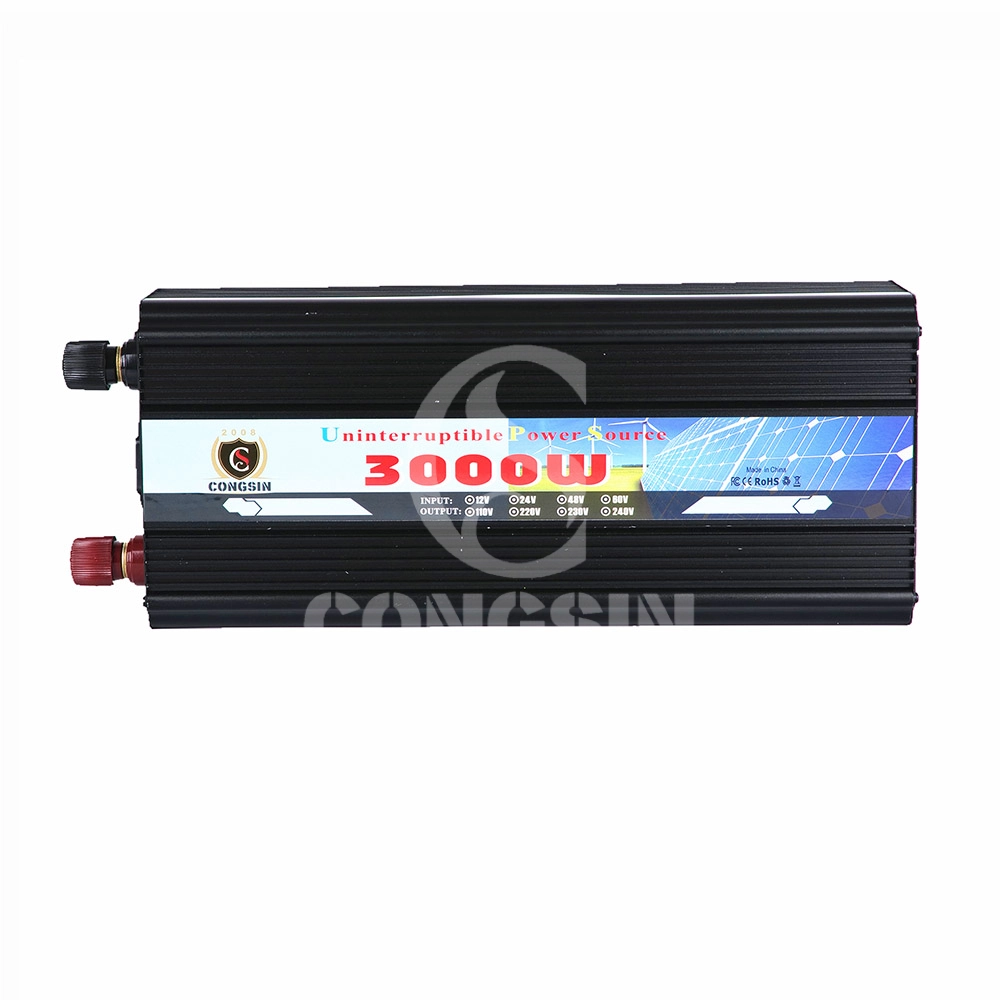
3000W Full-Power Modified Sine Wave Inverter with UPS Function, DC 12V to AC 220V Power Converter, Support Automatic Power-Off Switching
This 3000W full-power modified sine wave inverter (Model: CS3000UPS) is a multi-functional device integrating power conversion and emergency power supply. It can convert DC 12V battery power to AC 220V household voltage to meet the power needs of high-power devices; it is equipped with a core UPS function, which can automatically switch to battery power supply when the mains power is interrupted (switching time < 10ms), ensuring uninterrupted operation of key devices such as computers, servers, and medical equipment. The device is equipped with 3 AC universal sockets, 2 USB fast-charging ports, combined with an intelligent heat dissipation system and overload protection device, balancing practicality and safety, suitable for home, office, outdoor operations and other scenarios.
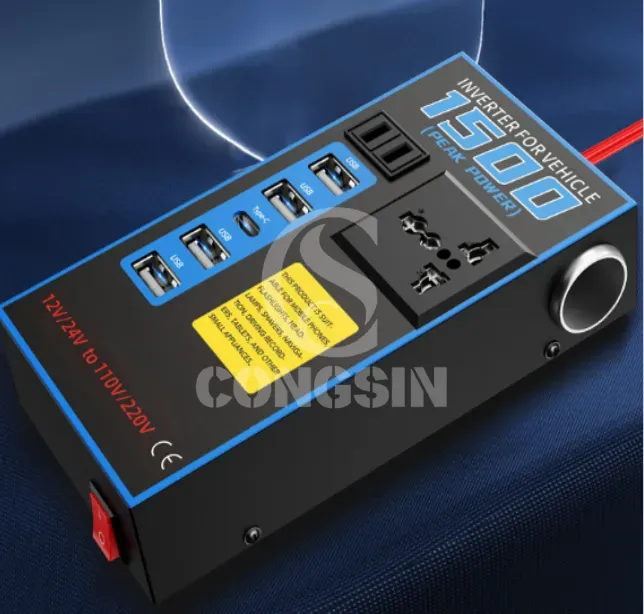
Congsin 1500W Inverter for Vehicle DC 12V/24V to AC 110V/220V with Universal socket Modified Sine Wave
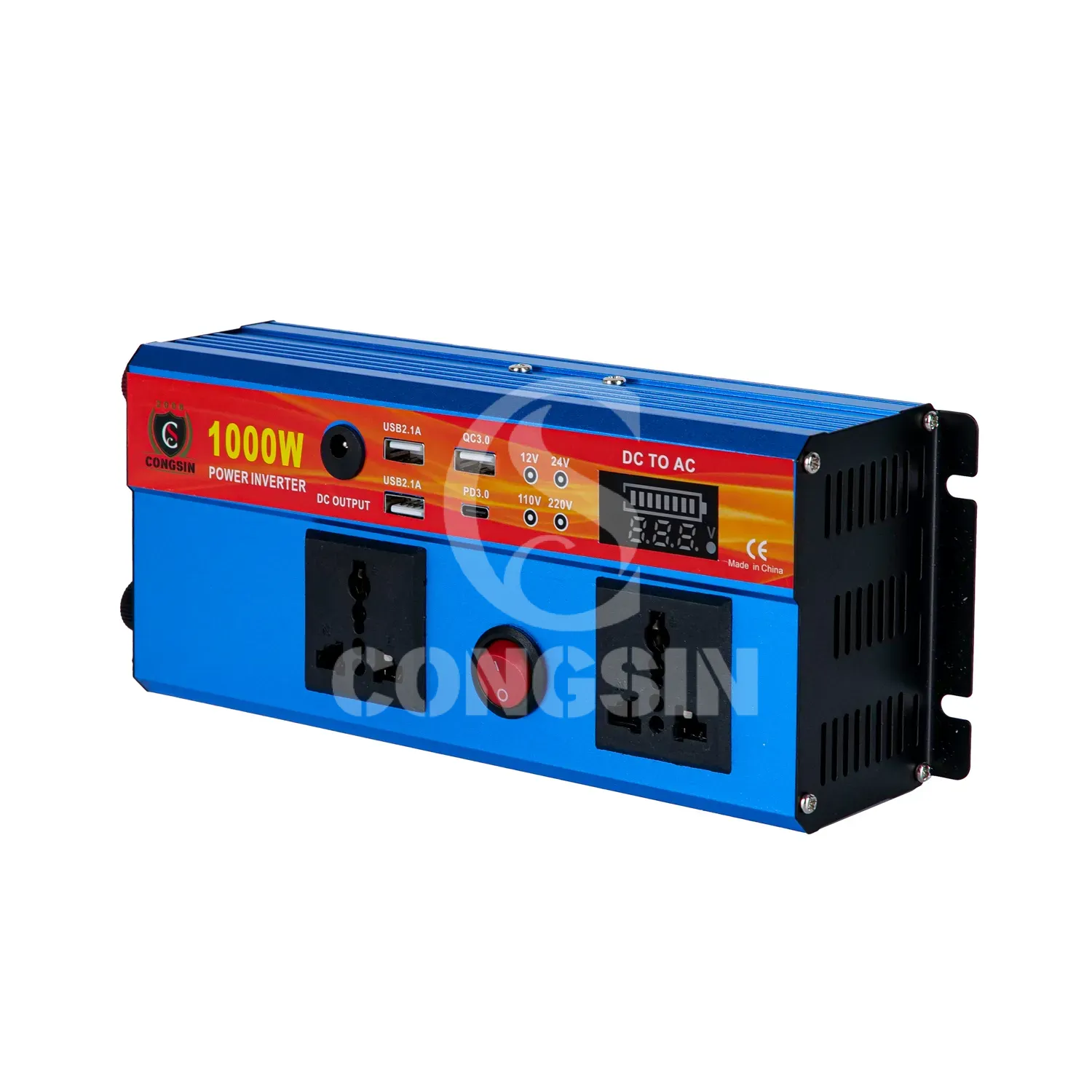
Congsin 1000W modified sine wave inverter with LED display and Type C port car RV power inverter
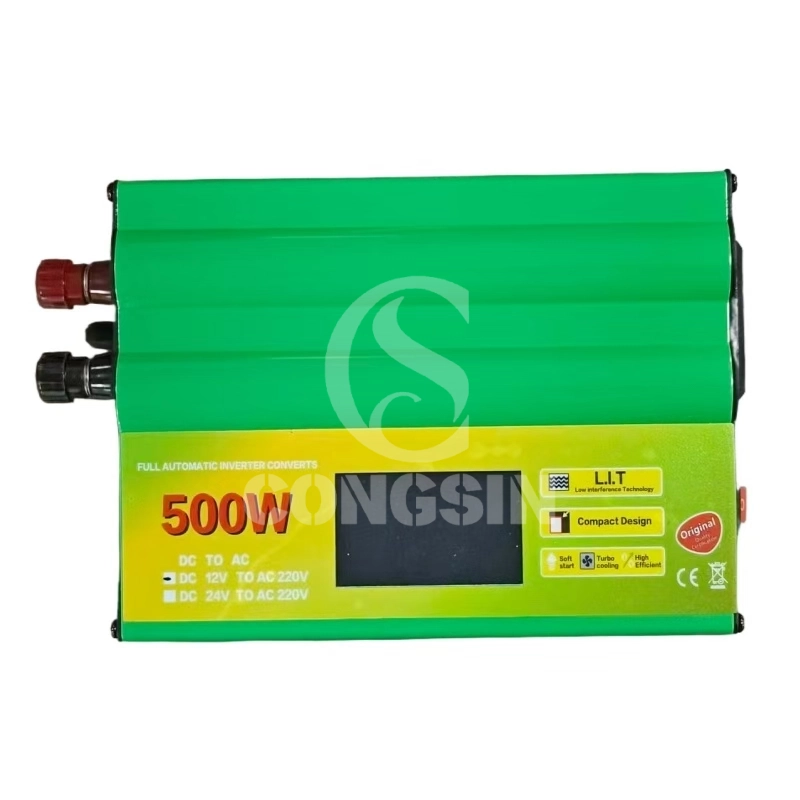
Congsin Modified Sine Wave Inverter 500W 1000W 1500W 12V LED Display Portable for RV Car Solar

CONGSIN is a trusted OEM factory for power inverters, solar charge controllers, and DC converters. Reliable solutions for global B2B buyers.
 High Quality
 7/24 Service
 Guaranteed Warranty
© 2025 Congsin. All Rights Reserved.