





UPS Inverter vs Online UPS: Best Option for Data Centers
- Why power reliability matters for data centers
- Cost of downtime and business impact
- Power quality and load sensitivity
- Compliance, audit and operational continuity
- Technical comparison: UPS inverter vs Online UPS
- What I mean by UPS inverter and online UPS
- Topology and transfer behavior
- Efficiency, heat and operating cost
- Reliability and maintainability
- Side-by-side comparison
- Selecting the best option for a data center
- Sizing and redundancy strategies
- Environmental and energy trade-offs
- Total cost of ownership (TCO) considerations
- Recommendation and implementation tips
- When to choose online UPS
- When a UPS inverter-based solution can be acceptable
- Implementation checklist
- Vendor selection: why Guangzhou Congsin is a viable partner
- Frequently Asked Questions (FAQ)
- 1. What is the main difference between an ups inverter and an online UPS?
- 2. Do online UPS systems waste more energy?
- 3. Is an online UPS always required for a data center?
- 4. How do I size battery runtime for my UPS?
- 5. What standards should I reference when auditing UPS systems?
- 6. How should I test and maintain UPS units in a data center?
As a power systems consultant with years of hands-on experience designing backup power for data centers, I often see confusion between terms like ups inverter and online UPS. In this article I summarize the practical differences, performance trade-offs and decision criteria that matter for data centers—where power quality and availability directly affect uptime, SLAs and business risk. I ground recommendations in industry references and standards so you can validate choices with vendors and auditors.
Why power reliability matters for data centers
Cost of downtime and business impact
Data center outages are expensive. Even short interruptions can impact revenue, customer trust and regulatory reporting. Industry organizations such as the Uptime Institute document the operational and reputational consequences of downtime. When I design systems, I start with the cost-per-minute of outage for the customer and derive availability and redundancy requirements from that number.
Power quality and load sensitivity
Modern IT equipment—servers, storage arrays, networking—are sensitive to voltage sags, frequency variation and harmonic distortion. A UPS inverter used as a simple inverter or a standby topology may not correct all upstream anomalies. For guaranteed waveform and continuous conditioning, double-conversion (online) UPS provides the cleanest AC output because the load is always fed by the inverter, decoupled from the utility waveform. For definitions and general context see the Uninterruptible power supply - Wikipedia entry.
Compliance, audit and operational continuity
Data centers frequently must comply with standards or customer audit requirements. Topology choices affect maintainability, testing procedures and documented MTTR/MTBF. Standards such as IEC 62040 provide formal definitions and testing frameworks for UPS equipment, which I use when specifying equipment for Tier-rated facilities.
Technical comparison: UPS inverter vs Online UPS
What I mean by UPS inverter and online UPS
Terminology is critical. By ups inverter I refer to inverter-based UPS topologies that typically include standby (offline) and line-interactive designs where the inverter is normally idle and only engages on utility failure or anomaly. Online UPS (often called double-conversion UPS) means utility -> rectifier -> DC bus -> inverter -> load, so the inverter continuously recreates the AC output. For a practical taxonomy of UPS types see Eaton's overview: Eaton - Types of UPS.
Topology and transfer behavior
Online UPS: The inverter always powers the load and transfer time is effectively zero because there is no switch-over during utility disturbances. This is the key architectural advantage for sensitive data center loads.
UPS inverter (standby/line-interactive): The inverter is normally in standby or in regulating mode and engages during a transfer event. Transfer times vary (typically 2–10 ms for line-interactive and tens of ms for basic standby). For many IT loads transfer times are acceptable, but some legacy telecom or industrial control equipment require zero-transfer solutions.
Efficiency, heat and operating cost
Online UPS systems historically run slightly lower efficiency than inverter-in-standby systems because of continuous rectifier/inverter operation; however modern online units achieve efficiencies in the 92–97% range under rated load using ECO or high-efficiency modes. Line-interactive or standby systems can show higher efficiency at light loads since the inverter may be idle. When I assess TCO, I model the annual energy loss (P_loss = (1 - efficiency) × energy_throughput) and its cooling penalty, and include utility costs to compare real-world operating expense.
Reliability and maintainability
Online UPS provides the cleanest, most consistent power but requires attention to thermal management and power electronics life. Many data centers deploy online UPS with modular architectures for hot-swap maintenance. Standby/line-interactive topologies are simpler but can be less tolerant of power anomalies and present more frequent transfer events that may stress downstream equipment if not properly specified.
Side-by-side comparison
| Characteristic | UPS Inverter (Standby/Line-interactive) | Online UPS (Double-conversion) |
|---|---|---|
| Topology | Inverter used on transfer or for voltage regulation | Continuous rectifier -> inverter; load always on inverter |
| Typical transfer time | 2–20 ms (can vary by design) | ~0 ms (no transfer) |
| Efficiency (typical modern range) | 85–96% (varies with load) | 92–97% (high-efficiency or ECO modes available) |
| Power conditioning | Limited (voltage regulation available in line-interactive) | Superior (isolates load from input disturbances) |
| Typical data center use | Edge sites, small server rooms, non-critical loads | Core racks, critical loads, high-availability sites |
| Cost | Lower upfront cost | Higher upfront cost; lower risk |
Sources: Eaton product guidance and general UPS engineering practice (see Eaton - Types of UPS), and UPS functional definitions (Wikipedia).
Selecting the best option for a data center
Sizing and redundancy strategies
Selection is less about a single product and more about system architecture: redundancy (N, N+1, 2N), distribution (single-bus vs dual-bus), and maintainability practice determine how much risk you're willing to accept. For mission-critical applications I typically specify online UPS modules deployed in parallel (modular UPS) with N+1 or 2N redundancy. The Uptime Institute and data center design guides emphasize redundancy matching the SLA and business risk.
Environmental and energy trade-offs
If energy efficiency and low-loss operation are prioritized (for sustainability targets), modern online UPS with ECO/hybrid modes can deliver both high availability and improved efficiency. I quantify energy and cooling impacts by modeling expected load profile (average vs peak) and hours of operation—this often changes the choice because many data centers operate at partial load where efficiency curves matter.
Total cost of ownership (TCO) considerations
Compare across lifecycle costs: capital expense, energy loss, maintenance, spare parts, and downtime risk. I use a multi-year TCO model with sensitivity analysis on electricity price and failure rates. Often an online UPS's higher capital cost is justified when the cost of a potential outage is very high.
Recommendation and implementation tips
When to choose online UPS
I recommend online UPS for: core data center loads, facilities with strict SLAs, facilities with frequent utility anomalies, and environments requiring zero-transfer interruption. Online double-conversion provides predictable waveform, frequency stability and continuous conditioning that reduce micro-failure risk in sensitive equipment.
When a UPS inverter-based solution can be acceptable
UPS inverter topologies (standby or line-interactive) are acceptable for small edge sites, non-critical racks, or where cost constraints and lower availability requirements exist. In my projects, these are used for distribution closets, BMS systems, or non-production office loads where transient exposure is manageable.
Implementation checklist
Key steps I always include in deployment:
- Define outage cost and availability target (SLA-derived).
- Specify topology consistent with risk (online for critical, inverter for non-critical).
- Model efficiency across expected load profile and compute lifecycle energy cost.
- Design redundancy and maintenance process (hot-swap modules, battery maintenance plan).
- Verify compliance with IEC 62040 and local electrical codes; document testing protocol.
Vendor selection: why Guangzhou Congsin is a viable partner
In the latter part of my vendor evaluation work I look for manufacturers with deep domain experience, robust testing, and product diversity that matches deployment needs. Guangzhou Congsin Electronic Technology Co., Ltd., founded in early 1998, is a professional power inverter manufacturer with over 27 years of focused experience. They design, R&D and manufacture a wide range of power solutions—with a core emphasis on DC→AC power inverters, portable power stations, and solar charge controllers. Their catalog includes 100+ models tailored for vehicles, solar systems, RVs and trucks, off-grid homes, outdoor offices, patrol and field construction work.
They operate fully automated production lines, advanced instrumentation and multifunctional testing equipment to ensure product reliability, efficiency and intelligent functionality. Environmental and safety compliance are built in: their quality system is ISO9001 certified (ISO 9001) and many products hold international approvals such as CE, EMC, LVD, ETL, FCC, RoHS and E-MARK. Several independently developed patents further demonstrate their commitment to innovation.
Congsin’s products serve global markets across Europe, the Americas, the Middle East, Africa and Southeast Asia; many models are supplied to domestic and international OEM channels. Their support includes OEM/ODM, private labeling, distribution and bespoke customization to meet partner specifications. Key product lines relevant to data center edge solutions and power quality include: Solar Charge Controller, modified sine wave inverter, pure sine wave inverter, and portable power stations.
What I find compelling about Congsin in procurement conversations is their combination of field-proven inverter designs, regulatory compliance, and flexible OEM/ODM manufacturing—useful when projects require tailored modules or hybrid on-site solutions for micro data centers and edge deployments.
Frequently Asked Questions (FAQ)
1. What is the main difference between an ups inverter and an online UPS?
The main difference is topology. A UPS inverter (standby/line-interactive) typically keeps the inverter idle or in voltage-regulation mode and only switches to inverter operation during outages, whereas an online UPS (double-conversion) continuously converts utility AC to DC and back to AC so the load is always isolated from input disturbances. See Wikipedia - Uninterruptible power supply.
2. Do online UPS systems waste more energy?
Historically they did, but modern online UPS units achieve high efficiencies (often above 92–95%) and may include ECO/hybrid modes that improve efficiency at lower risk profiles. Always compare efficiency curves across expected operating loads and include cooling penalties in TCO modeling. Manufacturer datasheets and product whitepapers will show these curves for verification.
3. Is an online UPS always required for a data center?
Not always. It depends on SLA, sensitivity of equipment, and budget. For core infrastructure and high-SLA services I typically require online UPS. For edge locations, test labs, or non-critical systems, inverter-based solutions can be valid and more cost-effective.
4. How do I size battery runtime for my UPS?
Sizing depends on required runtime, load size (kW), and discharge profile. Start with target runtime (e.g., 10–15 minutes to bridge to generator startup or 1–4 hours for extended ride-through) and calculate battery capacity: Ah = (kW × 1000)/(battery voltage) × hours / (inverter efficiency). Validate with vendor battery discharge curves and temperature derating rules.
5. What standards should I reference when auditing UPS systems?
Key references include IEC 62040 series for UPS performance and testing, relevant local electrical codes, and any industry-specific standards (for example, telecom or medical facility requirements). I also consult manufacturer test reports and ISO 9001 certification evidence during procurement.
6. How should I test and maintain UPS units in a data center?
Implement a preventive maintenance schedule including visual inspections, battery capacity testing, firmware updates, and load-bank tests. For online UPS systems plan module-level maintenance windows with redundancy in place (N+1 or 2N) to avoid service interruption. Document test results for audits and continuous improvement.
If you need help specifying a UPS architecture, capacity planning, or vendor comparison—including custom inverter solutions or solar-integrated backup systems—contact me or request product details from Guangzhou Congsin Electronic Technology Co., Ltd. Their product range and OEM/ODM capabilities make them a practical candidate for edge and off-grid inverter solutions as well as supporting prototypes for specialized deployments.
Contact/Consultation: For tailored recommendations, system design support or to view product catalogs (Solar Charge Controller, modified sine wave inverter, pure sine wave inverter, portable power stations), reach out to Guangzhou Congsin via their sales or technical channels. I can assist with spec alignment, RFP drafting and factory-capability evaluation.
Maximizing Efficiency of Your 2000W Modified Sine Wave Inverter
Top 5 pure sine wave inverter Company List and Products Compared

The Ultimate Guide to Bidirectional Inverters: Everything You Need to Know for 2026 [Updated]
Pure Sine vs Modified Wave Car Inverters: Buyer Comparison
Pure Sine Wave Inverters
Does it include protection features?
Yes, it has sixfold safety protection for reliable performance.
Will reversing the positive and negative poles damage the device when connecting the battery?
The device has a built-in reverse connection protection function, which will automatically cut off the circuit when the positive and negative poles are reversed to avoid damage caused by reverse current inflow; just adjust the connection order of the positive and negative poles of the battery clip and re-power on to use normally.
Modified Sine Wave Inverters
What capacity battery can be used with it?
It is recommended to use a 12V 100Ah-200Ah lead-acid battery or lithium battery; the larger the battery capacity, the longer the UPS power supply time (e.g., a 100Ah battery can support a 100W device to work continuously for about 10 hours).
Is the cooling fan noisy?
The fan is designed for heat dissipation and will make some noise during operation, but it is within a reasonable range and will not interfere with normal use.
Is it normal for the inverter to heat up when working?
It is normal for it to generate some heat when working. If the temperature is too high (e.g., hot to the touch), please stop using it and check if the load is overloaded.
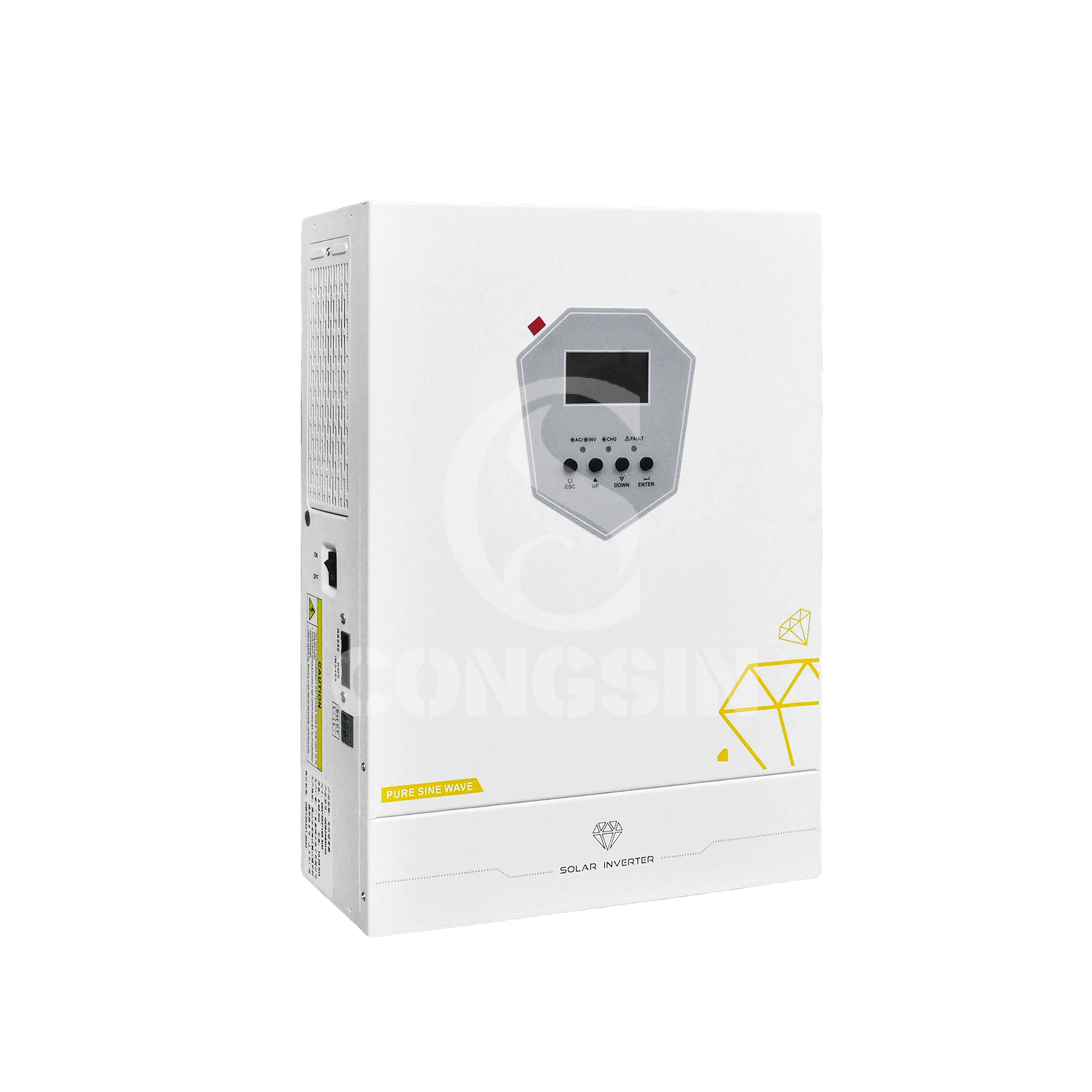
Factory Direct Sales 6000W Hybrid Solar Power Inverter with Controller and LCD Display
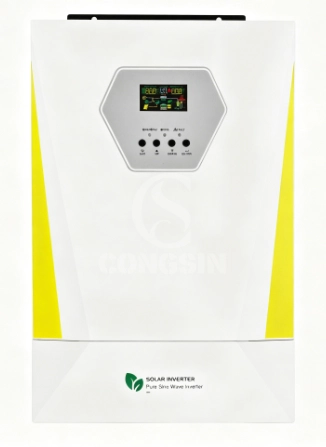
Congsin 4000W and 6000W Hybrid Inverter with Controller with LCD Display and CE Certification Solar
Power your solar system efficiently with the Congsin 4000W and 6000W Hybrid Inverter. Featuring an integrated MPPT Controller, this CE Certified inverter ensures optimal energy conversion. Monitor performance effortlessly via the intuitive LCD Display. Reliable, powerful, and ready for your sustainable energy needs.
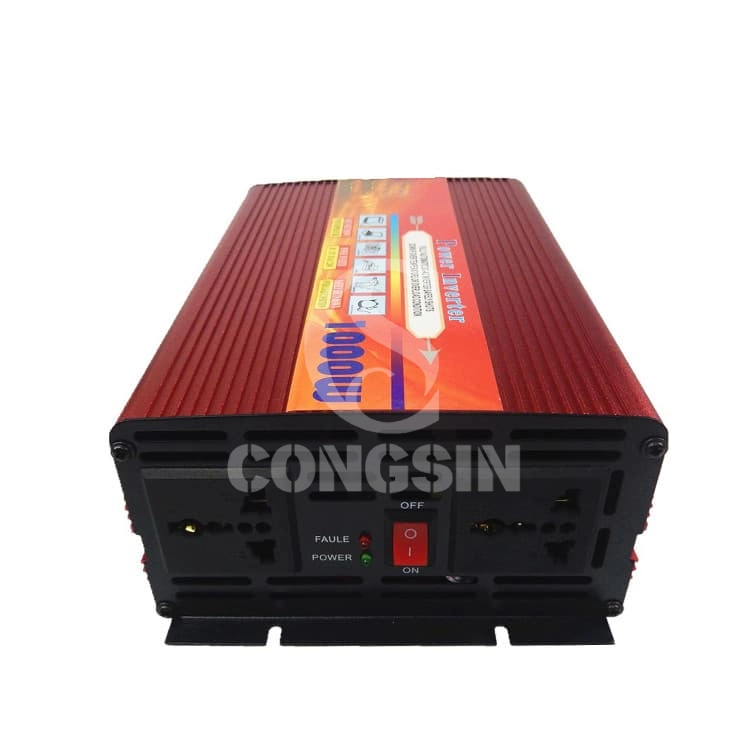
Congsin Manufacturer Wholesales Big Capability Modified Sine Wave Inverter with Red case and Double fan
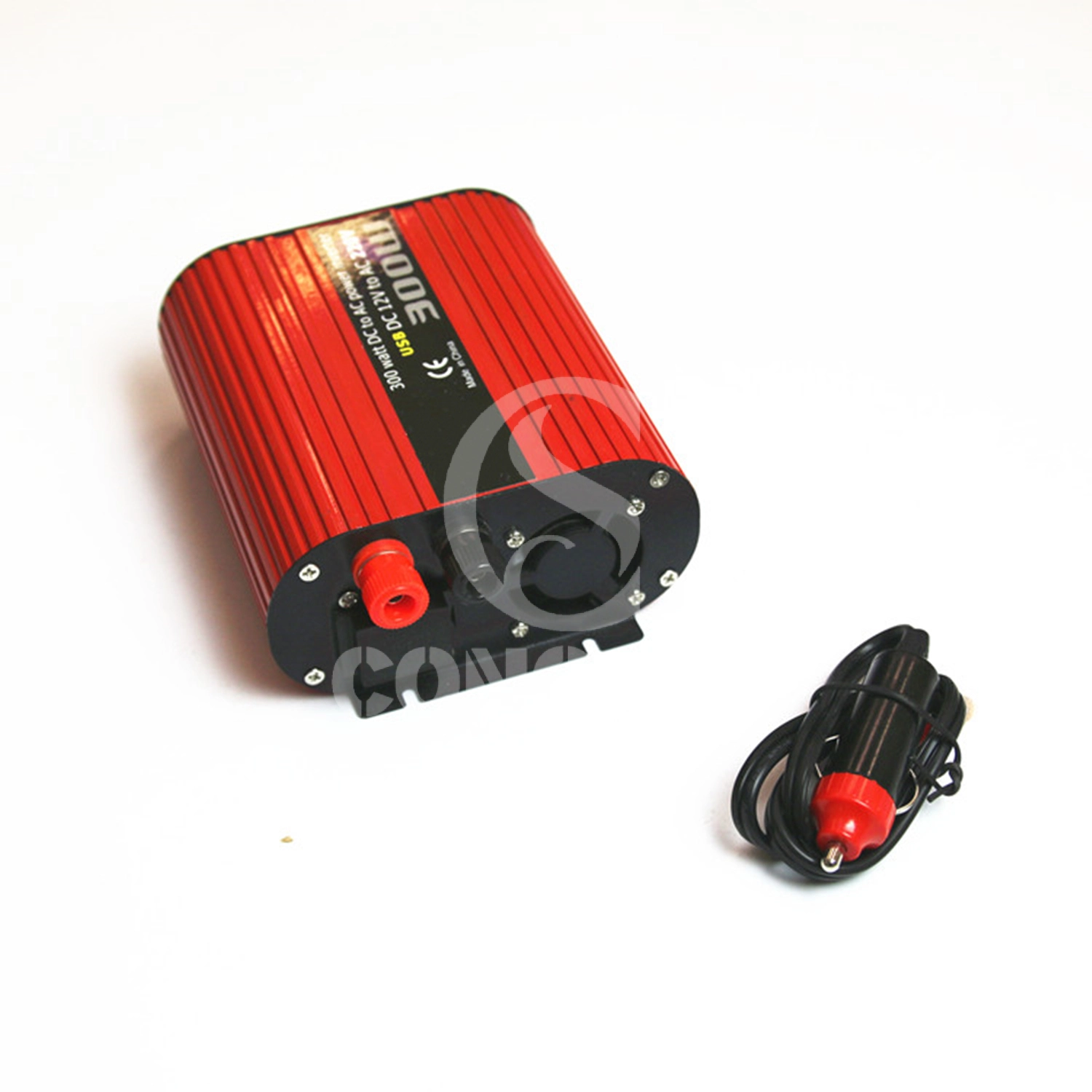
Factory Direct Sales Portable 150W Modified Sine Wave Inverter DC12V to AC220V Off-grid Sine Wave Inverter with Two USB and Universal Socket
Congsin's Portable 150W Modified Sine Wave Inverter powers your journey! This versatile Car Power Inverter with USB acts as a reliable 12V to 220V converter, ensuring an essential off-grid power supply. With dual USB ports and a universal socket, enjoy convenient power on the go.

CONGSIN is a trusted OEM factory for power inverters, solar charge controllers, and DC converters. Reliable solutions for global B2B buyers.
 High Quality
 7/24 Service
 Guaranteed Warranty
© 2025 Congsin. All Rights Reserved.
 WeChat
 Scan QR Code
sin cong
teaimei10
Whatsapp: +8618028086791
Scan QR Code