





Top Features to Look for in a UPS Power Inverter
- Why reliable backup power matters today
- Increasing reliance on electronics and edge devices
- Costs of poor power protection
- Standards and references
- Core features to evaluate in a UPS power inverter
- Waveform type: pure sine vs modified sine
- Continuous vs surge (peak) power rating
- Transfer time and inverter topology
- Intelligent battery and system management
- Battery type, capacity and lifecycle management
- Integrated inverter-charger and multi-mode operation
- Monitoring, telemetry and remote management
- Safety, compliance and real-world performance
- Certifications and test reports
- Efficiency, thermal management and derating
- Surge protection, grounding and safety features
- How to size and specify the right UPS power inverter
- Step-by-step sizing method
- Example calculation
- Comparison table: waveform, efficiency and suitability
- Practical considerations: environment, installation and lifecycle
- Installation site and environmental controls
- Maintenance and warranty
- Costs and total cost of ownership (TCO)
- Why choose Guangzhou Congsin Electronic Technology Co., Ltd. for UPS power inverter solutions
- Company strengths and product focus
- Manufacturing quality, certification and innovation
- Product range and services
- Decision checklist before purchase
- Essential questions to answer
- Requesting the right documentation
- Final selection guidance
- Frequently Asked Questions (FAQ)
- 1. What is the difference between a UPS and a power inverter?
- 2. Do I always need a pure sine wave inverter for a UPS?
- 3. How do I calculate battery runtime for my inverter?
- 4. What certifications should I look for in a UPS power inverter?
- 5. Can I connect solar PV directly to a UPS inverter?
- 6. What maintenance is required for UPS power inverters?
As dependence on sensitive electronics and intermittent power grows, selecting the right ups power inverter integrated in a UPS system is critical for maintaining uptime, protecting equipment and maximizing battery life. This article breaks down the most important features, how they affect real-world performance, and how to choose the correct specification for your needs. Authoritative references and practical sizing examples are included to help technicians, facility managers and informed buyers make a confident decision.
Why reliable backup power matters today
Increasing reliance on electronics and edge devices
Work-from-home setups, smart appliances, networked security systems and edge computing have multiplied the number of devices sensitive to power quality. A UPS power inverter must not only provide continuity during outages but also deliver stable waveform and low total harmonic distortion (THD) so that modern electronics operate reliably without overheating or data corruption.
Costs of poor power protection
Unexpected outages and poor-quality backup power can cause data loss, equipment damage and operational downtime. For businesses, even short interruptions may mean lost transactions and productivity. For critical systems (medical equipment, telecom, industrial controls), the cost can be far higher. A thoughtfully specified ups power inverter mitigates these risks by matching capacity and waveform to load characteristics.
Standards and references
Industry resources provide context for choosing UPS and inverter systems. For general background on uninterruptible power supplies and their uses, see Uninterruptible power supply (Wikipedia). For technical background on inverters, waveforms and efficiency, see Inverter (Wikipedia). These resources are useful starting points when evaluating product datasheets.
Core features to evaluate in a UPS power inverter
Waveform type: pure sine vs modified sine
The waveform delivered by an ups power inverter determines compatibility with loads. Pure sine wave inverters produce a smooth AC waveform similar to utility power and are required for sensitive electronics, variable-speed motors, and many medical/telecom devices. Modified sine (or stepped approximations) are lower-cost but can cause humming, reduced motor efficiency, increased EMI and potential issues with active power supplies. If you run laptops, servers, HVAC controls or precision instruments, prioritize pure sine wave output.
Continuous vs surge (peak) power rating
Two ratings matter: continuous power (what the inverter can supply indefinitely at rated temperature) and surge (short-term capacity to handle inrush currents from motors or compressors). Choose an ups power inverter whose continuous rating covers aggregate steady-state load and whose surge rating comfortably handles motor starts and switching loads. Manufacturer datasheets and labels will specify both values—always size for a margin above calculated demand.
Transfer time and inverter topology
Transfer time is the interval between mains loss detection and inverter supplying AC. True online (double-conversion) UPS systems have effectively zero transfer time because they continuously regenerate AC from DC, while line-interactive and offline UPS units have short but non-zero transfer times. Critical IT equipment and some industrial controllers may require online UPS; for less sensitive loads, a line-interactive UPS with a reliable inverter may suffice.
Intelligent battery and system management
Battery type, capacity and lifecycle management
Battery chemistry (lead-acid, AGM, LiFePO4) affects energy density, cycle life, charging profile and safety. Lithium (LiFePO4) offers higher cycle life and energy density but at higher initial cost; sealed lead-acid remains common for cost-sensitive installations. Evaluate the inverter's battery management features: programmable charge algorithms, temperature compensation, state-of-charge (SoC) reporting and depth-of-discharge limits. These functions extend battery life by preventing overcharge, undercharge and thermal stress. For general battery lifecycle guidance, see resources such as Battery University.
Integrated inverter-charger and multi-mode operation
A UPS power inverter that combines inverter and charger functions simplifies installation for systems that require shore charging (vehicle or RV), solar charging, or generator support. Intelligent inverter-chargers can automatically switch modes, prioritize charging sources, and implement generator support logic to reduce fuel consumption and extend generator life.
Monitoring, telemetry and remote management
Modern UPS inverters offer local displays and remote telemetry via USB, RS-232, SNMP or cloud platforms. Features to look for: remote shutdown, load/energy logging, event history, and programmable alerts. These functions are essential for preventive maintenance and for rapid troubleshooting in distributed deployments.
Safety, compliance and real-world performance
Certifications and test reports
Certifications (CE, EMC, LVD, ETL, FCC, RoHS, E-MARK) demonstrate compliance with safety, electromagnetic compatibility and environmental regulations. ISO9001 certification indicates manufacturing quality systems. Verify certificates and ask for test reports for high-stakes deployments. ISO standards information can be found at ISO.org.
Efficiency, thermal management and derating
Inverter efficiency (typically 85–95% depending on topology and load) affects how much energy is drawn from batteries and fuel sources. Consider efficiency at expected load levels—many inverters achieve peak efficiency at 50–75% load. Thermal design (ventilation, forced cooling, temperature derating) affects continuous power ratings; confirm performance at ambient temperatures typical for your installation.
Surge protection, grounding and safety features
Look for built-in surge protection, ground fault protection, overload and short-circuit protection, and clear grounding instructions. For installations in vehicles or field sites, ensure compliance with automotive or marine standards (E-MARK or equivalent). Proper protection reduces the risk of equipment damage and fire during abnormal events.
How to size and specify the right UPS power inverter
Step-by-step sizing method
1) List all connected equipment and their continuous power draw (Watts) and startup current (inrush). 2) Calculate a realistic diversity factor—not all devices peak simultaneously. 3) Determine required continuous power and required surge capacity. 4) Choose battery capacity (Ah) and voltage to meet desired runtime at expected loads. 5) Include margin for future expansion (typically 20–30%).
Example calculation
Suppose a small office has a router (15W), two workstations (each 200W), a network switch (25W) and a VoIP PBX (40W). Total continuous = 15 + 400 + 25 + 40 = 480W. Add 25% margin = 600W continuous. If a workstation has 2–3x inrush, specify inverter with 1.5–2kW surge capability to cover transient events. Battery sizing: for 1 hour runtime at 600W using a 12V battery bank, required Wh = 600Wh, Ah = 600Wh/12V = 50Ah (allow for derating and depth-of-discharge limits; for lead-acid, double the value to preserve life).
Comparison table: waveform, efficiency and suitability
| Feature | Pure Sine Wave | Modified/Stepped Sine | Inverter-charger / Online UPS |
|---|---|---|---|
| Waveform quality | High (low THD) | Moderate (higher THD) | High (continuous double-conversion) |
| Efficiency (typical) | 90–95% | 75–85% | 85–94% (varies by design) |
| Best for | Sensitive electronics, motors, medical, telecom | Simple resistive loads, basic lighting | Critical systems requiring continuous clean power |
| Typical cost | Higher | Lower | Highest |
Sources: general inverter and UPS technical summaries such as Inverter (Wikipedia) and UPS (Wikipedia).
Practical considerations: environment, installation and lifecycle
Installation site and environmental controls
Temperature, humidity, dust and altitude affect inverter and battery performance. Many inverters are derated above certain temperatures or altitudes—check datasheets. For remote or outdoor installations, consider ingress protection (IP ratings), sealed enclosures and active ventilation to maintain reliability.
Maintenance and warranty
Plan for regular battery testing/replacement and firmware updates for intelligent inverters. Understand warranty terms (coverage for electronics vs batteries) and service options—especially for mission-critical systems where SLAs matter.
Costs and total cost of ownership (TCO)
Initial purchase price is only one component. TCO includes installation, cabling, batteries, efficiency losses, maintenance and disposal. Selecting the right inverter and battery chemistry for the expected duty profile minimizes long-term cost while maximizing uptime.
Why choose Guangzhou Congsin Electronic Technology Co., Ltd. for UPS power inverter solutions
Company strengths and product focus
Guangzhou Congsin Electronic Technology Co., Ltd., founded in early 1998, is a professional power inverter manufacturer with over 27 years of focused experience. The company designs, R&D and manufactures a wide range of power solutions—with a core emphasis on DC→AC power inverters, portable power stations, and solar charge controllers. Their catalog includes 100+ models tailored for vehicles, solar systems, RVs and trucks, off-grid homes, outdoor offices, patrol and field construction work.
Manufacturing quality, certification and innovation
Congsin operates fully automated production lines, advanced instrumentation and multifunctional testing equipment to ensure product reliability, efficiency and intelligent functionality. Their quality system is ISO9001 certified and many products hold international approvals such as CE, EMC, LVD, ETL, FCC, RoHS and E-MARK. Several independently developed patents further demonstrate their commitment to innovation and field-oriented engineering.
Product range and services
Congsin’s primary offerings include Solar Charge Controller, modified sine wave inverter, pure sine wave inverter and portable power stations. Their products serve markets across Europe, the Americas, the Middle East, Africa and Southeast Asia and are supplied through domestic and international OEM channels. Congsin supports OEM/ODM, private labeling, distribution and bespoke customization to meet partner specifications—making them a competitive choice for integrators seeking flexible manufacturing partners and reliable UPS power inverter modules.
Decision checklist before purchase
Essential questions to answer
- What is the continuous and peak power requirement of all loads?
- Are loads sensitive to waveform quality (need pure sine)?
- What runtime is required on battery and what battery chemistry is preferred?
- Is online (double-conversion) UPS necessary or will line-interactive suffice?
- What environmental and installation constraints apply (temperature, space, ventilation)?
Requesting the right documentation
Ask vendors for: detailed datasheets, efficiency curves, transfer time specs, surge capability, certified test reports, manufacturer warranty, and battery lifecycle expectations. Request a reference list of similar installations when evaluating suppliers for large projects.
Final selection guidance
For home and light office use, a high-quality pure sine inverter with integrated charger and clear monitoring may be sufficient. For mission-critical or industrial applications, prioritize online UPS topologies, redundant architectures and proven vendors with third-party certifications and field references.
Frequently Asked Questions (FAQ)
1. What is the difference between a UPS and a power inverter?
A UPS (uninterruptible power supply) typically includes an inverter plus battery and control circuits designed to provide immediate backup and power conditioning. A standalone power inverter converts DC to AC but may not include battery management, automatic transfer, or UPS-class fast transfer behavior. See Uninterruptible power supply (Wikipedia) for background.
2. Do I always need a pure sine wave inverter for a UPS?
Not always—pure sine wave output is recommended for sensitive electronics, motors, variable-speed drives, and medical equipment. For simple resistive loads (heaters, incandescent lighting) a modified sine may work, but long-term compatibility and EMI should be considered.
3. How do I calculate battery runtime for my inverter?
Calculate total continuous load (Watts), divide battery Wh capacity by this load, and adjust for inverter efficiency and allowable depth-of-discharge. Example: a 600W load on a 12V 100Ah battery (1200Wh) at 90% inverter efficiency gives runtime ≈ (1200Wh * 0.9) / 600W = 1.8 hours (theoretical). Real-world runtime will be lower due to temperature and aging.
4. What certifications should I look for in a UPS power inverter?
Key certifications include CE, EMC, LVD for Europe, ETL/UL for North America, FCC for emissions, RoHS for hazardous substances and E-MARK for automotive. ISO9001 indicates manufacturing quality management. Always verify certificates against product models.
5. Can I connect solar PV directly to a UPS inverter?
Not directly. If you intend to integrate solar, choose an inverter system that supports MPPT solar charge controllers and has appropriate battery charging logic or an inverter-charger with solar inputs. Specialized hybrid inverters and MPPT controllers are designed for solar+battery integration.
6. What maintenance is required for UPS power inverters?
Regular maintenance includes battery health checks and replacements, firmware updates, ventilation/cleaning, and periodic load tests. For large or critical systems, use scheduled preventive maintenance and logging to anticipate battery replacement and component wear.
If you need tailored recommendations, product datasheets or a quotation, contact Guangzhou Congsin Electronic Technology Co., Ltd. Their experienced engineering team can help size systems, recommend the right pure sine wave or modified sine wave inverter, solar charge controller or portable power station and provide OEM/ODM support. View product lines or request a consultation to evaluate the ideal ups power inverter for your project.
Contact / Request a Quote: For product details, certifications and customization options, reach out to Guangzhou Congsin Electronic Technology Co., Ltd. to discuss requirements and explore suitable models (Solar Charge Controller, pure sine wave inverter, modified sine wave inverter, portable power stations).
Pure Sine vs Modified Wave Car Inverters: Buyer Comparison
Cost, Savings and ROI of Bidirectional Solar Inverters
Grid-Tied vs Off-Grid Inverters: Best Options for Homes
High Frequency Inverter Safety Standards and Compliance Guide
Modified Sine Wave Inverters
Can I customize the logo?
Yes, OEM/ODM service is available.
What is the working principle of the UPS function?
When the external power supply is normal, the inverter powers the device and charges the battery; when the external power supply is interrupted, it automatically switches to battery power to ensure uninterrupted operation of the device.
Distributor
What kind of distributors are you looking for?
We seek distributors with experience in the amusement or entertainment equipment industry and a strong local market presence.
Pure Sine Wave Inverters
Can the 3 AC sockets drive high-power devices at the same time?
Yes, but it is necessary to ensure that the total power of the 3 devices does not exceed 2000W (continuous power). For example, it can drive 1 1000W electric oven + 1 500W microwave + 1 400W printer at the same time (total power 1900W), avoiding total power overload to trigger the protection mechanism.
What happens if the positive and negative poles are reversed when connecting the battery?
The device features built-in reverse polarity protection. If the positive and negative terminals are connected incorrectly, the circuit will automatically disconnect to prevent damage to the equipment. Simply adjust the battery clip connections (red clip to positive terminal, black clip to negative terminal), then restore power to resume normal operation.
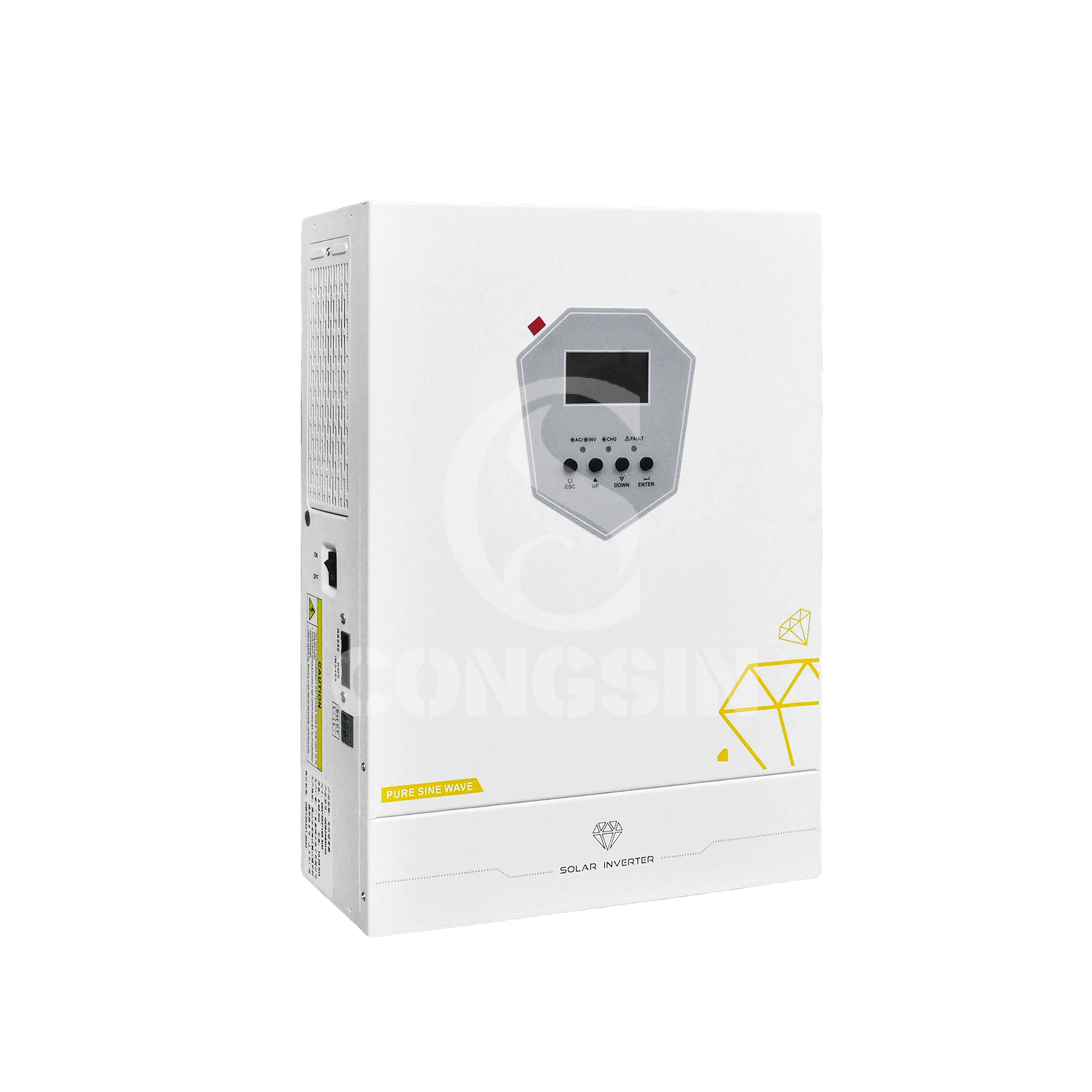
Factory Direct Sales 6000W Hybrid Solar Power Inverter with Controller and LCD Display
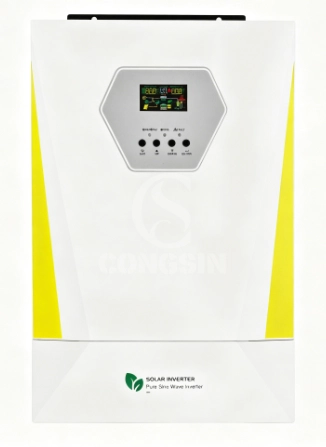
Congsin 4000W and 6000W Hybrid Inverter with Controller with LCD Display and CE Certification Solar
Power your solar system efficiently with the Congsin 4000W and 6000W Hybrid Inverter. Featuring an integrated MPPT Controller, this CE Certified inverter ensures optimal energy conversion. Monitor performance effortlessly via the intuitive LCD Display. Reliable, powerful, and ready for your sustainable energy needs.
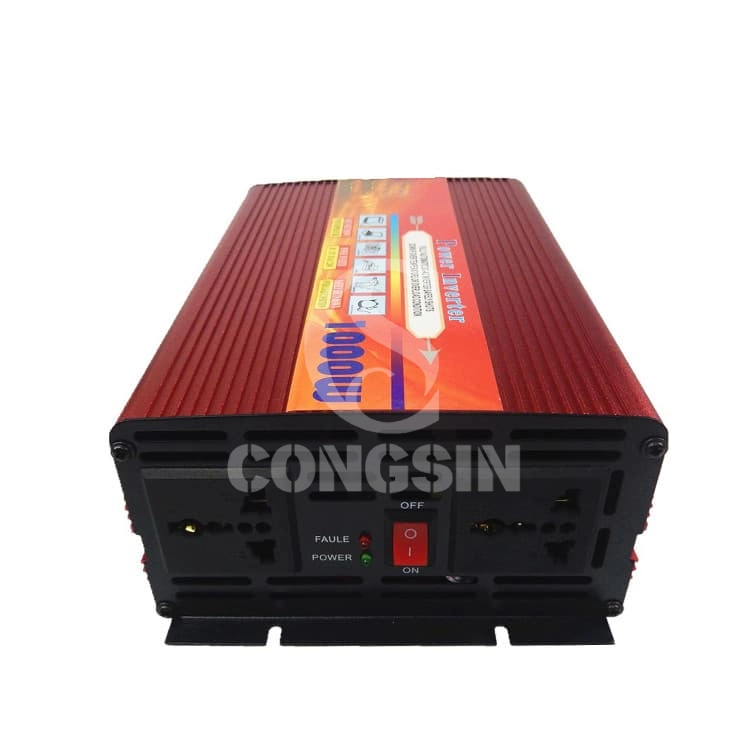
Congsin Manufacturer Wholesales Big Capability Modified Sine Wave Inverter with Red case and Double fan
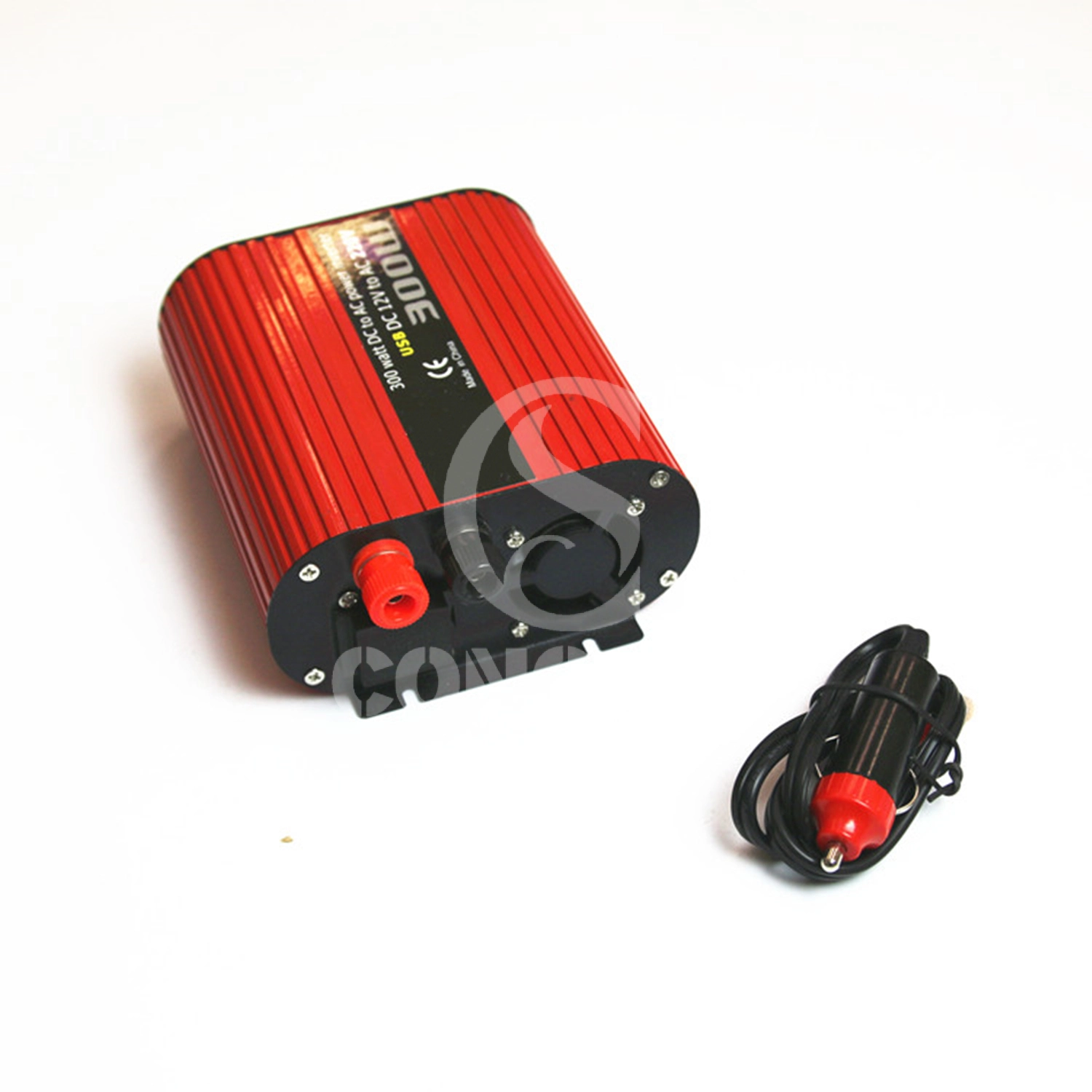
Factory Direct Sales Portable 150W Modified Sine Wave Inverter DC12V to AC220V Off-grid Sine Wave Inverter with Two USB and Universal Socket
Congsin's Portable 150W Modified Sine Wave Inverter powers your journey! This versatile Car Power Inverter with USB acts as a reliable 12V to 220V converter, ensuring an essential off-grid power supply. With dual USB ports and a universal socket, enjoy convenient power on the go.

CONGSIN is a trusted OEM factory for power inverters, solar charge controllers, and DC converters. Reliable solutions for global B2B buyers.
 High Quality
 7/24 Service
 Guaranteed Warranty
© 2025 Congsin. All Rights Reserved.
 WeChat
 Scan QR Code
sin cong
teaimei10
Whatsapp: +8618028086791
Scan QR Code