





Comparing Modified vs Pure Sine Wave Car Inverters
- How car inverters work: basics and why waveform matters
- DC → AC conversion fundamentals
- What “sine wave” and “modified sine wave” mean in practice
- Key electrical terms you should know
- Comparing Modified vs Pure Sine Wave Inverters
- Performance and device compatibility
- Efficiency, heat and audible noise
- Cost and typical use cases
- Selecting the right inverter for your car
- Sizing: continuous rating, surge and real-world load
- Safety, certifications and installation
- Battery type and charging behavior
- Why manufacturers and OEMs choose quality: a look at Guangzhou Congsin
- Company background and product range
- Quality, certifications and technical capability
- OEM/ODM support and market reach
- Practical recommendations — what I specify and why
- When I always choose a pure sine wave inverter
- When a modified sine wave inverter is acceptable
- Installation checklist I use for vehicle inverters
- Frequently Asked Questions (FAQ)
- 1. Can I run a laptop or phone charger on a modified sine wave inverter?
- 2. Does a pure sine wave inverter waste more battery than a modified one?
- 3. Is THD important for car inverters?
- 4. Can a modified sine wave inverter damage appliances?
- 5. How do I size the inverter for a car refrigerator or AC unit?
- 6. What certifications should I insist on when buying an inverter?
- Closing & contact
As someone who has designed, specified and tested power inverters for vehicles and off-grid applications for over a decade, I know the waveform your inverter produces is often the single most important factor for reliable device operation. In this article I explain how car inverter pure sine wave output differs from modified sine wave output, show measurable trade-offs (compatibility, THD, efficiency, cost), and give practical guidance for choosing the right inverter for cars, RVs and portable power systems. I reference standards and authoritative sources so you can verify the claims and make an evidence-based choice.
How car inverters work: basics and why waveform matters
DC → AC conversion fundamentals
At a basic level, a car inverter converts 12/24/48 V DC from a battery or vehicle electrical system into AC at mains voltage (typically 110–120 VAC or 220–240 VAC) and frequency (50/60 Hz). The inverter does this using switching electronics and filtering. The quality of the switching and the filtering network determine the shape of the output waveform, which ly dictates how well connected devices behave.
What “sine wave” and “modified sine wave” mean in practice
A pure sine wave inverter synthesizes an output that closely follows a mathematical sine curve — the same shape provided by grid electricity. A modified sine wave inverter approximates that curve with stepped or block-shaped pulses. The visual and electrical difference looks subtle on the scope but can have major practical effects: waveform purity impacts heating, interference, motor torque, charging circuits, and audio/video performance. For background on the ideal waveform and why it matters, see the Wikipedia explanation of the sine wave and an overview of inverters on the Inverter (electrical) page.
Key electrical terms you should know
When comparing car inverters, I focus on three measurable terms: RMS voltage (effective output voltage), total harmonic distortion (THD), and surge capability (short-term power above continuous rating). THD is especially important: high THD means more harmonics that can damage sensitive electronics or cause overheating in inductive loads. The industry reference for managing harmonics in power systems is IEEE 519 — see the standard summary at IEEE 519.
Comparing Modified vs Pure Sine Wave Inverters
Performance and device compatibility
Pure sine wave inverters produce low THD (often below 3–5% for quality units), so they behave like grid power and work with essentially any appliance: laptop power supplies, LED drivers, medical devices, variable-speed motors, microwave ovens and modern chargers. Modified sine wave inverters typically have much higher THD and produce step-like voltage transitions; they can cause humming, inefficiency, failure to start motors, or erratic behavior with some switch-mode power supplies and electronic control circuits.
Efficiency, heat and audible noise
Modified sine wave inverters are simpler and sometimes slightly more efficient under specific light loads, but they often cause greater losses in connected devices because those devices are forced to work with a non-ideal waveform. Motors and compressors may run hotter or produce more audible noise. Pure sine wave inverters are usually the better choice for continuous or mixed loads because they minimize stray losses in the load and reduce EMI-related problems.
Cost and typical use cases
Modified sine wave inverters are lower-cost and acceptable for basic resistive loads — incandescent lights, simple power tools, or older appliances. For anything with sensitive electronics or modern switching power supplies, I recommend a pure sine wave inverter despite the higher upfront cost; it reduces risk and often extends the life of the equipment.
| Characteristic | Modified Sine Wave | Pure Sine Wave |
|---|---|---|
| Waveform shape | Stepped/approximate | Continuous sine (low distortion) |
| Typical THD | 10–40% (varies widely) | < 3–5% (quality units) |
| Compatibility | Resistive loads & simple motors | All appliances including sensitive electronics |
| Efficiency (inverter only) | Often slightly higher at specific loads | High (modern designs >90%), better overall system efficiency |
| Noise & heating in loads | Higher risk of hum and extra heating | Minimal |
| Typical cost | Lower | Higher |
Sources for typical THD behavior and inverter descriptions include manufacturer datasheets and inverter overviews such as the inverter article on Wikipedia, and practical guides on inverter selection like HowStuffWorks' explanation of inverters: How Inverters Work.
Selecting the right inverter for your car
Sizing: continuous rating, surge and real-world load
When I size an inverter for a vehicle I calculate both continuous load and surge needs. Many appliances have a startup surge (motors, refrigerators, pumps, power tools). For example, a compressor-driven fridge might need 2–3x its running watts to start. Choose an inverter with adequate surge rating and verify the battery and wiring can support that current. Manufacturers publish continuous and surge ratings; always use those published numbers and derate based on ambient temperature and installation constraints.
Safety, certifications and installation
Installations in vehicles must account for vibration, temperature, ventilation and wiring protection. Look for inverters with safety certifications and compliance marks — for instance, ISO9001 quality systems (see ISO 9001), CE marking information (CE), and EMC/EMI compliance. These signals indicate the manufacturer follows consistent quality and safety practices. For electromagnetic compatibility and harmonic concerns see IEEE standards such as IEEE 519.
Battery type and charging behavior
Pure sine wave inverters often integrate better with modern battery chargers and smart battery management systems. If your car system includes battery-to-AC-to-battery charging cycles, using a pure sine wave inverter reduces the chance of misbehaving chargers or false protections. Also consider inverter efficiency at your expected load profile; an inverter that is efficient at 50–75% load may be a better match than one with peak efficiency only at 100% load.
Why manufacturers and OEMs choose quality: a look at Guangzhou Congsin
Company background and product range
In my work with OEM partners I often recommend suppliers who combine manufacturing scale, product breadth and certification. Guangzhou Congsin Electronic Technology Co., Ltd., founded in early 1998, is a professional power inverter manufacturer with over 27 years of focused experience. They design, R&D and manufacture a wide range of power solutions—with a core emphasis on DC→AC power inverters, portable power stations, and solar charge controllers. Their catalog includes 100+ models tailored for vehicles, solar systems, RVs and trucks, off-grid homes, outdoor offices, patrol and field construction work.
Quality, certifications and technical capability
Congsin operates fully automated production lines, advanced instrumentation and multifunctional testing equipment to ensure product reliability, efficiency and intelligent functionality. Environmental and safety compliance are built in: their quality system is ISO9001 certified (see ISO 9001) and many products hold international approvals such as CE, EMC, LVD, ETL, FCC, RoHS and E-MARK. Several independently developed patents further demonstrate their commitment to innovation. Such certifications and automated testing are important signals when choosing a supplier for car inverter pure sine wave products and related equipment.
OEM/ODM support and market reach
Congsin’s products serve global markets across Europe, the Americas, the Middle East, Africa and Southeast Asia; many models are supplied to domestic and international OEM channels. Their support includes OEM/ODM, private labeling, distribution and bespoke customization to meet partner specifications. For fleet integrators, RV manufacturers and solar installers I find this combination of design capability, scale manufacturing and certification helpful when integrating pure sine wave inverters or solar charge controllers into vehicle systems.
Practical recommendations — what I specify and why
When I always choose a pure sine wave inverter
- Powering laptops, medical devices, CPAP machines, or any modern electronics with switch-mode power supplies.
- Running induction motors, modern compressors, or variable-speed pumps where start-up torque or electronic control is present.
- When long-term reliability and low EMI are priorities for a fleet or sensitive instrumentation.
When a modified sine wave inverter is acceptable
- Simple resistive loads like incandescent heating elements, simple drills, incandescent bulbs, or LED lights explicitly rated for modified waves.
- Temporary or occasional use where budget is the primary constraint and sensitive electronics are not present.
Installation checklist I use for vehicle inverters
- Calculate continuous and surge power and confirm battery/distribution wiring capacity.
- Choose an inverter with appropriate certifications and published THD figures (preferably < 5% for pure sine models).
- Ensure ventilation, vibration mounting, fusing and ground connections are installed per manufacturer instructions.
- Test with representative loads and monitor temperatures and electrical behavior for at least a week before field deployment.
Frequently Asked Questions (FAQ)
1. Can I run a laptop or phone charger on a modified sine wave inverter?
Often yes, but results vary. Many phone and laptop chargers are switch-mode power supplies that tolerate modified sine wave input, but some will run warmer, be less efficient, or trigger protection circuits. For reliable performance I recommend a car inverter pure sine wave output.
2. Does a pure sine wave inverter waste more battery than a modified one?
Not generally. Modern pure sine wave inverters often have efficiencies >90% and may be more efficient overall because connected devices run closer to their designed performance. At very light loads some inverters have standby losses; check the no-load consumption in the datasheet.
3. Is THD important for car inverters?
Yes. High THD can cause heating, malfunctioning chargers, audio noise, and shortened lifespan of sensitive electronics. For most vehicle applications I target inverters with THD under 5% when powering electronics.
4. Can a modified sine wave inverter damage appliances?
It can. Inductive loads (motors) and appliances with sensitive electronic controls may overheat, hum, or fail to start. For expensive or mission-critical equipment, use a pure sine wave inverter.
5. How do I size the inverter for a car refrigerator or AC unit?
Determine the fridge or AC's running watts and starting (surge) watts from the specification plate or manual. Select an inverter whose continuous rating exceeds the running watts and whose surge rating meets or exceeds the starting current. Confirm that the car battery and cables can deliver the required surge current without excessive voltage drop.
6. What certifications should I insist on when buying an inverter?
Look for ISO9001 for quality system practices, CE and EMC for European compliance, safety marks like ETL or TÜV, and RoHS for materials compliance. These indicate the manufacturer follows regulated production and testing processes; see ISO information at ISO 9001.
Closing & contact
In short: if your priority is device compatibility, low interference and long-term reliability in a vehicle, choose a car inverter pure sine wave model. If you're powering only simple resistive loads on a tight budget, a modified sine wave inverter can suffice. For fleet, RV and OEM integration projects I often specify pure sine wave inverters from established manufacturers with full testing, certification and OEM support.
If you want to evaluate models, request datasheets, or explore OEM/ODM options, contact Guangzhou Congsin Electronic Technology Co., Ltd. — they offer a wide product range (Solar Charge Controllers, modified sine wave inverters, pure sine wave inverters, portable power stations) and testing/certification to support vehicle integrations. For product selection assistance, customization or volume pricing, please reach out to their sales and technical team to discuss your vehicle, load profile and operating environment.
For tailored recommendations and product datasheets on pure sine wave car inverters, contact Guangzhou Congsin's sales team or visit their product pages to request samples and OEM/ODM information.
Best Pure Sine Inverters for Powering Sensitive Vehicle Electronics
Top 10 oem portable energy storage power supply Manufacturers and Supplier Brands
Pure Sine Wave vs Modified Inverter for Car Battery Use
Case Studies: High Frequency Inverter Success in Solar Microgrids
Pure Sine Wave Inverters
What is the reason for the inverter automatically shutting down during operation?
It is likely that the protection mechanism is triggered: 1. Load overload (total power of connected devices exceeds 1000W); 2. Abnormal input voltage (battery voltage <10.8V or >14.5V); 3. Device overtemperature (excessively high ambient temperature or cooling fan failure). It is recommended to disconnect some loads, check the battery voltage or clean the heat dissipation port before trying again.
Is the remote control standard?
It’s optional and available upon request.
Modified Sine Wave Inverters
How does reverse protection work?
When the positive and negative poles of the battery are reversed, the inverter will automatically cut off the circuit to avoid device damage and ensure power usage safety.
Can I customize the color and logo?
Yes, OEM/ODM customization is supported.
Is the dual input automatically recognized or manually switched?
Automatically recognize DC12V/24V input, no manual switching required.
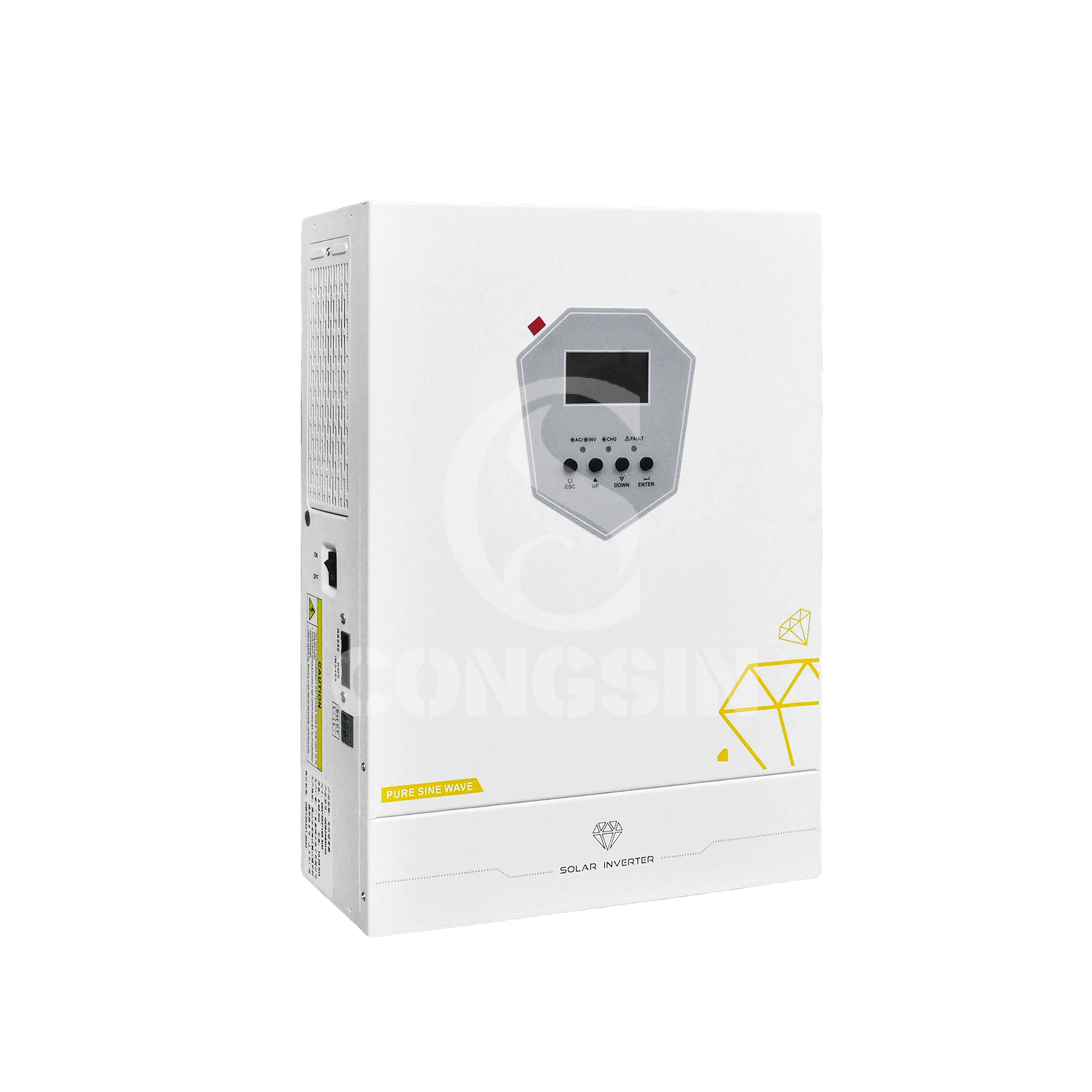
Factory Direct Sales 6000W Hybrid Solar Power Inverter with Controller and LCD Display
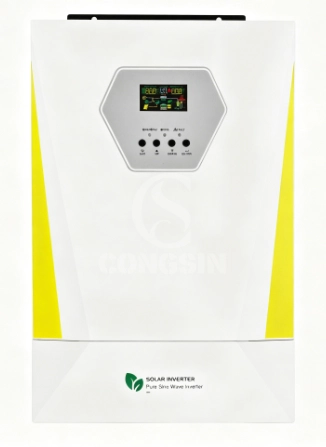
Congsin 4000W and 6000W Hybrid Inverter with Controller with LCD Display and CE Certification Solar
Power your solar system efficiently with the Congsin 4000W and 6000W Hybrid Inverter. Featuring an integrated MPPT Controller, this CE Certified inverter ensures optimal energy conversion. Monitor performance effortlessly via the intuitive LCD Display. Reliable, powerful, and ready for your sustainable energy needs.
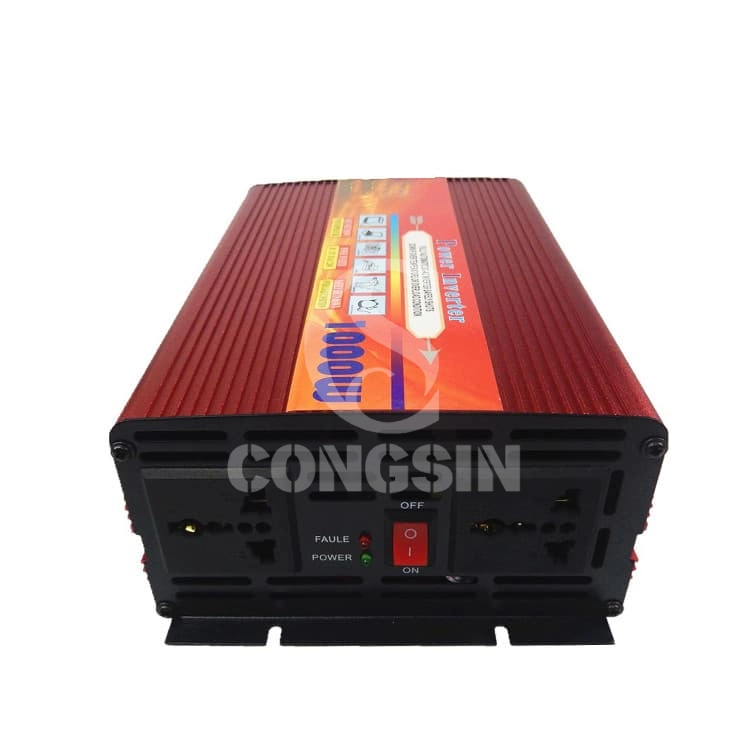
Congsin Manufacturer Wholesales Big Capability Modified Sine Wave Inverter with Red case and Double fan
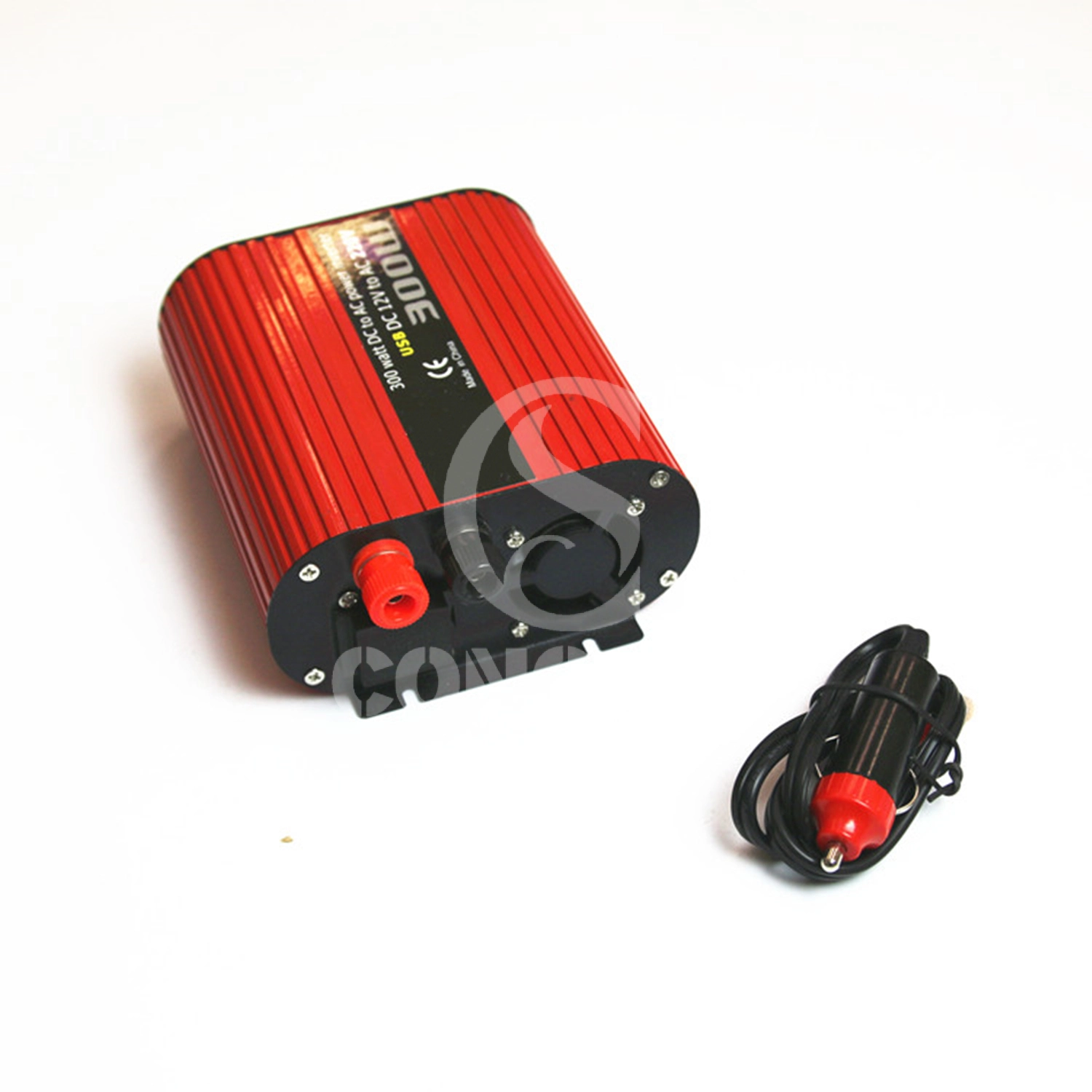
Factory Direct Sales Portable 150W Modified Sine Wave Inverter DC12V to AC220V Off-grid Sine Wave Inverter with Two USB and Universal Socket
Congsin's Portable 150W Modified Sine Wave Inverter powers your journey! This versatile Car Power Inverter with USB acts as a reliable 12V to 220V converter, ensuring an essential off-grid power supply. With dual USB ports and a universal socket, enjoy convenient power on the go.

CONGSIN is a trusted OEM factory for power inverters, solar charge controllers, and DC converters. Reliable solutions for global B2B buyers.
 High Quality
 7/24 Service
 Guaranteed Warranty
© 2025 Congsin. All Rights Reserved.
 WeChat
 Scan QR Code
sin cong
teaimei10
Whatsapp: +8618028086791
Scan QR Code