





Pure Sine Wave vs Modified Inverter for Car Battery Use
- How car battery power and inverters work together
- Basic electrical interaction: DC source to AC load
- Battery constraints: capacity, discharge rates and efficiency
- Thermal behavior and installation concerns
- Waveform types: pure sine wave vs modified sine wave
- What is a pure sine wave inverter?
- What is a modified sine wave inverter?
- Practical compatibility differences
- Performance, efficiency and device compatibility (with data)
- Key performance metrics
- Comparative table: pure sine vs modified (typical values)
- Battery runtime calculations and realistic expectations
- Safety, standards and selecting the right inverter with car battery
- Why standards and certifications matter
- Protection features I insist on
- Installation checklist
- Choosing based on real-world needs and cost-benefit
- When I recommend a pure sine inverter
- When a modified sine inverter can be acceptable
- Total cost of ownership analysis
- Guangzhou Congsin Electronic Technology Co., Ltd. — manufacturer perspective
- Frequently Asked Questions (FAQ)
- 1. Can I run a laptop from a modified sine inverter?
- 2. How do I size an inverter for a car battery?
- 3. What is THD and why should I care?
- 4. Can a modified inverter damage my appliances?
- 5. How do I protect my vehicle battery from inverter discharge?
- 6. Should I choose an inverter with integrated charger/transfer switch for vehicle use?
I often advise customers, fleet managers and RV enthusiasts who need reliable AC power from a 12V or 24V car battery. Choosing the right inverter with car battery setup is about more than price: waveform quality, harmonic distortion, efficiency, and protection features determine whether sensitive electronics run safely and whether you get predictable battery runtime. Below I summarize the technical differences, real-world consequences, and decision points so you can select the correct inverter solution for your vehicle or mobile power system.
How car battery power and inverters work together
Basic electrical interaction: DC source to AC load
An inverter with car battery converts the vehicle’s DC bus (commonly 12V, 24V or 48V) into AC mains voltage (commonly 110–120V or 220–240V). The inverter performs switching, filtering and control to produce a waveform. That waveform’s shape — pure sine or modified — drives how well connected appliances behave. For a technical overview of inverters, see the Power inverter entry on Wikipedia (Wikipedia).
Battery constraints: capacity, discharge rates and efficiency
Your car battery’s usable energy and maximum continuous discharge limit the practical inverter size and run-time. A common rule: allow 80% of inverter-rated continuous output for safety and consider inverter efficiency — a 90% efficient inverter draws more DC power than an assumed 100% device. Proper matching prevents deep-discharge cycles that shorten battery life. For battery management and safe discharge practices, industry guidelines and manufacturer datasheets are essential references.
Thermal behavior and installation concerns
Inverters mounted near batteries must manage heat and vibration. Higher continuous output units require better cooling, heavier DC cabling and secure mounting. I always recommend fusing close to the battery, correct cable gauge per ALSA/IEC recommendations, and keeping cable runs short to avoid voltage drop that reduces inverter performance.
Waveform types: pure sine wave vs modified sine wave
What is a pure sine wave inverter?
A pure sine wave inverter synthesizes a smooth sinusoidal AC voltage similar to grid power. This minimizes harmonic distortion, maintains consistent RMS voltage and is compatible with nearly all AC loads, especially sensitive electronics (audio equipment, computers, medical devices). Typical total harmonic distortion (THD) for quality pure sine inverters is often below 3–5%. For standards & power quality context, see IEEE 519 on harmonic control (IEEE 519) and the Total harmonic distortion explanation (Wikipedia).
What is a modified sine wave inverter?
Modified sine wave inverters approximate a sine by producing a stepped or square-like waveform. They are simpler, cheaper and often physically smaller, but they introduce higher harmonics (THD commonly 20–40% or more) and voltage irregularities that can cause issues with certain loads. Modified waveforms can cause audible buzzing in motors and transformers and may produce unreliable behavior in modern power supplies and sensitive electronics.
Practical compatibility differences
I always test candidate loads when possible: modern switch-mode power supplies (SMPS), variable-speed motors, medical equipment, certain LED drivers, and some refrigerators may run poorly or produce heat on modified waveforms. Conversely, incandescent bulbs, many resistive heaters and simple tools often operate acceptably on modified inverters. But if you plan to power laptops, CPAP machines, audio equipment, or precision instruments from an inverter with car battery, choose pure sine for predictable behavior and safety.
Performance, efficiency and device compatibility (with data)
Key performance metrics
When I evaluate inverters for car battery applications I focus on: continuous output rating, surge capacity, efficiency at typical loads (25–75% load), idle/no-load draw, THD, and protection features (overload, over/under-voltage, thermal). A good pure sine inverter will sustain higher efficiency across a wide load range and offer low idle draw, which matters when running from a car battery for extended periods.
Comparative table: pure sine vs modified (typical values)
| Attribute | Pure Sine Wave | Modified Sine Wave |
|---|---|---|
| Waveform quality | True sinusoidal; low harmonic distortion (THD <3–5%) | Stepped/square approximation; high harmonics (THD ~20–40%) |
| Compatibility | Nearly all AC devices, sensitive electronics, SMPS | Basic loads, incandescent bulbs, simple motors; problems with SMPS, medical/devices |
| Efficiency | Typically 90–95% at optimal loads | Often 80–90%, varies by design |
| Noise & heat in loads | Minimal; devices run quietly and cool | Possible buzzing, increased heating |
| Typical cost | Higher initial cost | Lower upfront cost |
| Best use cases | Computers, audio, medical devices, sensitive appliances, long-term use | Occasional power tools, incandescent lighting, low-sensitivity appliances |
Sources: inverter manufacturers’ datasheets and general power-quality references such as IEEE 519 and inverter technology summaries (Wikipedia).
Battery runtime calculations and realistic expectations
Estimate runtime by converting AC load to DC draw: DC current (A) = AC watts / (battery voltage × inverter efficiency). Example: a 300W laptop plus 50W accessories (350W) on a 12V battery with a 90% efficient inverter draws ~32.4A DC (350 / (12 × 0.9)). A 100Ah lead-acid battery provides ~50Ah usable at conservative depth-of-discharge, so expected runtime ≈ 50Ah / 32.4A ≈ 1.5 hours. I recommend factoring inverter idle draw and battery aging; lithium batteries can stretch runtime due to higher usable capacity and better discharge behavior.
Safety, standards and selecting the right inverter with car battery
Why standards and certifications matter
Certifications (CE, EMC, LVD, ETL, FCC, RoHS, E-MARK) and quality systems (ISO9001) are not just marketing — they indicate tested safety, EMI performance and manufacturing controls. For example, ISO9001 describes quality management systems that increase product consistency: (ISO 9001). When selecting an inverter for vehicle use, choose models with appropriate automotive approvals (E-MARK for road vehicles where applicable) and third-party safety marks to reduce legal and safety risks.
Protection features I insist on
Look for undervoltage/overvoltage shutdown, short-circuit protection, thermal shutdown, and soft-start for inductive loads. For car battery installations, add a DC fuse near the battery and consider a low-voltage disconnect (LVD) to protect vehicle starting ability. Some advanced inverters integrate battery charging and automatic transfer switching — useful when switching between shore power and battery in an RV or service vehicle.
Installation checklist
- Confirm battery voltage matches inverter input (12V, 24V, 48V).
- Use appropriate cable gauge; minimize cable length to reduce voltage drop.
- Install an appropriately rated fuse or breaker as near to the battery as possible.
- Ensure ventilation and secure mounting to limit vibration damage.
- Verify inverter certifications for automotive or marine use if applicable.
Choosing based on real-world needs and cost-benefit
When I recommend a pure sine inverter
I recommend pure sine inverters when you intend to power: laptops and networking gear, audio/video systems, medical devices (e.g., CPAP), precision instruments, refrigerators with electronic control boards, or any device explicitly requiring sine-wave input. For business or mission-critical mobile power (field offices, telecom vans, mobile clinics), pure sine is the safe default.
When a modified sine inverter can be acceptable
If your needs are basic — incandescent lighting, simple power tools, or occasional use of non-sensitive appliances — a modified sine inverter can save upfront cost. However, I caution against using modified sine for extended use with modern electronics; hidden inefficiencies and device wear often offset initial savings.
Total cost of ownership analysis
Evaluate total cost: initial inverter price, expected battery replacements (accelerated by inefficient conversion or poor installation), risk of device damage, and operational behaviors (idle draw, efficiency at your typical load). For vehicle integrators I work with, investing more upfront in a well-designed pure sine inverter often yields lower long-term support and replacement costs.
Guangzhou Congsin Electronic Technology Co., Ltd. — manufacturer perspective
Guangzhou Congsin Electronic Technology Co., Ltd., founded in early 1998, is a professional power inverter manufacturer with over 27 years of focused experience. We design, R&D and manufacture a wide range of power solutions—with a core emphasis on DC→AC power inverters, portable power stations, and solar charge controllers. Our catalog includes 100+ models tailored for vehicles, solar systems, RVs and trucks, off-grid homes, outdoor offices, patrol and field construction work.
We operate fully automated production lines, advanced instrumentation and multifunctional testing equipment to ensure product reliability, efficiency and intelligent functionality. Environmental and safety compliance are built in: our quality system is ISO9001 certified and many products hold international approvals such as CE, EMC, LVD, ETL, FCC, RoHS and E-MARK. Several independently developed patents further demonstrate our commitment to innovation.
Congsin’s products serve global markets across Europe, the Americas, the Middle East, Africa and Southeast Asia; many models are supplied to domestic and international OEM channels. Our support includes OEM/ODM, private labeling, distribution and bespoke customization to meet partner specifications.
Our mission is to deliver reliable, efficient and affordable energy solutions that enable energy independence. Congsin’s strengths include deep inverter design experience, automated production for consistent quality, international certifications for market access, and a wide product lineup including Solar Charge Controller, modified sine wave inverter, pure sine wave inverter, and portable power stations. If you need an inverter with car battery integration, Congsin’s vehicle-focused models and OEM capabilities make them a competitive supplier.
Frequently Asked Questions (FAQ)
1. Can I run a laptop from a modified sine inverter?
Some laptops will run on a modified sine inverter, but many modern chargers are optimized for clean sine input; you may experience overheating of the charger, reduced efficiency, or intermittent charging. I recommend pure sine for consistent laptop use.
2. How do I size an inverter for a car battery?
Calculate the continuous AC wattage of your loads, add surge requirements (motors, compressors), divide by battery voltage and inverter efficiency to get DC current, and select an inverter whose continuous rating meets the AC demand and whose surge rating covers startups. Always allow margin for inefficiencies and future expansion.
3. What is THD and why should I care?
Total Harmonic Distortion (THD) measures waveform purity. High THD (typical of modified sine) can cause extra heating, audible noise, and improper operation of sensitive electronic devices. Pure sine inverters maintain low THD and better device compatibility.
4. Can a modified inverter damage my appliances?
Potentially. While many resistive loads tolerate modified waveforms, certain SMPS, motor-driven devices, and sensitive electronics can run hotter, make noise, or fail prematurely. For valuable equipment, use a pure sine inverter or test carefully under manufacturer guidance.
5. How do I protect my vehicle battery from inverter discharge?
Install a low-voltage disconnect (LVD) or automatic battery isolator, use properly rated fuses near the battery, and select an inverter with low idle draw and programmable under-voltage shutdown. Monitor battery state-of-charge and avoid deep discharging lead-acid batteries.
6. Should I choose an inverter with integrated charger/transfer switch for vehicle use?
If you alternate between shore power and battery (e.g., RV or service vehicle), integrated multi-function inverters with automatic transfer, battery charger and shore-power input simplify wiring and improve system safety. For pure battery-only mobile setups, a dedicated inverter may suffice.
If you’d like help selecting the right inverter with car battery specifications, testing compatibility with particular devices, or evaluating Congsin vehicle inverter models, contact our team for consultation or view our product catalog. For direct inquiries and OEM/ODM requests, please reach out to Guangzhou Congsin Electronic Technology Co., Ltd. via their official channels.
Contact / View products: For product details, OEM inquiries or technical consultation about inverters with car battery applications, please contact Guangzhou Congsin Electronic Technology Co., Ltd. or visit their official product pages.
Energy Efficiency and Cooling in Pure Sine Car Inverters
2000W Pure Sine Wave Inverter vs Modified: Which to Choose?
Top 10 AC to DC Car Inverters for Road Trips and Work
How to Choose Right Wattage Car Power Inverter
Modified Sine Wave Inverters
Can the peak 720W supply power continuously?
The peak power is the instantaneous maximum power, and the continuous power supply is 360W. Ensure that the device power does not exceed the rated value when using.
Can 4 USB ports fast charge at the same time?
Yes, 4 USB ports can fast charge mobile phones, tablets and other devices at the same time, meeting the needs of simultaneous charging of multiple devices.
What is the benefit of the UPS function? A2:
It automatically switches to battery power when AC fails.
Pure Sine Wave Inverters
Will reversing the positive and negative poles damage the device when connecting the battery?
The device has a built-in reverse connection protection function, which will automatically cut off the circuit when the positive and negative poles are reversed to avoid damage caused by reverse current inflow; just adjust the connection order of the positive and negative poles of the battery clip and re-power on to use normally.
OEM & ODM Services
Can I order samples before production?
Yes, we offer sample evaluation and prototype testing.
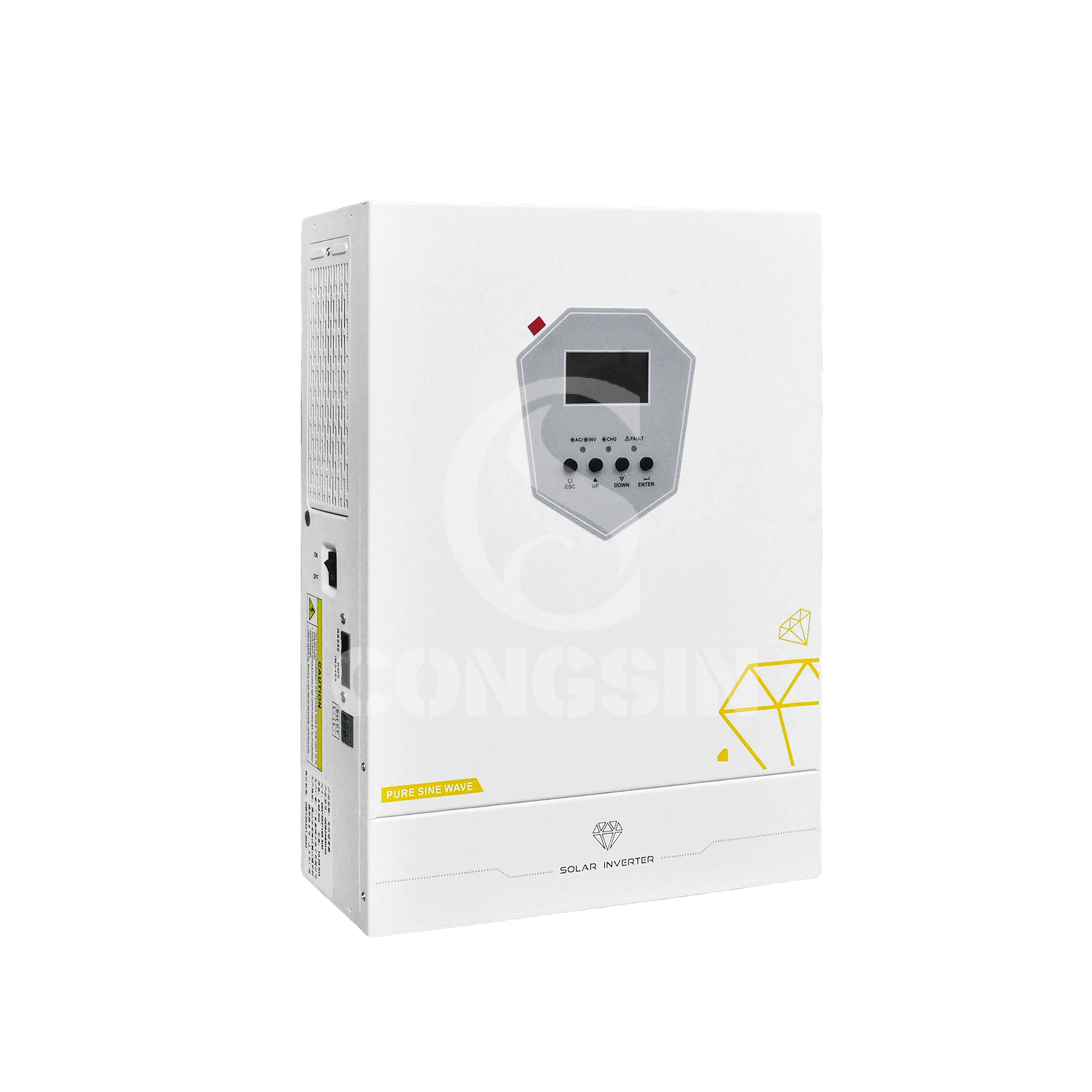
Factory Direct Sales 6000W Hybrid Solar Power Inverter with Controller and LCD Display
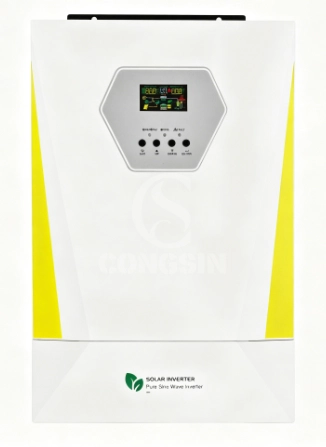
Congsin 4000W and 6000W Hybrid Inverter with Controller with LCD Display and CE Certification Solar
Power your solar system efficiently with the Congsin 4000W and 6000W Hybrid Inverter. Featuring an integrated MPPT Controller, this CE Certified inverter ensures optimal energy conversion. Monitor performance effortlessly via the intuitive LCD Display. Reliable, powerful, and ready for your sustainable energy needs.
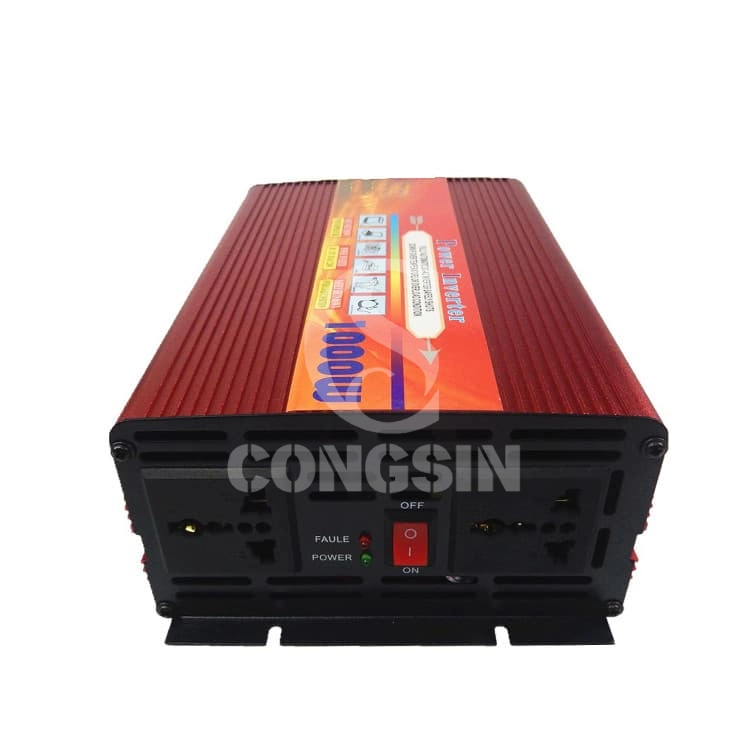
Congsin Manufacturer Wholesales Big Capability Modified Sine Wave Inverter with Red case and Double fan
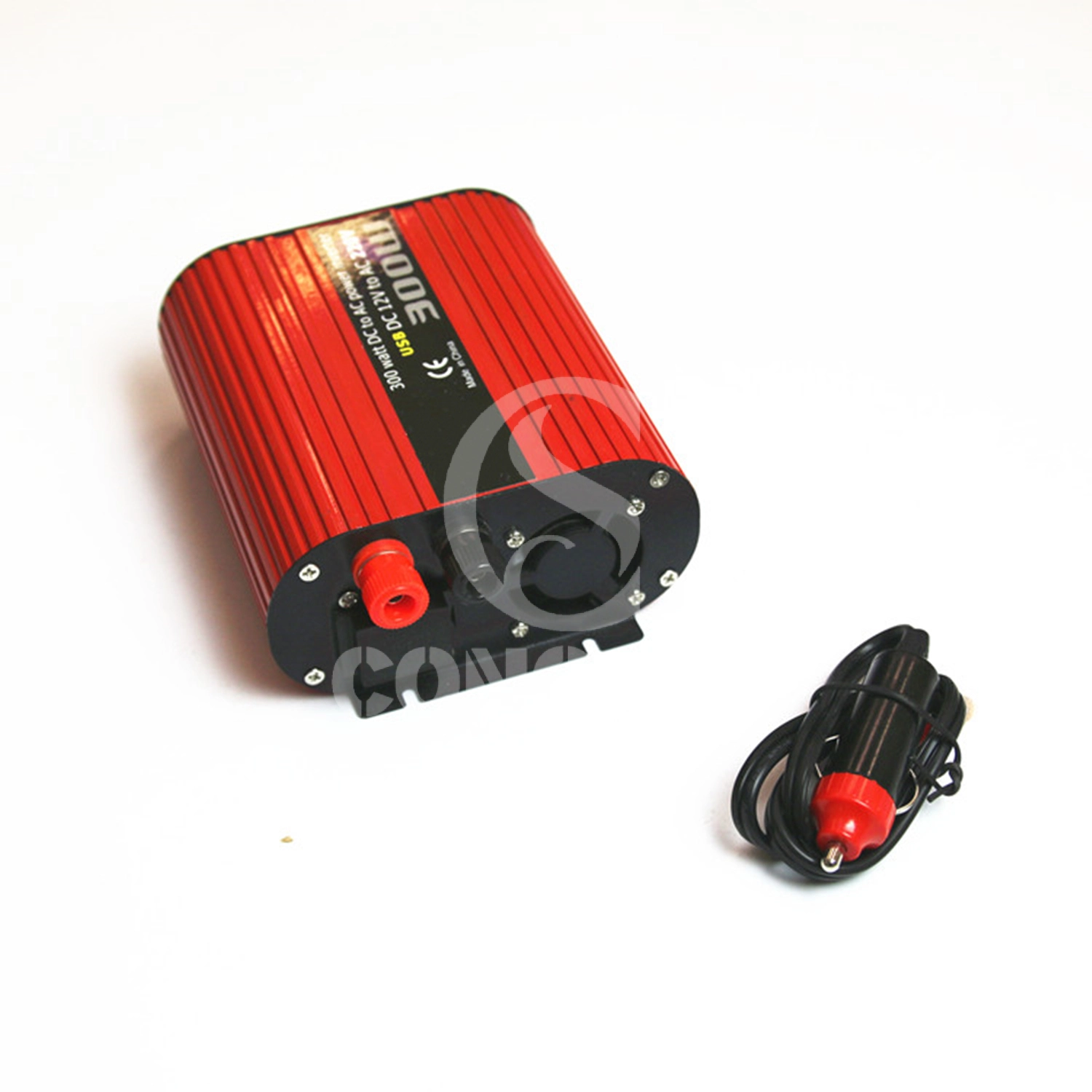
Factory Direct Sales Portable 150W Modified Sine Wave Inverter DC12V to AC220V Off-grid Sine Wave Inverter with Two USB and Universal Socket
Congsin's Portable 150W Modified Sine Wave Inverter powers your journey! This versatile Car Power Inverter with USB acts as a reliable 12V to 220V converter, ensuring an essential off-grid power supply. With dual USB ports and a universal socket, enjoy convenient power on the go.

CONGSIN is a trusted OEM factory for power inverters, solar charge controllers, and DC converters. Reliable solutions for global B2B buyers.
 High Quality
 7/24 Service
 Guaranteed Warranty
© 2025 Congsin. All Rights Reserved.
 WeChat
 Scan QR Code
sin cong
teaimei10
Whatsapp: +8618028086791
Scan QR Code