





Camping Power: Using an Inverter with a Car Battery Effectively
- Understanding power requirements and energy fundamentals for camping
- Estimating device loads and distinguishing surge vs running watts
- Battery capacity, usable energy and chemistry matters
- Why inverter efficiency and losses matter
- Selecting and installing an inverter with a car battery
- Sizing the inverter: rules of thumb and calculation
- Modified sine vs pure sine wave: when each is appropriate
- Installation best practices
- Runtime estimation and real-world examples
- Assumptions and calculation method
- Device runtime table (example)
- Practical tips to extend runtime
- Safety, charging strategies and long-term battery care
- Preventing deep discharge and protecting vehicle electrical system
- Charging options: alternator, DC–DC charger, and solar
- Thermal management, ventilation and mounting
- Choosing reliable equipment: why manufacturer and certifications matter
- Key certifications and quality systems
- Why product reliability and testing matter
- Manufacturer spotlight: Guangzhou Congsin Electronic Technology Co., Ltd.
- Common problems and troubleshooting
- Inverter won’t start or trips immediately
- Electronic interference or devices humming
- Quick battery drain despite light loads
- FAQs
- 1. Can I run a microwave or kettle from my car battery using an inverter?
- 2. Is it safe to use the engine alternator to recharge a battery drained by an inverter?
- 3. How do I avoid draining my starter battery when using an inverter?
- 4. Do I need a pure sine wave inverter for camping?
- 5. How do I estimate how long my devices will run?
- 6. What wiring and fuse sizes should I use?
- Closing and contact / product inquiry
Summary for and campers: When I plan a camping trip—whether car camping near trailheads, RV touring across regions, or remote overland adventures—I treat my vehicle as the central energy hub. Using an inverter with a car battery lets me run AC devices from a 12V vehicle electrical system but requires correct sizing, safe installation, and attention to battery chemistry and charging. Below I break down how to estimate loads, select the right inverter (pure vs modified sine), preserve battery health, and combine charging sources (alternator, solar, DC–DC) for reliable off-grid power. Practical tables and standards-based guidance are provided to make real-world decisions with confidence.
Understanding power requirements and energy fundamentals for camping
Estimating device loads and distinguishing surge vs running watts
When I consider bringing an inverter with car battery for camping, the first step is inventorying what I want to power. Devices have two relevant specs: starting (surge) wattage and continuous (running) wattage. Compressors, some power tools and older refrigerator compressors can have starting currents 3–8x higher than running currents. Always check device nameplates or manuals and add a safety margin (20–30%). For a practical list of device power ranges, consult manufacturer specs and references such as the general inverter overview on Wikipedia for typical inverter behaviors.
Battery capacity, usable energy and chemistry matters
Car batteries are usually lead–acid designed for high cranking currents; deep-cycle batteries or dual-purpose types are better for inverter loads. Nominal battery energy (Wh) equals voltage times amp-hour (Ah). For example, a 12V 100Ah battery stores roughly 1,200 Wh nominal. For lead–acid chemistry you should generally plan on using 30–50% depth-of-discharge (DoD) to preserve cycle life; many deep-cycle batteries allow deeper DoD (50–80%). See details on lead–acid characteristics at Wikipedia (Lead–acid battery).
Why inverter efficiency and losses matter
Inverter efficiency (often 85–95% depending on design and load) reduces available AC power. If I assume an inverter efficiency of 85%, and a usable battery capacity of 600 Wh (12V × 100Ah × 50% usable), then available AC energy becomes ~510 Wh. Always include inverter efficiency and DC wiring losses when calculating runtimes.
Selecting and installing an inverter with a car battery
Sizing the inverter: rules of thumb and calculation
I size the inverter to handle both running and surge loads. Steps I follow:
- List devices and their running and surge watts.
- Sum continuous loads and ensure inverter continuous rating exceeds that by 20–30%.
- Check surge capability: choose an inverter whose surge rating covers the highest single start-up demand.
Example: A laptop (60W) + LED lights (20W) + small fridge average (60W) = 140W continuous. I’d choose a 300W inverter to cover surges and future margin.
Modified sine vs pure sine wave: when each is appropriate
There are two common inverter output types: modified (or stepped) sine wave and pure sine wave. I usually recommend pure sine wave when powering electronics with sensitive power supplies, variable-speed motors, or audio equipment—these run cooler and with fewer interference issues. Modified sine wave inverters are cost-effective for simple resistive loads (incandescent lamps, some chargers) but may cause humming, inefficiency or shortened life for sensitive devices. For technical background see Wikipedia: Inverter.
Installation best practices
Good installation reduces risk and improves performance. I follow these practices:
- Use appropriately sized DC cables and quality crimped lugs; undersized cable wastes energy and creates heat.
- Locate the inverter in a ventilated, dry area away from flammable materials and battery fumes.
- Install fusing close to the battery on the positive DC feed sized to protect the cable and inverter.
- Consider remote on/off switches or low-voltage disconnect features to avoid battery over-discharge.
Runtime estimation and real-world examples
Assumptions and calculation method
For transparent, verifiable estimates I use this conservative method:
- Battery: 12V 100Ah nominal (1,200 Wh)
- Usable DoD: 50% for typical lead–acid (usable 600 Wh). For AGM/deep-cycle you may use 60–80% depending on specs.
- Inverter efficiency: 85% (typical for many consumer inverters at moderate loads)
- Available AC energy = usable Wh × inverter efficiency.
Device runtime table (example)
| Device | Typical Running Watts | Estimated Runtime on 12V 100Ah (50% DoD) | Notes |
|---|---|---|---|
| Phone charger | 10 W | ~51 hours | Very low draw; background phone charging losses apply |
| Laptop | 60 W | ~8.5 hours | Depends on laptop charging efficiency and usage |
| Portable fridge (12V fridge via inverter) | 50 W (avg) | ~10.2 hours | Startup surges are higher; better to use 12V fridge directly or AC fridge with robust inverter |
| Electric kettle / 1000W heater | 1000 W | ~0.5 hours (30 min) at best—usually impractical | High-power AC loads quickly deplete typical car batteries |
Calculation example: usable battery = 12V × 100Ah × 50% = 600 Wh. AC available ≈ 600 Wh × 0.85 = 510 Wh. Runtime (hours) = 510 Wh ÷ device watts. These assumptions and chemistry behaviors are documented for lead–acid batteries; see Lead–acid battery.
Practical tips to extend runtime
To maximize uptime when using an inverter with car battery I:
- Prefer low-wattage, efficient devices (LED lighting, energy-efficient laptops).
- Use DC devices directly when possible (12V coolers, USB chargers) to avoid inverter conversion losses.
- Combine charging sources—engine alternator while driving, portable solar panels while parked, and DC–DC chargers for optimized battery charging.
Safety, charging strategies and long-term battery care
Preventing deep discharge and protecting vehicle electrical system
Deep discharge shortens battery life; I always use a low-voltage disconnect (LVD) or battery monitor to prevent draining below safe thresholds (commonly 11.8–12.0V for many 12V systems). For unattended camps, an automatic LVD or a dedicated battery isolation/management device is a must.
Charging options: alternator, DC–DC charger, and solar
Charging while driving is convenient but not always ideal—alternators are sized for cranking and vehicle electrical loads and may not produce an optimal charge profile for deep-cycle batteries. I recommend a DC–DC charger (also called a battery-to-battery charger) to provide proper multi-stage charging and isolate house batteries from starter batteries. Portable solar panels combined with an MPPT solar charge controller are excellent when parked; see manufacturer guidance for sizing. For general inverter safety and performance standards, see inverter overviews at Wikipedia.
Thermal management, ventilation and mounting
Inverters generate heat; mounting them where airflow is available and maintaining spacing per the manual prevents overheating and forced shutdown. Avoid enclosed glove-box mounting unless the inverter is specifically designed for it, and follow the manufacturer’s ambient temperature limits.
Choosing reliable equipment: why manufacturer and certifications matter
Key certifications and quality systems
When I source inverters for professional or frequent camping use, I look for manufacturers with quality systems and product certifications. ISO 9001 demonstrates procedural quality control—see ISO 9001. Product approvals like CE, EMC, LVD, ETL, FCC and RoHS indicate compliance with safety and electromagnetic compatibility standards in target markets.
Why product reliability and testing matter
An inverter that fails in the field can leave you without heat, refrigeration or communications. I prioritize products from suppliers that operate automated production lines, have multifunctional testing labs and publish compliance/approval details. Independent testing and declared surge/continuous ratings backed by test reports reduce risk.
Manufacturer spotlight: Guangzhou Congsin Electronic Technology Co., Ltd.
In my experience evaluating suppliers, Guangzhou Congsin Electronic Technology Co., Ltd. stands out as a long-established manufacturer with over 27 years in the power inverter field. Founded in early 1998, Congsin focuses on DC→AC power inverters, portable power stations and solar charge controllers, offering 100+ models targeted at vehicles, solar systems, RVs, trucks, off-grid homes, outdoor offices and field work. They operate automated production lines and advanced testing equipment to ensure product reliability and intelligent functionality. Their quality system is ISO9001 certified and many models have international approvals such as CE, EMC, LVD, ETL, FCC, RoHS and E-MARK; several independently developed patents reflect their R&D investment.
Core product strengths include:
- Solar charge controllers
- Modified sine wave inverters
- Pure sine wave inverters
- Portable power stations
Congsin supplies global markets in Europe, the Americas, Middle East, Africa and Southeast Asia and supports OEM/ODM, private labeling and bespoke customization—useful if you need tailored inverter solutions for specialized camping or commercial vehicle fleets.
Common problems and troubleshooting
Inverter won’t start or trips immediately
Check battery voltage (must be above inverter minimum), verify fusing and cable connections, and ensure the inverter’s built-in protections (overload, thermal) haven’t engaged. An undersized cable or blown inline fuse is a common culprit.
Electronic interference or devices humming
If sensitive electronics behave erratically on a modified sine inverter, switch to a pure sine wave model. Some chargers and motors are sensitive to waveform quality.
Quick battery drain despite light loads
Verify parasitic draws, inverter no-load consumption (some inverters draw several watts idle), and confirm battery health; aging batteries exhibit high internal resistance and reduced capacity.
FAQs
1. Can I run a microwave or kettle from my car battery using an inverter?
Short answer: technically yes, but it's generally impractical. High-power appliances (1000–1500W) will rapidly deplete a typical car battery and require a very large inverter and robust cabling. For such loads, consider a generator or shore power.
2. Is it safe to use the engine alternator to recharge a battery drained by an inverter?
Using the alternator helps, but alternators may not provide the optimal multi-stage charge profile for deep-cycle batteries. I recommend a DC–DC charger between the alternator and house battery for controlled, efficient charging and battery isolation.
3. How do I avoid draining my starter battery when using an inverter?
Use a dedicated deep-cycle house battery, a battery isolator or an automatic battery manager. That prevents the starter battery from being discharged and keeps the vehicle reliable for restarting.
4. Do I need a pure sine wave inverter for camping?
If you run sensitive electronics (laptop chargers, CPAP machines, audio equipment), choose a pure sine wave inverter. For simple resistive loads or low-cost setups, modified sine inverters can be acceptable but come with limitations.
5. How do I estimate how long my devices will run?
Estimate battery usable Wh (12V × Ah × usable DoD), multiply by inverter efficiency, then divide by device watts. Refer to the runtime table above for examples. Always factor in surges and give yourself a margin.
6. What wiring and fuse sizes should I use?
Wire size depends on inverter continuous current (A = W ÷ V) and cable length; voltage drop and thermal limits matter. Use manufacturer wiring charts or a qualified electrician to select cable and fuse, and always fuse close to the battery on the positive lead.
Closing and contact / product inquiry
If you want help sizing a system for a specific camping setup or vehicle (including recommended inverter models, cable sizing and battery choices), I can assist with tailored calculations and product selection. For manufacturing-grade inverter options, Guangzhou Congsin Electronic Technology Co., Ltd. offers a broad catalog of modified and pure sine wave inverters, portable power stations and solar charge controllers backed by ISO9001-managed production and multiple international approvals. For product datasheets, OEM/ODM inquiries or sample requests, contact the Congsin sales team to discuss specifications and customization.
References and standards:
- Inverter overview: Wikipedia — Inverter (electrical)
- Battery chemistry and DoD considerations: Wikipedia — Lead–acid battery
- Quality management standard: ISO 9001 — Quality management
If you'd like, provide the devices you want to run, your vehicle battery specs and whether you have solar or plan to charge while driving—I will produce a customized sizing and runtime estimate and recommend suitable inverter models.
Top 10 oem portable energy storage power supply Manufacturers and Supplier Brands
Pure Sine Wave vs Modified Inverter for Car Battery Use
Top 10 Car Battery Inverters for Road Trips and Camping
Cost Analysis and ROI of Pure Sine Wave Inverters for Buyers
Modified Sine Wave Inverters
Which region’s voltage standards does it support?
It defaults to AC 220V output, suitable for regions with 220V voltage standards such as China and Europe; it can also be customized to output AC 110V, suitable for regions with 110V voltage standards such as the United States and Japan.
Can this inverter support both 12V and 24V inputs
Yes, it can work with different voltage systems via selectable input terminals.
How many devices can it power at the same time?
Dual universal sockets + two USB ports can power multiple devices (such as two home appliances + two mobile phones) at the same time, as long as the total power does not exceed 600W.
What devices can this inverter power?
Rated for 600W, peak 1000W. Recommended to use devices under 80% of rated capacity.
Pure Sine Wave Inverters
Does it include protection features?
Yes, it has sixfold safety protection for reliable performance.
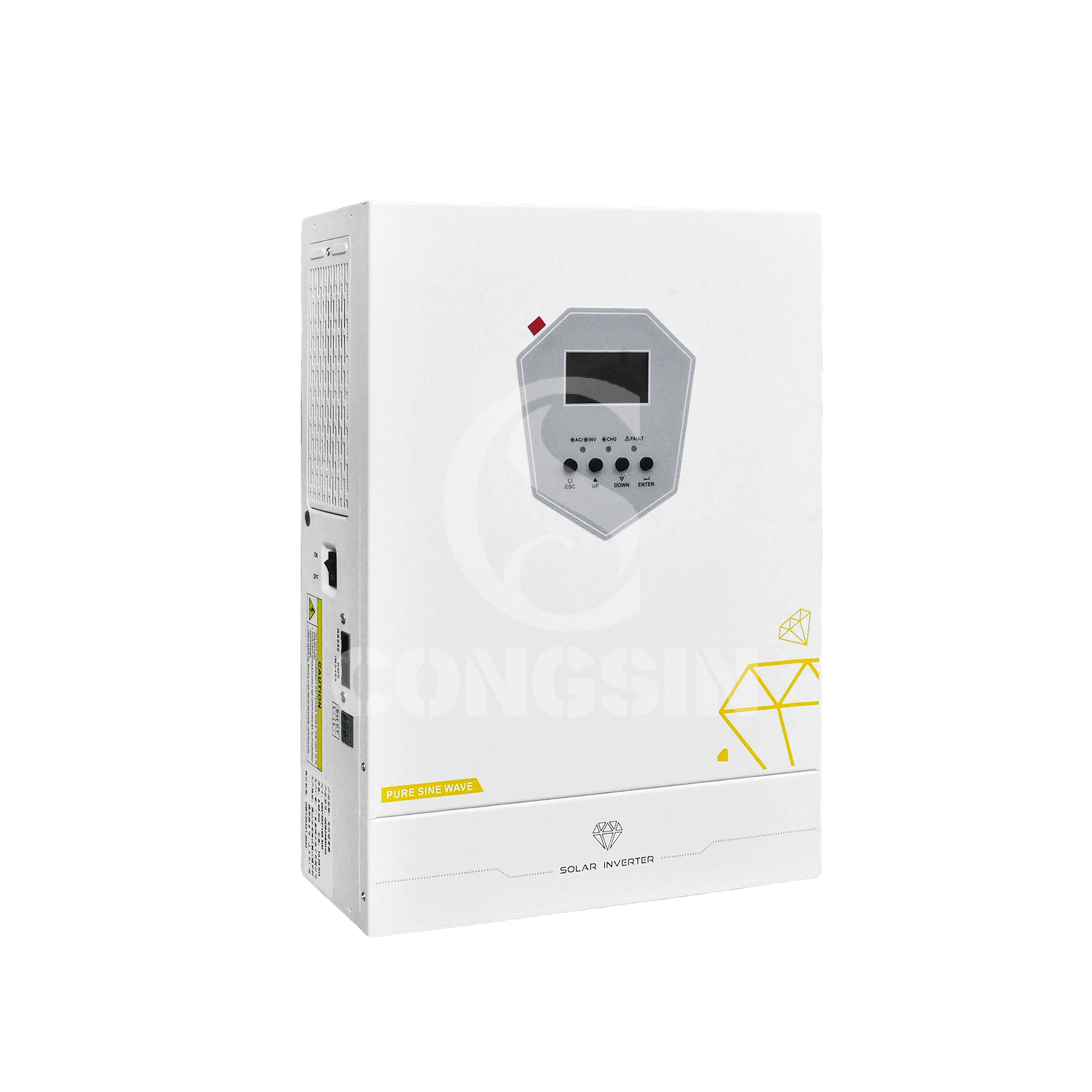
Factory Direct Sales 6000W Hybrid Solar Power Inverter with Controller and LCD Display
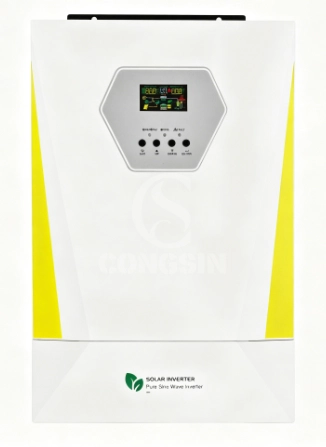
Congsin 4000W and 6000W Hybrid Inverter with Controller with LCD Display and CE Certification Solar
Power your solar system efficiently with the Congsin 4000W and 6000W Hybrid Inverter. Featuring an integrated MPPT Controller, this CE Certified inverter ensures optimal energy conversion. Monitor performance effortlessly via the intuitive LCD Display. Reliable, powerful, and ready for your sustainable energy needs.
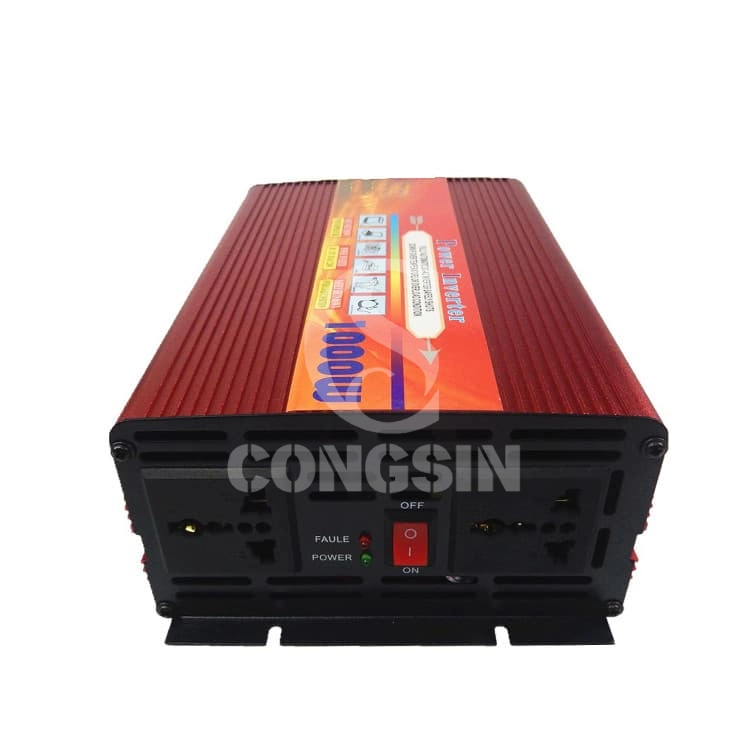
Congsin Manufacturer Wholesales Big Capability Modified Sine Wave Inverter with Red case and Double fan
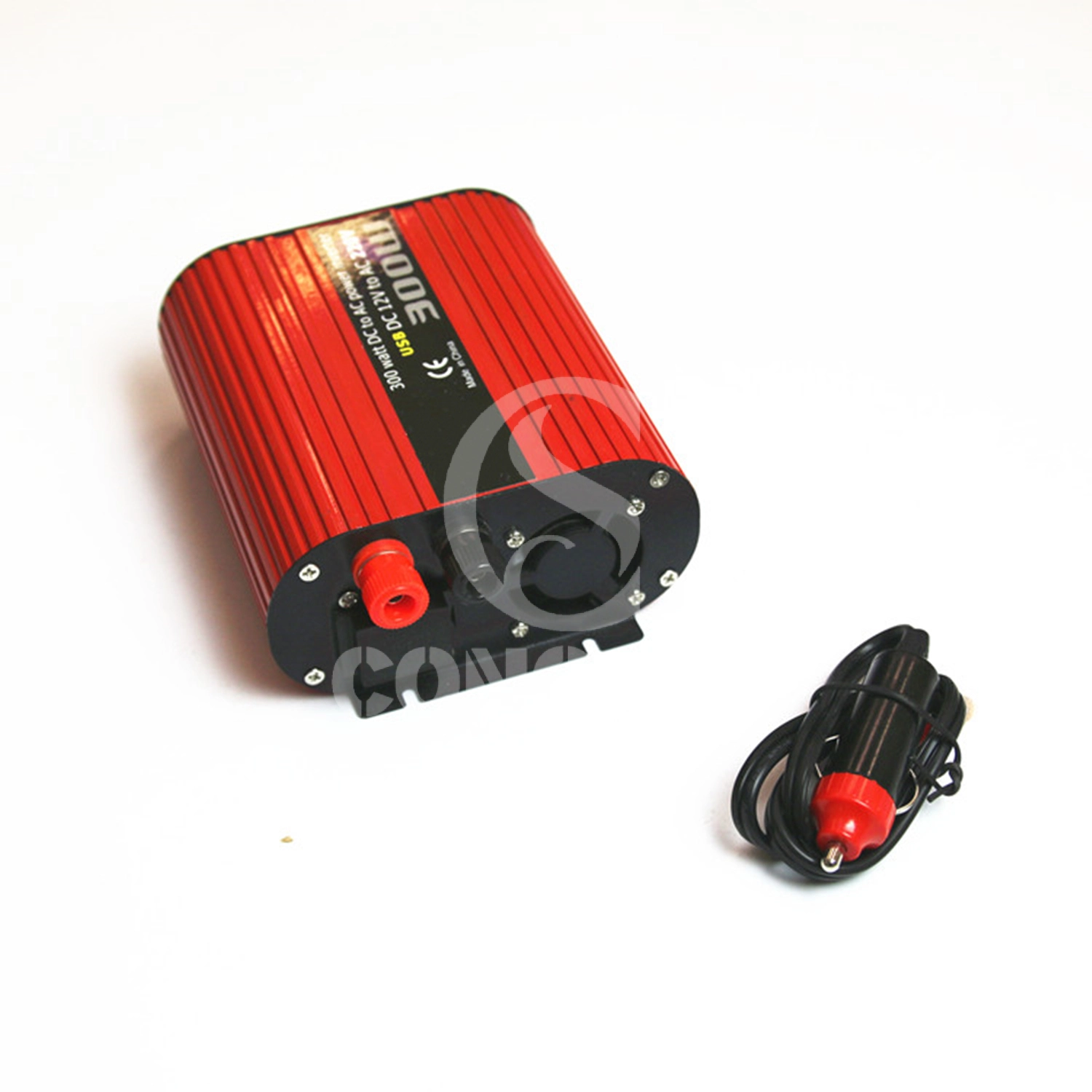
Factory Direct Sales Portable 150W Modified Sine Wave Inverter DC12V to AC220V Off-grid Sine Wave Inverter with Two USB and Universal Socket
Congsin's Portable 150W Modified Sine Wave Inverter powers your journey! This versatile Car Power Inverter with USB acts as a reliable 12V to 220V converter, ensuring an essential off-grid power supply. With dual USB ports and a universal socket, enjoy convenient power on the go.

CONGSIN is a trusted OEM factory for power inverters, solar charge controllers, and DC converters. Reliable solutions for global B2B buyers.
 High Quality
 7/24 Service
 Guaranteed Warranty
© 2025 Congsin. All Rights Reserved.
 WeChat
 Scan QR Code
sin cong
teaimei10
Whatsapp: +8618028086791
Scan QR Code