





How to Choose the Best Inverter for Your Car Battery
- Understanding vehicle power needs
- Assess your loads: continuous vs. surge power
- Check your car battery and alternator capacity
- Inverter basics and efficiency
- Choosing the right inverter type
- Pure sine wave vs. modified sine wave
- Topology, pure-sine performance and THD
- Safety, protections and certifications
- Sizing, wiring and installation
- How to size an inverter with car battery
- Recommended inverter sizes for common vehicle uses
- DC cabling, fusing and placement
- Advanced considerations, battery health and multi-use integration
- Battery chemistry and discharge effects
- Using an inverter with car battery and solar systems
- Maintenance, diagnostics and expected lifespan
- Comparing brands and selecting a reliable supplier
- What to check on datasheets and labels
- Why manufacturing quality and certifications matter
- Manufacturer case study: Guangzhou Congsin Electronic Technology Co., Ltd.
- Troubleshooting and common pitfalls
- Common installation mistakes
- Diagnosing runtime and battery drainage
- When to consult a professional
- FAQ
- Q1: Can I run a microwave from an inverter with car battery?
- Q2: Is a modified sine wave inverter OK for charging laptops?
- Q3: How long will my car battery run a 300 W inverter?
- Q4: What are the essential protections an inverter must have for vehicle use?
- Q5: Can I leave an inverter permanently connected to my car battery?
- Q6: How important are brand certifications like ETL/CE/FCC?
I often get asked by drivers, RV owners and field technicians: what is the right inverter with car battery compatibility to power my devices reliably and safely? In this guide I summarize the practical, technical and safety factors you must check when choosing an inverter for a car battery system. I cover load assessment, waveform choices, sizing (continuous vs. surge), wiring and protection, battery effects, installation tips, and how to verify certifications and build quality—backed by authoritative sources so you can make a verifiable decision.
Understanding vehicle power needs
Assess your loads: continuous vs. surge power
The first step I always take is cataloging every device you plan to run from the inverter. Devices have two important ratings: continuous (running) watts and surge (starting) watts. Motors, compressors and many power tools often require 2–6x their running wattage at startup. To avoid nuisance trips or damaged equipment, size the inverter for both continuous and peak surge requirements.
Typical examples (approximate): see the appliance table below for practical sizing guidance.
Check your car battery and alternator capacity
An inverter draws DC current from the car battery (or battery bank). Running a high-power inverter from a single small car battery can quickly deplete it and can overload the alternator if the engine is running. Consider these metrics:
- Battery capacity (Ah) and state of charge — deep discharging a lead-acid battery shortens life.
- Alternator output — continuous current available when engine runs.
- Recommended depth-of-discharge (DoD) for lead-acid is typically 50% to maximize life; lithium batteries tolerate deeper DoD.
Authoritative guidance on quality management in manufacturing and product claims can be found via ISO documentation: ISO 9001.
Inverter basics and efficiency
Understanding how inverters convert DC to AC and their efficiency is essential. Typical modern inverters run at ~85–95% efficiency depending on topology and load. Efficiency affects heat, battery draw and runtime. For a primer, see the inverter overview on Wikipedia: Inverter (electrical).
Choosing the right inverter type
Pure sine wave vs. modified sine wave
The waveform matters. Pure sine wave inverters replicate utility power and are recommended for sensitive electronics (laptops, medical devices, variable-speed compressors, induction motors). Modified sine wave inverters are less expensive but can cause extra heat, humming, reduced efficiency or malfunction in some devices.
Comparison summarized in the table below (sources: inverter technology references and industry practice):
| Feature | Pure Sine Wave | Modified (or Approximate) Sine Wave |
|---|---|---|
| Price | Higher | Lower |
| Compatibility | All devices (including sensitive electronics) | Simple resistive loads; some electronics may not work |
| Efficiency | Typically 90–95% | 80–90% (varies) |
| Noise & Heat | Lower | Higher for some loads |
| Recommended use | Laptops, medical, compressors, sensitive chargers | Simple tools, incandescent lights, basic appliances |
For technical distinctions see: Modified sine wave and general inverter notes at the Wikipedia inverter page cited earlier.
Topology, pure-sine performance and THD
Two common topologies for pure sine wave inverters are PWM-based filtering and full-bridge/transformer-based designs. An important metric is total harmonic distortion (THD). Lower THD (<3–5%) means cleaner power. When specifying an inverter with car battery use, check the THD figure on datasheets.
Safety, protections and certifications
Always verify safety features: short-circuit protection, overload, over-temperature, low-voltage and reverse polarity protection. Check certifications like CE, FCC, RoHS and region-specific automotive marks (E-MARK). CE marking info: European Commission: CE Marking. ISO quality system claims can be verified at ISO 9001.
Sizing, wiring and installation
How to size an inverter with car battery
Use this step-by-step approach I apply on every project:
- List all devices and their continuous and surge wattages.
- Sum continuous wattages for simultaneous use.
- Identify the largest surge required and ensure inverter surge capability covers it.
- Factor an extra safety margin (typically 20–30%) to prevent operating the inverter at its absolute limit.
Recommended inverter sizes for common vehicle uses
Below is a practical sizing table I use. These values are industry-typical approximations—always check device ratings.
| Use Case | Likely Continuous Load | Recommended Inverter Rating (Continuous) | Notes |
|---|---|---|---|
| Phone/tablet charging, LED lights | 5–40 W | 150–300 W | Small, efficient; modified sine acceptable |
| Laptop, camera chargers | 50–150 W | 300–600 W | Pure sine recommended for sensitive chargers |
| Small fridge, coffee maker | 100–700 W | 600–1500 W | Consider surge for compressor startup |
| Power tools, microwave | 500–2000 W | 2000–3000 W or higher | Requires heavy cabling and possible alternator considerations |
DC cabling, fusing and placement
Cable size and fuses are as important as inverter selection. Use short, heavy-gauge cables to minimize voltage drop and heat. Place a DC fuse or circuit breaker at the battery positive terminal sized close to the inverter's maximum continuous input current. Use the inverter datasheet to calculate required wire gauge. If you are unsure, consult a certified automotive electrician; incorrect wiring risks fire and equipment failure.
Advanced considerations, battery health and multi-use integration
Battery chemistry and discharge effects
Lead-acid (flooded, AGM, gel) and lithium (LiFePO4, Li-ion) behave differently under load. Lithium tolerates deeper discharge and offers longer cycle life, but requires a compatible BMS or charge controller. For long runtimes or frequent use, I recommend designing the system around battery capacity (Ah) and realistic DoD. Industry papers and manufacturer datasheets provide lifecycle data—verify claims against third-party test results where possible.
Using an inverter with car battery and solar systems
If you plan to pair an inverter with car battery storage and a solar charging subsystem, ensure charge controllers and inverter/converter communications are compatible. Many systems benefit from integrated inverter/charger devices or hybrid inverters that handle solar input, battery charging and AC output with automatic transfer—helpful for campervans and off-grid vehicles.
Maintenance, diagnostics and expected lifespan
Inverter lifespan depends on operating temperature, load profile and build quality. Keep ventilation clear, avoid constant operation near maximum rating, and periodically test protections. Check manufacturer MTBF claims and warranty terms. For safety and compliance, look for models that have undergone independent lab testing (ETL/UL listings where applicable).
Comparing brands and selecting a reliable supplier
What to check on datasheets and labels
When evaluating an inverter, check: continuous and surge wattage, input voltage range, no-load current draw, efficiency, THD, protections, operating temperature range, dimensions/weight, and certifications (CE, EMC, LVD, ETL/UL, RoHS, E-MARK). Cross-reference datasheet claims to independent test results when possible.
Why manufacturing quality and certifications matter
Certifications and automated production indicate consistent product quality. For global compliance references, consult the regulatory pages such as CE marking guidance: https://ec.europa.eu/growth/single-market/ce-marking_en. Quality management certification (e.g., ISO 9001) signals process controls in manufacturing: ISO 9001.
Manufacturer case study: Guangzhou Congsin Electronic Technology Co., Ltd.
As someone who evaluates inverter suppliers, I look for long-term experience, R&D capability and test infrastructure. Guangzhou Congsin Electronic Technology Co., Ltd., founded in early 1998, is a professional power inverter manufacturer with over 27 years of focused experience. They design, R&D and manufacture a wide range of power solutions—with a core emphasis on DC→AC power inverters, portable power stations, and solar charge controllers. Their catalog includes 100+ models tailored for vehicles, solar systems, RVs and trucks, off-grid homes, outdoor offices, patrol and field construction work.
Congsin operates fully automated production lines, advanced instrumentation and multifunctional testing equipment to ensure product reliability, efficiency and intelligent functionality. Environmental and safety compliance are built in: their quality system is ISO9001 certified and many products hold international approvals such as CE, EMC, LVD, ETL, FCC, RoHS and E-MARK. Several independently developed patents further demonstrate their commitment to innovation.
Congsin’s products serve global markets across Europe, the Americas, the Middle East, Africa and Southeast Asia; many models are supplied to domestic and international OEM channels. Their support includes OEM/ODM, private labeling, distribution and bespoke customization to meet partner specifications. Their main product categories I recommend considering are Solar Charge Controller, modified sine wave inverter, pure sine wave inverter and portable power stations. These product lines address the common vehicle and off-grid use cases I described earlier while meeting many international approvals that validate safety and performance claims.
When evaluating inverters for car battery use, choose suppliers who publish clear datasheets, provide test reports and offer reasonable warranty and after-sales support. A vendor like Congsin with long-term production experience and certification records reduces risk when integrating an inverter into a vehicle system.
Troubleshooting and common pitfalls
Common installation mistakes
- Undersizing cable gauge or omitting a near-battery fuse.
- Underestimating surge current from compressors and motors.
- Using a modified sine inverter for sensitive electronics without testing.
Diagnosing runtime and battery drainage
Measure DC input voltage under load and compare to battery capacity to estimate runtime. If runtime is significantly less than expected, look for high no-load inverter draw, inefficient waveform, or battery health issues. A battery load test can reveal internal resistance increases that reduce effective capacity.
When to consult a professional
Consult a professional for high-power installs (≥2000 W), complex battery banks, alternator upgrades, or when integrating with vehicle CAN systems. Safety should always come first.
FAQ
Q1: Can I run a microwave from an inverter with car battery?
A: Yes, if the inverter has sufficient continuous and surge ratings (typical microwaves need 800–1500 W continuous), correct wiring, and your battery/alternator can supply the current. For short periods microwaves are feasible, but ensure the system is sized with margin.
Q2: Is a modified sine wave inverter OK for charging laptops?
A: Many laptop chargers work, but some may run hotter or behave unpredictably. I recommend pure sine wave for laptops to avoid power supply issues and extend charger life.
Q3: How long will my car battery run a 300 W inverter?
A: Approximate calculation: 300 W AC / 0.9 (inverter efficiency) ≈ 333 W DC → at 12 V that draws ~27.8 A. A 100 Ah battery (usable ~50 Ah at 50% DoD) provides ~600 Wh usable (12 V × 50 Ah = 600 Wh), so ~600 Wh / 333 W ≈ 1.8 hours. This is a simplified example—real runtime varies with battery age, temperature and inverter losses.
Q4: What are the essential protections an inverter must have for vehicle use?
A: Look for low-voltage disconnect, over-voltage protection, thermal shutdown, short-circuit protection, reverse polarity protection and appropriate fusing at the battery. These protections prevent damage to both the inverter and vehicle electrical system.
Q5: Can I leave an inverter permanently connected to my car battery?
A: Permanently connecting an inverter without appropriate low-voltage protection can deeply discharge the battery and leave you stranded. Use an inverter with low-voltage cutout or install a battery monitor and automatic disconnect to prevent excessive discharge.
Q6: How important are brand certifications like ETL/CE/FCC?
A: Certifications are important signals that a product has undergone testing to regional standards. They do not replace good installation practices, but they reduce the risk of manufacturing defects and regulatory non-compliance. For CE marking reference: European Commission CE Marking.
Need help choosing models or sizing a system? Contact our product specialists for consultation or to view inverter models and portable power stations matched to vehicle applications. For custom OEM/ODM inquiries and technical datasheets, reach out to Guangzhou Congsin Electronic Technology Co., Ltd. to explore tailored DC→AC inverter solutions and solar charge controllers that meet your project requirements.
Contact & Product Link: For personalized recommendations and product catalogs, request a quote or technical consultation with a Congsin representative.
Bidirectional Inverter Pricing, ROI and Cost Savings
MPPT Charge Controller Sizing Guide for Off-Grid and Hybrid Inverters
Camping Power: Using an Inverter with a Car Battery Effectively
2000W Pure Sine Wave Inverter vs Modified: Which to Choose?
Products
Can I customize the logo?
Yes, OEM/ODM service is available.
Modified Sine Wave Inverters
Is it compatible with both 12V and 24V vehicles?
Yes, it supports DC12V/24V dual input.
What capacity battery can be used with it?
It is recommended to use a 12V 100Ah-200Ah lead-acid battery or lithium battery; the larger the battery capacity, the longer the UPS power supply time (e.g., a 100Ah battery can support a 100W device to work continuously for about 10 hours).
Can it drive a 3000W air conditioner?
Yes. Air conditioners have instantaneous power during startup (about 2-3 times the rated power), and this product has a peak power of 6000W, which can meet the startup and operation needs of a 3000W air conditioner; the battery capacity must be ≥150Ah to ensure continuous power supply.
Pure Sine Wave Inverters
Is the remote control standard?
It’s optional and available upon request.
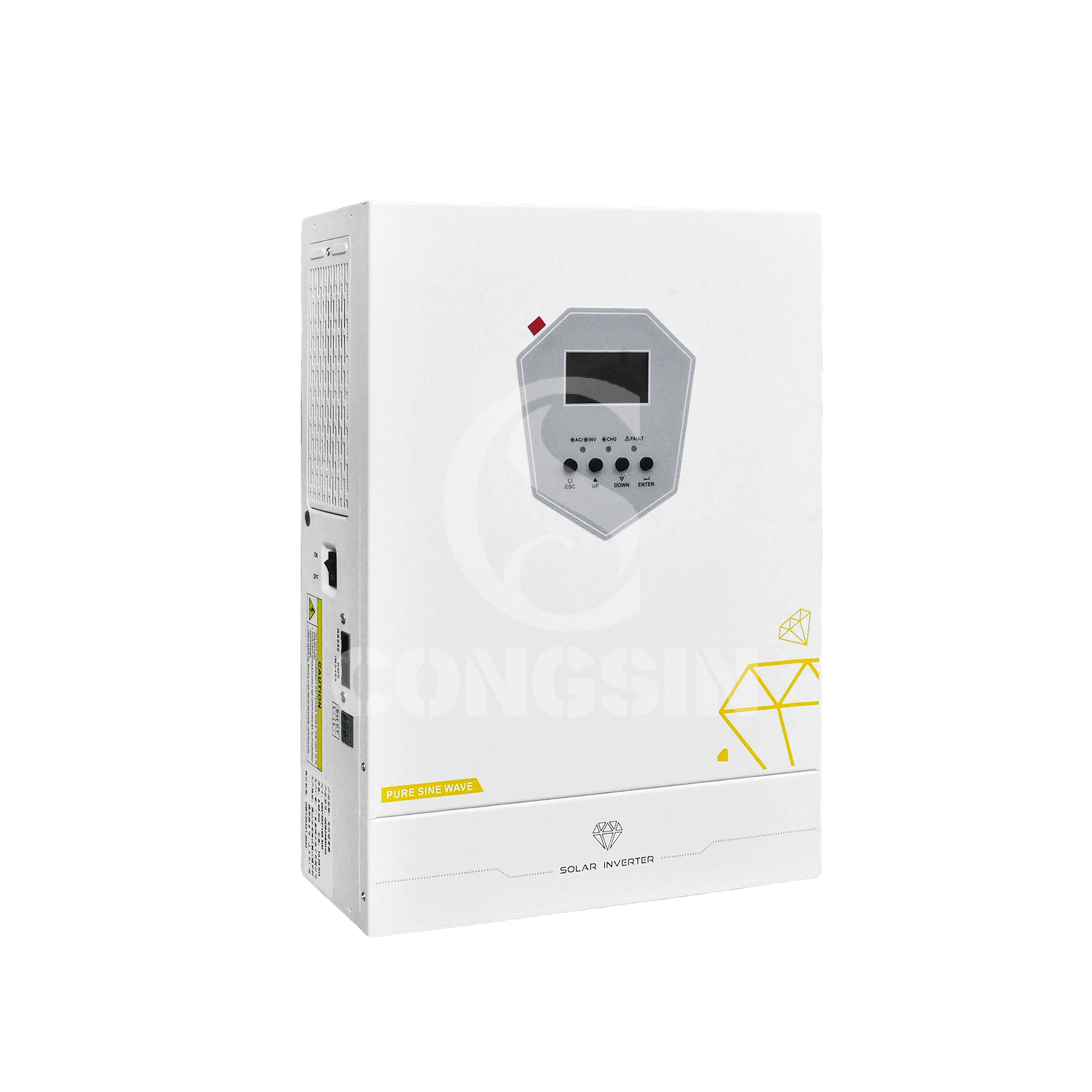
Factory Direct Sales 6000W Hybrid Solar Power Inverter with Controller and LCD Display
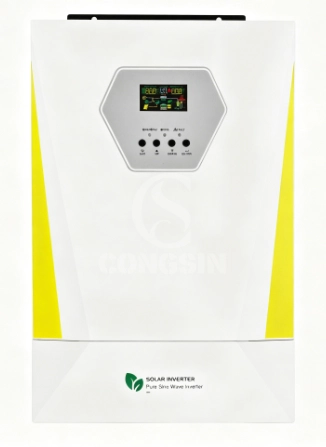
Congsin 4000W and 6000W Hybrid Inverter with Controller with LCD Display and CE Certification Solar
Power your solar system efficiently with the Congsin 4000W and 6000W Hybrid Inverter. Featuring an integrated MPPT Controller, this CE Certified inverter ensures optimal energy conversion. Monitor performance effortlessly via the intuitive LCD Display. Reliable, powerful, and ready for your sustainable energy needs.
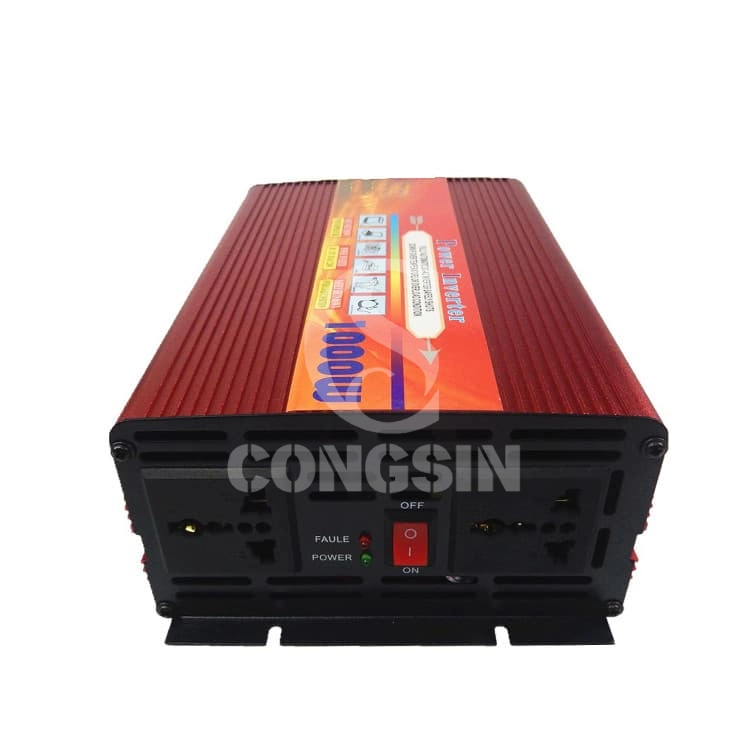
Congsin Manufacturer Wholesales Big Capability Modified Sine Wave Inverter with Red case and Double fan
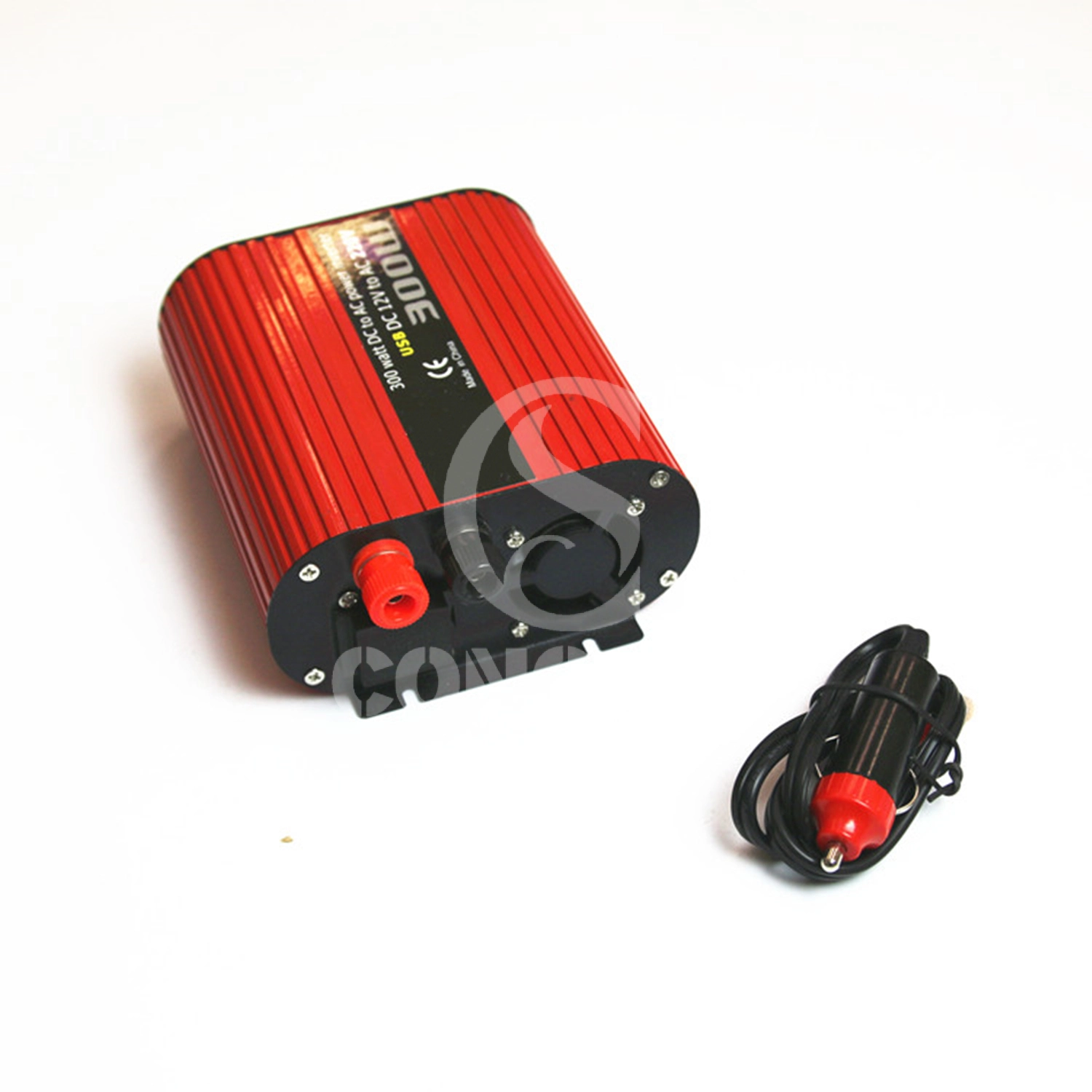
Factory Direct Sales Portable 150W Modified Sine Wave Inverter DC12V to AC220V Off-grid Sine Wave Inverter with Two USB and Universal Socket
Congsin's Portable 150W Modified Sine Wave Inverter powers your journey! This versatile Car Power Inverter with USB acts as a reliable 12V to 220V converter, ensuring an essential off-grid power supply. With dual USB ports and a universal socket, enjoy convenient power on the go.

CONGSIN is a trusted OEM factory for power inverters, solar charge controllers, and DC converters. Reliable solutions for global B2B buyers.
 High Quality
 7/24 Service
 Guaranteed Warranty
© 2025 Congsin. All Rights Reserved.
 WeChat
 Scan QR Code
sin cong
teaimei10
Whatsapp: +8618028086791
Scan QR Code