





Certifications and Safety Standards for Pure Sine Inverters
- Why certifications matter for inverters
- Protection for people, vehicles and equipment
- Market access, liability and insurance
- Performance assurance and customer confidence
- Key international standards and what they test
- Safety standards (IEC 62109, UL 1741 and equivalents)
- Electromagnetic Compatibility (EMC) and emissions
- Environmental and material restrictions (RoHS, WEEE)
- Vehicle and road‑use standards (E‑MARK / ECE R10 etc.)
- How to verify certifications and choose a pure sine car inverter
- Interpreting labels, certificates and test reports
- Factory capability, quality systems and traceable testing
- Selection checklist for buyers
- Standards comparison
- Manufacturer case study: Guangzhou Congsin Electronic Technology Co., Ltd.
- Company credentials and core products
- Quality systems, approvals and testing
- Why choose Congsin for pure sine wave inverter needs
- Practical guide: Buying and deploying a pure sine car inverter
- Checklist before purchase
- Installation and maintenance tips
- When to ask for additional evidence
- FAQ
- 1. Do I need UL or CE for a pure sine car inverter?
- 2. What is the difference between a pure sine inverter and a modified sine inverter in terms of safety testing?
- 3. How can I verify an E‑MARK or vehicle EMC compliance?
- 4. Are online reviews enough to prove safety and reliability?
- 5. What tests ensure an inverter won't damage my vehicle’s electrical system?
- 6. How does RoHS affect inverter choice?
- Contact and product inquiry
Certifications and safety standards determine whether a pure sine car inverter (or any pure sine wave inverter) is safe, reliable and legally sellable in a target market. This article explains the most relevant international standards and approvals, what each evaluates, how to read certificates and test reports, and practical steps to verify compliance. It includes a manufacturer case study to illustrate how an experienced inverter maker integrates safety, EMC and environmental requirements into product development and production.
Why certifications matter for inverters
Protection for people, vehicles and equipment
Pure sine car inverter units convert vehicle DC power to AC and are often used to run sensitive electronics—laptops, medical equipment, compressors and communication gear. Safety standards (electrical insulation, leakage current, thermal behavior) reduce risks of electric shock, fire and equipment damage. For example, safety standards such as IEC 62109 (safety of power converters) define requirements for insulation, creepage/clearance and protection against component failure. See IEC resources for standards context: IEC Standards.
Market access, liability and insurance
Regulatory approvals like CE (Europe), E‑MARK (vehicle compatibility), UL (North America), FCC (EMI emissions for unintentional radiators) and RoHS (restriction of hazardous substances) are commonly required to place products on specific markets legally. Without appropriate approvals, importers and distributors may be denied customs clearance, and sellers can face liability or product recalls. Official CE marking guidance: EU CE marking.
Performance assurance and customer confidence
Certifications often include electromagnetic compatibility (EMC) and efficiency tests which offer objective measures of a unit’s real-world performance—important for customers deciding between models and for integrators designing systems that include a pure sine car inverter. Independent test reports and recognized logos increase buyer trust and support OEM/ODM partnerships.
Key international standards and what they test
Safety standards (IEC 62109, UL 1741 and equivalents)
IEC 62109 series targets power converters’ safety and is widely referenced for inverters used in both PV and general power-conversion contexts. For North America, UL 1741 (Inverters, Converters, Controllers and Interconnection System Equipment for Use With Distributed Energy Resources) and its scope are commonly applied to standalone and grid-tied inverters. UL standards address electrical shock, overtemperature, mechanical integrity and fault behavior. More on UL: UL 1741. IEC standards program info: IEC.
Electromagnetic Compatibility (EMC) and emissions
EMC testing ensures that the inverter does not emit excessive radio-frequency interference (RFI) and is immune to typical disturbances. For consumer-approved products in many markets, EMC/EMI tests are required (e.g., EU EMC Directive implemented via harmonized standards, FCC Part 15 for the United States). FCC guidance on emissions: FCC EMC regulations.
Environmental and material restrictions (RoHS, WEEE)
RoHS restricts hazardous substances (lead, mercury, cadmium, certain brominated flame retardants). For products sold in the EU marketplace, compliance with the RoHS directive is normally required. Packaging and end-of-life handling sometimes fall under WEEE rules. EU RoHS information: RoHS.
Vehicle and road‑use standards (E‑MARK / ECE R10 etc.)
When a pure sine car inverter is intended for vehicle installation (RV, truck, patrol vehicle), it may need vehicular approvals such as E‑MARK/ECE R10 (electromagnetic compatibility for vehicles) and declarations showing compatibility with automotive electrical transients (ISO 7637 series). UNECE vehicle regulations: UNECE.
How to verify certifications and choose a pure sine car inverter
Interpreting labels, certificates and test reports
Certificates should list: the exact model numbers covered, issuing body (accredited lab), scope of testing (EMC, safety, environmental), test report number and date, standards referenced and any limitations. Beware of images of logos without accompanying report numbers or lab accreditation. Genuine certificates typically reference an independent testing laboratory (e.g., TÜV, Intertek, UL) and include a searchable certificate ID on the issuer’s site.
Factory capability, quality systems and traceable testing
A reliable inverter maker will operate production lines with documented process controls and test equipment. Look for ISO 9001 certification (ISO 9001) and independent factory audit reports (SMETA, BSCI or customer third-party audits). On-line catalogs should provide safety and EMC test reports or at least test summaries for each model.
Selection checklist for buyers
- Confirm the inverter’s intended use: vehicle (12/24/48V DC), off-grid, or grid-tie.
- Ask for full test reports (safety + EMC + environmental) for the exact model and revision.
- Verify certificate IDs with the issuing lab or scope on the issuer’s website.
- Check labels: CE, UL, ETL, FCC, RoHS, E‑MARK — but validate reports, not just icons.
- Request factory audit summaries and production testing procedures.
Standards comparison
| Standard / Approval | Scope | Typical tests | Regions / Use |
|---|---|---|---|
| IEC 62109 | Safety of power converters | Insulation, leakage current, thermal, fault behavior | International (design baseline) |
| UL 1741 | Inverter/Converter safety and interconnection | Safety, anti-islanding (when grid-tie), performance | North America |
| EMC / CE (EMC Directive) | Emissions and immunity | Radiated/conducted emissions, immunity tests | EU / EEA |
| FCC Part 15 | Radio emissions | Radiated & conducted emissions tests | USA |
| RoHS | Restriction of hazardous substances | Material analysis, supplier declarations | EU and many other markets |
| E‑MARK / ECE R10 | Automotive EMC | Vehicle-specific EMC & immunity tests | Automotive markets, Europe |
Sources: IEC and UL standard catalogues; official EU and FCC regulatory pages (links above).
Manufacturer case study: Guangzhou Congsin Electronic Technology Co., Ltd.
Company credentials and core products
Guangzhou Congsin Electronic Technology Co., Ltd., founded in early 1998, is a professional power inverter manufacturer with over 27 years of focused experience. The company designs, R&D and manufactures a wide range of power solutions—with a core emphasis on DC→AC power inverters, portable power stations, and solar charge controllers. Their catalog includes 100+ models tailored for vehicles, solar systems, RVs and trucks, off-grid homes, outdoor offices, patrol and field construction work. Using a manufacturer with deep domain experience helps ensure the product roadmap already accounts for compliance requirements for markets worldwide.
Quality systems, approvals and testing
Congsin operates fully automated production lines, advanced instrumentation and multifunctional testing equipment to ensure product reliability, efficiency and intelligent functionality. Environmental and safety compliance are built in: their quality system is ISO9001 certified and many products hold international approvals such as CE, EMC, LVD, ETL, FCC, RoHS and E‑MARK. Several independently developed patents further demonstrate R&D capability and continuous improvement. These practices align with the verification best-practices described earlier: independent testing, traceable certificates and factory controls.
Why choose Congsin for pure sine wave inverter needs
Congsin’s combination of long-term specialization, robust production lines and a broad model range—including pure sine wave inverter, modified sine wave inverter and portable power stations—makes them a candidate partner for OEM/ODM, private labeling and customized solutions. Their global reach (Europe, the Americas, Middle East, Africa and Southeast Asia) and experience supplying OEM channels demonstrate capability to meet diverse certification and market-entry requirements.
Practical guide: Buying and deploying a pure sine car inverter
Checklist before purchase
When choosing a pure sine car inverter for vehicle or mobile use, follow this practical checklist:
- Confirm input voltage compatibility (12V/24V/48V DC) with your vehicle.
- Verify continuous and peak power ratings and match to device start-up surges.
- Request explicit test reports for the exact model showing safety and EMC approvals.
- For vehicle installations, request E‑MARK/ECE R10 or equivalent vehicle EMC compliance.
- Check thermal tests and recommended ventilation/clearances for enclosed installations.
Installation and maintenance tips
Install the inverter following manufacturer mounting and wiring instructions. Use correctly sized cabling and fusing at the battery side to prevent cable overheating and to meet short-circuit protection requirements. Regularly inspect battery connections, ensure ventilation is not blocked, and schedule periodic checks for loose terminals or corrosion—these simple steps prevent most field failures that are unrelated to inherent device quality.
When to ask for additional evidence
Ask for extra documentation if any of the following apply: the product will be installed in safety-critical systems (medical equipment, communications relays), the inverter will be integrated into a certified system, or you are specifying equipment for resale in regulated markets. Additional evidence may include accredited lab test reports, a copy of the factory ISO 9001 certificate, and results of environmental stress testing (temperature cycling, vibration).
FAQ
1. Do I need UL or CE for a pure sine car inverter?
It depends on where you sell or use the inverter. CE is required for most sales in the EU/EEA (indicating conformity with applicable directives like EMC and Low Voltage). UL certification is common and often expected in North America. Regardless of logos, you should request the underlying test reports and certificate numbers to validate claims. See EU CE guidance: CE marking.
2. What is the difference between a pure sine inverter and a modified sine inverter in terms of safety testing?
From a safety-testing viewpoint, both types must meet electrical safety and EMC standards; however, pure sine inverters typically produce less harmonic distortion and are better suited for sensitive electronics. EMC performance can differ and should be validated by emission and immunity testing. For sensitive or medical equipment, prefer certified pure sine solutions with documented EMC results.
3. How can I verify an E‑MARK or vehicle EMC compliance?
Ask the manufacturer for the E‑MARK certificate, the E‑number, and the corresponding test reports (e.g., ECE R10). Verify these documents with the certifying body or national authority. Vehicle regulations are administered via UNECE rules—details: UNECE vehicle regulations.
4. Are online reviews enough to prove safety and reliability?
No. Reviews provide user experience context but are not a substitute for accredited test reports, factory audits and documented quality systems. For procurement, require official documentation from accredited labs.
5. What tests ensure an inverter won't damage my vehicle’s electrical system?
Key tests include immunity to automotive transients (ISO 7637 series), conducted emissions to ensure no interference with vehicle electronics, reverse polarity protection, over-voltage and under-voltage protections, and proper thermal/overload protection. Confirm test evidence and installation instructions from the manufacturer.
6. How does RoHS affect inverter choice?
RoHS restricts hazardous substances in electrical products. If you sell in the EU or in jurisdictions that adopt RoHS-like rules, you must choose products with RoHS compliance declarations and material test data where required. Manufacturer declarations and supplier material chain documentation help demonstrate compliance.
Contact and product inquiry
If you need certified pure sine car inverter models, solar charge controllers, portable power stations or customized inverter solutions, Guangzhou Congsin Electronic Technology Co., Ltd. offers a broad portfolio with documented approvals and factory capabilities. Contact their sales or technical team to request model-specific certificates, test reports and OEM/ODM options. For product catalogs and inquiries, ask for certificates demonstrating CE, EMC, LVD, ETL, FCC, RoHS and E‑MARK where required.
Choosing a certified, tested pure sine wave inverter reduces risk, protects users and equipment, and smooths market entry. Always validate certificates through issuing labs and require factory test evidence as part of procurement.
Battery Compatibility: Best Batteries for Off-Grid Inverters

Pure Sine Wave vs Modified Sine Wave Inverter: The 2026 Definitive Comparison
Top Features to Look for in a UPS Power Inverter
Bidirectional vs Hybrid Inverters: Key Differences
OEM & ODM Services
Can I order samples before production?
Yes, we offer sample evaluation and prototype testing.
Pure Sine Wave Inverters
Can it run inductive loads like fridges or tools?
Yes, pure sine wave output supports all load types.
What happens if the positive and negative poles are reversed when connecting the battery?
The device features built-in reverse polarity protection. If the positive and negative terminals are connected incorrectly, the circuit will automatically disconnect to prevent damage to the equipment. Simply adjust the battery clip connections (red clip to positive terminal, black clip to negative terminal), then restore power to resume normal operation.
Modified Sine Wave Inverters
Which regional plugs are supported by the universal socket?
The universal socket is compatible with most national plug specifications, such as GB, US, EU, etc. (some require adapters), and can meet the use of devices in different regions.
How does reverse protection work?
When the positive and negative poles of the battery are reversed, the inverter will automatically cut off the circuit to avoid device damage and ensure power usage safety.
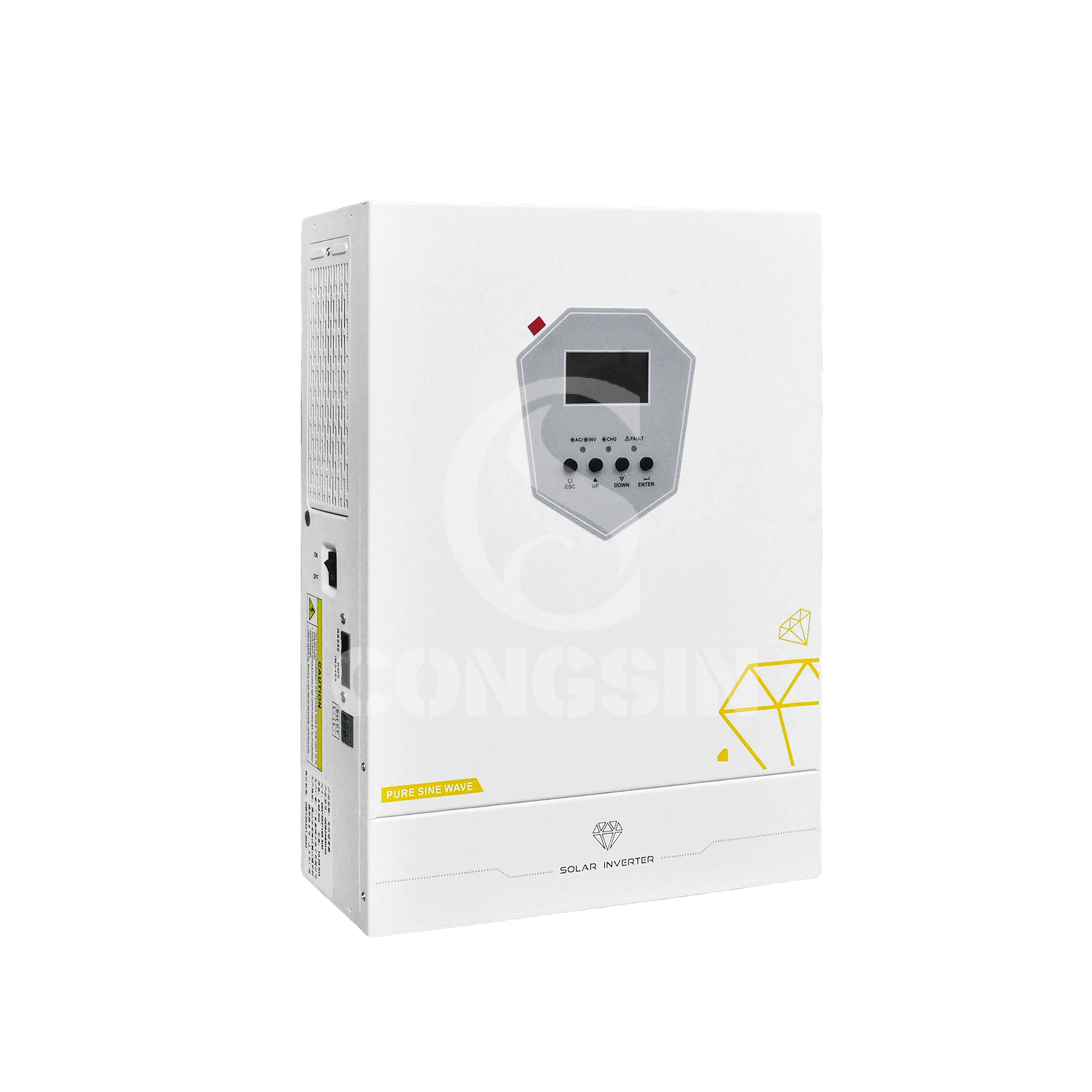
Factory Direct Sales 6000W Hybrid Solar Power Inverter with Controller and LCD Display
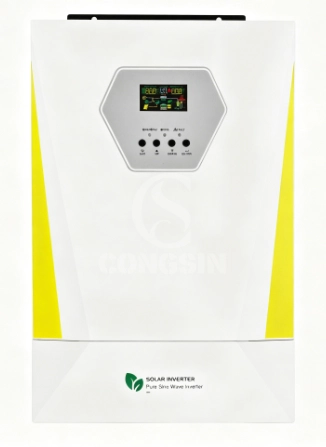
Congsin 4000W and 6000W Hybrid Inverter with Controller with LCD Display and CE Certification Solar
Power your solar system efficiently with the Congsin 4000W and 6000W Hybrid Inverter. Featuring an integrated MPPT Controller, this CE Certified inverter ensures optimal energy conversion. Monitor performance effortlessly via the intuitive LCD Display. Reliable, powerful, and ready for your sustainable energy needs.
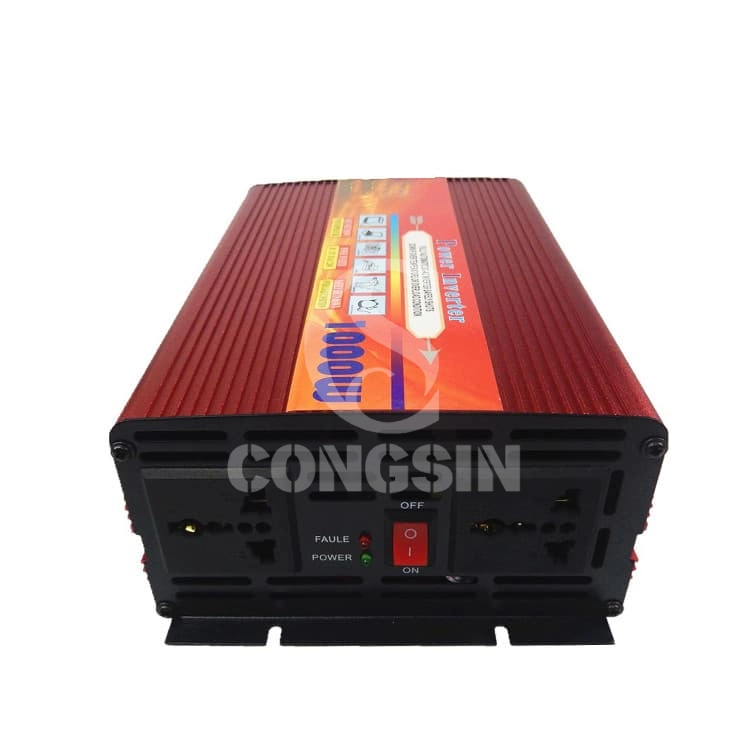
Congsin Manufacturer Wholesales Big Capability Modified Sine Wave Inverter with Red case and Double fan
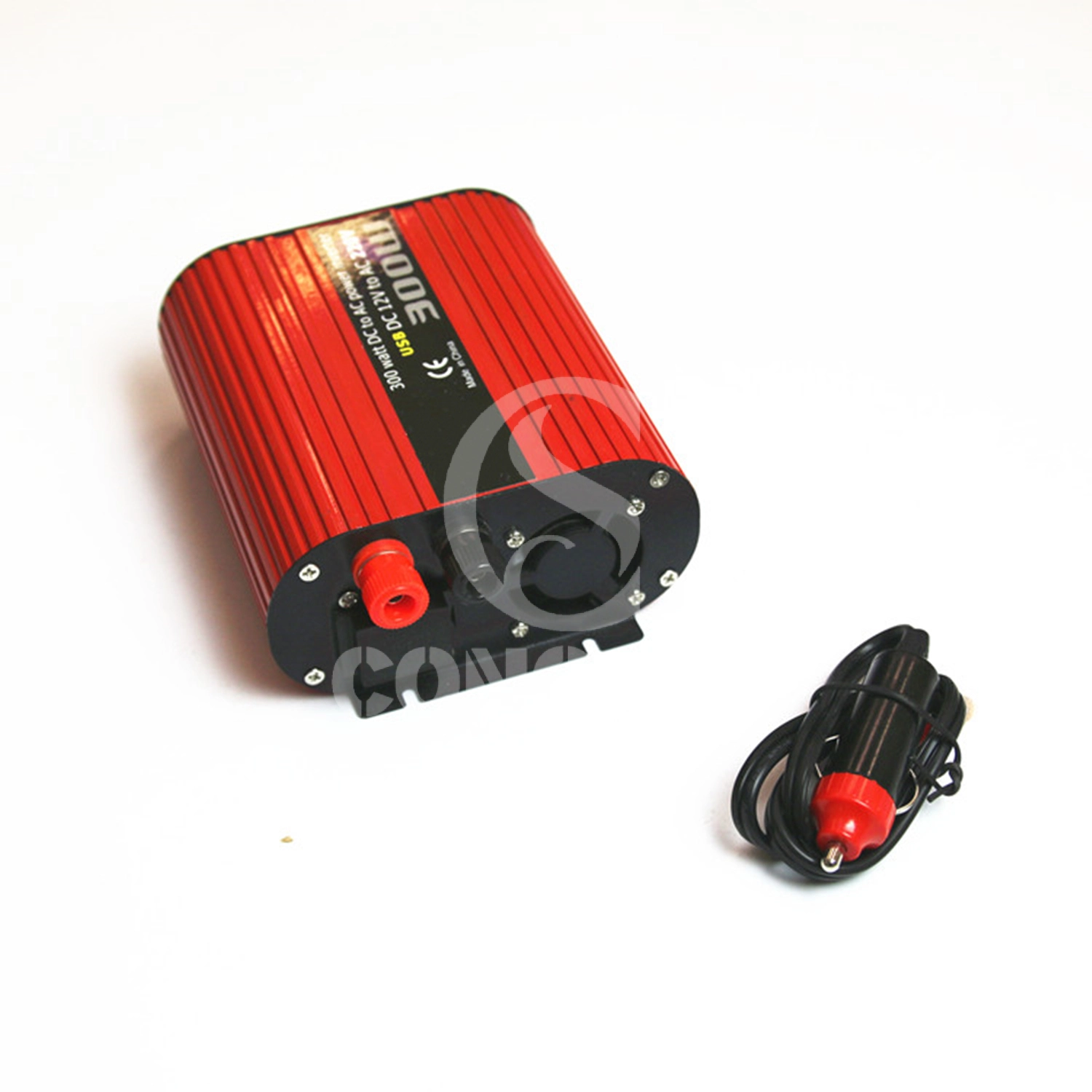
Factory Direct Sales Portable 150W Modified Sine Wave Inverter DC12V to AC220V Off-grid Sine Wave Inverter with Two USB and Universal Socket
Congsin's Portable 150W Modified Sine Wave Inverter powers your journey! This versatile Car Power Inverter with USB acts as a reliable 12V to 220V converter, ensuring an essential off-grid power supply. With dual USB ports and a universal socket, enjoy convenient power on the go.

CONGSIN is a trusted OEM factory for power inverters, solar charge controllers, and DC converters. Reliable solutions for global B2B buyers.
 High Quality
 7/24 Service
 Guaranteed Warranty
© 2025 Congsin. All Rights Reserved.
 WeChat
 Scan QR Code
sin cong
teaimei10
Whatsapp: +8618028086791
Scan QR Code