





How to test compatibility between an inverter and car battery?
- Comprehensive Guide to Using Power Inverters with Car Batteries
- 1. What is the difference between automotive and deep cycle batteries?
- 2. How do I test the compatibility between my inverter and car battery?
- 3. Can using a power inverter damage my car battery?
- 4. What safety measures should I take when connecting an inverter to a car battery?
- 5. How can I maintain my car battery and inverter for optimal performance?
- 6. Can I use a car battery to charge other devices through an inverter?
- 7. What are the risks of using a car battery with a power inverter?
- 8. How can I safely use a power inverter with my car battery?
- Conclusion
- About Congsin
Comprehensive Guide to Using Power Inverters with Car Batteries
Power inverters are devices that convert your car's DC (direct current) power into AC (alternating current), allowing you to operate household appliances and electronic devices while on the go. However, it's crucial to understand the compatibility between your inverter and car battery to ensure safe and efficient operation. Below are some common questions and answers to guide you through this process.
1. What is the difference between automotive and deep cycle batteries?
Automotive batteries are designed for short, high-current bursts to start your vehicle's engine. They are not built for deep discharges and frequent recharging. In contrast, deep cycle batteries are designed for prolonged, steady power output and can handle deep discharges without significant damage. For running power inverters, especially those with higher wattage, deep cycle batteries are recommended due to their durability and capacity.
2. How do I test the compatibility between my inverter and car battery?
To ensure compatibility:
Check Voltage Ratings: Ensure that the inverter's input voltage matches your car battery's voltage (typically 12V for most vehicles).
Assess Power Requirements: Verify that the inverter's power output (in watts) aligns with the power needs of the devices you intend to run.
Evaluate Battery Capacity: Ensure your car battery has sufficient capacity (measured in ampere-hours, Ah) to handle the inverter's load without excessive discharge. For instance, a 100Ah battery can run a 1000W inverter for approximately 45 minutes to an hour under full continuous load.
3. Can using a power inverter damage my car battery?
Yes, improper use of a power inverter can damage your car battery. Continuous deep discharges can shorten the battery's lifespan and may prevent your vehicle from starting. To prevent damage:
Monitor Battery Voltage: After using the inverter, check the battery voltage. A reading below 12.2V indicates a significant discharge, which can harm the battery.
Limit Usage Time: Avoid prolonged use of high-power devices without the engine running. If you need to use the inverter for extended periods, consider running the engine periodically to recharge the battery.
4. What safety measures should I take when connecting an inverter to a car battery?
Use Appropriate Wiring: Select cables with the correct gauge to handle the current without overheating. For inverters up to 300W, 10–12 AWG wiring may suffice; for 500W–1000W, 6–8 AWG wires are recommended.
Install a Fuse: Place a fuse between the inverter and the battery to protect against short circuits and power surges.
Avoid Connecting to the Car's Electrical System: Do not connect the inverter to your car's 12V electrical system (e.g., cigarette lighter) unless it's specifically rated for inverter use, as most car electrical systems are not designed to handle the high power draw from inverters.
5. How can I maintain my car battery and inverter for optimal performance?
Regular Inspections: Periodically check both the inverter and battery for signs of wear, corrosion, or damage.
Monitor Battery Health: Use a multimeter to check the battery voltage regularly. A healthy 12V battery should read between 12.6V and 12.8V when the engine is off.
Limit Deep Discharges: Avoid discharging the battery below 50% capacity to prolong its lifespan.
6. Can I use a car battery to charge other devices through an inverter?
Yes, you can use a car battery to power devices through an inverter. However, be mindful of the battery's capacity and the power requirements of the devices to prevent excessive discharge. For instance, a 100Ah battery can run a 1000W inverter for approximately 45 minutes to an hour under full continuous load.
7. What are the risks of using a car battery with a power inverter?
Using a car battery with a power inverter carries several risks:
Battery Damage: Prolonged deep discharges can shorten the battery's lifespan and may prevent your vehicle from starting.
Overheating: Inadequate wiring or overloading the inverter can lead to overheating, posing a fire risk.
Warranty Concerns: Excessive use of a power inverter can void your car battery's warranty, especially if it leads to over-discharge or damage due to improper use.
8. How can I safely use a power inverter with my car battery?
To use a power inverter safely:
Choose the Right Inverter: Select an inverter that matches your power needs and is compatible with your car battery.
Use Proper Wiring: Ensure that the wiring is of adequate gauge to handle the current without overheating.
Monitor Battery Voltage: Regularly check the battery voltage to prevent deep discharges.
Limit Usage Time: Avoid prolonged use of high-power devices without the engine running.
Maintain Equipment: Regularly inspect and maintain both the inverter and battery to ensure optimal performance.
Conclusion
Understanding the compatibility and safe usage of power inverters with car batteries is essential for efficient and safe operation. By following the guidelines above, you can effectively power your devices while minimizing risks to your vehicle's electrical system and battery.
About Congsin
Congsin is a leading brand specializing in high-quality power inverters and battery solutions. With a commitment to innovation and customer satisfaction, Congsin offers reliable products designed to meet diverse power needs. Whether you're looking to power devices on the go or seeking backup power solutions, Congsin provides products that ensure safety, efficiency, and durability.


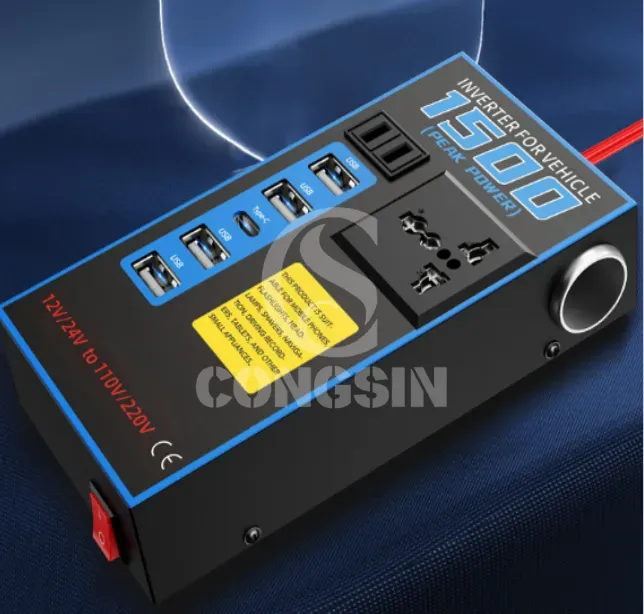
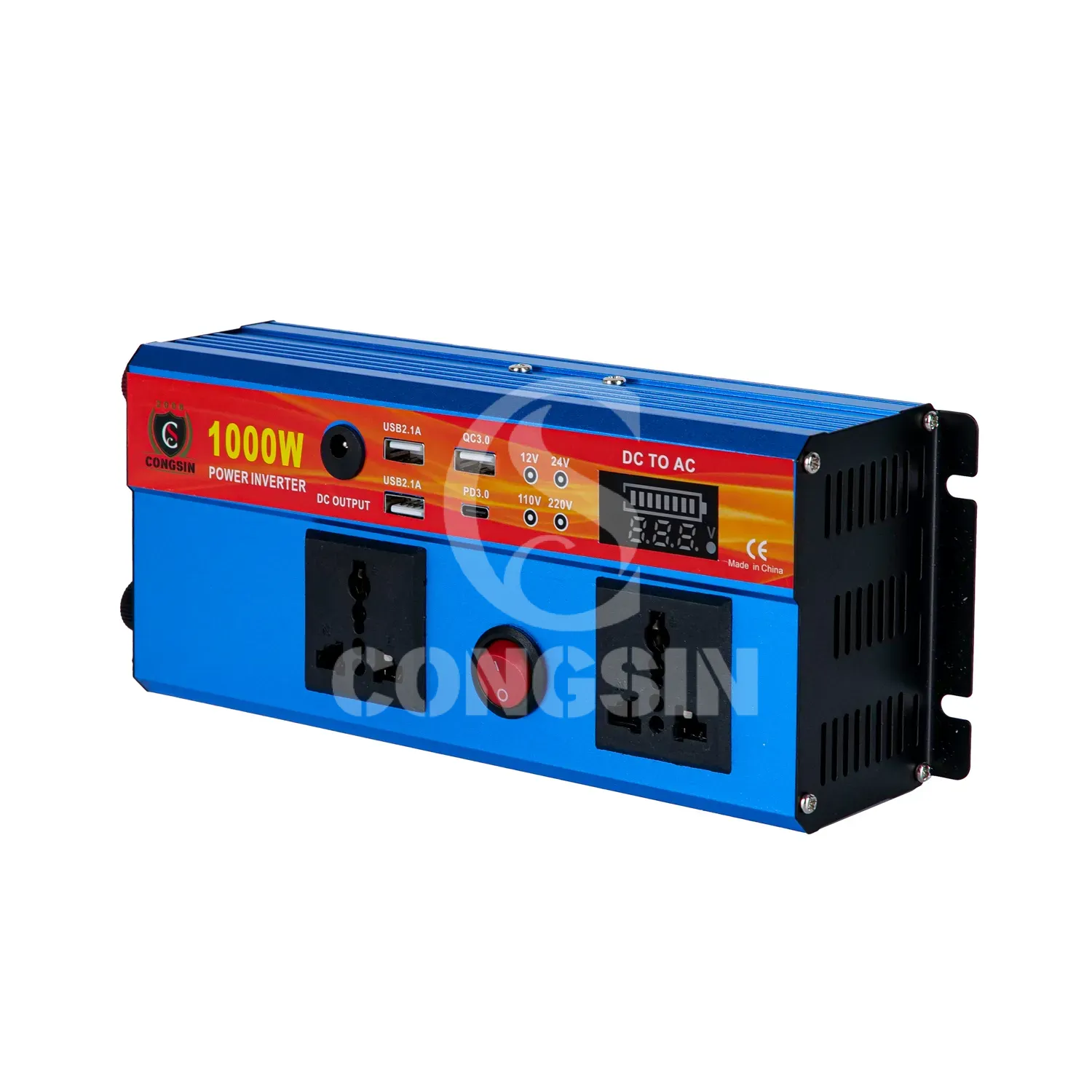
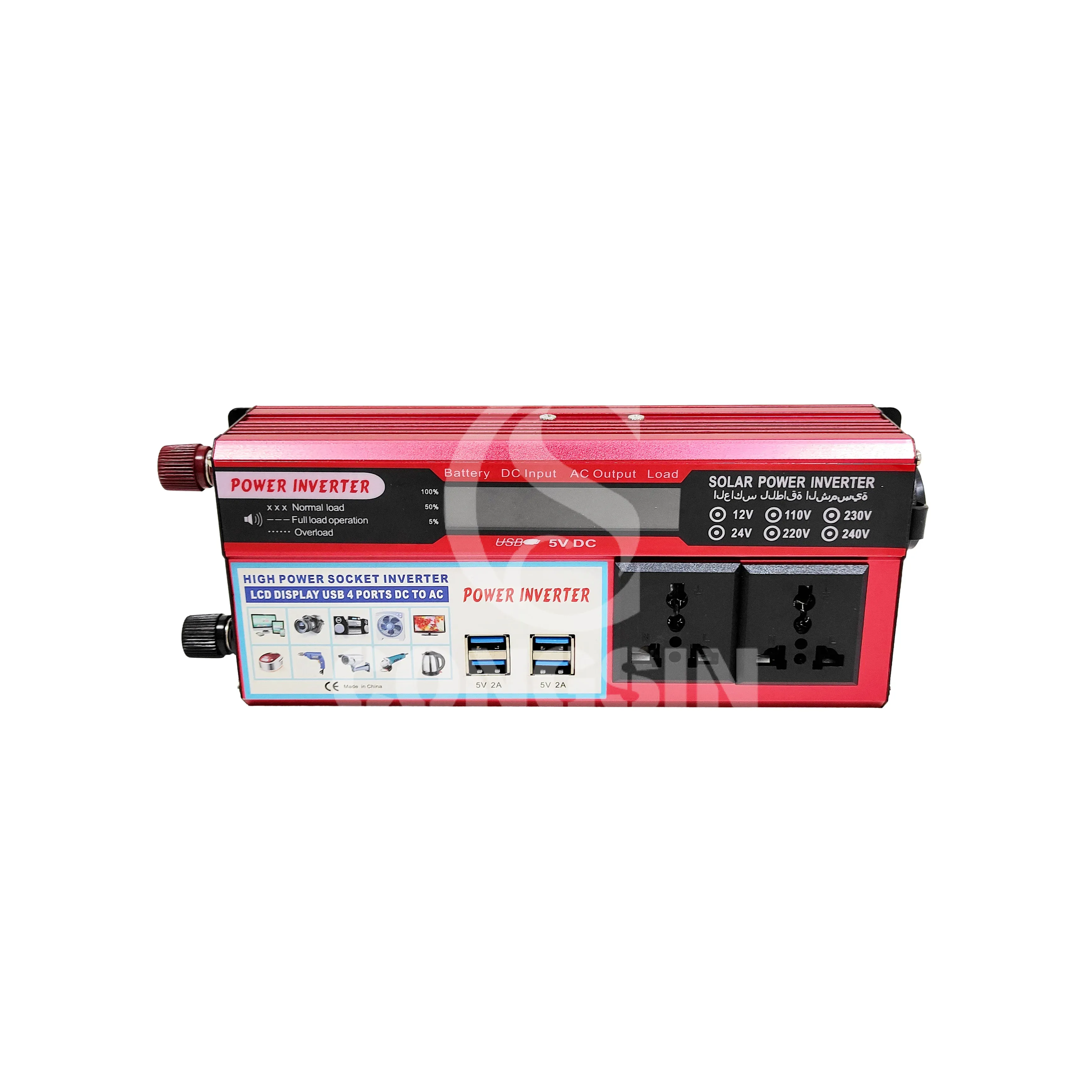
Modified Sine Wave Inverters
Is it compatible with both 12V and 24V vehicles?
Yes, it supports DC12V/24V dual input.
Can it be used with a car cigarette lighter socket?
Yes, it supports both battery clip and cigarette lighter connection.
What devices can be powered by the cigarette lighter port?
The cigarette lighter port can be used for car air pumps, car refrigerators, car vacuum cleaners and other conventional cigarette lighter powered devices, as long as the power does not exceed 300W.
Is it a pure sine wave or a modified sine wave? What's the difference?
This is a modified sine wave inverter, suitable for most conventional home appliances and electronic devices; pure sine wave is suitable for precision devices with extremely high power requirements. This modified sine wave is more cost-effective at 2000W, meeting the needs of most scenarios.
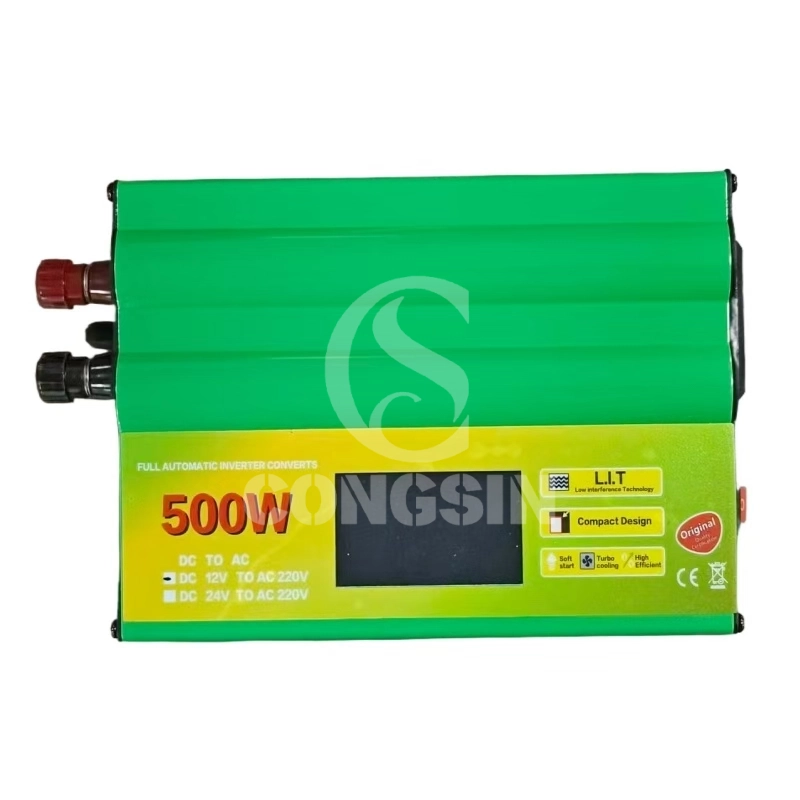
Pure Sine Wave Inverters
Can it drive a 3P air conditioner and an electric oven at the same time?
Total power needs to be calculated: the rated power of a 3P air conditioner is about 2200W-2500W, and the electric oven is about 1500W-2000W. The total power is 3700W-4500W, which exceeds the 3000W continuous power, so simultaneous use is not recommended; if used alone, the 6000W peak can meet the startup needs of both, and the battery capacity must be ≥200Ah (12V) when used alone.
Get in Touch with Our Team
You can also communicate with us directly through our online contact form. Please fill in the following information, and our team will contact you as soon as possible after receiving your message.

CONGSIN is a trusted OEM factory for power inverters, solar charge controllers, and DC converters. Reliable solutions for global B2B buyers.
 High Quality
 7/24 Service
 Guaranteed Warranty
© 2025 Congsin. All Rights Reserved.