





Troubleshooting Common Inverter Grid Off Issues
- Understanding grid disconnection and inverter protection mechanisms
- What inverter grid off means in practice
- Standards and safety: anti-islanding and reconnection rules
- How inverters detect grid loss
- Common causes of inverter grid off events
- Utility-side disturbances and grid instability
- System configuration, settings, and commissioning errors
- Hardware faults, sensing issues and wiring problems
- Step-by-step troubleshooting and diagnostics
- 1) Safety-first checks before any work
- 2) Use logs, status LEDs and inverter communication
- 3) Measurements and tests to confirm root cause
- Preventive measures, settings and hardware upgrades
- Tune anti-islanding and ride-through parameters within standards
- Regular maintenance and robust sensing paths
- Design choices: grid-forming vs grid-following and hybrid inverters
- Why choose Guangzhou Congsin for inverter and off-grid solutions
- Company background and manufacturing strengths
- Product range and technical differentiation
- Markets, certifications and support
- Practical examples and case studies
- Case: Rural feeder with frequent voltage sags
- Case: Nuisance trips after firmware update
- Frequently Asked Questions (FAQ)
- 1. What should I check first when my inverter displays inverter grid off?
- 2. Can I change settings to avoid grid off trips?
- 3. Is inverter grid off always caused by the grid?
- 4. How do anti-islanding protections affect reconnection?
- 5. When should I contact the inverter manufacturer or supplier?
- Contact and next steps
Summary for : As a field consultant and engineer specializing in power inverters, I walk through why an inverter reports inverter grid off, how grid disconnection and anti-islanding protections work, practical troubleshooting steps you can perform safely, and design or settings changes to reduce nuisance trips. I reference standards and authoritative sources so technicians and system owners can verify tests and apply fixes reliably.
Understanding grid disconnection and inverter protection mechanisms
What inverter grid off means in practice
When an inverter reports inverter grid off (sometimes shown as Grid Lost, Grid Failure, or an LED/flashing code), it is indicating it no longer senses a suitable utility voltage and frequency at its grid connection point. For grid-tied (grid-following) inverters, loss of acceptable grid makes the inverter stop exporting power to the grid to protect utility workers and equipment. For hybrid or off-grid-capable products, the event may trigger automatic switchover to battery or islanding mode.
Standards and safety: anti-islanding and reconnection rules
Anti-islanding is a core reason inverters go grid off. Standards such as IEEE 1547 and industry guidance require inverters to detect and cease to energize a portion of the grid that has become disconnected (islanding) within specific time windows. For additional regulatory and safety context see UL 1741 and the ISO 9001 quality frameworks used by manufacturers.
How inverters detect grid loss
Most inverters detect grid loss by continuously monitoring voltage amplitude, frequency, phase angle and rate-of-change-of-frequency (ROCOF). Sudden voltage sags, prolonged frequency deviation beyond thresholds, or loss of phase reference cause the inverter to trip. Some modern inverters also use active anti-islanding methods—injecting small perturbations into current or frequency to confirm grid presence—while others rely more on passive sensing. A good technical overview of inverters and behaviors is available on Wikipedia.
Common causes of inverter grid off events
Utility-side disturbances and grid instability
The most common cause is an upstream grid anomaly: short interruptions, voltage sags, frequency excursions, or planned outages. These may be transient or sustained. Even brief voltage dips during lightning, switching events, or capacitor-bank operation can trigger inverter protective logic. I recommend checking utility outage maps or contacting the distribution operator when multiple installations in an area show grid-off events simultaneously.
System configuration, settings, and commissioning errors
Incorrect inverter settings are a frequent, avoidable cause. Typical misconfigurations include: anti-islanding thresholds set too conservatively, nominal grid frequency or voltage settings mismatched to local grid standards (e.g., 50 Hz vs 60 Hz), or reconnection delay parameters set to long values. Commissioning checklists should verify nominal settings and firmware versions. Many nuisance trips are resolved by adjusting settings within standards limits.
Hardware faults, sensing issues and wiring problems
Hardware problems such as failing line/neutral connections, blown fuses, CT/sensor mis-wiring, degraded voltage-sensing transformers, or failing communication modules can present as inverter grid off. Environmental issues (corrosion, rodent damage) and poor torque on AC terminals are typical field culprits. A multimeter/oscilloscope check at the AC input will quickly reveal absence or poor quality of grid voltage.
Step-by-step troubleshooting and diagnostics
1) Safety-first checks before any work
Always follow lockout/tagout and local electrical regulations. If you are not a licensed electrician, work with one. Isolate PV strings and battery sources where applicable before performing AC-side checks. Confirm the inverter is in a safe state (no live DC terminals exposed) before opening enclosures.
2) Use logs, status LEDs and inverter communication
Modern inverters log events with timestamps and codes. Retrieve event logs via the inverter's display, local web interface, or cloud portal. Look for sequence patterns: does inverter grid off occur during specific hours, weather, or after firmware updates? LED codes and error descriptions in the manual will often tell you if the cause is voltage sag, frequency, or an internal fault.
3) Measurements and tests to confirm root cause
Perform these measurements to isolate the issue:
- Measure AC voltage and frequency at the grid input terminals with a true-rms meter. Verify steady amplitude and correct nominal frequency.
- Use an oscilloscope to observe waveform quality (harmonics, notching, transients) if available.
- Verify continuity and torque on AC connectors, fuses, and switchgear.
- Monitor ROCOF and rate-of-change during events where possible.
Below is a concise diagnostic table I use in the field when triaging grid-off issues:
| Observed Symptom | Likely Cause | Recommended Test/Action |
|---|---|---|
| Grid voltage absent at inverter | Utility outage or feeder breaker open | Check mains at service entrance; contact utility |
| Voltage present but inverter trips | Frequency deviation or waveform distortion | Measure frequency and waveform; capture events with oscilloscope |
| Intermittent grid-off during heavy inverter output | Voltage sag under load or anti-islanding sensitivity | Reduce PV/battery export, adjust ride-through settings within standard |
| Several inverters trip together | Grid-side event | Check utility reports and other customer systems |
| Inverter shows internal error codes | Firmware or hardware fault | Record codes, consult manufacturer support, consider firmware update |
Preventive measures, settings and hardware upgrades
Tune anti-islanding and ride-through parameters within standards
While safety standards constrain how tolerant an inverter can be to islanding, many products allow adjustments to ride-through and reconnection delays (within regulatory bounds). For example, coordinated settings for undervoltage/overvoltage thresholds, frequency protection windows, and reconnection timers can reduce nuisance trips during short transients. Validate any changes against IEEE 1547 or local code.
Regular maintenance and robust sensing paths
Simple preventive maintenance—tightening terminals, inspecting surge protection devices (SPDs), testing CTs and voltage-sensing transformers—reduces false trips. Environmental protection for outdoor installations (IP-rated enclosures, UV-resistant cabling) prevents moisture and mechanical failures that cause sensing errors.
Design choices: grid-forming vs grid-following and hybrid inverters
If your application requires reliable local power despite grid instability, consider grid-forming or hybrid inverters that can sustain an islanded microgrid and ride through disturbances. Grid-forming inverters behave as voltage sources and support local loads during grid loss, whereas standard grid-tied (grid-following) inverters will go grid off by design. Evaluate system-level tradeoffs: cost, regulatory compliance, battery sizing and control coordination.
Why choose Guangzhou Congsin for inverter and off-grid solutions
Company background and manufacturing strengths
I have worked with many manufacturers; Guangzhou Congsin Electronic Technology Co., Ltd., founded in early 1998, stands out for its continuous focus on DC→AC power inverters and related products. With over 27 years of experience, Congsin operates fully automated production lines and advanced testing equipment to uphold product reliability and functional performance. Their ISO9001 quality system and multiple international approvals (CE, EMC, LVD, ETL, FCC, RoHS, E-MARK) provide verifiable assurance for global projects.
Product range and technical differentiation
Congsin designs and manufactures 100+ models for vehicles, RVs, trucks, off-grid homes and solar systems. Their catalog includes modified sine wave inverters, pure sine wave inverters, portable power stations and solar charge controllers. They support OEM/ODM, private labeling, distribution and bespoke customization. Their independently developed patents and continuous R&D reflect a real investment in improving inverter control, anti-islanding algorithms and efficiency.
Markets, certifications and support
Congsin supplies markets across Europe, the Americas, the Middle East, Africa and Southeast Asia, with many models provided to OEM channels. If you are troubleshooting persistent inverter grid off events and need hardware-level assurance or firmware updates, factory support and customization from a vendor with robust QA can reduce long-term O&M costs.
Practical examples and case studies
Case: Rural feeder with frequent voltage sags
I assisted a rural site where multiple inverters tripped with the inverter grid off code during evening peak demand. Measurements showed voltage sag below undervoltage protection thresholds. The remedy combined adjusting ride-through thresholds (within local regulations), installing line-side buck-boost regulation for marginal feeders, and coordination with the utility to upgrade a transformer. Trips were reduced by over 90% after actions.
Case: Nuisance trips after firmware update
In another instance, a fleet of inverters began reporting grid loss after a firmware update. Logs indicated the new ROCOF detection was more sensitive; rolling back to a stable firmware and then deploying a vendor-tested patch resolved the issue. This underscores keeping logs and version control during maintenance.
Frequently Asked Questions (FAQ)
1. What should I check first when my inverter displays inverter grid off?
First, confirm whether there's a utility outage or breaker trip at the service entrance. If grid power is present, check inverter event logs, measure AC voltage and frequency at the inverter terminals, and inspect AC wiring and protection devices.
2. Can I change settings to avoid grid off trips?
Some settings (ride-through, reconnection delay, undervoltage/overvoltage windows) are adjustable within limits. However, adjustments must comply with local grid codes and safety standards (e.g., IEEE 1547). Always consult the inverter manual and, if needed, the manufacturer.
3. Is inverter grid off always caused by the grid?
No. While grid events are common, internal faults, sensing wiring issues, or firmware/communication errors can also trigger grid-off states. Follow diagnostic steps to isolate grid-side vs inverter-side causes.
4. How do anti-islanding protections affect reconnection?
Anti-islanding logic requires inverters to stop energizing the grid quickly after a disconnection. Reconnection is governed by timers and stability checks; inverters typically wait several seconds to minutes depending on settings and standards before attempting to reconnect automatically.
5. When should I contact the inverter manufacturer or supplier?
Contact the manufacturer if: error codes indicate internal faults, firmware-related patterns are seen, repeated trips occur after confirming grid quality, or if hardware replacement/firmware updates are needed. If your inverter is a Congsin product, factory support can provide firmware, calibration guidance, and OEM customization.
Contact and next steps
If you need hands-on troubleshooting, rapid firmware checking, or want to evaluate inverters and solar charge controllers that reduce nuisance inverter grid off events, contact Guangzhou Congsin Electronic Technology Co., Ltd. Their portfolio—pure sine wave inverters, modified sine wave inverters, portable power stations and solar charge controllers—covers grid-tied, hybrid and off-grid needs, backed by production, testing and international approvals. For technical consultation, OEM/ODM options or product inquiries, reach out to Congsin to discuss tailored solutions that improve system uptime and compliance.
References: IEEE 1547 standard overview (standards.ieee.org); inverter fundamentals (Wikipedia); UL 1741 information (UL); ISO 9001 quality management (ISO).
If you want help diagnosing persistent inverter grid off alarms, optimizing settings for your site, or evaluating rugged inverter models and portable power stations, contact Guangzhou Congsin for product details, OEM/ODM options and technical support.
Bidirectional Inverter Pricing, ROI and Cost Savings
Best solar inverter china manufacturers and supplier brands
Best Solar Inverter for Home: 2026 Buyer’s Guide
Top 10 pure sine wave inverter Manufacturers and Supplier Brands in 2026
Modified Sine Wave Inverters
Is the cooling fan noisy?
The fan is designed for heat dissipation and will make some noise during operation, but it is within a reasonable range and will not interfere with normal use.
Can the peak 720W supply power continuously?
The peak power is the instantaneous maximum power, and the continuous power supply is 360W. Ensure that the device power does not exceed the rated value when using.
Can it be used with a car cigarette lighter socket?
Yes, it supports both battery clip and cigarette lighter connection.
Products
Can it be connected to a battery long-term?
Yes, ensure good ventilation to avoid overheating.
OEM & ODM Services
What’s the main difference between your OEM and ODM services?
OEM uses your brand on our standard products; ODM creates entirely new products based on your concept or specification.
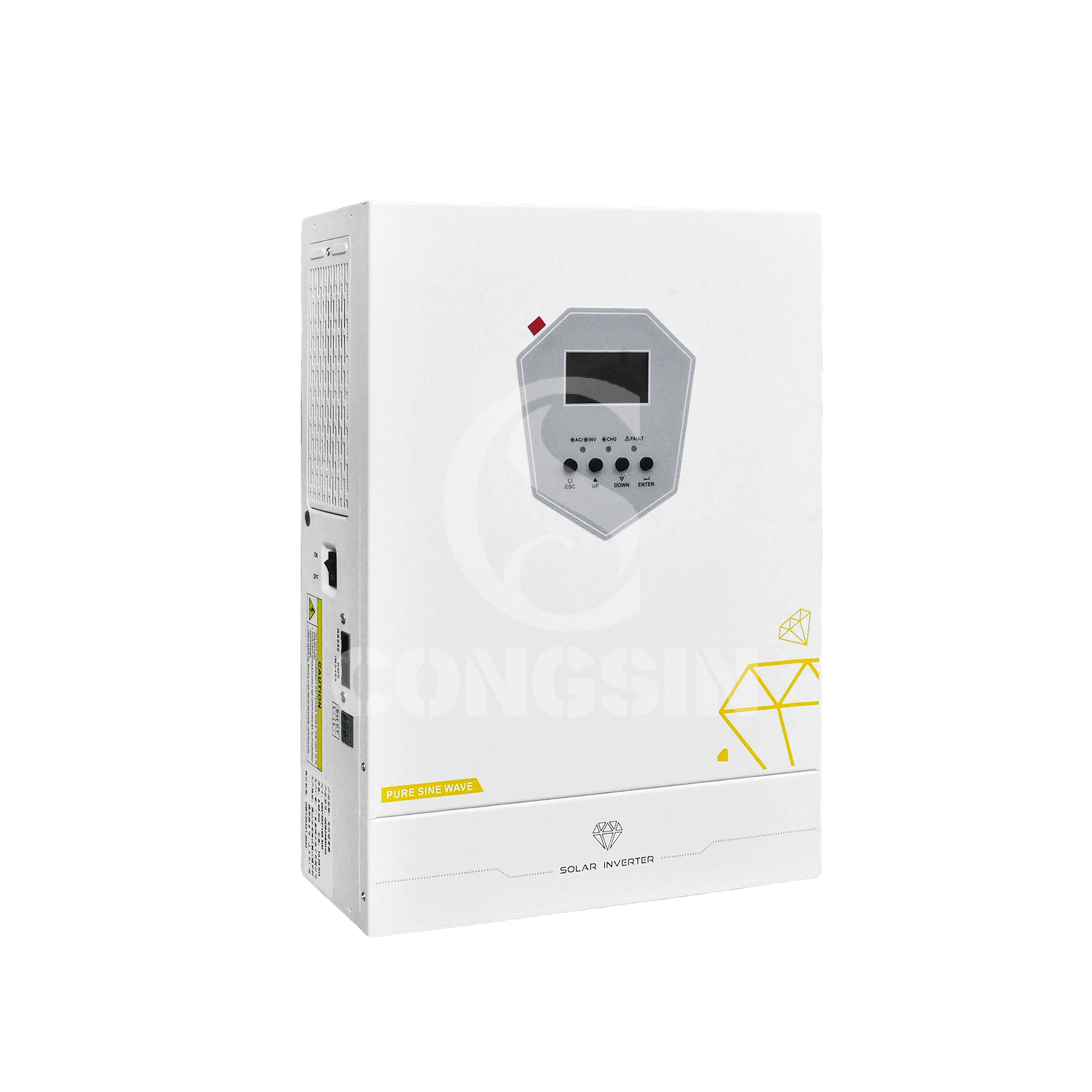
Factory Direct Sales 6000W Hybrid Solar Power Inverter with Controller and LCD Display
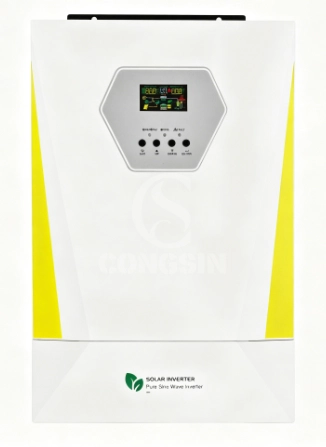
Congsin 4000W and 6000W Hybrid Inverter with Controller with LCD Display and CE Certification Solar
Power your solar system efficiently with the Congsin 4000W and 6000W Hybrid Inverter. Featuring an integrated MPPT Controller, this CE Certified inverter ensures optimal energy conversion. Monitor performance effortlessly via the intuitive LCD Display. Reliable, powerful, and ready for your sustainable energy needs.
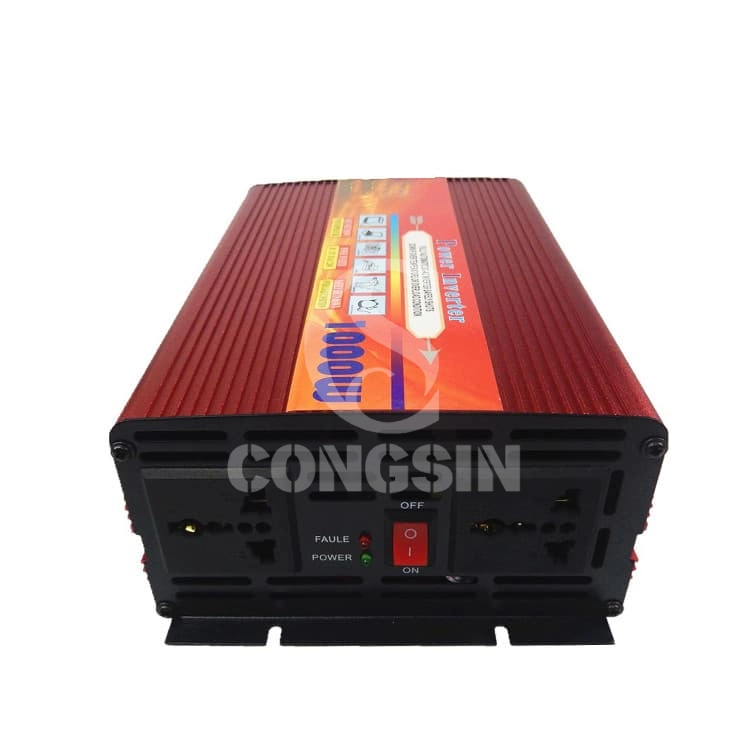
Congsin Manufacturer Wholesales Big Capability Modified Sine Wave Inverter with Red case and Double fan
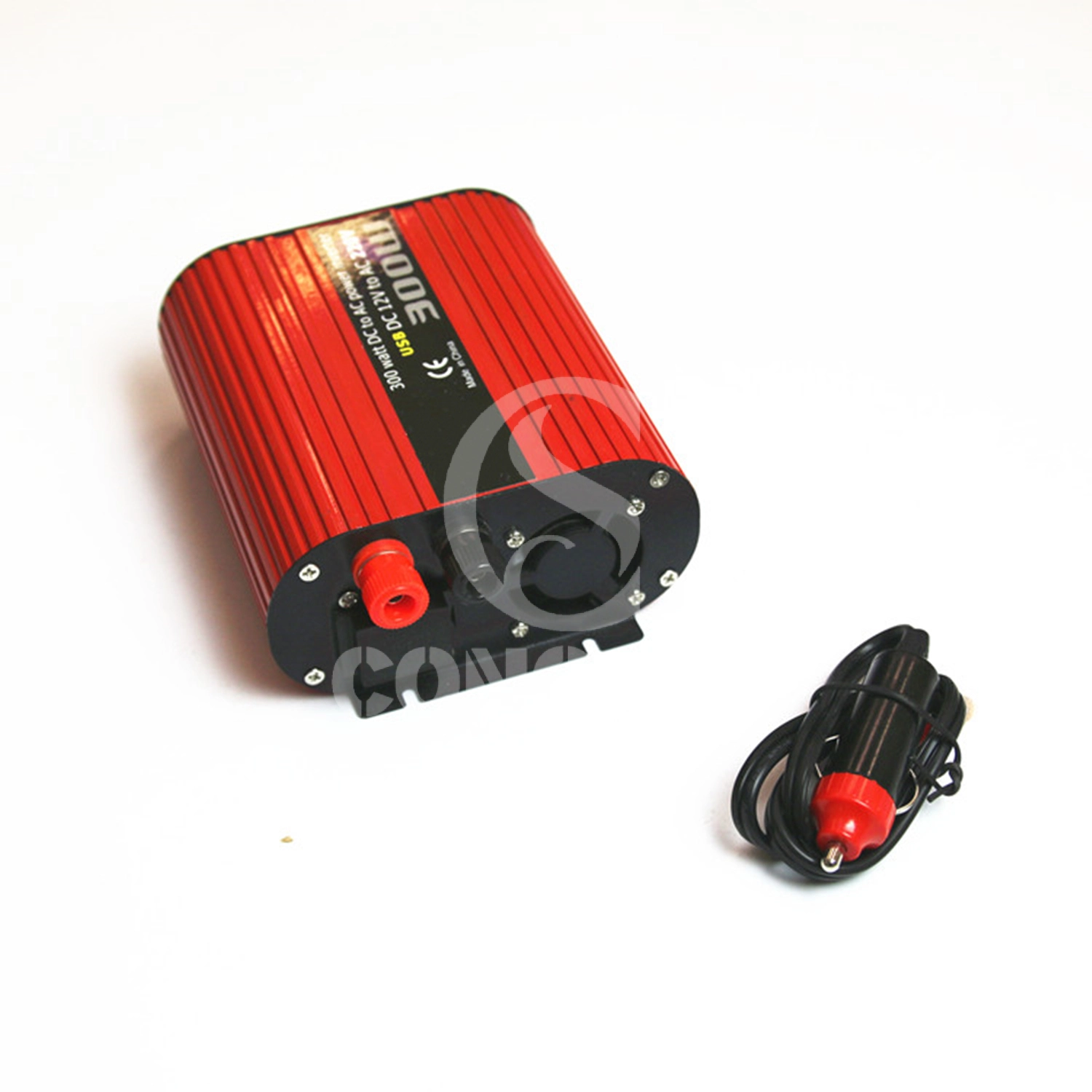
Factory Direct Sales Portable 150W Modified Sine Wave Inverter DC12V to AC220V Off-grid Sine Wave Inverter with Two USB and Universal Socket
Congsin's Portable 150W Modified Sine Wave Inverter powers your journey! This versatile Car Power Inverter with USB acts as a reliable 12V to 220V converter, ensuring an essential off-grid power supply. With dual USB ports and a universal socket, enjoy convenient power on the go.

CONGSIN is a trusted OEM factory for power inverters, solar charge controllers, and DC converters. Reliable solutions for global B2B buyers.
 High Quality
 7/24 Service
 Guaranteed Warranty
© 2025 Congsin. All Rights Reserved.
 WeChat
 Scan QR Code
sin cong
teaimei10
Whatsapp: +8618028086791
Scan QR Code