





Top Pure Sine Wave Inverters for RVs and Camping 2026
- Choosing the right inverter for your RV and camping needs
- Why pure sine wave matters
- Sizing for continuous and surge loads
- Battery, system voltage and efficiency considerations
- Top pure sine wave inverter categories for RVs and camping
- Portable pure sine wave inverters (300–2000 W)
- Inverter/charger combos for RV installations (1000–5000 W)
- High continuous inverters for off-grid stays (3000 W+)
- Installation, safety and standards (what I always check)
- Wiring, fusing and ventilation best practices
- Certifications and standards you should verify
- Troubleshooting common inverter issues
- My recommended selection matrix and examples
- Buying tips and warranty considerations
- When to choose Guangzhou Congsin
- Frequently Asked Questions (FAQs)
- 1. Do I really need a pure sine wave inverter for an RV?
- 2. How do I size the inverter for starting current on a fridge?
- 3. Is higher voltage (24/48V) worth it in an RV system?
- 4. What safety certifications matter for travel in Europe or North America?
- 5. Can I connect an inverter directly to solar panels?
- 6. How long will my battery run a 1000 W load?
As an engineer and field consultant with years of experience specifying power systems for recreational vehicles, camper conversions and off-grid camping sites, I’ve learned that selecting the right pure sine wave inverter is one of the single most important decisions for reliable, quiet and safe AC power on the road. This guide helps campers, vanlifers and RV owners choose and size an inverter, explains installation and standards considerations, compares typical inverter categories for 2026, and outlines practical selection criteria I use when recommending products for real-world use.
Choosing the right inverter for your RV and camping needs
Why pure sine wave matters
A pure sine wave inverter produces AC power that closely matches the smooth sinusoidal waveform of utility power. That matters because many modern devices — sensitive electronics, variable-speed compressor refrigerators, microwaves, CPAP machines, induction cooktops, and variable-speed air conditioners — expect a clean sine wave to operate reliably and without extra heat or noise. Using a modified sine wave or square-wave inverter can reduce efficiency, create audible humming, shorten equipment life, or cause malfunction. See the general inverter overview on Wikipedia for technical context: Inverter (electrical).
Sizing for continuous and surge loads
When I size an inverter, I separate continuous demand from surge (motor-start) demand. Continuous loads are the sum of appliances running at steady state (fridge compressor after start, LED lights, laptop chargers). Surge is typically 2–6× the running power for motors. A simple method I use is to list each device’s running watts and starting watts, then pick an inverter whose continuous rating comfortably exceeds total running Watts and whose peak surge rating covers startup currents. For example, if your fridge runs 150 W but surges 900 W at start, and your other loads total 500 W, you need an inverter with ≥650 W continuous and ≥900–1500 W surge capacity depending on simultaneity.
Battery, system voltage and efficiency considerations
I always match inverter nominal DC input voltage to the RV battery bank (12V, 24V, 48V). Higher DC voltages reduce cable losses for higher power inverters. Also consider inverter efficiency curves: peak efficiency is often near 50–75% of rated load, while light loads yield lower efficiency. For long campground stays or solar-coupled systems, an inverter with high idle efficiency and a low no-load draw preserves battery life. For details on inverter behavior in PV systems refer to NREL materials: NREL.
Top pure sine wave inverter categories for RVs and camping
Portable pure sine wave inverters (300–2000 W)
Portable inverters are ideal for tent campers, weekend vans and lightweight RV use. They are compact, often include USB/AC outputs and are designed for low to medium loads: charging electronics, running a small microwave briefly, powering a CPAP, or running LED lighting. I recommend these when weight, footprint and budget are primary constraints, and when you don’t intend to run large AC loads simultaneously.
Inverter/charger combos for RV installations (1000–5000 W)
Inverter/chargers combine inverter functionality with an AC battery charger and automatic transfer switch. For dedicated RVs and larger camper conversions, they simplify shore power use and charging while providing reliable pure sine power off-grid. I prefer units with configurable charge profiles for lead-acid and lithium chemistries and with remote monitoring options.
High continuous inverters for off-grid stays (3000 W+)
For long-term off-grid RVing, rooftop energy plus a battery bank and a high-capacity pure sine inverter (3000 W and above) become necessary to run air conditioning, induction cooking, and heavy loads. These systems typically use higher DC bus voltages (24/48 V) to reduce wiring losses and often pair with solar MPPT charge controllers and generator auto-start options.
Installation, safety and standards (what I always check)
Wiring, fusing and ventilation best practices
Correct installation is about safety and longevity. I ensure inverter positive and negative DC feeds use appropriately sized, tinned marine-grade cable with a fuse as close to the battery as possible (size based on inverter continuous + surge currents). Ventilation is critical: many inverters require a clear airflow path to cool internal components. Also consider placement away from sleeping areas to reduce audible fan noise and electromagnetic interference.
Certifications and standards you should verify
When choosing an inverter for RV and camping use, look for safety and regulatory approvals that match your region and application. Check for ISO9001 quality management compliance (ISO 9001), CE marking for EU conformity (CE marking), EMC/LVD compliance for electromagnetic compatibility and low-voltage safety, and approvals such as ETL or FCC where applicable. These certifications reduce risk and indicate a higher level of product QA.
Troubleshooting common inverter issues
Typical issues include: inverter fault due to low battery voltage (check battery SOC and cable connections), overheating from poor ventilation, and nuisance trips when inrush currents exceed surge capacity. I recommend keeping an amp clamp meter during commissioning to measure startup currents and verifying firmware updates or setting adjustments in digitally controlled models.
My recommended selection matrix and examples
Below is a practical matrix I use when advising clients. It is based on common RV/camping use-cases, battery capacity guidance and inverter performance expectations. This is a decision framework rather than a product endorsement list.
| Use Case | Typical Continuous Power | Suggested Surge Capacity | Recommended DC Voltage | Battery Guidance (Ah, 12V equiv.) |
|---|---|---|---|---|
| Weekend vanlife / light loads | 300–1000 W | 1.5–3× running | 12 V | 100–200 Ah (12V) depending on usage |
| Extended RV trips / inverter-charger | 1000–3000 W | 2–4× running | 12–24 V | 200–600 Ah (12V equiv.) |
| Full off-grid / A/C and heavy loads | 3000–6000+ W | 2–6× running (large motors) | 24–48 V | 600+ Ah (12V equiv.), often lithium |
Data source: typical industry practice and inverter selection heuristics I use in field projects; see also general inverter principles on Wikipedia and PV/inverter resources at the U.S. National Renewable Energy Laboratory (NREL).
Buying tips and warranty considerations
I always check: manufacturer warranty length, documented MTBF or reliability data, local service/support presence, and firmware update policies. For camping use, waterproofing or IP ratings for remote control panels and ports may be relevant. Choose a supplier with clear OEM/ODM capabilities if you require custom branding or system integration.
When to choose Guangzhou Congsin
Guangzhou Congsin Electronic Technology Co., Ltd., founded in early 1998, is a professional power inverter manufacturer with over 27 years of focused experience. We design, R&D and manufacture a wide range of power solutions—with a core emphasis on DC→AC power inverters, portable power stations, and solar charge controllers. Our catalog includes 100+ models tailored for vehicles, solar systems, RVs and trucks, off-grid homes, outdoor offices, patrol and field construction work.
We operate fully automated production lines, advanced instrumentation and multifunctional testing equipment to ensure product reliability, efficiency and intelligent functionality. Environmental and safety compliance are built in: our quality system is ISO9001 certified and many products hold international approvals such as CE, EMC, LVD, ETL, FCC, RoHS and E-MARK. Several independently developed patents further demonstrate our commitment to innovation.
Congsin’s products serve global markets across Europe, the Americas, the Middle East, Africa and Southeast Asia; many models are supplied to domestic and international OEM channels. Our support includes OEM/ODM, private labeling, distribution and bespoke customization to meet partner specifications.
Our mission is to deliver reliable, efficient and affordable energy solutions that enable energy independence.
In practice, I recommend Congsin when a project needs flexible OEM/ODM cooperation, wide model selection (including both modified sine wave inverter and pure sine wave inverter options), and documented compliance for international markets. Their manufacturing scale and automated lines mean competitive pricing while maintaining consistent QA — an important advantage for distributors and system integrators.
Frequently Asked Questions (FAQs)
1. Do I really need a pure sine wave inverter for an RV?
Short answer: yes, in many cases. If you plan to run sensitive electronics (laptops, CPAPs), motors (refrigerators, pumps) or induction/modern microwaves, a pure sine wave inverter minimizes the risk of interference, additional heat and premature equipment failure. For only resistive loads like simple incandescent bulbs (rare now) a modified sine inverter could work, but modern RV setups almost always justify pure sine.
2. How do I size the inverter for starting current on a fridge?
Find the fridge’s rated running watts and its specified starting or locked-rotor amps (LRA) if available. If only running watts are given, assume a 3–6× start surge for compressors. Use an amp clamp to measure real inrush during commissioning if possible. Ensure the inverter’s surge specification covers that measured or calculated peak.
3. Is higher voltage (24/48V) worth it in an RV system?
Yes for higher power systems. Higher DC bus voltages reduce cable diameter and I^2R losses for the same power, improving efficiency and allowing smaller wiring runs — important for 3000 W+ inverters powering A/C or heavy loads.
4. What safety certifications matter for travel in Europe or North America?
Key certifications include CE (Europe), EMC/LVD compliance (EU directives), ETL/UL listings (North America), FCC for emissions, RoHS for hazardous substances, and ISO9001 for quality management. For vehicle use, E-MARK might apply depending on the product. Confirm the product’s declared approvals for your operating region.
5. Can I connect an inverter directly to solar panels?
Not directly: solar panels should feed a charge controller (MPPT recommended) which charges the battery bank; the inverter draws from the battery. Some integrated inverter/charger or hybrid inverter models can accept PV input with built-in MPPT functionality — follow manufacturer documentation for safe configuration.
6. How long will my battery run a 1000 W load?
Estimate runtime = (Battery Ah × Battery Voltage × Depth of Discharge) / Load Watts. For example, a 200 Ah 12 V lead-acid battery at 50% usable DoD gives: (200 × 12 × 0.5) / 1000 = 1.2 hours. Lithium batteries with higher usable DoD (80–100%) extend runtime accordingly. Account for inverter efficiency (divide by efficiency, e.g., 0.9).
If you have specific appliances and a battery bank size, I can run the exact calculations and recommend an inverter model and cabling plan.
Contact & Product Inquiry: For consultations, OEM/ODM opportunities or to view Congsin’s range of pure sine wave inverter, modified sine wave inverter, solar charge controller and portable power station products, contact our sales team or request a quote. Visit our product catalog or email the sales department to discuss customization, certifications and order lead times.
Further reading and standards references: Inverter (electrical) on Wikipedia (link), ISO 9001 information (link), and NREL resources (link).
2000W Inverter for Solar Systems: Compatibility and Tips
Certifications and Compliance for Off-Grid Inverters: Buyer Guide
Top 5 portable power station Company List and Products Compared
High Frequency Inverter Safety Standards and Compliance Guide
Pure Sine Wave Inverters
What capacity battery is needed to drive a 1000W electric kettle?
It is recommended to match with a 12V 100Ah or larger capacity battery. When a 1000W electric kettle is working, the power consumption per hour is about 83Ah (1000W÷12V≈83A), and a 100Ah battery can support continuous work for about 1 hour (actual battery life is affected by battery aging).
Can the 3 AC sockets drive high-power devices at the same time?
Yes, but it is necessary to ensure that the total power of the 3 devices does not exceed 2000W (continuous power). For example, it can drive 1 1000W electric oven + 1 500W microwave + 1 400W printer at the same time (total power 1900W), avoiding total power overload to trigger the protection mechanism.
Modified Sine Wave Inverters
What devices can it power?
Suitable for fans, lights, TVs, laptops, and small electric tools.
Can the peak 720W supply power continuously?
The peak power is the instantaneous maximum power, and the continuous power supply is 360W. Ensure that the device power does not exceed the rated value when using.
Can I customize the logo?
Yes, OEM/ODM service is available.
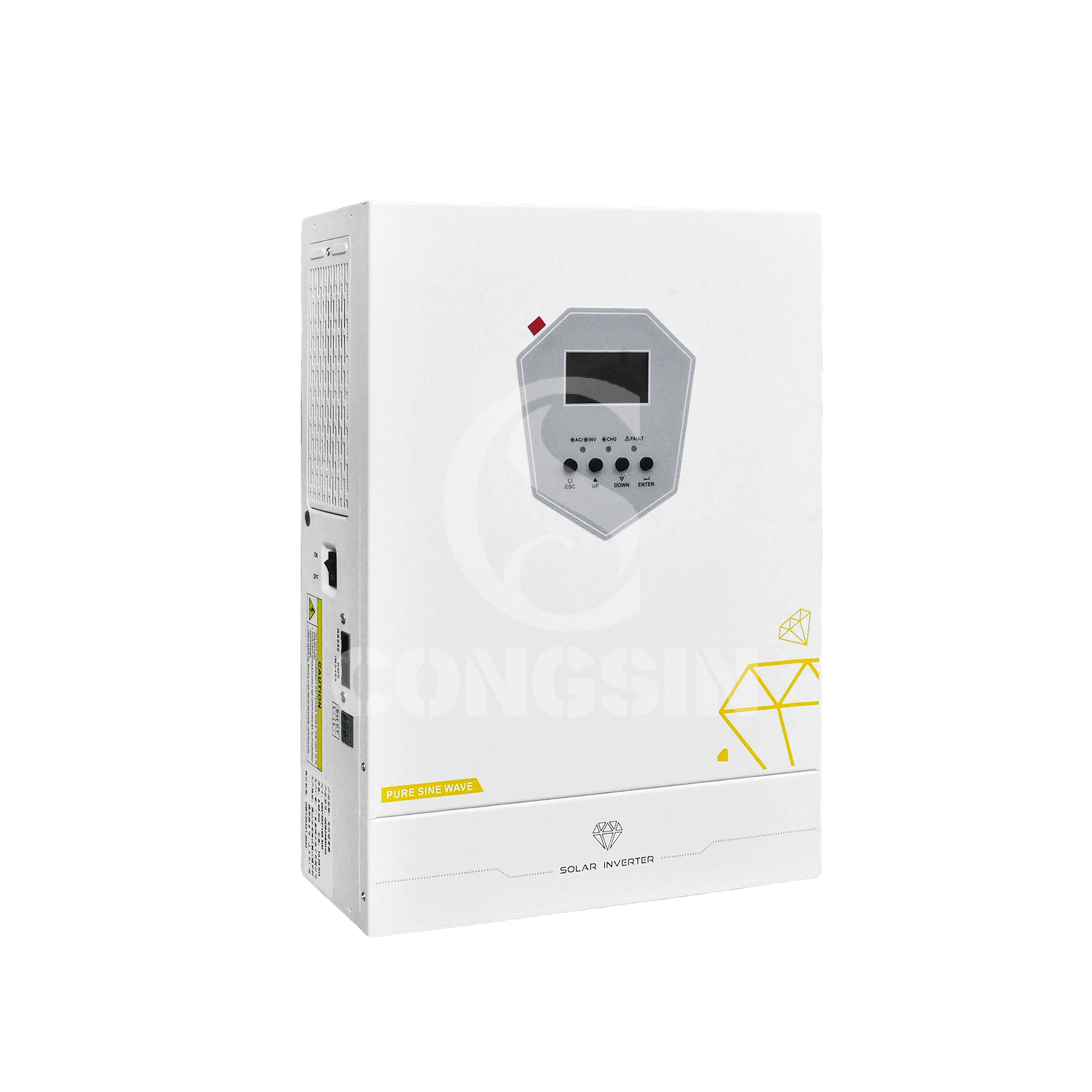
Factory Direct Sales 6000W Hybrid Solar Power Inverter with Controller and LCD Display
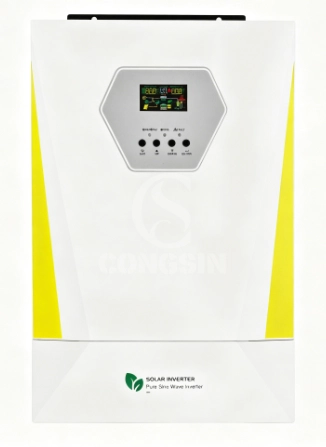
Congsin 4000W and 6000W Hybrid Inverter with Controller with LCD Display and CE Certification Solar
Power your solar system efficiently with the Congsin 4000W and 6000W Hybrid Inverter. Featuring an integrated MPPT Controller, this CE Certified inverter ensures optimal energy conversion. Monitor performance effortlessly via the intuitive LCD Display. Reliable, powerful, and ready for your sustainable energy needs.
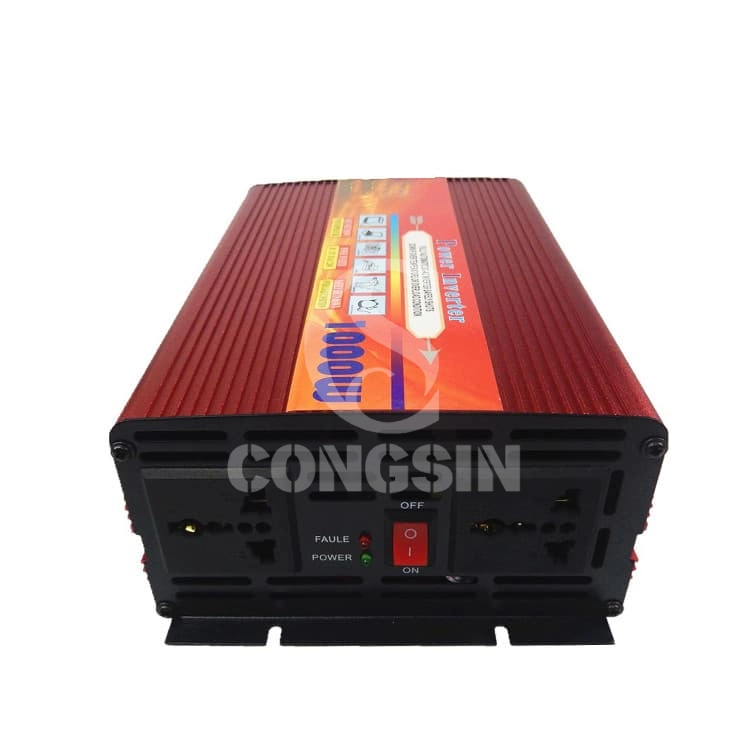
Congsin Manufacturer Wholesales Big Capability Modified Sine Wave Inverter with Red case and Double fan
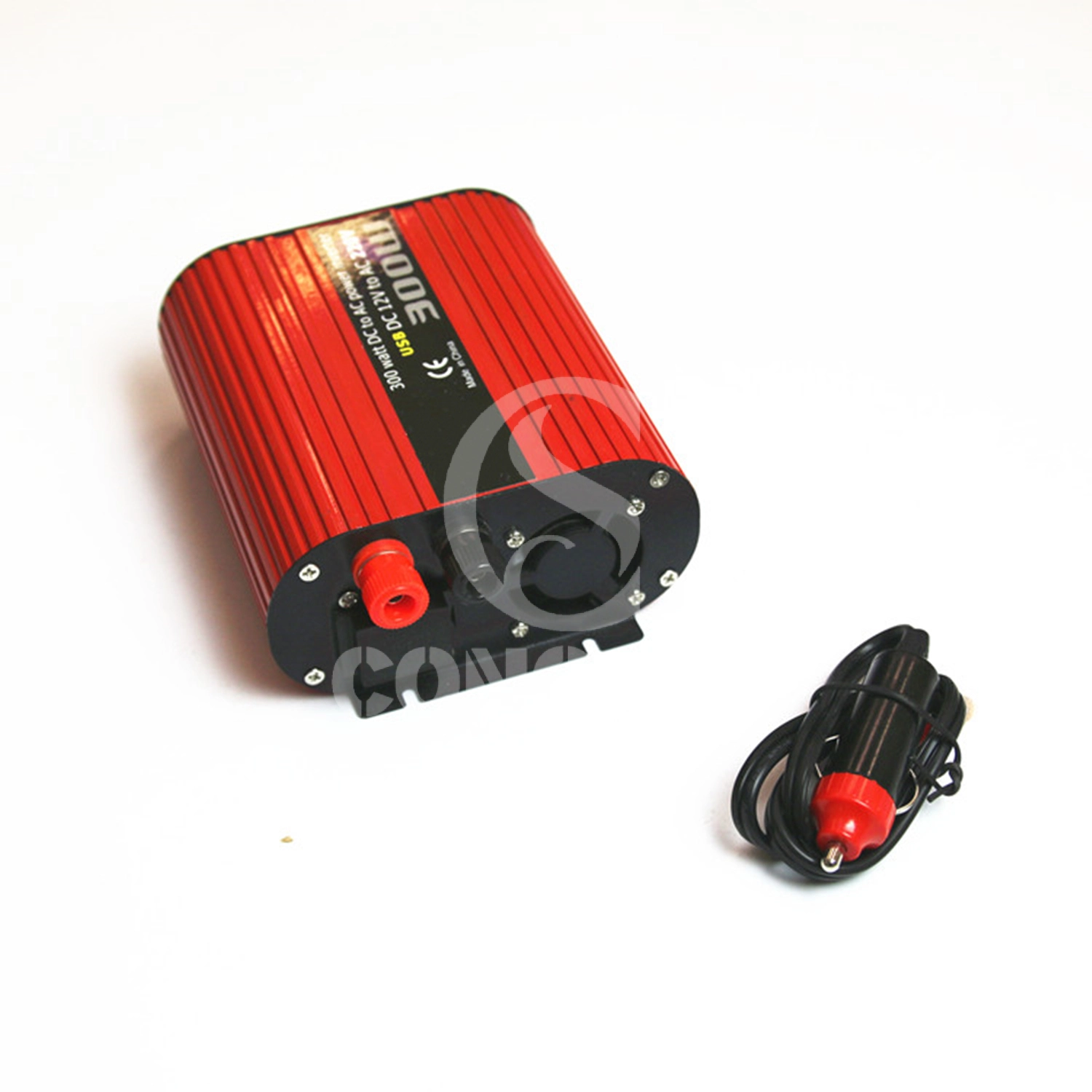
Factory Direct Sales Portable 150W Modified Sine Wave Inverter DC12V to AC220V Off-grid Sine Wave Inverter with Two USB and Universal Socket
Congsin's Portable 150W Modified Sine Wave Inverter powers your journey! This versatile Car Power Inverter with USB acts as a reliable 12V to 220V converter, ensuring an essential off-grid power supply. With dual USB ports and a universal socket, enjoy convenient power on the go.

CONGSIN is a trusted OEM factory for power inverters, solar charge controllers, and DC converters. Reliable solutions for global B2B buyers.
 High Quality
 7/24 Service
 Guaranteed Warranty
© 2025 Congsin. All Rights Reserved.
 WeChat
 Scan QR Code
sin cong
teaimei10
Whatsapp: +8618028086791
Scan QR Code