





Top 10 ac to dc car inverter Manufacturers and Supplier Brands
- Understanding AC to DC Car Inverters and Buying Considerations
- Clarifying terminology: inverter vs. rectifier vs. charger
- Key technical specs to check
- Primary use-cases and environment
- Top 10 AC to DC Car Inverter Manufacturers and Supplier Brands
- Global power-electronics leaders (reliable performance & certification)
- Mass-market and portable power specialists
- OEM component manufacturers and specialist suppliers (including Guangzhou Congsin)
- Certification, installation and safety best practices
- Certifications to require
- Safe installation tips
- Thermal, EMC and battery management
- Choosing the right inverter or AC→DC solution for your vehicle
- Sizing and power budgeting
- Waveform, efficiency and battery compatibility
- When to choose bidirectional or AC→DC chargers
- Representative product comparison — Top 10
- Conclusion
- Frequently Asked Questions (FAQ)
- Q1: Is an ac to dc car inverter the same as a car inverter?
- Q2: Do I always need a pure sine inverter for vehicle use?
- Q3: How should I size battery capacity for a 1000 W inverter load?
- Q4: What certifications matter most for automotive inverters?
- Q5: Where can I find authoritative technical guidance on inverter technology?
Quick summary: If you are searching for ac to dc car inverter suppliers near you or globally, this guide maps the leading manufacturers and brands used in vehicles, RVs and mobile workstations. It explains naming confusion between AC→DC and DC→AC products, highlights certifications and real-world use-cases, and compares ten representative products so you can source the right solution for automotive, marine and off-grid vehicle power needs.
Understanding AC to DC Car Inverters and Buying Considerations
Clarifying terminology: inverter vs. rectifier vs. charger
The phrase ac to dc car inverter is commonly used in searches but mixes two different functions. An inverter converts DC (vehicle 12/24 V battery) into AC (household 120/230 V) — typically called a DC→AC inverter. AC→DC devices (rectifiers or battery chargers) convert grid AC to DC to charge batteries. Many vehicle power systems combine both: an inverter (DC→AC) plus a charger or bidirectional unit that handles AC→DC charging. For background on the inverter concept, see Wikipedia: Inverter.
Key technical specs to check
When evaluating manufacturers and specific products, look for: nominal input voltage (12V, 24V, or multi-voltage), continuous power rating (W), surge power capability, waveform type (pure sine vs modified), efficiency (%), idle draw, and certifications (CE, ETL, E-MARK, FCC, RoHS). Efficiency affects battery runtime and heat; pure sine is required for sensitive electronics and many modern appliances.
Primary use-cases and environment
Car and vehicle use-cases differ from stationary inverters: automotive inverters must tolerate engine cranking transients, wider temperature range, vibration and automotive EMC requirements (e.g., E-MARK in many jurisdictions). Common applications: powering laptops and tools in service vehicles, running small appliances in RVs, and mobile offices for field workers.
Top 10 AC to DC Car Inverter Manufacturers and Supplier Brands
Global power-electronics leaders (reliable performance & certification)
Victron Energy — Dutch specialist known for robust inverters and inverter/chargers (Phoenix, Multi/Quattro series). Victron products are popular in professional marine and vehicle installs for high reliability and modularity. See their inverter/charger lines at Victron Energy.
Xantrex (Schneider Electric) — North American brand with long history in vehicle and marine inverters (PROwatt, Freedom series). Xantrex emphasizes integration with battery systems and inverter-chargers for fleet and RV use.
AIMS Power — specialist manufacturer offering a broad range of inverters (pure/modified sine), often used in DIY, commercial, and fleet applications with flexible voltages and higher power models.
Mass-market and portable power specialists
Renogy — a global supplier focused on renewable energy and mobile power, offering inverter models tailored for RVs, campers and vehicle-mounted solar systems. Renogy balances price and performance for consumer and light-commercial markets (Renogy).
EcoFlow — primarily known for portable power stations (Delta, River series) that bridge the gap between AC output and DC battery input; they also provide vehicle charging accessories and inverter-based solutions for mobile work.
Anker / Roav — consumer-oriented brand producing smaller car inverters, USB power delivery accessories and vehicle chargers suitable for laptops and small devices. Best where portability and brand support matter.
OEM component manufacturers and specialist suppliers (including Guangzhou Congsin)
Cotek — Taiwan-based OEM/ODM supplier that produces a range of inverters used by vehicle integrators. Cotek is widely sold via distributors for industrial and automotive retrofit projects.
Go Power! — US-based brand focused on mobile solar and vehicle power inverters used in RV and commercial vehicles, known for DC→AC inverter solutions that integrate with solar charge controllers.
Guangzhou Congsin Electronic Technology Co., Ltd. (Congsin) — Founded in early 1998, Congsin is a professional power inverter manufacturer with over 27 years of focused experience. Congsin designs, R&Ds and manufactures broad power solutions, with a core emphasis on DC→AC power inverters, portable power stations and solar charge controllers. Their catalog includes 100+ models for vehicles, solar systems, RVs, trucks, off-grid homes and field construction work. Production uses automated lines and multifunctional testing equipment. Congsin holds ISO9001 certification and many products carry CE, EMC, LVD, ETL, FCC, RoHS and E-MARK approvals. The company supports OEM/ODM, private labeling, distribution and customized solutions for global markets across Europe, the Americas, the Middle East, Africa and Southeast Asia.
Certification, installation and safety best practices
Certifications to require
For vehicle installations, request documentation of relevant approvals: ISO9001 quality management (for consistent production processes), CE/EMC/LVD (European markets), ETL/UL (North America), E-MARK (automotive EMC/safety in many regions), FCC (EMC for radio frequency), and RoHS (hazardous substances). See ISO 9001 overview at ISO: Quality Management.
Safe installation tips
Always mount inverters in ventilated locations, fuse the DC feed close to the battery, use correct cable size to limit voltage drop and heat, and provide a solid ground. Protect the unit from fluids and direct sunlight. For professional installations in vehicles, follow automotive wiring best practices and consult the inverter manufacturer’s vehicle installation manual.
Thermal, EMC and battery management
High-power inverters generate heat; confirm rated ambient temperature and derating curves in manufacturer datasheets. For EMC, use shielded cables and maintain recommended separation between inverter and antenna/electronics. If the system includes AC→DC charging, ensure the charge algorithm matches battery chemistry (AGM, LiFePO4, lead-acid).
Choosing the right inverter or AC→DC solution for your vehicle
Sizing and power budgeting
Make a list of loads you will run simultaneously (e.g., laptop 60–100W, power tools 500–1500W, microwave 800–1200W). Add appliance startup (surge) currents when motors or compressors are involved. Choose an inverter with continuous rating above your expected continuous load and adequate surge capacity—typically 1.5–3× continuous rating for short peaks.
Waveform, efficiency and battery compatibility
Pure sine inverters provide clean AC suitable for sensitive electronics and inductive loads; modified sine is cheaper but may cause motor noise or reduced efficiency in some devices. Higher inverter efficiency (90–95%+) preserves battery energy. Match inverter input voltage to your vehicle (12V, 24V) and ensure battery bank capacity (Ah) supports expected run times.
When to choose bidirectional or AC→DC chargers
If you need vehicle-to-grid charging, shore-power charging or regenerative capability, consider inverter/charger or bidirectional solutions that combine DC→AC and AC→DC charging. These systems help manage onboard battery charging from AC mains or generator while providing inverter capability when off-grid.
Representative product comparison — Top 10
Below is a compact comparison of representative products/lines from the brands discussed. Use this to shortlist candidates for technical datasheet review and local availability checks.
| Brand | Representative Product / Line | Input Voltage | Continuous Power (W) | Waveform | Efficiency (typ.) | Key Certifications | Typical Use |
|---|---|---|---|---|---|---|---|
| Victron Energy | Phoenix / Multi series | 12/24/48 V | 300–3000 W (model dependent) | Pure sine | ≈94% | CE, E-mark options | Marine, RV, professional installs |
| Renogy | 2000W Pure Sine Inverter | 12/24 V | 600–2000 W | Pure sine | ≈90–93% | CE, RoHS | RVs, campers, solar-integrated vehicles |
| Xantrex | PROwatt / Freedom | 12 V | 1000–3000 W | Pure sine | ≈90–92% | ETL/UL, CE | Fleet, RV, marine |
| Go Power! | Mobile inverter series | 12/24 V | 300–2000 W | Pure & modified sine | ≈88–92% | CE, RoHS | RV, solar mobile systems |
| Samlex | PST / EVO series | 12 V | 300–2000 W | Pure sine | ≈90–93% | UL/CSA options | Telecom, professional vehicle installs |
| AIMS Power | Inverter / Inverter-Charger lines | 12/24/48 V | 1500–6000 W | Pure / modified sine | ≈88–94% | CE, ETL (selected) | Heavy-duty, fleet, backup power |
| Cotek | SP / HM series | 12/24 V | 300–3000 W | Pure sine | ≈90–93% | CE, RoHS | OEM, industrial vehicle integration |
| EcoFlow | Delta / River (portable) | Integrated battery (vehicle charging supported) | 600–3000 W (AC output) | Pure sine | ≈90–94% | CE, FCC, RoHS | Portable power for vehicles, mobile offices |
| Anker (Roav) | Car inverter / charger accessories | 12 V | 75–400 W | Modified / pure (model dependent) | ≈80–90% | FCC, RoHS | Consumer electronics, charging small devices |
| Guangzhou Congsin | Vehicle inverter & portable power lines | 12/24/48 V | 300–3000 W (100+ models) | Pure sine / modified options | ≈88–94% | ISO9001, CE, EMC, LVD, ETL, FCC, RoHS, E-MARK | Vehicles, RVs, off-grid field work, OEM supply |
Notes: The table lists representative product families and typical ranges rather than exact model-by-model specifications. Always verify datasheets for the exact model you plan to purchase and confirm local approvals for automotive use.
Conclusion
Searching for an ac to dc car inverter often means you need a vehicle-grade power solution that either converts vehicle battery DC to AC (inverter) or manages AC→DC charging as part of an inverter/charger system. The ten manufacturers and brands above cover a broad spectrum of needs: from high-reliability professional inverter/chargers (Victron, Xantrex), through renewable and portable specialists (Renogy, EcoFlow), to OEM suppliers (Cotek) and experienced manufacturers like Guangzhou Congsin that provide wide model ranges, certifications and OEM/ODM services. Use the comparison table to shortlist candidates, check datasheets for exact specs, and ensure required certifications (ETL/UL, CE, E-MARK) for vehicle installations.
For product selection, size conservatively above expected continuous loads, prefer pure sine for sensitive electronics, and plan battery capacity and ventilation to meet runtime and thermal limits. For complex fleet or OEM projects, request factory technical support, test reports and customization options (Congsin supports private labeling and bespoke customization).
Frequently Asked Questions (FAQ)
Q1: Is an ac to dc car inverter the same as a car inverter?
A1: No — the phrase mixes terms. A car inverter normally refers to DC→AC devices that let you run AC loads from a vehicle battery. AC→DC converters/chargers charge batteries from mains. Many modern systems combine both functions in an inverter/charger.
Q2: Do I always need a pure sine inverter for vehicle use?
A2: Not always — pure sine is strongly recommended for sensitive electronics (computers, power tools with electronic controls, medical devices) and motorized appliances. For simple resistive loads or basic chargers, modified sine can be acceptable but may reduce device efficiency or cause noise.
Q3: How should I size battery capacity for a 1000 W inverter load?
A3: Assume inverter + load efficiency. For a 1000 W continuous load and 90% efficiency, DC draw ≈ 1110 W. On a 12 V system that’s ~92 A. If you want 1 hour runtime, you need ≈92 Ah usable capacity; for lead-acid sizing, increase for depth-of-discharge and Peukert effects. For lithium (LiFePO4), usable capacity is close to rated capacity but consider BMS and charge/discharge rates.
Q4: What certifications matter most for automotive inverters?
A4: Aside from general safety approvals (UL/ETL or CE/LVD), automotive installations should consider E-MARK or manufacturer-specified automotive EMC testing, and ISO9001 for manufacturer quality systems. Confirm local regulatory requirements for mobile installations.
Q5: Where can I find authoritative technical guidance on inverter technology?
A5: Good starting points are technical standards organizations and industry societies—see the IEEE Power Electronics Society for research and standards and general inverter overviews like Wikipedia for conceptual summaries. Also consult manufacturer datasheets for model-level performance and approvals.
If you need help comparing models for a specific vehicle or project, contact our technical sales team for tailored recommendations and OEM/ODM options.
Contact us to discuss project requirements, customization and bulk pricing.
How to Size a 2000W Inverter for Home Backup and Appliances
Affordable High-Efficiency Solar Inverters for Homes
How to Choose the Right Inverter for Your Car Battery
Compact 12V Inverters for Cars: Best Options for Small Spaces
Modified Sine Wave Inverters
How does reverse protection work?
When the positive and negative poles of the battery are reversed, the inverter will automatically cut off the circuit to avoid device damage and ensure power usage safety.
What power range of devices can it supply?
It supports devices within 360W in UPS mode and within 500W in regular mode. Ensure the device power does not exceed the corresponding limit.
Distributor
Do you provide marketing and sales materials?
Yes, we provide a range of marketing resources, including brochures, digital content, and product training.
Pure Sine Wave Inverters
What is the difference between labeled 6000W and full power 3000W?
Labeled 6000W is peak power, which is only used to cope with the instantaneous high-power demand during device startup (such as air conditioner, motor startup); full power 3000W is continuous power, referring to the power that the device can stably output for a long time. When driving appliances daily, 3000W should be used as a reference to avoid total power overload.
Does it include protection features?
Yes, it has sixfold safety protection for reliable performance.
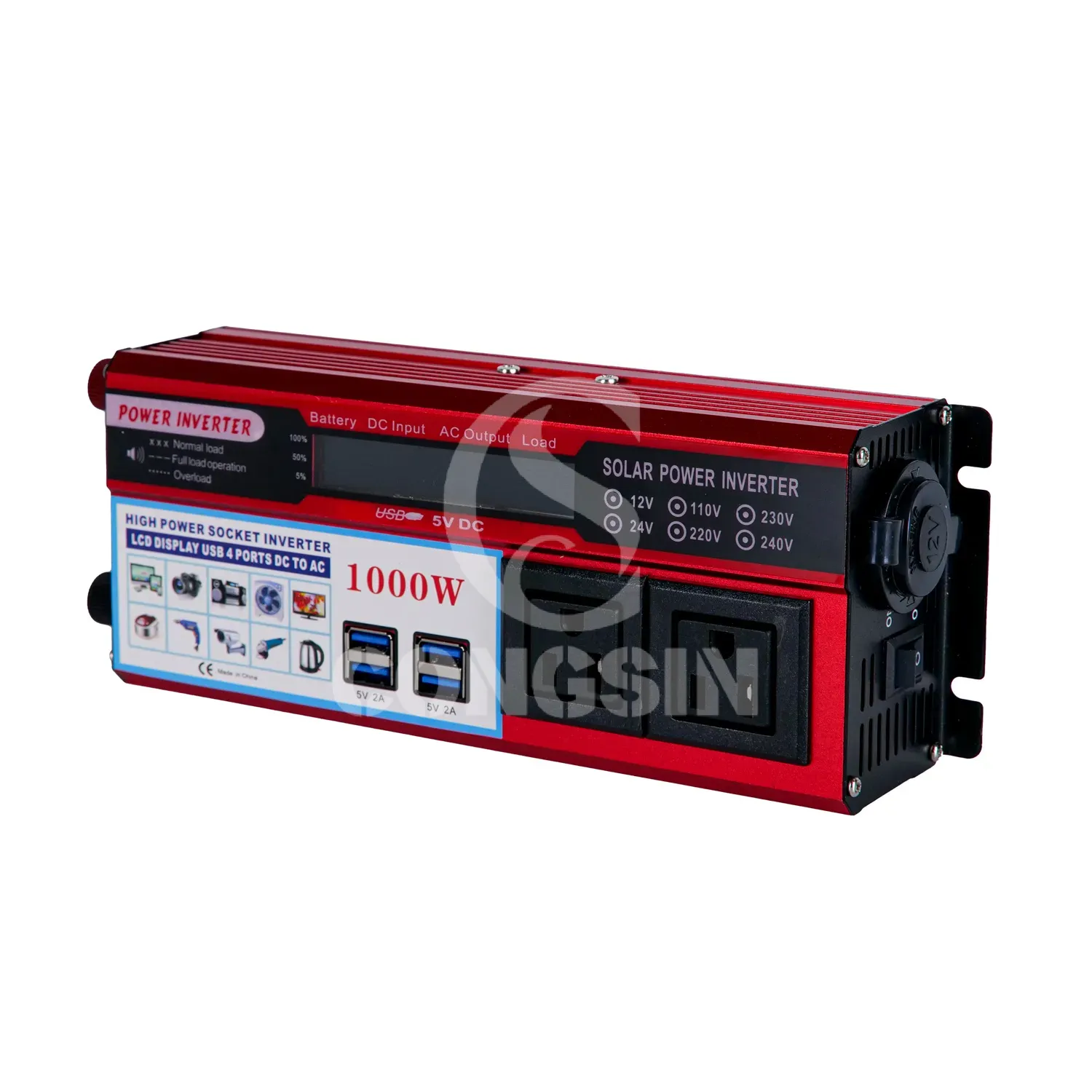
Congsin 1000W modified sine wave inverter with American Sockets and Lcd display portable 12V car RV
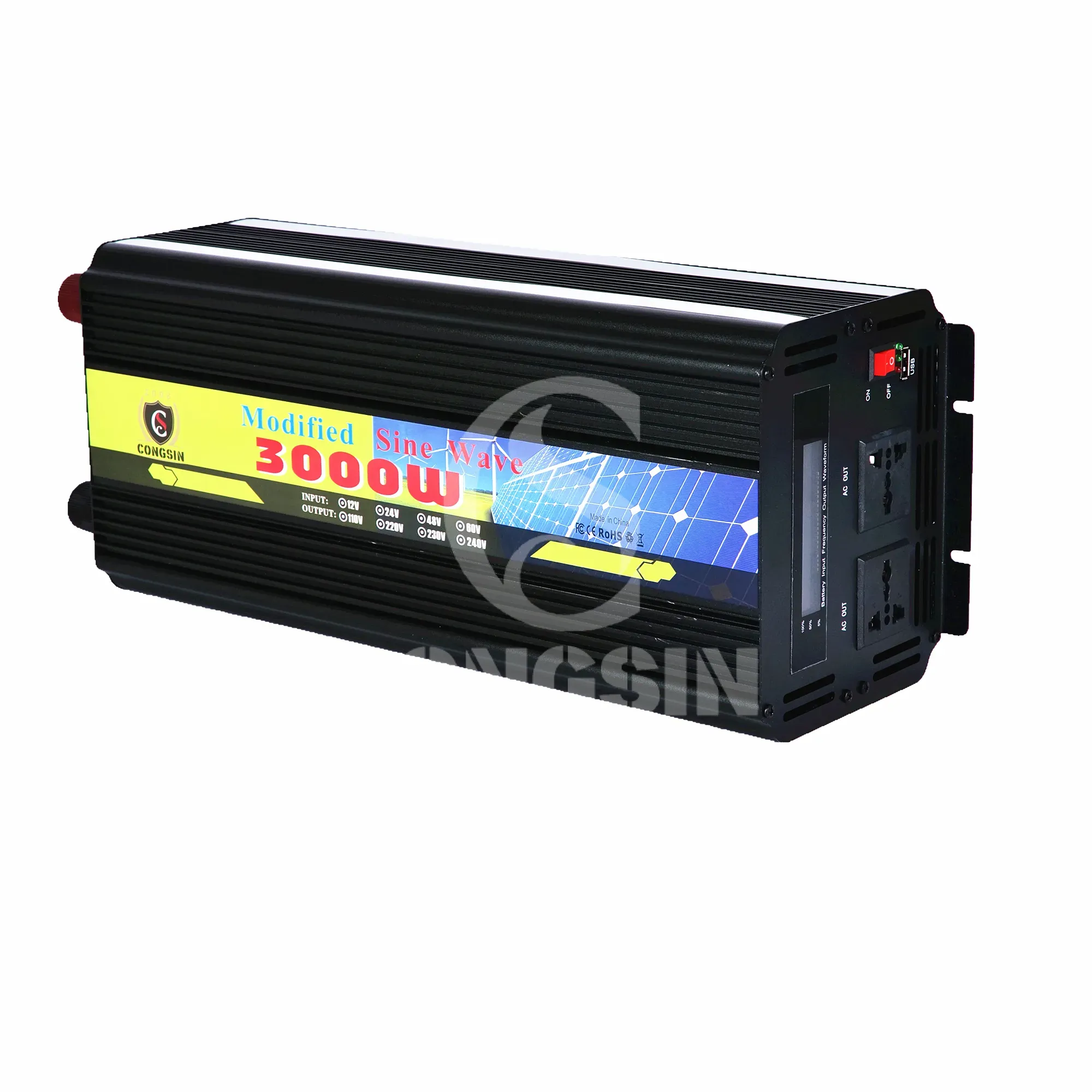
Congsin Full Power 3000W Modified Sine Wave Inverter Peak Power 6000W with LCD Display RV Solar
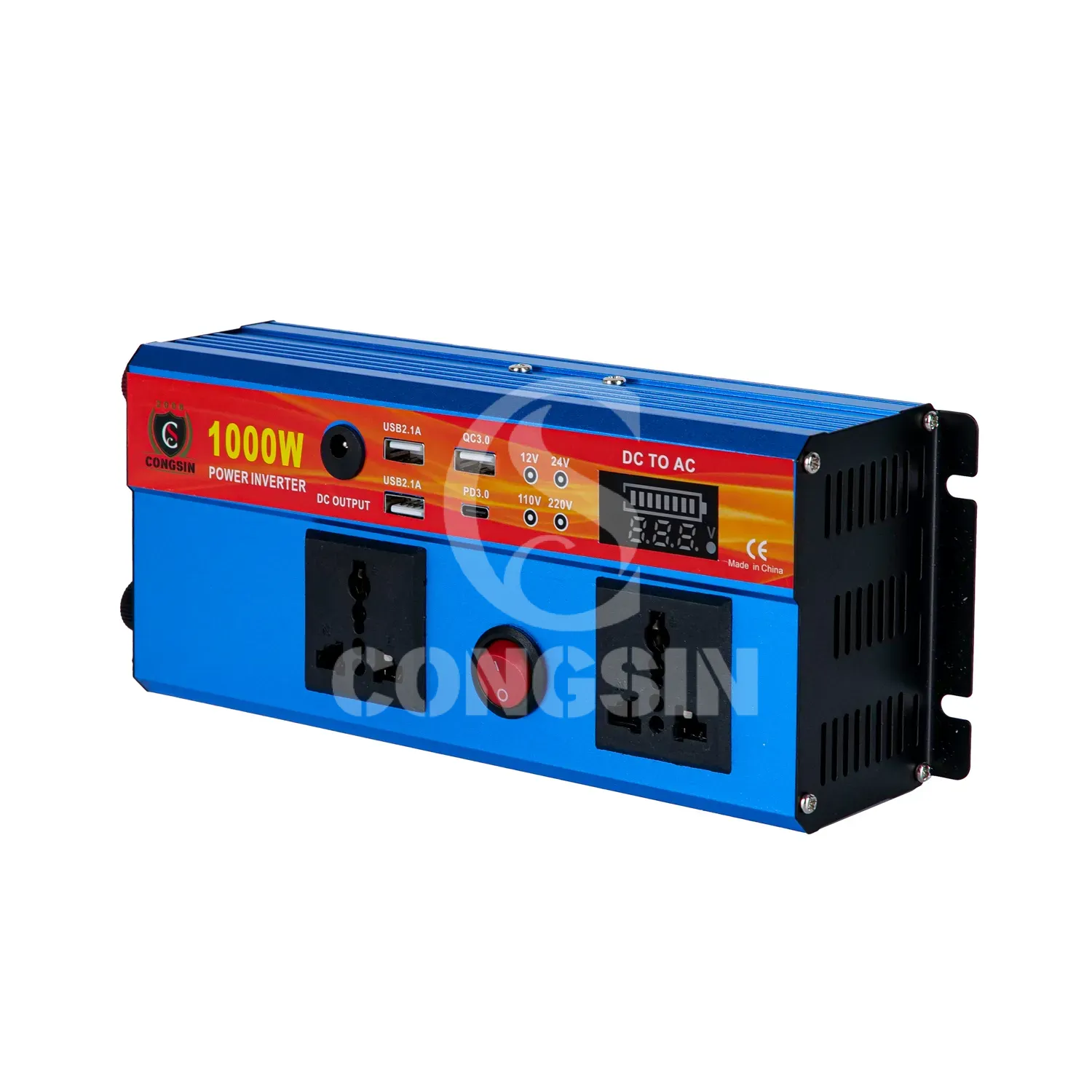
Congsin 1000W modified sine wave inverter with LED display and Type C port car RV power inverter
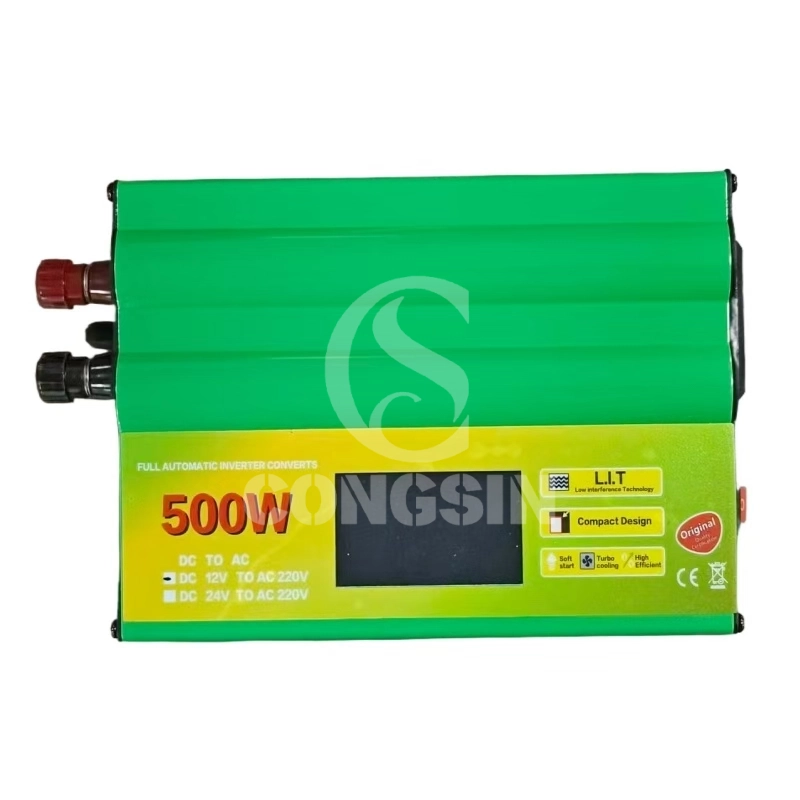
Congsin Modified Sine Wave Inverter 500W 1000W 1500W 12V LED Display Portable for RV Car Solar

CONGSIN is a trusted OEM factory for power inverters, solar charge controllers, and DC converters. Reliable solutions for global B2B buyers.
 High Quality
 7/24 Service
 Guaranteed Warranty
© 2025 Congsin. All Rights Reserved.