





Affordable High-Efficiency Solar Inverters for Homes
- Understanding Solar Inverter Basics
- What is a solar inverter?
- Key components and terminology
- Why efficiency matters for home systems
- Choosing the Best Solar Inverter for Home: Practical Criteria
- Efficiency and performance metrics to prioritize
- Cost vs value: affordable high-efficiency options
- Compatibility with panels, batteries and system topology
- Inverter type comparison
- Top affordable high-efficiency inverter configurations and recommendations
- Budget-friendly pure sine wave inverters
- Hybrid inverters for future-proof homes
- When microinverters make sense
- Installation, maintenance and long-term performance
- Sizing and installation tips
- Monitoring, maintenance and performance verification
- Warranty, certifications and safety
- Why choose Guangzhou Congsin Electronic Technology Co., Ltd.?
- Company background and proven capabilities
- Product range, certifications and innovation
- OEM/ODM support and global reach
- Putting it together: a practical checklist to buy the best solar inverter for home
- Frequently Asked Questions (FAQ)
- 1. What is the most efficient type of inverter for a typical home?
- 2. Can I use a modified sine wave inverter at home to save money?
- 3. How do I size an inverter for my solar array and battery?
- 4. What warranties and certifications should I ask for?
- 5. How do microinverters compare to string inverters in cloudy or shaded conditions?
- 6. Are hybrid inverters more expensive to maintain?
Searching for the best solar inverter for home use means balancing upfront cost, long-term efficiency, reliability and compatibility with your solar panels and battery systems. This article provides practical guidance for homeowners and installers: how solar inverters work, what performance numbers really matter, which inverter types deliver the most value, and how to compare affordable high-efficiency models. It also highlights trusted industry references and supplier capabilities to help you make a verifiable, confident purchase.
Understanding Solar Inverter Basics
What is a solar inverter?
A solar inverter converts the direct current (DC) produced by photovoltaic (PV) panels into alternating current (AC) used by household appliances or exported to the grid. Modern residential inverters include MPPT (Maximum Power Point Tracking), monitoring and sometimes battery charging functions. For a technical overview of inverters and their role in electrical systems, see the inverter entry on Wikipedia (Inverter — Wikipedia).
Key components and terminology
Important terms to understand when evaluating the best solar inverter for home: MPPT efficiency, inverter efficiency (often peak and weighted), THD (total harmonic distortion), continuous power rating, surge capacity, battery compatibility (if hybrid), and IP rating for outdoor use. These figures determine real-world performance more than marketing labels.
Why efficiency matters for home systems
Inverter efficiency directly affects how much of your PV energy becomes usable AC power. Higher inverter efficiency reduces energy losses and improves payback time—especially critical where export tariffs are low or battery backup is used. Typical modern string and hybrid inverters operate in the high-90s percent range at optimal loads; microinverters also achieve similar efficiencies at panel level but with different cost profiles (see comparison table below).
Choosing the Best Solar Inverter for Home: Practical Criteria
Efficiency and performance metrics to prioritize
Ask for both peak efficiency and weighted (EU or California) efficiency numbers. The weighted efficiency reflects real-world partial-load conditions better than a single peak number. Also check MPPT range and number of MPPT inputs if your roof has multiple orientations or shading. Look for low no-load consumption to reduce standby losses, particularly for off-grid or battery-coupled systems.
Cost vs value: affordable high-efficiency options
True affordability considers lifetime energy yield, warranty length, and support. A slightly more expensive inverter with 5–10 years longer warranty and better monitoring may deliver lower $/kWh over its service life. Compare total installed cost (hardware + installation) not only product price.
Compatibility with panels, batteries and system topology
Ensure the inverter supports your PV string voltage, panel power range and battery chemistry (if applicable). Hybrid inverters combine solar conversion with battery charge/discharge and may simplify wiring, but confirm supported battery voltages, round-trip efficiency and battery management capabilities.
Inverter type comparison
Different inverter architectures suit different homeowner goals—cost reduction, maximum production, backup capability, or simple off-grid use. The table below summarizes typical performance and use-cases.
| Type | Typical efficiency | Typical installed cost (USD) | Best for | Pros / Cons |
|---|---|---|---|---|
| String inverter | 95%–98% (modern models) | $800–$3,000 (depending on capacity) | Most residential roofs with uniform orientation | High efficiency, lower cost per watt; shading on one string affects output |
| Microinverters | 95%–97% per panel | $150–$300 per panel (installed) | Shaded/complex roofs, panel-level monitoring | Maximizes per-panel output, modular; higher upfront cost |
| Hybrid (battery-ready) inverter | 94%–98% (varies) | $1,200–$4,000 | Homes planning battery backups or self-consumption optimization | Combines inverter + charge controller; simplifies BESS integration |
| Off-grid (standalone) inverter | 85%–95% (depends on topology) | $500–$3,000 | Remote cabins, full off-grid homes | Designed for battery management and loads without grid; requires proper sizing |
Sources on inverter types and general performance: NREL resources on PV systems (NREL) and inverter/MPPT descriptions on Wikipedia (Inverter — Wikipedia).
Top affordable high-efficiency inverter configurations and recommendations
Budget-friendly pure sine wave inverters
Pure sine wave inverters produce clean AC with low THD suitable for sensitive electronics. For homes aiming at backup power or basic off-grid use, a pure sine wave inverter in the 1–5 kW range with continuous efficiency >90% is often the best blend of cost and performance. Avoid modified sine wave inverters for household use if you expect to power modern appliances and electronics—pure sine is the safer, more compatible choice.
Hybrid inverters for future-proof homes
If you plan to add batteries or prioritize self-consumption, a hybrid inverter (also called multi-mode) can save cost and integration complexity. When evaluating hybrid models, request round-trip efficiency figures for battery operation and confirm the supported depth-of-discharge, charge/discharge rates and battery chemistry compatibility.
When microinverters make sense
Choose microinverters when panels face multiple azimuths, there is module-level shading, or you need granular monitoring and panel-level redundancy. While per-watt cost is higher, increased energy harvest and simplified expansions can offset the High Quality over a standard string inverter for complex roofs.
Installation, maintenance and long-term performance
Sizing and installation tips
Proper sizing protects inverter longevity and performance. Oversizing PV array relative to inverter AC rating (a practice called DC/AC ratio >1) is common to maximize energy harvest during low-irradiance periods—typical DC/AC ratios range from 1.1 to 1.3. However, keep within manufacturer recommendations to avoid clipping losses and warranty issues. Always use a certified installer and adhere to local grid interconnection rules and standards.
Monitoring, maintenance and performance verification
Choose inverters with built-in monitoring or compatible gateways so you can track production, detect faults and verify performance over time. Regular maintenance includes visual inspections, firmware updates and keeping ventilation clean—especially for ventilated outdoor units. Monitoring data also helps validate efficiency claims and supports warranty or insurance claims.
Warranty, certifications and safety
Longer warranties (5–12 years, extendable to 20) often signal manufacturer confidence. Verify safety and EMC certifications (CE, ETL, FCC, RoHS, E-MARK and standards compliance such as IEC 62109 for safety) when selecting equipment. Manufacturers with automated production, ISO9001 quality management and independent testing labs tend to provide more consistent product quality and traceability.
Why choose Guangzhou Congsin Electronic Technology Co., Ltd.?
Company background and proven capabilities
Guangzhou Congsin Electronic Technology Co., Ltd., founded in early 1998, is a professional power inverter manufacturer with over 27 years of focused experience. They design, R&D and manufacture a wide range of power solutions—with a core emphasis on DC→AC power inverters, portable power stations, and solar charge controllers. Their long history in power electronics, combined with production automation, supports consistent quality for residential inverter applications.
Product range, certifications and innovation
Congsin’s catalog includes 100+ models tailored for vehicles, solar systems, RVs and trucks, off-grid homes, outdoor offices, patrol and field construction work. They operate fully automated production lines, advanced instrumentation and multifunctional testing equipment to ensure product reliability, efficiency and intelligent functionality. Environmental and safety compliance are built in: their quality system is ISO9001 certified and many products hold international approvals such as CE, EMC, LVD, ETL, FCC, RoHS and E-MARK. Several independently developed patents further demonstrate their commitment to innovation and practical engineering.
OEM/ODM support and global reach
Congsin’s products serve global markets across Europe, the Americas, the Middle East, Africa and Southeast Asia; many models are supplied to domestic and international OEM channels. Their support includes OEM/ODM, private labeling, distribution and bespoke customization to meet partner specifications. Core products relevant to homeowners and installers include solar charge controllers, modified sine wave inverters, pure sine wave inverters and portable power stations—giving a manufacturer-backed path from simple affordable home inverters to integrated hybrid systems.
Putting it together: a practical checklist to buy the best solar inverter for home
- Confirm system goals: grid-tied, self-consumption optimization, backup or full off-grid.
- Match inverter MPPT range and inputs to panel strings and orientations.
- Prioritize weighted/part-load efficiency, not just peak numbers.
- Check battery compatibility and round-trip efficiency for hybrid choices.
- Verify certifications, warranty length and after-sales support (local service availability).
- Consider automated production, ISO certification and third-party approvals as indicators of manufacturing reliability.
Frequently Asked Questions (FAQ)
1. What is the most efficient type of inverter for a typical home?
For most homes, a modern string or hybrid inverter with high weighted efficiency (95%–98%) provides the best balance of efficiency and cost. Microinverters can match panel-level efficiency and increase production on complex roofs but generally cost more per watt.
2. Can I use a modified sine wave inverter at home to save money?
Modified sine wave inverters are less expensive but can cause issues with motors, audio/video equipment and some chargers. For residential solar where sensitive electronics are in use, choose a pure sine wave inverter for compatibility and lower THD.
3. How do I size an inverter for my solar array and battery?
Work with an installer to calculate expected peak AC load, continuous load and starting surge requirements. For PV sizing, confirm the DC/AC ratio (typically 1.1–1.3) that the inverter supports. For battery-coupled systems, verify inverter charge/discharge rates and battery voltage compatibility.
4. What warranties and certifications should I ask for?
Seek a manufacturer warranty of at least 5 years (extendable if possible), and certifications such as CE, ETL, LVD, EMC, RoHS, and compliance with safety standards like IEC 62109. ISO9001 production systems and third-party test reports are additional quality indicators.
5. How do microinverters compare to string inverters in cloudy or shaded conditions?
Microinverters optimize each panel independently, so shading or mismatch affects only the shaded panel, improving overall energy harvest on shaded or multi-aspect roofs. String inverters may lose output from the entire string when one panel is shaded unless module-level power electronics (e.g., power optimizers) are used.
6. Are hybrid inverters more expensive to maintain?
Hybrid inverters combine functionalities (inverter + battery charging) which simplifies system architecture and can reduce total parts. Maintenance needs are similar to other inverters—firmware updates, occasional inspections, and monitoring. Ensure manufacturer support and local service availability when choosing hybrid models.
If you want tailored recommendations for your rooftop, battery plan or off-grid project, contact our technical team to review site specifics and suggest the best, affordable high-efficiency inverter options. Explore Guangzhou Congsin’s product lines including Solar Charge Controllers, modified sine wave inverters, pure sine wave inverters and portable power stations for reliable residential and mobile power solutions.
Contact us to request product specs, OEM/ODM options and pricing, or visit our product pages to view model datasheets and certification documents.
References: NREL (US National Renewable Energy Laboratory) https://www.nrel.gov/, Inverter (electrical) — Wikipedia https://en.wikipedia.org/wiki/Inverter_(electrical).
Pure Sine Wave vs Modified: Best Inverter for Car Batteries
Top 10 high frequency power inverter Manufacturers and Supplier Brands
Portable Pure Sine Wave Inverters for Emergency Power Backup
24V Pure Sine Inverters vs Modified: Why Pay More?
Modified Sine Wave Inverters
What devices can this inverter power?
Rated for 600W, peak 1000W. Recommended to use devices under 80% of rated capacity.
What devices can be powered by the cigarette lighter port?
The cigarette lighter port can be used for car air pumps, car refrigerators, car vacuum cleaners and other conventional cigarette lighter powered devices, as long as the power does not exceed 300W.
How to install the battery terminal wire?
Connect the red terminal wire to the positive pole of the battery and the black terminal wire to the negative pole. Ensure the interface is firm and there is no short circuit when connecting.
What devices can this inverter support?
It can power laptops, phones, cameras, and other small appliances.
Pure Sine Wave Inverters
Is the remote control standard?
It’s optional and available upon request.
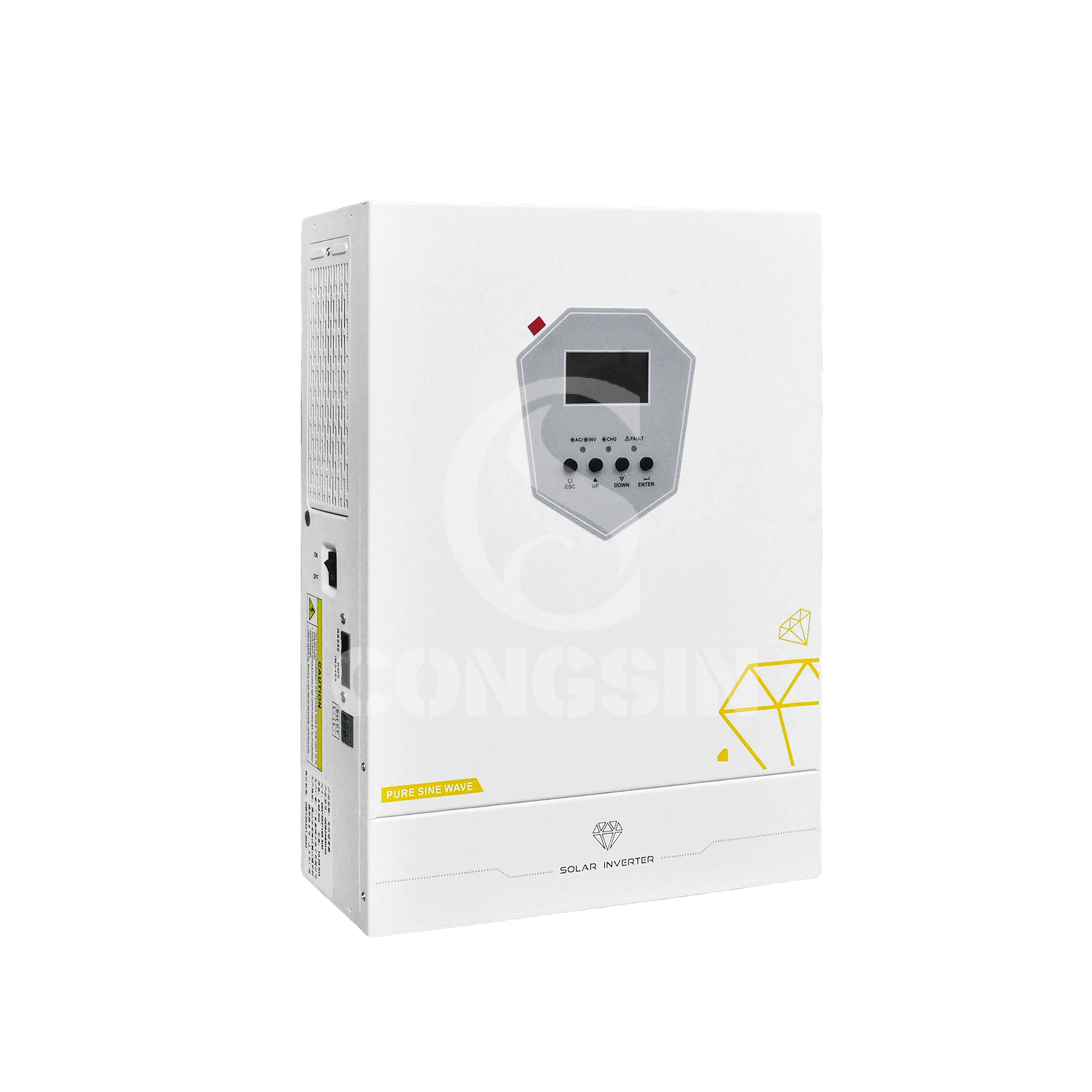
Factory Direct Sales 6000W Hybrid Solar Power Inverter with Controller and LCD Display
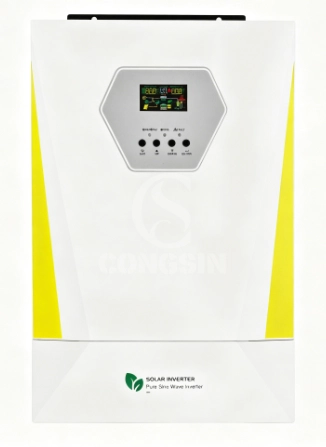
Congsin 4000W and 6000W Hybrid Inverter with Controller with LCD Display and CE Certification Solar
Power your solar system efficiently with the Congsin 4000W and 6000W Hybrid Inverter. Featuring an integrated MPPT Controller, this CE Certified inverter ensures optimal energy conversion. Monitor performance effortlessly via the intuitive LCD Display. Reliable, powerful, and ready for your sustainable energy needs.
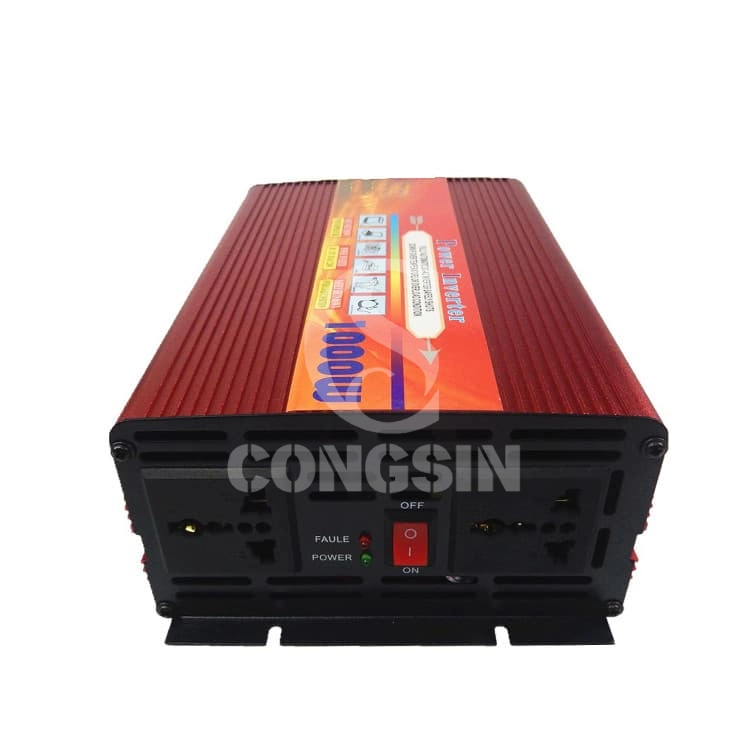
Congsin Manufacturer Wholesales Big Capability Modified Sine Wave Inverter with Red case and Double fan
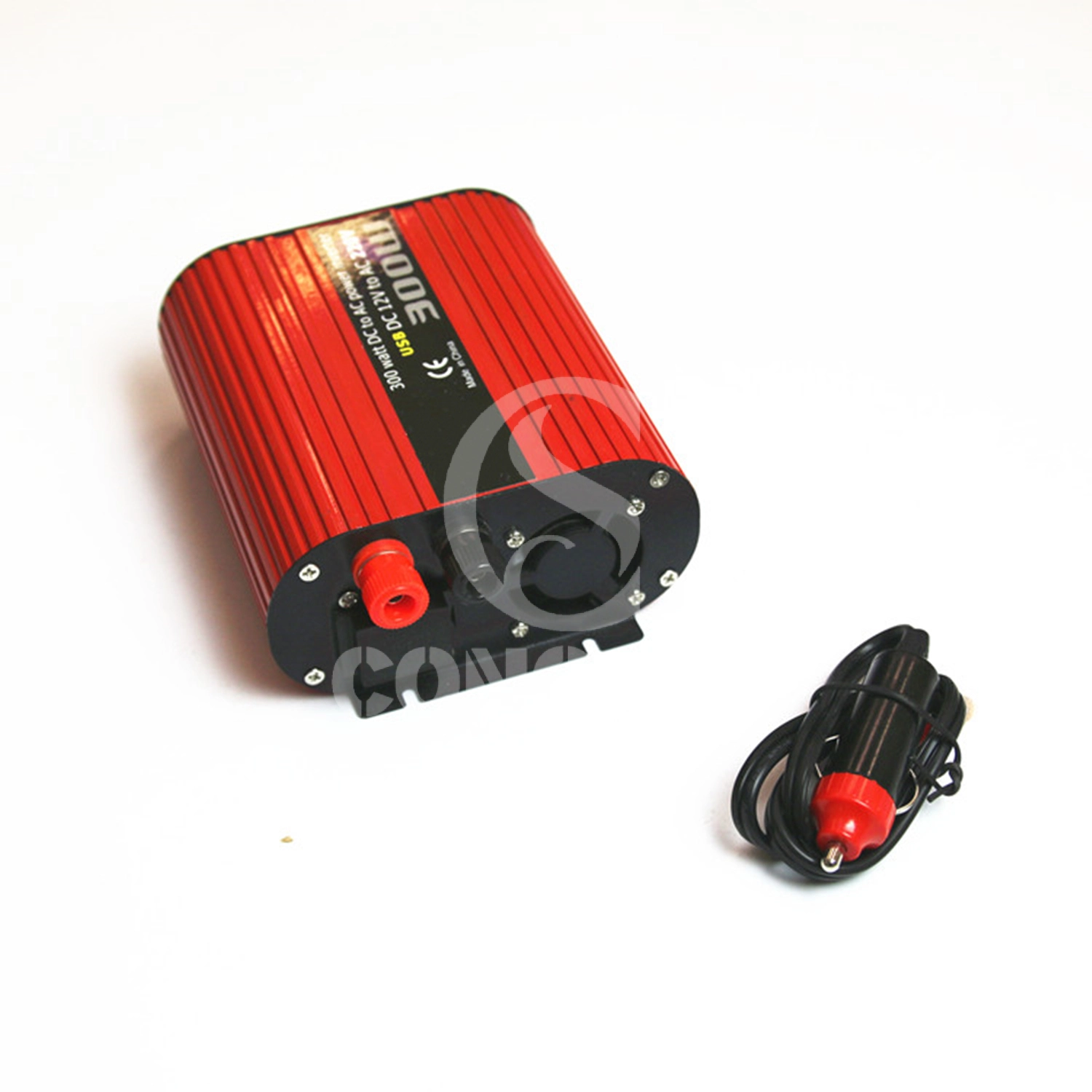
Factory Direct Sales Portable 150W Modified Sine Wave Inverter DC12V to AC220V Off-grid Sine Wave Inverter with Two USB and Universal Socket
Congsin's Portable 150W Modified Sine Wave Inverter powers your journey! This versatile Car Power Inverter with USB acts as a reliable 12V to 220V converter, ensuring an essential off-grid power supply. With dual USB ports and a universal socket, enjoy convenient power on the go.

CONGSIN is a trusted OEM factory for power inverters, solar charge controllers, and DC converters. Reliable solutions for global B2B buyers.
 High Quality
 7/24 Service
 Guaranteed Warranty
© 2025 Congsin. All Rights Reserved.
 WeChat
 Scan QR Code
sin cong
teaimei10
Whatsapp: +8618028086791
Scan QR Code