





Top 5 solar charge controller Company List and Products Compared
- Introduction — Why choose the right solar charge controller matters
- and what this guide delivers
- How to evaluate a solar charge controller — quick buyer checklist
- Key buying factors for solar charge controller selection
- Victron Energy — High Quality MPPT controllers for reliability and integration
- Product highlight and target users
- Morningstar Corporation — industrial-grade controllers and long-life designs
- Product highlight and target users
- Renogy — consumer-friendly controllers for RV, marine and DIY solar
- Product highlight and target users
- EPEVER (EPsolar) — wide model range, strong MPPT value options
- Product highlight and target users
- Guangzhou Congsin — specialized Chinese manufacturer with OEM/ODM strength
- Company profile and product positioning
- Comparison table — at-a-glance features of top 5 solar charge controller companies
- Technical comparison and real-world guidance
- MPPT vs PWM: why MPPT is often worth the High Quality
- Monitoring and communications—choose what you need
- Recommendations by application — how to pick the right brand and model
- Small RV/boat or DIY cabin (budget-conscious)
- Off-grid home or commercial micro-grid
- OEM integration, vehicle fleets and RV manufacturers
- Buying tips — avoid common mistakes when purchasing a solar charge controller
- Checklist before you buy a controller
- Conclusion — which solar charge controller brand to choose
- Decision summary and practical next steps
- Frequently Asked Questions
- Sources and further reading
Introduction — Why choose the right solar charge controller matters
and what this guide delivers
People searching for “solar charge controller” usually want actionable guidance: which brands and models are reliable, what technical differences matter (MPPT vs PWM, voltage/current limits, efficiency), and which product suits their system (RV, off-grid home, commercial). This article compares five reputable manufacturers—Victron Energy, Morningstar, Renogy, EPEVER (EPsolar), and Guangzhou Congsin—and highlights competitive products, real technical points, advantages and disadvantages, and best-use scenarios to help you make an informed buying decision.
How to evaluate a solar charge controller — quick buyer checklist
Key buying factors for solar charge controller selection
Before comparing brands, check these essential metrics: controller type (MPPT or PWM), maximum PV open-circuit voltage (Voc) and battery current rating (A), conversion efficiency, battery chemistry support (lead‑acid, AGM, GEL, LiFePO4), communications and monitoring (Bluetooth/Wi‑Fi/RS485), safety and certifications, and environmental ratings (IP or thermal limits). These will determine real-world energy harvest, compatibility and reliability.
Victron Energy — High Quality MPPT controllers for reliability and integration
Product highlight and target users
Victron Energy’s SmartSolar MPPT series is widely used in marine, off-grid homes and commercial installations that need strong monitoring and integration with inverters and battery systems. Victron emphasizes build quality, software integration and long warranty support.
Advantages: High build quality and software ecosystem (VictronConnect), robust thermal design, reliable MPPT algorithms, strong global support network.
Disadvantages: Higher purchase price versus consumer brands; some models may be over-specified for small portable setups.
Technical points: Victron MPPT controllers commonly support Bluetooth monitoring, multiple battery chemistries and MPPT efficiencies typically quoted in the high 90% range for steady-state operation. Models vary in PV Voc input capability and current output—select according to system voltage and PV array design.
Applications: Best for marine systems, off-grid homes and commercial installs where monitoring, integration and reliability are top priorities.
Morningstar Corporation — industrial-grade controllers and long-life designs
Product highlight and target users
Morningstar is known for robust industrial and telecom-grade controllers, including MPPT and PWM lines. Products such as the TriStar MPPT are common in remote power sites and telecom due to strict reliability and long MTBF characteristics.
Advantages: Very reliable designs with proven track records in harsh environments; conservative thermal ratings and long-life components; good for mission-critical and remote installations.
Disadvantages: Less emphasis on consumer mobile apps; mid-to-high price bracket; product range is focused on fixed utility and telecom use-cases rather than portable/RV markets.
Technical points: Morningstar focuses on robust MPPT control, low self‑consumption, temperature-compensated charging and extensive protection features. Their controllers often include detailed event logging and advanced charge algorithms for maximizing battery life.
Applications: Telecom, off-grid homes with long service life requirements, remote monitoring stations and solar pumping when uptime and reliability are primary goals.
Renogy — consumer-friendly controllers for RV, marine and DIY solar
Product highlight and target users
Renogy targets the DIY, RV and marine market with affordable MPPT and PWM controllers (e.g., the Rover MPPT series). Their products balance cost, feature set and easy-user interfaces for hobbyists and light commercial users.
Advantages: Competitive pricing, user-friendly apps and display devices, broad availability through consumer channels and quick support for DIYers.
Disadvantages: Build quality and long-term durability can lag behind High Quality industrial brands; higher-end features and certifications may be limited on budget models.
Technical points: Rover MPPT controllers typically offer MPPT efficiency in the high 90s, multiple battery chemistry settings, and Bluetooth or wired monitoring on many models. They are well-suited for small-to-medium off-grid systems and vehicle installations.
Applications: RVs, boats, cabins and entry-level off-grid homes where budget and ease-of-installation are key priorities.
EPEVER (EPsolar) — wide model range, strong MPPT value options
Product highlight and target users
EPEVER (often marketed as EPsolar/EPEVER) provides a wide range of controllers from budget PWM models to feature-rich MPPT units for solar installers and OEM partners. Their Tracer and AN/BN series MPPTs are popular in cost-sensitive commercial and residential segments.
Advantages: Broad model range covering many voltages and currents; attractive price-to-performance ratios; available OEM/ODM options for system integrators.
Disadvantages: Software ecosystems and documentation quality may vary across models; support network is more fragmented than High Quality brands.
Technical points: EPEVER MPPT controllers typically advertise MPPT efficiencies in the high 90% range, support for multiple battery chemistries, programmable charging parameters and optional monitoring modules. Many models accept high Voc inputs suitable for larger PV arrays.
Applications: Residential PV systems, commercial small-scale installations and OEM systems where a balance between performance and cost is required.
Guangzhou Congsin — specialized Chinese manufacturer with OEM/ODM strength
Company profile and product positioning
Guangzhou Congsin Electronic Technology Co., Ltd. (founded in 1998) is a manufacturer focused on power inverters, portable power stations and solar charge controllers. With automated production, ISO9001 quality systems and multiple international approvals, Congsin targets vehicle, RV, off-grid and OEM channels with more than 100 product models in power electronics.
Advantages: Long experience (27+ years), strong OEM/ODM and private-label capability, flexible product customization, and full production lines enabling cost-effective manufacturing for high-volume partners.
Disadvantages: For international buyers, brand recognition may be lower than long-established High Quality brands; product datasheets and regional support vary with distribution partners.
Technical points: Congsin’s product portfolio includes PWM and MPPT controller options tailored to vehicle, RV and off-grid applications, with emphasis on intelligent charging, safety features and compliance with CE/EMC/LVD and other marks. The company offers customization for battery chemistries and communications interfaces to fit OEM needs.
Applications: OEM integration, fleet/RV producers, off-grid homes, outdoor offices and field equipment where customized solutions and volume supply are important.
Comparison table — at-a-glance features of top 5 solar charge controller companies
| Company | Best for | Typical controller type | MPPT efficiency (typical) | Strengths | Price positioning |
|---|---|---|---|---|---|
| Victron Energy | High‑end off-grid, marine, integrated systems | MPPT (SmartSolar series) | High 90s (manufacturer-quoted) | Build quality, monitoring & integration, global support | High Quality |
| Morningstar | Industrial / telecom / long-life installations | MPPT & PWM | High 90s | Reliability, thermal design, low self-consumption | Mid-High |
| Renogy | RV, marine, DIY home systems | MPPT & PWM (Rover series) | High 90s | Affordable, easy to buy, consumer support | Budget-Mid |
| EPEVER (EPsolar) | Residential & small commercial, OEM | MPPT & PWM (Tracer/AN series) | High 90s | Wide model range, strong price-performance | Budget-Mid |
| Guangzhou Congsin | OEM, RV/vehicle, off-grid custom systems | MPPT & PWM (customizable) | Manufacturer typical high 90s (model dependent) | Customization, volume manufacturing, certifications | Competitive (OEM focus) |
Technical comparison and real-world guidance
MPPT vs PWM: why MPPT is often worth the High Quality
MPPT controllers extract more power from PV panels in most real-world conditions, especially when array voltage is higher than battery voltage or in variable light. Typical energy gains vs PWM range from single-digit percent to 10–30% depending on temperature, panel mismatch and cloud cover. For small portable systems the addition of MPPT must be balanced against cost; for rooftop, off-grid and commercial systems MPPT is usually the better choice.
Monitoring and communications—choose what you need
Bluetooth or Wi‑Fi monitoring is useful for RVs and homes. For industrial or multi-controller arrays, RS485/MODBUS support is valuable for integration into building management. Victron and Morningstar provide strong integration tools; Renogy and EPEVER offer consumer-friendly apps; Congsin supports OEM customization for communications per partner requirements.
Recommendations by application — how to pick the right brand and model
Small RV/boat or DIY cabin (budget-conscious)
Choose a Renogy Rover MPPT or a mid-range EPEVER MPPT. These provide good MPPT performance, simple setup and lower cost. Ensure the chosen model supports your panel Voc and battery chemistry (e.g., LiFePO4 if used).
Off-grid home or commercial micro-grid
Consider Victron for strong system integration and monitoring, or Morningstar for mission-critical reliability. EPEVER or Congsin can be cost-effective if you need multiple controllers and OEM customization for larger arrays.
OEM integration, vehicle fleets and RV manufacturers
Guangzhou Congsin is optimized for OEM/ODM and private labeling; EPEVER also supports custom firmware/hardware options. Select partners that offer documentation, regulatory compliance and long-term production stability.
Buying tips — avoid common mistakes when purchasing a solar charge controller
Checklist before you buy a controller
Confirm PV Voc > controller max Voc with temperature margin, ensure controller current rating exceeds maximum expected array current, verify battery compatibility and charging curves (especially for Li batteries), check thermal and IP ratings for installation environment, and prefer models with monitoring if you plan future expansion.
Conclusion — which solar charge controller brand to choose
Decision summary and practical next steps
If you want High Quality integration and long-term support, Victron is a strong choice. For industrial-grade reliability in harsh sites, choose Morningstar. For DIY, RV and entry-level off-grid projects, Renogy or EPEVER offer great value. If you need OEM/ODM capabilities, flexible customization and volume manufacturing, Guangzhou Congsin should be considered. Always match controller specs to your PV array, battery chemistry and monitoring needs before final purchase.
Frequently Asked Questions
Q: What is the main practical difference between MPPT and PWM controllers?A: MPPT actively tracks the solar panel's maximum power point to convert higher panel voltage to the battery voltage, delivering more energy especially in cool, low-light or mismatched conditions. PWM simply connects panels to batteries when charging and is cheaper but typically less efficient.
Q: How do I size a solar charge controller for my system?A: Pick a controller with a maximum current rating greater than the expected short-circuit/operating current of your PV array (with a safety margin), and ensure the controller's maximum PV Voc rating exceeds your array's Voc at lowest expected temperature.
Q: Do all controllers support Li-ion batteries like LiFePO4?A: Not all. Many MPPT controllers now support LiFePO4, but confirm firmware/charging profile support and whether battery management is required. Some manufacturers offer Li-specific profiles or allow custom charging parameters.
Q: Is monitoring necessary for a small system?A: Not strictly necessary, but monitoring helps diagnose issues, verify production and optimize performance—especially valuable for remote or hard-to-access systems.
Q: Can I mix brands of controllers and inverters in the same system?A: Yes—mixing brands is common—but verify communication compatibility (if you need integrated display or control), ensure proper grounding and protections, and confirm battery charging strategy across devices to avoid conflicts.
Sources and further reading
- Victron Energy — SmartSolar MPPT product pages and manuals. https://www.victronenergy.com/ (accessed 2025-12-20)
- Morningstar Corporation — TriStar and MPPT controller product information. https://www.morningstarcorp.com/ (accessed 2025-12-20)
- Renogy — Rover MPPT series product information. https://www.renogy.com/ (accessed 2025-12-20)
- EPEVER / EPsolar — Tracer/AN series controller documentation. https://www.epever.com/ (accessed 2025-12-20)
- Guangzhou Congsin Electronic Technology Co., Ltd. — company profile and product scope (company-supplied profile). (accessed 2025-12-20)
- General MPPT vs PWM performance overview — manufacturer white papers and installer guides (multiple vendor sources reviewed, accessed 2025-12-20).
Cost Breakdown: UPS Inverter Price, Installation, and ROI
How to Choose a Reliable 1000 Watt Car Inverter for Camping
Grid-Tied vs Off-Grid Inverters: Best Options for Homes
Maintenance Checklist for High Frequency Power Inverter Installations
OEM & ODM Services
What certifications do your products comply with?
All products meet CE, RoHS, FCC, and other market-specific compliance standards.
Modified Sine Wave Inverters
What is the difference between modified sine wave and pure sine wave?
Modified sine wave is suitable for most ordinary home appliances and electronic devices; pure sine wave is suitable for devices with extremely high power requirements (such as precision instruments). This modified sine wave is more cost-effective and meets the needs of most daily scenarios.
Is customization available?
OEM/ODM support for logo, color, and packaging design.
Pure Sine Wave Inverters
Will reversing the positive and negative poles damage the device when connecting the battery?
The device has a built-in reverse connection protection function, which will automatically cut off the circuit when the positive and negative poles are reversed to avoid damage caused by reverse current inflow; just adjust the connection order of the positive and negative poles of the battery clip and re-power on to use normally.
Distributor
What kind of distributors are you looking for?
We seek distributors with experience in the amusement or entertainment equipment industry and a strong local market presence.
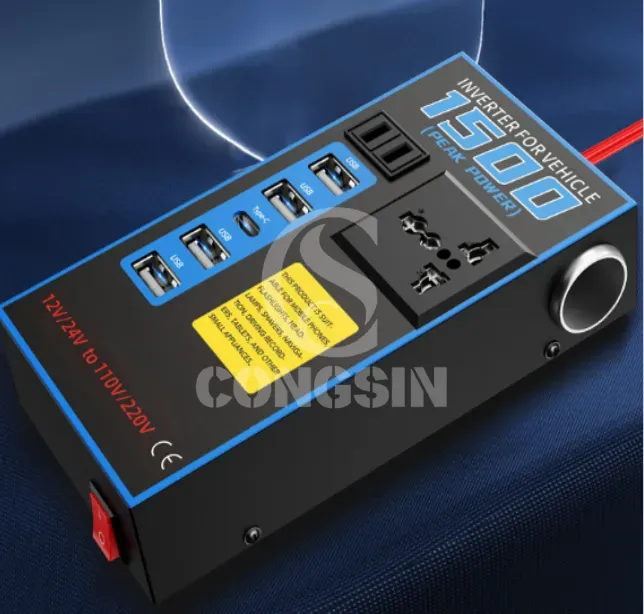
Congsin 1500W Inverter for Vehicle DC 12V/24V to AC 110V/220V with Universal socket Modified Sine Wave
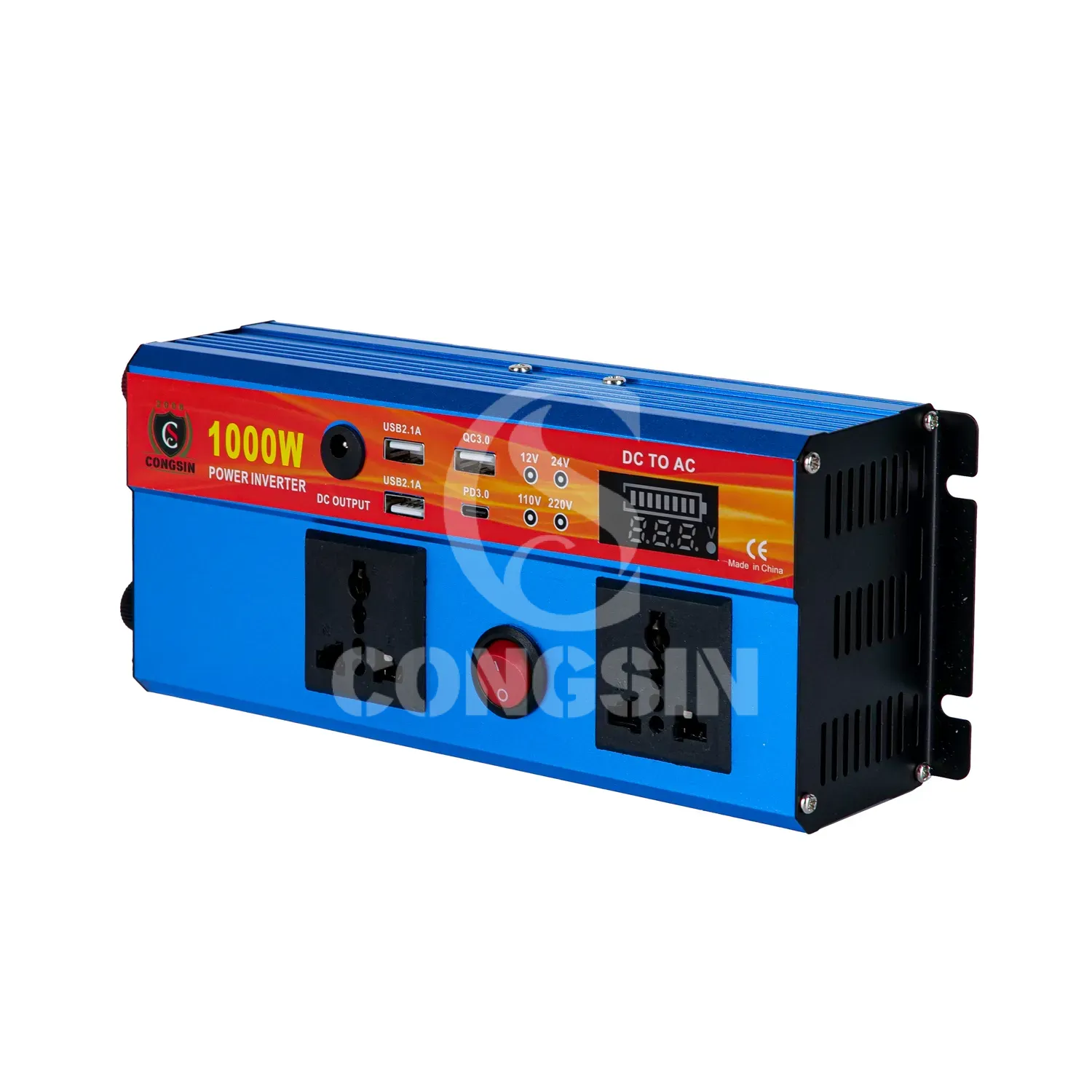
Congsin 1000W modified sine wave inverter with LED display and Type C port car RV power inverter
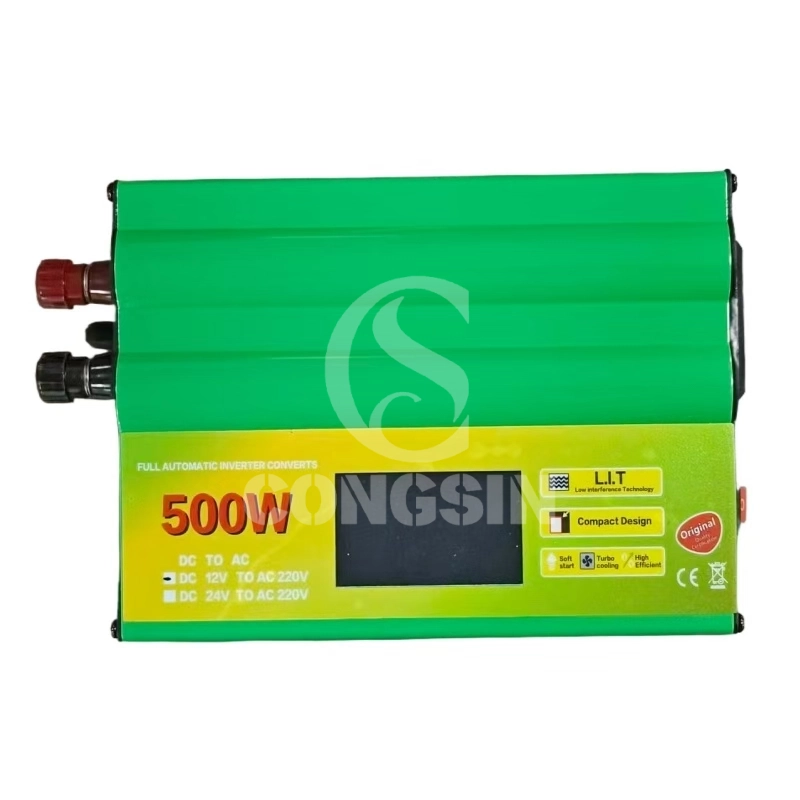
Congsin Modified Sine Wave Inverter 500W 1000W 1500W 12V LED Display Portable for RV Car Solar
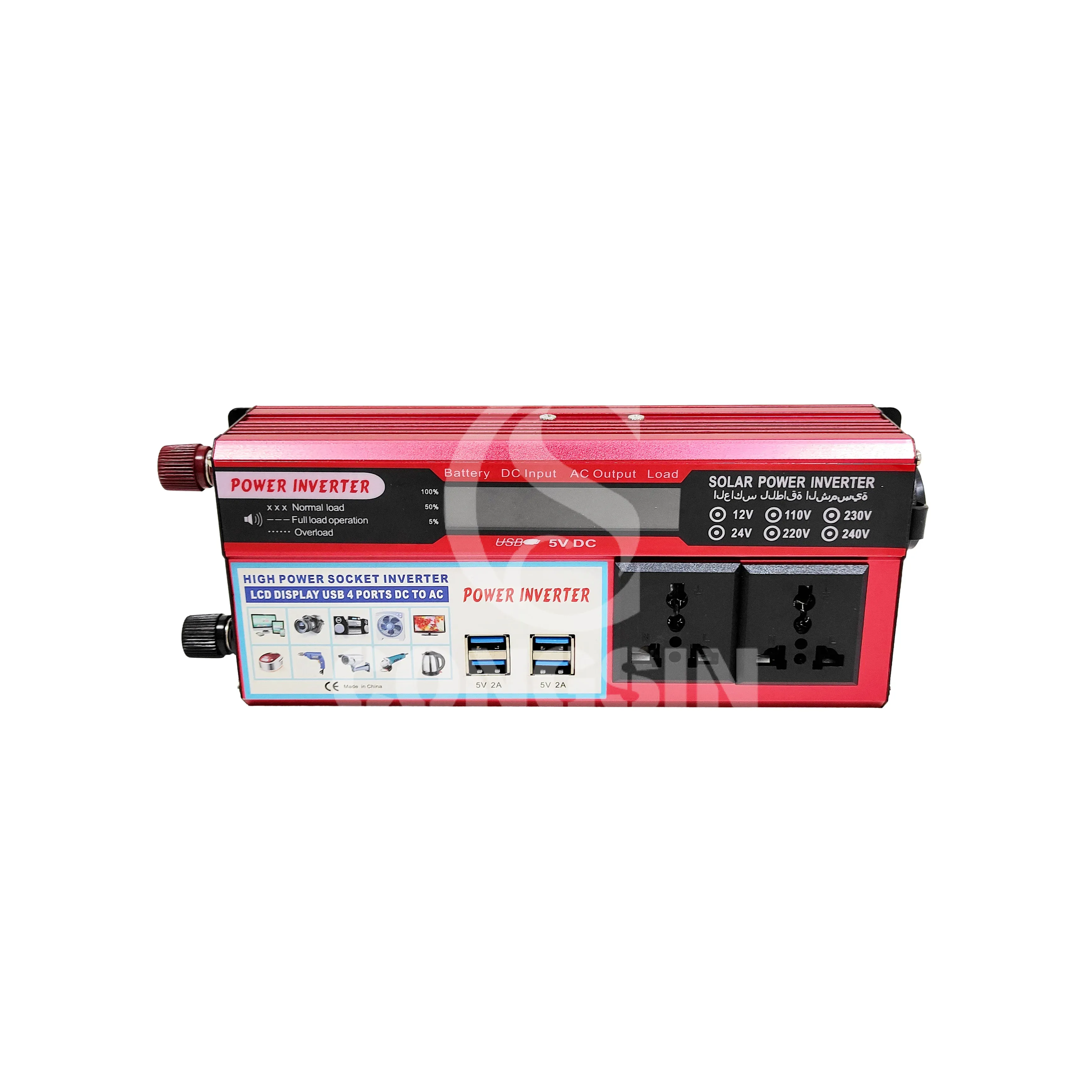
Congsin 1500W modified sine wave inverter with LCD display and USB ports for RV car boat home use

CONGSIN is a trusted OEM factory for power inverters, solar charge controllers, and DC converters. Reliable solutions for global B2B buyers.
 High Quality
 7/24 Service
 Guaranteed Warranty
© 2025 Congsin. All Rights Reserved.