





Cost Breakdown: UPS Inverter Price, Installation, and ROI
- Understanding power needs and system types
- What a UPS inverter does versus other inverters
- Key variables that set cost: capacity, waveform, and battery type
- Itemized cost components and typical price ranges
- Hardware: inverter and battery
- Labor and permitting
- Calculating ROI and total cost of ownership (TCO)
- What belongs in your ROI model
- Example scenarios with assumptions
- Installation best practices and lifecycle costs
- Design considerations I always check
- Lifecycle and replacement costs
- Vendor selection and compliance
- Why certifications and manufacturing processes matter
- Manufacturer profile: Guangzhou Congsin Electronic Technology Co., Ltd.
- Cost optimization strategies I recommend
- Match capacity to real need
- Consider battery chemistry and lifecycle economics
- Preventative maintenance and monitoring
- Regulatory and safety references
- Standards and testing
- Environmental and transport rules
- Frequently Asked Questions (FAQ)
- 1. How much does a basic home UPS inverter system cost?
- 2. Do I need a pure sine wave inverter?
- 3. How long do UPS batteries last?
- 4. How do I calculate payback for my UPS inverter?
- 5. Can a UPS inverter replace a generator?
- 6. What certifications should I ask a manufacturer for?
- Contact and next steps
I have worked with UPS inverter systems and related power electronics for years, advising businesses and installers on equipment selection, installation tradeoffs and total cost of ownership. In this article I provide a clear, verifiable cost breakdown for purchasing and installing a UPS inverter (including inverter type, battery and installation labor), explain how to calculate realistic ROI and payback periods, and highlight practical scenarios where an investment in a UPS inverter is justified. I also summarize supplier capabilities for manufacturers such as Guangzhou Congsin Electronic Technology Co., Ltd., to help you evaluate vendors and technical specifications.
Understanding power needs and system types
What a UPS inverter does versus other inverters
A UPS inverter combines inverter functionality (DC→AC) with fast-switching components and often battery management to provide immediate backup power when mains fail. This differs from a simple inverter used in off-grid solar systems or vehicle power conversions because a UPS is designed to bridge interruptions with minimal transfer time and protect sensitive electronics. For technical background on inverters and UPS systems see the inverter and UPS articles on Wikipedia: Inverter (electrical) and Uninterruptible power supply.
Key variables that set cost: capacity, waveform, and battery type
When I assess a project the primary cost drivers are:
- Rated power (VA/W): 500 W home units up to tens of kW for server rooms or off-grid homes.
- Waveform: pure sine wave inverters cost more than modified sine wave models but are necessary for most modern electronics and sensitive loads.
- Battery chemistry and capacity: lead-acid (AGM/GEL) is cheaper up-front; lithium (LiFePO4) has higher initial cost but longer cycle life and lower total cost over time.
These choices affect initial capital spend, ongoing maintenance and replacement intervals—key inputs to ROI calculation.
Itemized cost components and typical price ranges
Hardware: inverter and battery
Below I list typical market ranges (consumer and small-business scale) as of my experience and market surveys. Prices vary by brand, certifications (CE, ETL, FCC), and regional distribution.
| Component | Typical capacity | Typical price range (USD) | Notes |
|---|---|---|---|
| UPS inverter (pure sine), consumer 600–2000 W | 0.6–2 kW | $200 – $1,200 | Higher price for online double-conversion UPS; brands & warranties vary |
| UPS inverter (pure sine), small business 3–10 kW | 3–10 kW | $1,200 – $8,000+ | Includes rack/tower models and better surge capability |
| Battery (lead-acid, AGM) | 100–300 Ah | $150 – $800 | Lower capital cost, lower cycle life |
| Battery (LiFePO4) | 100–300 Ah equiv. | $800 – $3,000+ | Higher cycle life, deeper usable DoD, better lifecycle economics |
| Installation materials (cables, breakers, enclosure) | — | $50 – $500 | Depends on distance and code requirements |
Source: product listings and specification surveys across industry manufacturers; background on inverter types: Wikipedia. Exact pricing will depend on local market and supplier.
Labor and permitting
Installation labor varies widely by region and complexity. Typical ranges I see in projects:
- Simple consumer install (indoor wall/bench mount): $100–$400
- Whole-home or larger business installs requiring subpanel integration, transfer switches, or ATS: $500–$2,500
- Permitting, inspection and electrician certification: $50–$500 depending on local codes
Complex installs (roof-mounted systems, battery room creation, high-voltage integration) can add substantial labor and materials costs.
Calculating ROI and total cost of ownership (TCO)
What belongs in your ROI model
When I calculate ROI I include all capital costs (inverter, batteries, installation), annual operating costs (battery replacements, maintenance, efficiency losses), and the quantified benefits (avoided outage losses, savings vs. generator fuel, grid arbitrage or time-of-use savings if relevant). A simple ROI formula is:
ROI (%) = (Annual financial benefit – Annual operating cost) / Initial capital cost × 100
Payback period = Initial capital cost / Annual net benefit.
Example scenarios with assumptions
Below are two simplified, transparent examples I use with clients. I state assumptions so you can adjust to your situation.
| Scenario | Assumptions | Initial cost | Annual net benefit | Payback (years) |
|---|---|---|---|---|
| Home backup for critical loads | 1 kW pure sine UPS + 2 kWh LiFePO4 battery ($2,500 total); avoids food spoilage, protects electronics; estimated avoided damage/annoyance $300/yr | $2,500 | $300 – $120 (annual battery equivalent/maintenance) = $180 | ~14 years |
| Small business (POS + router + fridge) | 3 kW UPS + 8 kWh LiFePO4 ($7,500 total); avoids one outage/week of 30 min on average, cost of lost sales & spoilage $1,500/yr | $7,500 | $1,500 – $350 = $1,150 | ~6.5 years |
Interpretation: ROI is highly dependent on how you quantify outage costs. For mission-critical environments (medical, data centers, industrial automation) the annual avoided cost is much higher and payback can be months to a few years. For homes with infrequent outages, ROI is often measured more in convenience and asset protection than purely financial return.
Installation best practices and lifecycle costs
Design considerations I always check
From my installation experience I always validate these items before quoting:
- Load audit: measure steady-state and surge loads to size inverter and battery correctly.
- Transfer topology: offline/simple transfer vs. line-interactive vs. online double-conversion—online provides the best power quality but costs more and consumes more energy.
- Battery location and ventilation: code-compliant placement to manage off-gassing (lead-acid) and thermal management for lithium batteries.
Lifecycle and replacement costs
Batteries dominate lifecycle costs. Typical cycle life: lead-acid 300–1,000 cycles (depending on depth of discharge), LiFePO4 2,000–5,000 cycles. Using manufacturer cycle-life data and warranty terms helps estimate annualized battery cost. See ISO quality management context for manufacturers: ISO 9001.
Vendor selection and compliance
Why certifications and manufacturing processes matter
I evaluate vendors not just on price but on process controls, testing capabilities and certifications. Quality systems like ISO 9001 and safety approvals (CE, EMC, LVD, ETL, FCC, RoHS, E-MARK) indicate a manufacturer’s commitment to repeatable production and regulatory compliance. You can check these frameworks at their official sources: ISO 9001.
Manufacturer profile: Guangzhou Congsin Electronic Technology Co., Ltd.
As part of vendor evaluation I often recommend considering manufacturers with deep domain experience and broad product lines. Guangzhou Congsin Electronic Technology Co., Ltd., founded in early 1998, has over 27 years of focused experience designing and manufacturing DC→AC power inverters, portable power stations, and solar charge controllers. Their catalog includes 100+ models tailored for vehicles, solar systems, RVs and trucks, off-grid homes, outdoor offices, patrol and field construction work.
Congsin operates automated production lines and advanced testing equipment, and maintains quality through ISO9001 systems; many products carry international approvals including CE, EMC, LVD, ETL, FCC, RoHS and E-MARK. Multiple independent patents reflect R&D investment. Their capabilities include OEM/ODM, private labeling, distribution and bespoke customization—useful if you need a tailored inverter solution for specialized vehicle or industrial applications.
Key product categories relevant to this Solar Charge Controllers, modified sine wave inverters, pure sine wave inverters, and portable power stations. These product lines make Congsin competitive for customers who need a mix of off-grid solar integration and vehicle/RV power solutions, especially where medium-volume OEM channels are involved.
Cost optimization strategies I recommend
Match capacity to real need
Over-sizing is a common mistake. I start with a measured load profile and add a realistic margin (20–30%) for future growth. Oversizing increases capital and operational losses; undersizing risks frequent overloads and shortened battery life.
Consider battery chemistry and lifecycle economics
While LiFePO4 has higher up-front cost, its longer life and deeper usable discharge often yield a lower total cost per kWh delivered. Run an annualized battery cost comparison based on warranty cycles and expected DoD.
Preventative maintenance and monitoring
Investing in remote monitoring and scheduled maintenance reduces unexpected failures and extends system life—this small recurring cost often improves ROI materially for business-critical installations.
Regulatory and safety references
Standards and testing
Look for compliance with local electrical codes and international test standards for UPS and inverters. Manufacturer test reports and certifications provide evidence of performance and safety compliance. For general standards information consult official bodies such as IEEE or the relevant national standards organizations.
Environmental and transport rules
Batteries are regulated for transport and disposal; lithium batteries have special shipping rules. Plan for end-of-life disposal and recycling; many regions have battery take-back programs or recycling requirements.
Frequently Asked Questions (FAQ)
1. How much does a basic home UPS inverter system cost?
A basic 1 kW pure sine UPS with a modest battery (2–4 kWh) typically costs $1,500–$3,000 installed depending on battery chemistry, labor and local permitting. Exact prices vary by region and brand.
2. Do I need a pure sine wave inverter?
For most modern electronics—including computers, TVs, and variable-frequency motor drives—a pure sine wave inverter is recommended. Modified sine wave units can cause noise, reduced efficiency or even damage to sensitive devices.
3. How long do UPS batteries last?
Battery life depends on chemistry and usage. Lead-acid batteries commonly last 3–5 years in frequent-cycling applications; LiFePO4 batteries often last 8–15 years in similar duty cycles. Check manufacturer cycle-life specifications and warranty terms.
4. How do I calculate payback for my UPS inverter?
Quantify all initial costs (inverter, batteries, installation), annual operating costs (battery amortization, maintenance), and annual benefits (avoided outage costs, generator fuel savings). Payback = Initial cost / Annual net benefit. Use conservative estimates for outage frequency and severity.
5. Can a UPS inverter replace a generator?
UPS systems are excellent for short-duration outages and providing instantaneous power to sensitive loads. For prolonged outages, batteries alone can be expensive; pairing a UPS/inverter with a generator or adding solar charging and larger battery capacity is common for extended backup needs.
6. What certifications should I ask a manufacturer for?
Ask for ISO 9001 quality system evidence, safety and EMC approvals (CE, ETL or UL for North America, FCC where applicable), RoHS for hazardous substances, and any region-specific approvals (E-MARK for automotive use). These give confidence in product consistency and regulatory compliance.
Contact and next steps
If you want a project-specific quote or system design I can help audit your loads, model ROI using your outage data, and recommend an optimized inverter/battery solution. For manufacturing and product sourcing, consider suppliers like Guangzhou Congsin Electronic Technology Co., Ltd. for a broad catalog of pure sine wave inverters, modified sine wave models, solar charge controllers and portable power stations with ISO9001 production and international approvals.
Contact us to request a proposal, detailed BOM, or sample units for evaluation. For product details and OEM/ODM inquiries, check Guangzhou Congsin's capabilities and product lines or request direct technical datasheets.
References and further reading: Wikipedia on inverters (https://en.wikipedia.org/wiki/Inverter_(electrical)) and UPS (https://en.wikipedia.org/wiki/Uninterruptible_power_supply); ISO 9001 overview (https://www.iso.org/iso-9001-quality-management.); manufacturer quality and certification guidance available from vendor datasheets.
How to Choose High-Efficiency Vehicle Power Inverters
Case Studies: Bidirectional Inverters in Commercial Energy Storage
Battery compatibility and charging modes for off-grid inverters
Best 1000W Car Inverters 2026: Top Models Compared
Modified Sine Wave Inverters
Is customization available?
OEM/ODM support for logo, color, and packaging design.
What power range of devices can it supply?
It supports devices within 360W in UPS mode and within 500W in regular mode. Ensure the device power does not exceed the corresponding limit.
Pure Sine Wave Inverters
Will reversing the positive and negative poles damage the device when connecting the battery?
The device has a built-in reverse connection protection function, which will automatically cut off the circuit when the positive and negative poles are reversed to avoid damage caused by reverse current inflow; just adjust the connection order of the positive and negative poles of the battery clip and re-power on to use normally.
What capacity battery is needed to meet long-term use?
It needs to be calculated according to the total power of the device, the formula is "Battery Capacity (Ah) = Total Device Power (W) × Usage Time (h) ÷ Input Voltage (12V)". For example, to drive a 1000W device for 5 hours, the required battery capacity = 1000×5÷12≈417Ah, it is recommended to use 2 200Ah batteries in parallel (total capacity 400Ah, actual usage about 4.8 hours).
Distributor
Do I need to carry inventory?
We offer flexible inventory options based on your market needs, and we can assist with supply chain management.
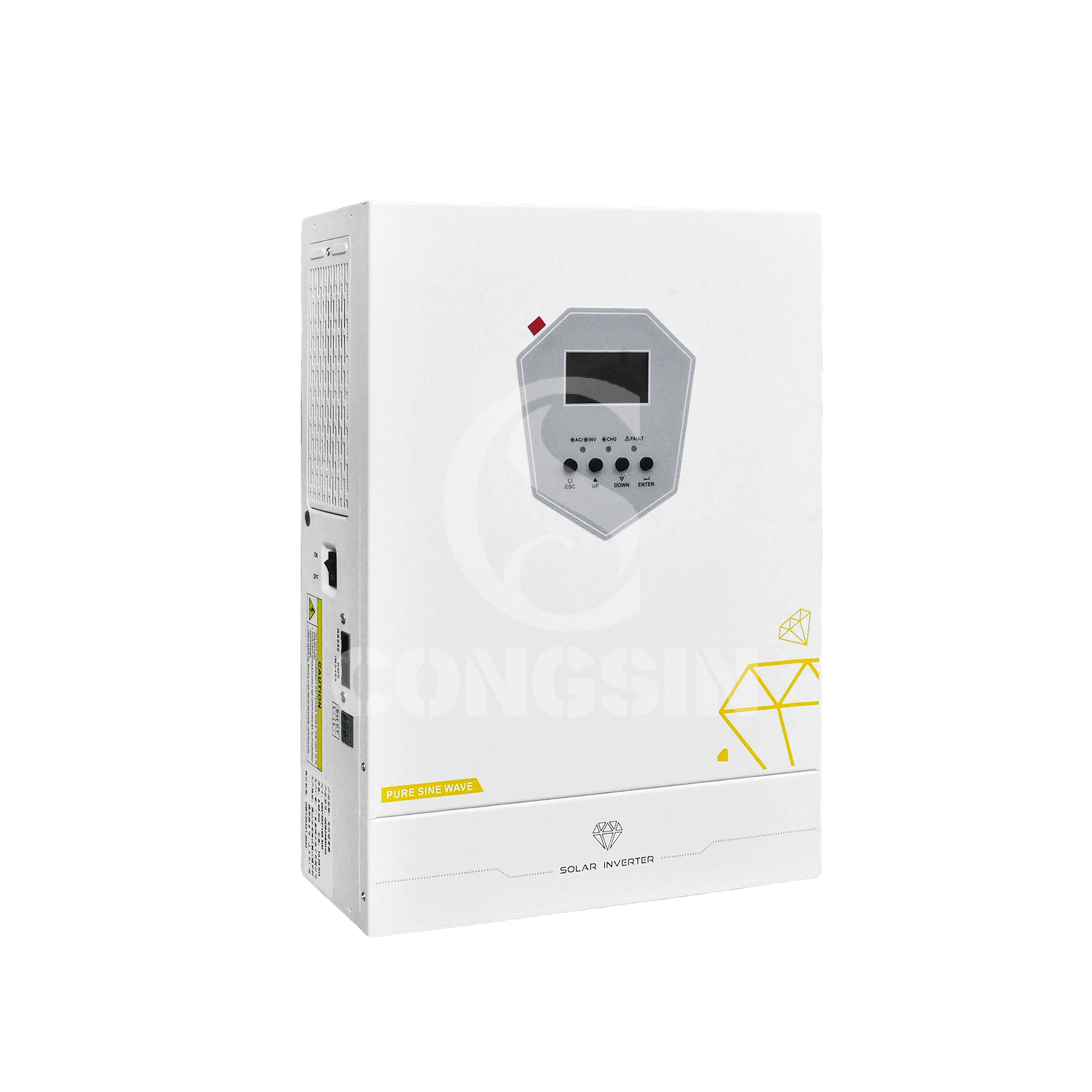
Factory Direct Sales 6000W Hybrid Solar Power Inverter with Controller and LCD Display
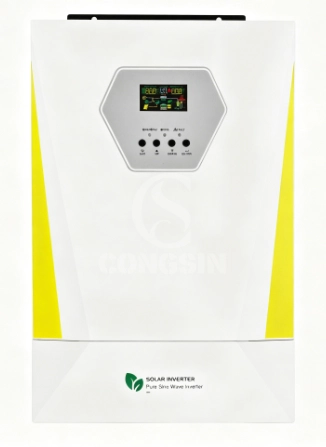
Congsin 4000W and 6000W Hybrid Inverter with Controller with LCD Display and CE Certification Solar
Power your solar system efficiently with the Congsin 4000W and 6000W Hybrid Inverter. Featuring an integrated MPPT Controller, this CE Certified inverter ensures optimal energy conversion. Monitor performance effortlessly via the intuitive LCD Display. Reliable, powerful, and ready for your sustainable energy needs.
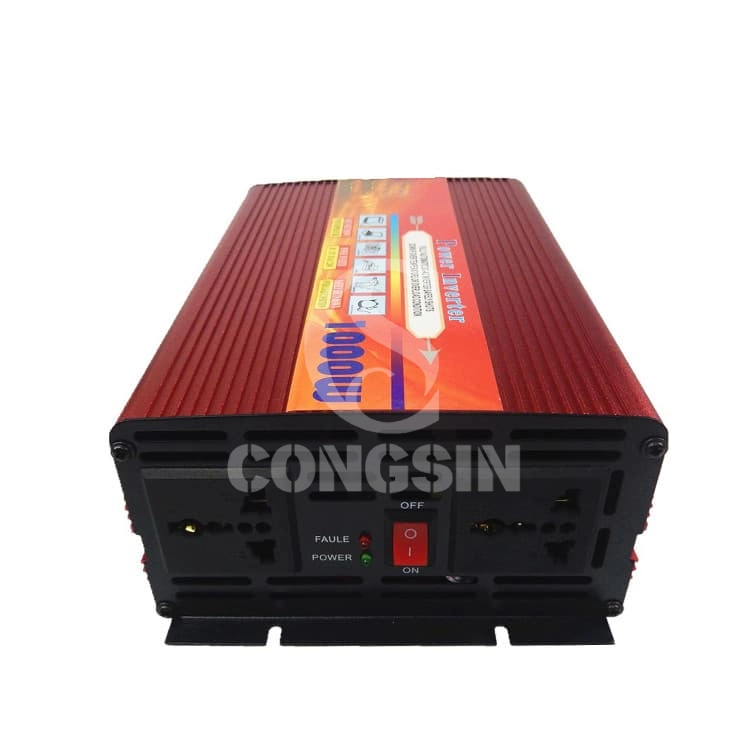
Congsin Manufacturer Wholesales Big Capability Modified Sine Wave Inverter with Red case and Double fan
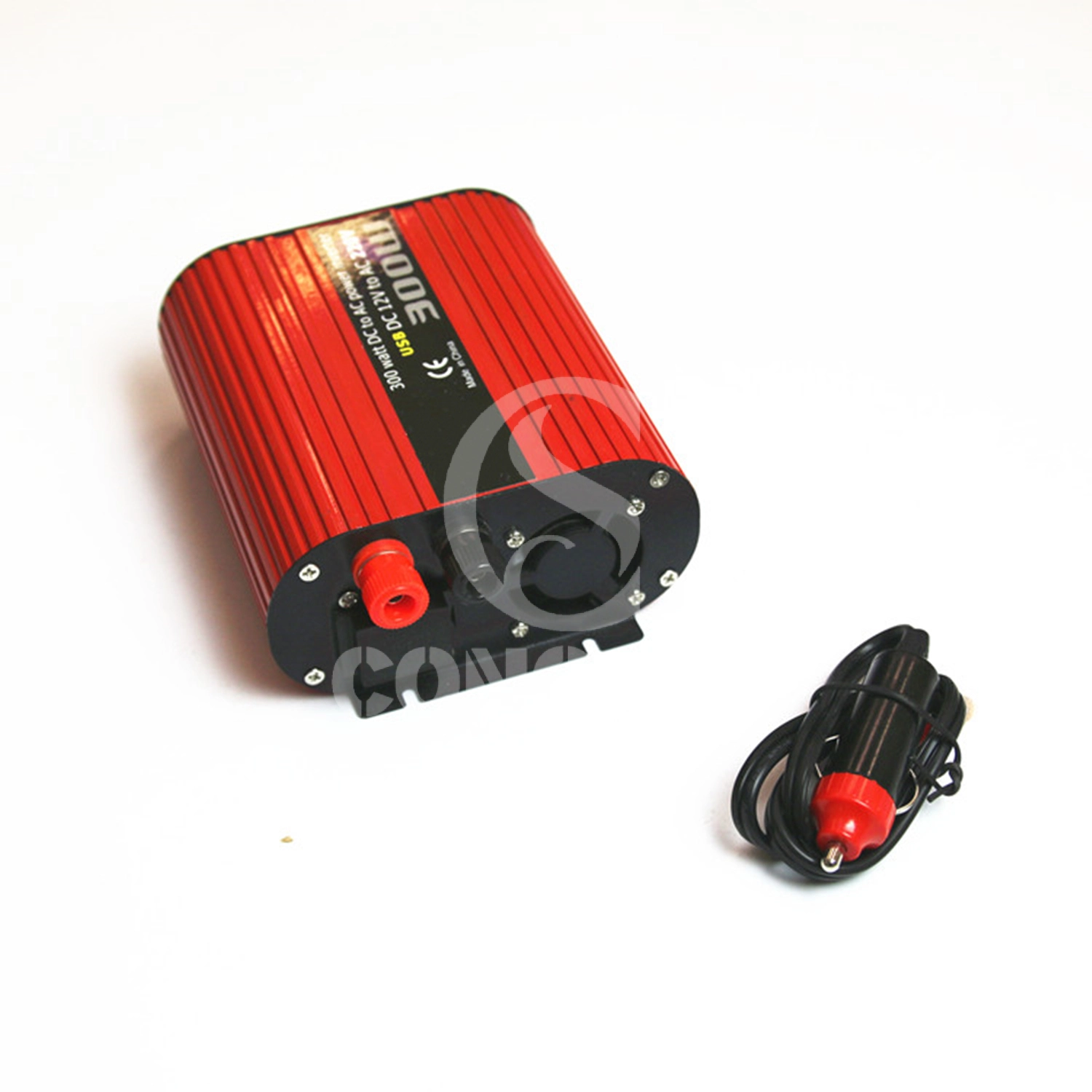
Factory Direct Sales Portable 150W Modified Sine Wave Inverter DC12V to AC220V Off-grid Sine Wave Inverter with Two USB and Universal Socket
Congsin's Portable 150W Modified Sine Wave Inverter powers your journey! This versatile Car Power Inverter with USB acts as a reliable 12V to 220V converter, ensuring an essential off-grid power supply. With dual USB ports and a universal socket, enjoy convenient power on the go.

CONGSIN is a trusted OEM factory for power inverters, solar charge controllers, and DC converters. Reliable solutions for global B2B buyers.
 High Quality
 7/24 Service
 Guaranteed Warranty
© 2025 Congsin. All Rights Reserved.
 WeChat
 Scan QR Code
sin cong
teaimei10
Whatsapp: +8618028086791
Scan QR Code