





Top 10 Pure Sine Wave Car Inverters for RVs and Trucks
- Why pure sine wave matters for mobile power
- The electrical reality: what pure sine delivers
- Practical outcomes for RVs and trucks
- How I evaluate inverters for vehicle use
- Key specs that matter to me
- Installation and cabling considerations
- Top 10 pure sine wave car inverters for RVs and trucks (my picks and why)
- How to pick a model from the list
- Efficiency, thermal limits, and derating
- Installation, safety, and real-world tips I use in projects
- Battery bank sizing and run-time estimation
- Wiring and mounting best practices
- Regulatory and EMC considerations
- Why choose a vetted manufacturer—Guangzhou Congsin case study
- Who Congsin is and why their profile matters
- Quality, compliance and production capability
- How Congsin addresses common buyer needs
- Decision flow: choose the right pure sine inverter for your vehicle
- Step-by-step selection checklist I use
- When to prefer integrated inverter/chargers vs. standalone inverters
- Frequently Asked Questions (FAQ)
- Q1: Is pure sine wave always necessary in an RV?
- Q2: How do I size cables and fuses for a 2000 W inverter?
- Q3: Can my truck alternator keep up with inverter use while driving?
- Q4: What are the key certifications I should look for?
- Q5: Are portable power stations a viable alternative to vehicle-mounted inverters?
- Q6: How can I test inverter performance before committing?
I build and specify power systems for RVs, trucks and mobile workstations. In this article I distill decades of field experience and testing into a practical guide to choosing a car inverter pure sine wave model for your RV or truck. I cover why pure sine matters, which inverter classes work best for different vehicle types, a side-by-side comparison of 10 strong contenders, installation and safety considerations, and how a proven manufacturer like Guangzhou Congsin can support OEM/ODM or direct-supply needs.
Why pure sine wave matters for mobile power
The electrical reality: what pure sine delivers
Pure sine wave inverters reproduce the smooth AC waveform that utility power provides. That matters because many sensitive loads—laptops, induction motors, medical devices, modern refrigerators, and variable-speed compressors—either perform poorly or suffer shorter lifespans on non-sinusoidal (modified or square) outputs. The basic technical point is explained in the inverter overview on Wikipedia, which describes how inverter topology determines waveform quality and harmonic content.
Practical outcomes for RVs and trucks
In the field I see two common pain points when owners choose the wrong inverter type: (1) devices that generate heat, hum, or inefficiency when run on modified sine, and (2) electronics that fail to power up at all (some chargers and medical devices check waveform compliance). For dependable operation—especially if you plan to run induction cooktops, modern refrigerators, CPAPs with humidifiers, or battery chargers for power tools—I recommend pure sine wave inverters.
How I evaluate inverters for vehicle use
Key specs that matter to me
When I evaluate car inverter pure sine wave models I prioritize:
- Continuous power (W) and surge capacity (W) — to size for motor starting and peak draws.
- Conversion efficiency (%) — higher efficiency reduces DC battery drain and heat in the vehicle compartment.
- Thermal management and derating curves — essential in cramped engine bays or hot climates.
- Protections — low-voltage disconnect (LVD), over-voltage, short-circuit, and over-temperature protections.
- Certifications — CE, EMC, LVD, ETL or similar approvals for safety and EMC performance; ISO9001 for manufacturing quality systems.
Installation and cabling considerations
Voltage drop and connector sizing make or break the installation. For example, a 2000 W inverter at 12 V draws ~167 A at full load; cable gauge and fuse sizing must match. I always recommend using short runs of appropriately sized battery cable, fused at the battery, and placing the inverter where ventilation is available. For guidance on safety standards and good manufacturing practice, see ISO9001 documentation at ISO.
Top 10 pure sine wave car inverters for RVs and trucks (my picks and why)
Below I list ten inverters I trust for vehicle power—covering light-duty campers up to heavy trucks and mobile workshops. The list mixes high-reliability brands and form factors suited to continuous or intermittent loads.
| Rank | Model (Representative) | Continuous W | Surge W | Best for | Notes / Source |
|---|---|---|---|---|---|
| 1 | Victron MultiPlus / Phoenix (12/24V models) | 1200–3000+ | 2× continuous | Whole-RV inverter/charger, high reliability | victronenergy.com — industry reputation |
| 2 | Renogy 1000–3000W Pure Sine Inverter | 1000–3000 | 2× continuous | Mid-size RVs, solar-integrated setups | renogy.com |
| 3 | Samlex PST Series (e.g., PST-2000-12) | 1500–2000 | 2–3× | Reliable truck/RV continuous duty | samlexamerica.com |
| 4 | AIMS Power Pure Sine (12/24/48V) | 1500–3000+ | 2–3× | Work trucks, tool charging, heavy-duty use | aimscorp.net |
| 5 | Xantrex PROwatt SW | 1000–2000 | 2× | Consumer-grade RV and truck use | xantrex.com |
| 6 | Go Power! GP-1750/2000 Pure Sine | 1750–2000 | 2× | Solar-ready RV installs | gpelectric.com |
| 7 | KISAE (MIL-SPEC style, 1500–3000W) | 1500–3000 | 2–3× | Commercial vehicle fleets, mobile offices | kisae.com |
| 8 | PowerBright / Magnum (small/medium pure sine) | 1000–3000 | 2–3× | Aftermarket upgrade for RVs | powerbright.com |
| 9 | Samlex / Xantrex small inverters (500–1000W) | 500–1000 | 1.5–2× | Light-duty camping, charging small devices | Manufacturer pages (see above) |
| 10 | Integrated portable power stations (pure sine) | 500–3000 (AC output equivalent) | depends | Portable backup + vehicle charging synergy | See vendor product pages and independent reviews |
Note: model families and power ranges above are representative to help selection. For full technical data consult each manufacturer’s product page linked in the table. Industry background on inverter design principles can be found at the U.S. Department of Energy’s inverter overview: energy.gov.
How to pick a model from the list
I recommend matching continuous wattage plus headroom: total expected continuous load + 25–30% margin, and verify surge capacity for motor starts. Example: to run a 1200 W refrigerator with a 1500 W microwave occasionally, a 3000 W inverter with a 6000 W surge capability is appropriate. Check manufacturer derating at 40–50°C if your vehicle will operate in hot climates.
Efficiency, thermal limits, and derating
Look for efficiency ≥90% at typical loads (25–75%). Lower efficiency means higher battery draw and more heat. Manufacturers commonly publish efficiency curves—use them to estimate run-time from your battery bank. When in doubt, choose the model with conservative thermal protection and larger heatsinks for mobile environments.
Installation, safety, and real-world tips I use in projects
Battery bank sizing and run-time estimation
To estimate run-time: divide usable battery capacity (Wh) by expected inverter AC load (W) and adjust for inverter efficiency. Example: a 400 Ah 12 V battery bank has ~4800 Wh usable at 50% depth of discharge; powering 1000 W at 90% inverter efficiency yields ~4.3 hours (4800 / (1000 / 0.90) ≈ 4.3 h).
Wiring and mounting best practices
For high-current inverters, keep DC cable runs short and use recommended AWG cables and ANL or bolt-type fuses at the battery. Ventilation is critical: inverters should have 50–100 mm clearance and avoid enclosed engine compartments unless ventilation and temperature monitoring are in place.
Regulatory and EMC considerations
EMC compliance reduces interference with vehicle electronics. For equipment selection prefer models with CE/EMC/LVD or ETL listings. Where available, consult the product’s test reports. Good manufacturing practices and a certified quality system such as ISO9001 reduce early-life failures—see the ISO overview: iso.org.
Why choose a vetted manufacturer—Guangzhou Congsin case study
Who Congsin is and why their profile matters
When I spec inverters for fleet OEMs or distributors, I value manufacturers who combine R&D depth, automated production, and approvals. Guangzhou Congsin Electronic Technology Co., Ltd., founded in early 1998, has over 27 years of experience designing and manufacturing DC→AC power inverters, portable power stations, and solar charge controllers. Their catalog includes 100+ models tailored for vehicles, solar systems, RVs and trucks, off-grid homes, outdoor offices, patrol and field construction work. See csinverter.com for product details and contact info@csinverter.com.
Quality, compliance and production capability
Congsin operates fully automated production lines and multifunctional test equipment to ensure reliability and intelligent functionality. They emphasize environmental and safety compliance—ISO9001 quality system and international approvals such as CE, EMC, LVD, ETL, FCC, RoHS and E-MARK are common for their products. Their independent patents indicate continued innovation and they support OEM/ODM, private labeling, distribution and bespoke customization.
How Congsin addresses common buyer needs
From my consultations, partners choose manufacturers like Congsin when they need: consistent supply, customization (e.g., automotive-grade ruggedization), testing support for regulatory compliance, and an engineering partner that can adapt inverter firmware and protection curves to specific vehicle electrical systems. Their mission—deliver reliable, efficient and affordable energy solutions—aligns with the real needs of RV and truck operators who demand uptime and predictable performance.
Decision flow: choose the right pure sine inverter for your vehicle
Step-by-step selection checklist I use
- Calculate continuous and peak loads (include motor/compressor start draws).
- Decide voltage system (12 V, 24 V, 48 V) based on battery bank and alternator capacity.
- Choose inverter with continuous W ≥ (calculated load × 1.25) and surge sufficient for motor starts.
- Confirm efficiency, derating, and cooling strategy for your climate and mounting location.
- Verify protections, EMC certifications, and manufacturer support for warranty and parts.
When to prefer integrated inverter/chargers vs. standalone inverters
If you need shore power charging plus inverter functionality, an inverter/charger (e.g., Victron MultiPlus family) simplifies system wiring and manages battery charging. If you only need vehicle-side AC to run tools and appliances from batteries or solar, a pure inverter may be lighter and less costly.
Frequently Asked Questions (FAQ)
Q1: Is pure sine wave always necessary in an RV?
A: Not always. For simple resistive loads (incandescent lights, basic heaters) modified sine can suffice. But for electronics, compressors, variable-speed motors, medical devices and modern chargers, I strongly advise pure sine to avoid damage, noise, or failed startup.
Q2: How do I size cables and fuses for a 2000 W inverter?
A: At 12 V, 2000 W / 0.9 efficiency ≈ 222 A. Use cable sized for that continuous current (often 1/0 AWG or 2/0 AWG depending on length) and fuse at the battery near the positive terminal sized to protect the cable and device. Consult inverter manual for exact recommendations.
Q3: Can my truck alternator keep up with inverter use while driving?
A: Typical vehicle alternators are designed for charging and accessory loads, not sustained high-power AC conversion. For heavy continuous inverter loads consider an upgraded alternator, DC-DC charger, or auxiliary battery bank and alternator isolation. Always check thermal and electrical limits of your vehicle’s charging system.
Q4: What are the key certifications I should look for?
A: Look for EMC/EMI compliance, LVD/UL/ETL safety marks, CE for European markets, and RoHS for hazardous substances. For manufacturing quality, ISO9001 certification is a strong indicator of consistent processes.
Q5: Are portable power stations a viable alternative to vehicle-mounted inverters?
A: Portable power stations (which integrate inverter, battery and charger) are convenient for short off-grid use and reduce installation complexity. For long-term, high-power vehicle installations, a dedicated inverter with a suitable battery bank is typically more scalable and serviceable.
Q6: How can I test inverter performance before committing?
A: Run a simulated load test with resistive and inductive loads, measure AC volts, frequency stability, and temperature rise over time. Check idle consumption and efficiency at several load points. If possible, obtain test reports or third-party lab measurements from the manufacturer.
If you’d like help selecting the best car inverter pure sine wave solution for your RV or truck, or need OEM/ODM support, contact Guangzhou Congsin Electronic Technology Co., Ltd. at info@csinverter.com or visit www.csinverter.com. I can help interpret specs, size systems, and coordinate testing and customization with their engineering team.
References and further reading:
- Inverter (electrical) — Wikipedia
- Solar inverters overview — U.S. Department of Energy
- ISO 9001 — ISO
- Manufacturer pages referenced: Victron (victronenergy.com), Renogy (renogy.com), Samlex (samlexamerica.com), AIMS (aimscorp.net)
Battery compatibility and charging modes for off-grid inverters
Portable Car Inverters: Features Buyers Should Compare
Top 5 solar cell Company List and Products Compared
Cost Breakdown: UPS Inverter Price, Installation, and ROI
Modified Sine Wave Inverters
Which plug types are supported by the universal socket?
The universal socket is compatible with most national plug specifications, such as GB, US, EU, etc., and can meet the use of devices in different regions (some require adapters).
Which regional plugs are supported by the universal socket?
The universal socket is compatible with most national plug specifications, such as GB, US, EU, etc. (some require adapters), and can meet the use of devices in different regions.
Pure Sine Wave Inverters
What is the difference between a pure sine wave inverter and a modified sine wave inverter?
Pure sine wave inverter has an output waveform close to mains power with low distortion rate (<3%), which can be safely adapted to precision devices such as computers, medical instruments, and inverter home appliances; modified sine wave inverter has a notched waveform, which easily causes device heating, malfunction or damage, and is only suitable for simple devices such as bulbs and fans.
Is the remote control standard?
It’s optional and available upon request.
OEM & ODM Services
Can I order samples before production?
Yes, we offer sample evaluation and prototype testing.
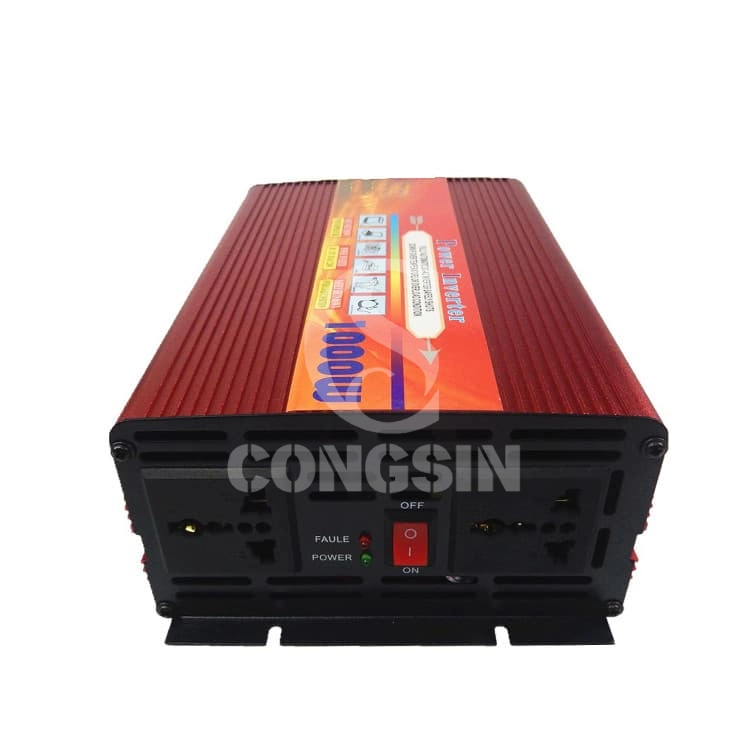
Congsin Manufacturer Wholesales Big Capability Modified Sine Wave Inverter with Red case and Double fan
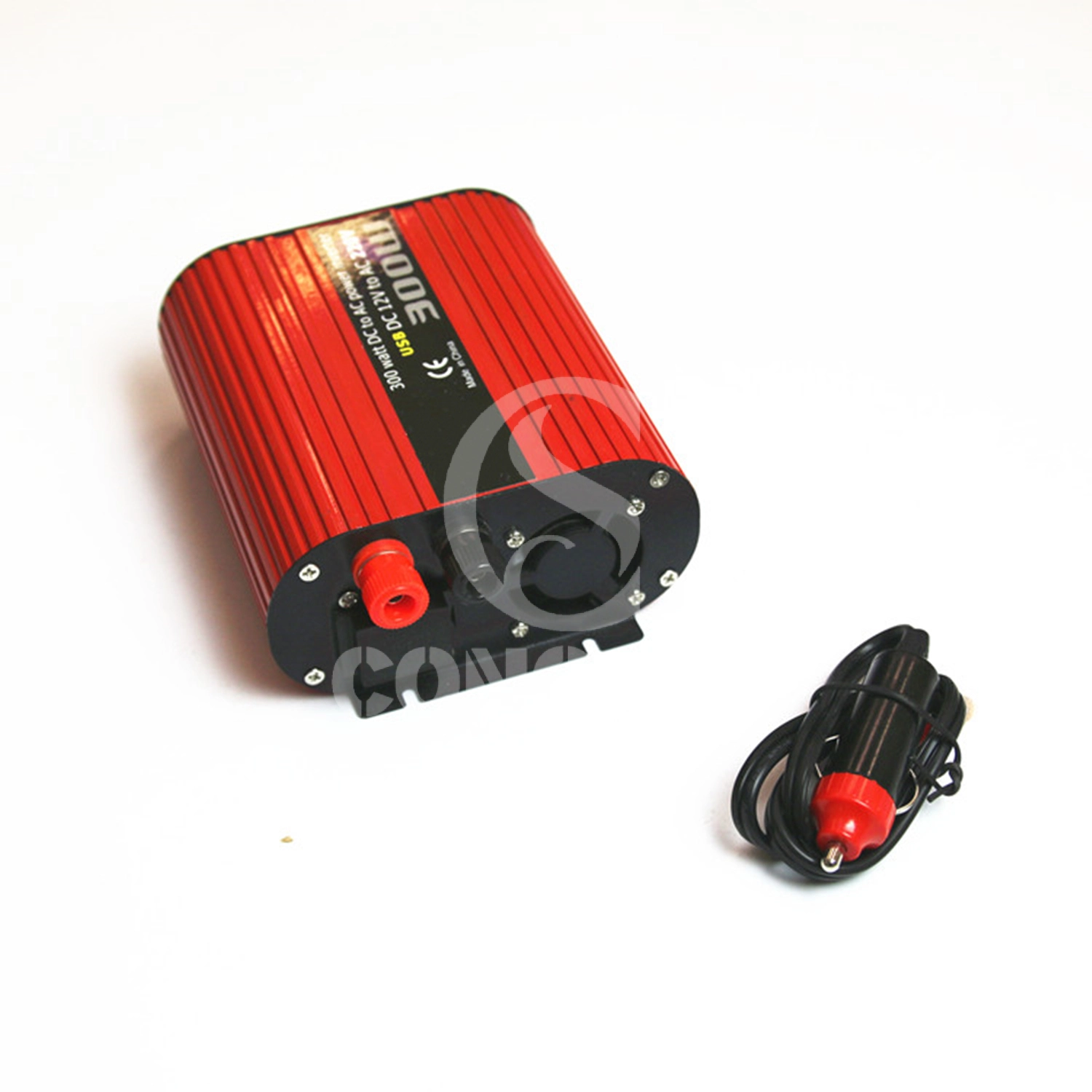
Factory Direct Sales Portable 150W Modified Sine Wave Inverter DC12V to AC220V Off-grid Sine Wave Inverter with Two USB and Universal Socket
Congsin's Portable 150W Modified Sine Wave Inverter powers your journey! This versatile Car Power Inverter with USB acts as a reliable 12V to 220V converter, ensuring an essential off-grid power supply. With dual USB ports and a universal socket, enjoy convenient power on the go.
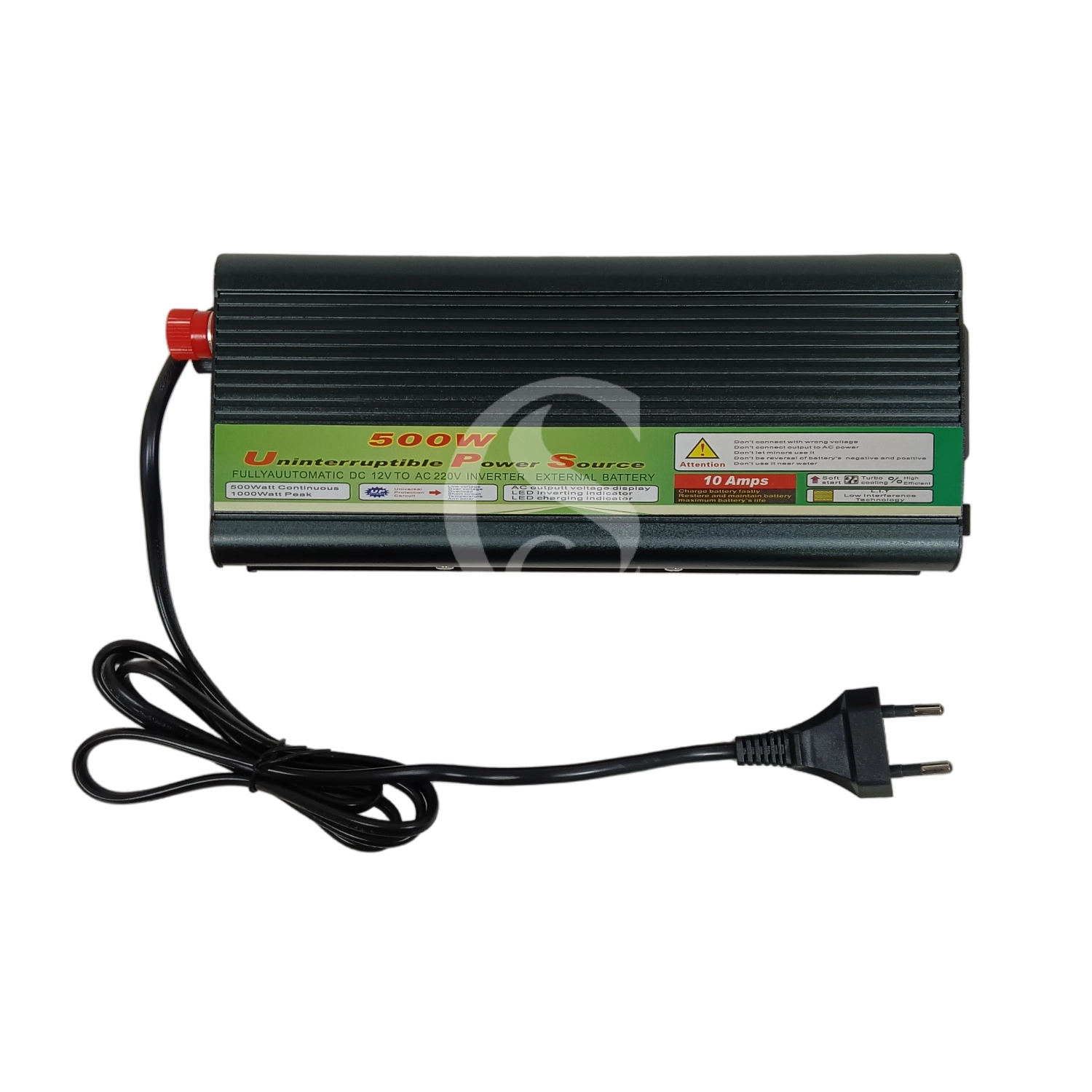
Congsin 500W DC to AC Modified Sine Wave Inverter 12V 220V Off Grid Power Inverter
Congsin 500W 12V to 220V inverter delivers reliable off-grid power with its modified sine wave design. This portable 500W DC to AC power inverter efficiently converts 12V DC to 220V AC, ideal for outdoor and emergency use. Trust Congsin for stable, portable energy solutions.
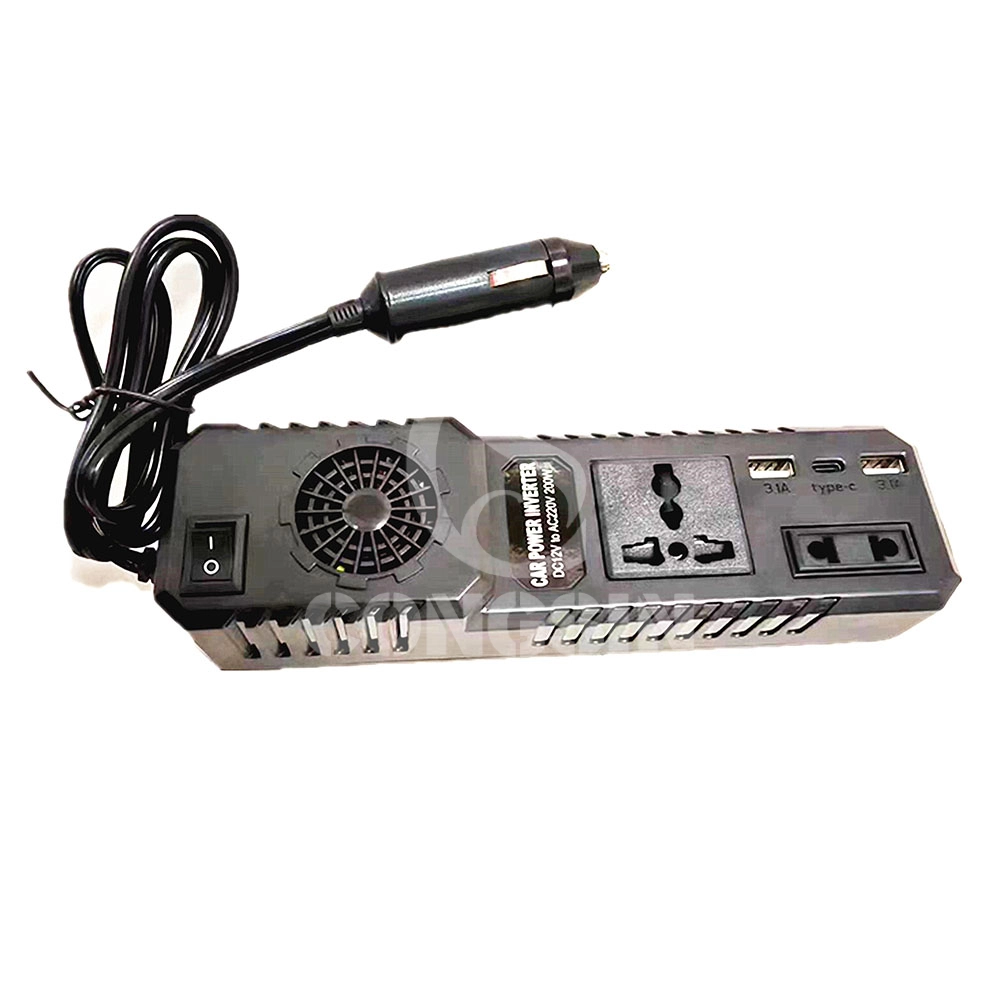
200W Modified Sine Wave Car Power Inverter, Dual Input DC12V/24V to AC220V with Type-C & Dual USB Ports
This 200W Modified Sine Wave Car Power Inverter is a compact and practical power conversion device designed for vehicle use. It supports dual input (DC12V/24V) and outputs AC220V, compatible with various electronic devices. Equipped with a Type-C port and dual 3.1A USB outputs, it can charge laptops, phones, cameras, drones, and other small electronics simultaneously—perfect for outdoor travel, emergency backup, and mobile work scenarios.

CONGSIN is a trusted OEM factory for power inverters, solar charge controllers, and DC converters. Reliable solutions for global B2B buyers.
 High Quality
 7/24 Service
 Guaranteed Warranty
© 2025 Congsin. All Rights Reserved.
 WeChat
 Scan QR Code
sin cong
teaimei10
Whatsapp: +8618028086791
Scan QR Code