





Top 10 Modified Sine Wave Inverters with USB Ports for Camping, Vans, and Emergencies (2026 Guide)
- What Is a Modified Sine Wave Inverter with USB Ports?
- Key Takeaways: Quick Summary
- Why Choose a Modified Sine Wave Over Pure Sine Wave?
- Top 10 Modified Sine Wave Inverters with USB Ports for 2026
- Crucial Specs to Consider Before Buying
- Expert Tips & Common Mistakes When Using Inverters
- Conclusion
- Can a modified sine wave inverter charge a laptop via USB?
- What appliances will not run on a modified sine wave inverter?
- Are modified sine wave inverters safe for smartphones?
- How many watts do I need for a campervan inverter?
- Does using the USB port drain my car battery faster?
- Can I leave my inverter plugged into the cigarette lighter while driving?
- What is the lifespan of a modified sine wave inverter?
- Can I connect a modified sine wave inverter directly to a solar panel?
Are you looking for a reliable DC to AC power inverter for your next off-grid adventure or emergency preparedness kit? As mobile living and remote work continue to evolve in 2026, finding the right car camping power supply has become critical for keeping your smart devices charged and essential appliances running. Whether you are outfitting a rugged overlanding camper, living the full-time vanlife, or simply building a robust backup power kit for unexpected home emergencies, understanding how to harness portable electricity efficiently will save you both money and battery life.
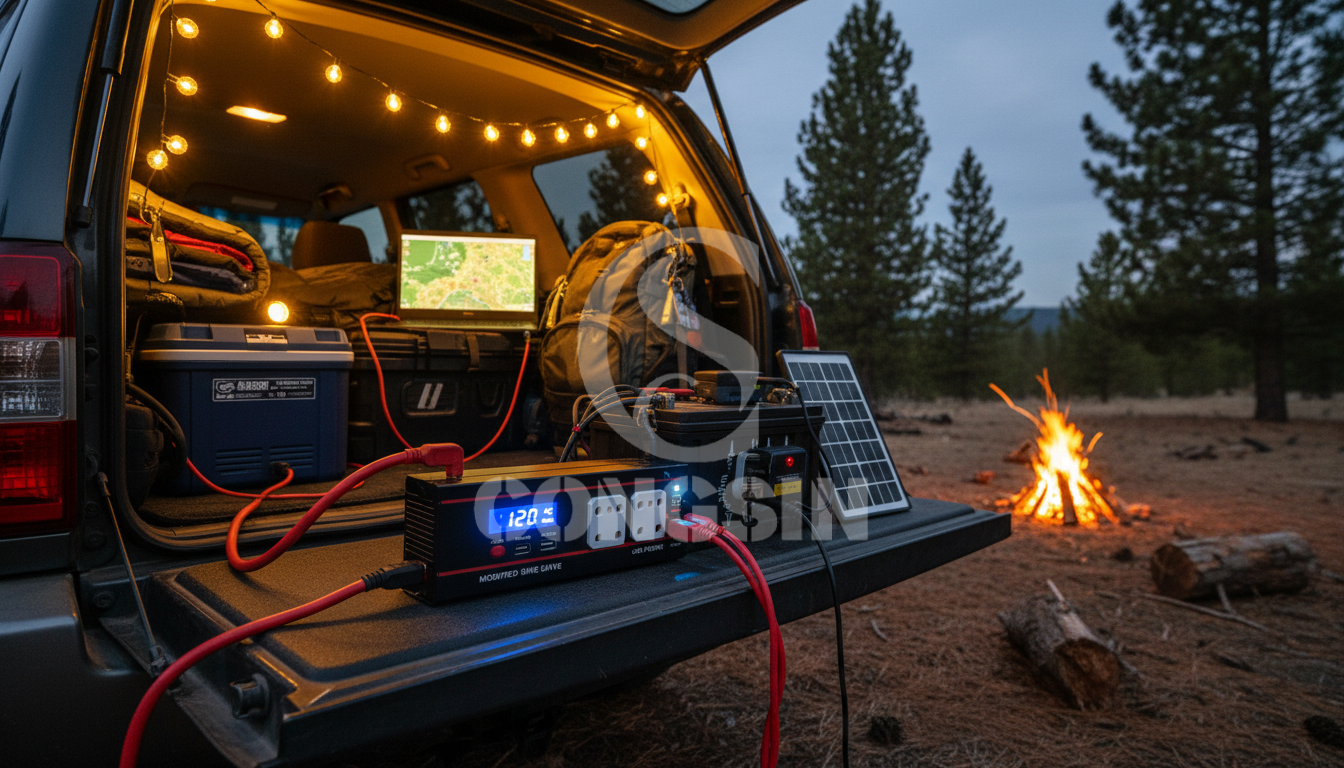
In this comprehensive guide, we will dive deep into the top 10 modified sine wave inverters equipped with modern USB charging ports. We will explore the technical differences between waveforms, outline crucial buying specifications, and share expert tips to prevent electrical mishaps. Let us explore everything you need to know to make the best, most cost-effective purchasing decision for your off-grid energy needs.
What Is a Modified Sine Wave Inverter with USB Ports?
A modified sine wave inverter with USB ports is a device that converts 12V DC battery power into 110V/120V AC power using a stepped electrical waveform, while offering built-in USB connections to charge mobile devices directly without bulky wall adapters.
These inverters act as highly cost-effective solutions for converting stored battery energy into usable household electricity. Instead of producing a perfectly smooth, arching electrical curve like standard grid power, they produce a blocky, "stepped" wave. This simplified design requires far fewer complex internal electronic components, making the unit significantly more affordable, lighter, and more compact. When manufacturers integrate USB-A or modern USB-C Power Delivery (PD) ports into the chassis, the inverter becomes a highly efficient 12V to 110V inverter with USB that serves multiple roles simultaneously.
Here is how this specific technology benefits users:
- Direct DC-to-DC Charging: By plugging your smartphone or tablet directly into the built-in USB port, you bypass the inverter's AC conversion process entirely, saving valuable battery life and reducing heat generation.
- Unmatched Versatility: You can power simple AC loads—such as overhead LED lights and small resistive heaters—while simultaneously fast-charging modern electronics on the same unit.
- Emergency Readiness: These devices serve as robust, easily storable solutions during grid-down emergencies where powering basic electronics, communication radios, and medical refrigeration is an absolute priority.
Key Takeaways: Quick Summary
The main takeaway is that modified sine wave inverters offer a budget-friendly, highly efficient power solution for resistive loads and basic electronics, provided you avoid using them for sensitive medical equipment or high-end motor-driven appliances.
When building a USB power inverter for vanlife or a weekend family camping kit, it is absolutely crucial to understand the limitations and strategic advantages of your electrical equipment. Making an informed choice prevents blown fuses and ruined batteries.
- Extreme Affordability: Modified models are significantly cheaper than their pure sine wave counterparts, freeing up your project budget to invest in better deep-cycle LiFePO4 batteries or higher-wattage solar panels.
- Ideal for Simple Loads: They perform flawlessly when paired with resistive heating elements, simple lighting rigs, and standard device chargers.
- Efficiency Gains: Built-in USB ports provide direct, efficient energy transfer, protecting your battery bank's overall capacity for larger, more demanding AC loads later in the day.
- The Golden Sizing Rule: Always size your inverter at least 20% to 30% higher than your expected maximum continuous wattage to prevent unit overheating, voltage drops, and system shutdowns.
As reported by Wikipedia, a power inverter is essential for taking the direct current (DC) from an energy source like a battery and altering it into the alternating current (AC) needed for standard electrical items, making these devices the absolute heartbeat of any mobile power system.
Why Choose a Modified Sine Wave Over Pure Sine Wave?
You should choose a modified sine wave over a pure sine wave because it provides an unbeatable cost-to-wattage ratio, a significantly lighter physical footprint, and extreme durability for users who only need to power basic appliances.
The ongoing debate of modified sine wave vs pure sine wave almost always comes down to balancing your upfront budget with your actual, realistic power needs. Not every camper or off-grid enthusiast needs flawlessly smooth electricity. If your primary goal is to brew morning coffee, run a basic ventilation fan, and keep your smartphone charged, a pure sine wave inverter is often an unnecessary and expensive overkill.
Here are the primary benefits of selecting a modified sine wave model:
- Cost-to-Wattage Ratio: You can often purchase a massive 2000W modified sine wave unit for the exact same price as a 500W pure sine wave model. This gives you incredible raw starting power for high-surge appliances for much less money.
- Compact and Lightweight: Fewer internal filtering capacitors and heavy copper inductors mean these units are physically smaller and lighter. This saves precious cargo space and weight in campervans, small boats, and emergency bug-out bags.
- Robust Durability: With a much simpler electronic architecture, there are fewer delicate components that can fail under rugged, bumpy, off-grid travel conditions.
According to technical resources from Xantrex, a leading manufacturer in the mobile power industry, modified sine wave inverters remain a highly practical and accessible solution when your power needs are foundational and you wish to save money without sacrificing reliable daily energy access.
Top 10 Modified Sine Wave Inverters with USB Ports for 2026
The top 10 modified sine wave inverters for 2026 combine reliable AC power generation with high-speed USB ports, offering varied wattage capacities and rugged designs tailored specifically for budget backpackers, full-time vanlifers, and home emergency preparedness kits.
Finding the perfect unit depends heavily on your specific daily power draw and travel style. Here is our expertly curated list of the absolute best models on the market this year:
- The Budget Backpacker (300W): The best compact 300W inverter featuring dual USB-A ports. It plugs directly into your 12V cigarette lighter, making it ideal for quick weekend trips and charging camera batteries on the go.
- The Vanlife Workhorse (1000W): Perfectly balanced for running basic kitchen appliances and charging laptops simultaneously. It features active smart-cooling and reliable, pre-drilled mounting brackets for permanent installation.
- The Emergency Lifeline (2000W): A heavy-duty unit designed specifically for grid-down scenarios. It includes a bright digital battery voltage display so you can actively monitor your remaining power reserves during a blackout.
- The Multi-Port Hub (500W): The best inverter for modern tech enthusiasts. It features high-speed USB-C PD (Power Delivery) ports, allowing you to charge tablets, modern laptops, and camera drones at maximum safe speeds.
- The Solar-Ready Unit (1500W): Designed with heavy-duty battery clamps and optimized input terminals, making it incredibly easy to integrate into an off-grid solar charge controller setup without complicated wiring.
- The Tailgater's Choice (150W): A highly unique, cup-holder-friendly car inverter with a standard 12V plug. It is perfect for road trips, tailgating parties, and mobile workers where center console space is at a premium.
- The High-Surge Bargain (3000W): The absolute best value for users running devices that require a massive starting wattage peak, such as older power tools, simple water pumps, or large campsite lighting arrays.
- The Quiet Camper (400W): Optimized with a smart, load-sensing silent fan mechanism. This unit ensures your sleep isn't disturbed by loud whirring noises during the night while charging your devices.
- The Rugged Brick (800W): Encased in a drop-resistant, hardened aluminum alloy shell with rubberized corners. It is the go-to choice for off-road, overlanding adventures where equipment gets bounced around.
- The Smart Hybrid (1200W): Features advanced integrated microprocessors that deliver rapid thermal shutdown, short-circuit protection, and a loud audible low-voltage alarm to protect your vehicle's starting battery from dying.
Crucial Specs to Consider Before Buying
Before buying an inverter, you must evaluate its continuous wattage versus peak surge power, the types of USB ports included, the efficiency of its cooling fans, and the presence of built-in safety protections to prevent battery damage.
Purchasing the wrong size or type of inverter can lead to blown vehicle fuses, fully drained batteries, and permanently damaged electronics. To ensure you build a safe, reliable, and efficient system, carefully evaluate these specifications:
- Continuous Wattage vs. Peak Surge Power: Continuous wattage is the steady stream of power the inverter can supply indefinitely. Surge power (or peak power) is the momentary burst of energy it can provide to start up a device, like a resistive heater or a basic motor. Always size your inverter based on the continuous rating, not the surge rating.
- USB Port Types: Standard 5V/2.4A USB-A ports are great for older phones, but modern mobile living demands USB-C PD ports capable of outputting 45W to 65W for fast-charging laptops, portable gaming consoles, and drones.
- Cooling Systems: Look for inverters engineered with "smart" or "load-dependent" cooling fans. These fans remain off during low-power charging (like overnight phone charging) to save energy and reduce ambient noise, only activating when the internal temperature crosses a specific safety threshold.
- Safety Protections: A high-quality inverter must feature comprehensive safety mechanisms. Ensure your chosen model has over-voltage protection, a low-voltage disconnect (LVD) to save your expensive battery from deep discharge, short-circuit prevention, and automatic thermal shutdown capabilities.
Expert Tips & Common Mistakes When Using Inverters
The most common mistake when using inverters is plugging sensitive electronics or medical equipment into a modified sine wave, while the best expert tip is to utilize the built-in USB ports to directly charge devices.
Even the highest-quality equipment can fail if used improperly. Drawing on years of off-grid electrical system experience, here are the most critical mistakes to avoid and the best expert tips to adopt for a seamless power experience:
Common Mistakes to Avoid:
- Powering Sensitive Gear: Never plug CPAP machines, high-end audio amplifiers, or laser printers into a modified sine wave unit. The blocky, choppy waveform can cause severe humming, excess heat generation, and permanent circuit damage to sensitive microprocessors.
- Overloading the Cigarette Lighter: Attempting to wire a 1000W+ inverter through a standard 12V dashboard cigarette lighter port will instantly blow your vehicle's fuses. Cigarette lighter ports max out at roughly 150W to 300W safely. Large inverters must be wired directly to the vehicle's battery using adequately sized, thick-gauge copper cables and a properly rated inline fuse.
Expert Tips for Maximum Efficiency:
- Leverage USB for DC-to-DC Charging: Whenever possible, plug your smartphones, power banks, and tablets directly into the inverter’s USB ports rather than using a standard AC wall adapter. By keeping the power strictly in DC format, you bypass the inverter's AC conversion losses, saving up to 15% of your total battery power.
- Minimize Cable Length: Keep your inverter mounted as close to the 12V battery bank as safely possible, while still maintaining proper airflow and ventilation. Long DC cable runs suffer from extreme voltage drops and heat generation. If you need power further away from the battery, use a heavy-duty AC extension cord instead. AC power travels over long distances much more efficiently than low-voltage DC power.
Conclusion
Modified sine wave inverters with built-in USB capabilities offer an unbeatable blend of rugged affordability, compact utility, and highly efficient power distribution for camping, vanlife, and emergency home kits. By accurately assessing your wattage requirements, understanding the fundamental differences between waveform types, and utilizing direct DC-to-DC USB charging, you can build a highly resilient off-grid power system on a strict budget. As long as you respect the technological limitations regarding sensitive electronics and heavy inductive loads, these devices will provide years of reliable, safe service in the wild. Contact us today to optimize your car camping power supply strategy.
Can a modified sine wave inverter charge a laptop via USB?
Yes, if the inverter has a USB-C Power Delivery (PD) port with enough wattage (typically 45W or higher), it can charge laptops directly. If you use the standard AC outlet, most laptop charging bricks handle modified sine waves perfectly fine, though the brick itself may run slightly warmer.
What appliances will not run on a modified sine wave inverter?
Appliances with AC motors, such as refrigerators, standard microwaves, or fans, may run hotter, louder, and less efficiently. Sensitive electronics, medical devices (like CPAP machines), laser printers, and variable-speed tools should be strictly avoided due to the 'choppy' waveform.
Are modified sine wave inverters safe for smartphones?
Yes, charging a smartphone via the built-in USB ports on an inverter is completely safe. The USB ports bypass the complex AC conversion process entirely, delivering clean, regulated 5V DC power directly to your phone.
How many watts do I need for a campervan inverter?
For basic charging, laptops, and LED lights, a 300W to 500W inverter is usually sufficient. If you plan to run a coffee maker, a small heater, or power tools, you will need a 1500W to 2000W+ inverter paired with a robust deep-cycle battery bank.
Does using the USB port drain my car battery faster?
No, USB ports draw very little power (typically 10 to 15 watts) compared to AC outlets, making them highly efficient. However, simply leaving the inverter turned on when not in use can slowly drain the battery due to the unit's internal standby power consumption.
Can I leave my inverter plugged into the cigarette lighter while driving?
Yes, most car cigarette lighters can handle 150W to 300W safely while the vehicle's alternator is running and generating power. Be absolutely sure to unplug or turn off the inverter when the engine is turned off to prevent draining the vehicle's starting battery.
What is the lifespan of a modified sine wave inverter?
With proper use, adequate ventilation, and correct load sizing, a high-quality modified sine wave inverter can last 5 to 10 years. You can maximize its lifespan by never overloading its continuous wattage rating and keeping it in a dry, dust-free environment.
Can I connect a modified sine wave inverter directly to a solar panel?
No, you cannot connect an inverter directly to a solar panel because solar panels produce variable voltage that will trigger the inverter's safety shutdown. You must wire the solar panel to a charge controller, which safely charges a 12V battery, and then connect the inverter directly to that battery.
Efficiency and Heat Management for Pure Sine Car Inverters
Top 10 12 volt inverter for car Manufacturers and Supplier Brands
UPS Inverter vs Online UPS: Best Option for Data Centers
Top 10 modified sine wave inverter Manufacturers and Supplier Brands in 2026
Pure Sine Wave Inverters
What capacity battery is needed to drive a 1000W electric kettle?
It is recommended to match with a 12V 100Ah or larger capacity battery. When a 1000W electric kettle is working, the power consumption per hour is about 83Ah (1000W÷12V≈83A), and a 100Ah battery can support continuous work for about 1 hour (actual battery life is affected by battery aging).
Modified Sine Wave Inverters
What is the working principle of the UPS function?
When the external power supply is normal, the inverter powers the device and charges the battery; when the external power supply is interrupted, it automatically switches to battery power to ensure uninterrupted operation of the device.
What power appliance can this inverter run?
It has a continuous power of 800W, so it can run appliances within 800W; the peak power is 1500W, supporting the instantaneous startup of appliances within 1500W.
Which types of batteries can it be used with?
It is suitable for common DC batteries such as 12V lead-acid batteries and lithium batteries. Please ensure the battery voltage matches the inverter's input voltage before use.
What devices can this inverter support?
It can power laptops, phones, cameras, and other small appliances.
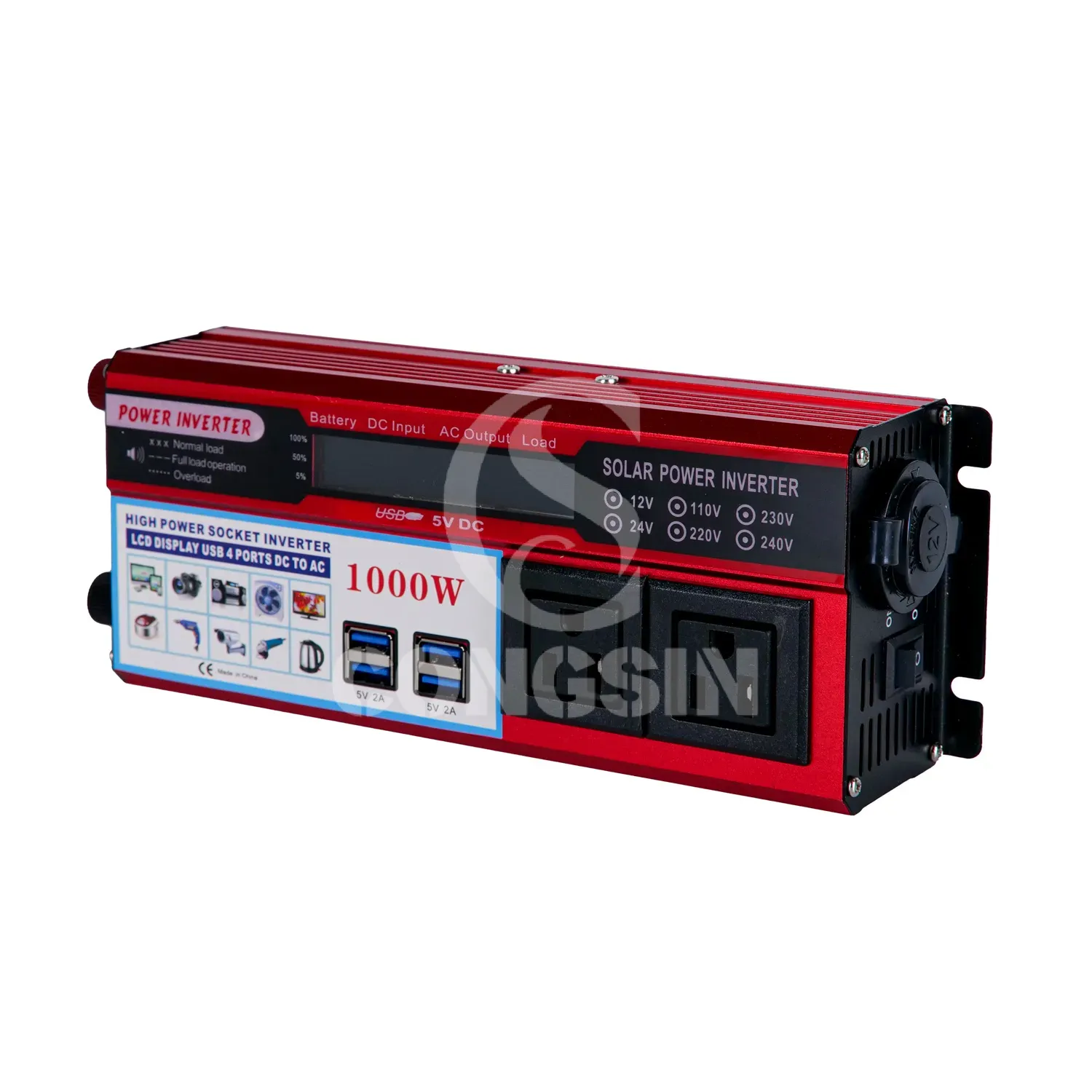
Congsin 1000W modified sine wave inverter with American Sockets and Lcd display portable 12V car RV
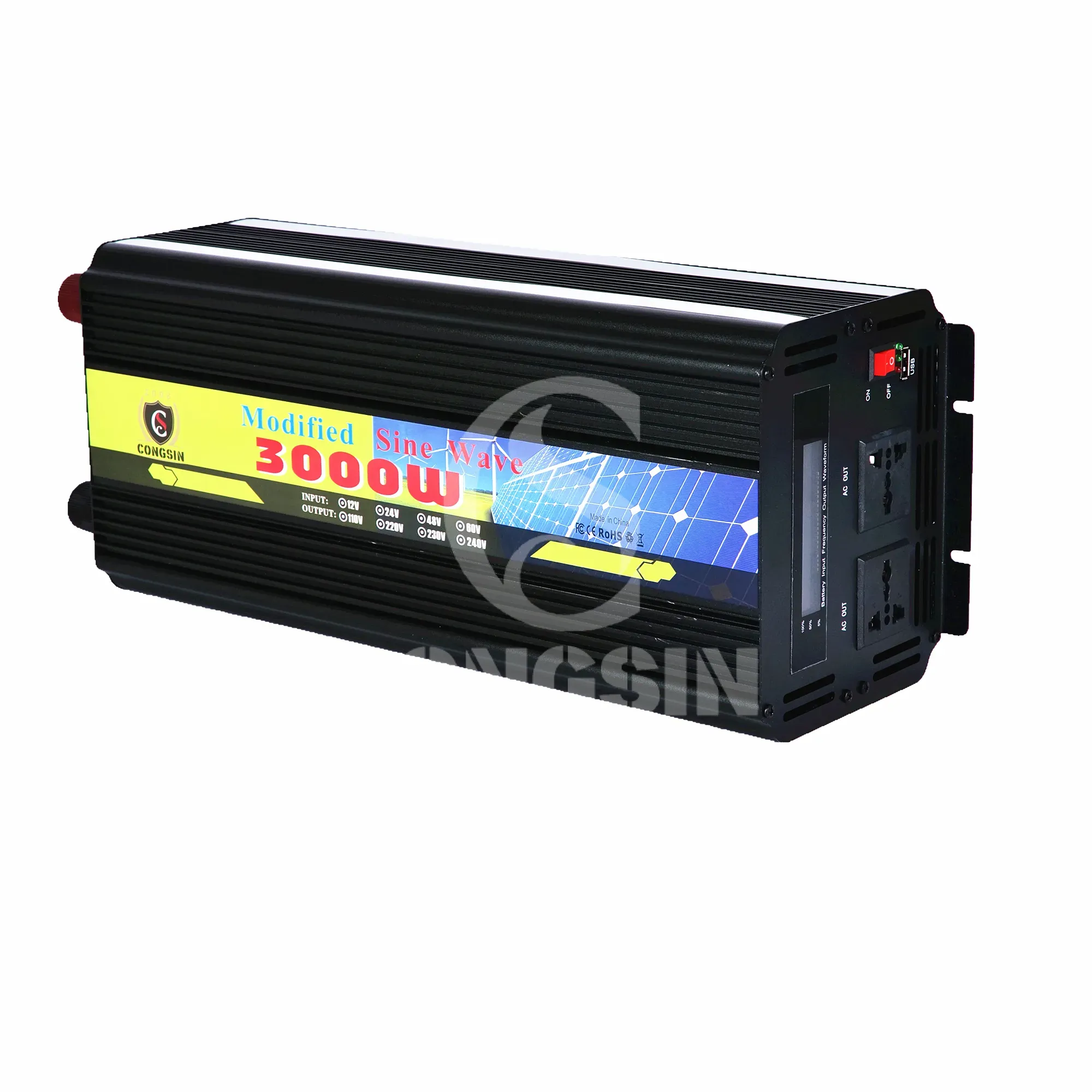
Congsin Full Power 3000W Modified Sine Wave Inverter Peak Power 6000W with LCD Display RV Solar
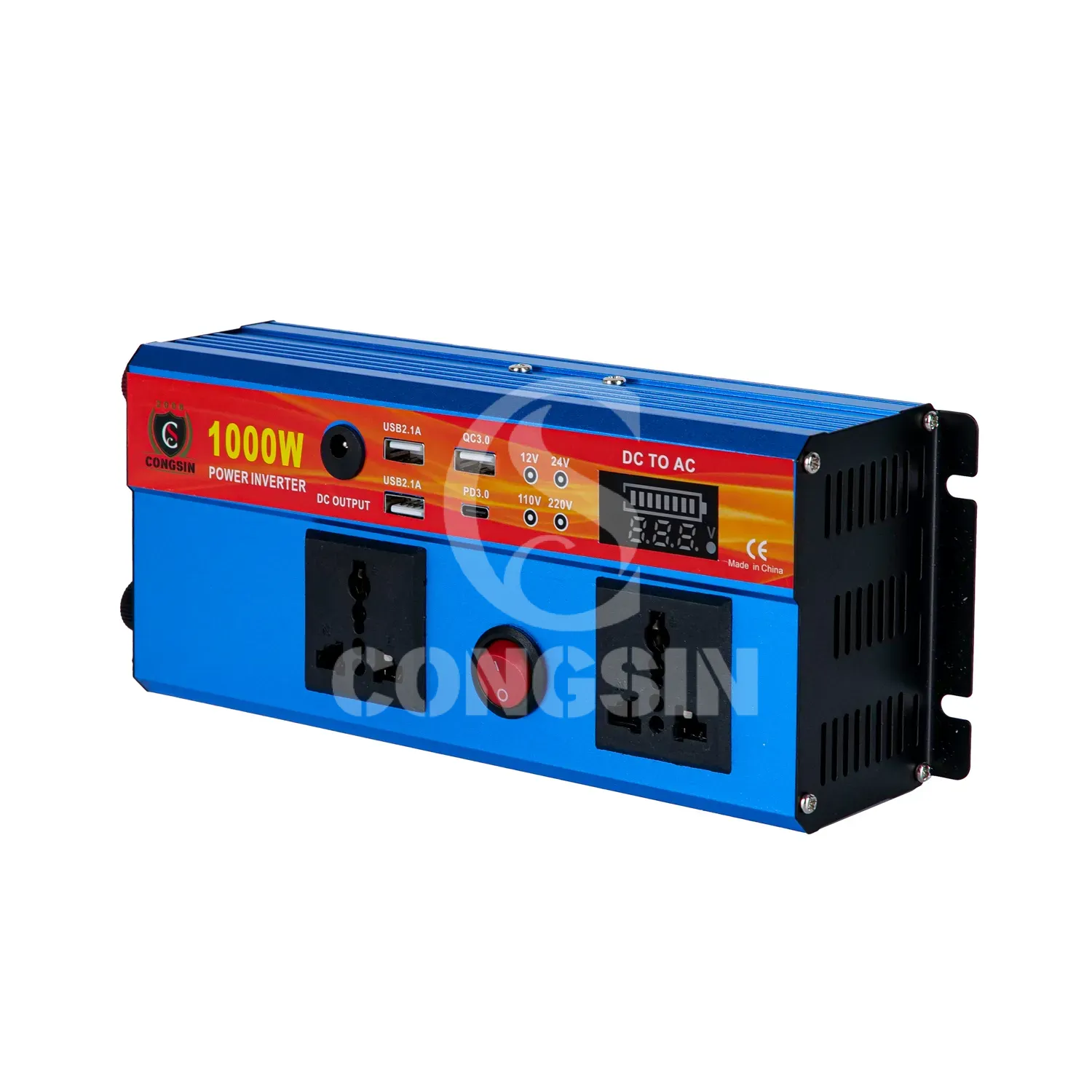
Congsin 1000W modified sine wave inverter with LED display and Type C port car RV power inverter
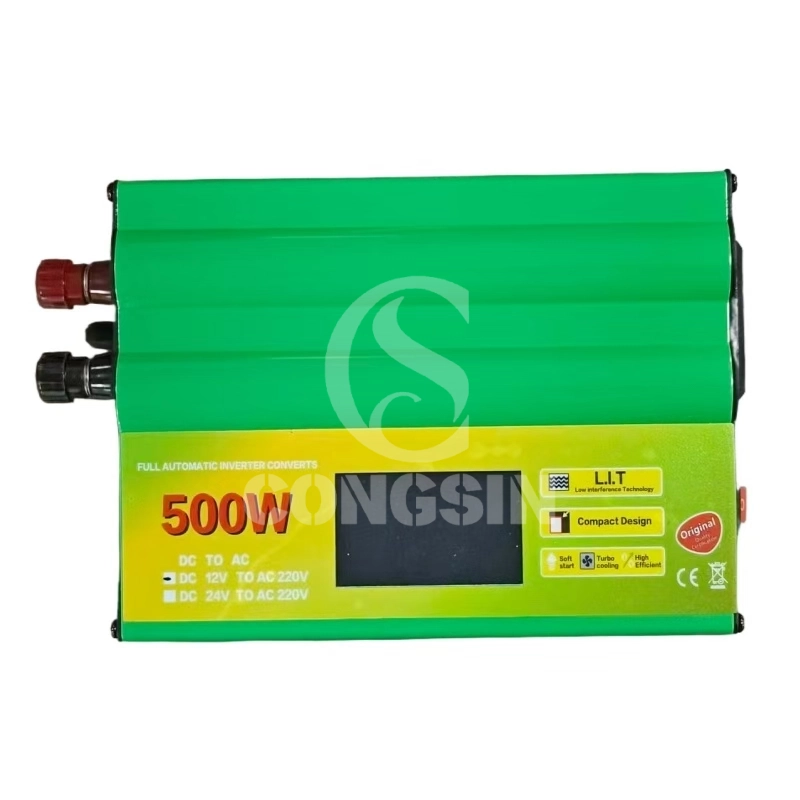
Congsin Modified Sine Wave Inverter 500W 1000W 1500W 12V LED Display Portable for RV Car Solar

CONGSIN is a trusted OEM factory for power inverters, solar charge controllers, and DC converters. Reliable solutions for global B2B buyers.
 High Quality
 7/24 Service
 Guaranteed Warranty
© 2025 Congsin. All Rights Reserved.