





Top 10 12V Car Inverters for Camping and Road Trips
- Why a 12V Inverter Matters for Camping and Road Trips
- Understanding what an inverter does
- Common camping loads and realistic expectations
- Why waveform and efficiency matter
- How to Choose the Right 12 Volt Inverter for Car
- Calculate true power needs (continuous vs. surge)
- Match waveform to device sensitivity
- Consider vehicle electrical limits and cooling
- Top 10 12V Car Inverters for Camping and Road Trips
- My short-list picks by scenario
- Installation, Safety and Long-Term Reliability
- Proper wiring and fusing
- Thermal management and placement
- Battery and alternator considerations
- Why Guangzhou Congsin Should Be on Your Radar
- Company background and manufacturing credentials
- Production quality, certifications and innovation
- Product fit for camping and road trips
- Global reach and after-sales support
- Final Recommendations and Practical Checklist
- Quick selection checklist
- My closing advice
- FAQ
- 1. Can I run a microwave from a 12 volt inverter in my car?
- 2. Is a pure sine inverter necessary for laptops and CPAP machines?
- 3. How much battery capacity do I need for overnight camping?
- 4. Can I use a portable power station instead of a 12V inverter?
- 5. What safety features should I look for in a car inverter?
- 6. How do I maintain my inverter and batteries?
As someone who has designed, tested and recommended mobile power solutions for over a decade, I know how critical the right 12 volt inverter for car use is to a successful camping or road-trip experience. In this guide I summarize the technical trade-offs (pure vs. modified sine, continuous vs. surge ratings), cover real-world selection criteria, and compare ten reliable 12V inverters I regularly recommend for campers, vanlifers and families on the road. I also explain how OEM manufacturers like Guangzhou Congsin ensure product quality and what to look for when buying.
Why a 12V Inverter Matters for Camping and Road Trips
Understanding what an inverter does
A power inverter converts 12V DC power from a vehicle battery into AC power that household devices expect. This lets you run lights, small kitchen appliances, laptop chargers and medical devices directly from your car. For a technical overview, see the encyclopedia entry on inverters (Wikipedia: Inverter).
Common camping loads and realistic expectations
When planning power for camping, I group loads into three buckets: low-power electronics (phones, LED lamps, CPAPs), mid-power appliances (laptops, coffee makers, microwaves), and high-power devices (air conditioners, large induction cooktops). A small 12V inverter (200–400W) typically handles low-power loads; medium inverters (400–1500W) handle most kitchen appliances and power tools; high-capacity inverters (>1500W) support heavy-duty appliances but require battery and alternator capacity planning.
Why waveform and efficiency matter
Pure sine wave inverters produce AC power that mirrors household mains and are necessary for sensitive electronics, variable-speed motors and many modern power supplies. Modified sine wave inverters are less expensive and work fine for resistive loads (lighting, toasters) but can cause issues with audio equipment, some laptop chargers, and medical devices. For standards and safety context, see ISO 9001 quality principles (ISO 9001).
How to Choose the Right 12 Volt Inverter for Car
Calculate true power needs (continuous vs. surge)
I always start by listing every device you want to run simultaneously and their power draws. Pay special attention to surge (startup) power for motors or compressors—these can be 2–6x the running wattage. Choose an inverter with a surge rating that covers those peaks.
Match waveform to device sensitivity
If you're powering laptops, camera chargers, CPAP machines, modern TVs, or anything with an AC motor or microprocessor, prioritize pure sine wave. If you only need USB charging, LED lights, and simple resistive devices, a modified sine model can save money and weight.
Consider vehicle electrical limits and cooling
High-power inverters draw significant DC current (P = V × I, so I = P / 12V). Running a 1500W inverter at full load requires charging and wiring upgrades in many vehicles. Also check ventilation and thermal protection; many inverters will derate output at high ambient temperatures.
Top 10 12V Car Inverters for Camping and Road Trips
Below I list ten models I consider solid choices across budget, waveform, and power classes. Specifications are typical manufacturer claims—always confirm with the latest product datasheet before purchase.
| Model (Representative) | Continuous Watts | Peak/Surge Watts | Waveform | Outlets & Ports | Best for |
|---|---|---|---|---|---|
| BESTEK 300W Car Inverter | 300W | 700W | Modified sine | 1 AC, 2 USB | Phone/laptop charging, low-power devices |
| BESTEK 500W (or 600W) Inverter | 500–600W | 1000–1200W | Modified sine | 2 AC, USB | Small appliances, car fridges |
| Renogy 1000W Pure Sine Inverter | 1000W | 2000W | Pure sine | 2 AC, USB | Laptops, small microwave, sensitive electronics |
| Krieger 1100W Inverter | 1100W | 2200W | Pure sine / Modified (model-dependent) | 2 AC | Power tools, mid-power appliances |
| Giandel 1200W Inverter | 1000–1500W | 2000–3000W | Modified / Pure (variants) | AC + USB | Van setups, moderate loads |
| AIMS 2000W–3000W Inverter | 2000–3000W | 4000–6000W | Pure sine (many models) | Multiple AC outlets | Large appliances, off-grid tools |
| POTEK 500W Inverter | 500W | 1000W | Modified sine | 1–2 AC, USB | Budget camping setups |
| Renogy 2000W Pure Sine Inverter | 2000W | 4000W | Pure sine | Multiple AC | Van life, extended off-grid runs |
| Giandel 3000W Inverter | 3000W | 6000W | Pure or Modified (model) | Multiple AC | High-draw appliances, 12V-to-AC base |
| Portable Power Station (AC output via internal battery) | 300–2000W equivalent | Varies | Pure sine (common) | Multiple AC/USB/DC outputs | Silent use, no direct vehicle wiring |
Note: The table groups representative consumer models and power classes. For device-specific purchases I verify the latest manufacturer datasheet and third-party reviews (sustained load, thermal performance and warranty). Also see safety and compliance guidance for inverters: the CE marking and EMC directives are often referenced in product approvals (Wikipedia: CE marking).
My short-list picks by scenario
Based on testing and user reports, here are the scenarios and the inverter I most often recommend:
- Solo camper or day trips (phone, lights, small laptop): BESTEK 300W or similar small inverter.
- Family camping with coffee maker and microwave: Renogy 1000W pure sine or a 1500W pure sine alternative.
- Van life with tools and kitchen appliances: 2000W+ pure sine inverter (Renogy/AIMS or equivalent), paired with auxiliary batteries and proper wiring.
- Medical devices (CPAP): Always use a certified pure sine inverter sized with 20–30% headroom and verify device compatibility with the manufacturer.
Installation, Safety and Long-Term Reliability
Proper wiring and fusing
An inverter draws high DC current; undersized cabling causes voltage drop and is a fire risk. For most installations I recommend using manufacturer-specified cables, fuses at the battery positive close to the battery terminal, and professional installation for anything above 1000W. The electrical relationship follows I = P / V (for approximate current). For example, a 1200W draw at 12V approaches 100A DC.
Thermal management and placement
Inverters need ventilation. Place them in a dry, ventilated area away from combustible materials. If the inverter will operate for long runs at high load, consider forced-air cooling and avoid enclosed compartments without airflow.
Battery and alternator considerations
Running high continuous loads from the vehicle’s starter battery can damage it and leave you stranded. I recommend using a dedicated deep-cycle battery or portable battery bank, and a suitable DC-to-DC charger or battery isolator when charging from the alternator. This practice is common in RV and marine setups.
Why Guangzhou Congsin Should Be on Your Radar
Company background and manufacturing credentials
Guangzhou Congsin Electronic Technology Co., Ltd., founded in early 1998, is a professional power inverter manufacturer with over 27 years of focused experience. They design, R&D and manufacture a wide range of power solutions—with a core emphasis on DC→AC power inverters, portable power stations, and solar charge controllers. Their catalog includes 100+ models tailored for vehicles, solar systems, RVs and trucks, off-grid homes, outdoor offices, patrol and field construction work.
Production quality, certifications and innovation
Congsin operates fully automated production lines, advanced instrumentation and multifunctional testing equipment to ensure product reliability, efficiency and intelligent functionality. Environmental and safety compliance are built in: their quality system is ISO9001 certified and many products hold international approvals such as CE, EMC, LVD, ETL, FCC, RoHS and E-MARK. Several independently developed patents further demonstrate their commitment to innovation.
Product fit for camping and road trips
For camping and vehicle applications Congsin offers both modified sine wave inverter models for budget-conscious users and pure sine wave inverters for sensitive electronics and medical devices, plus portable power stations that combine inverter, battery and charger in one package. Their flexible OEM/ODM support means they can supply private-label products or customize features such as DC distribution panels, remote controls, and integrated solar charge controllers.
Global reach and after-sales support
Congsin’s products serve global markets across Europe, the Americas, the Middle East, Africa and Southeast Asia; many models are supplied to domestic and international OEM channels. Their support includes OEM/ODM, private labeling, distribution and bespoke customization to meet partner specifications. For buyers, that network translates to reliable warranty handling and parts availability.
Final Recommendations and Practical Checklist
Quick selection checklist
- List devices and calculate total continuous and surge wattage.
- Prefer pure sine for sensitive electronics and medical devices.
- Ensure wiring, battery and alternator capacity match inverter draw.
- Confirm product certifications (CE/ETL/FCC/ RoHS) and manufacturer warranty.
- Test your setup at home before out—measure real draw and heat behavior.
My closing advice
I recommend starting with conservative estimates and choosing an inverter with some headroom above your calculated peak. For many travelers, a 1000–2000W pure sine model paired with an auxiliary deep-cycle battery and an alternator-friendly DC-to-DC charger provides a flexible, reliable power platform. For budget day-trip needs, a compact 300–600W inverter will cover charging and small appliances without heavy installation.
FAQ
1. Can I run a microwave from a 12 volt inverter in my car?
Yes, but you need an inverter with sufficient continuous and surge capacity. A typical small microwave may draw 700W–1200W (heating element plus inefficiency). I recommend a 1500–2000W pure sine inverter and a robust battery/alternator setup. Always verify the microwave’s wattage and the inverter’s continuous and surge ratings before use.
2. Is a pure sine inverter necessary for laptops and CPAP machines?
Most modern laptops and CPAP machines are happiest on pure sine power. While some will run on modified sine, pure sine reduces the risk of interference, excessive heat, or charger inefficiency. For medical devices, follow the device manufacturer’s guidance.
3. How much battery capacity do I need for overnight camping?
Estimate total watt-hours for the night (device wattage × hours). Convert to amp-hours at 12V (Ah = Wh / 12V). Allow 30–50% depth of discharge for lead-acid, 80–90% for lithium (if recommended by manufacturer). For example, 600Wh/night ≈ 50Ah at 12V; with lead-acid you’d want ~100Ah to avoid deep discharge.
4. Can I use a portable power station instead of a 12V inverter?
Portable power stations integrate batteries and inverters and are an excellent option for silent, plug-and-play use without vehicle wiring. They’re often pure sine and include multiple AC/USB ports. Capacity and recharge options (solar, AC, car) vary, so select based on your runtime needs.
5. What safety features should I look for in a car inverter?
Look for short-circuit protection, overload shutdown, low-voltage and over-voltage alarm/shutdown, thermal protection (fan or derating), and proper fusing. Certified compliance markings (CE, RoHS, ETL) are also important indicators of safety adherence.
6. How do I maintain my inverter and batteries?
Keep inverter vents clear, periodically inspect cables and terminals for corrosion, and follow battery maintenance guidelines for your battery chemistry. For long-term storage, keep batteries at a recommended state-of-charge and avoid extreme temperatures.
If you want personalized advice—based on your vehicle, devices and typical itinerary—I can help size the inverter, recommend specific models (including Congsin options) and outline wiring and battery components. Contact our team to discuss bespoke solutions, OEM/ODM opportunities or request data sheets and test reports.
Contact & Product Inquiry: For product details, OEM/ODM support, or to view Guangzhou Congsin’s catalog (solar charge controllers, modified sine wave inverters, pure sine wave inverters, portable power stations), please contact Guangzhou Congsin Electronic Technology Co., Ltd. Their manufacturing depth, certifications (ISO9001), automated production and global distribution make them a reliable partner for vehicle and off-grid inverter solutions.
Certifications and Safety Standards for UPS Inverters
Top 10 power inverter Manufacturers and Supplier Brands in 2026
Pure Sine Car Inverter Efficiency and Battery Compatibility Tips
Top Pure Sine Wave Inverters for RVs and Camping 2026
Products
Can I customize the logo?
Yes, OEM/ODM service is available.
Modified Sine Wave Inverters
How to connect the battery with the battery clip?
Connect the positive and negative poles of the battery clip to the positive and negative poles of the battery respectively, and ensure a firm connection.
Can I customize the color and logo?
Yes, OEM/ODM customization is supported.
Pure Sine Wave Inverters
Will reversing the positive and negative poles damage the device when connecting the battery?
The device has a built-in reverse connection protection function, which will automatically cut off the circuit when the positive and negative poles are reversed to avoid damage caused by reverse current inflow; just adjust the connection order of the positive and negative poles of the battery clip and re-power on to use normally.
Does it include protection features?
Yes, it has sixfold safety protection for reliable performance.
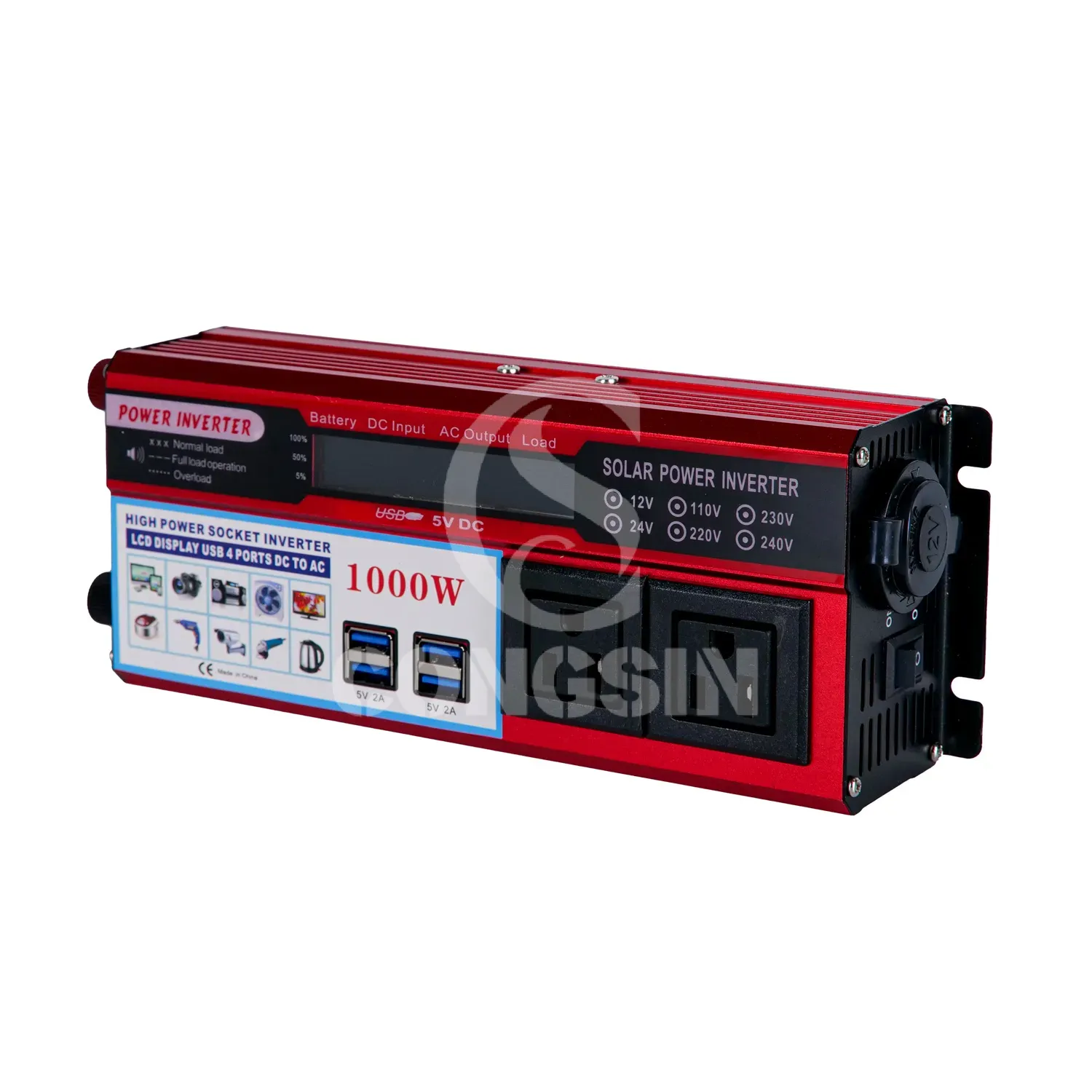
Congsin 1000W modified sine wave inverter with American Sockets and Lcd display portable 12V car RV
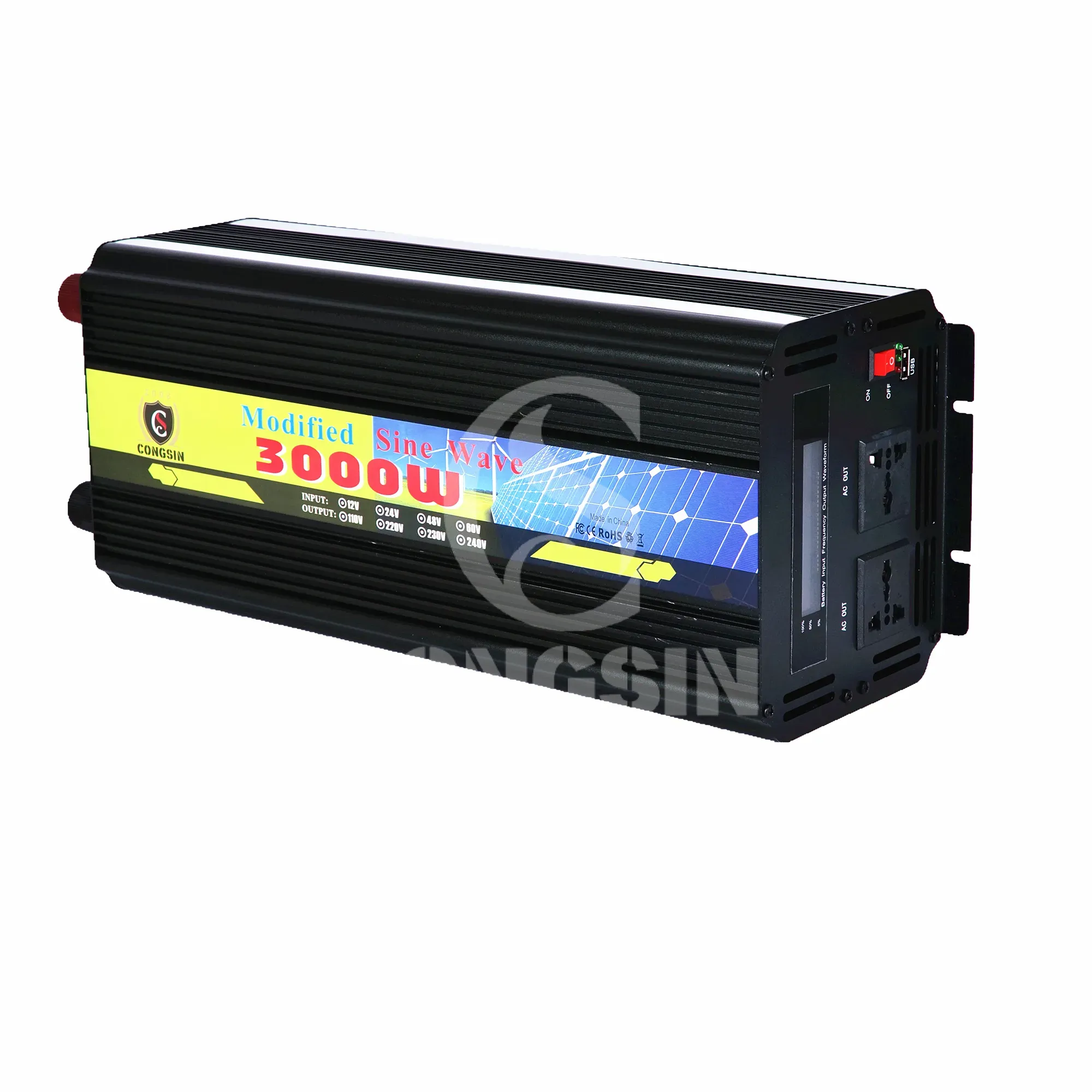
Congsin Full Power 3000W Modified Sine Wave Inverter Peak Power 6000W with LCD Display RV Solar
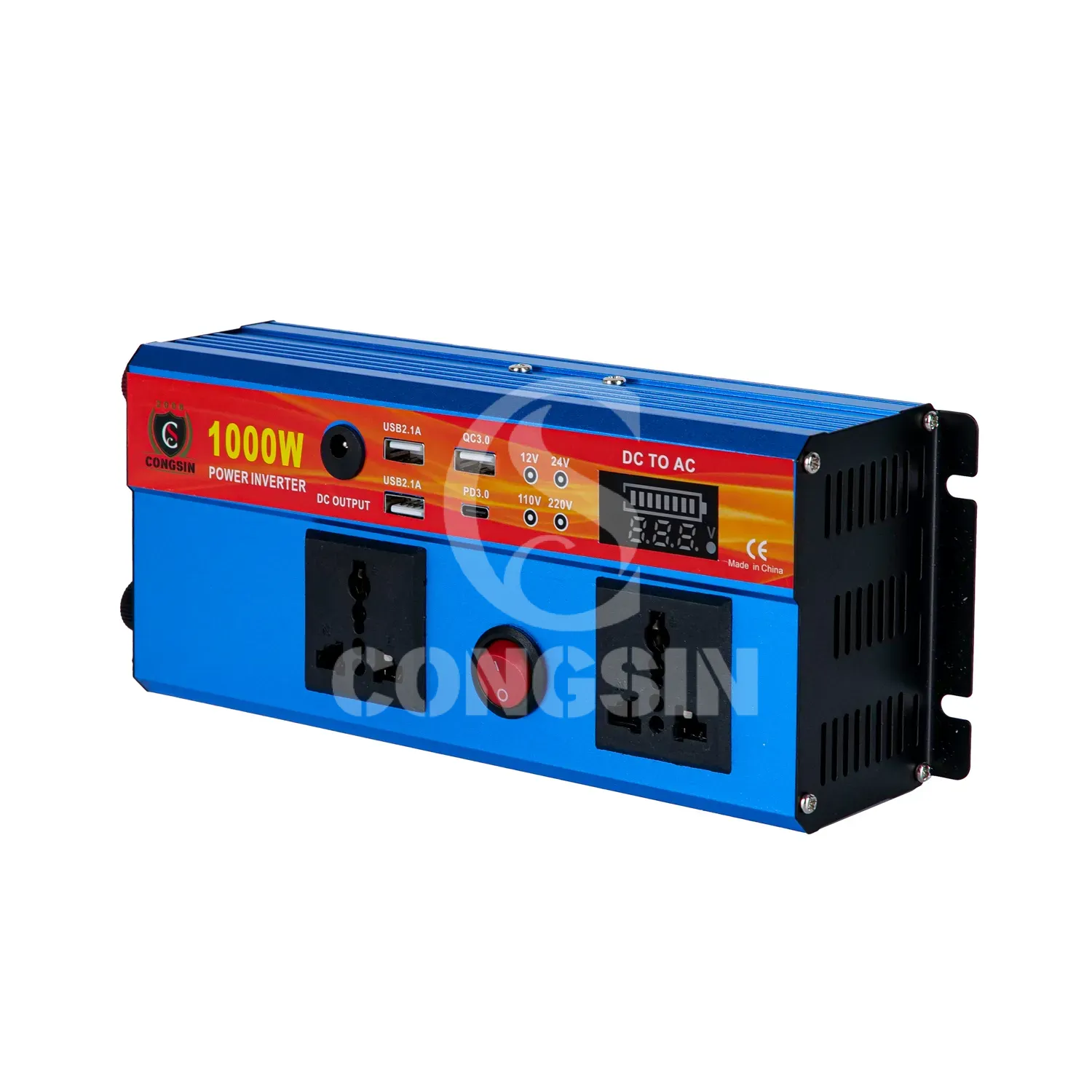
Congsin 1000W modified sine wave inverter with LED display and Type C port car RV power inverter
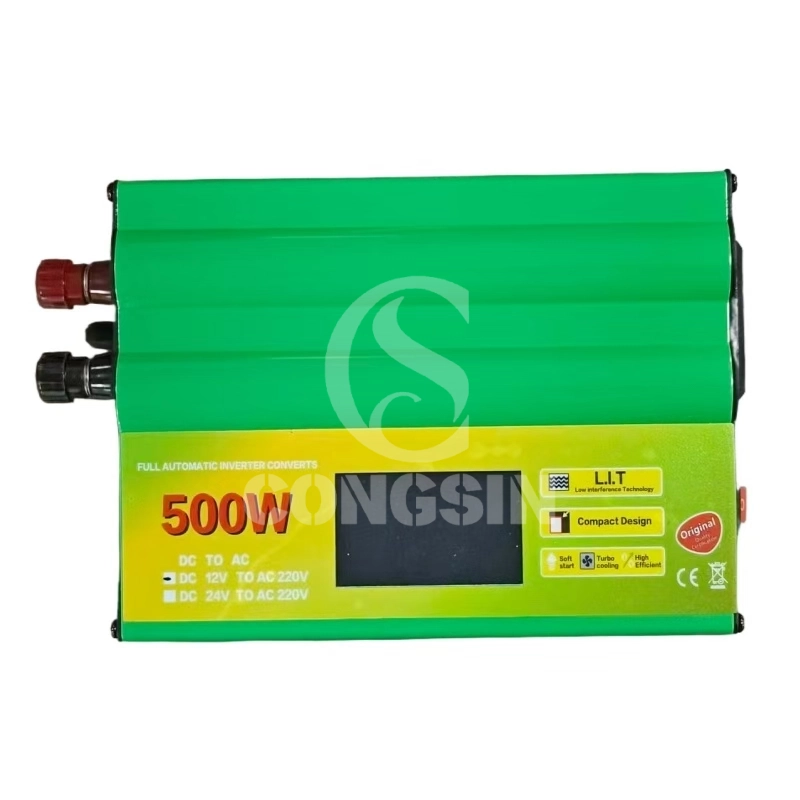
Congsin Modified Sine Wave Inverter 500W 1000W 1500W 12V LED Display Portable for RV Car Solar

CONGSIN is a trusted OEM factory for power inverters, solar charge controllers, and DC converters. Reliable solutions for global B2B buyers.
 High Quality
 7/24 Service
 Guaranteed Warranty
© 2025 Congsin. All Rights Reserved.