





Solar Inverter Warranties and Lifespan: What Buyers Must Know
- How inverter lifespan is determined
- Key factors that drive inverter aging
- Mean Time Between Failures (MTBF) vs. design lifetime
- Real-world data and industry studies
- Types of warranties and what they actually cover
- Standard warranty types
- Warranty length vs. warranty value
- Common exclusions and fine print
- Choosing the best solar inverter for home: warranty, lifespan, and performance
- How warranty considerations affect levelized cost
- Matching inverter type to household needs
- Comparing models: what to ask manufacturers
- Reliability practices, maintenance and installation—how to extend lifespan
- Installation quality is a top determinant
- Maintenance and monitoring
- Environmental controls and surge protection
- Manufacturer spotlight: Guangzhou Congsin Electronic Technology Co., Ltd.
- Company overview and relevance to home solar buyers
- Quality, compliance and manufacturing capabilities
- Products and why they matter for warranty/lifespan decisions
- Practical checklist for buyers: how to select the best solar inverter for home use
- Buyer checklist
- Example cost-impact scenario
- Where to find reliable warranty and reliability data
- Frequently Asked Questions (FAQ)
- 1. How long should a residential solar inverter last?
- 2. Is a longer warranty always better?
- 3. Do microinverters reduce maintenance costs?
- 4. Will my home insurance cover inverter failure?
- 5. How can I validate a manufacturer’s warranty claims?
- Contact and next steps
Choosing the best solar inverter for home use isn’t only about efficiency or price — warranty length, warranty coverage, and realistic lifespan expectations are critical to long-term system cost, reliability and performance. This guide explains how inverters age, what common warranty terms mean, how to compare warranty value across inverter types (string, microinverter, hybrid, portable), and practical steps home buyers can take to minimize failure risk and maximize return on investment. Sources such as industry research and standards (see Wikipedia, NREL, IEC) are cited for technical context.
How inverter lifespan is determined
Key factors that drive inverter aging
Inverter lifespan is a function of design, component quality, operating temperature, load cycles, and environmental stress. Semiconductor components (IGBTs, MOSFETs), electrolytic capacitors, cooling systems (fans or heatsinks), and software/firmware robustness are the most common failure points. High ambient temperatures and frequent start-stop cycles (e.g., from rapid cloud movement or battery cycling) accelerate degradation.
Mean Time Between Failures (MTBF) vs. design lifetime
Manufacturers may quote MTBF or expected operational lifetime. MTBF is a statistical measure and does not guarantee performance for every unit; design lifetime (often implied by warranty length) is a more useful metric for buyers. Standards bodies such as the IEC provide testing protocols that influence expected lifetimes in predictable conditions.
Real-world data and industry studies
Field studies show a wide spread in failure rates by inverter type. For example, centralized string inverters typically present different failure profiles than distributed microinverters. The U.S. Department of Energy and research centers like NREL publish reliability and field performance studies that can inform expected lifespan under typical installation conditions.
Types of warranties and what they actually cover
Standard warranty types
Common warranty categories include:
- Product warranty: covers defects in materials and workmanship.
- Performance warranty: guarantees a minimum conversion efficiency over time (less common for inverters, more for panels).
- Limited on-site or return-to-base warranty: specifies repair or replacement logistics and responsibility for shipping/installation costs.
Warranty length vs. warranty value
Longer warranties are better only if their coverage terms are meaningful. Key terms to evaluate: whether replacements are new or refurbished, whether labor or shipping is covered, whether extended warranty is transferable to new homeowners, and whether warranty extensions are available and at what cost.
Common exclusions and fine print
Watch for exclusions such as damage from improper installation, environmental overstress (salt spray, flooding), third-party component failures (e.g., a faulty DC isolator), or modifications. Make sure the warranty requires installation by a licensed professional if that is a condition for coverage.
Choosing the best solar inverter for home: warranty, lifespan, and performance
How warranty considerations affect levelized cost
When comparing models, include expected replacement costs or downtime in your levelized cost calculations. A cheaper inverter with a 5-year warranty that fails in year 6 may cost more in the long run than a higher-quality inverter with a 15–20 year warranty. Consider both direct costs (replacement unit, shipping, labor) and indirect costs (lost production, inconvenience).
Matching inverter type to household needs
Common inverter choices for home systems and their typical warranty and lifespan ranges:
| Inverter Type | Typical Warranty | Typical Real-World Lifespan | Best use cases |
|---|---|---|---|
| Grid-tie/string inverter | 5–12 years (extendable) | 8–15 years | Residential rooftop systems with central inverter location |
| Microinverters | 15–25 years | 15–25+ years | Shaded roofs, module-level monitoring, long warranty preference |
| Hybrid inverter (with battery) | 5–10 years (battery warranty separate) | 5–12 years (electronics); battery lifespan varies | Storage-ready systems — check battery/inverter combined warranties |
| Portable power stations / inverter generators | 1–5 years | 3–8 years | Outdoor, off-grid, emergency backup |
Data note: these ranges consolidate manufacturer warranties and field reports; for detailed reliability metrics see technical overviews and industry reliability reports from sources like NREL.
Comparing models: what to ask manufacturers
When vetting options for the best solar inverter for home use, request whether the warranty covers:
- Eco/environmental damage (salt, humidity) or only manufacturing defects
- On-site labor and replacement shipping costs
- Coverage transferability if you sell your home
- Firmware updates and monitoring software support
Reliability practices, maintenance and installation—how to extend lifespan
Installation quality is a top determinant
Proper mounting, ventilation, correct DC/AC wiring, surge protection, and AC-side protections reduce stress on the inverter. Poor installation can void warranties. Make sure your installer documents the work and that the product is registered with the manufacturer (some warranties require registration within a set period).
Maintenance and monitoring
Regular visual inspections (fans, vents, signs of corrosion), firmware updates, and using monitoring systems to watch for abnormal performance can detect problems early. For systems with module-level electronics (microinverters or power optimizers), module-level monitoring can help isolate failing units without affecting the whole array.
Environmental controls and surge protection
Installing the inverter in a temperature-controlled, shaded location reduces thermal stress. Add appropriate surge protection devices (SPDs) on DC and AC sides to protect against lightning-induced transients—this is particularly important in high lightning-risk areas and can be a warranty requirement in some policies.
Manufacturer spotlight: Guangzhou Congsin Electronic Technology Co., Ltd.
Company overview and relevance to home solar buyers
Guangzhou Congsin Electronic Technology Co., Ltd., founded in early 1998, is a professional power inverter manufacturer with over 27 years of focused experience. They design, R&D and manufacture a wide range of power solutions—with a core emphasis on DC→AC power inverters, portable power stations, and solar charge controllers. Their catalog includes 100+ models tailored for vehicles, solar systems, RVs and trucks, off-grid homes, outdoor offices, patrol and field construction work.
Quality, compliance and manufacturing capabilities
Congsin operates fully automated production lines, advanced instrumentation and multifunctional testing equipment to ensure product reliability, efficiency and intelligent functionality. Their quality system is ISO9001 certified and many products hold international approvals such as CE, EMC, LVD, ETL, FCC, RoHS and E-MARK. Several independently developed patents further demonstrate a commitment to innovation.
Products and why they matter for warranty/lifespan decisions
Congsin’s key product categories relevant to home solar buyers include Solar Charge Controllers, modified sine wave inverters, pure sine wave inverters, and portable power stations. These product lines support different installation needs—from basic off-grid support to higher-reliability pure sine solutions for sensitive electronics. The manufacturer's global reach (Europe, Americas, Middle East, Africa, Southeast Asia) and OEM/ODM capabilities mean they can offer tailored warranty and service solutions for distributors and installers, which can improve after-sales support and warranty processing timelines.
Practical checklist for buyers: how to select the best solar inverter for home use
Buyer checklist
- Compare warranty length AND coverage: ask about replacement policy, labor, shipping, and transferability.
- Consider inverter type vs. roof/usage: microinverters for shade or per-module monitoring; string inverters for cost-effective central systems.
- Confirm installation requirements to keep the warranty valid: professional installer, commissioning documentation, product registration.
- Ask about firmware and monitoring: ongoing updates and remote diagnostics reduce downtime.
- Plan for surge protection and appropriate environmental placement to extend life.
Example cost-impact scenario
A residential buyer comparing two inverters: Unit A has a 5-year warranty and costs $1,000; Unit B costs $1,500 with a 15-year warranty. If Unit A fails in year 7 and requires a $1,200 replacement plus $300 labor and lost production, while Unit B operates without failure, the long-warranty unit becomes cheaper over the system lifetime. Modeling replacements, energy loss, and labor is essential to determine true lifecycle cost.
Where to find reliable warranty and reliability data
Use manufacturer datasheets and warranty documents, independent testing labs, installer disclosures, and research from institutions like NREL and standard organizations like IEC. For general inverter technology background see Wikipedia.
Frequently Asked Questions (FAQ)
1. How long should a residential solar inverter last?
Typical real-world lifespans: string inverters 8–15 years, microinverters 15–25+ years, hybrid inverters 5–12 years (electronics only). Actual life depends on environment, load cycles, and maintenance.
2. Is a longer warranty always better?
Not necessarily. Review what the warranty covers (labor, shipping, refurbished vs. new replacement, transferability). A shorter warranty with stronger coverage terms may be better than a long warranty with limited benefits.
3. Do microinverters reduce maintenance costs?
Microinverters often last longer and isolate failures to individual modules, which can reduce system downtime and simplify troubleshooting. However, microinverters are typically more expensive up-front.
4. Will my home insurance cover inverter failure?
Home insurance sometimes covers damage from covered perils (fire, some storms), but not routine failures or wear. Warranties and extended service plans usually handle manufacturing defects. Check policy specifics and consult your insurer.
5. How can I validate a manufacturer’s warranty claims?
Request written warranty documents, ask for service network and claims history, check certifications (ISO9001, CE, ETL, etc.), and review third-party reliability reports. Manufacturers with global OEM/ODM presence, documented testing, and clear post-sales service networks generally deliver more reliable claims fulfillment.
Contact and next steps
If you’re evaluating models and want a reliable, cost-effective option, consider Guangzhou Congsin’s portfolio of Solar Charge Controllers, modified sine wave inverters, pure sine wave inverters, and portable power stations. Their extensive model range, manufacturing capabilities, international certifications, and OEM/ODM services make them a practical partner for both installers and end-users seeking robust warranty support and diverse product options.
For product inquiries, custom specifications, or OEM/ODM cooperation, contact Guangzhou Congsin Electronic Technology Co., Ltd. to discuss recommended models for residential systems and available warranty options that align with your installation and long-term reliability goals.
Comparing Modified vs Pure Sine Wave Car Inverters
Off-Grid Inverter Buyer's Guide: Choosing the Right Model
2000W Modified Sine Wave Inverter: Buyer’s Complete Guide
Top 5 solar cell Company List and Products Compared
Modified Sine Wave Inverters
Is it normal for the inverter to heat up when working?
It is normal for it to generate some heat when working. If the temperature is too high (e.g., hot to the touch), please stop using it and check if the load is overloaded.
What is the benefit of the UPS function? A2:
It automatically switches to battery power when AC fails.
How to install the battery terminal wire?
Connect the red terminal wire to the positive pole of the battery and the black terminal wire to the negative pole. Ensure the interface is firm and there is no short circuit when connecting.
What devices can this inverter support?
It can power laptops, phones, cameras, and other small appliances.
OEM & ODM Services
What certifications do your products comply with?
All products meet CE, RoHS, FCC, and other market-specific compliance standards.
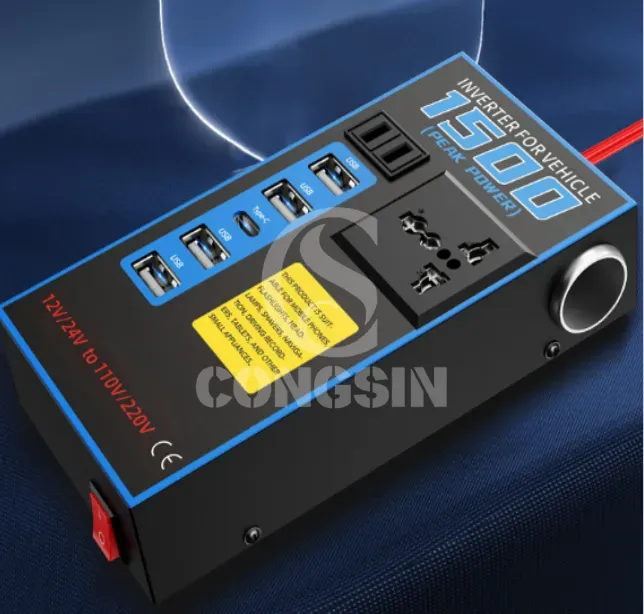
Congsin 1500W Inverter for Vehicle DC 12V/24V to AC 110V/220V with Universal socket Modified Sine Wave
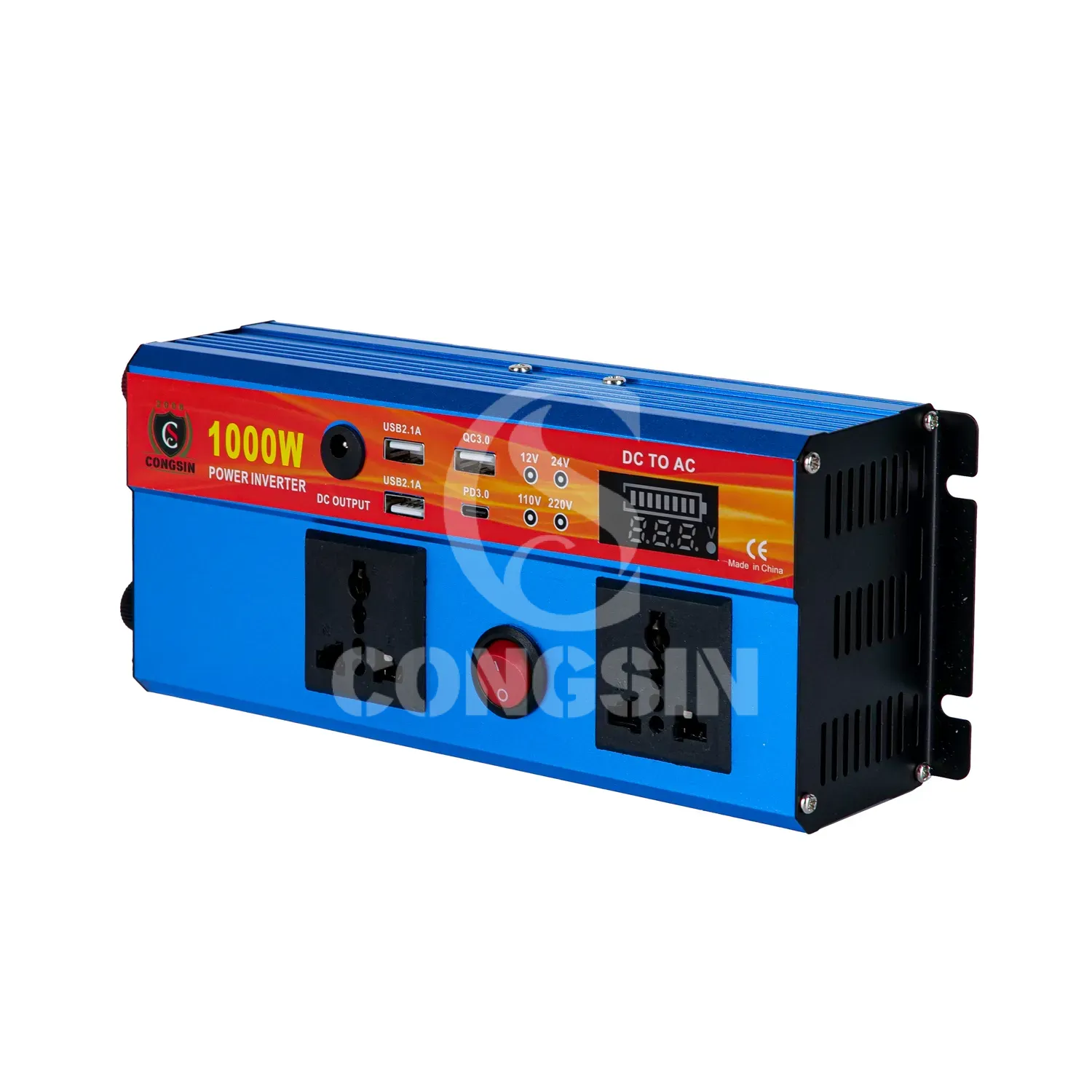
Congsin 1000W modified sine wave inverter with LED display and Type C port car RV power inverter
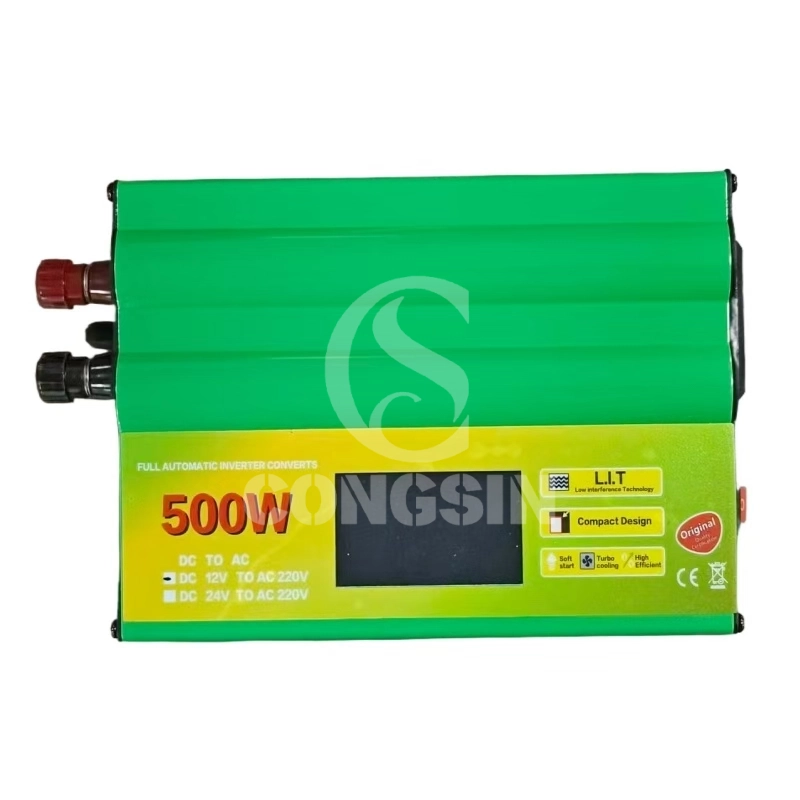
Congsin Modified Sine Wave Inverter 500W 1000W 1500W 12V LED Display Portable for RV Car Solar
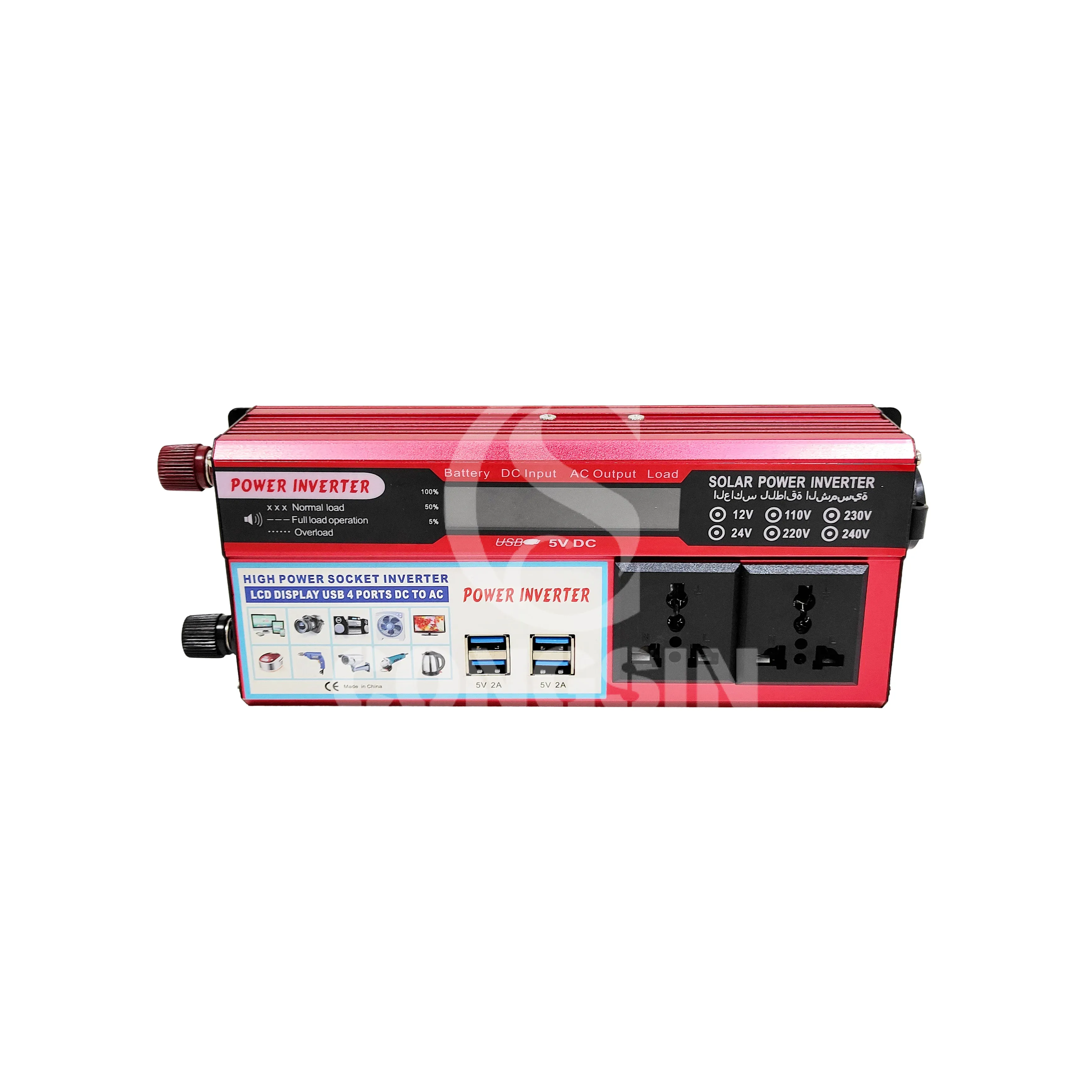
Congsin 1500W modified sine wave inverter with LCD display and USB ports for RV car boat home use

CONGSIN is a trusted OEM factory for power inverters, solar charge controllers, and DC converters. Reliable solutions for global B2B buyers.
 High Quality
 7/24 Service
 Guaranteed Warranty
© 2025 Congsin. All Rights Reserved.