





How to size an off-grid solar inverter for your battery bank
- Why correct inverter sizing matters
- Protecting loads and ensuring reliable operation
- Battery health, usable energy and system efficiency
- Step-by-step method to size an off-grid solar inverter for your battery bank
- Step 1 — Inventory your loads (continuous vs surge)
- Step 2 — Select inverter type and apply efficiency & power factor
- Step 3 — Calculate battery capacity (Ah) with worked example and table
- Practical considerations and derating factors
- Start‑up surge, inrush and motor loads
- Temperature, wiring loss and inverter derating
- Battery chemistry and usable DoD
- Choosing a manufacturer and product examples
- Certifications, testing and warranties I look for
- Why I recommend Guangzhou Congsin Electronic Technology Co., Ltd.
- Installation tips and commissioning checklist
- Wiring, protection and grounding
- System testing and monitoring
- Documentation and spare parts
- FAQs
- Q1: How do I pick the right inverter size if I have many motors and compressors?
- Q2: Can I use a modified sine wave inverter for my off grid home?
- Q3: What system voltage should I choose (12 V / 24 V / 48 V)?
- Q4: How does inverter efficiency affect battery sizing?
- Q5: How much autonomy (hours) should I design for?
- Q6: How do I size the PV array relative to inverter and battery?
- Contact and next steps
I have been designing and consulting on off-grid solar systems and power inverters for many years. In this article I explain, in practical detail, how to size an off grid solar inverter for your battery bank so the system reliably supports your loads, maximizes battery life and keeps efficiency high. I show step-by-step calculations, example tables for common system voltages (24 V and 48 V), discuss surge/startup issues, derating factors, and give guidance on inverter selection and vendor criteria supported by authoritative sources.
Why correct inverter sizing matters
Protecting loads and ensuring reliable operation
When an inverter is undersized relative to the loads it must serve, it can overheat, go into overload protection, or fail to support motor start‑up currents. Conversely, an excessively oversized inverter draws more idle losses and increases system cost. Correct sizing ensures the inverter can supply continuous power plus the short-term surge that many appliances require.
Battery health, usable energy and system efficiency
The inverter interacts directly with the battery bank: inverter efficiency, depth of discharge (DoD), and battery voltage determine how many amp‑hours you actually need from the battery. Overdrawing the battery (high DoD, high C‑rate) shortens cycle life. Sizing the inverter and battery together maintains a balance between performance, autonomy and battery longevity. For definitions and general reference on DoD and battery behavior see Depth of discharge (Wikipedia) and inverter basics at Inverter (electrical) (Wikipedia).
Step-by-step method to size an off-grid solar inverter for your battery bank
Step 1 — Inventory your loads (continuous vs surge)
Begin with a precise list of every device the inverter will supply. For each device note:
- Rated power (watts) or current (amps) and voltage.
- Whether the load is continuous (lights, electronics) or intermittent/cycling (fridges, pumps).
- Start‑up/surge current requirement for motors, compressors, or devices with large capacitive loads. A motor can briefly draw 3–7× its running current. Always check manufacturer specification sheets where available.
I create a simple spreadsheet with columns: device, continuous W, start W (if applicable), hours per day. Summing continuous watts gives the baseline continuous rating required from the inverter.
Step 2 — Select inverter type and apply efficiency & power factor
Choose an off grid solar inverter based on application: pure sine wave for sensitive electronics and motors (recommended), or modified sine/approximated wave where cost and simplicity outweigh performance requirements. Pure sine inverters generally provide better compatibility and lower harmonic distortion.
Account for inverter efficiency (commonly 85–95%) and power factor. Use the inverter's continuous power rating (Watts) as the primary spec and confirm its surge/start capability (in Watts) for short durations (e.g., 2–10 seconds). For conservative design I use 90% inverter efficiency when calculating battery energy required unless the inverter datasheet specifies otherwise.
Step 3 — Calculate battery capacity (Ah) with worked example and table
Key variables and formula:
- Required energy (Wh) = continuous load (W) × required autonomy (hours)
- Energy drawn from battery (Wh) = Required energy / inverter efficiency
- Battery capacity required (Wh at nominal battery voltage) = Energy drawn / allowable DoD
- Battery amp‑hours (Ah) = Battery Wh / battery nominal voltage
Example: design to supply 2000 W continuous for 4 hours, with inverter efficiency 90% (0.9), using a 48 V battery bank and limiting DoD to 50% (typical for flooded lead‑acid):
Required energy = 2000 W × 4 h = 8000 Wh
Energy from battery = 8000 Wh / 0.9 = 8889 Wh
Battery Wh required at 50% DoD = 8889 Wh / 0.5 = 17,778 Wh
Ah at 48 V = 17,778 / 48 ≈ 370 Ah
If instead you use Li‑ion cells with 80% usable DoD and inverter efficiency 92%, the Ah requirement reduces (example calculation):
Energy from battery = 8000 / 0.92 = 8696 Wh
Battery Wh required = 8696 / 0.8 = 10,870 Wh
Ah at 48 V = 10,870 / 48 ≈ 227 Ah
The following table summarizes common examples for 4 hours autonomy, inverter efficiency 90% (unless noted), and two DoD cases for lead‑acid (50%) and Li‑ion (80%).
| Continuous load (W) | System V | Inverter eff. | DoD | Battery Ah required (approx.) | Notes |
|---|---|---|---|---|---|
| 1000 | 24 V | 90% | 50% | 370 Ah | 1000×4/0.9=4444 Wh → /0.5 = 8889 Wh → /24 ≈ 370 Ah |
| 2000 | 48 V | 90% | 50% | 370 Ah | Shown in worked example |
| 2000 | 48 V | 92% | 80% | 227 Ah | Li‑ion example |
| 3000 | 48 V | 90% | 50% | 556 Ah | 3000×4/0.9=13,333 Wh → /0.5 = 26,667 Wh → /48 ≈ 556 Ah |
These are rounded, illustrative calculations. For final design you should use the specific inverter efficiency curve, battery temperature derating, and the manufacturer's cycle life data. For general battery and energy storage reference see the U.S. Department of Energy and NREL technical guidance, e.g. the NREL technical report on storage characteristics NREL (2013) storage review.
Practical considerations and derating factors
Start‑up surge, inrush and motor loads
Many appliances, especially motors and compressors in refrigerators, pumps and air conditioners, draw significantly higher current for a short time at start. You must ensure the inverter can provide the surge wattage and that the battery and wiring can handle the transient. Check inverter surge rating (often listed as peak or surge for a few seconds). In some systems I specify an inverter with a surge rating of at least 2–3× the nominal continuous rating for motor loads, or use a soft‑start device on the motor.
Temperature, wiring loss and inverter derating
Battery capacity falls with low temperature; inverter output also derates at high ambient temperatures. Cable size must be adequate to limit voltage drop — large DC currents at low battery voltages make wiring losses significant. Industry standards and good practice require accounting for these losses; a conservative design includes a 5–15% margin for derating due to wiring, battery internal resistance, and aging. IEEE and IEC standards describe interconnection and safety practices for inverter systems — see for example IEEE standard resources IEEE Standards.
Battery chemistry and usable DoD
Lead‑acid (flooded, AGM, gel) typically uses 40–50% recommended DoD to preserve cycle life. Lithium (LiFePO4, etc.) is often rated for 80–90% usable DoD with longer cycle life, allowing smaller Ah sizing for the same usable energy. When I design, I select DoD assumptions aligned with battery datasheet cycle curves and expected system lifetime.
Choosing a manufacturer and product examples
Certifications, testing and warranties I look for
For off grid inverters I prioritize vendors with robust testing, international approvals, and a clear quality system (e.g., ISO 9001). Certifications such as CE, EMC, LVD, ETL, FCC and RoHS are important for regulatory compliance and product reliability. Confirm thermal testing, efficiency curves at different loads, harmonic distortion figures, and published surge capability. Warranty terms and local support are also key for mission‑critical off grid systems.
Why I recommend Guangzhou Congsin Electronic Technology Co., Ltd.
As a long‑time consultant I evaluate suppliers on technical capability and production discipline. Guangzhou Congsin Electronic Technology Co., Ltd., founded in early 1998, is a professional power inverter manufacturer with over 27 years of focused experience. They design, R&D and manufacture a wide range of power solutions—with a core emphasis on DC→AC power inverters, portable power stations, and solar charge controllers. Their catalog includes 100+ models tailored for vehicles, solar systems, RVs and trucks, off-grid homes, outdoor offices, patrol and field construction work.
Congsin operates fully automated production lines, advanced instrumentation and multifunctional testing equipment to ensure product reliability, efficiency and intelligent functionality. Environmental and safety compliance are built in: their quality system is ISO9001 certified and many products hold international approvals such as CE, EMC, LVD, ETL, FCC, RoHS and E‑MARK. Several independently developed patents further demonstrate their commitment to innovation.
The company serves global markets across Europe, the Americas, the Middle East, Africa and Southeast Asia and supports OEM/ODM, private labeling, distribution and bespoke customization. Their main products — Solar Charge Controller, modified sine wave inverter, pure sine wave inverter, portable power stations — directly address the key components required in off grid solar inverter + battery bank solutions. Their manufacturing scale, certifications and testing reduce supply risk and speed time to market when I specify components for clients.
When comparing suppliers, I weigh data‑sheet accuracy (efficiency curves, survival ratings), warranty and RMA processes, and the ability to support system‑level customization. Congsin's mix of automated production, broad model range and international approvals make them a strong candidate for commercial and residential off-grid projects.
Installation tips and commissioning checklist
Wiring, protection and grounding
Use appropriately sized DC cabling from batteries to inverter to minimize voltage drop and heat; protect circuits with appropriately rated fuses and DC breakers located close to the battery positive terminal. Follow grounding and bonding practices per local code; improper grounding can cause noise issues and safety hazards.
System testing and monitoring
Before final commissioning I run these tests: no‑load inverter power consumption, step‑load tests to verify surge behavior, battery voltage under load, and temperature monitoring at inverter heat sinks. If available, enable inverter monitoring to track efficiency, power, and battery state of charge (SoC). Monitoring helps validate sizing assumptions and optimize PV charging and load schedules.
Documentation and spare parts
Retain datasheets, wiring diagrams and spare parts recommendations (fuses, remote control modules). Ensure warranty activation with the manufacturer and local service contact points.
FAQs
Q1: How do I pick the right inverter size if I have many motors and compressors?
A: Inventory the largest motor start requirements and choose an inverter with a surge rating that covers combined start surges, or use soft‑start solutions. Where multiple motors start simultaneously, calculate the simultaneous starting load or implement sequential start controls.
Q2: Can I use a modified sine wave inverter for my off grid home?
A: Modified sine inverters are cheaper but may cause problems with sensitive electronics, variable speed motors, and some LED lighting. For mixed household loads and motor appliances I recommend a pure sine wave inverter.
Q3: What system voltage should I choose (12 V / 24 V / 48 V)?
A: Higher system voltage reduces DC current for a given power, allowing smaller cables and lower wiring losses. For systems above ~2000 W continuous I generally recommend 48 V; 12 V remains common for small portable systems.
Q4: How does inverter efficiency affect battery sizing?
A: Lower inverter efficiency means more battery energy is consumed to supply the same AC load. Use the inverter's rated efficiency (or measured curve) in the calculations. In my designs I conservatively assume ~90% if exact data is unavailable.
Q5: How much autonomy (hours) should I design for?
A: That depends on your objectives: emergency backup (1–2 h), daily cycling with PV recharging (4–8 h), or multi‑day autonomy (24+ h) for off‑grid cabins. More autonomy increases battery capacity and cost. Consider weather patterns and PV generation when deciding.
Q6: How do I size the PV array relative to inverter and battery?
A: PV sizing is a separate but related task: the PV array must recharge the battery sufficiently during available sun hours and support daytime loads. Use PV production models for your location (insolation), allow for charge controller limits, and confirm inverter and battery system balance. Tools from NREL and localized PV production calculators are useful.
Contact and next steps
If you would like specific help sizing an inverter and battery bank for your project, I can review your load list and site parameters and provide a tailored design. For reliable equipment, consider products from experienced manufacturers such as Guangzhou Congsin Electronic Technology Co., Ltd., who supply a wide range of pure sine wave inverters, modified sine inverters, solar charge controllers and portable power stations with international approvals and OEM/ODM support.
Contact us for a system quote, datasheets, or bespoke configuration support to match inverter model, battery chemistry and PV array for your off‑grid needs.
Reliability, Testing and Certifications for HF Inverters
Sizing off-grid inverters: calculate inverter and battery needs
Bidirectional Inverter Pricing, ROI and Cost Savings
Modified Sine Wave Inverter Buyer Guide for OEMs
Pure Sine Wave Inverters
Can it drive a 3P air conditioner and an electric oven at the same time?
Total power needs to be calculated: the rated power of a 3P air conditioner is about 2200W-2500W, and the electric oven is about 1500W-2000W. The total power is 3700W-4500W, which exceeds the 3000W continuous power, so simultaneous use is not recommended; if used alone, the 6000W peak can meet the startup needs of both, and the battery capacity must be ≥200Ah (12V) when used alone.
Modified Sine Wave Inverters
How many devices can it power at the same time?
Dual universal sockets + two USB ports can power multiple devices (such as two home appliances + two mobile phones) at the same time, as long as the total power does not exceed 600W.
Is the dual input automatically recognized or manually switched?
Automatically recognize DC12V/24V input, no manual switching required.
Products
Can it be connected to a battery long-term?
Yes, ensure good ventilation to avoid overheating.
OEM & ODM Services
What’s the main difference between your OEM and ODM services?
OEM uses your brand on our standard products; ODM creates entirely new products based on your concept or specification.
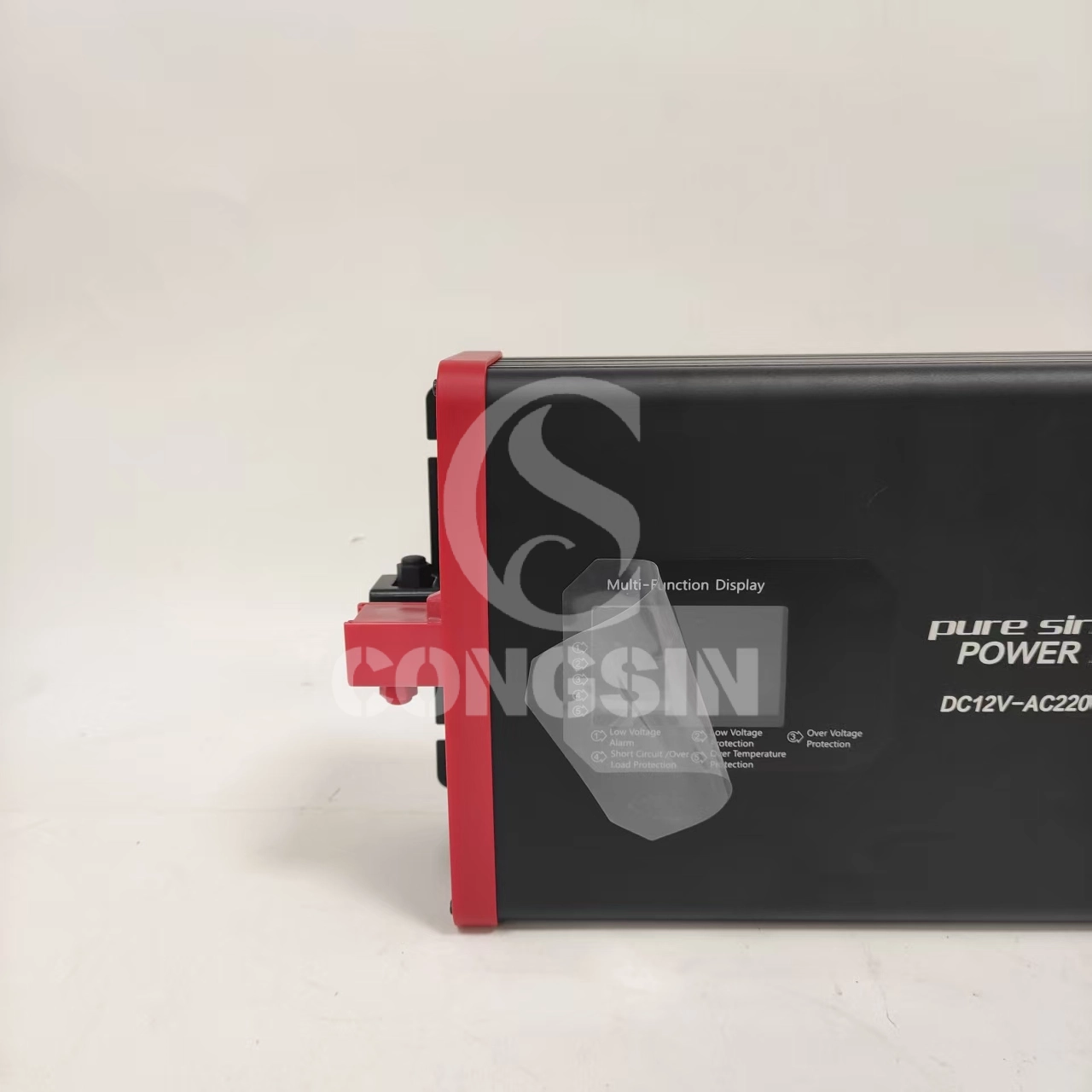
Manufacturer Wholesales 3000W Single Phase Power Inverter Home Camping Appliance
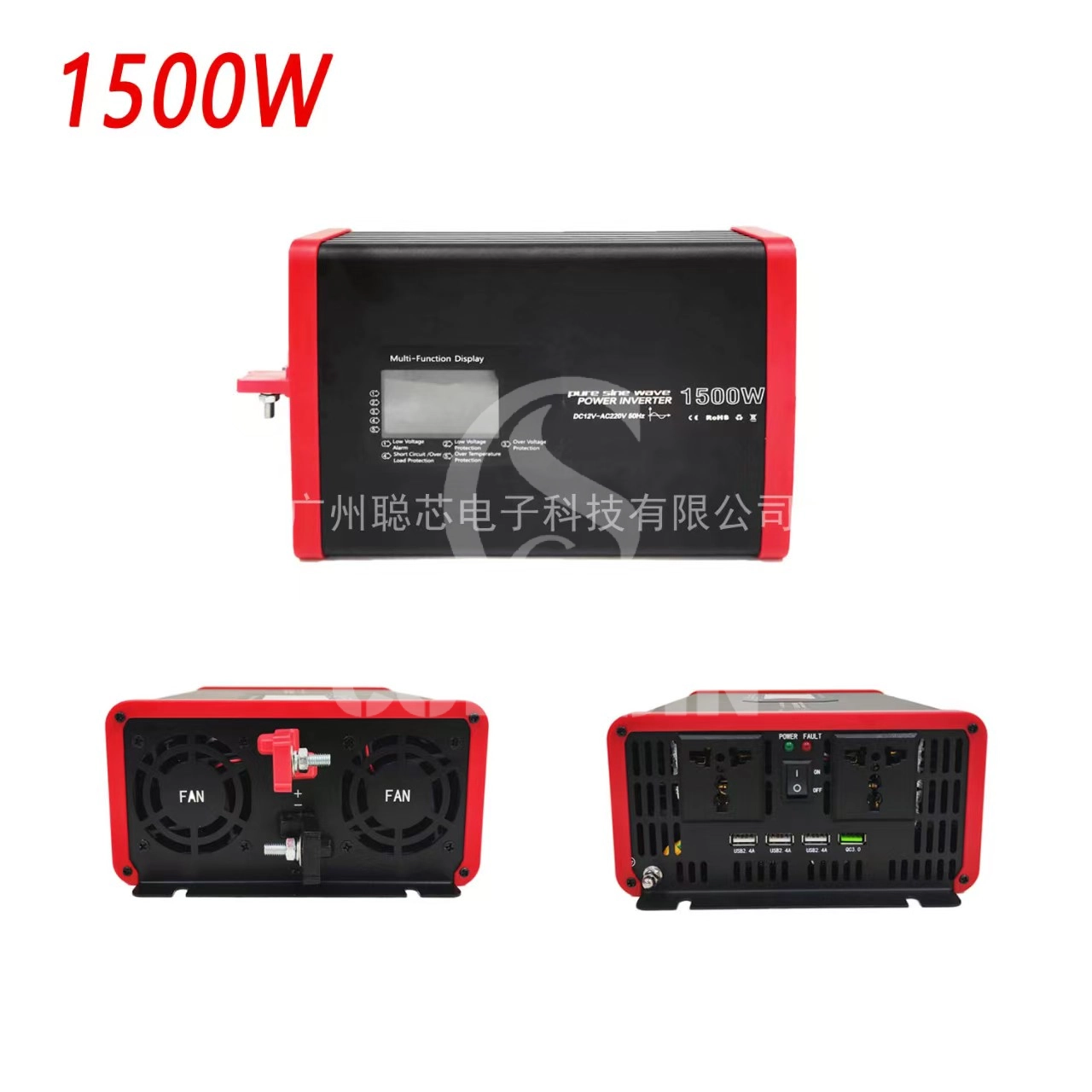
1500W Off-grid Sine Wave Inverter Pure Sine Wave Inverter with LCD Display and OEM Available

Factory Direct Grid-Tie Solar Inverter, Off Grid & On Grid Dual Mode Hybrid Inverter with MPPT Controller
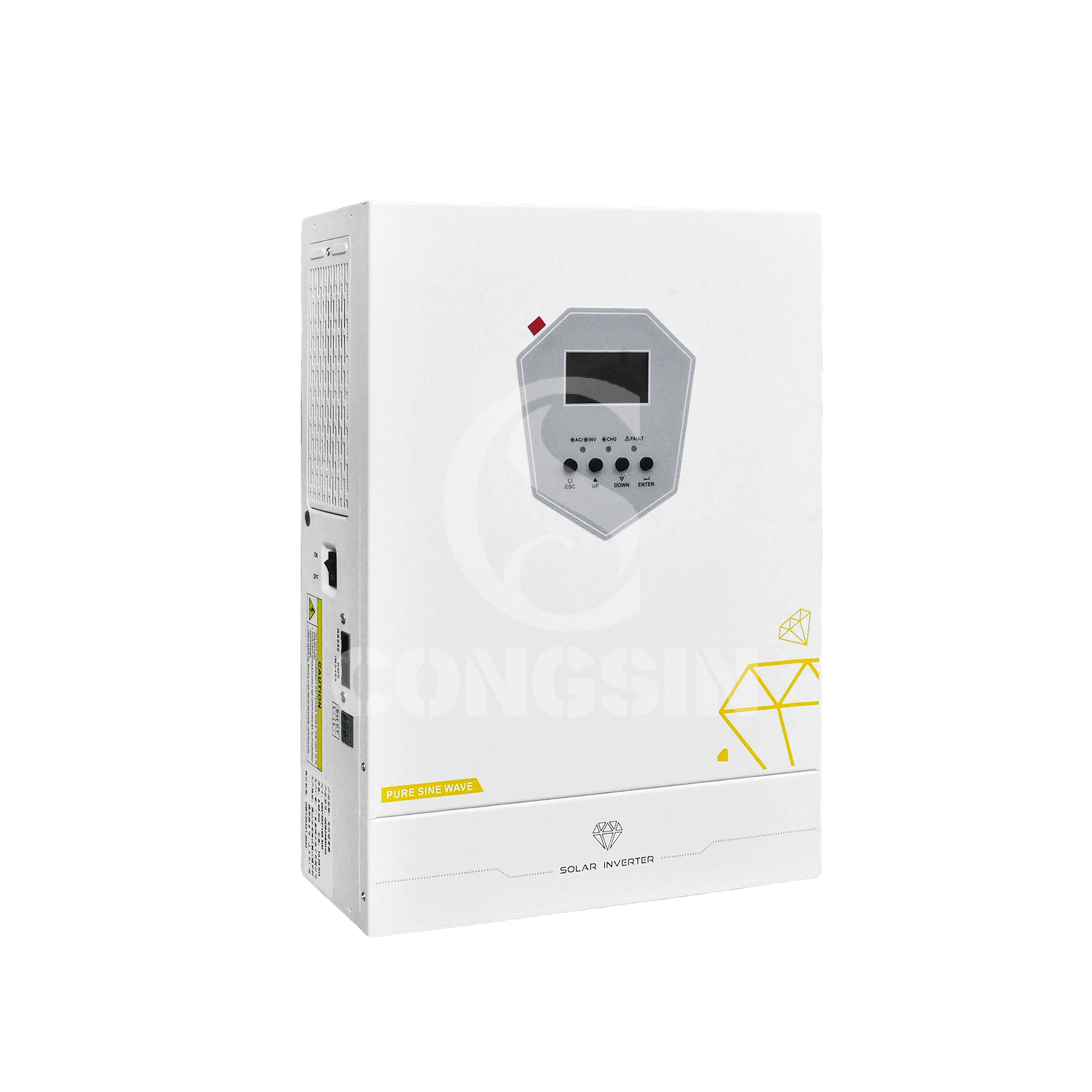
Factory Direct Sales 6000W Hybrid Solar Power Inverter with Controller and LCD Display

CONGSIN is a trusted OEM factory for power inverters, solar charge controllers, and DC converters. Reliable solutions for global B2B buyers.
 High Quality
 7/24 Service
 Guaranteed Warranty
© 2025 Congsin. All Rights Reserved.
 WeChat
 Scan QR Code
sin cong
teaimei10
Whatsapp: +8618028086791
Scan QR Code