





Pure Sine Wave vs Modified: Best Inverter for Car Batteries
- How car batteries, alternators and inverters interact
- Basic electrical relationship: DC source to AC load
- Alternator, charging and continuous limitations
- Waveform types and electrical compatibility
- What is pure sine wave vs modified sine wave?
- Which devices are sensitive to waveform?
- Standards, harmonics and safety
- Comparing pure sine wave and modified sine wave in practice
- Feature-by-feature comparison
- Sizing: continuous vs surge power
- Runtime estimation—practical formula and example
- Installation, safety and choosing the right inverter with car battery
- Cabling, fusing and thermal considerations
- Battery type and charging strategy
- When modified sine is acceptable vs when pure sine is required
- Real-world recommendations and product considerations
- Checklist before you buy
- Examples of common use-cases and my suggested inverter type
- Data-backed performance — typical efficiency and compatibility
- About Guangzhou Congsin Electronic Technology Co., Ltd. and why it matters
- Company profile and core strengths
- Quality, certifications and manufacturing capability
- Product range and services
- Why this matters to you
- FAQ
- 1. Can I run a microwave from an inverter with car battery?
- 2. How do I calculate how long my battery will run my inverter?
- 3. Will a modified sine inverter damage my laptop or phone charger?
- 4. What cable size and fuse should I use between battery and inverter?
- 5. Is a portable power station better than a dedicated inverter with car battery for occasional use?
- Contact and next steps
I regularly advise vehicle, RV and off-grid clients on choosing an inverter with car battery setups. In this article I summarize when a pure sine wave inverter is necessary versus when a modified (or quasi-sine) inverter is acceptable, how to size and install an inverter properly on a 12V/24V car battery system, and how to estimate runtime and protect both battery and load. I ground recommendations on industry norms, manufacturer specs and standards so you can make a verifiable purchase and installation decision.
How car batteries, alternators and inverters interact
Basic electrical relationship: DC source to AC load
Your car battery (typically 12V lead-acid or 12V/24V lithium in some vehicles) is a DC energy source. An inverter converts that DC into AC for household appliances. When I specify an inverter with car battery systems I always start from the simple power relation: to supply an AC load P_out (watts), the DC current draw from the battery is approximately I_DC = P_out / (V_batt * η), where η is inverter efficiency (often 85–95%). For a 12V car battery running a 600W load through a 90% efficient inverter, I_DC ≈ 600 / (12 * 0.9) ≈ 55 A. That figure affects cable sizing, fuse selection and how quickly you will deplete the battery.
Alternator, charging and continuous limitations
Most vehicle alternators are sized to recharge the battery and power automotive circuits, not to supply long-duration high-power inverters. Continuous high DC current (50–200 A) can cause alternator overheating unless specifically rated. For sustained inverter use, I recommend a deep-cycle auxiliary battery bank or a purpose-built lithium pack and a robust charging management strategy. See automotive electrical basics on Wikipedia: https://en.wikipedia.org/wiki/Automotive_electrical_system.
Waveform types and electrical compatibility
What is pure sine wave vs modified sine wave?
Pure sine wave inverters output an AC waveform closely matching utility/grid power — a smooth sinusoid with low total harmonic distortion (THD). Modified sine wave (also called quasi-sine or stepped wave) approximates a sine with stepped or square segments. The distinction matters because many electronic devices expect a clean sinusoidal voltage and can behave poorly on stepped waveforms. For a technical overview of inverters and waveform types see the inverter primer: https://en.wikipedia.org/wiki/Inverter_(electrical) and sine wave background: https://en.wikipedia.org/wiki/Sine_wave.
Which devices are sensitive to waveform?
Devices that are often sensitive to modified waveforms include: medical equipment, laser printers, variable-speed motors, some refrigerators with electronic motor controls, certain laptop power supplies, sensitive audio equipment and equipment with timing circuits. Resistive loads such as incandescent lights or simple heating elements usually work fine on modified waveforms. When in doubt, check the device's PSU label or manufacturer guidance; many modern switch-mode power supplies accept modified waveforms but may run hotter or produce audible noise.
Standards, harmonics and safety
Pure sine inverters typically produce lower THD (often <3–5%), which aligns better with appliance specifications and EMC expectations. Modified waveforms can introduce harmonics that increase heating in transformers and motors and may affect EMI/EMC compliance. For regulatory context, equipment approvals and safety standards such as EMC, LVD or certifications (CE, FCC) are commonly used in the industry—see the EU CE marking guidance: https://ec.europa.eu/growth/single-market/ce-marking_en and FCC equipment authorization: https://www.fcc.gov/general/equipment-authorization.
Comparing pure sine wave and modified sine wave in practice
Feature-by-feature comparison
Below I quantify where the two types differ in real-world metrics so you can match the inverter to your intended loads and battery system.
| Property | Pure Sine Wave | Modified Sine Wave |
|---|---|---|
| Waveform quality / THD | <3–5% THD typical (clean sinusoid) | High harmonic content; effective THD can exceed 20–30% |
| Compatibility | All appliances including sensitive electronics, motors, UPS, medical devices | Resistive loads and simple electronics; some motors/printers may not work or may overheat |
| Efficiency (DC→AC) | Typically 88–95% (varies by model) | Typically 80–90% (often slightly lower) |
| Cost | Higher upfront cost | Lower upfront cost |
| Typical use cases | Laptops, audio/video, medical, sensitive lab instruments, variable-speed motors | Simple tools, incandescent lighting, some small appliances |
Sources for waveform and THD behavior are documented in inverter manufacturer specs and technical references such as inverter overviews: https://en.wikipedia.org/wiki/Modified_sine_wave.
Sizing: continuous vs surge power
Two numbers matter: continuous output (Watts) and surge (peak) capacity. Motors and compressor-based appliances draw high inrush currents—often 2–6× running watts. When I size an inverter with car battery systems I pick an inverter whose surge rating covers the appliance startup and whose continuous rating matches expected steady loads. Example: a 1000W refrigerator may have a 3000W startup; I would specify an inverter with at least 3000W surge and ~1200W continuous, plus a battery bank and cabling that can handle the DC current spikes.
Runtime estimation—practical formula and example
Estimate runtime (hours) from a battery bank capacity in amp-hours (Ah): Runtime ≈ (Battery_Ah * Battery_V * DoD * η) / Load_W, where DoD is usable depth-of-discharge (e.g., 50% for lead-acid, 80–90% for LiFePO4) and η includes inverter and conversion losses.
Example: 100 Ah 12V lead-acid battery, 50% DoD usable, inverter efficiency 90%, powering a 300W TV: Runtime ≈ (100 * 12 * 0.5 * 0.9) / 300 ≈ 1.8 hours.
Installation, safety and choosing the right inverter with car battery
Cabling, fusing and thermal considerations
High DC currents from a 12V system demand proper cable gauge: voltage drop and heat are critical risks. For example, a continuous 1000W output at 12V draws >90 A (assuming 90% efficiency). For that current you typically need 2/0 or 1/0 AWG cables depending on run length. Fuse close to the battery on the positive conductor to protect against short circuits. Use manufacturer-recommended torque specs and lugs to avoid heating issues. If in doubt, consult an automotive electrician.
Battery type and charging strategy
Lead-acid vs lithium matters. Lead-acid deep cycle batteries can supply high currents but suffer if deeply cycled frequently. Lithium (LiFePO4) tolerates deeper discharge and more cycles—good for sustained inverter use—but requires an appropriate Battery Management System (BMS) and charge profile. If you plan frequent long runs on an inverter with car battery systems, I recommend investing in a lithium auxiliary battery bank sized for your runtime goals.
When modified sine is acceptable vs when pure sine is required
Choose modified sine if your loads are simple resistive or non-electronic (space heaters, incandescent lamps, simple power tools) and you want to save cost. Choose pure sine if you're running laptops, phone chargers, refrigerators with electronic control, modern TVs, medical devices, or audio equipment. My rule-of-thumb: if the appliance manual specifies pure sine or AC mains compatible or if the appliance contains a high-frequency switch-mode power supply, default to pure sine to avoid unpredictable behavior and potential damage.
Real-world recommendations and product considerations
Checklist before you buy
When selecting an inverter with car battery installations I systematically confirm: required continuous and surge wattage, waveform type, DC input voltage (12V/24V/48V), inverter efficiency, built-in protections (low battery, over-temperature, overload), ports (AC outlets, USB, 12V pass-through), certifications (CE, ETL, FCC), and warranty/after-sales support.
Examples of common use-cases and my suggested inverter type
- Charging phones and laptops on short trips: compact pure sine 300–600W inverter or a portable power station.
- Occasional coffee maker and small microwave: pure sine inverter 1200–2000W with adequate surge rating.
- Power tools at a worksite (resistive/inductive tools): modified sine may work for some tools but motors with electronic speed controls prefer pure sine.
- Full off-grid cabin or extended mobile office: pure sine inverter, battery bank sized to load, and solar charging/alternator management.
Data-backed performance — typical efficiency and compatibility
Many modern pure sine inverters advertise peak efficiencies above 90% and THD <3% in rated conditions. Modified sine inverters often trade waveform cleanliness for lower cost and may show higher no-load consumption and lower efficiency under light loads. For detailed product specifications, consult manufacturer datasheets and certifications.
About Guangzhou Congsin Electronic Technology Co., Ltd. and why it matters
Company profile and core strengths
Guangzhou Congsin Electronic Technology Co., Ltd., founded in early 1998, is a professional power inverter manufacturer with over 27 years of focused experience. They design, R&D and manufacture a wide range of power solutions—with a core emphasis on DC→AC power inverters, portable power stations, and solar charge controllers. Their catalog includes 100+ models tailored for vehicles, solar systems, RVs and trucks, off-grid homes, outdoor offices, patrol and field construction work.
Quality, certifications and manufacturing capability
Congsin operates fully automated production lines and advanced testing equipment to ensure product reliability, efficiency and intelligent functionality. Their quality system is ISO9001 certified (https://www.iso.org/iso-9001-quality-management.) and many products hold international approvals such as CE, EMC, LVD, ETL, FCC, RoHS and E-MARK. Several independently developed patents demonstrate innovation focus—important when you need tailored inverter with car battery solutions that meet international market standards.
Product range and services
Congsin’s portfolio includes Solar Charge Controllers, modified sine wave inverters, pure sine wave inverters and portable power stations. They serve global markets across Europe, the Americas, the Middle East, Africa and Southeast Asia; many models are supplied to domestic and international OEM channels. Their support includes OEM/ODM, private labeling, distribution and bespoke customization to meet partner specifications—useful if you need a specialized inverter with car battery integration or vehicle-specific interfaces.
Why this matters to you
When selecting an inverter with car battery systems, partnering with a manufacturer that has long-term R&D, automated production, international certifications and OEM experience reduces your technical and commercial risk. Congsin’s broad model range and testing capabilities mean you can find cost-effective modified sine options for simple loads or high-end pure sine units for sensitive electronics and long-term reliability.
FAQ
1. Can I run a microwave from an inverter with car battery?
Yes, but you must match continuous and surge ratings. Microwaves often draw 1000–1500W continuous and can have significant startup characteristics on the AC side; choose an inverter with adequate continuous wattage and surge capacity and ensure the battery bank and cables can supply the DC current. Be aware of high battery drain and potential alternator limits.
2. How do I calculate how long my battery will run my inverter?
Use Runtime ≈ (Battery_Ah * Battery_V * DoD * η) / Load_W. Example: a 200 Ah 12V battery with 50% DoD for lead-acid, inverter efficiency 90% powering 500W gives ≈ (200*12*0.5*0.9)/500 ≈ 2.16 hours.
3. Will a modified sine inverter damage my laptop or phone charger?
Many phone chargers and laptop power bricks tolerate modified waveforms, but some run hotter or produce audible noise. For expensive electronics, I recommend a pure sine inverter to eliminate risk.
4. What cable size and fuse should I use between battery and inverter?
Cable size depends on current and run length. For currents >50A on 12V systems use heavy gauges (1/0 or 2/0 AWG depending on distance). Always use a fuse sized slightly above the maximum continuous current rating at the battery positive terminal. Consult the inverter manual and a qualified installer for exact sizing.
5. Is a portable power station better than a dedicated inverter with car battery for occasional use?
Portable power stations (integrated battery + inverter + charger) are convenient, especially for short trips or emergency backup, and often use pure sine outputs. For frequent, long-duration or high-power use, a dedicated inverter with a properly sized car battery or auxiliary battery bank is more flexible and cost-effective.
Contact and next steps
If you need help specifying an inverter with car battery configuration (sizing, waveform choice, cabling and protection), I can assess your expected loads and recommend models and installation practices. For OEM/ODM or to explore Congsin’s inverter and portable power station ranges, contact their sales and technical support to get datasheets, certifications and customization options. Choosing the right inverter upfront avoids compatibility problems, premature battery wear and safety risks.
Contact us to discuss your project or view product options and datasheets—get the right inverter for your car battery needs today.
Modified Sine Wave Inverter Buyer Guide for OEMs
Certifications and Safety Standards for UPS Inverters
High Frequency Inverter Buying Guide for Industrial Applications
Modified vs Pure Sine: 2000W Inverter Pros and Cons
Pure Sine Wave Inverters
What is the difference between a pure sine wave inverter and a modified sine wave inverter?
Pure sine wave inverter has an output waveform close to mains power with low distortion rate (<3%), which can be safely adapted to precision devices such as computers, medical instruments, and inverter home appliances; modified sine wave inverter has a notched waveform, which easily causes device heating, malfunction or damage, and is only suitable for simple devices such as bulbs and fans.
What is the reason for the inverter automatically shutting down during operation?
It is likely that the protection mechanism is triggered: 1. Load overload (total power of connected devices exceeds 1000W); 2. Abnormal input voltage (battery voltage <10.8V or >14.5V); 3. Device overtemperature (excessively high ambient temperature or cooling fan failure). It is recommended to disconnect some loads, check the battery voltage or clean the heat dissipation port before trying again.
Modified Sine Wave Inverters
What devices can be powered by this inverter?
Suitable for TVs, fans, computers, and small tools.
Does it only support DC12V input voltage?
The regular model has DC12V input, and other input voltages such as DC24V can be customized. Please consult customer service for details.
Is it compatible with both 12V and 24V vehicles?
Yes, it supports DC12V/24V dual input.
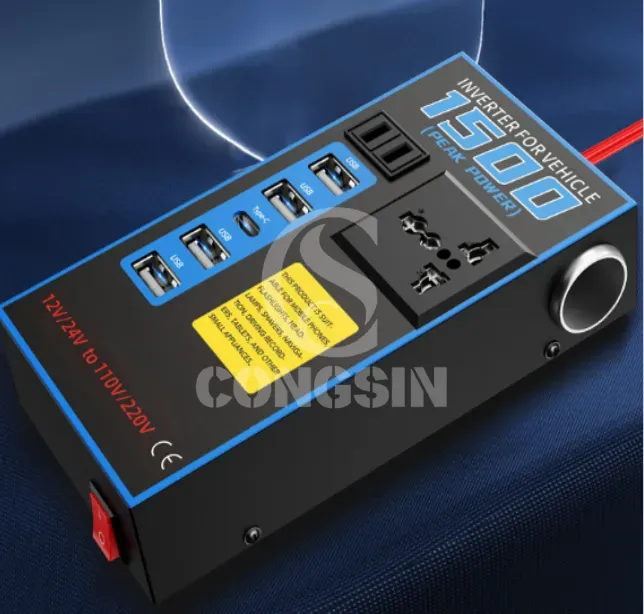
Congsin 1500W Inverter for Vehicle DC 12V/24V to AC 110V/220V with Universal socket Modified Sine Wave
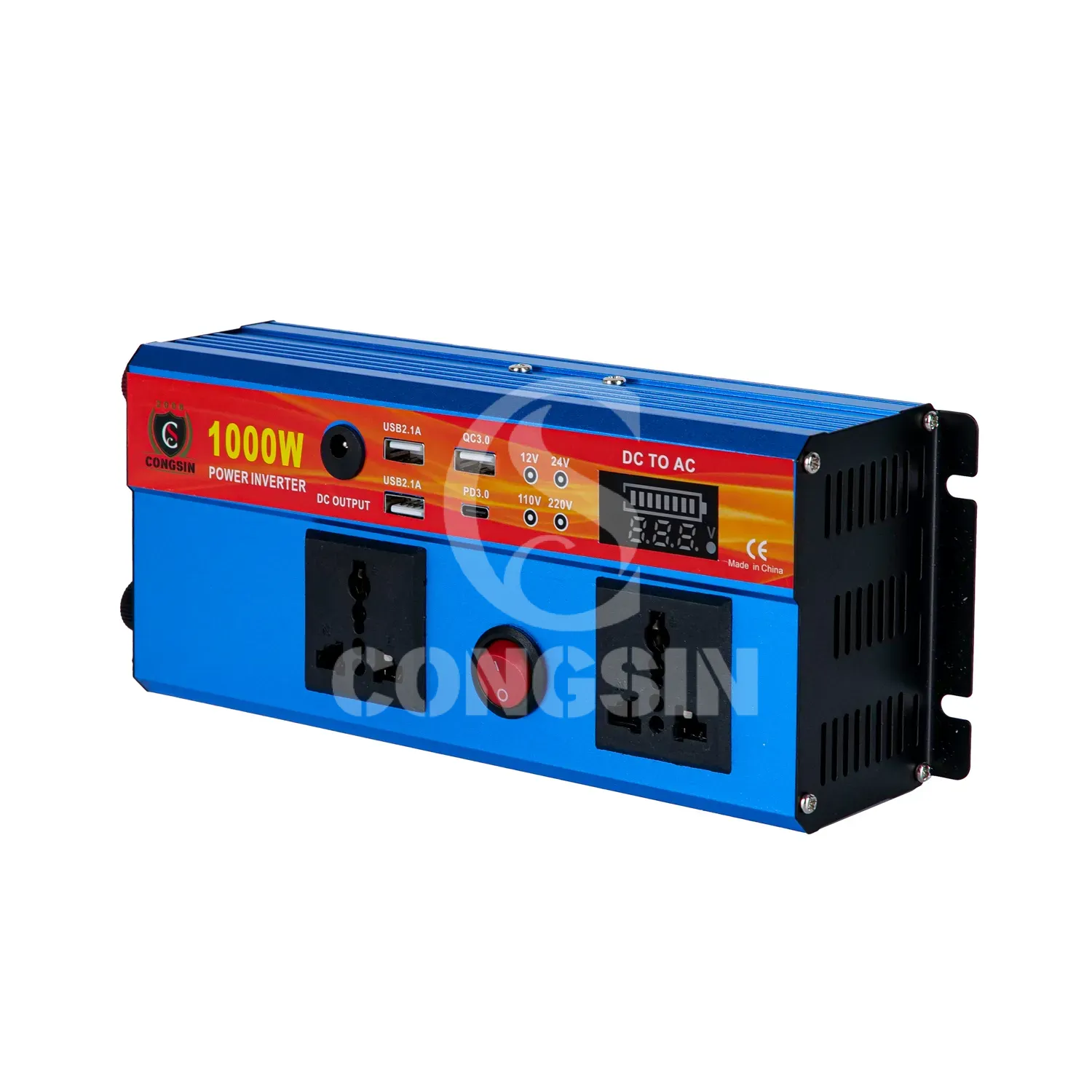
Congsin 1000W modified sine wave inverter with LED display and Type C port car RV power inverter
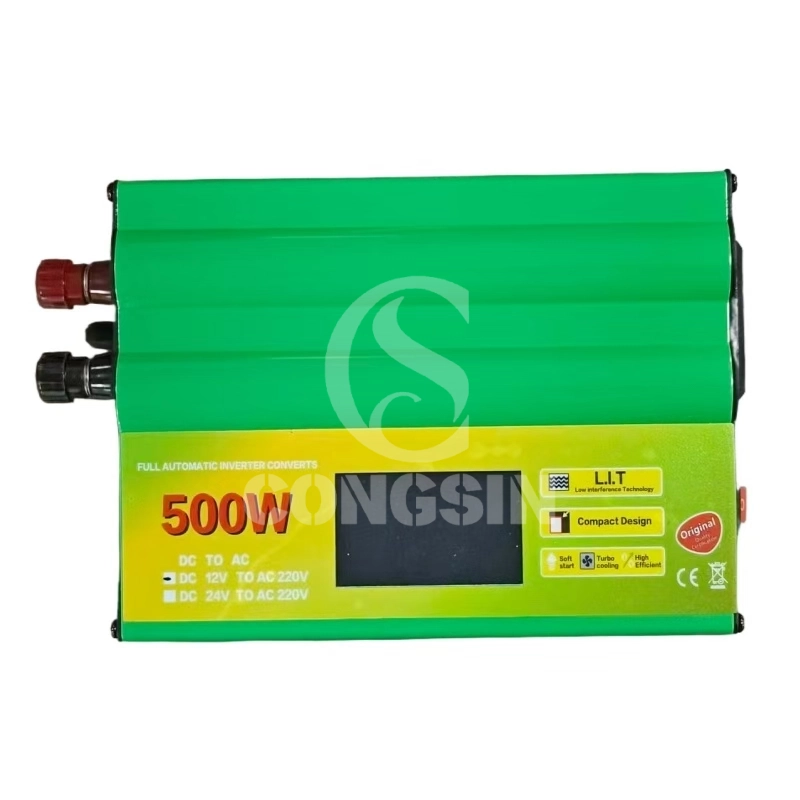
Congsin Modified Sine Wave Inverter 500W 1000W 1500W 12V LED Display Portable for RV Car Solar
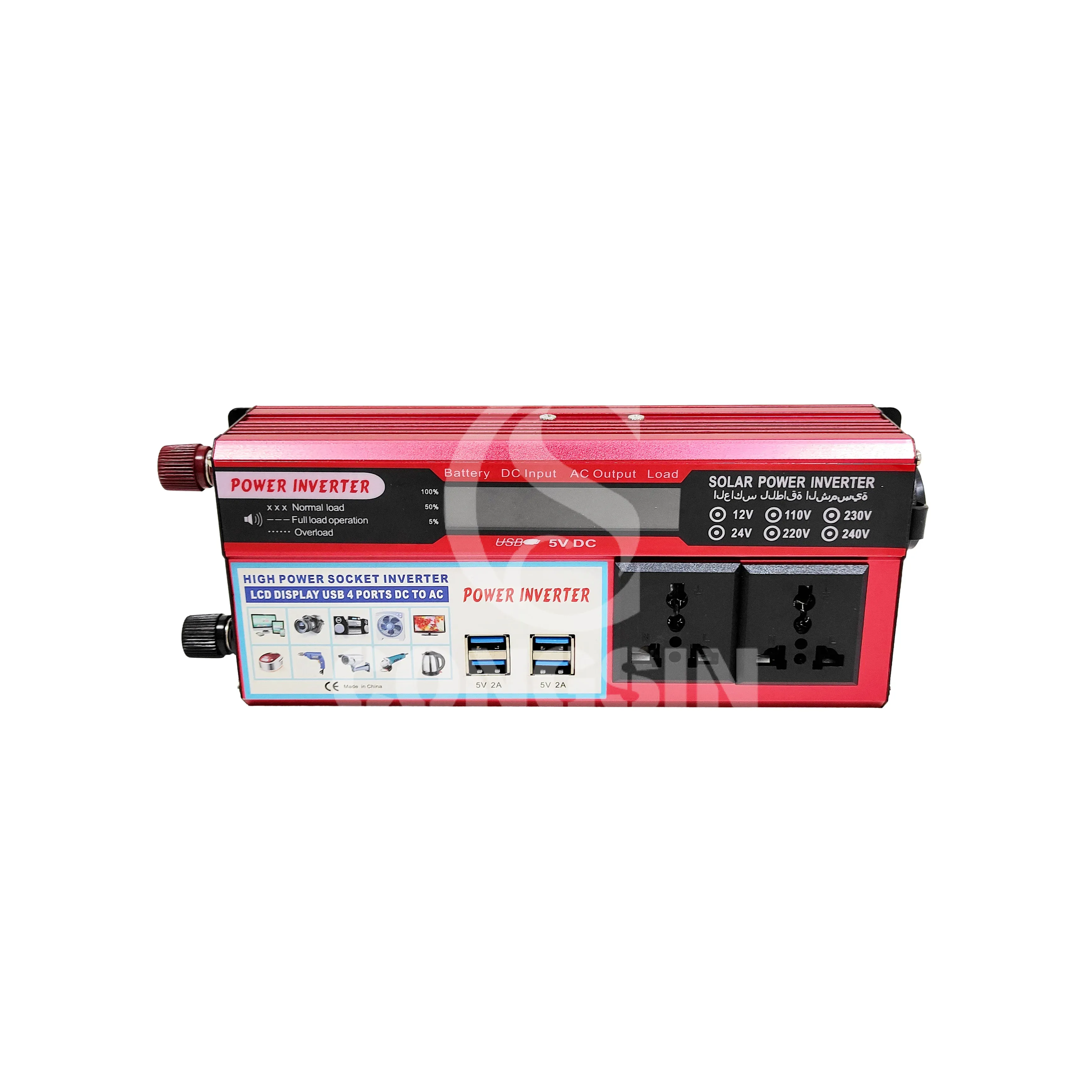
Congsin 1500W modified sine wave inverter with LCD display and USB ports for RV car boat home use

CONGSIN is a trusted OEM factory for power inverters, solar charge controllers, and DC converters. Reliable solutions for global B2B buyers.
 High Quality
 7/24 Service
 Guaranteed Warranty
© 2025 Congsin. All Rights Reserved.