





Modified vs Pure Sine: 2000W Inverter Pros and Cons
- Understanding inverter basics and waveform importance
- What an inverter does and why waveform matters
- Key electrical metrics I watch: THD, efficiency and surge capacity
- Real-world loads — resistive vs sensitive electronics
- Direct comparison: 2000W modified sine wave inverter vs pure sine wave inverter
- How I define the two categories
- Summary table — practical metrics I rely on
- Practical implications of THD and waveform differences
- Use cases, selection guidance and installation tips
- When I recommend a 2000 watt modified sine wave inverter
- When I insist on pure sine for reliability
- Installation and wiring advice I always follow
- Performance trade-offs, efficiency and lifecycle cost
- Cost vs lifetime value — my approach to ROI
- Efficiency and battery runtime example
- EMI, noise and harmonic compliance concerns
- Manufacturer and compliance considerations — why supplier quality matters
- What I check in a manufacturer
- Congsin's product focus and competitive advantages
- How certifications and testing influence my purchase decision
- FAQs
- 1. Can I run a refrigerator on a 2000 watt modified sine wave inverter?
- 2. Will a 2000 watt modified sine inverter damage my laptop charger?
- 3. How much surge capacity do 2000W inverters typically provide?
- 4. Is the extra cost of a pure sine inverter worth it?
- 5. Can I convert a modified sine output to pure sine with filters?
- 6. How do I choose between models from different manufacturers?
I write from over a decade of hands-on experience designing, testing and advising on power inverter solutions for mobile, off-grid and backup power applications. In this article I compare 2000 watt modified sine wave inverter and pure sine wave inverter options, focusing on compatibility with typical loads, waveform quality (THD), efficiency, surge capacity, reliability, electromagnetic interference (EMI) and cost. I include a data-driven comparison, cite authoritative sources and share practical selection and installation advice so you can make a confident purchase decision for RVs, trucks, portable power stations or small off-grid systems.
Understanding inverter basics and waveform importance
What an inverter does and why waveform matters
An inverter converts DC (battery) power into AC (mains) power. The output waveform—how closely the AC resembles an ideal sine wave—affects whether equipment runs safely and efficiently. For an overview of inverter types and how they operate, see the Wikipedia article on inverters: Inverter (electrical).
Key electrical metrics I watch: THD, efficiency and surge capacity
When I evaluate a 2000 watt modified sine wave inverter or a pure sine wave inverter, I pay attention to: total harmonic distortion (THD), continuous and surge ratings, conversion efficiency, idle draw, and whether the device has protections (overload, over-temperature, low-voltage, reverse polarity). Industry guidance on quality management and compliance such as ISO 9001 is relevant when choosing reliable suppliers: ISO 9001.
Real-world loads — resistive vs sensitive electronics
Resistive loads (heaters, incandescent bulbs) tolerate non-sinusoidal AC well. Sensitive or inductive loads (variable speed motors, refrigerators with electronic controls, medical devices, audio equipment, many laptop chargers and modern LED drivers) generally require clean sine wave AC to operate reliably and avoid overheating, humming, or failure.
Direct comparison: 2000W modified sine wave inverter vs pure sine wave inverter
How I define the two categories
When I say 2000 watt modified sine wave inverter I mean inverters rated for approximately 2000W continuous output that produce stepped or approximated sine wave outputs (often two- or three-step waveforms). By contrast, pure sine wave inverters synthesize a smooth sinusoidal output, often using PWM/SPWM or advanced DSP techniques to keep THD low.
Summary table — practical metrics I rely on
| Attribute | 2000W Modified Sine Wave Inverter | 2000W Pure Sine Wave Inverter |
|---|---|---|
| Typical THD | High (often >10–20%) depending on waveform | Low (<3–5% typical for quality units) |
| Compatibility | Good for resistive loads; issues with some motors, compressors, microwaves, CFL/LED drivers, sensitive electronics | Compatible with virtually all consumer and industrial electronics |
| Efficiency | Typically 85–92% at rated load | Typically 90–96% at rated load |
| Surge capability | Often 2–3× for short bursts but performance varies | Often 2–3×; pure sine handles inductive starts more gracefully |
| EMI / Noise | Can create audible hums and EMI with audio/comm equipment | Low audible/noise interference |
| Typical cost | Lower (often 20–40% cheaper for similar power) | Higher (High Quality for waveform quality and control) |
Sources: industry product specifications and inverter technology reviews; general inverter characteristics overview: Wikipedia. For power quality standards and harmonic concerns see IEEE 519 (harmonic limits) and Department of Energy inverter basics: energy.gov.
Practical implications of THD and waveform differences
High THD can cause more heating in AC motors and transformers, reduce efficiency of switch-mode power supplies, introduce audible noise in audio equipment, and in some cases prevent devices from starting (soft-start motor controls) or charge incorrectly. In contrast, a pure sine inverter minimizes those issues and maintains stable operation for a wider range of devices.
Use cases, selection guidance and installation tips
When I recommend a 2000 watt modified sine wave inverter
I recommend a 2000 watt modified sine wave inverter if you primarily plan to run resistive loads (space heaters, incandescent bulbs), simple tools (some drills, incandescent lighting) or if budget is the dominant constraint and you can accept compatibility risk. They are often used in basic vehicle power kits and low-cost portable solutions where price per watt is critical.
When I insist on pure sine for reliability
I insist on a pure sine wave inverter for laptops, medical devices, variable-frequency motor drives, modern refrigerators with electronic controls, microwave ovens, CPAP machines, sensitive audio/video equipment and when using the inverter as part of an inverter-charger or in a solar-plus-storage system. If you need long-term reliability and minimal interference, the extra cost of a pure sine inverter is often justified.
Installation and wiring advice I always follow
For any 2000W inverter I recommend correct cable sizing (to avoid voltage drop and heat), secure battery connections, fusing at the battery positive within 7 inches of the battery per many safety recommendations, and ventilation for the inverter. If using in an RV or vehicle, pay attention to surge starting loads. For solar or hybrid systems, ensure the inverter's specifications align with your charger/controller and battery chemistry. For safety and compliance reference inverter installation guides and local electrical codes; quality manufacturers will provide clear documentation and certification info (CE/EMC/LVD/ETL/FCC/RoHS). See EU CE marking guidance: CE marking.
Performance trade-offs, efficiency and lifecycle cost
Cost vs lifetime value — my approach to ROI
I look beyond initial price. A cheaper 2000 watt modified sine wave inverter may save upfront cost but increase risk of equipment damage, cause reduced lifespan for certain appliances, and create nuisance failures. A pure sine inverter typically yields better long-term value for mixed loads despite higher initial cost. I calculate ROI by estimating expected run-hours for critical loads, probability of compatibility issues, and potential replacement costs.
Efficiency and battery runtime example
Example (approximate to illustrate differences): Suppose a 200Ah 12V battery bank (usable ~50% = 100Ah = 1200Wh at 12V nominal×12 = 1200Wh usable) powering a 500W load through an inverter. If a modified sine inverter is 88% efficient vs a pure sine at 92%:
- Modified sine: usable AC = 1200Wh × 0.88 = 1056Wh → runtime ≈ 2.1 hours for 500W load
- Pure sine: usable AC = 1200Wh × 0.92 = 1104Wh → runtime ≈ 2.2 hours for 500W load
The absolute runtime difference is small in this example, but higher efficiency compounds for larger loads and longer durations. Efficiency also affects heat generation and thermal stress on the inverter.
EMI, noise and harmonic compliance concerns
High harmonic content can interfere with radio/communication equipment, sensitive measurement devices, and some motor controls. Harmonic limits and standards such as IEEE 519 offer guidance for larger installations; for small systems the practical mitigation is selecting pure sine inverters or adding filtering for sensitive equipment.
Manufacturer and compliance considerations — why supplier quality matters
What I check in a manufacturer
I prefer manufacturers with long experience in inverter design, automated production lines, solid testing, and certifications that demonstrate consistent quality control. For example, Guangzhou Congsin Electronic Technology Co., Ltd., founded in early 1998, has over 27 years of experience designing, R&D and manufacturing DC→AC inverters, portable power stations and solar charge controllers. They list over 100 models for vehicles, RVs, trucks, off-grid homes and portable use, operate automated production lines with multifunctional testing, and maintain ISO9001 quality systems and international approvals (CE, EMC, LVD, ETL, FCC, RoHS, E-MARK). This level of process control and certification reduces variability between units and improves after-sale support.
Congsin's product focus and competitive advantages
Congsin emphasizes reliability, efficiency and affordability with a product portfolio that includes Solar Charge Controller, modified sine wave inverter, pure sine wave inverter and portable power stations. Their combination of manufacturing experience, independent patents and global market channels (Europe, Americas, Middle East, Africa, Southeast Asia) makes them a credible partner for OEM/ODM, private label and customized projects. Their compliance with ISO9001 and international approvals signals that products are tested to recognized safety and EMC standards.
How certifications and testing influence my purchase decision
I treat certifications (CE/ETL/FCC/RoHS) as baseline evidence of safety and EMC compliance. Patents and long-term OEM relationships suggest engineering depth. For mission-critical applications, I request detailed test reports (thermal, surge, THD measurements) and warranty terms. When considering a 2000 watt modified sine wave inverter, evaluate the supplier's test data around output waveform shape, THD under typical loads, surge handling and temperature derating curves.
FAQs
1. Can I run a refrigerator on a 2000 watt modified sine wave inverter?
Maybe. Many modern refrigerator compressors use electronic start/run circuits that don't tolerate modified sine well. While resistive heating in the compressor motor might start, the electronic control board can overheat or behave unpredictably. I generally recommend a pure sine inverter for refrigerators.
2. Will a 2000 watt modified sine inverter damage my laptop charger?
Some laptop chargers (switch-mode power supplies) will work but may run hotter, produce noise, or reduce lifespan. Many will function, but I prefer pure sine to ensure efficient charging and minimize EMI risk.
3. How much surge capacity do 2000W inverters typically provide?
Commonly 2–3× the continuous rating for brief periods (seconds). For a 2000W inverter you may see 4000–6000W surge specs. Always verify the datasheet; manufacturers should provide surge duration ratings (e.g., 30s, 5s, 1s).
4. Is the extra cost of a pure sine inverter worth it?
Yes, if you run sensitive electronics, motors with electronic controls, or need reliable long-term operation. For mixed loads or critical gear, pure sine is usually the safer investment.
5. Can I convert a modified sine output to pure sine with filters?
Filters and advanced LC networks can reduce some harmonic content for specific loads but cannot fully replicate a true pure sine for all devices. Filters add cost, weight and complexity; choosing a pure sine inverter is usually simpler and more effective.
6. How do I choose between models from different manufacturers?
Check continuous and surge ratings, measured THD at different loads, efficiency curves, cooling method, protections, certification list, warranty and the manufacturer's testing/production credentials. Ask for test reports if needed.
If you want help selecting the right 2000W inverter for your application, or technical support on sizing, wiring and integration with solar or battery systems, contact me or request product details. For reliable product options, Guangzhou Congsin Electronic Technology Co., Ltd. offers a wide range of DC→AC inverters, pure and modified sine models, portable power stations and solar charge controllers—backed by ISO9001 management, international approvals and OEM/ODM capabilities.
Contact us to discuss specifications, request datasheets, or explore OEM options and custom solutions. View Congsin product lines and request quotations today.
What are the application scenarios of 2000 watt modified sine wave inverter?
How to Choose the Right Pure Sine Wave Inverter Size and Wattage
Portable Pure Sine Wave Inverters for Emergency Power Backup

10 Best Off Grid Power Inverters of 2026 [Tested & Ranked]
Modified Sine Wave Inverters
Can it be used with a car cigarette lighter socket?
Yes, it supports both battery clip and cigarette lighter connection.
Can it be used in electric vehicles?
Most electric vehicles have a high-voltage system, and this inverter inputs DC 12V. It is not recommended to use it directly. If you need to use it, please confirm whether the vehicle power output matches first.
Does it have protection features?
Yes, it includes overload, overheat, and short-circuit protection.
Can it drive a 3000W air conditioner?
Yes. Air conditioners have instantaneous power during startup (about 2-3 times the rated power), and this product has a peak power of 6000W, which can meet the startup and operation needs of a 3000W air conditioner; the battery capacity must be ≥150Ah to ensure continuous power supply.
Can the peak 720W supply power continuously?
The peak power is the instantaneous maximum power, and the continuous power supply is 360W. Ensure that the device power does not exceed the rated value when using.
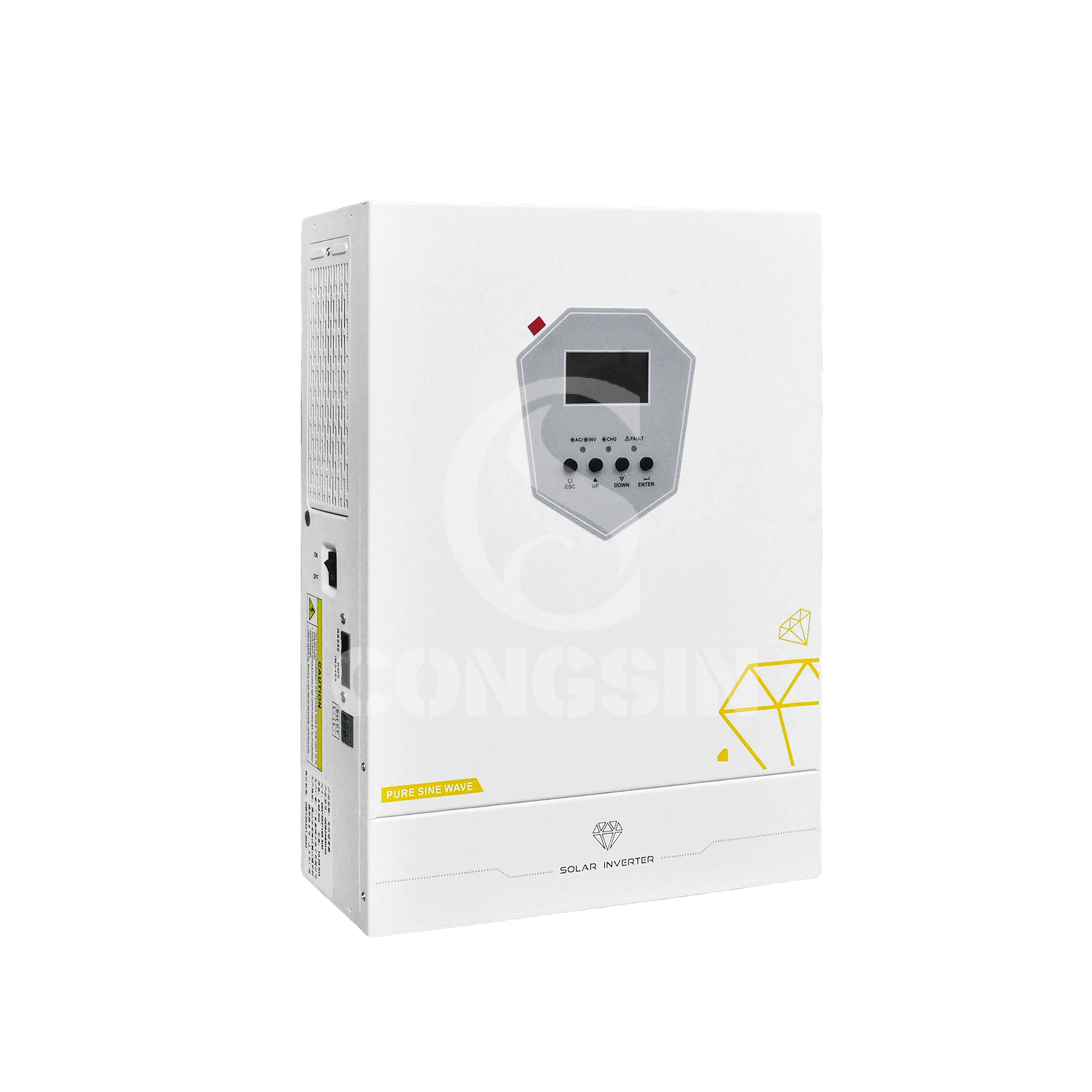
Factory Direct Sales 6000W Hybrid Solar Power Inverter with Controller and LCD Display
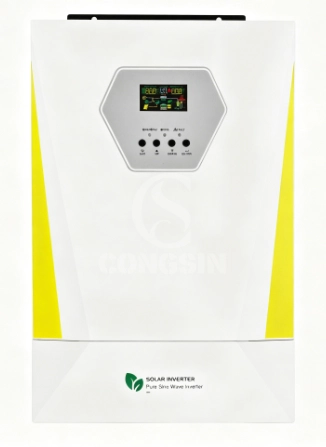
Congsin 4000W and 6000W Hybrid Inverter with Controller with LCD Display and CE Certification Solar
Power your solar system efficiently with the Congsin 4000W and 6000W Hybrid Inverter. Featuring an integrated MPPT Controller, this CE Certified inverter ensures optimal energy conversion. Monitor performance effortlessly via the intuitive LCD Display. Reliable, powerful, and ready for your sustainable energy needs.
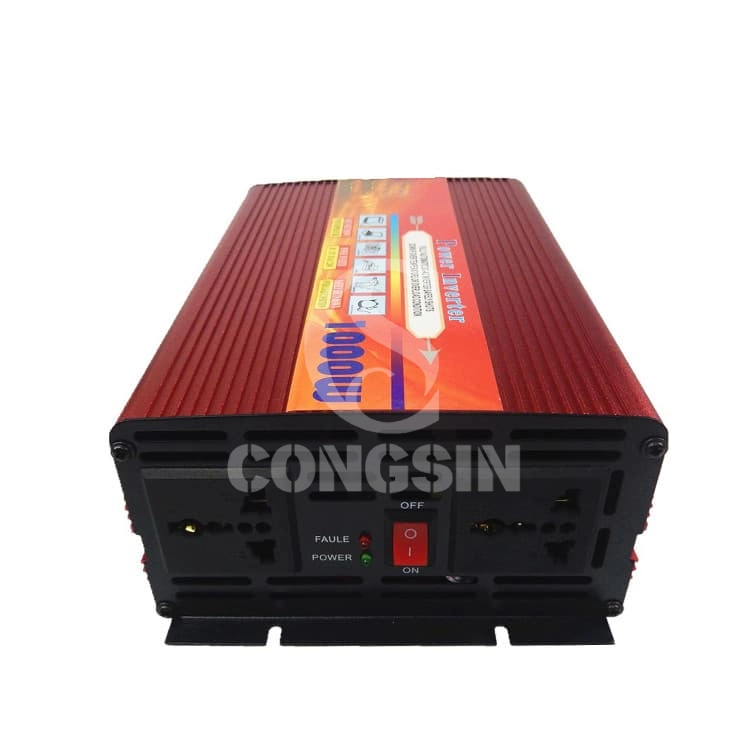
Congsin Manufacturer Wholesales Big Capability Modified Sine Wave Inverter with Red case and Double fan
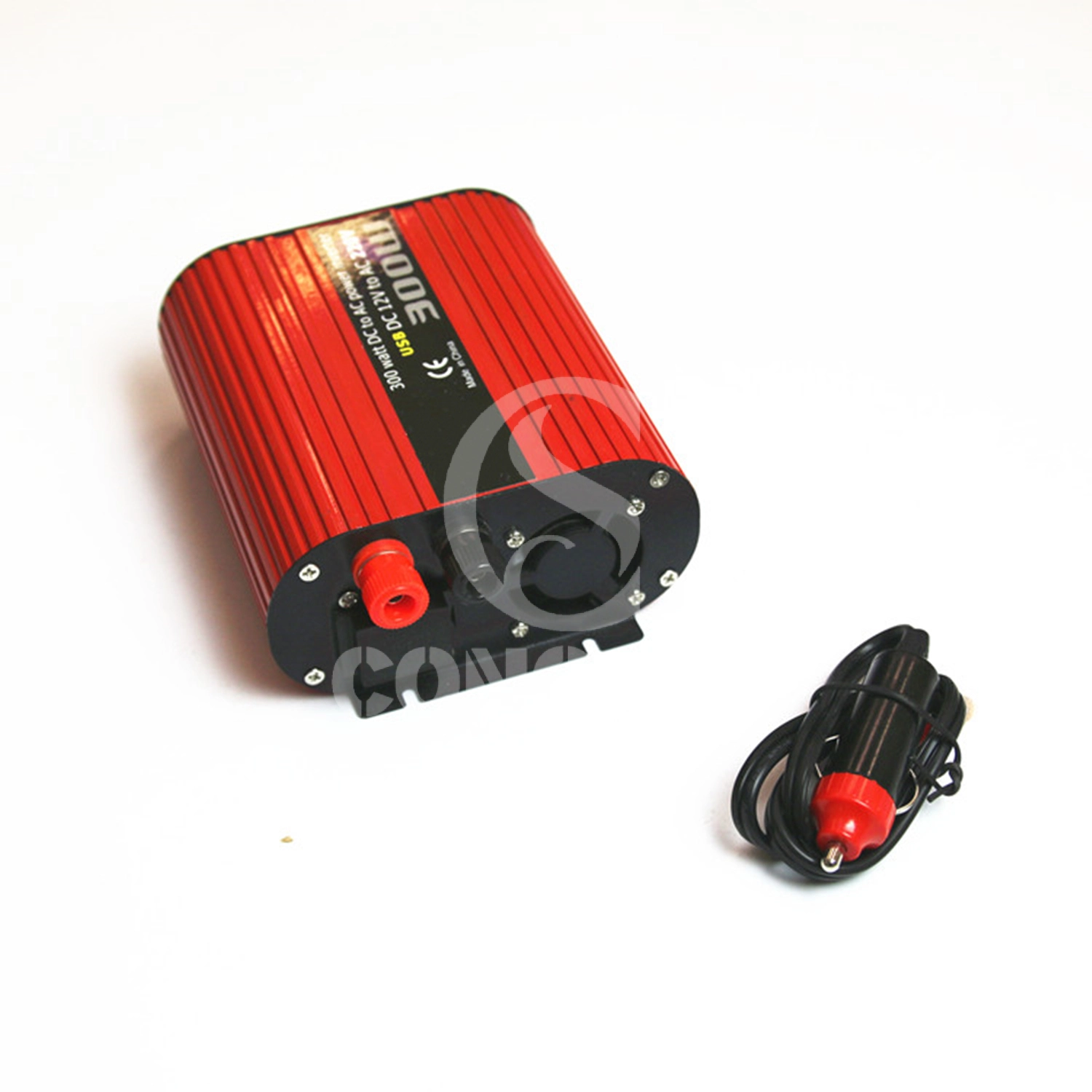
Factory Direct Sales Portable 150W Modified Sine Wave Inverter DC12V to AC220V Off-grid Sine Wave Inverter with Two USB and Universal Socket
Congsin's Portable 150W Modified Sine Wave Inverter powers your journey! This versatile Car Power Inverter with USB acts as a reliable 12V to 220V converter, ensuring an essential off-grid power supply. With dual USB ports and a universal socket, enjoy convenient power on the go.

CONGSIN is a trusted OEM factory for power inverters, solar charge controllers, and DC converters. Reliable solutions for global B2B buyers.
 High Quality
 7/24 Service
 Guaranteed Warranty
© 2025 Congsin. All Rights Reserved.
 WeChat
 Scan QR Code
sin cong
teaimei10
Whatsapp: +8618028086791
Scan QR Code