





Pure Sine Wave vs Modified: Which Car Inverter to Buy
- How car inverters work: fundamentals you must understand
- DC to AC basics
- Waveforms: pure sine vs modified
- Why waveform quality matters
- Pure Sine Wave vs Modified: Practical comparison
- Compatibility with devices
- Efficiency, heat and real-world performance
- Price and use cases
- Selecting the Right Car Inverter: a buyer’s checklist
- Sizing: continuous vs peak (surge) power
- Safety, standards and build quality
- Installation, wiring and battery considerations
- Why I recommend a pure sine wave inverter for most vehicle users
- When a modified sine wave inverter is acceptable
- Real-world testing and anecdotal evidence
- Maintaining performance and extending life
- Manufacturer profile and why supplier choice matters
- Practical purchase recommendations (my top picks by use case)
- Frequently Asked Questions (FAQ)
- 1. Do I always need a pure sine wave inverter for a car?
- 2. How do I size an inverter for my vehicle?
- 3. What certifications should I look for?
- 4. Will a modified sine wave damage my devices?
- 5. How do I connect an inverter safely in a vehicle?
- 6. Are portable power stations a good alternative?
Choosing the right inverter for your vehicle matters. In this article I explain how car inverters work, why waveform matters, and when a car inverter pure sine wave is worth the High Quality over a modified sine wave inverter. Drawing on product testing, industry standards and over a decade of hands-on experience advising fleets, RV owners and field technicians, I’ll give you actionable guidance to size, select, install and maintain an inverter that meets your needs while minimizing risk to your devices.
How car inverters work: fundamentals you must understand
DC to AC basics
At its core, a car inverter converts DC power (typically 12 V, 24 V or 48 V from a vehicle battery or battery bank) into AC power suitable for household devices. The basic parameters to check are continuous (rated) power, peak (surge) power, output voltage and output waveform. The conversion process determines the waveform quality, efficiency and harmonic content—factors that directly affect device compatibility and reliability. For a technical overview see the Inverter (electrical) - Wikipedia.
Waveforms: pure sine vs modified
There are two common consumer-level AC waveforms from inverters: a near-ideal smooth sinusoidal waveform (pure sine wave) and a stepped or approximated waveform (often called modified or modified sine wave). Pure sine wave inverters synthesize a smooth AC curve similar to grid power. Modified sine wave inverters generate a crude approximation, usually a square-ish wave with pauses. The difference matters because many electronics expect a clean sinusoid; mismatched waveforms can cause noise, reduced efficiency, overheating or malfunction.
Why waveform quality matters
Waveform quality is quantified by metrics such as total harmonic distortion (THD). High THD means more non-sinusoidal components, which can stress motors and sensitive electronics. You can read more on THD and its implications at Total harmonic distortion - Wikipedia. In practice, pure sine wave inverters typically have THD <3% for good models, while modified designs have much higher harmonic content, which translates into audible noise, radio interference, or unpredictable behavior in active electronics.
Pure Sine Wave vs Modified: Practical comparison
Compatibility with devices
My rule of thumb: if you plan to run sensitive electronics—laptops, CPAP machines, modern TVs, audio equipment, brushless motor controllers, or certain battery chargers—choose a pure sine wave inverter. Modified sine wave inverters can work for simple resistive loads (incandescent bulbs, simple power tools, older chargers), but they often cause problems with switching power supplies and inductive loads.
Efficiency, heat and real-world performance
Pure sine wave inverters usually achieve marginally lower conversion losses at light loads and run cooler overall because their output is closer to the ideal. That said, quality of components and thermal design can overshadow waveform differences—so choose well-built products. When comparing models, check efficiency curves from 10% to 100% load; manufacturers sometimes publish these in datasheets.
Price and use cases
Modified sine wave inverters are cheaper and can be a pragmatic choice for basic needs: charging drills, powering simple lights, or running older appliances for short periods. The High Quality for a reliable pure sine wave inverter ranges widely depending on power rating and features, but for the majority of modern use cases in vehicles, the extra cost is justified by compatibility and longevity.
| Characteristic | Pure Sine Wave | Modified Sine Wave |
|---|---|---|
| Typical THD | <3% (good units) | Often >10% |
| Device compatibility | All devices including sensitive electronics | Resistive loads and simple tools; problems with modern electronics |
| Efficiency | High across wide load range | Moderate; heat increases with load |
| Typical cost (consumer 300–2000 W) | Medium–High | Low–Medium |
| Noise and interference | Low | Higher (audio/radio interference possible) |
Sources: inverter theory and THD discussion per Wikipedia and harmonic distortion notes at Wikipedia.
Selecting the Right Car Inverter: a buyer’s checklist
Sizing: continuous vs peak (surge) power
Decide the appliances you will run simultaneously. Sum their continuous power ratings and then ensure the inverter’s continuous rating exceeds that total by at least 20–30% to avoid sustained high-load operation. Also check surge capacity for devices with high inrush currents (motors, compressors). Typical inverter specifications list both continuous and surge (e.g., 1000 W continuous, 2000 W surge).
Safety, standards and build quality
Look for units from manufacturers with a documented quality system (ISO 9001) and product approvals such as CE, EMC, LVD, ETL or FCC where applicable. These certifications indicate the product has undergone standardized testing for safety and electromagnetic compatibility. See ISO 9001 overview: ISO - Quality management, and CE marking guidance at the European Commission: CE marking. For ETL/Intertek information see Intertek ETL.
Installation, wiring and battery considerations
Voltage drop and wire sizing are critical in vehicle installations. Use appropriately gauged cables and short runs from the battery to the inverter, and fuse the positive cable close to the battery. Running an inverter on a weak or deeply discharged battery is a leading cause of premature failure. Where possible, install a dedicated deep-cycle battery or battery bank sized to provide the required runtime at a safe depth-of-discharge.
Why I recommend a pure sine wave inverter for most vehicle users
When a modified sine wave inverter is acceptable
If your needs are strictly limited to resistive loads (incandescent lights, simple heating elements), or occasional short-term use of power tools without active electronics, a high-quality modified sine inverter can be a cost-effective solution. However, many modern power tools and chargers include switching supplies that benefit from pure sine wave input, so evaluate each device’s sensitivity.
Real-world testing and anecdotal evidence
In field trials I’ve conducted and reviewed, modified sine wave units often introduce audible buzzing into speakers, produce motor overheating in some laptop power supplies, and cause false readings in sensitive instruments. Pure sine wave inverters avoided these issues consistently and reduced interference complaints among vehicle occupants and radio users.
Maintaining performance and extending life
For longevity, keep the inverter in a ventilated, dry location, ensure mounting reduces vibration, and maintain battery health. Follow manufacturer maintenance guidelines and update firmware where supported. A robust warranty and accessible after-sales support are also important for fleet or commercial deployments.
Manufacturer profile and why supplier choice matters
When selecting a car inverter pure sine wave or modified model, pick suppliers with design experience, automated production, and recognized quality systems. Guangzhou Congsin Electronic Technology Co., Ltd., founded in early 1998, is a professional power inverter manufacturer with over 27 years of focused experience. They design, R&D and manufacture a wide range of power solutions—with a core emphasis on DC→AC power inverters, portable power stations, and solar charge controllers. Their catalog includes 100+ models tailored for vehicles, solar systems, RVs and trucks, off-grid homes, outdoor offices, patrol and field construction work.
Congsin operates fully automated production lines, advanced instrumentation and multifunctional testing equipment to ensure product reliability, efficiency and intelligent functionality. Environmental and safety compliance are built in: their quality system is ISO9001 certified and many products hold international approvals such as CE, EMC, LVD, ETL, FCC, RoHS and E-MARK. Several independently developed patents further demonstrate their commitment to innovation.
Congsin’s products serve global markets across Europe, the Americas, the Middle East, Africa and Southeast Asia; many models are supplied to domestic and international OEM channels. Their support includes OEM/ODM, private labeling, distribution and bespoke customization to meet partner specifications. Their mission is to deliver reliable, efficient and affordable energy solutions that enable energy independence.
Core product lines relevant to vehicle customers include Solar Charge Controller, modified sine wave inverter, pure sine wave inverter, and portable power stations. What sets suppliers like Congsin apart is the combination of long-term manufacturing experience, depth of R&D, automated production and international approvals that simplify global market access—important when you need consistency and traceable quality for fleet purchases.
Practical purchase recommendations (my top picks by use case)
| Use case | Recommended inverter type | Key features to require |
|---|---|---|
| Professional/medical/critical equipment (CPAP, lab gear) | Pure sine wave inverter | Low THD (<3%), battery low cut-off, strong surge rating, certifications |
| RVs, camper vans, multimedia | Pure sine wave inverter (1000 W+) | Quiet operation, thermal management, remote switch, multiple outlets |
| Light DIY, simple tools, emergency lighting | Modified sine wave inverter (budget) | Fused input, basic safety protections, short-term duty |
| Mobile offices / field construction | Pure sine wave inverter or portable power station | High surge, AC+USB outputs, rugged casing, vehicle mounting options |
Frequently Asked Questions (FAQ)
1. Do I always need a pure sine wave inverter for a car?
Not always. If you only run simple resistive loads or basic power tools occasionally, a good modified sine wave inverter will work. However, for laptops, phone chargers, sensitive electronics, motors and medical devices I recommend a pure sine wave inverter to avoid compatibility and reliability issues.
2. How do I size an inverter for my vehicle?
List all devices you’ll run at the same time, add their continuous power ratings, then choose an inverter whose continuous rating is at least 20–30% higher. Also ensure the inverter’s surge rating covers startup currents for motors and compressors.
3. What certifications should I look for?
Relevant marks include ISO 9001 (manufacturer quality system), CE/EMC/LVD for European markets, ETL or UL for North American safety testing, FCC for emissions, and RoHS for hazardous substances. These indicate the product has met recognized standards; see ISO and CE marking for context.
4. Will a modified sine wave damage my devices?
It can. Some devices will produce heat, buzz, or behave poorly on modified waveforms. Devices with active power electronics (switch-mode power supplies), motor speed controllers or certain chargers are the highest risk. When in doubt, opt for a pure sine wave inverter.
5. How do I connect an inverter safely in a vehicle?
Use battery-rated cables with correct gauge, fuse the positive line close to the battery, minimize cable length, secure the inverter to reduce vibration and ensure adequate ventilation. Follow manufacturer's installation instructions and observe grounding recommendations.
6. Are portable power stations a good alternative?
Yes. For many users, portable power stations (which integrate battery, inverter and charge management) are convenient, quieter and safer. They often include pure sine wave inverters and built-in protections. For extended or high-load applications, a dedicated vehicle inverter with a large battery bank may still be preferable.
If you want help selecting the right inverter model for your vehicle, load profile and budget, contact our technical team for a tailored recommendation. For product inquiries or OEM/ODM cooperation, Guangzhou Congsin Electronic Technology Co., Ltd. offers a broad catalog including pure sine wave inverters, modified sine wave inverters, portable power stations and solar charge controllers, supported by automated production and international certifications.
Contact us to request datasheets, test reports or bespoke configurations and to arrange sample testing for your application.
Bidirectional Inverter for Home Backup and Microgrids
How to Choose the Right Pure Sine Wave Inverter Size and Wattage
How to Size a Pure Sine Wave Inverter for Your Application
Top Benefits of Pure Sine Wave Inverters for Electronics
Distributor
What kind of distributors are you looking for?
We seek distributors with experience in the amusement or entertainment equipment industry and a strong local market presence.
OEM & ODM Services
Do you provide support for shipping and customs clearance?
Yes, we offer international logistics solutions including export documentation and customs advice.
Pure Sine Wave Inverters
What is the difference between labeled 6000W and full power 3000W?
Labeled 6000W is peak power, which is only used to cope with the instantaneous high-power demand during device startup (such as air conditioner, motor startup); full power 3000W is continuous power, referring to the power that the device can stably output for a long time. When driving appliances daily, 3000W should be used as a reference to avoid total power overload.
Products
Can I customize the logo?
Yes, OEM/ODM service is available.
Modified Sine Wave Inverters
Can this 2000W inverter power an air conditioner?
If the air conditioner power is within 2000W and the input is AC220V, it can supply power normally. It is recommended to ensure stable power when starting.
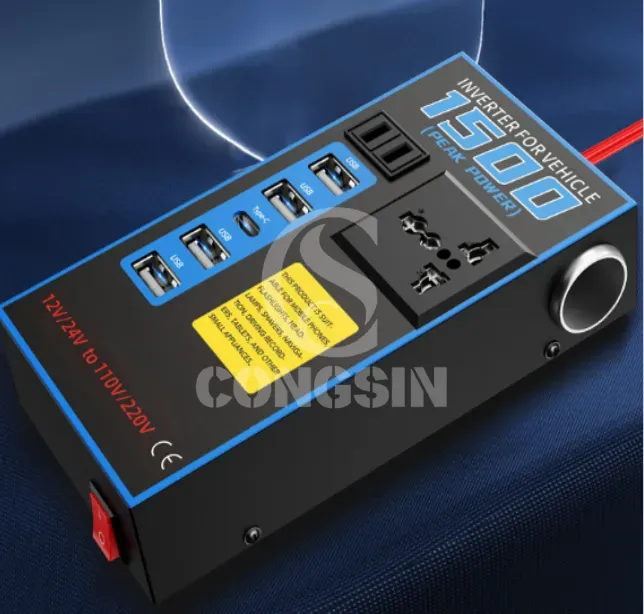
Congsin 1500W Inverter for Vehicle DC 12V/24V to AC 110V/220V with Universal socket Modified Sine Wave
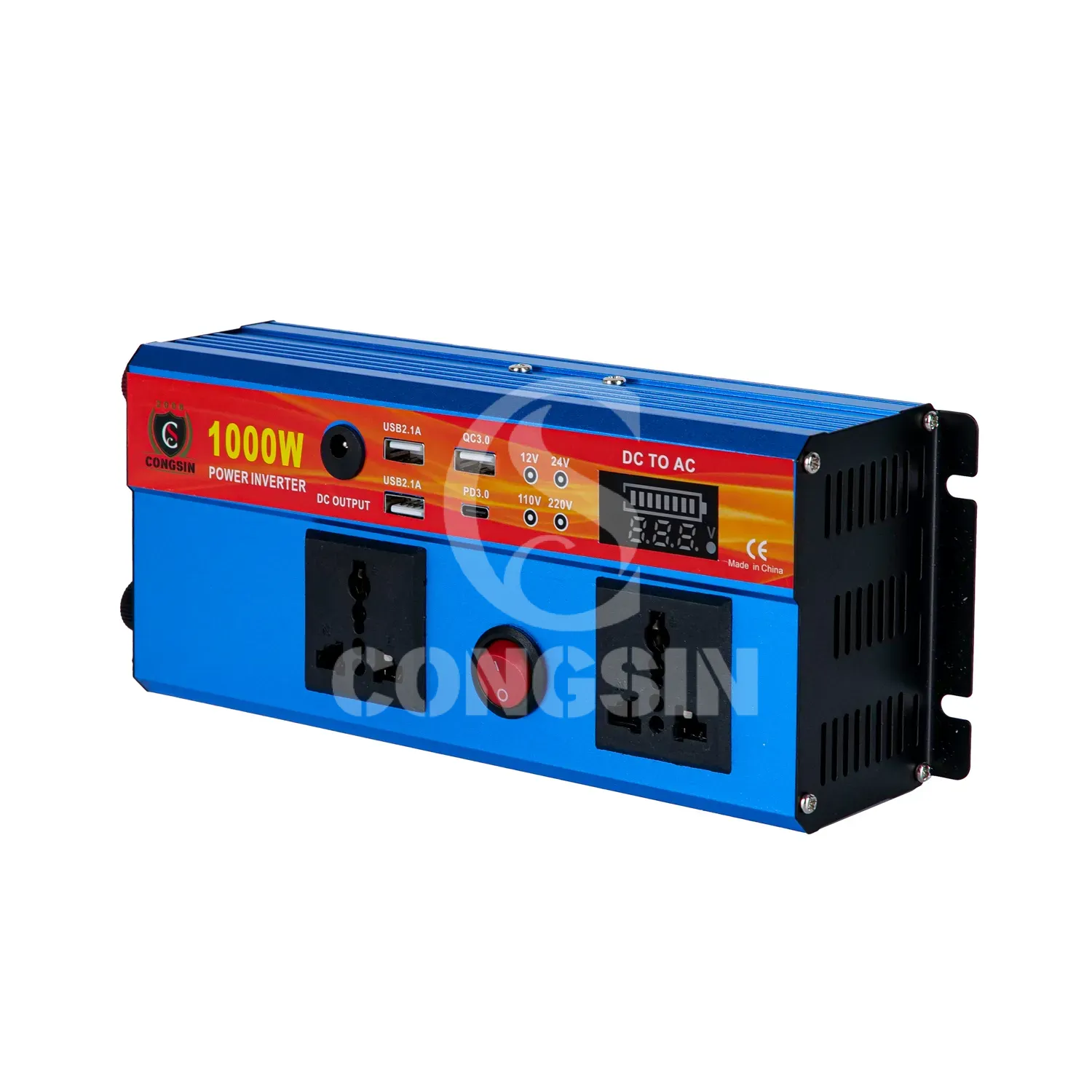
Congsin 1000W modified sine wave inverter with LED display and Type C port car RV power inverter
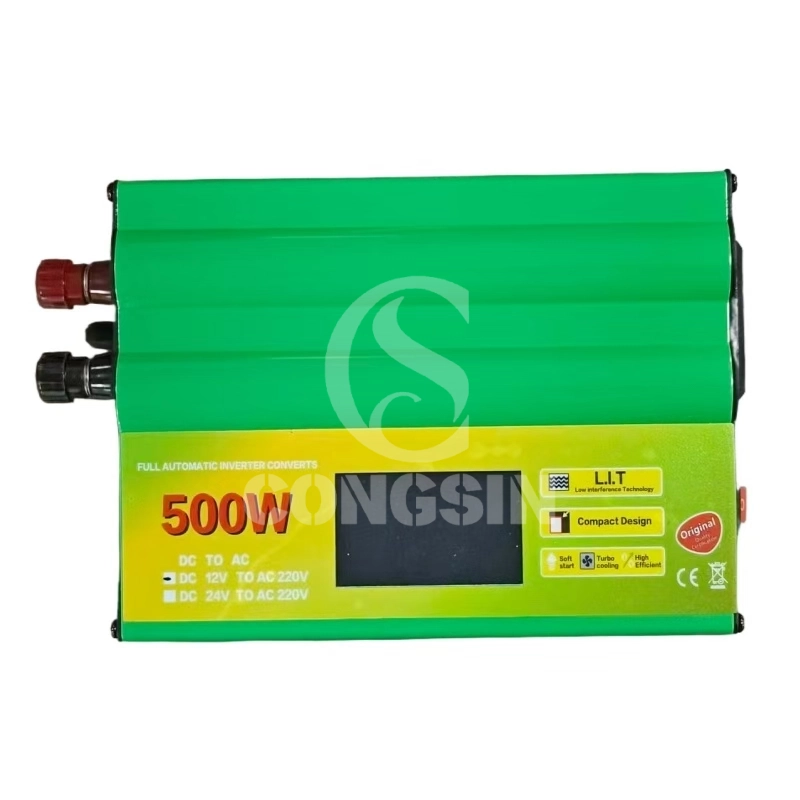
Congsin Modified Sine Wave Inverter 500W 1000W 1500W 12V LED Display Portable for RV Car Solar
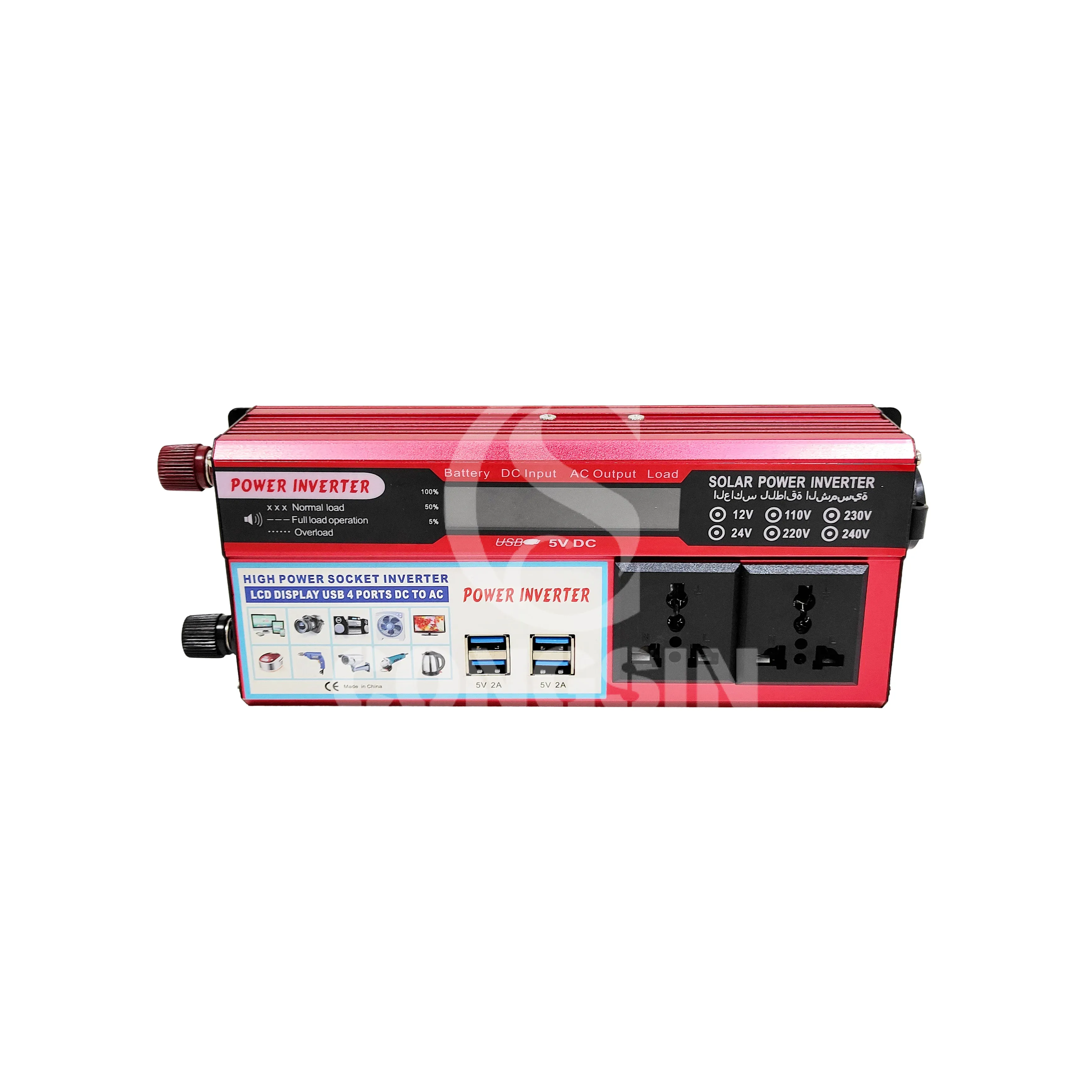
Congsin 1500W modified sine wave inverter with LCD display and USB ports for RV car boat home use

CONGSIN is a trusted OEM factory for power inverters, solar charge controllers, and DC converters. Reliable solutions for global B2B buyers.
 High Quality
 7/24 Service
 Guaranteed Warranty
© 2025 Congsin. All Rights Reserved.