





How to Size a Pure Sine Wave Inverter for Your Application
- Why correct inverter sizing matters
- Performance, reliability and power quality
- Cost vs. safety trade-offs
- Standards and quality assurance
- Step-by-step method to size a pure sine wave inverter
- 1) List all AC loads and identify running and starting watts
- 2) Sum continuous and largest surge demands
- 3) Apply safety margin and select inverter rated power (continuous and peak)
- Electrical calculations and practical details
- Calculate DC input current and battery sizing
- Factor in power factor and VA ratings
- Thermal limits, run time and efficiency
- Worked example and sizing table
- Example: Off-grid cabin with mixed loads
- Battery current estimate (12 V system)
- Summary table of decision
- Installation considerations: wiring, cooling and protection
- Cable sizing and fusing
- Cooling, placement and ventilation
- Grounding, surge protection and safety
- Choosing between modified sine and pure sine wave inverters
- When pure sine wave is necessary
- When modified sine wave is acceptable
- Efficiency and cost considerations
- Why manufacturer and production quality matter — the Congsin example
- Verifiable references and standards I consult
- Frequently Asked Questions (FAQ)
- 1. How do I know whether I need a pure sine wave inverter?
- 2. What safety margin should I use when sizing an inverter?
- 3. How do I calculate battery size for my inverter?
- 4. Can one inverter start multiple motors at the same time?
- 5. How important is inverter efficiency and THD?
- 6. What wiring size do I need for a 12 V inverter drawing 140 A?
- Contact, product support and next steps
I often see customers underestimate the complexity of selecting a pure sine wave inverter. Choosing the wrong inverter leads to poor performance, shortened equipment life, or even system failure. In this guide I explain how I size a pure sine wave inverter for real-world applications — from determining running and starting watts, to accounting for power factor, inverter efficiency, battery current and installation best practices. I reference industry standards and provide verifiable formulas and a worked example so you can confidently choose the right inverter for vehicles, off-grid homes, RVs or portable power stations.
Why correct inverter sizing matters
Performance, reliability and power quality
A pure sine wave inverter provides a true sinusoidal AC output with low total harmonic distortion (THD), making it suitable for sensitive electronics, variable-speed motors, medical devices and modern appliances. Selecting an undersized inverter can cause voltage sag, overheating and nuisance shutdowns. For an overview of inverter technology see Inverter (electronics) — Wikipedia.
Cost vs. safety trade-offs
Oversizing an inverter increases cost, weight and standby losses; undersizing risks damage and downtime. My approach balances a reasonable safety margin (typically 20–30% above expected continuous load) with the application-specific needs for surge capability and runtime.
Standards and quality assurance
When I recommend inverters, I look for manufacturers and products that follow quality systems such as ISO 9001 and hold certifications (CE, EMC, LVD, ETL, FCC, RoHS) relevant to their market. These certifications validate design, EMC performance and safety.
Step-by-step method to size a pure sine wave inverter
1) List all AC loads and identify running and starting watts
Create an itemized list of every device you'll power. For each device note:
- Rated running watts (continuous power)
- Starting or surge watts (for motors, compressors and some power supplies)
- Whether the device is resistive (heaters, incandescent lamps) or inductive (motors, pumps)
Motorized loads (refrigerators, pumps, compressors) often need 2–6 times the running current at startup — this is the surge or inrush requirement. Manufacturer spec sheets commonly list start and run watts. When not available, consult motor locked-rotor or service factor data or assume a conservative multiplier (e.g., 3–5×).
2) Sum continuous and largest surge demands
For system sizing I sum all continuous (running) watts to get the continuous load. Then I identify the largest single surge requirement; an inverter must handle that surge while supplying the continuous load. Many inverters can handle brief surges (typically 3–5 seconds) higher than their continuous rating — check the product's surge specification.
3) Apply safety margin and select inverter rated power (continuous and peak)
I apply a safety margin of 20–30% to the continuous load to allow for unforeseen peaks or future additions. For example, if the total continuous load is 800 W and you expect occasional extra draws, a 20% margin suggests selecting an inverter with at least 960 W continuous rating, so I would choose a 1000–1200 W inverter. Ensure the inverter's peak/surge watt rating satisfies the largest starting load (see worked example below).
Electrical calculations and practical details
Calculate DC input current and battery sizing
To estimate the DC current draw from your battery bank at a given output power, use:
I_DC = P_out / (V_batt × η)
Where I_DC is DC current (A), P_out is AC output power (W), V_batt is battery nominal voltage (V), and η is inverter efficiency (decimal). Example: a 1200 W continuous load, 12 V battery and inverter efficiency 90% (0.9): I_DC = 1200 / (12 × 0.9) ≈ 111 A.
For battery capacity (Ah) to run a load for T hours: Ah = I_DC × T. Remember to account for allowable depth of discharge (DoD) — for lead-acid batteries I typically use 50% DoD for longevity; LiFePO4 may allow 80–90% DoD.
Factor in power factor and VA ratings
Some loads are rated in VA instead of watts because of power factor (PF). True power (W) = VA × PF. Many inverters are rated in watts (continuous). For inductive loads with PF < 1, confirm the inverter can supply the required VA and handle reactive current.
Thermal limits, run time and efficiency
Continuous operation near the inverter’s maximum reduces life and may trigger thermal shutdown. Efficiency varies with load; many inverters are most efficient at 30–70% of rated capacity. Consult the inverter’s efficiency curve and derate if you plan continuous heavy loads.
Worked example and sizing table
Example: Off-grid cabin with mixed loads
Assume the following AC loads will run simultaneously:
| Device | Running Watts | Starting Watts (if motor) | |
|---|---|---|
| LED lights (6 × 10 W) | 60 | — |
| Refrigerator (inverter compressor) | 120 | 600 |
| Microwave | 900 | — |
| Laptop & chargers | 120 | — |
| Well pump (intermittent) | 800 | 2400 |
Continuous running watts (if microwave + fridge + lights + laptop run together) = 60 + 120 + 900 + 120 = 1,200 W.
Largest surge event could be the pump at 2,400 W. The inverter must therefore handle 1,200 W continuous and a 2,400 W surge. I apply a 25% safety margin to continuous: 1,200 × 1.25 = 1,500 W. So I would choose an inverter with at least 1,500 W continuous rating and 3,000 W peak surge capability (to comfortably handle pump starts while other loads run).
Battery current estimate (12 V system)
If inverter efficiency = 0.9, I_DC ≈ 1,500 / (12 × 0.9) = 139 A. For 1 hour of runtime at that load, battery Ah = 139 Ah (use 2× for 50% DoD if using lead-acid, i.e., ~278 Ah battery bank).
Summary table of decision
| Parameter | Value |
|---|---|
| Total continuous load (calculated) | 1,200 W |
| Safety margin | +25% |
| Recommended continuous inverter size | 1,500 W |
| Largest surge to cover | 2,400 W (pump) |
| Recommended surge rating | ≥ 3,000 W peak |
| Estimated DC current at 12 V | ~139 A (@1,500 W, 90% efficiency) |
Installation considerations: wiring, cooling and protection
Cable sizing and fusing
Choose DC cable gauge to safely carry the inverter input current with minimal voltage drop. For example, 139 A continuous (from worked example) requires heavy gauge cable. I reference AWG charts and NEC recommendations; as a rule of thumb, at ~140 A use 2/0 AWG for short runs (<2 m) to limit voltage drop, but always verify using a cable ampacity table and local code. See AWG reference: American Wire Gauge — Wikipedia.
Cooling, placement and ventilation
Install the inverter where airflow is unobstructed. Many inverters have thermostatic fans; continuous heavy loads generate heat that reduces efficiency and may trigger thermal protection. Keep ambient temperature considerations in mind when derating continuous power.
Grounding, surge protection and safety
Proper grounding protects equipment and people. For systems connected to alternative energy sources (solar arrays, wind), include surge protection and follow local electrical codes. For grid-tie or hybrid systems, ensure compliance with interconnection standards and utility requirements.
Choosing between modified sine and pure sine wave inverters
When pure sine wave is necessary
I recommend a pure sine wave inverter when powering sensitive electronics, medical equipment, variable-speed motors, microwave ovens, and modern refrigerators. Pure sine wave inverters reduce heat, audible noise, and the risk of misbehavior in electronic control circuits. Compared with modified sine wave inverters, pure sine models typically have lower THD and better compatibility.
When modified sine wave is acceptable
Modified sine wave inverters can be acceptable for simple resistive loads (incandescent heating, basic lights, simple tools). However, many modern electronics (audio equipment, laptops, battery chargers) perform poorly or inefficiently on modified sine outputs.
Efficiency and cost considerations
Pure sine wave inverters historically cost more, but their improved compatibility and lower risk of equipment damage typically justify the investment. When I size systems for commercial or mission-critical applications, I always opt for true pure sine wave inverters with verified efficiency curves and low THD.
Why manufacturer and production quality matter — the Congsin example
When selecting an inverter supplier I evaluate production capacity, certifications, test equipment and R&D capability. Guangzhou Congsin Electronic Technology Co., Ltd., founded in early 1998, is a professional power inverter manufacturer with over 27 years of focused experience. We design, R&D and manufacture a wide range of power solutions—with a core emphasis on DC→AC power inverters, portable power stations, and solar charge controllers. Our catalog includes 100+ models tailored for vehicles, solar systems, RVs and trucks, off-grid homes, outdoor offices, patrol and field construction work.
We operate fully automated production lines, advanced instrumentation and multifunctional testing equipment to ensure product reliability, efficiency and intelligent functionality. Environmental and safety compliance are built in: our quality system is ISO9001 certified and many products hold international approvals such as CE, EMC, LVD, ETL, FCC, RoHS and E-MARK. Several independently developed patents further demonstrate our commitment to innovation.
Congsin’s products serve global markets across Europe, the Americas, the Middle East, Africa and Southeast Asia; many models are supplied to domestic and international OEM channels. Our support includes OEM/ODM, private labeling, distribution and bespoke customization to meet partner specifications.
Our mission is to deliver reliable, efficient and affordable energy solutions that enable energy independence. Congsin’s core products include Solar Charge Controllers, modified sine wave inverters, pure sine wave inverters and portable power stations. If you need a supplier with deep manufacturing experience, broad certification coverage and flexible OEM capabilities, Congsin is a proven partner.
Verifiable references and standards I consult
- General inverter technology and types: Wikipedia - Inverter (electronics)
- Quality management system standard: ISO 9001 — ISO
- Electrical engineering standards and best practices: IEEE Standards and national electrical codes for wiring and grounding
Frequently Asked Questions (FAQ)
1. How do I know whether I need a pure sine wave inverter?
If you plan to run sensitive electronics (computers, audio systems), motor-driven appliances (refrigerators, pumps), medical devices, or appliances with electronic control boards, you should use a pure sine wave inverter. They produce a cleaner AC waveform with low THD and avoid many issues seen with modified sine wave output.
2. What safety margin should I use when sizing an inverter?
I typically recommend a 20–30% safety margin above the calculated continuous load. This accommodates inefficiencies, future loads and brief transients. For mission-critical systems, a larger margin or redundant inverter configuration may be appropriate.
3. How do I calculate battery size for my inverter?
First compute DC current: I_DC = P_out / (V_batt × η). Then multiply I_DC by desired runtime (hours) to get Ah. Adjust for battery DoD (e.g., divide required Ah by 0.5 for 50% usable capacity with lead-acid). Example: 1,500 W at 12 V and 90% efficiency draws ~139 A; for 2 hours runtime you need ~278 Ah usable — or ~556 Ah battery bank at 50% DoD.
4. Can one inverter start multiple motors at the same time?
Starting multiple motors simultaneously can produce very large cumulative surges. Either stagger motor starts, use an inverter with a sufficiently high continuous and surge rating, or consider separate inverters for heavy inductive loads. In many installations, a dedicated soft-start or motor-start controller reduces starting current and avoids oversized inverters.
5. How important is inverter efficiency and THD?
Efficiency affects battery runtime and heat generation. THD (total harmonic distortion) affects equipment compatibility and can cause heating or malfunction in sensitive devices. Aim for high-efficiency inverters (often >90%) and low THD (<5% for high-quality pure sine models).
6. What wiring size do I need for a 12 V inverter drawing 140 A?
Cable must carry the continuous current with acceptable voltage drop. For ~140 A short runs (<2 m) I commonly use 2/0 AWG copper, but actual gauge depends on run length and installation conditions — consult local electrical code or a qualified electrician.
Contact, product support and next steps
If you’d like help sizing an inverter for your specific application — RV, off-grid home, solar system or portable power station — I can perform a load audit and recommend suitable pure sine wave inverter models and battery configurations. For reliable, certified products and OEM/ODM services, consider Guangzhou Congsin Electronic Technology Co., Ltd., which offers 100+ tailored inverter and power solutions.
Contact us to discuss your project, request datasheets, or view product lines and customization options. For immediate inquiries, please reach out to our sales team or request a quote through our website.
How to Choose a Good Pure Sine Wave Inverter for Home Use
Portable Pure Sine Wave Inverters for Emergency Power Backup
Bidirectional vs Hybrid Inverters: Key Differences
Key Specs Buyers Should Check on 2000W Inverters
Modified Sine Wave Inverters
Is it a pure sine wave or a modified sine wave? What's the difference?
This is a modified sine wave inverter, suitable for most conventional home appliances and electronic devices; pure sine wave is suitable for precision devices with extremely high power requirements. This modified sine wave is more cost-effective at 2000W, meeting the needs of most scenarios.
What devices can this inverter support?
It can power laptops, phones, cameras, and other small appliances.
What is the benefit of the UPS function? A2:
It automatically switches to battery power when AC fails.
Distributor
What kind of distributors are you looking for?
We seek distributors with experience in the amusement or entertainment equipment industry and a strong local market presence.
Pure Sine Wave Inverters
What is the reason for the inverter automatically shutting down during operation?
It is likely that the protection mechanism is triggered: 1. Load overload (total power of connected devices exceeds 1000W); 2. Abnormal input voltage (battery voltage <10.8V or >14.5V); 3. Device overtemperature (excessively high ambient temperature or cooling fan failure). It is recommended to disconnect some loads, check the battery voltage or clean the heat dissipation port before trying again.
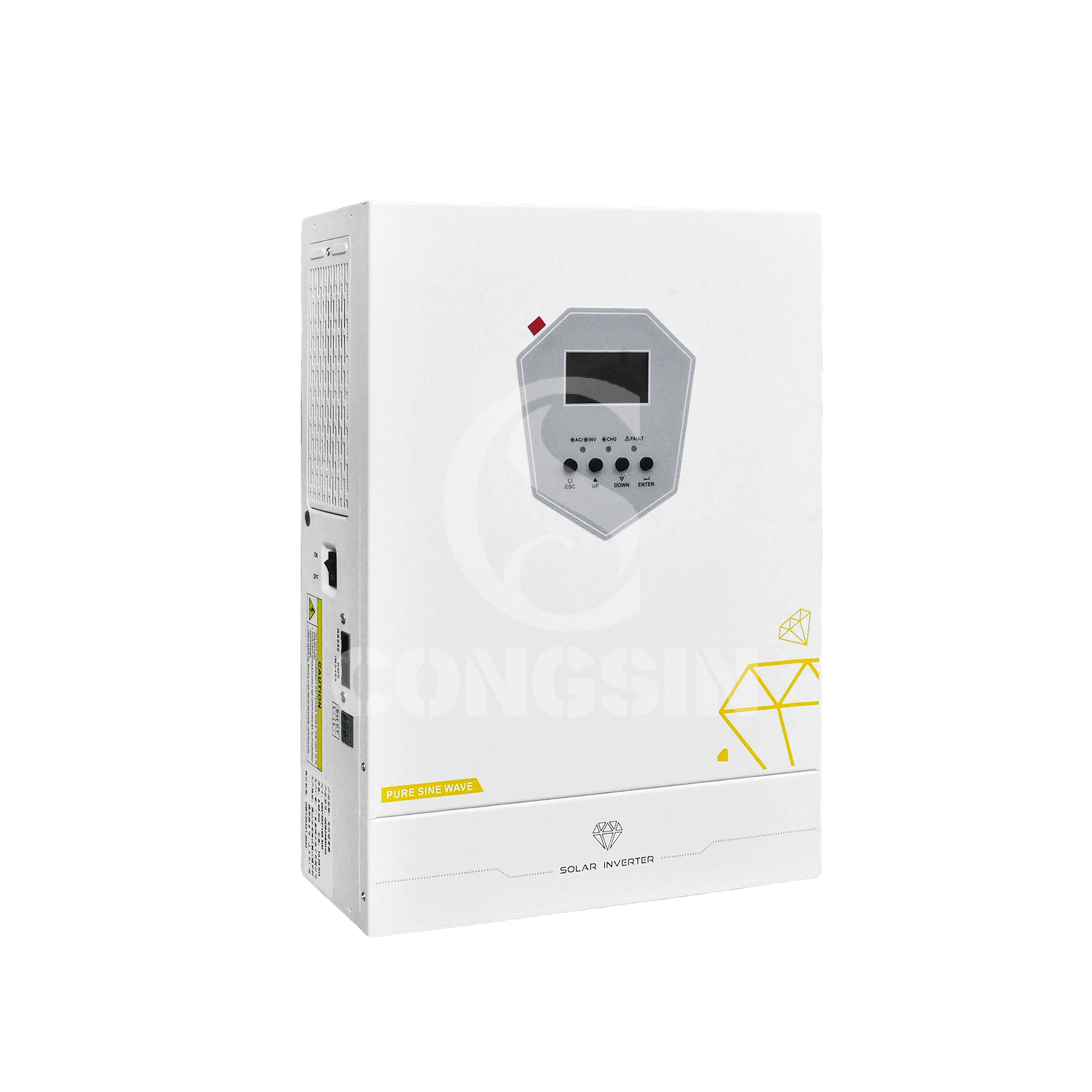
Factory Direct Sales 6000W Hybrid Solar Power Inverter with Controller and LCD Display
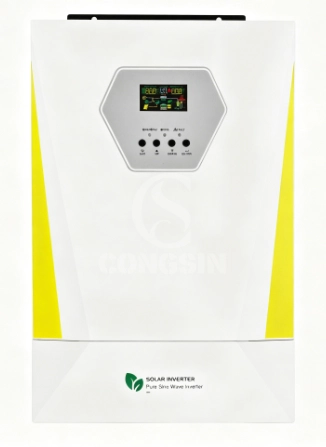
Congsin 4000W and 6000W Hybrid Inverter with Controller with LCD Display and CE Certification Solar
Power your solar system efficiently with the Congsin 4000W and 6000W Hybrid Inverter. Featuring an integrated MPPT Controller, this CE Certified inverter ensures optimal energy conversion. Monitor performance effortlessly via the intuitive LCD Display. Reliable, powerful, and ready for your sustainable energy needs.
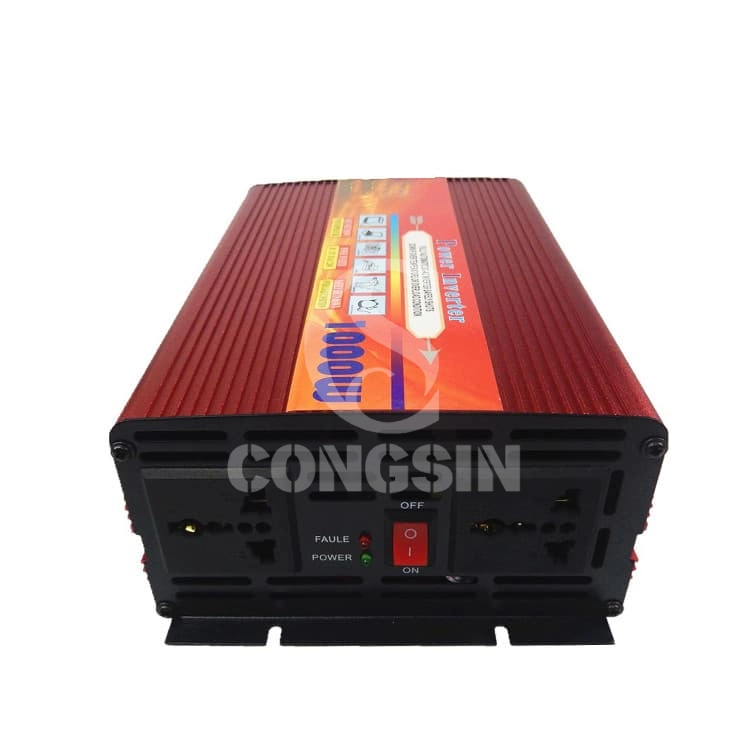
Congsin Manufacturer Wholesales Big Capability Modified Sine Wave Inverter with Red case and Double fan
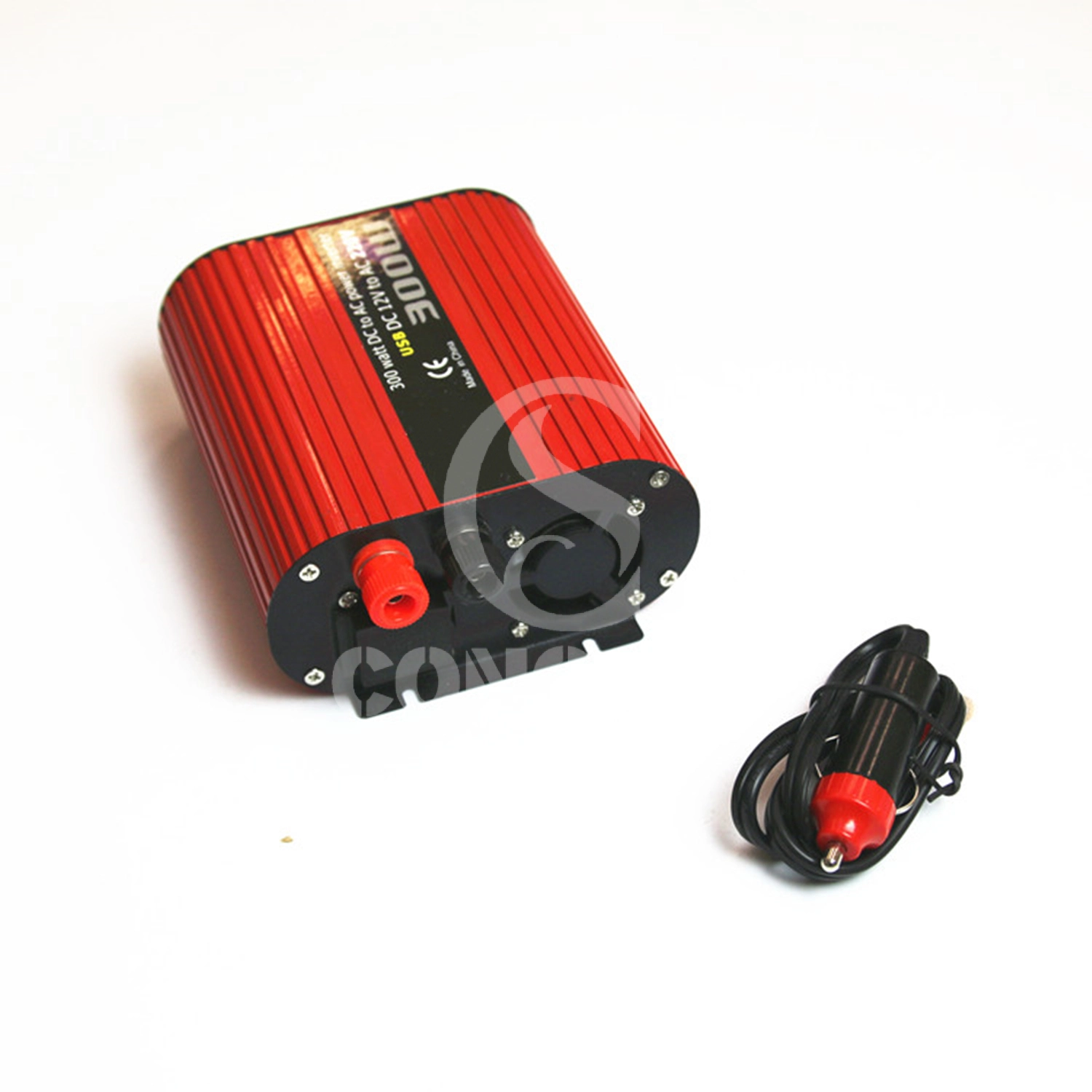
Factory Direct Sales Portable 150W Modified Sine Wave Inverter DC12V to AC220V Off-grid Sine Wave Inverter with Two USB and Universal Socket
Congsin's Portable 150W Modified Sine Wave Inverter powers your journey! This versatile Car Power Inverter with USB acts as a reliable 12V to 220V converter, ensuring an essential off-grid power supply. With dual USB ports and a universal socket, enjoy convenient power on the go.

CONGSIN is a trusted OEM factory for power inverters, solar charge controllers, and DC converters. Reliable solutions for global B2B buyers.
 High Quality
 7/24 Service
 Guaranteed Warranty
© 2025 Congsin. All Rights Reserved.
 WeChat
 Scan QR Code
sin cong
teaimei10
Whatsapp: +8618028086791
Scan QR Code