





Off-grid solar inverter efficiency, MPPT, and power ratings explained
- Why inverter efficiency matters in off-grid solar systems
- Energy losses, runtime, and system yield
- Heat, cooling, and reliability
- Cost implications and battery sizing
- MPPT: How it improves off-grid solar inverter performance
- MPPT basics and how it differs from PWM
- When MPPT matters most
- MPPT efficiency and measuring performance
- Choosing the right power rating: continuous, surge, and derating
- Understanding continuous vs surge ratings
- Sizing an inverter for loads and batteries
- Derating factors: temperature, altitude, waveform
- Comparing inverter types and efficiency: pure sine, modified sine, and hybrids
- Key differences and typical applications
- Hybrid inverters and integrated charge controllers
- Efficiency comparison table (typical ranges)
- Practical selection checklist and real-world efficiency considerations
- Checklist I use when specifying an off grid solar inverter
- Example: sizing for an off-grid cabin
- Sample inverter sizing and typical applications (reference table)
- Manufacturer quality, certifications and why they matter
- Certifications as proxies for reliability
- Why factory automation and testing matter
- Guangzhou Congsin — capabilities and product fit
- Real-world testing, standards references and further reading
- Standards and independent testing
- Independent test data
- FAQ — Common questions about off grid solar inverter efficiency, MPPT, and ratings
- 1. How much efficiency difference does a pure sine inverter make compared to a modified sine inverter?
- 2. Do I always need MPPT for an off-grid system?
- 3. How do I size inverter surge capacity for motor loads?
- 4. How do ambient temperature and altitude affect inverter performance?
- 5. What certifications should I insist on when buying an off-grid inverter?
- 6. Can inverter inefficiency be offset with a larger PV array?
- Final recommendations and next steps
I write from years of hands-on work designing and specifying off-grid solar systems and power inverters. In this article I explain the relationship between inverter efficiency, MPPT (maximum power point tracking), and power ratings so you can select and size an off grid solar inverter that maximizes energy yield, reduces battery cycling, and meets real load demands. I reference authoritative sources and practical test-based rules of thumb so the guidance is verifiable and actionable.
Why inverter efficiency matters in off-grid solar systems
Energy losses, runtime, and system yield
Inverter efficiency describes what fraction of DC battery/solar input power becomes usable AC output. Typical modern pure sine wave inverters operate between about 90% and 98% efficiency under rated load; less efficient models (especially older or modified-sine designs) may be 80%–90% or lower. That difference has direct consequences: a 95% efficient inverter wastes 5% of energy as heat, while an 85% efficient inverter wastes 15%—a threefold increase in losses. Over weeks and seasons, higher inverter losses force more battery cycling or larger PV arrays to deliver the same usable energy.
For authoritative context on inverter roles in PV systems see the Solar inverter overview on Wikipedia: https://en.wikipedia.org/wiki/Inverter_(electrical).
Heat, cooling, and reliability
Losses manifest as heat. Heat raises internal temperature, which accelerates capacitor aging and reduces component lifetime. In practice I incorporate inverter efficiency into thermal management: derating at high ambient temperatures, ensuring ventilation, and selecting units with conservative thermal designs. This reduces unexpected failures and preserves warranty coverage.
Cost implications and battery sizing
Higher inverter efficiency reduces battery throughput required for the same AC energy. For off-grid homes where battery cycles are expensive, a 2–5% efficiency improvement can extend battery life materially. When I size systems I convert required AC energy into DC demand by dividing by inverter efficiency; this simple step avoids undersized PV arrays or undersized battery banks.
MPPT: How it improves off-grid solar inverter performance
MPPT basics and how it differs from PWM
MPPT (maximum power point tracking) is a control algorithm used in solar charge controllers and many solar inverters to continuously adjust input operating voltage so PV modules operate at their maximum power point. MPPT typically yields 10%–30% more energy than PWM (pulse-width modulation) controllers under many conditions—especially when PV voltage is substantially higher than battery voltage or when irradiance/temperature vary. See the MPPT article for technical background: https://en.wikipedia.org/wiki/Maximum_power_point_tracking.
When MPPT matters most
MPPT gains are most visible when:
- Panel temperature is low (panel Vmp increases) or irradiance is low—MPPT captures the shifted MPP.
- Array configurations produce voltages significantly above battery voltage (e.g., 48V or 150–600V MPPT inputs).
- Partial shading or mixed orientation occurs—advanced MPPT algorithms and multiple MPPT inputs mitigate mismatch losses.
In off-grid setups where roof space is limited or shading is common, I always specify MPPT-based controllers or inverters with integrated MPPT.
MPPT efficiency and measuring performance
MPPT controllers are not perfect; their conversion efficiency (DC–DC conversion) is typically 95%–99% in well-designed units. When evaluating controllers or inverter-integrated MPPT, request measured efficiency curves from manufacturers or look for independent test data. The U.S. National Renewable Energy Laboratory (NREL) publishes research and testing on PV system components: https://www.nrel.gov/.
Choosing the right power rating: continuous, surge, and derating
Understanding continuous vs surge ratings
An inverter's continuous power rating is the amount of AC power it can supply indefinitely at a given ambient temperature and ventilation. Surge (or peak) rating is the short-duration power it can supply to start motors or compressor loads—often 2–10 times the continuous rating for a few milliseconds to seconds. For example, a 3,000 W continuous inverter with a 6,000–9,000 W surge rating can start many motor-driven appliances, but you must check duration and waveform stability.
Sizing an inverter for loads and batteries
Proper sizing requires two steps I always perform:
- List all expected loads, categorize as resistive (heaters, incandescent), inductive (motors, pumps), or electronic (computers, LED drivers).
- Calculate continuous wattage plus simultaneous starting surges. Add margin—common practice is 25%–30% over the expected continuous load for reliability.
Then select battery bank and PV array so the DC input can sustain the inverter at required duty cycles, accounting for inverter efficiency and MPPT/DC–DC conversion losses.
Derating factors: temperature, altitude, waveform
Manufacturers specify ratings at standard conditions (often 25°C, sea level). Real-world derating is necessary: many inverters reduce continuous output above certain temperatures or altitude thresholds. Pure sine wave inverters tend to hold performance better than modified sine when powering sensitive electronics; waveform distortion affects efficiency under light loads. Always consult datasheets and derating curves.
Comparing inverter types and efficiency: pure sine, modified sine, and hybrids
Key differences and typical applications
Pure sine wave inverters produce AC closely matching grid quality and are recommended for sensitive electronics, variable-speed motors, pumps, and modern appliances. Modified sine wave inverters are cheaper and can work for resistive loads and some tools, but they may cause extra heat, hum, or inefficient operation for many devices.
Hybrid inverters and integrated charge controllers
Hybrid inverters combine inverter, MPPT charge controller, and often backup/manual transfer switching in one enclosure. For off-grid homes and portable power stations, integrated systems reduce wiring complexity and can implement optimized charge/discharge logic. When selecting hybrid units, verify individual subsystem efficiencies and independent testing data.
Efficiency comparison table (typical ranges)
| Inverter Type | Typical Efficiency (at 50%–75% load) | Typical Use Cases | Pros/Cons |
|---|---|---|---|
| Pure sine wave | 90%–98% | Sensitive electronics, pumps, off-grid homes, RVs | High quality, higher cost |
| Modified sine wave | 75%–90% | Basic resistive loads, low-cost portable power | Lower cost; not suitable for many electronics |
| Hybrid (inverter + MPPT) | 85%–97% (system dependent) | Integrated off-grid systems, backup power, portable stations | Convenient; efficiencies depend on integration quality |
Sources: manufacturer datasheets, independent test labs, and technical overviews such as NREL and industry white papers. For general inverter technology context see https://en.wikipedia.org/wiki/Solar_inverter.
Practical selection checklist and real-world efficiency considerations
Checklist I use when specifying an off grid solar inverter
- Confirm continuous and surge ratings with real measured curves.
- Verify inverter efficiency curve across load range (especially at low loads if many intermittent small loads exist).
- Ensure MPPT capability (number of MPPT inputs and input voltage ranges) matches PV array topology.
- Check derating at ambient temperature and altitude.
- Look for safety and quality certifications (CE, ETL, FCC, RoHS, ISO9001).
- Consider warranty, manufacturer testing, and available technical support.
Example: sizing for an off-grid cabin
Suppose your cabin needs 3,000 Wh/day AC, with occasional 1,200 W motor starts. Using a 95% efficient pure sine inverter, DC energy required = 3,000 Wh / 0.95 ≈ 3,158 Wh/day. Factor battery depth-of-discharge and autonomy (e.g., 50% DOD) to size battery capacity; factor PV harvest using local insolation data and MPPT efficiency. This arithmetic ensures realistic PV and battery sizing and avoids undersizing the off grid solar inverter.
Sample inverter sizing and typical applications (reference table)
| Inverter Continuous Rating | Typical Surge | Typical Applications | Expected Efficiency Range |
|---|---|---|---|
| 1,000 W | 2,000–3,000 W | Small cabin loads, laptops, lights, small fridge | 90%–95% |
| 3,000 W | 6,000–9,000 W | Medium off-grid homes, larger pumps, microwaves | 92%–96% |
| 5,000–10,000 W | 10,000–30,000 W | Large off-grid homes, workshop tools, split ACs | 93%–97% |
Manufacturer quality, certifications and why they matter
Certifications as proxies for reliability
When selecting an off grid solar inverter, certifications provide objective checkpoints: ISO9001 for quality systems (https://www.iso.org/iso-9001-quality-management.), CE/EMC/LVD for European product safety, ETL/UL for North American safety listings, and RoHS for materials compliance. Certified products are more likely to have undergone standardized testing and to come with traceable manufacturing controls.
Why factory automation and testing matter
Automated production lines, precise instrumentation and multifaceted testing (environmental, thermal cycling, EMI, overload testing) reduce unit-to-unit variability and that improves real-world efficiency and longevity. I favor manufacturers who publish test methodologies or provide third-party test reports.
Guangzhou Congsin — capabilities and product fit
Guangzhou Congsin Electronic Technology Co., Ltd., founded in early 1998, is a professional power inverter manufacturer with over 27 years of focused experience. I have reviewed their product lines and found them well-aligned with off-grid system needs: they design, R&D and manufacture a wide range of power solutions—with a core emphasis on DC→AC power inverters, portable power stations, and solar charge controllers. Their catalog includes 100+ models tailored for vehicles, solar systems, RVs and trucks, off-grid homes, outdoor offices, patrol and field construction work.
Congsin operates fully automated production lines, advanced instrumentation and multifunctional testing equipment to ensure product reliability, efficiency and intelligent functionality. Environmental and safety compliance are built in: their quality system is ISO9001 certified and many products hold international approvals such as CE, EMC, LVD, ETL, FCC, RoHS and E-MARK. Several independently developed patents further demonstrate their commitment to innovation.
In practice I value Congsin for offering a broad SKU range (including solar charge controller, modified sine wave inverter, pure sine wave inverter, and portable power stations) that supports OEM/ODM, private labeling, distribution and bespoke customization. Their global market reach across Europe, the Americas, the Middle East, Africa and Southeast Asia and available technical support make them a viable partner when I specify off-grid components for both commercial and residential projects. Their mission—to deliver reliable, efficient and affordable energy solutions that enable energy independence—matches the practical priorities I use when advising clients.
Real-world testing, standards references and further reading
Standards and independent testing
For grid-tied and inverter performance issues, IEEE standards (such as IEEE 1547 for interconnection) provide technical baselines. For inverter technology overview and performance expectations, consult reputable sources like NREL and IEEE publications. Links:
- NREL: https://www.nrel.gov/
- IEEE Standards overview: https://standards.ieee.org/
Independent test data
When possible, rely on independent laboratory test reports or peer-reviewed papers rather than marketing claims. Efficiency curves, thermal derating charts, and MPPT performance logs are the most valuable datasheet supplements I request from manufacturers before final selection.
FAQ — Common questions about off grid solar inverter efficiency, MPPT, and ratings
1. How much efficiency difference does a pure sine inverter make compared to a modified sine inverter?
Typical pure sine units are 90%–98% efficient while modified sine units often fall in the 75%–90% range. The exact difference depends on load type and operating point—sensitive electronics and motor loads usually favor pure sine for both efficiency and reliability.
2. Do I always need MPPT for an off-grid system?
MPPT is strongly recommended in most off-grid systems because it maximizes PV harvest, especially when array voltage is higher than battery voltage, temperatures are variable, or shading occurs. PWM controllers may be acceptable for very small arrays and tight budgets but will often result in lower energy yield.
3. How do I size inverter surge capacity for motor loads?
Check the locked-rotor or starting current of the motor. As a rule of thumb, many motors require 3–7 times running current at startup. Choose an inverter with a surge rating and duration sufficient to supply this starting current, and ensure your battery can support that surge without excessive voltage drop.
4. How do ambient temperature and altitude affect inverter performance?
Most inverters reduce continuous output at elevated temperatures and high altitude due to cooling limits and reduced air density. Consult the product datasheet for derating curves; apply those deratings when sizing to ensure reliability in hot or high-altitude locations.
5. What certifications should I insist on when buying an off-grid inverter?
Look for ISO9001 (quality system), CE/EMC/LVD (European safety/EMC), ETL/UL (North American safety), RoHS (hazardous substances), and any regional approvals relevant to installation locales (e.g., E-MARK for automotive). Certifications improve the likelihood of consistent performance and safety compliance.
6. Can inverter inefficiency be offset with a larger PV array?
Yes, but that increases capital cost and may not address heat and reliability issues caused by inefficient inverters. I recommend improving inverter efficiency first (where feasible) and then sizing PV to meet net AC requirements after accounting for inverter and MPPT losses.
Final recommendations and next steps
When I design off-grid systems I prioritize: (1) accurate load inventory and realistic surge estimates; (2) high-quality pure sine inverters with verified efficiency curves; (3) MPPT charge controllers sized to array voltage and current; (4) conservative derating for temperature/altitude; and (5) supplier traceability, testing, and certifications. These steps deliver reliable, efficient systems that lower lifecycle costs and improve user satisfaction.
If you’d like product suggestions, technical datasheets, or help sizing an off grid solar inverter for a specific project (RV, off-grid home, portable power station or vehicle), contact Guangzhou Congsin Electronic Technology Co., Ltd. for their full product catalog and OEM/ODM support. To review models, request test reports, or discuss custom configurations, please reach out to Congsin’s sales and technical team to get a tailored recommendation and quotation.
Contact/See Products CTA: For inquiries or to view Congsin’s range of solar charge controllers, modified sine wave inverters, pure sine wave inverters and portable power stations, contact Guangzhou Congsin Electronic Technology Co., Ltd. via their official channels to request datasheets, certifications and OEM/ODM options.
String vs. Micro vs. Hybrid: Choosing a Home Solar Inverter
How to size an off-grid solar inverter for your battery bank
Top 5 portable power station Company List and Products Compared
Pure Sine Wave vs Modified: Which Car Inverter to Buy
Modified Sine Wave Inverters
What power appliance can this inverter run?
It has a continuous power of 800W, so it can run appliances within 800W; the peak power is 1500W, supporting the instantaneous startup of appliances within 1500W.
Can it be used in electric vehicles?
Most electric vehicles have a high-voltage system, and this inverter inputs DC 12V. It is not recommended to use it directly. If you need to use it, please confirm whether the vehicle power output matches first.
Products
Can I customize the logo?
Yes, OEM/ODM service is available.
Distributor
Do I need to carry inventory?
We offer flexible inventory options based on your market needs, and we can assist with supply chain management.
Pure Sine Wave Inverters
What is the difference between a pure sine wave inverter and a modified sine wave inverter?
Pure sine wave inverter has an output waveform close to mains power with low distortion rate (<3%), which can be safely adapted to precision devices such as computers, medical instruments, and inverter home appliances; modified sine wave inverter has a notched waveform, which easily causes device heating, malfunction or damage, and is only suitable for simple devices such as bulbs and fans.
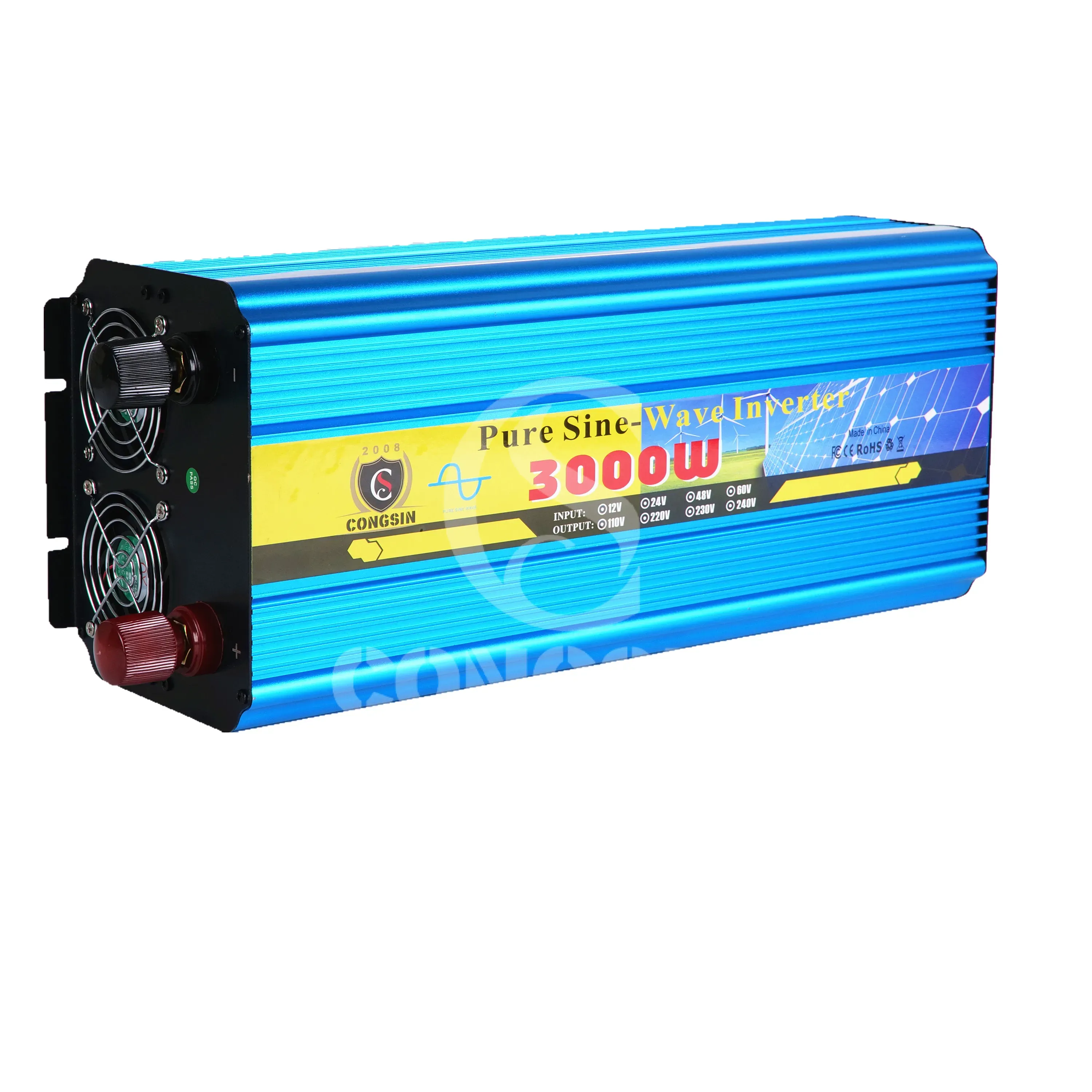
Congsin 3000W LCD Pure Sine Wave Inverter for Home Use Solar Backup Power Inverter Off Grid UPS
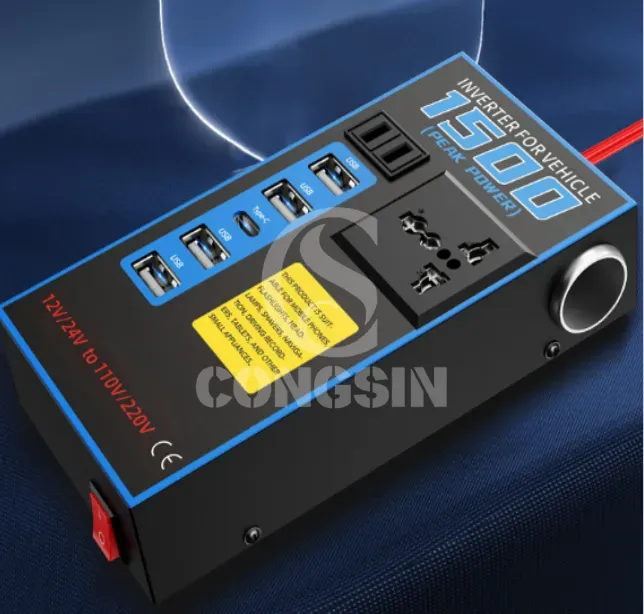
Congsin 1500W Inverter for Vehicle DC 12V/24V to AC 110V/220V with Universal socket Modified Sine Wave
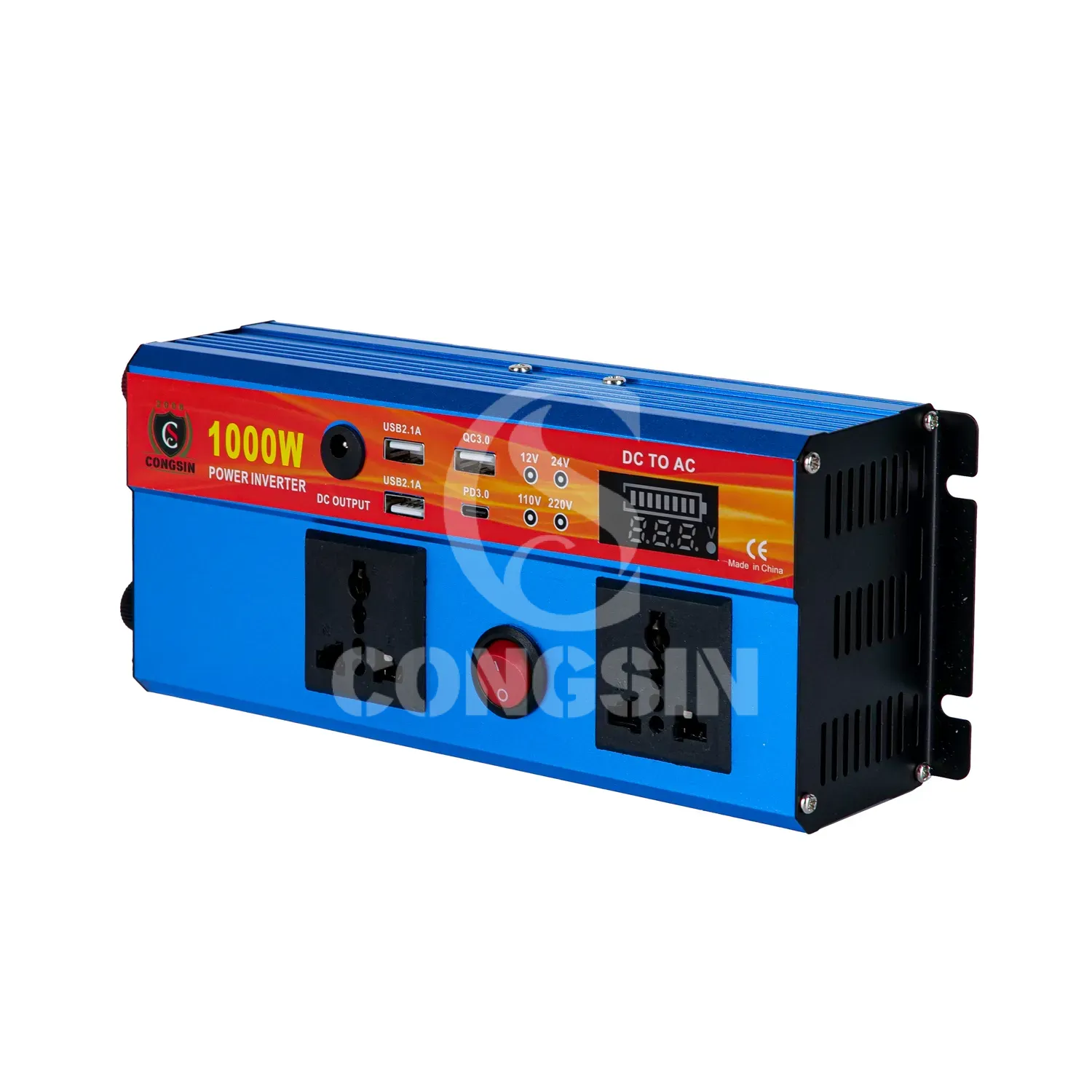
Congsin 1000W modified sine wave inverter with LED display and Type C port car RV power inverter
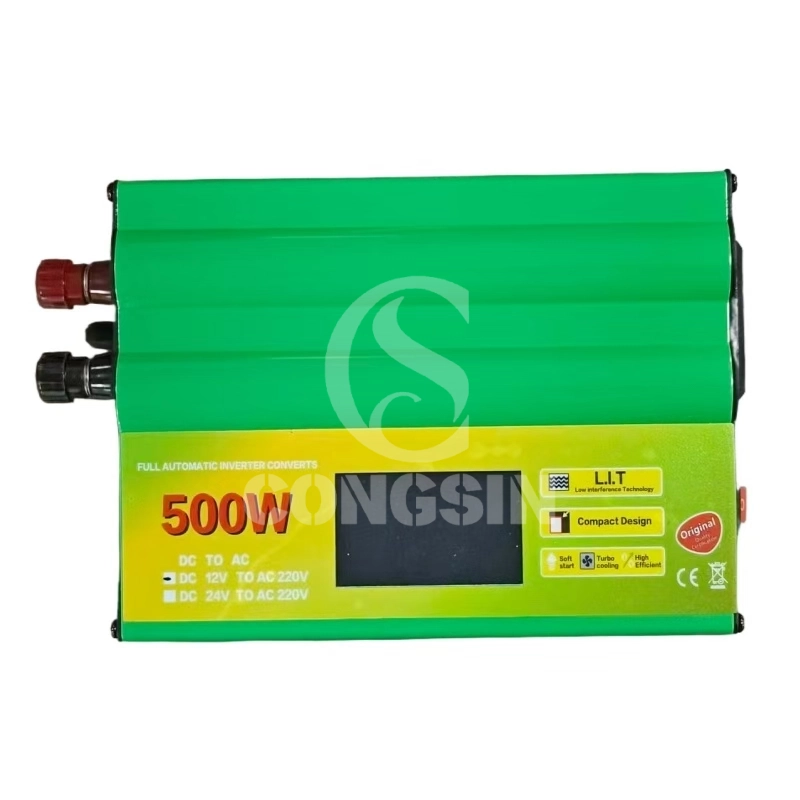
Congsin Modified Sine Wave Inverter 500W 1000W 1500W 12V LED Display Portable for RV Car Solar

CONGSIN is a trusted OEM factory for power inverters, solar charge controllers, and DC converters. Reliable solutions for global B2B buyers.
 High Quality
 7/24 Service
 Guaranteed Warranty
© 2025 Congsin. All Rights Reserved.