





Grid-Tied Bidirectional Inverters: Certifications & Compliance
- Why Certifications Matter for Inverter Systems
- Safety, grid stability and public trust
- Market access, liability and insurance
- Quality, reliability and aftermarket confidence
- Regulatory Standards for Grid-Tied Bidirectional Inverters
- North America: UL 1741, IEEE 1547 and FCC
- Europe: IEC 62109, Network Codes and CE
- Other regions and automotive (E‑MARK)
- Standards comparison table
- Testing, Certification Process & Technical Requirements
- Electrical safety and Low-Voltage Directive (LVD) testing
- EMC: emissions and immunity testing
- Anti‑islanding, ride‑through and interoperability
- Practical Compliance Strategy for Manufacturers and Integrators
- Design and documentation best practices
- Third-party testing, type vs unit certification
- Lifecycle, software updates and post-market surveillance
- Compliance checklist (practical)
- Business and technical risks — mitigation and testing partners
- Common compliance pitfalls
- Working with accredited labs and notified bodies
- Case study summary (industry trend)
- Guangzhou Congsin Electronic Technology Co., Ltd. — Capabilities & Relevance
- Frequently Asked Questions (FAQ)
- 1. What is the difference between UL 1741 and IEEE 1547 for bidirectional inverters?
- 2. Do I need to retest my inverter after a firmware update?
- 3. How can manufacturers minimize time-to-market for certified bidirectional inverters?
- 4. What tests are essential for anti-islanding and grid-safety verification?
- 5. Are CE and RoHS enough to sell in the EU?
- 6. Can a certified inverter be used in automotive applications?
- Contact & Next Steps
Summary for : This article explains the certifications, standards and compliance pathways required for grid-tied bidirectional inverters (bidirectional inverter) used in distributed energy resources (DER), vehicle-to-grid (V2G) and residential/commercial PV+storage systems. It maps regional requirements (UL/IEEE, IEC/CE, E-MARK), key technical tests—anti-islanding, EMC, LVD, interoperability—and practical steps manufacturers and system integrators should take to achieve market access and safe grid interconnection. Authoritative sources are cited for verification.
Why Certifications Matter for Inverter Systems
Safety, grid stability and public trust
Grid-tied bidirectional inverters connect local DC sources (batteries, EVs, PV) to the public AC grid and can inject power in both directions. Certification ensures the inverter protects users and the grid from hazards such as electrical shock, fire, unintended islanding, and power quality disturbance. Standards like IEEE 1547 and IEC 62109 define requirements for protective functions and safe operation.
Market access, liability and insurance
Regulatory approvals and marks (e.g., UL, CE, E-MARK, ETL) are often prerequisites for sale, grid interconnection, and for gaining insurance or warranty acceptance. Utilities and regulators commonly require certified devices for interconnection agreements and net-metering or export compensation schemes.
Quality, reliability and aftermarket confidence
Certification and third-party testing increase confidence in product durability and electromagnetic compatibility (EMC). This reduces warranty exposures and installation failures—critical considerations for OEMs, EPCs and rooftop integrators.
Regulatory Standards for Grid-Tied Bidirectional Inverters
North America: UL 1741, IEEE 1547 and FCC
In the U.S. and Canada, grid-interactive inverters typically require compliance with UL 1741 (Inverters, Converters, Controllers and Interconnection System Equipment for Use With Distributed Energy Resources) and interconnection behavior per IEEE 1547. FCC Part 15 rules and EMC testing are also required to demonstrate limits for radiated and conducted emissions (FCC).
Europe: IEC 62109, Network Codes and CE
European market entry relies on meeting safety and EMC directives and harmonized standards such as IEC 62109 (safety for power converters), plus local grid codes (e.g., Germany's VDE AR-N 4120 / ENTSO-E requirements). CE marking requires demonstration of compliance with the Low Voltage Directive (LVD) and the EMC Directive (EU LVD, EMC Directive).
Other regions and automotive (E‑MARK)
Automotive or trailer-mounted inverters require type approval such as E-MARK (UN/ECE regulations) for road-going equipment. Regional certification bodies or local standards (e.g., CCC in China) are required for market access in some countries.
Standards comparison table
| Region | Key Standard / Directive | Scope / Key Tests | Typical Mark / Approver |
|---|---|---|---|
| North America | UL 1741, IEEE 1547, FCC Part 15 | Anti-islanding, anti-faults, ride-through, power quality, EMC | UL Listing / CUL, FCC |
| Europe | IEC 62109, EN standards, EU EMC & LVD | Electrical safety, EMC, harmonized grid code compliance | CE Mark (Notified Body where applicable) |
| Automotive / Road | UN/ECE, E‑MARK | EMC for vehicles, vibration, ingress protection, safety | E‑MARK type approval |
| Global | ISO9001 (manufacturer QMS) | Quality management, production control | ISO certification bodies |
Sources: UL, IEEE, IEC, EU directives (European Commission).
Testing, Certification Process & Technical Requirements
Electrical safety and Low-Voltage Directive (LVD) testing
Safety tests validate insulation, creepage/clearance distances, overcurrent protection, grounding, thermal behavior and other hazards. For CE, this is often satisfied via harmonized standards like IEC 62109 and demonstrated in Technical Construction Files (TCF). For North America, UL 1741 testing covers many equivalent safety aspects.
EMC: emissions and immunity testing
EMC testing ensures the inverter neither creates nor is unduly affected by electromagnetic disturbances. Tests follow standards such as CISPR and IEC 61000 series. In the U.S., FCC Part 15 limits apply to conducted/radiated emissions. Immunity tests (surges, EFT, voltage dips) are required for robust grid interaction.
Anti‑islanding, ride‑through and interoperability
Anti-islanding prevents the inverter from energizing a de-energized grid section; ride-through tests validate behavior during short grid disturbances. IEEE 1547 and related utility interconnection requirements outline permitted behaviors and setpoints for active/reactive power response, frequency/voltage ride-through, and volt-var functions. Independent testing labs or certification bodies execute these tests and simulated grid scenarios.
Practical Compliance Strategy for Manufacturers and Integrators
Design and documentation best practices
Start compliance early: embed safety margins, EMC mitigation, and secure firmware update mechanisms into product design. Maintain a complete Technical File (schematics, BOM, firmware version control, risk analysis, test reports, user manual). ISO9001 systems improve traceability and production consistency for regulators and customers (ISO 9001).
Third-party testing, type vs unit certification
Type testing verifies a representative model’s compliance. For large production runs, manufacturers combine type tests with factory audits and periodic sample testing. Recognized test labs (NRTL, TÜV, Intertek) can provide the necessary reports and certification marks (UL, ETL, CE via Notified Body).
Lifecycle, software updates and post-market surveillance
For smart bidirectional inverters, firmware changes can alter compliance (e.g., anti-islanding algorithm). Establish controlled release processes, risk assessment for software changes, and provisions for issuing corrective actions. Regulators increasingly expect post-market surveillance and incident reporting.
Compliance checklist (practical)
| Item | Action | Who |
|---|---|---|
| Standards mapping | Map target markets to required standards (UL/IEEE, IEC, local grid codes) | Product Manager / Compliance |
| Design for compliance | Include EMC filters, protective relays, secure firmware update paths | R&D / Hardware & Firmware |
| Type testing | Engage accredited lab for UL/IEC/EMC tests | Compliance / Test Lab |
| Documentation | Maintain technical file & user manual; implement QMS | QA / Documentation |
| Factory audit | Arrange factory inspection for certification bodies | Operations / QA |
Business and technical risks — mitigation and testing partners
Common compliance pitfalls
- Assuming homologation in one region equals acceptance in another
- Updating firmware without re-evaluating anti-islanding or EMC impacts
- Omitting network-code functions (e.g., volt-var, frequency-watt) required by utilities
Working with accredited labs and notified bodies
Select test partners accredited to the required standards (NRTL for US, Notified Bodies for CE where applicable). Early pre-compliance testing helps reduce iteration costs. Labs such as UL, TÜV, Intertek and national labs provide both engineering guidance and final certification.
Case study summary (industry trend)
Recent grid modernization and DER adoption have increased emphasis on smart inverter functions: utilities now require fault ride-through, dynamic VAR control, and communications (e.g., SunSpec/IEEE 2030.x) for DER. Designing to these expectations early reduces retrofit risk and speeds interconnection approvals. See industry analysis by NREL for deep-dive on inverter testing and grid integration: NREL technical report.
Guangzhou Congsin Electronic Technology Co., Ltd. — Capabilities & Relevance
Guangzhou Congsin Electronic Technology Co., Ltd., founded in early 1998, is a professional power inverter manufacturer with over 27 years of focused experience. We design, R&D and manufacture a wide range of power solutions—with a core emphasis on DC→AC power inverters, portable power stations, and solar charge controllers. Our catalog includes 100+ models tailored for vehicles, solar systems, RVs and trucks, off-grid homes, outdoor offices, patrol and field construction work.
We operate fully automated production lines, advanced instrumentation and multifunctional testing equipment to ensure product reliability, efficiency and intelligent functionality. Environmental and safety compliance are built in: our quality system is ISO9001 certified and many products hold international approvals such as CE, EMC, LVD, ETL, FCC, RoHS and E-MARK. Several independently developed patents further demonstrate our commitment to innovation.
Congsin’s products serve global markets across Europe, the Americas, the Middle East, Africa and Southeast Asia; many models are supplied to domestic and international OEM channels. Our support includes OEM/ODM, private labeling, distribution and bespoke customization to meet partner specifications.
Core product categories: Solar Charge Controller, modified sine wave inverter, pure sine wave inverter, portable power stations. Competitive advantages: long manufacturing heritage (27+ years), automated production and multifunctional test capability, comprehensive certifications for global market access, and flexible OEM/ODM support for specialized grid-code or automotive (E-MARK) requirements.
For partners needing certified grid-tied bidirectional inverters or custom solutions that meet UL/IEEE or IEC/CE requirements, Congsin can provide design, testing coordination, and production services to accelerate compliant product launch.
Frequently Asked Questions (FAQ)
1. What is the difference between UL 1741 and IEEE 1547 for bidirectional inverters?
UL 1741 is a product safety and interconnection standard focused on the equipment level, while IEEE 1547 specifies interconnection and interoperability requirements (grid-support functions, ride-through, volt-var). In practice, many grid interconnection processes require both: UL 1741 (or a specific supplement) for product listing and IEEE 1547-compliant settings for utility acceptance. See UL and IEEE.
2. Do I need to retest my inverter after a firmware update?
Potentially yes. Firmware updates that affect control logic, anti-islanding algorithms, or communication can change compliance status. Conduct a risk assessment and, for significant changes, perform regression testing for affected standards (anti-islanding, EMC, interoperability). Maintain versioned test documentation in your technical file.
3. How can manufacturers minimize time-to-market for certified bidirectional inverters?
Key actions: map target-market standards early, design for compliance from the outset, engage accredited labs for pre-compliance testing, implement a QMS (ISO9001), and prepare complete technical documentation. Consider modular certification: certify a core inverter platform, then qualify model variants to reduce repeated full testing.
4. What tests are essential for anti-islanding and grid-safety verification?
Essential tests include unintentional islanding detection under various load and grid-impedance scenarios, frequency/voltage ride-through tests, abnormal voltage/frequency response, protective relay coordination, and disconnect/reconnect behavior. These are defined in IEEE 1547 and local interconnection requirements.
5. Are CE and RoHS enough to sell in the EU?
CE marking demonstrates conformity with applicable EU directives (e.g., LVD & EMC) but does not cover all local grid connection rules. RoHS addresses hazardous substances and is separate. Manufacturers must also comply with national grid codes and sometimes utility-specific requirements; a Notified Body opinion may be required for certain functions.
6. Can a certified inverter be used in automotive applications?
Not necessarily. Road-legal or vehicle-integrated equipment often requires additional approvals such as E‑MARK for EMC/vibration and different ingress protection or thermal tests. If the inverter will be used in vehicles, design and testing must consider UN/ECE regulations and automotive-grade qualifications.
Contact & Next Steps
If you need certified grid-tied bidirectional inverter solutions or help with compliance strategy, testing coordination and OEM/ODM integration, contact Guangzhou Congsin Electronic Technology Co., Ltd. for consultation and product options. We can support UL/IEC testing coordination, factory audit readiness, and customized inverter designs for specific grid codes and automotive approvals.
Request a quote or technical consultation: Email our sales and technical team via info@congsin.com or visit our product pages to view models and datasheets. For urgent inquiries, request a direct callback on our website.
References and further reading: IEEE 1547 (IEEE), UL 1741 (UL), IEC 62109 (IEC), NREL inverter-grid integration report (NREL), ISO 9001 (ISO), EU LVD/EMC guidance (European Commission).
Battery Types Explained for UPS Power Inverters
Top Pure Sine Wave Inverter Models for Commercial Use 2026
Maximizing Efficiency of Your 2000W Modified Sine Wave Inverter
Maintenance Best Practices to Extend UPS Power Inverter Life
Modified Sine Wave Inverters
What devices can be powered by this inverter?
Suitable for TVs, fans, computers, and small tools.
Can it be connected to a battery long-term?
Yes, ensure good ventilation to avoid overheating.
Can I customize the logo?
Yes, OEM/ODM service is available.
What devices can this inverter power?
Rated for 600W, peak 1000W. Recommended to use devices under 80% of rated capacity.
Pure Sine Wave Inverters
Can it drive a 3P air conditioner and an electric oven at the same time?
Total power needs to be calculated: the rated power of a 3P air conditioner is about 2200W-2500W, and the electric oven is about 1500W-2000W. The total power is 3700W-4500W, which exceeds the 3000W continuous power, so simultaneous use is not recommended; if used alone, the 6000W peak can meet the startup needs of both, and the battery capacity must be ≥200Ah (12V) when used alone.
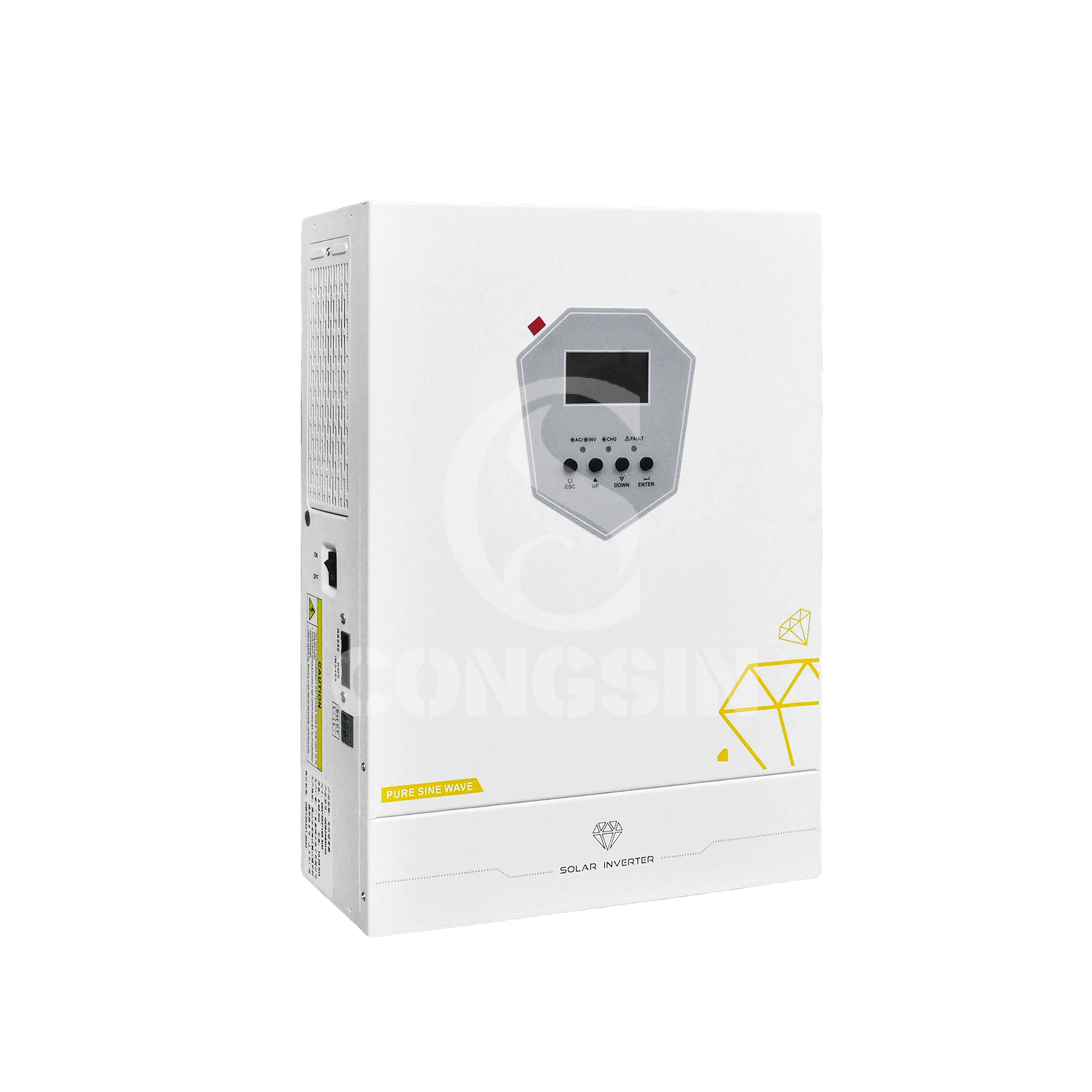
Factory Direct Sales 6000W Hybrid Solar Power Inverter with Controller and LCD Display
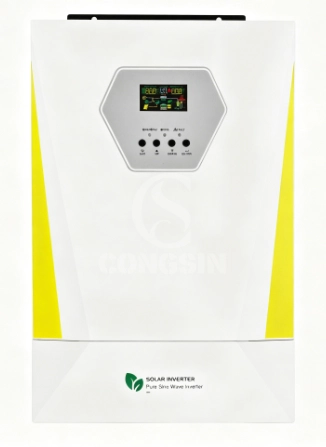
Congsin 4000W and 6000W Hybrid Inverter with Controller with LCD Display and CE Certification Solar
Power your solar system efficiently with the Congsin 4000W and 6000W Hybrid Inverter. Featuring an integrated MPPT Controller, this CE Certified inverter ensures optimal energy conversion. Monitor performance effortlessly via the intuitive LCD Display. Reliable, powerful, and ready for your sustainable energy needs.
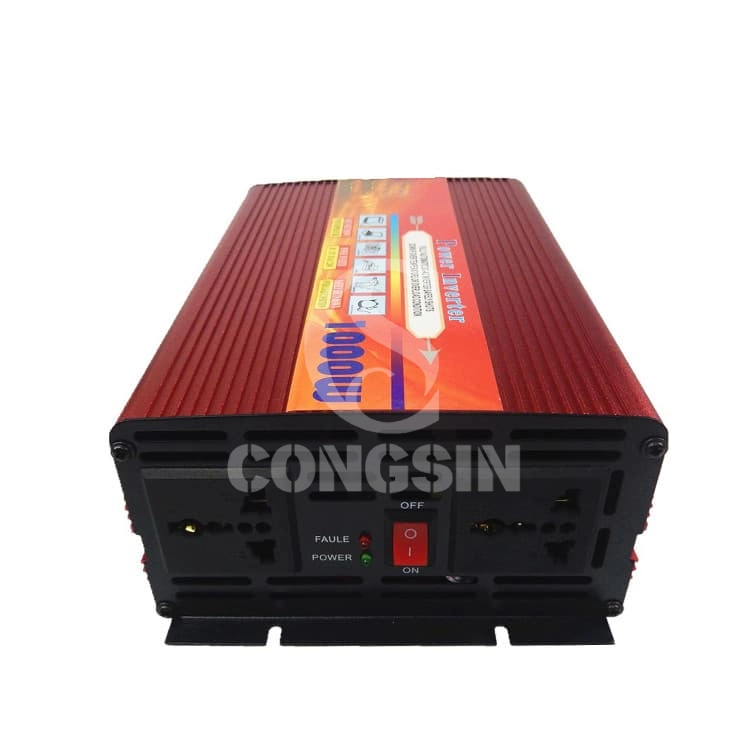
Congsin Manufacturer Wholesales Big Capability Modified Sine Wave Inverter with Red case and Double fan
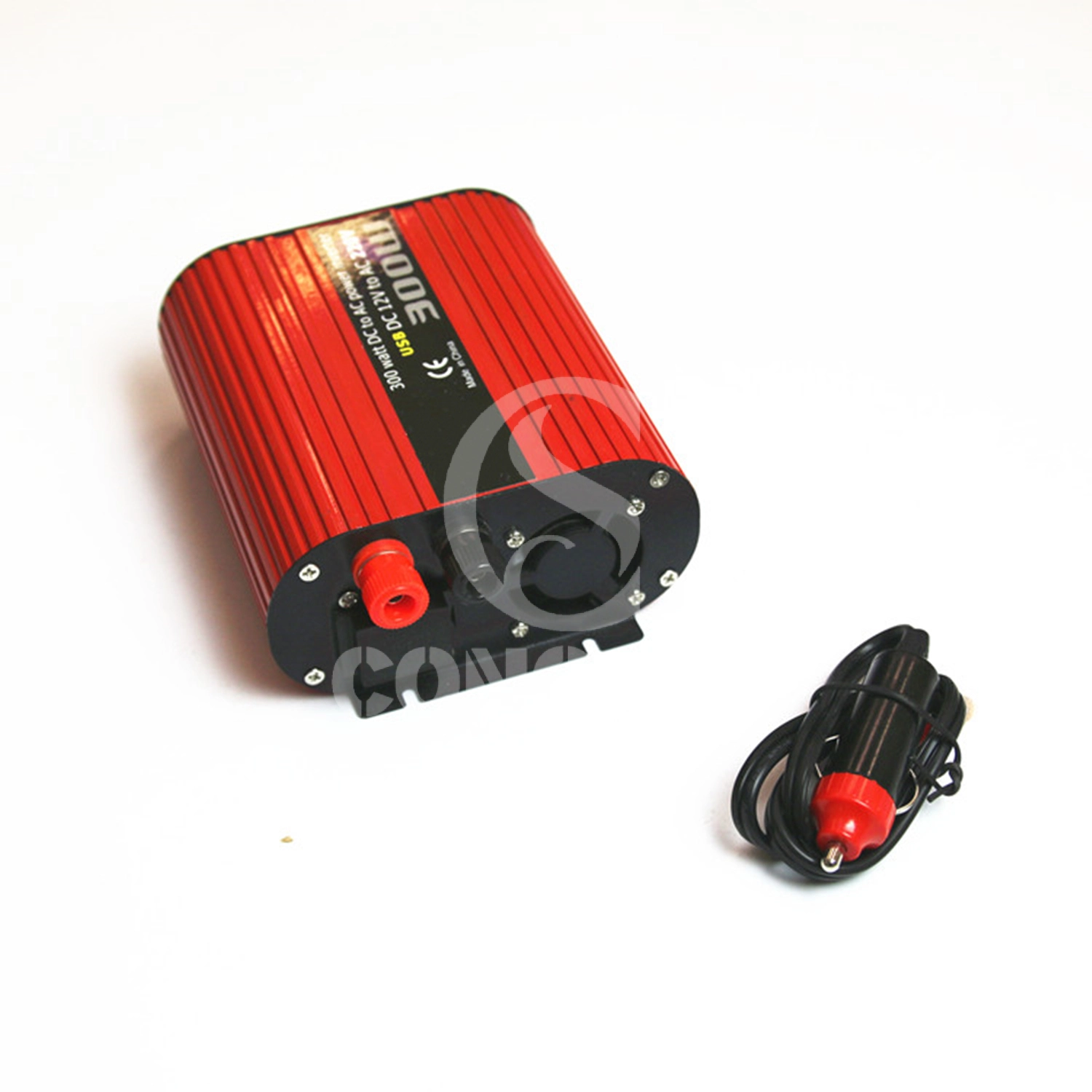
Factory Direct Sales Portable 150W Modified Sine Wave Inverter DC12V to AC220V Off-grid Sine Wave Inverter with Two USB and Universal Socket
Congsin's Portable 150W Modified Sine Wave Inverter powers your journey! This versatile Car Power Inverter with USB acts as a reliable 12V to 220V converter, ensuring an essential off-grid power supply. With dual USB ports and a universal socket, enjoy convenient power on the go.

CONGSIN is a trusted OEM factory for power inverters, solar charge controllers, and DC converters. Reliable solutions for global B2B buyers.
 High Quality
 7/24 Service
 Guaranteed Warranty
© 2025 Congsin. All Rights Reserved.
 WeChat
 Scan QR Code
sin cong
teaimei10
Whatsapp: +8618028086791
Scan QR Code