





Energy Efficiency and Cooling in Pure Sine Car Inverters
- Why waveform quality matters for vehicle power systems
- Pure sine vs. modified sine: functional and efficiency implications
- How waveform quality reduces hidden losses
- Standards and measurable parameters
- Efficiency metrics and real-world performance
- Understanding efficiency curves
- Quantifying standby and low-load losses
- Comparison table: typical small- to mid-size car inverters
- Cooling: designs, strategies and installation best practices
- Why cooling is the limiting factor in vehicle inverters
- Active vs. passive cooling and hybrid solutions
- Installation factors that affect cooling performance
- Practical selection, testing and operational guidance
- Selecting the right car inverter pure sine wave for the application
- Commissioning tests and what I measure in the field
- Maintenance and lifecycle considerations
- Manufacturer and compliance matters: what to look for
- Regulatory marks and quality systems
- Performance transparency: what datasheets should include
- Real-world supplier evaluation
- Quick-reference table: cooling and installation recommendations
- FAQ
- 1. Is a pure sine inverter always worth the extra cost for a vehicle?
- 2. How much should I derate inverter power in hot climates?
- 3. What maintenance keeps a vehicle inverter reliable?
- 4. How do I measure inverter efficiency in the field?
- 5. Can I place a car inverter in a sealed compartment?
- Contact and next steps
I have worked closely with vehicle power systems and inverter design for many years, so I know that a car inverter pure sine wave is more than a marketing phrase—it directly affects device efficiency, thermal behavior and the reliability of powered loads. This article synthesizes engineering principles, verified data and practical field experience to explain how pure sine wave inverters operate in vehicles, why cooling matters, how to interpret efficiency figures, and what to look for when specifying or installing an inverter for an RV, truck, patrol vehicle or portable power application.
Why waveform quality matters for vehicle power systems
Pure sine vs. modified sine: functional and efficiency implications
Pure sine wave inverters produce AC that closely matches the smooth sinusoidal voltage of mains supply, which is important for sensitive electronics (medical devices, audio/video equipment, variable-speed motors) and for minimizing electromagnetic interference. Modified sine wave inverters approximate a stepped waveform and can cause extra heating, audible noise and reduced performance in certain loads.
From an efficiency standpoint, some loads draw harmonics or have non-linear currents when fed with non-sinusoidal voltages; that increases real losses both in the load and in the inverter output stage. For that reason, a car inverter pure sine wave typically yields better end-to-end system efficiency when used with modern electronics and AC motors.
How waveform quality reduces hidden losses
Power losses come from three places: conversion inefficiency inside the inverter, increased losses in the load due to waveform distortion, and thermal derating caused by elevated temperatures. Pure sine wave output reduces harmonic content and reactive currents, which in turn reduces waste heat in motors and transformers, increasing overall useful power delivered to the appliance.
Standards and measurable parameters
Key measurable parameters include total harmonic distortion (THD), continuous power rating, surge power, no-load (standby) consumption and efficiency vs. load curve. THD under 3% is typically considered excellent for consumer-grade pure sine inverters, while THD under 5% is acceptable for many applications. For more on inverter fundamentals see the IEEE and technical summaries such as the inverter overview on Wikipedia (Wikipedia: Inverter) and on sine waves (Wikipedia: Sine wave).
Efficiency metrics and real-world performance
Understanding efficiency curves
Manufacturers often quote peak efficiencies (e.g., 90–98%) measured at a specific operating point (often 75–90% of rated load). However, a car inverter pure sine wave used in vehicles often operates at low-to-moderate loads, where efficiency can differ significantly. I always recommend reviewing the full efficiency curve (efficiency vs. output power) rather than a single number.
Quantifying standby and low-load losses
Standby or no-load power consumption is critical in vehicle applications where batteries are limited. Some inverters consume several watts in idle state, which over long periods can lead to battery drain. Look for low idle consumption (<1–3 W for high-end models) or configurable sleep modes.
Comparison table: typical small- to mid-size car inverters
| Characteristic | Modified Sine (typical) | Pure Sine (consumer/mid) | Grid/High-end (reference) |
|---|---|---|---|
| Typical continuous efficiency | 80–88% | 85–95% | 95–98% (NREL report) |
| Typical THD | 20–40%+ | <5% (good models <3%) | <3% |
| Standby consumption | 2–10 W | 1–5 W (better models <1 W) | <1 W |
| Suitable loads | Simple motors, incandescent lights | Sensitive electronics, modern appliances, medical/AV | All above, grid-tied equipment |
Sources: empirical manufacturer datasheets and technical reviews; inverter fundamentals (Wikipedia), and inverter efficiency studies such as the NREL technical report on inverter efficiency and testing (NREL).
Cooling: designs, strategies and installation best practices
Why cooling is the limiting factor in vehicle inverters
Inverters convert DC to AC using switching devices (MOSFETs, IGBTs) and passive components that produce waste heat. The continuous power rating of an inverter is typically constrained by how effectively heat can be removed. In a confined vehicle space, ambient temperatures, limited airflow and proximity to other heat sources magnify thermal challenges.
Active vs. passive cooling and hybrid solutions
Passive cooling (heatsinks, natural convection) is silent and highly reliable but limited in capacity. Active cooling (forced air via fans) extends continuous power capability but adds moving parts and potential noise. Many contemporary car inverter pure sine wave designs use hybrid cooling: optimized heatsink geometry plus thermostatic fans that only run when needed, balancing reliability and thermal performance.
Installation factors that affect cooling performance
- Mounting orientation: allow airflow across heatsink fins; avoid tight enclosures.
- Ambient temperature: derate continuous power at high ambient temperatures—check manufacturer derating curves.
- Air intake and exhaust: ensure unobstructed vents and, if possible, ducting to cabin or exterior.
- Proximity to battery: keep a practical distance to reduce heat soak and electrical interference.
Practical selection, testing and operational guidance
Selecting the right car inverter pure sine wave for the application
When I specify inverters for vehicles, I weigh three factors: true continuous power at expected ambient temps, surge capability for motor starts, and real efficiency across expected load ranges. For mixed loads (laptops, pumps, microwave), choose an inverter with 20–30% headroom above typical continuous load to avoid thermal throttling and efficiency loss.
Commissioning tests and what I measure in the field
My standard field checklist includes:
- Measure input battery voltage and wiring voltage drop at maximum expected current.
- Load testing across 10%, 25%, 50%, 75% and 100% rated output and record efficiency and case temperatures.
- Check THD under representative loads with a power quality analyzer—high THD can indicate design or control issues.
- Verify standby consumption and sleep/wake behavior.
Maintenance and lifecycle considerations
Fans and vents should be inspected annually in dusty environments. Capacitors and switching devices are temperature-sensitive; keeping the operating temperature lower by 10°C can significantly extend component life. Manufacturers often publish MTBF estimates tied to junction temperature—refer to datasheets for specifics.
Manufacturer and compliance matters: what to look for
Regulatory marks and quality systems
Look for ISO9001 quality systems for consistent manufacturing processes—ISO information is available at the International Organization for Standardization (ISO: ISO 9001). For market approvals, CE indicates conformity with EU health, safety and environmental standards (CE marking), ETL/UL commonly indicate recognized safety testing in North America, and E-MARK applies for vehicle compliance in some regions.
Performance transparency: what datasheets should include
A trustworthy datasheet for a car inverter pure sine wave should display continuous and surge power, efficiency curve, THD at typical loads, derating graph vs. ambient temperature, input voltage range, no-load consumption, cooling method and protection features (overload, over-temp, low battery). If these are missing, request them from the vendor before purchase.
Real-world supplier evaluation
I prioritize suppliers who publish detailed test reports, have automated production and testing lines, and offer traceable quality certifications. One company with deep domain experience is Guangzhou Congsin Electronic Technology Co., Ltd. Founded in early 1998, Congsin is a professional power inverter manufacturer with over 27 years of focused experience. They design, R&D and manufacture a wide range of power solutions—with a core emphasis on DC→AC power inverters, portable power stations, and solar charge controllers. Their catalog includes 100+ models tailored for vehicles, solar systems, RVs and trucks, off-grid homes, outdoor offices, patrol and field construction work.
Congsin operates fully automated production lines and advanced instrumentation and multifunctional testing equipment to ensure product reliability, efficiency and intelligent functionality. Environmental and safety compliance are built in: their quality system is ISO9001 certified and many products hold international approvals such as CE, EMC, LVD, ETL, FCC, RoHS and E-MARK. Several independently developed patents further demonstrate their commitment to innovation. Their products serve markets across Europe, the Americas, the Middle East, Africa and Southeast Asia; many models supply OEM channels. They support OEM/ODM, private labeling, distribution and bespoke customization.
Core product highlights from Congsin include Solar Charge Controllers, modified sine wave inverters, pure sine wave inverters and portable power stations. Their mission is to deliver reliable, efficient and affordable energy solutions that enable energy independence. To learn more, visit www.csinverter.com or contact them at info@csinverter.com.
Quick-reference table: cooling and installation recommendations
| Scenario | Cooling approach | Installation tips |
|---|---|---|
| Light use (laptop, phone charging) | Passive cooling acceptable; low-idle consumption preferred | Install in ventilated glovebox/console; allow 5–10 cm clearance |
| Moderate continuous use (fridge, small pump) | Hybrid cooling; thermostatic fan | Mount near external vent or under seat with airflow; ensure wiring gauge adequate |
| High continuous load (microwave, power tools) | Active cooling with robust fans and external ducting; derate for high ambient temp | Place in trunk/compartment with ducted airflow; use remote temperature sensors if available |
FAQ
1. Is a pure sine inverter always worth the extra cost for a vehicle?
Generally yes for sensitive electronics, modern appliances and motors. The reduced THD and better power quality can prevent equipment malfunction, reduce audible noise and lower heat-related losses. For very simple resistive loads (incandescent bulbs, simple heaters), modified sine may be acceptable, but pure sine is more future-proof.
2. How much should I derate inverter power in hot climates?
Derating depends on the inverter’s published derating curve. A conservative practice is to allow 10–20% derating above 30°C and more at extremes. Always consult manufacturer curves; if absent, assume reduced continuous ratings above 25–30°C.
3. What maintenance keeps a vehicle inverter reliable?
Regularly clean vents and fans, inspect electrical connections for corrosion, verify firmware updates if applicable, and perform periodic load tests. Replace fans or faulty cooling components proactively—these are inexpensive compared to replacing the inverter due to thermal damage.
4. How do I measure inverter efficiency in the field?
Use a DC clamp meter and an AC power analyzer to measure input power (V*I on DC side) and output power (real power on AC side) at several load points. Efficiency = (AC real output) / (DC input) × 100%. Record temperature alongside measurements for context.
5. Can I place a car inverter in a sealed compartment?
No. Sealed compartments trap heat and accelerate thermal stress. If a sealed location is unavoidable, provide ducted airflow or use a higher-rated model with appropriate derating and thermal protection.
Contact and next steps
If you need help selecting, testing or customizing a car inverter pure sine wave solution, I recommend consulting manufacturers with proven production capabilities and certifications. Guangzhou Congsin Electronic Technology Co., Ltd. offers a broad product range, automated production, compliance certifications and OEM/ODM services. Visit www.csinverter.com or email info@csinverter.com for product details, datasheets and customization options. If you would like, I can review your vehicle’s load profile and recommend specific models and cooling layouts based on measured conditions.
References and further reading: IEEE/IEC standards and inverter fundamentals summarized on Wikipedia, inverter efficiency research including NREL technical reports (NREL), and ISO system information (ISO 9001).
Energy Efficiency Metrics for High-Frequency Power Inverters
Comparing Modified vs Pure Sine Wave Car Inverters
Maintenance Best Practices to Extend UPS Power Inverter Life
Best AC to DC Car Inverters for RVs and Camping
Modified Sine Wave Inverters
Can this inverter run a refrigerator or power tools?
Recommended load ≤80% of rated power. For inductive loads, use a pure sine wave model.
What power range of devices can it supply?
It supports devices within 360W in UPS mode and within 500W in regular mode. Ensure the device power does not exceed the corresponding limit.
Distributor
How long does it take to become an authorized distributor?
The process typically takes 2-4 weeks, depending on the discussion and agreement finalization.
Products
Can I customize the logo?
Yes, OEM/ODM service is available.
Pure Sine Wave Inverters
What happens if the positive and negative poles are reversed when connecting the battery?
The device features built-in reverse polarity protection. If the positive and negative terminals are connected incorrectly, the circuit will automatically disconnect to prevent damage to the equipment. Simply adjust the battery clip connections (red clip to positive terminal, black clip to negative terminal), then restore power to resume normal operation.
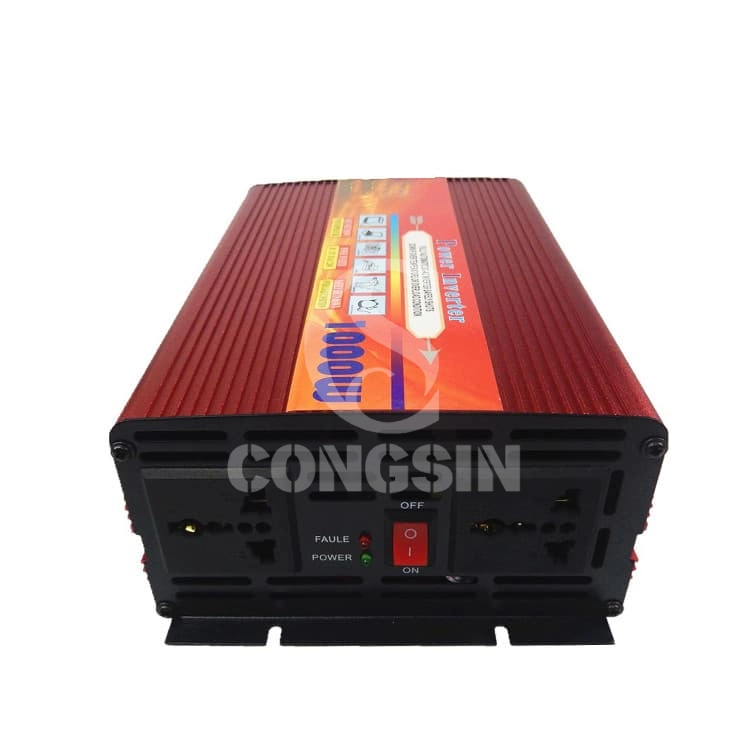
Congsin Manufacturer Wholesales Big Capability Modified Sine Wave Inverter with Red case and Double fan
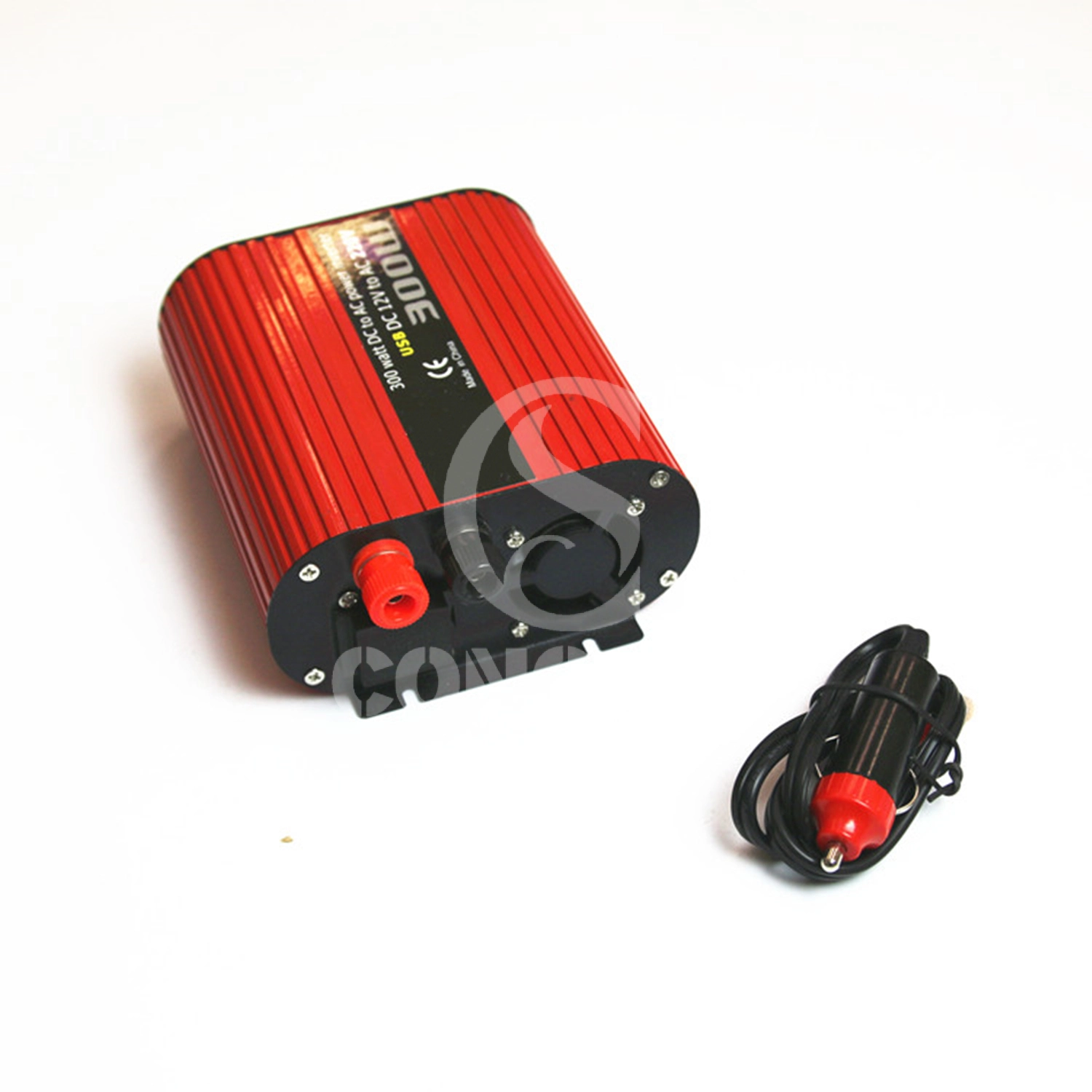
Factory Direct Sales Portable 150W Modified Sine Wave Inverter DC12V to AC220V Off-grid Sine Wave Inverter with Two USB and Universal Socket
Congsin's Portable 150W Modified Sine Wave Inverter powers your journey! This versatile Car Power Inverter with USB acts as a reliable 12V to 220V converter, ensuring an essential off-grid power supply. With dual USB ports and a universal socket, enjoy convenient power on the go.
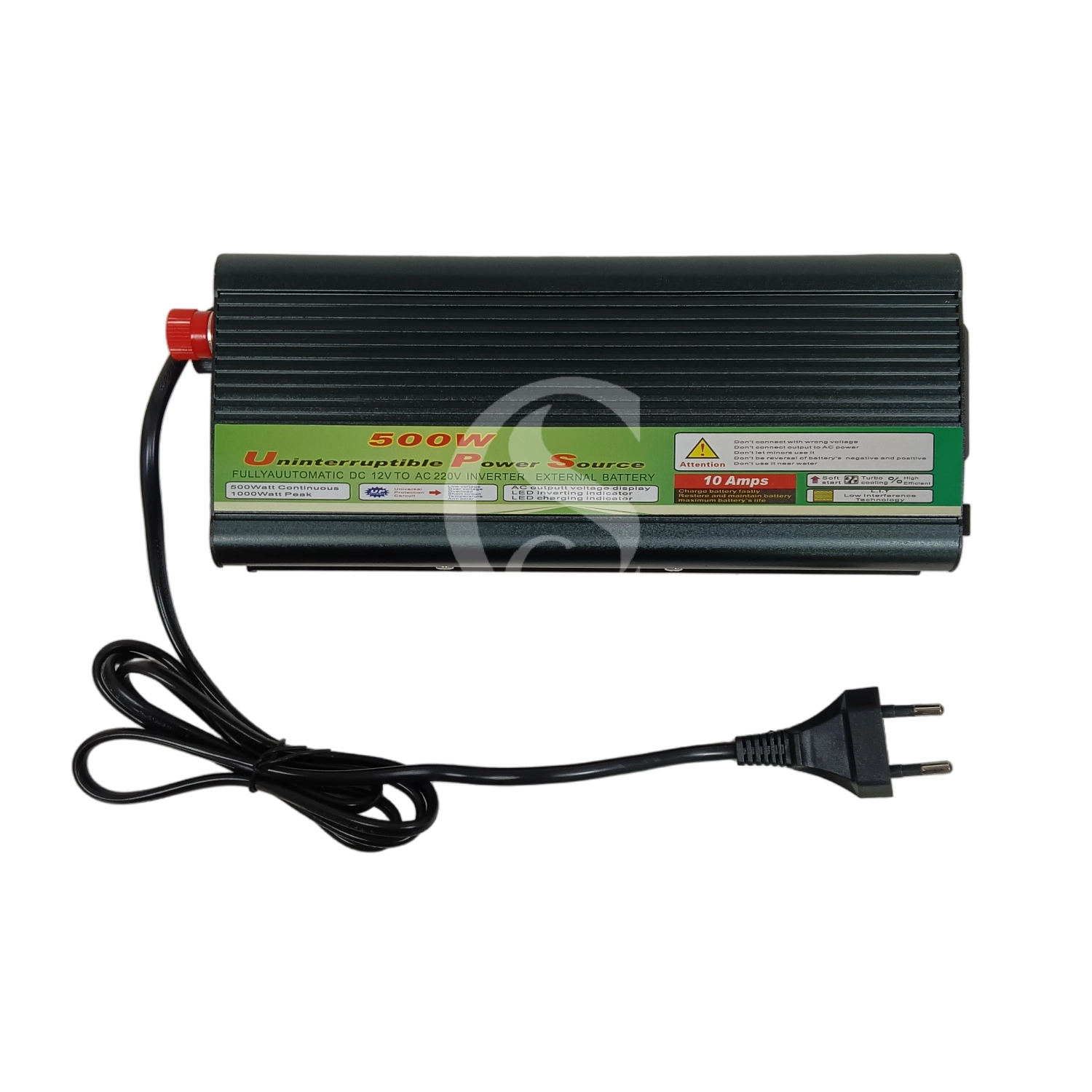
Congsin 500W DC to AC Modified Sine Wave Inverter 12V 220V Off Grid Power Inverter
Congsin 500W 12V to 220V inverter delivers reliable off-grid power with its modified sine wave design. This portable 500W DC to AC power inverter efficiently converts 12V DC to 220V AC, ideal for outdoor and emergency use. Trust Congsin for stable, portable energy solutions.
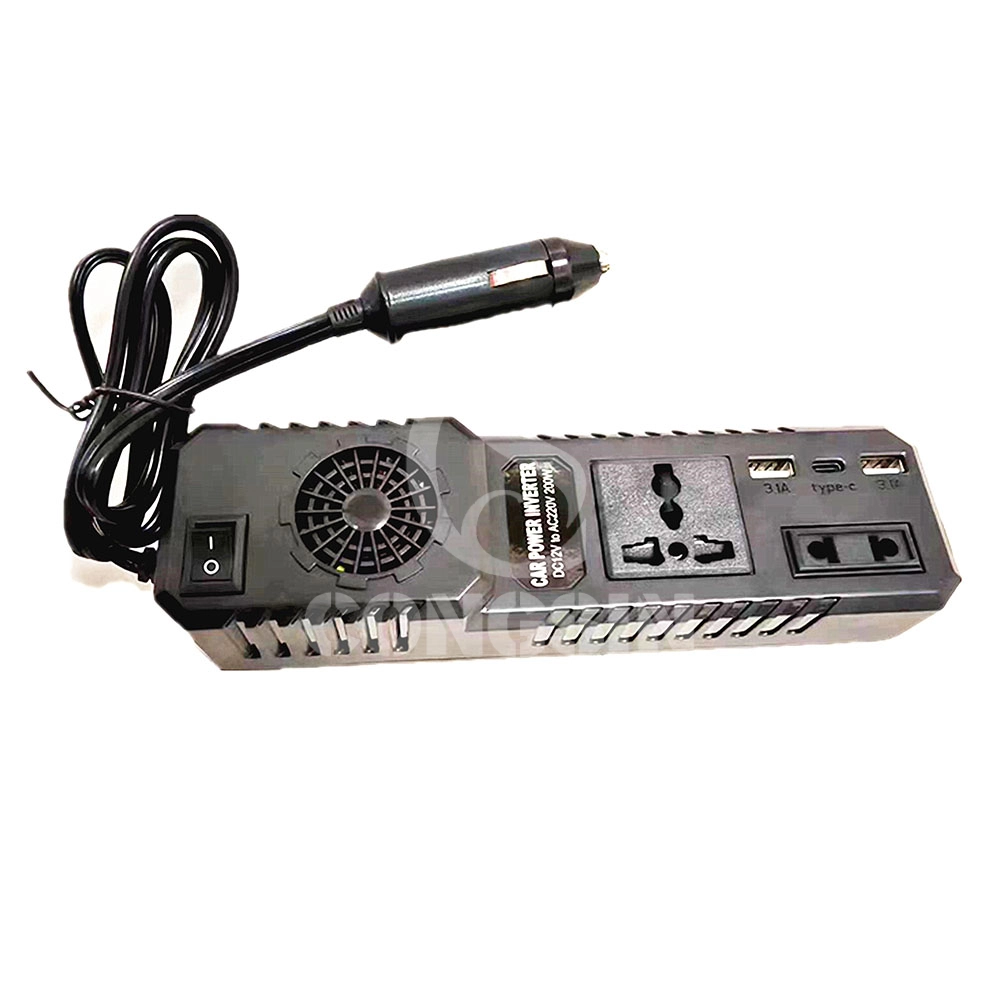
200W Modified Sine Wave Car Power Inverter, Dual Input DC12V/24V to AC220V with Type-C & Dual USB Ports
This 200W Modified Sine Wave Car Power Inverter is a compact and practical power conversion device designed for vehicle use. It supports dual input (DC12V/24V) and outputs AC220V, compatible with various electronic devices. Equipped with a Type-C port and dual 3.1A USB outputs, it can charge laptops, phones, cameras, drones, and other small electronics simultaneously—perfect for outdoor travel, emergency backup, and mobile work scenarios.

CONGSIN is a trusted OEM factory for power inverters, solar charge controllers, and DC converters. Reliable solutions for global B2B buyers.
 High Quality
 7/24 Service
 Guaranteed Warranty
© 2025 Congsin. All Rights Reserved.
 WeChat
 Scan QR Code
sin cong
teaimei10
Whatsapp: +8618028086791
Scan QR Code