





Cost and ROI: Comparing Off-Grid Inverters and Solar Systems
- System architecture and why it matters more than device price
- What constitutes an inverter-first or inverter-centric off-grid solution?
- Solar system topologies: grid-tied, hybrid, and fully off-grid
- Key performance metrics that drive economic outcomes
- Cost breakdown and realistic price ranges
- Typical upfront costs: components and installation
- Operating costs, lifetime and replacements
- LCOE and simple payback comparators
- ROI drivers and financial modeling
- How to model ROI: a pragmatic approach
- Case example: small off-grid cabin vs grid-tied solar on a house
- Non-financial ROI: resilience, mobility and operational value
- Procurement, technical choices and optimizing ROI
- Selecting the right inverter and battery chemistry
- Design rules to reduce total lifecycle costs
- Procurement and vendor selection—what to ask
- Why manufacturer track record matters — example supplier summary
- Decision checklist and next steps
- Checklist: when to choose inverter-first off-grid vs full solar system
- Model example: quick ROI calculator steps
- Practical next steps
- FAQ
- 1. What is the main cost difference between an inverter grid off solution and a grid-tied solar system?
- 2. How long does it take to recover the investment in off-grid solar with batteries?
- 3. Are modified sine wave inverters acceptable for off-grid use?
- 4. How often do inverters and batteries need replacement?
- 5. Can incentives make off-grid systems financially attractive?
- 6. What technical specs should I prioritize when choosing an inverter for an off-grid build?
Short summary for indexing: This article compares the costs and return-on-investment (ROI) of inverter-first off-grid systems and complete solar systems (grid-tied and off-grid hybrid). It covers hardware breakdown (inverters, batteries, PV modules, BOS), installation and operating costs, lifecycle and reliability, financing and incentives, and practical decision rules for selecting the optimal technical and economic solution for homes, RVs, remote sites and commercial microgrids. Real-world cost ranges, LCOE and payback examples are referenced to authoritative sources to support procurement and design choices.
System architecture and why it matters more than device price
What constitutes an inverter-first or inverter-centric off-grid solution?
An inverter-centric or inverter-first off-grid setup emphasizes the inverter (and often an inverter/charger) as the control hub converting DC battery energy to AC loads and managing charging from generators or intermittent PV. In many remote or mobile scenarios the system may be described by the keyword inverter grid off—users seeking to run loads away from the grid with an inverter as the central device. Compared to grid-tied PV, inverter-first deployments require robust battery capacity, reliable charge controllers, and more sophisticated power management.
Solar system topologies: grid-tied, hybrid, and fully off-grid
Three common topologies affect cost and ROI differently:
- Grid-tied PV with minimal battery backup—lowest upfront cost per kW, fastest ROI where net-metering or favorable tariffs exist.
- Hybrid (grid-connected with battery)—middle ground: higher capital cost but provides resilience and time-shifting to capture higher-value rates.
- Fully off-grid (inverter grid off scenario)—highest upfront cost because of batteries, inverter/chargers, and spare capacity for autonomy.
- Upfront capital expenditure (CAPEX): panels, inverter(s), batteries, BOS (mounting, wiring, protection), installation.
- Operating expenditure (OPEX): maintenance, replacement (batteries often replaced once or twice in 20 years), inverter service life.
- Levelized Cost of Energy (LCOE): total lifecycle cost divided by lifetime energy production.
- Value metrics: avoided grid electricity cost, resilience value, and incentives (tax credits, feed-in tariffs).
- Inverter lifetime: Typical modern inverters last 10–15 years (warranty often 5–10 years). Off-grid inverter-chargers running heavy duty may see more wear.
- Battery life: Lead-acid may last 3–7 years in cycling use; lithium FePO4 commonly achieves 8–15+ years depending on depth-of-discharge and cycles.
- Panels: 25+ year performance warranties (degradation ~0.5–1%/yr).
- Maintenance: Batteries and mechanical components require scheduled checks; remote sites incur higher maintenance logistics.
- CAPEX (detailed by component)
- Annual energy production and load profile
- Grid electricity cost or fuel cost for backup gensets
- Operation & maintenance costs and replacement schedules
- Incentives, tax credits, and value of resilience
- Off-grid cabin: 3 kW inverter/charger ($2,000–$6,000), 6 kWh usable battery ($3,000–$8,000), 2–4 kW PV ($4,000–$8,000). Total CAPEX approx $10k–$22k. LCOE often > $0.40/kWh if autonomy >2 days.
- Grid-tied house: 6 kW PV system installed $8k–$18k (depending on incentives). LCOE can be $0.06–$0.12/kWh; payback 5–12 years depending on tariff.
- Resilience and energy independence—critical for remote clinics, telecom towers or disaster-prone regions.
- Mobility—RVs, boats and vehicles need compact inverter grid off solutions that are optimized for weight and space.
- Operational savings—reduction in diesel use for remote operations can be measured in total cost of ownership and reduced logistics risk.
- For off-grid autonomy, choose inverter/chargers rated for continuous loads and surge capacity with integrated battery management and generator support.
- Battery chemistry: Lithium iron phosphate (LFP) offers higher cycle life and lower lifecycle cost than flooded lead-acid for frequent cycling. Use authoritative cost trend data from IEA/BNEF when valuing replacement cycles (IEA).
- Sine wave quality: for sensitive electronics, prefer pure sine wave inverters over modified sine wave units.
- Right-size battery capacity for expected autonomy — oversizing wastes capital; undersizing shortens life via deep cycling.
- Prioritize energy efficiency (LED lighting, efficient appliances) to reduce PV and battery sizing needs.
- Spec high-quality inverter components and warranty/after-sales support for remote deployments to limit downtime costs.
- Detailed BOM and test reports (efficiency curves, THD, surge ratings).
- Certifications and quality management—ISO9001, CE, EMC, LVD, ETL, FCC, RoHS where applicable.
- Service network, spare parts availability, and documented warranty service times for your region.
- Choose inverter-first off-grid when grid access is unavailable or extension costs exceed off-grid CAPEX, or when mobility/resilience is the primary requirement.
- Choose grid-tied solar when grid access exists and tariffs/incentives make PV payback attractive; minimize battery investment if resilience is secondary.
- Choose hybrid when resilience and partial grid reliance balance cost and backup capability—use TOU tariffs to justify battery deployment.
- Estimate annual kWh consumed and solar production (use local insolation data).
- Tabulate CAPEX and expected replacements with year.
- Discount cash flows at your financing/discount rate to compute NPV and payback.
- Compare to avoided grid/fuel cost and include intangible resilience value.
Understanding topology is essential: an expensive inverter alone won’t deliver ROI unless paired with correct battery sizing, panel area and controls.
Key performance metrics that drive economic outcomes
When comparing costs and ROI, focus on:
Cost breakdown and realistic price ranges
Typical upfront costs: components and installation
Below are representative installed-cost ranges (USD) as of recent industry reports and market data. Actual prices vary by region, scale, and component quality.
| System component | Small residential (kW-scale) | Off-grid / hybrid add-ons | Notes / references |
|---|---|---|---|
| PV modules (per W installed) | $0.40–$1.00/W (modules only); installed system $1.0–$3.5/W | n/a | See NREL / industry averages (installation labor, BOS vary) NREL |
| Inverter (residential, pure sine) | $0.10–$0.40/W (grid-tied inverter) | Inverter/charger for off-grid: $0.30–$1.00/W | Off-grid inverter/chargers include transfer relays and generator interfaces; cost reflects greater functionality |
| Batteries (chemistry-dependent) | Lead-acid: $150–$300/kWh; Lithium (LFP): $100–$300/kWh installed | Higher autonomy (days) => larger battery bank => major CAPEX driver | See IEA / BloombergNEF battery price trends IEA, BNEF |
| Balance of system (mounting, wiring) | $0.10–$0.50/W | Off-grid installs often cost more per W (remote labor, logistics) | Depends on site complexity |
| Installation & commissioning | $500–$5,000 (small systems) | Remote sites can double/triple labor cost | Permitting & engineering add cost |
Sources: National Renewable Energy Laboratory (NREL) cost breakdowns, IEA and industry reports. See NREL for U.S. installed cost trends (NREL report).
Operating costs, lifetime and replacements
Key considerations:
These replacement cycles significantly affect lifecycle cost and ROI; include replacement CAPEX when modelling LCOE.
LCOE and simple payback comparators
LCOE for grid-tied residential PV commonly ranges from $0.05–$0.15/kWh depending on location and incentives. Off-grid LCOE (including batteries and inverter replacements) can be $0.20–$0.60/kWh or higher in remote contexts. See Lazard’s levelized cost analyses and IEA/NREL data for methodology (Lazard LCOE).
ROI drivers and financial modeling
How to model ROI: a pragmatic approach
ROI modelling should be scenario-based. Minimum inputs:
Run sensitivity on battery prices, degradation, and financing rates. For many homes in regions with medium-to-high electricity tariffs (> $0.15/kWh), grid-tied PV offers payback in 5–10 years. Fully off-grid systems typically have longer payback, often 8–20 years, depending on the cost of avoided alternatives (diesel generators, remote grid extension).
Case example: small off-grid cabin vs grid-tied solar on a house
Example assumptions (rounded):
References for module/inverter pricing and installed costs: NREL and regional market price trackers (NREL), U.S. Energy Information Administration for retail electricity rates (EIA).
Non-financial ROI: resilience, mobility and operational value
Some buyers prioritize non-monetary ROI:
Procurement, technical choices and optimizing ROI
Selecting the right inverter and battery chemistry
Technical fit is key:
Design rules to reduce total lifecycle costs
Practical rules of thumb:
Procurement and vendor selection—what to ask
When evaluating suppliers, ask for:
Why manufacturer track record matters — example supplier summary
Guangzhou Congsin Electronic Technology Co., Ltd., founded in early 1998, is a professional power inverter manufacturer with over 27 years of focused experience. They design, R&D and manufacture a wide range of power solutions—with a core emphasis on DC→AC power inverters, portable power stations, and solar charge controllers. Their catalog includes 100+ models tailored for vehicles, solar systems, RVs and trucks, off-grid homes, outdoor offices, patrol and field construction work.
Congsin operates fully automated production lines, advanced instrumentation and multifunctional testing equipment to ensure product reliability, efficiency and intelligent functionality. Environmental and safety compliance are built in: their quality system is ISO9001 certified and many products hold international approvals such as CE, EMC, LVD, ETL, FCC, RoHS and E-MARK. Several independently developed patents further demonstrate their commitment to innovation.
Congsin’s products serve global markets across Europe, the Americas, the Middle East, Africa and Southeast Asia; many models are supplied to domestic and international OEM channels. Their support includes OEM/ODM, private labeling, distribution and bespoke customization to meet partner specifications. Core product lines relevant for off-grid and hybrid systems include Solar Charge Controller, modified sine wave inverter, pure sine wave inverter and portable power stations.
Why this matters to ROI: selecting a supplier like Congsin with long experience in inverter grid off solutions ensures access to certified products, spare parts, design support and predictable performance—factors that materially reduce lifecycle risk and can lower effective LCOE for an installation.
Decision checklist and next steps
Checklist: when to choose inverter-first off-grid vs full solar system
Model example: quick ROI calculator steps
Practical next steps
For project planning: get a site survey, energy audit, and at least three quotes that include detailed BOMs and lifecycle cost assumptions. Ask suppliers to provide real-world performance curves, efficiency data and failure rates. Use manufacturer support (e.g., Congsin’s OEM/ODM support) to customize the inverter and integration for your application.
FAQ
1. What is the main cost difference between an inverter grid off solution and a grid-tied solar system?
The main difference is battery and inverter/charger costs. Off-grid systems require adequate battery storage and robust inverter-chargers to manage autonomy, which significantly increase upfront CAPEX and replacement cycles versus grid-tied systems that may avoid batteries entirely.
2. How long does it take to recover the investment in off-grid solar with batteries?
Payback for off-grid systems depends on alternatives (e.g., diesel), system size, and energy prices. Typical ranges are 8–20 years. Grid-tied PV often pays back faster (5–12 years) because of lower CAPEX and higher production utilization.
3. Are modified sine wave inverters acceptable for off-grid use?
Modified sine wave inverters are lower cost but can cause issues with sensitive electronics, motors and some chargers. For most off-grid residences and commercial uses, a pure sine wave inverter is recommended for reliability and compatibility.
4. How often do inverters and batteries need replacement?
Inverters commonly need replacement or major service every 10–15 years. Batteries depend on chemistry: lead-acid 3–7 years in cycling service; LFP lithium commonly 8–15+ years. Include replacement schedules in lifecycle cost calculations.
5. Can incentives make off-grid systems financially attractive?
In many markets, incentives predominantly target grid-tied PV (tax credits, rebates). Off-grid projects sometimes qualify for special grants or rural electrification programs. Always check local incentive programs and include them in ROI models.
6. What technical specs should I prioritize when choosing an inverter for an off-grid build?
Prioritize continuous and surge ratings that exceed expected peak loads, pure sine output, integrated battery management/charger capability, generator EMS, low idle consumption, and reliable protective features (anti-islanding not relevant off-grid but safety protections are essential). Also verify certifications and test reports from manufacturers.
Contact/CTA: For tailored product recommendations and system design that optimize CAPEX and lifecycle ROI, contact Guangzhou Congsin Electronic Technology Co., Ltd. to discuss model options (solar charge controllers, modified sine wave inverters, pure sine wave inverters, portable power stations) and OEM/ODM possibilities. Visit the company website or request a quote to compare inverters and off-grid packages suitable for your application.
References and further reading: NREL (U.S. PV cost and performance data) https://www.nrel.gov/; Lazard (LCOE and storage studies) https://www.lazard.com/; IEA (energy and battery economics) https://www.iea.org/; EIA (retail electricity prices) https://www.eia.gov/; Wikipedia (inverter, solar power overview) https://en.wikipedia.org/wiki/Inverter_(electrical) and https://en.wikipedia.org/wiki/Solar_power.
Comparing Pure Sine Wave vs Modified Wave Car Inverters
Portable Pure Sine Wave Inverters for Emergency Power Backup
Cost Analysis: Pure Sine Wave Inverters for Backup Power
Top 10 high frequency power inverter Manufacturers and Supplier Brands
Modified Sine Wave Inverters
Does it have protection features?
Yes, it includes overload, overheat, and short-circuit protection.
Do you support OEM branding?
Yes, we offer logo, packaging, and label customization.
What is the working principle of the UPS function?
When the external power supply is normal, the inverter powers the device and charges the battery; when the external power supply is interrupted, it automatically switches to battery power to ensure uninterrupted operation of the device.
Can this inverter support both 12V and 24V inputs
Yes, it can work with different voltage systems via selectable input terminals.
Pure Sine Wave Inverters
Can this inverter drive a 3P air conditioner and a refrigerator at the same time?
Yes. The rated power of a 3P air conditioner is about 2200W-2500W, and an ordinary double-door refrigerator is about 150W-300W, with a total power of about 2350W-2800W, which does not exceed the 3000W continuous power; and the peak 6000W can cope with the instantaneous startup impact of the air conditioner. When using, ensure the battery capacity is ≥200Ah (12V) to ensure battery life.
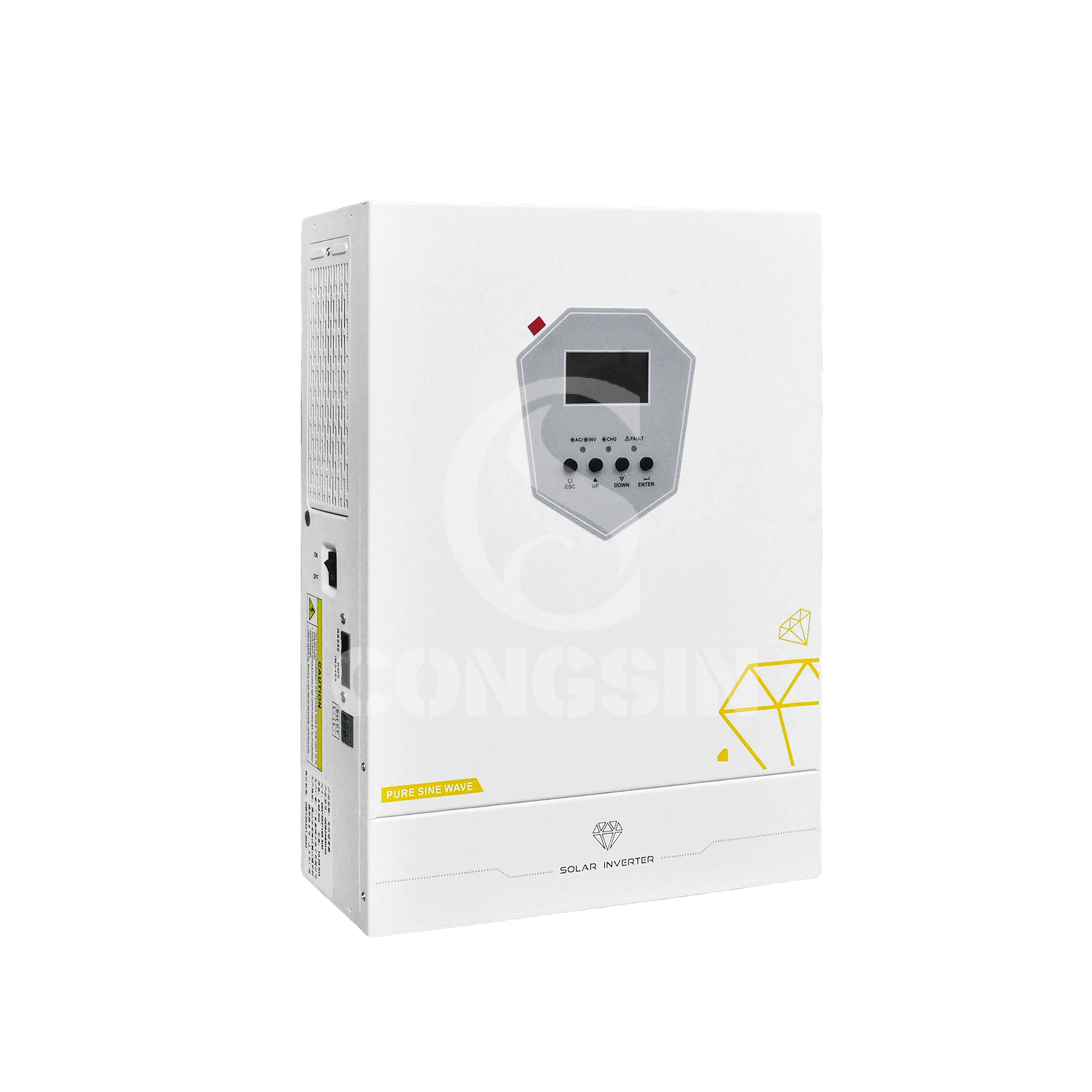
Factory Direct Sales 6000W Hybrid Solar Power Inverter with Controller and LCD Display
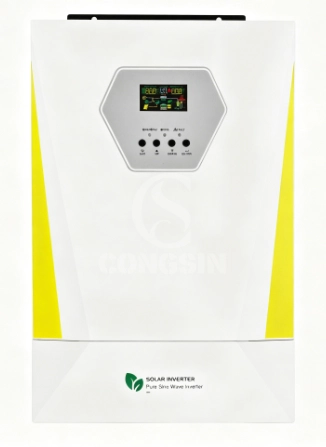
Congsin 4000W and 6000W Hybrid Inverter with Controller with LCD Display and CE Certification Solar
Power your solar system efficiently with the Congsin 4000W and 6000W Hybrid Inverter. Featuring an integrated MPPT Controller, this CE Certified inverter ensures optimal energy conversion. Monitor performance effortlessly via the intuitive LCD Display. Reliable, powerful, and ready for your sustainable energy needs.
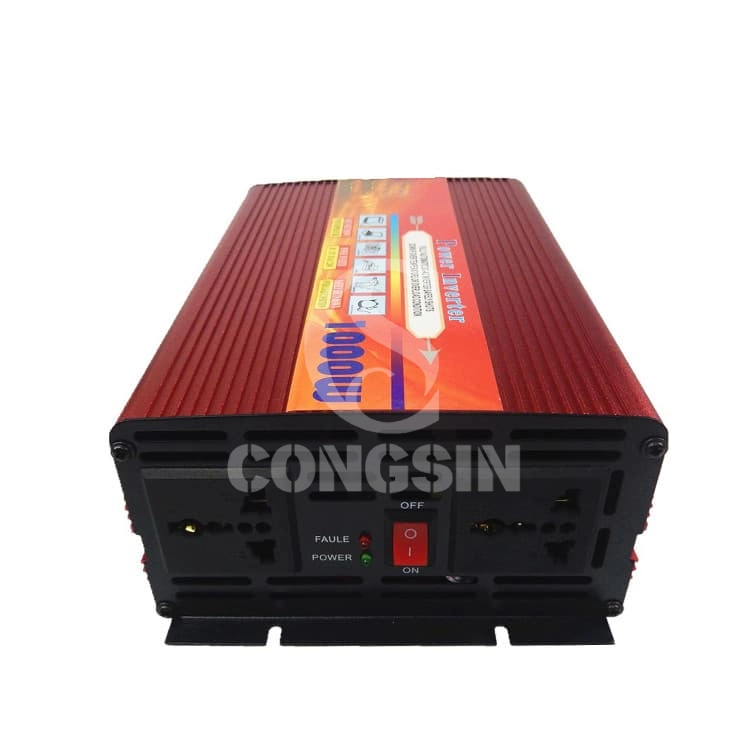
Congsin Manufacturer Wholesales Big Capability Modified Sine Wave Inverter with Red case and Double fan
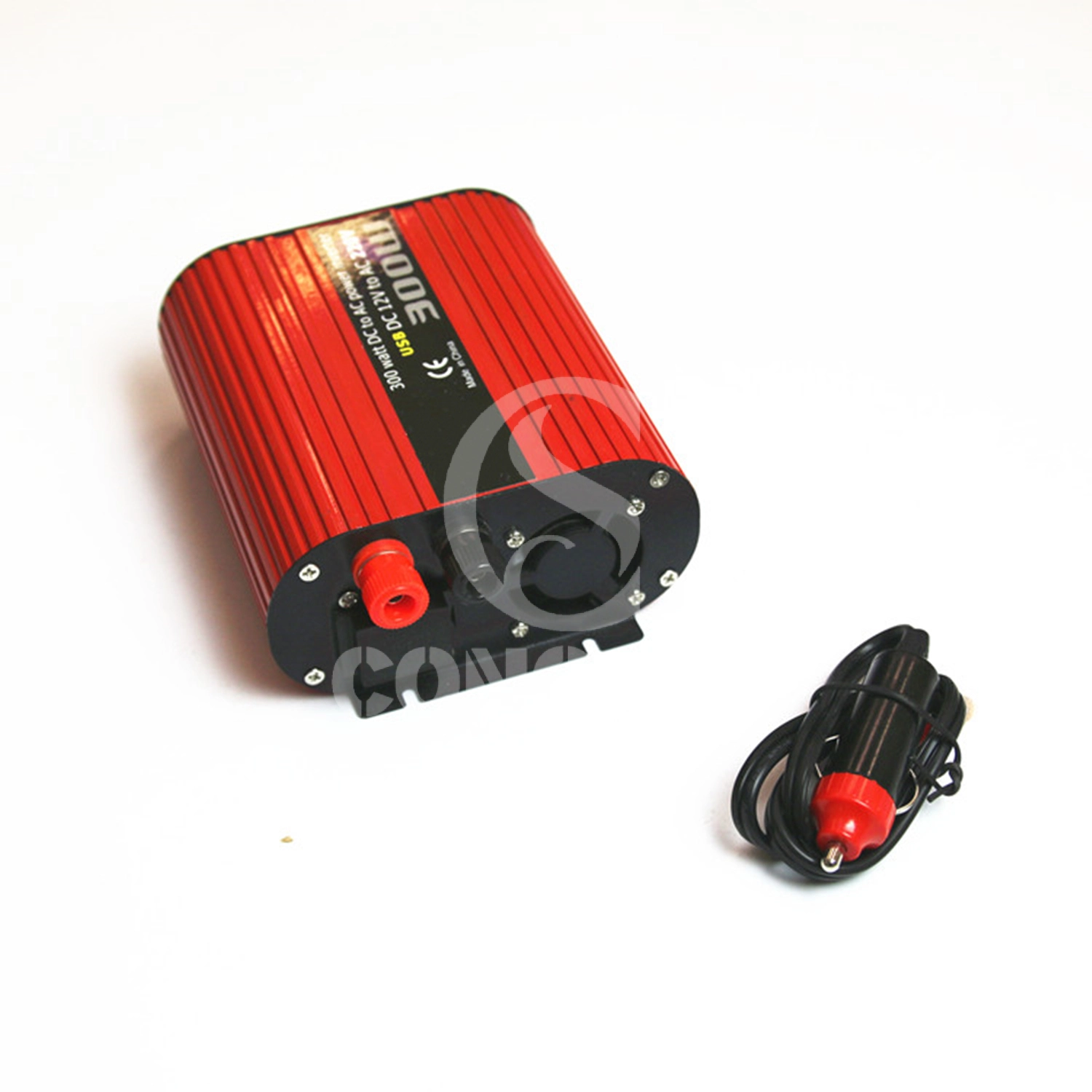
Factory Direct Sales Portable 150W Modified Sine Wave Inverter DC12V to AC220V Off-grid Sine Wave Inverter with Two USB and Universal Socket
Congsin's Portable 150W Modified Sine Wave Inverter powers your journey! This versatile Car Power Inverter with USB acts as a reliable 12V to 220V converter, ensuring an essential off-grid power supply. With dual USB ports and a universal socket, enjoy convenient power on the go.

CONGSIN is a trusted OEM factory for power inverters, solar charge controllers, and DC converters. Reliable solutions for global B2B buyers.
 High Quality
 7/24 Service
 Guaranteed Warranty
© 2025 Congsin. All Rights Reserved.
 WeChat
 Scan QR Code
sin cong
teaimei10
Whatsapp: +8618028086791
Scan QR Code