





How to Choose a Pure Sine Car Inverter for Vehicles
- Why waveform quality matters more than you think
- Electrical compatibility and device tolerance
- Appliance safety, EMI and long-term reliability
- Sizing and electrical specifications
- Continuous vs peak (surge) power
- Voltage, battery capacity and duty cycle
- Features, protections and build quality
- Efficiency, cooling and thermal management
- Protections, certifications and compliance
- Installation, wiring and practical considerations
- Wiring, fusing and location
- EMI mitigation, load balancing and multi-inverter systems
- Comparative tables: pure sine vs modified sine and sizing guidelines
- Choosing a supplier and verifying claims
- Why manufacturer credentials matter
- Where I recommend looking for evidence
- Practical examples and my field-tested tips
- Example 1: Overnight mobile workstation
- Example 2: Service truck with power tools and compressor
- About Guangzhou Congsin and why I trust their vehicle inverters
- Maintenance, troubleshooting and lifecycle considerations
- Routine checks and preventive maintenance
- Common faults and fixes
- FAQs
- 1. Do I always need a pure sine inverter for my car?
- 2. How do I size the inverter for my vehicle appliances?
- 3. Can I run my inverter while the engine is off?
- 4. What certifications should I require?
- 5. How important is inverter efficiency for vehicle use?
- 6. Can I parallel inverters to increase power?
- Contact and next steps
As someone who has specified and deployed vehicle power systems for commercial fleets, RVs and field operations for many years, I know the value of choosing the right car inverter pure sine wave. In vehicles, power quality, reliability and thermal performance directly affect the safety and lifespan of your appliances and electronics. This article gives a step-by-step framework for selecting a pure sine (true sine) inverter for cars, trucks, RVs or mobile workstations—covering sizing, waveform importance, compatibility, certifications, installation and maintenance—backed by industry references and practical examples.
Why waveform quality matters more than you think
Electrical compatibility and device tolerance
Pure sine wave inverters output AC power that closely matches utility mains (a smooth sinusoidal waveform). Many sensitive devices—laptop power supplies, variable-speed motors, active power supplies, medical equipment and some chargers—require a clean sine wave to operate correctly. Using a lower-quality waveform (e.g., modified sine wave) can cause excess heat, electrical noise, humming, reduced efficiency or even damage in sensitive electronics.
The technical rationale is that a non-sinusoidal waveform has harmonics and rapid voltage transitions that increase losses in inductive loads and cause improper operation of electronic controls. You can read more about inverter technology and waveform impacts in the general inverter overview on Wikipedia: Inverter (electrical) — Wikipedia.
Appliance safety, EMI and long-term reliability
Pure sine (true sine) inverters reduce electromagnetic interference (EMI) and voltage spikes that shorten equipment life. For example, compressors in portable refrigerators or HVAC units run smoother on pure sine outputs; chargers deliver correct charging algorithms; audio equipment has less hiss and distortion. If you depend on electronics for work—medical devices, communications gear, or precision tools—the extra upfront cost for a car inverter pure sine wave is often justified by lower long-term risk and repair costs.
Sizing and electrical specifications
Continuous vs peak (surge) power
Choosing the right inverter begins with load assessment. Two power ratings matter:
- Continuous power: the maximum load the inverter can sustain indefinitely (typically given in watts).
- Peak (surge) power: the short-term power an inverter can supply for motor starts or capacitive loads (usually for a few milliseconds to seconds).
Many appliances list starting watt and running watt. For example, a refrigerator may need 800 W to start but only 120 W to run. When selecting a car inverter pure sine wave, size the continuous rating above the sum of running watts and ensure the peak rating covers motor starts or inrush currents. A common rule: allow 20–30% headroom above expected continuous load to avoid running the inverter at its thermal limits.
Voltage, battery capacity and duty cycle
Match the inverter input voltage to your vehicle battery system (12 V, 24 V or 48 V). Larger power draws and longer runtimes benefit from higher system voltages (24 V/48 V) to reduce cable losses and required current. Use this calculation to estimate current draw from the battery:
Battery DC current (A) = AC power (W) / (DC voltage × inverter efficiency)
Example: a 1000 W inverter at 12 V with 90% efficiency draws approximately 1000 / (12 × 0.9) ≈ 93 A—so battery capacity, cabling and alternator charging strategy must accommodate that current.
Battery state-of-charge, alternator output, and whether you’ll be running while the engine is off are critical considerations. For extended off-grid use, pair the inverter with suitable battery capacity (Ah) or a portable power station sized for expected runtime.
Features, protections and build quality
Efficiency, cooling and thermal management
Efficiency affects battery runtime and heat generation. High-quality pure sine inverters commonly reach 90–95% peak efficiencies for continuous loads; exact numbers vary by model and load percentage. Efficiency charts in manufacturer datasheets show that efficiency typically peaks at 50–75% load and declines at very low or very high loads. High thermal performance and intelligent cooling (variable-speed fans, thermal derating strategies) are especially important for vehicle use, where ambient temperatures can be high. For an overview of inverter performance and design tradeoffs see Inverter (electrical) — Wikipedia.
Protections, certifications and compliance
Ensure the inverter includes protections for short-circuit, overload, over-temperature, low-voltage and over-voltage. For vehicle installations, look for additional safety features such as automatic shutdown when battery voltage drops below a safe threshold and automatic restart after a transient. Certifications (CE, EMC, LVD, FCC, RoHS, ETL, E-MARK) indicate compliance with regional safety and electromagnetic compatibility standards. If you need assurance around quality systems, ISO 9001 certification shows that a manufacturer operates with consistent quality processes—read more at ISO 9001 — ISO.
Installation, wiring and practical considerations
Wiring, fusing and location
Vehicle installations require short, heavy-gauge DC cables between battery and inverter to reduce voltage drop and heating. Use appropriately rated inline fuses or circuit breakers as close to the battery as possible to protect against faults. Grounding and mounting location matter: place the inverter where airflow is adequate and away from combustible materials; secure it to reduce vibration and movement.
EMI mitigation, load balancing and multi-inverter systems
In vehicles with multiple inverters or alternator-powered charging systems, consider EMI filtering and DC surge mitigation. For high-power configurations, use parallel-capable inverters or a single larger inverter to avoid asynchronous outputs. If you plan to integrate solar charging or portable power stations, verify compatibility with charge controllers and transfer switches to avoid harmful interactions.
Comparative tables: pure sine vs modified sine and sizing guidelines
Below I present compact, practical comparison and sizing guidance to help you quickly evaluate options.
| Feature | Pure Sine Wave | Modified Sine Wave |
|---|---|---|
| Waveform quality | Clean sinusoidal output, like grid power | Stepped waveform with harmonics |
| Device compatibility | All appliances, sensitive electronics, motors, chargers | Basic resistive loads, simple tools; not ideal for sensitive or motor-driven devices |
| Cost | Higher | Lower |
| Efficiency (typical) | 90–95% (high-quality units) | 80–90% (varies) |
| Recommended for | Mobile offices, medical equipment, laptops, compressors, audio/video | Simple lamps, heating elements, occasional power tools |
Data source: general inverter technology summaries and manufacturer datasheets; see inverter principles at Wikipedia.
| Appliance | Approx. Running Watts | Approx. Starting Watts | Suggested Inverter Continuous Rating |
|---|---|---|---|
| Laptop charger | 60–120 W | 120–200 W | 300 W |
| Portable fridge / mini compressor | 40–120 W | 200–800 W | 800–1500 W (with 1000–2000 W surge) |
| Power tools (drill) | 300–800 W | 800–1500 W | 1500–2000 W |
| Small microwave | 700–1000 W | 700–1000 W | 1500–2000 W |
These are practical guidelines; always check appliance labels and add margin. If unspecified, measure with a clamp meter or use inrush-measurement equipment for motors.
Choosing a supplier and verifying claims
Why manufacturer credentials matter
Supplier transparency on testing, production and certifications helps you verify that the car inverter pure sine wave will perform as specified. Factory automation and in-house R&D indicate consistent quality and the ability to customize for specific vehicle or OEM requirements. Request datasheets, efficiency curves and test reports (e.g., thermal, EMC) before purchase.
Where I recommend looking for evidence
Ask for independent test reports or third-party certifications (ETL, CE/EMC, FCC). Confirm quality-management systems (ISO 9001) and patents if innovation or IP protection are relevant. For compliance and standards context, ISO information is at ISO 9001 — ISO.
Practical examples and my field-tested tips
Example 1: Overnight mobile workstation
Scenario: I needed reliable power for a laptop, small monitor, LED lights and a Wi-Fi router during long stakeouts. Combined continuous load was ~200–300 W, occasional peak for router surge. I chose a 500 W pure sine inverter with 1200 W surge capability and a dedicated deep-cycle battery bank. This provided stable power, low EMI for communications and efficient charging while driving.
Example 2: Service truck with power tools and compressor
For a service truck that operates pneumatic tools and a portable compressor, I specified a 3000 W continuous pure sine inverter (with 6000 W surge) on a 24 V system to reduce DC current and cable size. Cooling ducts and vibration mounts were added to ensure reliability in harsh duty cycles.
About Guangzhou Congsin and why I trust their vehicle inverters
Guangzhou Congsin Electronic Technology Co., Ltd., founded in early 1998, is a professional power inverter manufacturer with over 27 years of focused experience. We design, R&D and manufacture a wide range of power solutions—with a core emphasis on DC→AC power inverters, portable power stations, and solar charge controllers. Our catalog includes 100+ models tailored for vehicles, solar systems, RVs and trucks, off-grid homes, outdoor offices, patrol and field construction work.
We operate fully automated production lines, advanced instrumentation and multifunctional testing equipment to ensure product reliability, efficiency and intelligent functionality. Environmental and safety compliance are built in: our quality system is ISO9001 certified and many products hold international approvals such as CE, EMC, LVD, ETL, FCC, RoHS and E-MARK. Several independently developed patents further demonstrate our commitment to innovation.
Congsin’s products serve global markets across Europe, the Americas, the Middle East, Africa and Southeast Asia; many models are supplied to domestic and international OEM channels. Our support includes OEM/ODM, private labeling, distribution and bespoke customization to meet partner specifications.
Our mission is to deliver reliable, efficient and affordable energy solutions that enable energy independence.
Key product lines: Solar Charge Controller, modified sine wave inverter, pure sine wave inverter, portable power stations. For vehicle applications, Congsin’s inverter range offers models specifically engineered for automotive environments: wide input-voltage tolerance, robust surge capacity, integrated protections and automotive-grade connectors. Their production scale and certifications make them a strong partner for OEMs and distributors seeking consistent quality and customization.
Maintenance, troubleshooting and lifecycle considerations
Routine checks and preventive maintenance
Perform regular inspections on DC cables, terminals and mounting hardware. Check for corrosion, frayed insulation, loose connections and dust accumulation in cooling fins or fan intakes. Update firmware for smart inverters if applicable and review log files for repeated alarms that indicate a systemic issue.
Common faults and fixes
Symptom: Inverter shuts down under load. Possible causes: low battery voltage, overheating, or overload. Actions: confirm battery SOC and cable integrity; check ventilation and derating; reduce load and measure input voltage under load. Symptom: Appliances hum or heat up. Possible cause: non-sinusoidal output or EMI—consider switching to a pure sine inverter if currently using a modified sine unit.
FAQs
1. Do I always need a pure sine inverter for my car?
If you only run resistive loads like incandescent heaters or simple lamps, a modified sine inverter may suffice. However, for laptops, chargers, motor-driven appliances, audio equipment or any sensitive electronics, I recommend a car inverter pure sine wave to avoid issues and prolong device life.
2. How do I size the inverter for my vehicle appliances?
Sum the continuous running watts of all appliances, add headroom (20–30%), and ensure the inverter’s surge rating covers the highest starting watt. Check battery capacity and DC current draw using the formula: Battery Current = AC Watts / (DC Voltage × Efficiency).
3. Can I run my inverter while the engine is off?
Yes, but be mindful of battery capacity and state-of-charge. For long off-engine runtimes, use deep-cycle batteries, a secondary auxiliary battery, or a portable power station. Also consider low-voltage shutdown settings to protect your starting battery.
4. What certifications should I require?
Look for CE/EMC, LVD, FCC, ETL, RoHS and region-specific marks (e.g., E-MARK for automotive use). Also verify the manufacturer’s quality systems like ISO 9001. Certification documents and test reports should be available on request.
5. How important is inverter efficiency for vehicle use?
Very important: higher efficiency means less battery drain and less heat. For vehicle applications where battery capacity is limited, a high-efficiency pure sine inverter (90–95% typical) improves runtime and reduces cooling needs.
6. Can I parallel inverters to increase power?
Some inverter models support parallel operation—consult the manufacturer. Parallel setups require matched models and careful synchronization to avoid phase or load-sharing problems. For high power, it’s often simpler and more reliable to specify a single larger inverter.
Contact and next steps
If you need help selecting the right car inverter pure sine wave for your vehicle, fleet or OEM project, contact our sales and technical support team to discuss load calculations, wiring strategies and available model options. View our product catalog or request OEM/ODM support to get a tailored solution that fits your vehicle platform and operational profile.
Contact us to request datasheets, efficiency curves, certification documents and pricing—our engineers will help size and specify the ideal inverter for your needs.
Maintenance and Troubleshooting for 24V Off-Grid Inverters
Reliability, Testing and Certifications for HF Inverters
Top 10 modified sine wave inverter Manufacturers and Supplier Brands in 2026
How to Size a Pure Sine Wave Car Inverter for Your Vehicle
Modified Sine Wave Inverters
Can other input voltages be customized?
Yes, the regular is DC12V, and DC24V, etc. can be customized. Please consult customer service for details.
Pure Sine Wave Inverters
What capacity battery is needed to meet long-term use?
It needs to be calculated according to the total power of the device, the formula is "Battery Capacity (Ah) = Total Device Power (W) × Usage Time (h) ÷ Input Voltage (12V)". For example, to drive a 1000W device for 5 hours, the required battery capacity = 1000×5÷12≈417Ah, it is recommended to use 2 200Ah batteries in parallel (total capacity 400Ah, actual usage about 4.8 hours).
Is the remote control standard?
It’s optional and available upon request.
What happens if the positive and negative poles are reversed when connecting the battery?
The device features built-in reverse polarity protection. If the positive and negative terminals are connected incorrectly, the circuit will automatically disconnect to prevent damage to the equipment. Simply adjust the battery clip connections (red clip to positive terminal, black clip to negative terminal), then restore power to resume normal operation.
Distributor
Do you provide marketing and sales materials?
Yes, we provide a range of marketing resources, including brochures, digital content, and product training.
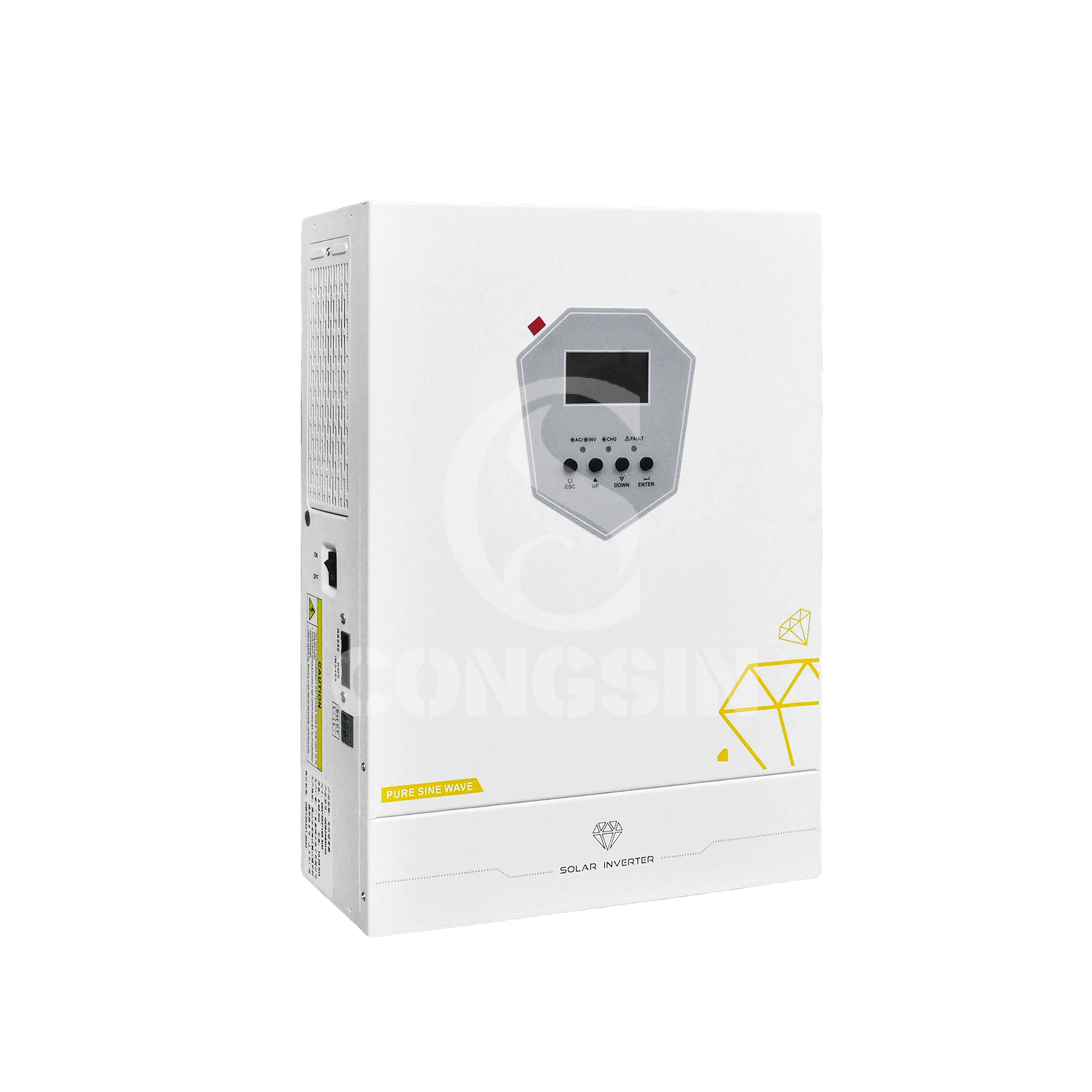
Factory Direct Sales 6000W Hybrid Solar Power Inverter with Controller and LCD Display
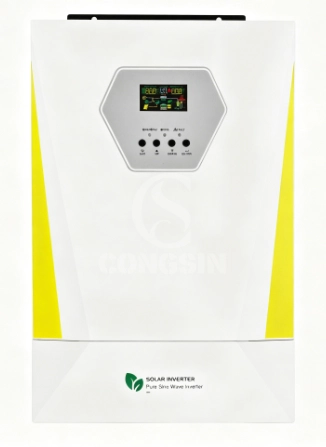
Congsin 4000W and 6000W Hybrid Inverter with Controller with LCD Display and CE Certification Solar
Power your solar system efficiently with the Congsin 4000W and 6000W Hybrid Inverter. Featuring an integrated MPPT Controller, this CE Certified inverter ensures optimal energy conversion. Monitor performance effortlessly via the intuitive LCD Display. Reliable, powerful, and ready for your sustainable energy needs.
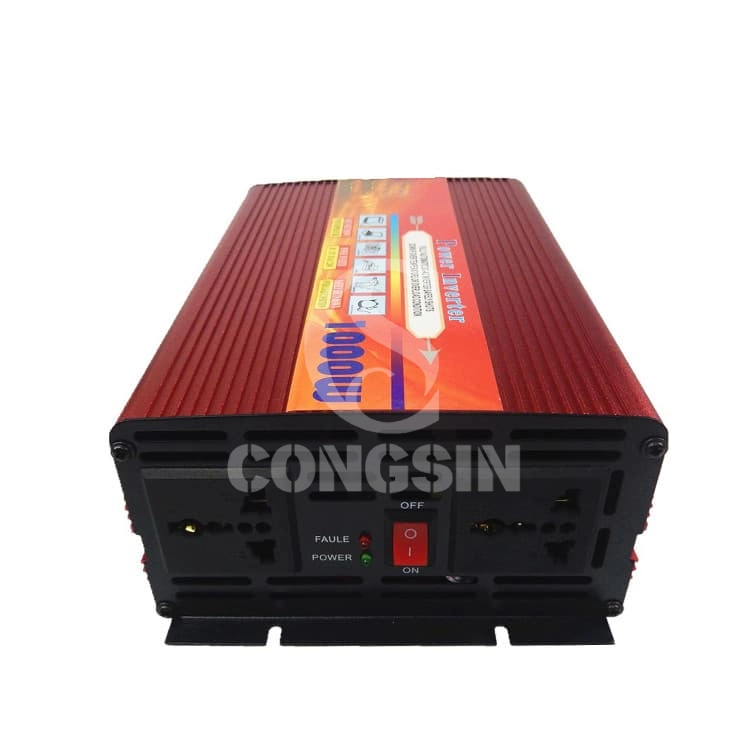
Congsin Manufacturer Wholesales Big Capability Modified Sine Wave Inverter with Red case and Double fan
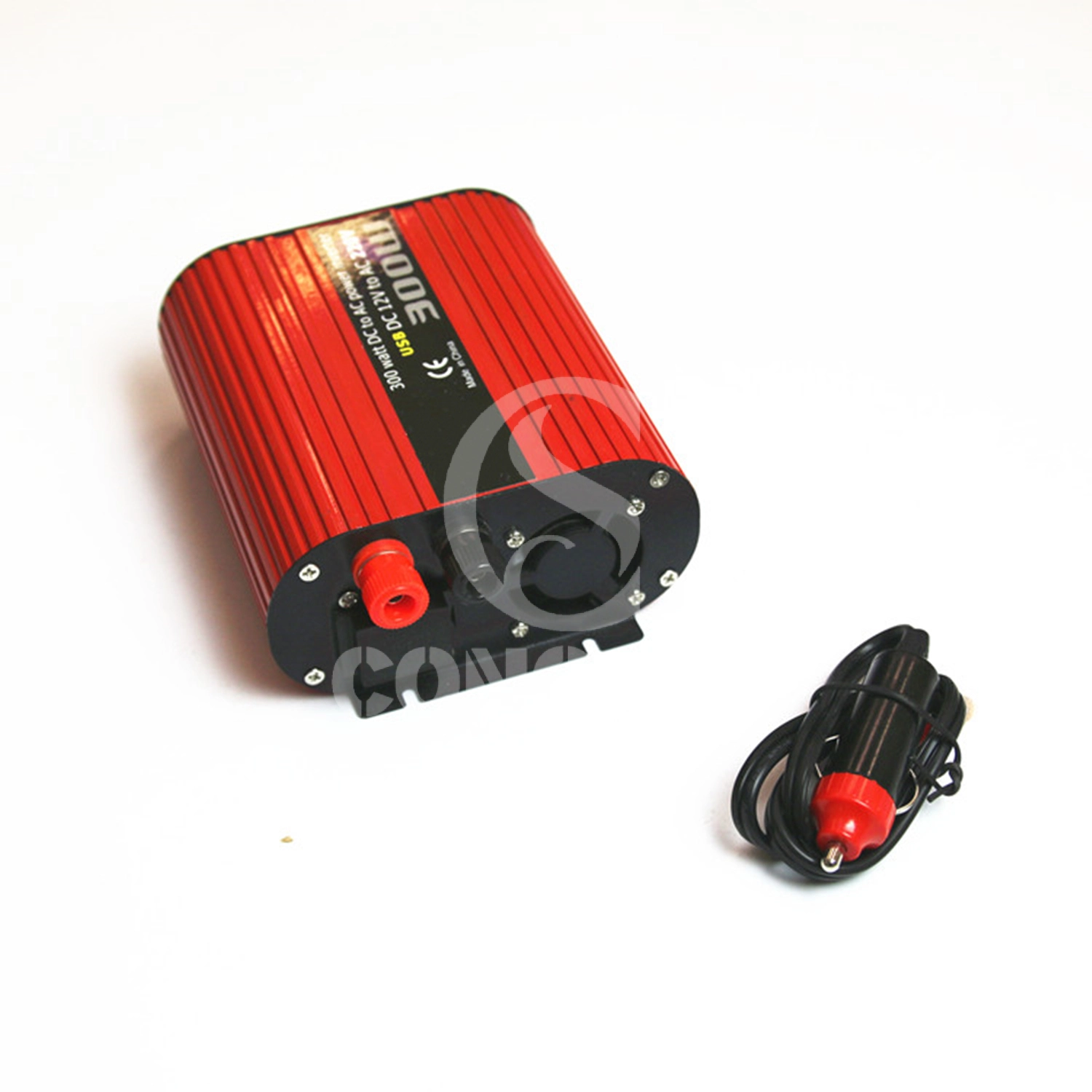
Factory Direct Sales Portable 150W Modified Sine Wave Inverter DC12V to AC220V Off-grid Sine Wave Inverter with Two USB and Universal Socket
Congsin's Portable 150W Modified Sine Wave Inverter powers your journey! This versatile Car Power Inverter with USB acts as a reliable 12V to 220V converter, ensuring an essential off-grid power supply. With dual USB ports and a universal socket, enjoy convenient power on the go.

CONGSIN is a trusted OEM factory for power inverters, solar charge controllers, and DC converters. Reliable solutions for global B2B buyers.
 High Quality
 7/24 Service
 Guaranteed Warranty
© 2025 Congsin. All Rights Reserved.
 WeChat
 Scan QR Code
sin cong
teaimei10
Whatsapp: +8618028086791
Scan QR Code