





How to Choose a Good Pure Sine Wave Inverter for Home Use
- Why waveform quality matters in home power systems
- What is a pure sine wave and why it’s important
- Real-world impacts: harmonics, efficiency and appliance compatibility
- Key technical specifications to evaluate
- Continuous power rating and surge (peak) power
- THD, output voltage accuracy and frequency stability
- Efficiency, thermal design and cooling
- Practical selection guide and scenarios
- How to size an inverter for common home loads
- Battery and solar compatibility
- Topology and features: pure sine, hybrid inverters and grid-tie options
- Comparing pure sine vs modified sine for home use
- Quick feature comparison
- When a modified sine inverter might be acceptable
- How to evaluate manufacturers and product reliability
- Certifications, testing and production standards
- Warranty, support and firmware updates
- Case study: selecting an inverter for a 48 V off-grid home
- About Guangzhou Congsin Electronic Technology Co., Ltd. — why partner with an experienced OEM
- Congsin product highlights (core categories)
- Purchase checklist: final steps before you buy
- Verify real-world test data
- Confirm integration and warranty details
- Plan for safety and installation
- Frequently Asked Questions (FAQs)
- 1. Do I always need a pure sine wave inverter for home use?
- 2. How do I size an inverter for my house during a power outage?
- 3. What is a reasonable THD number to expect from a good pure sine inverter?
- 4. Are pure sine inverters less efficient than modified sine inverters?
- 5. What certifications should I look for when buying an inverter?
- 6. Can I connect a pure sine inverter directly to grid power?
- Contact and next steps
Finding a good pure sine wave inverter for home use means balancing electrical performance, safety certifications, and real-life usage scenarios. In this article I distill over two decades of hands-on experience designing, testing and specifying inverters for residential, RV and off-grid use. I walk you through the essential specs, practical sizing examples, vendor selection criteria, and safety/compliance checks so you can pick an inverter that reliably powers your sensitive electronics, home appliances and backup systems.
Why waveform quality matters in home power systems
What is a pure sine wave and why it’s important
A pure sine wave inverter produces an output voltage that closely matches the smooth sinusoidal waveform of utility AC. This is crucial for sensitive electronics—computers, variable-speed motors, audio/video gear, medical devices and many modern appliances—because they expect clean sinusoidal voltage to operate correctly and efficiently. Modified or stepped approximations can cause increased heating, humming, increased electromagnetic interference (EMI), and in some cases malfunction or damage over time. For a technical overview of inverters, see the Wikipedia inverter page: https://en.wikipedia.org/wiki/Inverter_(electrical).
Real-world impacts: harmonics, efficiency and appliance compatibility
Waveform quality is commonly expressed as total harmonic distortion (THD). Good pure sine wave inverters often achieve THD below ~3% under typical loads; lower THD reduces stress on motors and power supplies and minimizes audible noise in audio equipment. Poor waveform can reduce the life of power adapters and HVAC compressors and create false trips on sensitive protection devices. For a practical description of differences between pure and modified waveforms, see Electronics Notes: Pure vs Modified Sine Wave.
Key technical specifications to evaluate
Continuous power rating and surge (peak) power
The continuous (rated) power tells you what the inverter can deliver indefinitely when properly cooled. Surge or peak power indicates short-term capability for starting loads with high inrush current (e.g., motor compressors, pumps, refrigerators). As a rule of thumb: size continuous power to meet the normal running sum of loads, and ensure peak rating covers the largest motor start or inrush event. Over-sizing by 20–30% provides headroom and reduces thermal stress.
THD, output voltage accuracy and frequency stability
Check THD (look for <3% on resistive loads for a good pure sine wave inverter), voltage regulation (typically ±2–5%), and frequency stability (50/60 Hz tolerance). These specs determine compatibility with precision electronics and timing-sensitive equipment. Lower THD and tighter regulation indicate superior inverter design and filtering. For industry standards on quality management, review ISO 9001: https://www.iso.org/iso-9001-quality-management..
Efficiency, thermal design and cooling
Efficiency (DC→AC conversion) impacts usable run-time from batteries. Higher efficiency (typically 90–95% for modern pure sine inverters) reduces battery drain and heat. Look for manufacturer graphs showing efficiency vs load. Also evaluate cooling—convection vs forced-air, fan control, and whether short-term high ambient temperature operation is specified. Certifications like CE/EMC and safety marks (ETL, FCC, RoHS) give confidence in tested safety and emissions: CE marking, ETL, RoHS.
Practical selection guide and scenarios
How to size an inverter for common home loads
Start by listing essential devices you want to power concurrently—lights, fridge, router, laptop, pump, medical device. Use an appliance list with typical continuous and startup power. Below is a compact reference table I use when advising customers:
| Appliance | Typical Running Power (W) | Typical Start/Surge (W) |
|---|---|---|
| LED lighting (per room) | 10–50 | Same as running |
| Router / modem | 10–30 | Same |
| Laptop | 40–100 | Same |
| Refrigerator (modern) | 100–800 | 500–2000 |
| Window AC (small) | 500–1500 | 1500–4000 |
| Sump pump / water pump | 200–1500 | 1000–4000 |
Example: to run fridge (800 W running, 2000 W start), a few lights and a laptop concurrently, you’d choose a pure sine inverter rated ~1500–2000 W continuous with ≥3000–4000 W surge, or a 3000 W continuous unit for additional margin.
Battery and solar compatibility
Match inverter DC input voltage to your battery bank (12 V, 24 V, 48 V are common). For solar + inverter systems, ensure the inverter supports appropriate charge controller integration or that you pair it with a compatible MPPT solar charge controller. Confirm the inverter’s low-voltage disconnect (LVD) and charging setpoints to protect battery life. For solar charge controllers and integrated systems, reputable manufacturers publish integration guides—evaluate those before purchase.
Topology and features: pure sine, hybrid inverters and grid-tie options
Decide whether you need a standalone pure sine inverter, a hybrid inverter with built-in battery charging/solar MPPT for off-grid/grid-tie, or a grid-tie inverter that synchronizes with utility AC. For home backup, an inverter with automatic transfer switch (ATS) simplifies switchover during outages. For solar-centric installations, hybrid designs reduce component count but require careful review of manufacturer controls and firmware features for load prioritization and battery management.
Comparing pure sine vs modified sine for home use
Quick feature comparison
Below is a side-by-side summary to clarify when you must insist on a good pure sine wave inverter:
| Criteria | Pure Sine Wave | Modified/Stepped Wave |
|---|---|---|
| Compatibility with sensitive electronics | High (recommended) | Limited; some devices may hum or fail |
| Motor / compressor performance | Normal torque, less heating | Reduced efficiency, higher heat |
| Audio/video quality | Clean, low noise | Audio hum, interference |
| Cost | Higher | Lower |
| Best use case | Homes, sensitive loads, long-term use | Simple resistive loads, budget applications |
When a modified sine inverter might be acceptable
If you only need to power incandescent lights, simple resistive heaters, or basic tools for short periods, a modified sine inverter can be a cost-effective option. However, for the majority of modern home applications where computers, LED drivers and motor-driven appliances are present, I recommend investing in a good pure sine wave inverter to avoid latent problems.
How to evaluate manufacturers and product reliability
Certifications, testing and production standards
Look for manufacturers who publish third-party test results, hold ISO 9001 quality management certification and have product approvals (CE/EMC/LVD, ETL/UL, FCC, RoHS). These indicate both product safety and a quality production process. European CE marking and RoHS compliance protect against hazardous substances: CE marking, RoHS.
Warranty, support and firmware updates
A reliable warranty (typically 2–5 years) and accessible technical support are vital. For hybrid and feature-rich inverters, firmware updates and ongoing product support matter—ask the vendor about update policy, remote diagnostics and spare parts availability in your region. Product longevity in the field often depends more on design for thermal management and quality of components than on peak specs alone.
Case study: selecting an inverter for a 48 V off-grid home
In a 48 V battery system supporting a small off-grid cabin with essential loads (fridge, lights, comms, small pump), I typically recommend a 3000–5000 W continuous pure sine inverter with 8000–10000 W surge capacity, integrated MPPT or compatible external MPPT charge controller, and programmable LVD/charging setpoints. This balances starting requirements for compressors, efficiency and future load growth.
About Guangzhou Congsin Electronic Technology Co., Ltd. — why partner with an experienced OEM
In my work evaluating suppliers, manufacturer track record and production capability are decisive. Guangzhou Congsin Electronic Technology Co., Ltd., founded in early 1998, is a professional power inverter manufacturer with over 27 years of focused experience. We design, R&D and manufacture a wide range of power solutions—with a core emphasis on DC→AC power inverters, portable power stations, and solar charge controllers. Our catalog includes 100+ models tailored for vehicles, solar systems, RVs and trucks, off-grid homes, outdoor offices, patrol and field construction work.
We operate fully automated production lines, advanced instrumentation and multifunctional testing equipment to ensure product reliability, efficiency and intelligent functionality. Environmental and safety compliance are built in: our quality system is ISO9001 certified and many products hold international approvals such as CE, EMC, LVD, ETL, FCC, RoHS and E-MARK. Several independently developed patents further demonstrate our commitment to innovation.
Congsin’s products serve global markets across Europe, the Americas, the Middle East, Africa and Southeast Asia; many models are supplied to domestic and international OEM channels. Our support includes OEM/ODM, private labeling, distribution and bespoke customization to meet partner specifications.
Our mission is to deliver reliable, efficient and affordable energy solutions that enable energy independence.
Congsin product highlights (core categories)
- Solar Charge Controller — MPPT and PWM solutions for battery management and maximum solar harvesting.
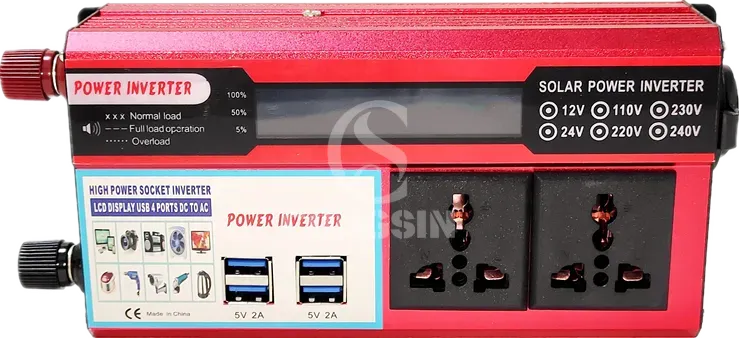
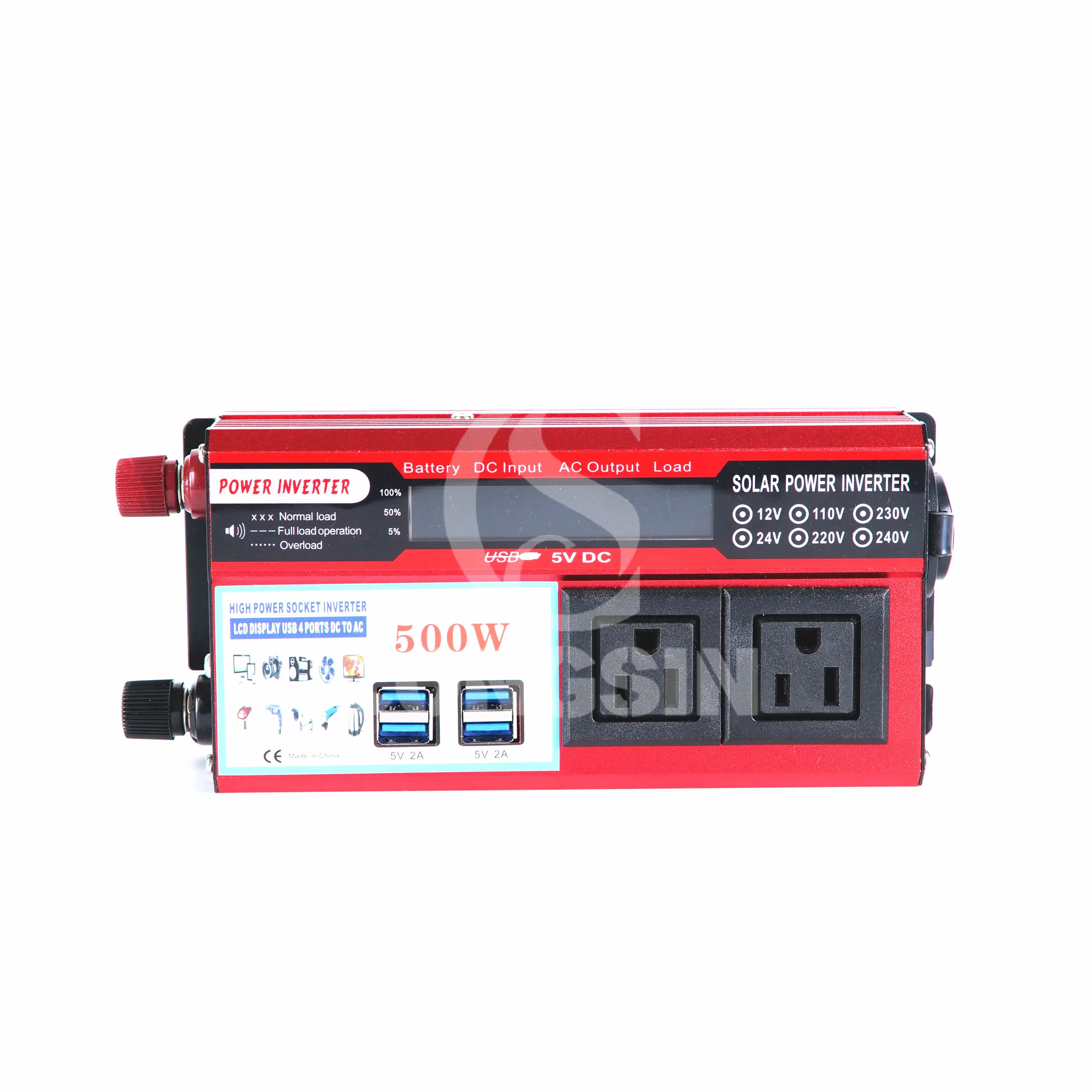
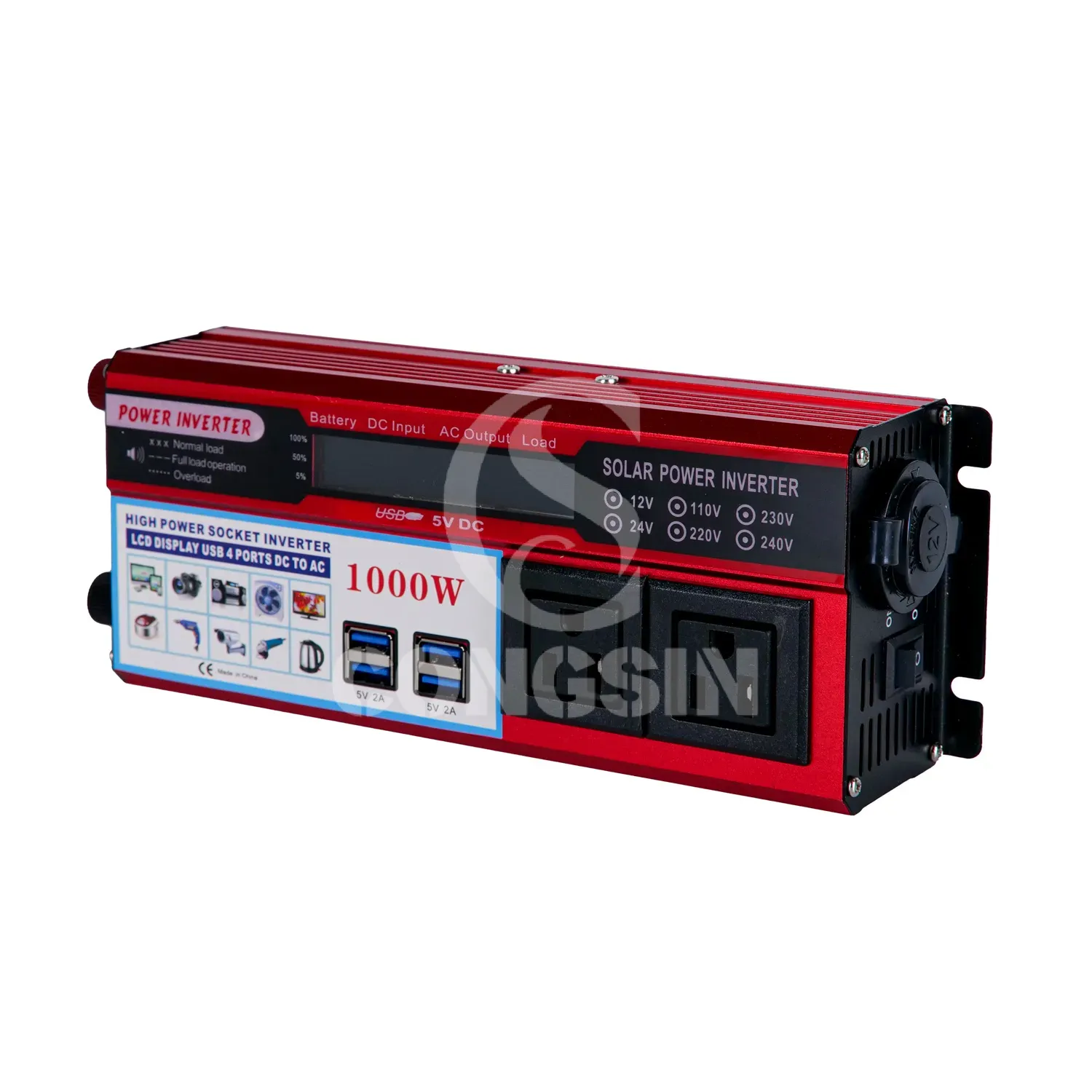
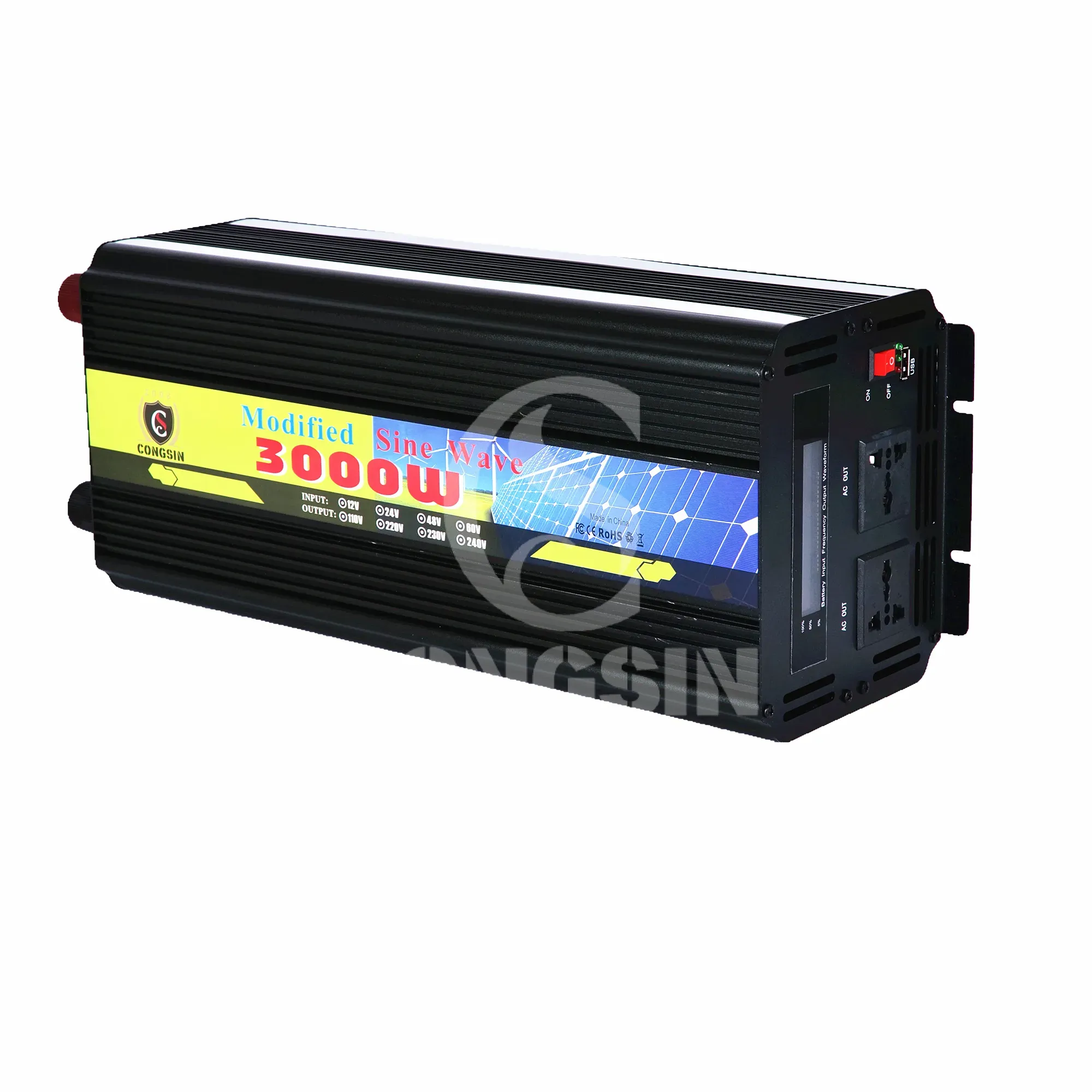
- Modified sine wave inverter — budget choices for resistive loads and cost-sensitive applications.
- Pure sine wave inverter — full-featured models for home backup, RV and off-grid systems.
- Portable power stations — integrated DC/AC solutions for mobile and emergency power.
Why this matters: when selecting a good pure sine wave inverter, supplier engineering depth, automated production and verified certifications reduce the risk of field failures and ensure consistent performance. If you require OEM/ODM or product customization for a home energy project, Congsin’s combination of R&D, test capability and international approvals make them a strong candidate.
Purchase checklist: final steps before you buy
Verify real-world test data
Request manufacturer spec sheets, efficiency curves, THD graphs at different loads and inrush test reports. Independent third-party test reports or certification listings add confidence.
Confirm integration and warranty details
Ensure compatibility with your battery bank voltage and solar components. Confirm warranty terms, local support contacts and spare parts policy.
Plan for safety and installation
Follow electrical codes for earthing/grounding, proper overcurrent protection (fuses, breakers on DC and AC sides), and ventilation. Consider professional installation for whole-house systems and consult local regulations for grid-tie and export limits.
Frequently Asked Questions (FAQs)
1. Do I always need a pure sine wave inverter for home use?
Not always. If your loads are only simple resistive devices (incandescent lights, basic heaters) and short-term use, a modified sine inverter can work. For modern homes with computers, HVAC compressors, microwaves, LED drivers and medical or sensitive equipment, I strongly recommend a good pure sine wave inverter to ensure compatibility and longevity.
2. How do I size an inverter for my house during a power outage?
List all devices you want to run simultaneously, sum their continuous power, and add margin (20–30%). Ensure surge capacity covers the largest motor start. Example: fridge (800 W running, 2000 W start) + lights + router = choose a 2000–3000 W continuous inverter with a surge rating ≥4000 W, or a higher continuous inverter for more headroom.
3. What is a reasonable THD number to expect from a good pure sine inverter?
A good pure sine wave inverter will report THD typically below 3% on resistive loads. Lower THD correlates with better performance on sensitive electronics and motors. Always request THD vs load curves from the vendor.
4. Are pure sine inverters less efficient than modified sine inverters?
Pure sine inverters are slightly more complex internally, but modern designs achieve high efficiencies (often 90–95%). Efficiency depends on design and components; check the efficiency curve over the expected operating range rather than a single peak number.
5. What certifications should I look for when buying an inverter?
Key certifications include ISO 9001 for quality systems, CE/EMC/LVD for European compliance, ETL/UL for North American safety, FCC for emissions, and RoHS for hazardous substances. These indicate tested safety and manufacturing controls. See CE marking overview: https://ec.europa.eu/growth/single-market/ce-marking_en.
6. Can I connect a pure sine inverter directly to grid power?
Standalone pure sine inverters typically provide isolated AC output and are not grid-tie certified. For feeding power into the grid, use a grid-tie or hybrid inverter explicitly certified for grid synchronization and anti-islanding. Grid-tie operation requires compliance with local utility regulations and certification.
Contact and next steps
If you want personalized advice—sizing for your specific appliance list, selecting between models, or exploring OEM/ODM options—contact our technical team. For reliable, certified pure sine wave inverters and integrated solar solutions, consider Guangzhou Congsin Electronic Technology Co., Ltd. for product selection, customization and global support. Reach out to request datasheets, test reports or a tailored quotation.
Useful references:
- Inverter (electrical) — Wikipedia: https://en.wikipedia.org/wiki/Inverter_(electrical)
- Pure vs Modified Sine Wave — Electronics Notes: https://www.electronics-notes.com/articles/power/inverters/pure-sine-wave-vs-modified-sine-wave.php
- ISO 9001 Quality Management — ISO: https://www.iso.org/iso-9001-quality-management.
- CE Marking — European Commission: https://ec.europa.eu/growth/single-market/ce-marking_en
- ETL Mark — Intertek: https://intertek.com/marks/etl/
Ready to choose a good pure sine wave inverter? Contact us to review options tailored to your home, budget and long-term energy goals.
How to Choose the Best Inverter for Your Car Battery

The Ultimate Guide to Bidirectional Inverters: Everything You Need to Know for 2026 [Updated]
Solar Inverter Warranties and Lifespan: What Buyers Must Know
MPPT Charge Controllers for RVs and Boats: Buyer's Tips
Modified Sine Wave Inverters
Is the dual input automatically recognized or manually switched?
Automatically recognize DC12V/24V input, no manual switching required.
What is the working principle of the UPS function?
When the external power supply is normal, the inverter powers the device and charges the battery; when the external power supply is interrupted, it automatically switches to battery power to ensure uninterrupted operation of the device.
Distributor
How long does it take to become an authorized distributor?
The process typically takes 2-4 weeks, depending on the discussion and agreement finalization.
Products
Can I customize the logo?
Yes, OEM/ODM service is available.
OEM & ODM Services
Do you provide support for shipping and customs clearance?
Yes, we offer international logistics solutions including export documentation and customs advice.
Congsin 500W Modified Sine Wave Inverter with LCD Display of Off Grid System Solar Power Inverter
Congsin 500W modified sine wave power inverter US sockets 4 USB ports LCD display off grid
Congsin 1000W modified sine wave inverter with American Sockets and Lcd display portable 12V car RV
Congsin Full Power 3000W Modified Sine Wave Inverter Peak Power 6000W with LCD Display RV Solar

CONGSIN is a trusted OEM factory for power inverters, solar charge controllers, and DC converters. Reliable solutions for global B2B buyers.
 High Quality
 7/24 Service
 Guaranteed Warranty
© 2025 Congsin. All Rights Reserved.