





2026 Ultimate Guide: How to Safely Use a Car Battery to Power an Inverter (Without Killing Your Alternator)
- Can You Safely Use a Car Battery to Power an Inverter?
- Quick Summary: 2026 Key Takeaways for Inverter Setups
- The Science: How Inverters Impact Your Car Battery and Alternator
- The Conversion Process and Efficiency Loss
- Alternator Duty Cycles and Overheating
- Step-by-Step Guide: Wiring an Inverter Directly to Your Battery
- Expert Tips: Common Mistakes That Kill Alternators
- Pure Sine Wave vs. Modified Sine Wave: What’s Best in 2026?
- Data Comparison: Inverter Waveforms
- Industry Leading Solutions from Congsin
- Conclusion
- FAQs About car battery to power inverter
- How big of an inverter can I put on my car battery?
- Will a 2000 watt inverter drain my car battery?
- Do I need to keep the car running while using a power inverter?
- What size inline fuse should I use between the battery and inverter?
- Can a power inverter damage my car's alternator?
- How long will a 12V car battery power a 1000W inverter?
- Is it better to connect the inverter to the battery or cigarette lighter?
- Why choose a pure sine wave inverter over a modified sine wave?
Can You Safely Use a Car Battery to Power an Inverter?

Yes, you can safely use a car battery to power inverter systems by matching the inverter's maximum wattage to your battery's safe discharge limits and the alternator's continuous output. While small inverters plug into 12V outlets, high-wattage units require a direct, heavy-duty battery connection.
When establishing a mobile power station, understanding your vehicle's electrical limits is critical. Your standard automotive battery is engineered to deliver high bursts of energy to crank the engine, not to sustain long, deep discharges. A proper car battery inverter setup acts as a bridge, transforming the 12V Direct Current (DC) stored in the battery into the 110V or 220V Alternating Current (AC) required by household appliances.
By implementing strict safety protocols, you can confidently run laptops, medical devices, and power tools while on the road. However, achieving safety relies heavily on a few core principles:
- Calculating Total Load: Knowing the precise wattage of your devices before plugging them in.
- Engine Operation Requirements: Running the vehicle for heavy loads to allow the alternator to actively generate power.
- Quality Components: Using certified, properly sized wiring and fuses to avoid catastrophic electrical fires.
Quick Summary: 2026 Key Takeaways for Inverter Setups
The most crucial takeaway for 2026 inverter setups is that standard car batteries are designed for short bursts of starting power, not continuous deep discharging. To avoid catastrophic damage, you must never exceed your alternator's idle rating and always use advanced sine wave technology.
As power demands increase in 2026, mobile workers, RV owners, and outdoor enthusiasts must adopt modern power management strategies. Relying on outdated advice can lead to dead batteries and expensive repair bills. Here are the core rules for a safe and effective power system:
- Understand Port Limits: Standard cigarette lighter ports max out at 150W to 300W due to strict 10A-15A vehicle fuses.
- Respect the Starter Battery: Standard lead-acid starter batteries will degrade rapidly if continually discharged below 80% capacity.
- Monitor the Alternator: Your alternator generates the actual sustained power when the engine runs. Do not exceed its continuous idle amperage rating.
- Prioritize Clean Power: Pure sine wave inverters are mandatory in 2026 for sensitive modern electronics, ensuring efficiency and safety.
The Science: How Inverters Impact Your Car Battery and Alternator
A power inverter draws direct current (DC) from your car battery and converts it to alternating current (AC), causing inherent efficiency losses and generating heat. This continuous heavy draw forces the vehicle's alternator to work at maximum capacity, which can lead to rapid overheating.
To master mobile power, you must understand the interaction between the battery, the DC to AC power inverter, and the alternator. Automotive alternators are designed to charge the battery and power the electrical system when the engine is running, replacing older DC dynamos for better efficiency, as reported by Wikipedia. However, these sophisticated components are highly vulnerable to abuse if misunderstood.
The Conversion Process and Efficiency Loss
An inverter utilizes internal switching mechanisms, transformers, and circuitry to simulate an alternating current. This conversion process is never 100% efficient; generally, 10% to 15% of the power is lost as heat. For example, if your AC device requires 1000 watts to run, the inverter is likely pulling 1150 watts from your vehicle’s electrical system. This invisible “tax” drains batteries faster than anticipated.
Alternator Duty Cycles and Overheating
The most common point of failure in any heavy-duty power setup is the vehicle's alternator. Alternators are rated for peak output at high cruising RPMs, not at engine idle.
- Idle Output Limitation: An alternator rated for 140 amps maximum output might only produce 50 to 70 amps when the car is idling in a parking lot.
- Overheating Risk: If an inverter pulls 100 amps while the car is idling, the alternator cannot keep up. It will run at 100% duty cycle, causing it to overheat and fail prematurely. Learning to protect alternator from inverter damage requires diligent load management and understanding your vehicle's specific idle output.
Step-by-Step Guide: Wiring an Inverter Directly to Your Battery
Wiring an inverter directly to your vehicle's battery involves calculating the correct AWG cable gauge, installing an inline fuse for safety, and securing a solid chassis ground. A proper direct connection ensures stable voltage delivery and prevents dangerous electrical fires during operation.
When moving beyond the 300-watt limit of a cigarette lighter plug, a direct-to-battery installation is absolutely required. Follow these professional steps to ensure safety and long-term reliability for your high-power setup.
- Calculate the Wire Size: Selecting the correct AWG cable gauge for inverter setups relies on the American Wire Gauge system, which is a standardized logarithmic stepped system used for determining a wire's current-carrying capacity, as reported by Wikipedia. If you run a 1000W inverter on a 12V system over a 10-foot distance, you will need at least a 2 AWG pure copper cable to prevent extreme voltage drops and melting insulation.
- Install an Inline Fuse: Place a high-quality inline fuse or DC circuit breaker as close to the positive battery terminal as possible (ideally within 12 to 18 inches). This protects the vehicle from catching fire if the positive cable ever shorts against the metal chassis.
- Route Cables Safely: Run the heavy-duty cables through the vehicle’s firewall using protective rubber grommets. This prevents the sharp metal edges of the vehicle frame from vibrating and slicing into the wire insulation over time.
- Establish a Chassis Ground: Connect the inverter's ground lug directly to a bare, unpainted metal point on the vehicle's chassis. This prevents electrical shock hazards and significantly reduces audio frequency noise.
- Perform Load Testing: Once connected, power on the inverter, apply a test load (like a 500W work light), and use a multimeter to monitor voltage drops across the system to ensure your crimps and connections are solid.
Expert Tips: Common Mistakes That Kill Alternators

The most common mistake that kills alternators is pulling a massive electrical load while the engine is idling, which overworks the alternator without adequate cooling airflow. Overloading the system forces it to produce maximum amperage continuously, destroying its internal diodes and bearings.
Even with premium components, user error can quickly destroy a vehicle's charging system. Avoid these critical mistakes to extend the lifespan of your vehicle:
- Cranking with a Loaded Inverter: Leaving a heavy appliance powered on while cranking the engine causes massive voltage spikes and sags. This damages both the inverter and the vehicle's sensitive Engine Control Unit (ECU).
- Ignoring Idle Limits: Pulling 120 amps to run a microwave or power tools when the alternator only generates 70 amps at idle will instantly begin draining the battery and overheating the alternator windings.
- Using Undersized Cables: Cheap, undersized wiring creates high electrical resistance. This forces the alternator to work harder to overcome the voltage drop, generating dangerous excess heat in the engine bay.
- Deep Cycling a Starter Battery: Standard automotive batteries have thin lead plates designed for high burst amps. Draining a standard car battery below 50% capacity causes rapid sulfation on the plates, permanently destroying its ability to hold a charge.
Pure Sine Wave vs. Modified Sine Wave: What’s Best in 2026?
In 2026, pure sine wave inverters are the absolute standard because they produce clean, smooth electricity identical to grid power, which is mandatory for modern sensitive electronics. Modified sine wave inverters produce a choppy output that can cause appliances to overheat or fail.
When evaluating pure sine wave vs modified sine wave inverters, the choice dictates the safety and longevity of your plugged-in devices. While modified models are cheaper, their blocky waveform creates excess electrical noise, interference, and heat.
Data Comparison: Inverter Waveforms
| Feature | Pure Sine Wave Inverter | Modified Sine Wave Inverter |
|---|---|---|
| Waveform Shape | Smooth, flowing, continuous curve | Blocky, stepped square wave |
| Best For | Laptops, medical CPAPs, variable motors | Basic heaters, old incandescent lights |
| Efficiency Rating | High (Less energy wasted as heat) | Lower (Excess heat generated in appliances) |
| Audio/Visual Noise | Silent, clean operation | Causes buzz in audio gear, lines on screens |
| Cost (2026 Average) | Higher upfront, but rapidly decreasing | Low budget, higher long-term replacement cost |
| Risk of Damage | Zero risk to modern electronics | High risk for microprocessors and compressors |
Investing in pure sine wave technology is the only way to ensure your expensive laptops, battery chargers, and power tools are not slowly degraded by "dirty" AC power.
Industry Leading Solutions from Congsin
Backed by over 27 years of manufacturing excellence, Congsin delivers professional-grade DC to AC pure sine wave inverters designed with intelligent load management. Our fully certified power solutions ensure energy independence while actively protecting your vehicle's sensitive electrical systems from overload.
Since early 1998, Guangzhou Congsin Electronic Technology Co., Ltd. has been at the forefront of the global mobile power industry. With a massive catalog of over 100 specialized models, we engineer our products to meet rigorous global safety and performance standards, holding prestigious ISO9001, CE, EMC, LVD, ETL, FCC, RoHS, and E-MARK certifications.
- Intelligent Protection: Our pure sine wave inverters feature sophisticated multi-layered protections, including automatic shut-offs for short circuits, over-temperature, and low battery voltage. This actively shields your vehicle's alternator and battery from user error.
- Versatile Applications: Whether you need a rugged, vibration-resistant setup for camping and RV use or a specialized, high-efficiency Power Inverter Tailored for Telecom Solutions, Congsin has a thoroughly tested and proven product for your specific application.
- Next-Gen Power Stations: For professionals pulling extreme wattage that would inevitably destroy a standard car alternator, our Portable Power Stations and Solar Charge Controllers offer dedicated, off-grid battery banks that keep your vehicle completely safe.
- Global OEM/ODM Partnerships: Operating fully automated production lines equipped with advanced instrumentation, we support extensive private labeling and bespoke customization for our global distribution partners across Europe, the Americas, and beyond.
Conclusion

Running an inverter from your vehicle is a highly effective way to gain mobile AC power, provided you manage your loads correctly and protect your alternator. Prioritizing proper wiring, correct fusing, and high-efficiency equipment guarantees safe and reliable energy on the go.
By following the 2026 standards of calculating precise AWG cable sizes, installing inline fuses, and upgrading to pure sine wave technology, you can comfortably enjoy all the comforts of grid power directly from your vehicle. Remember to avoid overtaxing your alternator at idle, monitor your battery voltage closely, and transition to dedicated auxiliary power systems for extreme electrical demands. Contact us today to optimize your car battery to power inverter strategy.
FAQs About car battery to power inverter
Navigating the technical requirements of mobile electrical systems can be challenging for both beginners and seasoned professionals. Below are the most frequently asked questions regarding the safe and efficient operation of car battery inverter setups.
How big of an inverter can I put on my car battery?
Most standard vehicle alternators can safely support up to a 1000W to 1500W inverter when the engine is running. To exceed this, you generally need an upgraded high-output alternator or a dedicated deep-cycle auxiliary battery bank.
Will a 2000 watt inverter drain my car battery?
Yes, a 2000W inverter drawing full power will pull over 160 amps from a 12V battery. If the engine is off, it will completely drain a standard car battery in a matter of minutes and potentially cause permanent damage to the battery cells.
Do I need to keep the car running while using a power inverter?
For small devices under 200W, you can use the battery for short periods with the engine off. For anything above 300W or extended use, the engine must be running so the alternator can supply continuous power and prevent battery depletion.
What size inline fuse should I use between the battery and inverter?
Divide your inverter's maximum wattage by your battery voltage (12V) and add 10-20% for a safety margin. For example, a 1000W inverter on a 12V system requires approximately a 100-amp to 120-amp inline fuse.
Can a power inverter damage my car's alternator?
Yes, if the inverter demands more amps than the alternator can produce at idle. Overworking the alternator forces it to run at maximum capacity continuously, leading to extreme heat buildup and premature failure.
How long will a 12V car battery power a 1000W inverter?
A typical 50Ah car battery provides about 600 watt-hours total. Running a 1000W load with the engine off will drain the battery past safe starting levels in less than 15-20 minutes.
Is it better to connect the inverter to the battery or cigarette lighter?
Cigarette lighters are strictly limited by 10-amp or 15-amp vehicle fuses, allowing a maximum of 150W to 200W. Any inverter intended for higher wattage must be connected directly to the battery with heavy-duty cables.
Why choose a pure sine wave inverter over a modified sine wave?
Pure sine wave inverters produce clean, smooth electricity identical to standard wall outlets. They are essential for running sensitive electronics, medical devices, and appliances with motors without causing interference or damage.

2026 Ultimate Guide: Why Off-Grid Hybrid Solar Inverters Are the Game-Changer You Need [Buyer's Checklist]
Choosing off-grid solar inverters for RVs, boats and tiny homes
Cost and ROI: Comparing Off-Grid Inverters and Solar Systems
Off-grid solar inverter efficiency, MPPT, and power ratings explained
Pure Sine Wave Inverters
Can it drive a 3P air conditioner and an electric oven at the same time?
Total power needs to be calculated: the rated power of a 3P air conditioner is about 2200W-2500W, and the electric oven is about 1500W-2000W. The total power is 3700W-4500W, which exceeds the 3000W continuous power, so simultaneous use is not recommended; if used alone, the 6000W peak can meet the startup needs of both, and the battery capacity must be ≥200Ah (12V) when used alone.
What happens if the positive and negative poles are reversed when connecting the battery?
The device features built-in reverse polarity protection. If the positive and negative terminals are connected incorrectly, the circuit will automatically disconnect to prevent damage to the equipment. Simply adjust the battery clip connections (red clip to positive terminal, black clip to negative terminal), then restore power to resume normal operation.
What capacity battery is needed to meet long-term use?
It needs to be calculated according to the total power of the device, the formula is "Battery Capacity (Ah) = Total Device Power (W) × Usage Time (h) ÷ Input Voltage (12V)". For example, to drive a 1000W device for 5 hours, the required battery capacity = 1000×5÷12≈417Ah, it is recommended to use 2 200Ah batteries in parallel (total capacity 400Ah, actual usage about 4.8 hours).
Distributor
What kind of distributors are you looking for?
We seek distributors with experience in the amusement or entertainment equipment industry and a strong local market presence.
Modified Sine Wave Inverters
How to connect the battery with the battery clip?
Connect the positive and negative poles of the battery clip to the positive and negative poles of the battery respectively, and ensure a firm connection.
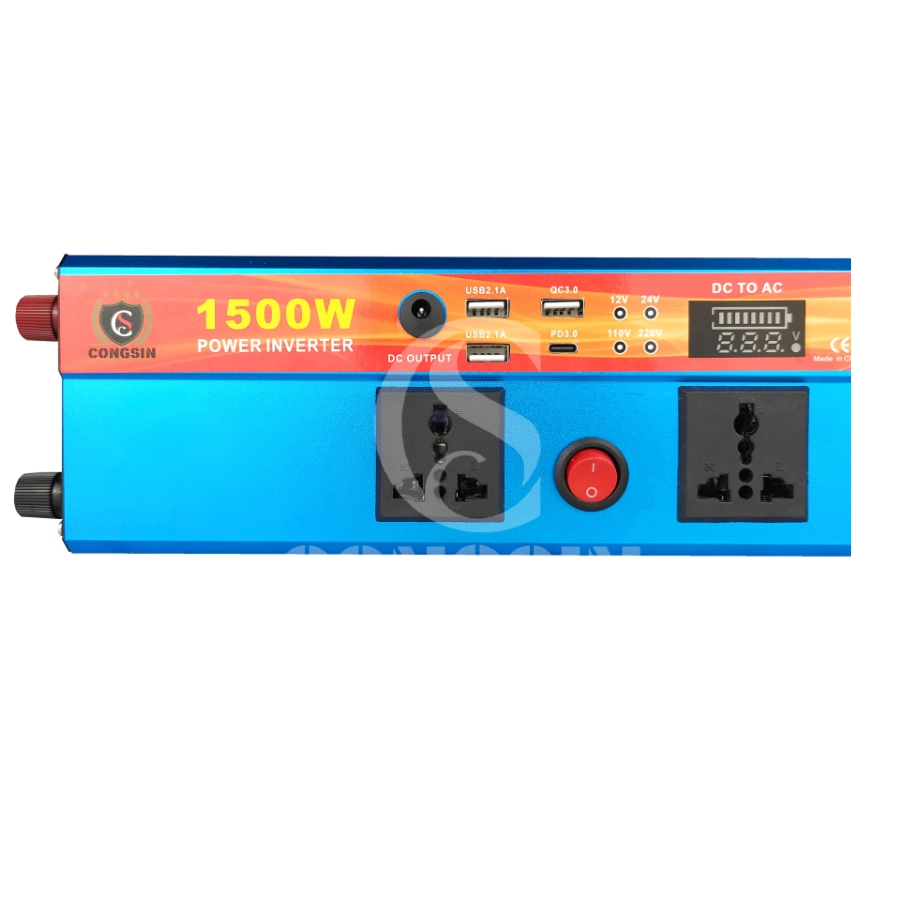
1500W Modified Sine Wave Inverter, DC 12V to AC 220V Power Inverter with LED Display, 3 USB Ports, 1 Type-C, 1 DC 12V Output & Two Universal Sockets
Our CS1000DDBC 1000W modified sine wave inverter is a professional power conversion device that converts DC 12V from batteries into AC 220V electricity. It is designed with user convenience in mind, featuring an LED display for real-time status monitoring, multiple charging ports (3 USB, 1 Type-C, 1 DC 12V) and two universal sockets to power a wide range of devices simultaneously. Its compact size (250×95×55mm) and lightweight design (NW: 0.84kg) make it easy to carry, ideal for outdoor activities, emergency home use, and on-the-go power needs.
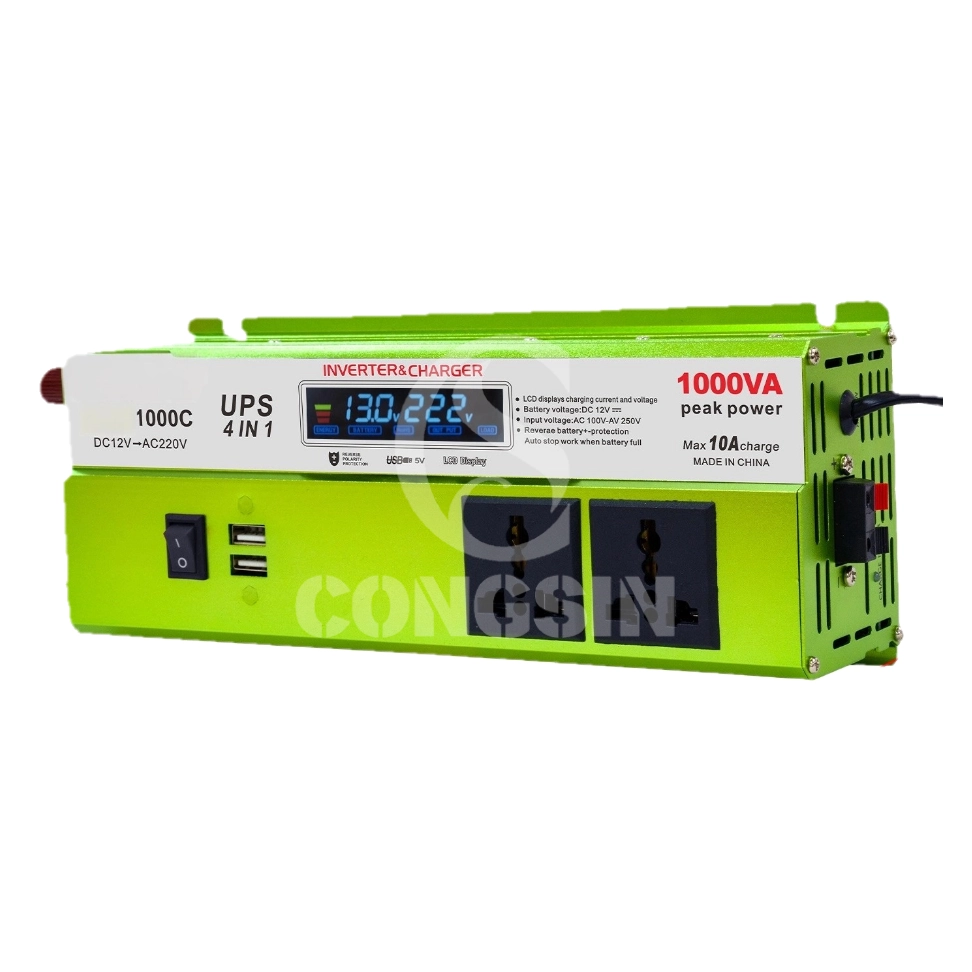
1000W 1500W 2000W UPS POWER INVERTER WITH CHARGER 10A 15A 20A DC TO AC 12v24v 110v 220V
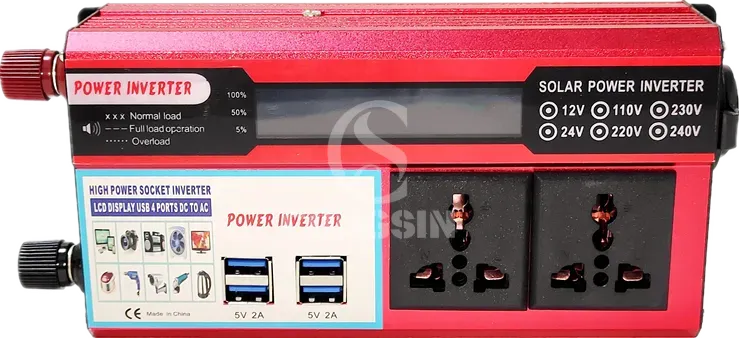
Congsin 500W Modified Sine Wave Inverter with LCD Display of Off Grid System Solar Power Inverter
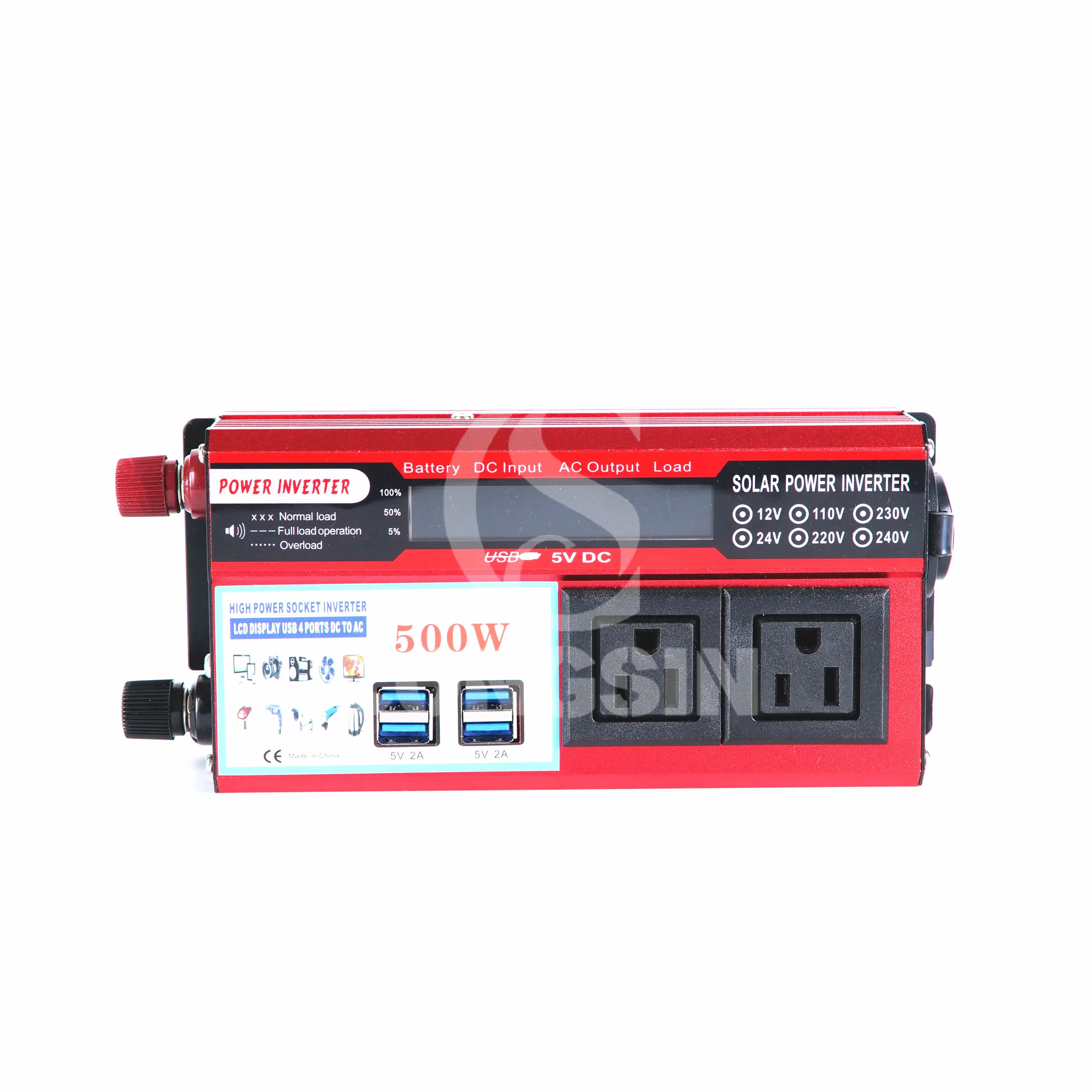
Congsin 500W modified sine wave power inverter US sockets 4 USB ports LCD display off grid

CONGSIN is a trusted OEM factory for power inverters, solar charge controllers, and DC converters. Reliable solutions for global B2B buyers.
 High Quality
 7/24 Service
 Guaranteed Warranty
© 2025 Congsin. All Rights Reserved.