





Battery Compatibility: Choosing the Right Battery for Your Inverter
- Understanding battery-inverter interactions
- Voltage, nominal ratings and inverter input requirements
- Capacity (Ah/kWh), depth of discharge and usable energy
- Charge/discharge profiles and inverter charging behavior
- Selecting battery types for off grid inverters
- Lead-acid: flooded, AGM and gel
- Lithium chemistries: LiFePO4 (LFP) and other Li-ion
- How chemistry affects inverter selection and warranty
- Sizing, configuration and management
- Calculating battery capacity for off-grid autonomy
- Series vs parallel: voltage and current trade-offs
- Battery Management Systems (BMS) and inverter integration
- Installation, safety and lifecycle considerations
- Thermal, ventilation and placement requirements
- Maintenance, testing and end-of-life planning
- Cost of ownership and lifecycle comparison
- Comparative data: common battery choices for off-grid inverters
- Vendor selection, warranties and real-world considerations
- Evaluating vendor claims and warranty terms
- Technical support, integration and documentation
- Guangzhou Congsin Electronic Technology Co., Ltd. — supplier profile and strengths
- Practical checklist before buying batteries for your off grid inverter
- Frequently Asked Questions (FAQ)
- 1. Can I use any battery with my off grid inverter?
- 2. Are lithium batteries always better than lead‑acid for off‑grid use?
- 3. How do I size a battery bank for 48V off grid inverter?
- 4. Do I need a BMS with every lithium battery?
- 5. What are common mistakes installers make?
- 6. How do I compare warranties between battery vendors?
- Conclusion and contact
Choosing the right battery for your off grid inverter is essential to ensure reliable power, long life and cost-effective performance. This guide covers technical compatibility (voltage, capacity, charge/discharge characteristics), chemistry options (flooded/AGM/gel lead‑acid and lithium variants such as LFP), sizing methods, Battery Management System (BMS) and inverter integration, maintenance and safety best practices, and decision criteria for selecting vendor-supplied solutions. Practical, verifiable recommendations and comparative data are provided to help homeowners, installers and system designers optimize off-grid energy systems.
Understanding battery-inverter interactions
Voltage, nominal ratings and inverter input requirements
The first compatibility requirement is voltage. Off grid inverters are designed for specific DC input voltages (commonly 12V, 24V, 48V and, for larger systems, 96V+). Match the battery bank nominal voltage to the inverter's DC input. For example, a 48V inverter requires a 48V nominal battery bank (often 4 × 12V batteries in series or an equivalent 48V battery pack). Mismatched voltages can damage the inverter or prevent it from starting.
Reference: general inverter principles are documented in the Inverter (electrical) page.
Capacity (Ah/kWh), depth of discharge and usable energy
Battery capacity measured in ampere‑hours (Ah) is often converted to usable kilowatt‑hours (kWh) for planning. Usable energy = nominal voltage × Ah × allowable depth of discharge (DoD). For example, a 48V, 200Ah battery at 80% DoD yields 48 × 200 × 0.8 = 7.68 kWh usable.
Different chemistries have different recommended DoD: flooded lead‑acid often uses 50% DoD to preserve cycle life, while lithium iron phosphate (LFP) commonly supports 80–95% DoD. Always size the battery for required autonomy (hours of load off-grid) plus allowances for inefficiencies and aging.
Charge/discharge profiles and inverter charging behavior
Some off grid inverters include a charger/MPPT or support hybrid operation with solar charge controllers. Batteries have different recommended charge voltages, absorption stages and temperature compensation. For lead‑acid batteries, charge voltages and multi‑stage charging are critical. LFP batteries require specific charge profiles and a reliable BMS. Ensure your inverter/charger or external charge controller can be set to the correct profile or supports the required algorithm. When in doubt, consult inverter manufacturer settings and the battery datasheet.
Selecting battery types for off grid inverters
Lead-acid: flooded, AGM and gel
Lead‑acid batteries remain common for small off grid systems because of lower upfront cost. Flooded cells (wet) require ventilation, regular maintenance and water topping. Sealed variants—AGM and gel—require less maintenance but have higher cost per kWh and lower cycle life versus lithium under deep cycling. Typical pros: lower initial cost and wide availability; cons: lower DoD, heavier and larger energy footprint.
For technical background see Lead–acid battery.
Lithium chemistries: LiFePO4 (LFP) and other Li-ion
Lithium iron phosphate (LFP) is now the preferred chemistry for off grid inverters due to safety, long cycle life (>2,000–5,000 cycles depending on depth of discharge), high usable DoD (~80–95%), higher energy density and better temperature performance. Other lithium chemistries (NMC, etc.) may offer higher energy density but typically trade off cycle life and thermal stability. LFP battery packs usually include an integrated BMS — essential for safe operation.
For a technical overview see Lithium iron phosphate battery.
How chemistry affects inverter selection and warranty
Manufacturers may specify or limit warranties if a battery chemistry is used that wasn’t recommended. Some inverters include charge profiles for lead‑acid and lithium; others require firmware updates or external chargers to match lithium charging. When planning an off grid inverter system, confirm the inverter’s supported battery types and whether an external BMS or charger configuration is required.
Sizing, configuration and management
Calculating battery capacity for off-grid autonomy
Step 1: List expected continuous loads and daily energy demand in kWh. Step 2: Determine desired autonomy (days without recharge). Step 3: Select allowable DoD and round-trip system efficiency (inverter + wiring + battery). Step 4: Calculate battery bank kWh = (daily kWh × autonomy) / (DoD × efficiency).
Example: 3 kWh/day, 2 days autonomy, LFP with 0.9 usable fraction and system efficiency 0.9: required bank = (3 × 2)/(0.9 × 0.9) ≈ 7.4 kWh. Round up for aging and future expansion.
Series vs parallel: voltage and current trade-offs
To reach system voltage, batteries are connected in series; to increase capacity, strings are connected in parallel. Series connections increase voltage while parallel increases Ah. Best practice: use identical batteries (same make, capacity, age) for series strings. Mixing old and new batteries or differing states of charge leads to imbalance and shortened life. Many installers prefer higher nominal voltage (48V or higher) because it reduces current for the same power and lowers conductor sizing and system losses.
Battery Management Systems (BMS) and inverter integration
A BMS protects lithium batteries from over/under voltage, overcurrent and cell imbalance, and communicates state of charge (SoC) and health data to the inverter or energy management system. For off grid inverters, ensure communication protocols (CAN, RS232, RS485) are supported if inverter‑BMS integration is needed. If the inverter depends on battery communications for charging decisions, verify compatibility and firmware support.
Installation, safety and lifecycle considerations
Thermal, ventilation and placement requirements
Lead‑acid batteries—especially flooded—release hydrogen gas and must be installed in ventilated spaces. Lithium batteries are more thermally stable (LFP safer than other lithium chemistries) but still require proper ambient temperature ranges for charging. Follow manufacturer specs for operating temperature and install battery packs on non‑combustible surfaces, away from direct sunlight and moisture.
Maintenance, testing and end-of-life planning
Lead‑acid maintenance includes periodic specific gravity checks (flooded) and equalization charging where appropriate. AGM and gel are lower maintenance but should be monitored for voltage and capacity fade. Lithium requires less routine maintenance but periodic capacity verification and BMS diagnostics are recommended. Plan for recycling and responsible disposal—lead acid recycling is widely available, and lithium recycling infrastructure is expanding.
Cost of ownership and lifecycle comparison
Initial cost is only part of the decision. Levelized cost per kWh delivered over the life of the battery accounts for cycle life, usable DoD and efficiency. LFP systems typically have higher initial cost but lower levelized cost due to higher usable capacity and longer life in deep‑cycle applications.
Comparative data: common battery choices for off-grid inverters
| Chemistry | Nominal Voltage (cells) | Usable DoD | Typical Cycle Life | Energy Density | Maintenance | Suitability for off grid inverter |
|---|---|---|---|---|---|---|
| Flooded Lead‑acid | 2V cells (12V banks) | ~30–50%* | 200–800 cycles* | Low | High (watering, ventilation) | Low cost initial; suitable where budget and ventilation exist |
| AGM/Gel (Sealed Lead‑acid) | 12V modules | ~40–60%* | 500–1000 cycles* | Low–Moderate | Low | Good for smaller off grid systems with limited maintenance |
| LFP (LiFePO4) | 3.2V per cell (48V packs) | 80–95% | 2000–5000+ cycles | High | Minimal (BMS required) | Excellent — best lifecycle and performance for deep cycling |
| Other Li‑ion (NMC) | Varies | 60–80% | 800–2000 cycles | Very High | Minimal (BMS required) | Used where energy density matters; consider thermal management |
Data ranges marked * depend on usage pattern, temperature, charge method and manufacturer. For chemistry details see: Lead–acid battery and Lithium iron phosphate battery.
Vendor selection, warranties and real-world considerations
Evaluating vendor claims and warranty terms
Review warranty inclusions carefully: cycle count, capacity retention guarantee (e.g., 70% after X cycles), and conditions that void warranty (deep discharge, incorrect charger profile, lack of BMS). Prefer suppliers that publish datasheets, independent third‑party test results and standards compliance.
Technical support, integration and documentation
Choose vendors who provide clear charging parameters, BMS communication protocols and battery pack documentation. When purchasing an off grid inverter, confirm that the supplier can assist with system configuration—especially for hybrid systems combining solar charge controllers, inverter/chargers and generators.
Guangzhou Congsin Electronic Technology Co., Ltd. — supplier profile and strengths
Guangzhou Congsin Electronic Technology Co., Ltd., founded in early 1998, is a professional power inverter manufacturer with over 27 years of focused experience. We design, R&D and manufacture a wide range of power solutions—with a core emphasis on DC→AC power inverters, portable power stations, and solar charge controllers. Our catalog includes 100+ models tailored for vehicles, solar systems, RVs and trucks, off-grid homes, outdoor offices, patrol and field construction work.
We operate fully automated production lines, advanced instrumentation and multifunctional testing equipment to ensure product reliability, efficiency and intelligent functionality. Environmental and safety compliance are built in: our quality system is ISO9001 certified and many products hold international approvals such as CE, EMC, LVD, ETL, FCC, RoHS and E-MARK. Several independently developed patents further demonstrate our commitment to innovation.
Congsin’s products serve global markets across Europe, the Americas, the Middle East, Africa and Southeast Asia; many models are supplied to domestic and international OEM channels. Our support includes OEM/ODM, private labeling, distribution and bespoke customization to meet partner specifications.
Our mission is to deliver reliable, efficient and affordable energy solutions that enable energy independence. Congsin's key product lines relevant to off grid inverter systems include Solar Charge Controllers, modified sine wave inverters, pure sine wave inverters, and portable power stations. Their competitive strengths include long industry experience, automated production capabilities, international certifications and flexible OEM/ODM services, making them a credible partner for off-grid inverter projects.
Practical checklist before buying batteries for your off grid inverter
- Confirm inverter nominal DC input voltage and supported battery chemistries.
- Calculate required usable kWh using load profile, autonomy and DoD assumptions.
- Choose a battery chemistry that balances upfront cost, lifecycle and maintenance (LFP recommended for deep cycling).
- Ensure the inverter/charger supports the battery’s charge profile or that an appropriate external charger/BMS is provided.
- Plan battery bank wiring with correct series/parallel configuration and appropriate cable sizing for current.
- Verify supplier datasheets, warranty terms and certifications (ISO9001, CE/ETL etc.).
- Design for safe installation: ventilation for lead‑acid, thermal considerations for lithium, and proper battery enclosure.
Frequently Asked Questions (FAQ)
1. Can I use any battery with my off grid inverter?
Not necessarily. You must match system nominal voltage and ensure the inverter supports the battery chemistry and charge profile. For lithium packs, BMS compatibility and proper charge voltage are critical.
2. Are lithium batteries always better than lead‑acid for off‑grid use?
Not always. Lithium (especially LFP) offers longer cycle life, deeper DoD and lower total cost of ownership for daily cycling. Lead‑acid can be acceptable for infrequent use or lower budgets but will require more maintenance and replacement sooner. Compare levelized cost per kWh.
3. How do I size a battery bank for 48V off grid inverter?
Calculate daily energy use in kWh, decide autonomy days, divide by usable fraction (DoD × efficiency), and then divide by nominal voltage to obtain Ah. Example: required bank kWh / 48V = Ah rating.
4. Do I need a BMS with every lithium battery?
Yes. A BMS is essential for cell balancing, protection from over/under voltage and safety. Many packaged LFP batteries include an integrated BMS; if your pack doesn’t, add a reputable external BMS compatible with the inverter.
5. What are common mistakes installers make?
Common errors include mismatched voltages, mixing batteries of different ages or capacities, insufficient cable sizing leading to voltage drop, improper charge settings (overcharging lead‑acid or incorrect lithium charging), and neglecting ventilation or thermal constraints.
6. How do I compare warranties between battery vendors?
Look beyond years: compare guaranteed cycle counts, capacity retention thresholds (e.g., 80% after X cycles), terms that void coverage, and whether shipping/installation is covered. Also check for third‑party testing or independent certifications.
Conclusion and contact
Selecting the right battery for your off grid inverter requires careful attention to voltage matching, usable capacity, charge profiles, chemistry trade‑offs and vendor support. For most deep‑cycle off grid applications today, LFP offers the best balance of lifecycle, safety and total cost of ownership—but project constraints and budget may make sealed lead‑acid or other chemistries appropriate in some cases. Always confirm inverter and battery compatibility, incorporate a reliable BMS, and follow installation and maintenance best practices.
If you need system design support or product options, Guangzhou Congsin Electronic Technology Co., Ltd. offers a broad portfolio of compatible off grid inverter solutions, solar charge controllers, modified and pure sine wave inverters, and portable power stations. For product specifications, OEM/ODM inquiries, or customized system proposals, contact Congsin to review available inverter models and recommended battery pairings.
Contact / Request a Quote: For technical consultations, product catalogs and customized off-grid inverter solutions, please contact Guangzhou Congsin Electronic Technology Co., Ltd. through their official channels to get a tailored recommendation based on your load profile and installation requirements.
UPS Inverter vs Online UPS: Best Option for Data Centers
Pure Sine Car Inverter Efficiency and Battery Compatibility Tips
Top Off-Grid Solar Inverters for Homes, Cabins and RVs
Best MPPT Charge Controllers for RVs, Boats and Remote Sites
Modified Sine Wave Inverters
How does reverse protection work?
When the positive and negative poles of the battery are reversed, the inverter will automatically cut off the circuit to avoid device damage and ensure power usage safety.
Can it drive a 3000W air conditioner?
Yes. Air conditioners have instantaneous power during startup (about 2-3 times the rated power), and this product has a peak power of 6000W, which can meet the startup and operation needs of a 3000W air conditioner; the battery capacity must be ≥150Ah to ensure continuous power supply.
Can 4 USB ports charge 4 mobile phones at the same time?
Yes, the total current of 6.8A can support simultaneous fast charging of multiple devices, and the charging efficiency is guaranteed.
Can this inverter support both 12V and 24V inputs
Yes, it can work with different voltage systems via selectable input terminals.
OEM & ODM Services
Can I order samples before production?
Yes, we offer sample evaluation and prototype testing.
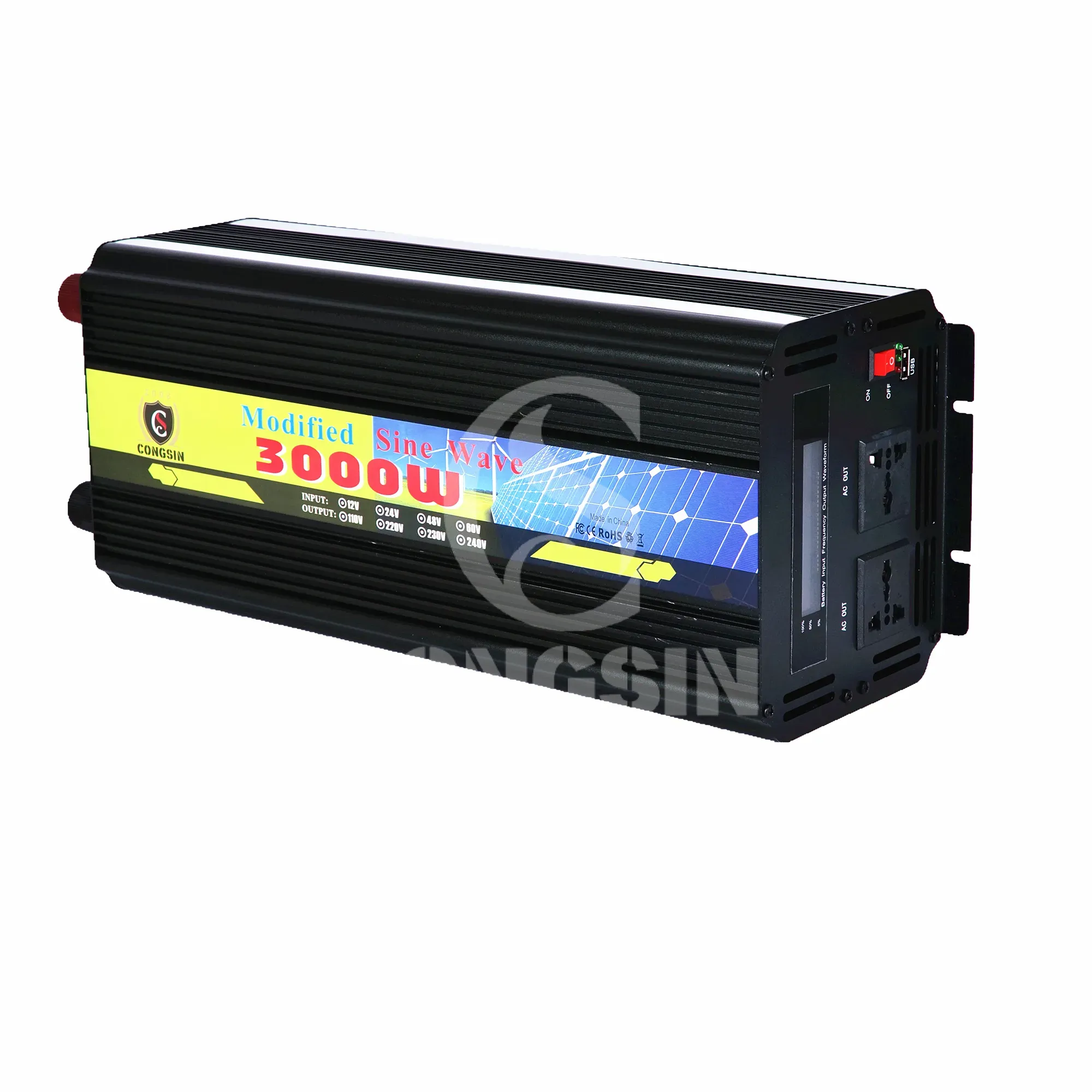
Congsin Full Power 3000W Modified Sine Wave Inverter Peak Power 6000W with LCD Display RV Solar
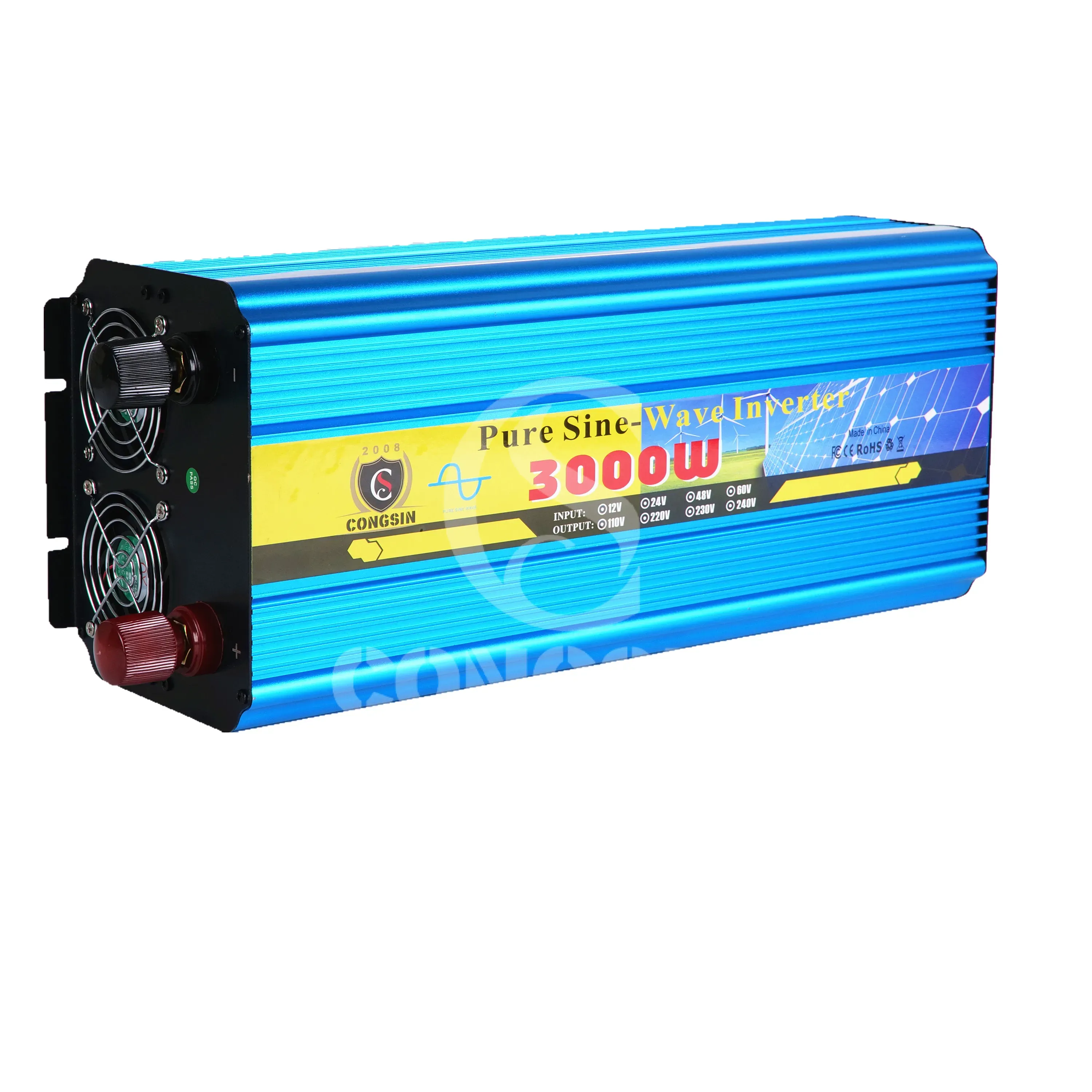
Congsin 3000W LCD Pure Sine Wave Inverter for Home Use Solar Backup Power Inverter Off Grid UPS
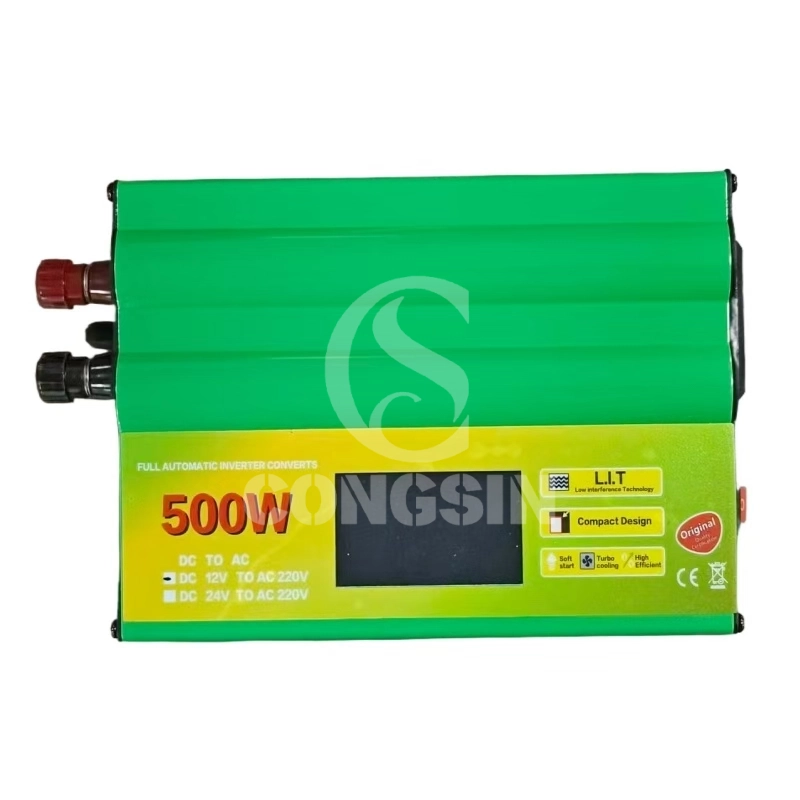
Congsin Modified Sine Wave Inverter 500W 1000W 1500W 12V LED Display Portable for RV Car Solar
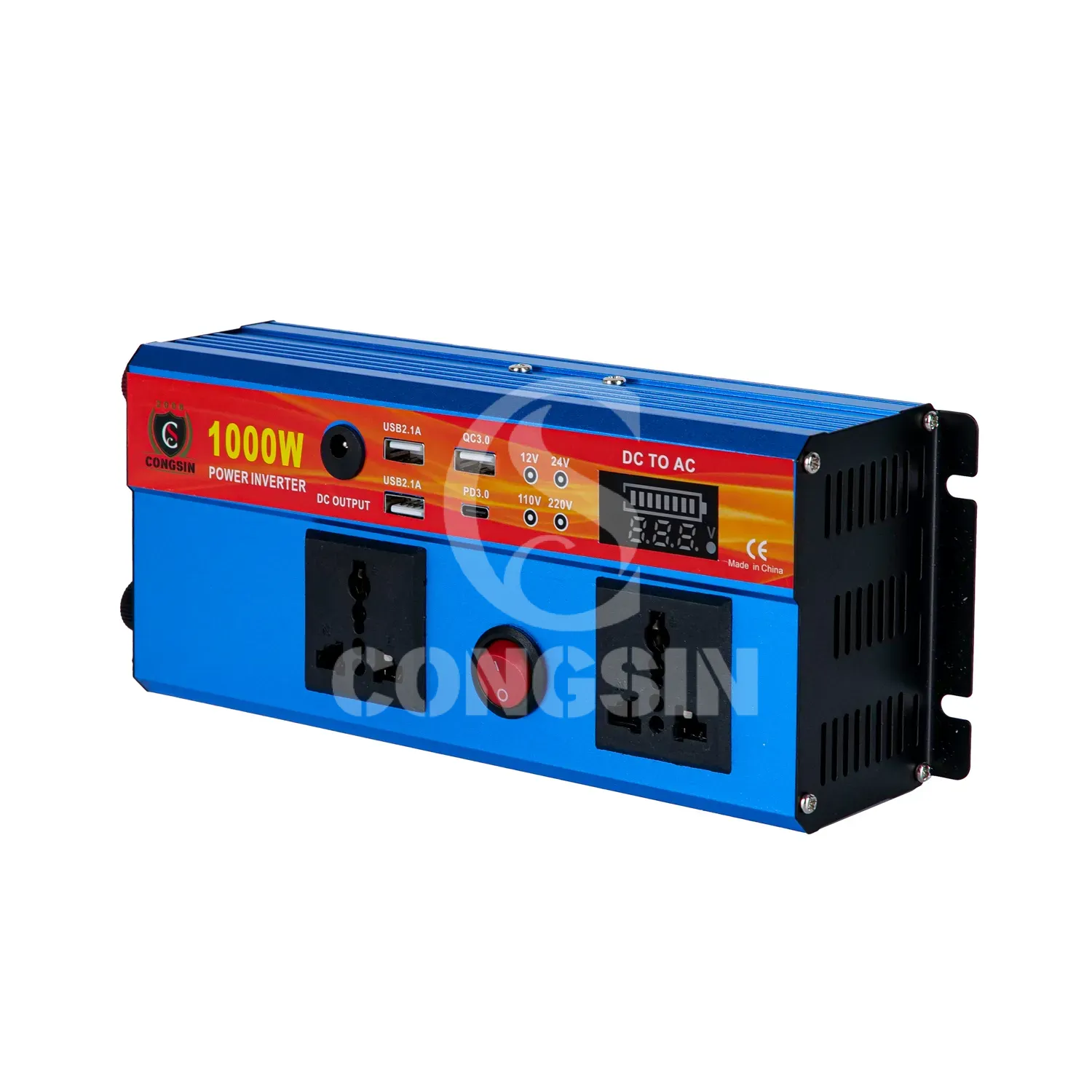
Congsin 1000W modified sine wave inverter with LED display and Type C port car RV power inverter

CONGSIN is a trusted OEM factory for power inverters, solar charge controllers, and DC converters. Reliable solutions for global B2B buyers.
 High Quality
 7/24 Service
 Guaranteed Warranty
© 2025 Congsin. All Rights Reserved.