





6000W Hybrid Solar Power Inverter with Controller and LCD — Reliable Off-grid & Backup Energy
- How to choose the right 6000W hybrid solar inverter for my home or RV?
- What load types and power profiles should I evaluate before buying?
- How do battery voltage and capacity affect inverter performance?
- Why should I prefer a hybrid inverter with MPPT controller?
- Why does MPPT and LCD control matter for daily system management?
- How does MPPT improve solar harvest compared to non-MPPT systems?
- How can the LCD controller simplify system setup and troubleshooting?
- What safety and compliance checks should I verify on the inverter?
- How to install, configure, and maintain a 6000W hybrid inverter for long life?
- What are the recommended installation practices to ensure reliability?
- How often should I perform maintenance and what checks are essential?
- Can I expand or parallel multiple inverters for higher capacity?
- What performance advantages and real-world benefits can I expect from this inverter?
- How does integrated hybrid functionality reduce overall system cost?
- Why is pure sine wave output important for sensitive electronics?
- How does compliance with grid interconnection standards protect installations?
- FAQs
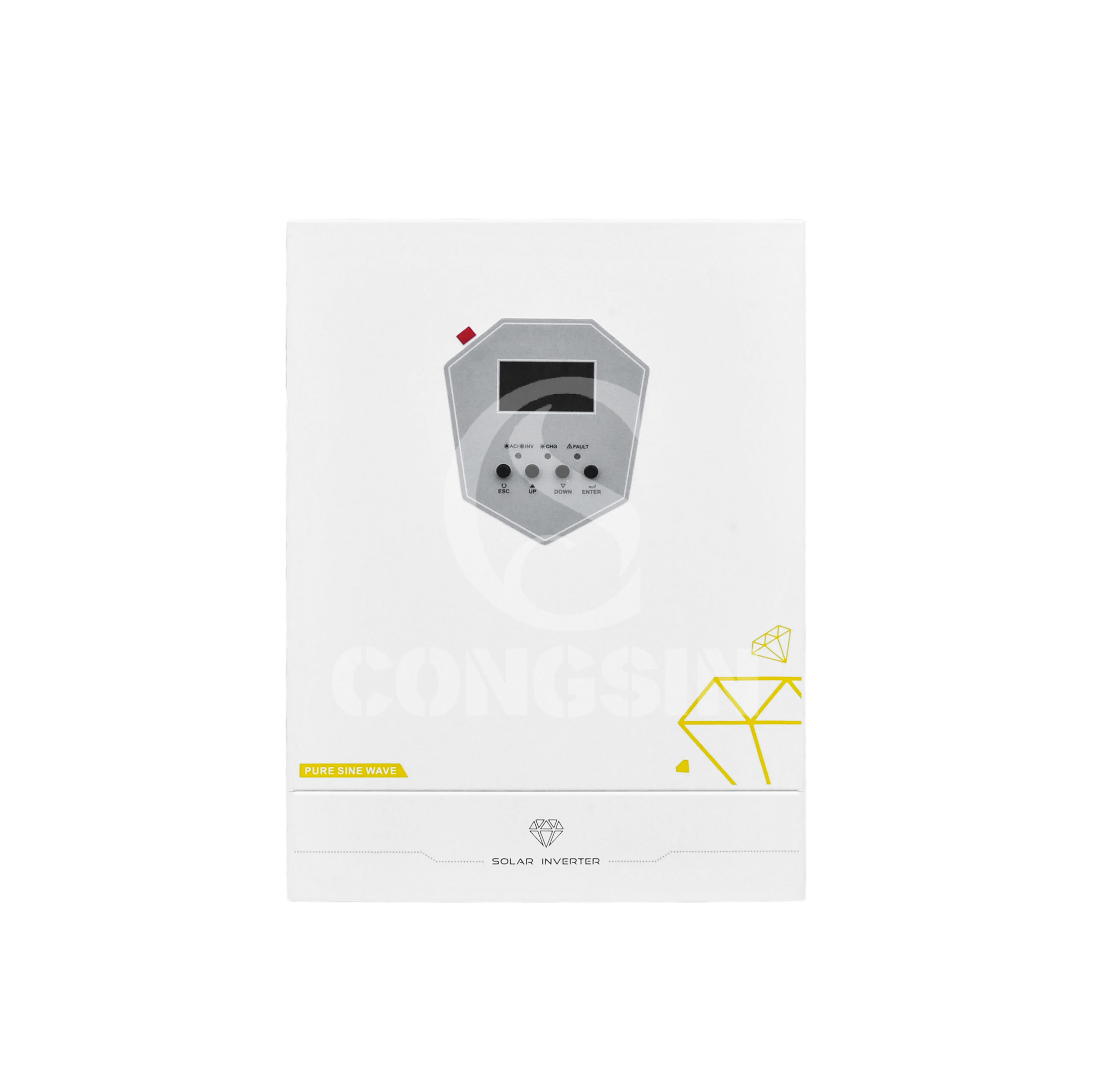
The 6000W hybrid solar power inverter with controller and LCD combines inverter, MPPT solar charge controller, battery charger and UPS functions into a single compact unit—ideal for off-grid homes, RVs and backup power systems. This summary is optimized for local and global discovery and highlights core benefits: continuous 6000W AC output, integrated solar MPPT charging, programmable LCD control, and reliable safety standards for worldwide markets. For full product details, view the manufacturer's page: 6000W hybrid solar power inverter product page.
How to choose the right 6000W hybrid solar inverter for my home or RV?
What load types and power profiles should I evaluate before buying?
First, identify continuous and peak loads—continuous household loads plus motor-start surges from fridges or pumps. A 6000W hybrid inverter typically supports continuous 6000W and higher short-time surge capacity; plan for surge events and factor in motor inrush. Use appliance wattage lists to size the inverter and battery bank accordingly to avoid overloads and nuisance shutdowns.
How do battery voltage and capacity affect inverter performance?
Match the inverter nominal DC voltage (commonly 24V or 48V) to your battery bank to maximize efficiency and reduce cable losses. Higher system voltages (e.g., 48V) allow smaller cables and lower I2R losses; battery capacity (Ah) determines runtime—6000W continuous draws 500A at 12V, so choose appropriately higher voltage banks or larger Ah capacity to keep currents reasonable.
Why should I prefer a hybrid inverter with MPPT controller?
An integrated MPPT solar charge controller extracts maximum power from PV arrays under varying irradiance, increasing yield versus PWM controllers. Hybrid inverters with MPPT reduce system complexity and wiring, and provide coordinated charging/AC priority logic so solar, grid and battery work efficiently for uninterrupted power.
Why does MPPT and LCD control matter for daily system management?
How does MPPT improve solar harvest compared to non-MPPT systems?
MPPT (Maximum Power Point Tracking) dynamically adjusts PV operating voltage to maximize wattage under changing sunlight and temperature. Expect 10–30% higher energy harvest compared to non-MPPT charge methods, especially in partially shaded or cold conditions. For design best practices, refer to the US Department of Energy guidance on solar inverters: US DOE guidance on solar inverters.
How can the LCD controller simplify system setup and troubleshooting?
The integrated LCD displays real-time metrics—PV volts, battery SOC, input/output power and fault codes—so installers and end-users can verify operation without extra meters. LCD menus usually allow charging current, AC priority and battery type settings, reducing commissioning time and avoiding configuration errors that cause premature battery wear.
What safety and compliance checks should I verify on the inverter?
Confirm the inverter meets recognized quality and safety systems—ISO 9001 quality management and applicable EMC/CE or other regional approvals. ISO9001 certification underscores consistent manufacturing processes (ISO 9001 quality management), and CE/EMC directives indicate compliance with EU safety and interference standards (EU CE marking overview).
How to install, configure, and maintain a 6000W hybrid inverter for long life?
What are the recommended installation practices to ensure reliability?
Mount the inverter in a ventilated, dust-free location with ambient temperatures within manufacturer limits. Use appropriately sized DC cabling, fuse/breaker protection at the battery, and follow polarity and grounding instructions. Proper AC transfer settings and wiring ensure safe UPS switching and avoid nuisance trips during grid fluctuations.
How often should I perform maintenance and what checks are essential?
Inspect terminals and cooling paths every 3–6 months; clean dust from heat sinks and verify fan operation. Check battery voltage and specific gravity/health monthly in active systems. Preventative maintenance extends service life and reduces unexpected downtime in critical installations.
Can I expand or parallel multiple inverters for higher capacity?
Some hybrid inverters support parallel operation or stacking to scale capacity; verify the specific model’s parallel control and communication protocol. Parallelizing requires matched models and coordinated settings to maintain stable load-sharing and proper UPS function—consult the manufacturer or product manual for supported configurations.
What performance advantages and real-world benefits can I expect from this inverter?
How does integrated hybrid functionality reduce overall system cost?
Combining inverter, MPPT charge regulator and battery charger lowers component count, wiring, and installation labor—reducing upfront system cost and simplifying maintenance. This consolidated approach often shortens installation time and lowers points of failure versus separate components.
Why is pure sine wave output important for sensitive electronics?
Pure sine-wave AC output ensures compatibility with modern electronics, medical devices and variable-speed motors, reducing electrical noise and heat. This preserves appliance lifespan and avoids interference; many hybrid inverters provide true sine output meeting international waveform quality expectations.
How does compliance with grid interconnection standards protect installations?
Adherence to interconnection standards like IEEE 1547 helps ensure safe anti-islanding and grid protection behavior when operating in grid-tied or hybrid modes; consult the IEEE standard for details on requirements and testing (IEEE 1547 interconnection standard).
Guangzhou Congsin Electronic Technology Co., Ltd. brings 27+ years of inverter design and manufacturing expertise, ISO9001-certified processes and a global distribution footprint. For OEM, ODM or bulk inquiries, contact the team at info@csinverter.com or visit the product page: 6000W hybrid solar power inverter with controller and LCD.
FAQs
What is the continuous and peak power rating of this inverter?
Continuous output is 6000W; peak (surge) capacity is typically higher for seconds to start motors. Confirm specific surge rating on the product spec sheet before sizing large motor loads.
How do I match battery bank size to a 6000W inverter?
Choose battery Ah and voltage to deliver required runtime; e.g., at 48V, a 6000W continuous draw requires about 125A DC, so a 48V 400Ah bank gives several hours depending on allowable depth of discharge.
Can this hybrid inverter work off-grid and with the grid simultaneously?
Yes, hybrid inverters are designed for both off-grid and grid-assisted operation, switching power sources and managing charging priorities automatically per configuration.
Why is MPPT better for PV charging compared to PWM?
MPPT maximizes PV output by tracking the module’s maximum power point, increasing energy harvest by roughly 10–30% under variable conditions compared to PWM controllers.
How often should firmware or settings be checked for optimal operation?
Check settings and firmware annually or after any system modification; critical installations may verify settings quarterly to ensure updated protections and optimal performance.
Is the inverter certified to international quality and safety standards?
The manufacturer maintains ISO9001 quality processes and offers models with CE/EMC/LVD and other region-specific approvals; check the product’s certificate pack for exact listings.
For personalized sizing, installation quotes, or compatibility checks, contact Guangzhou Congsin via info@csinverter.com or visit the product page to request datasheets and certification documents.
Best 240V Car Inverters for RVs and Mobile Workshops
Best 12V Inverters for Cars: Buyer's Guide and Top Models
24V Pure Sine Inverters vs Modified: Why Pay More?
How to Choose the Best Battery for Solar Power Storage
Pure Sine Wave Inverters
Will reversing the positive and negative poles damage the device when connecting the battery?
The device has a built-in reverse connection protection function, which will automatically cut off the circuit when the positive and negative poles are reversed to avoid damage caused by reverse current inflow; just adjust the connection order of the positive and negative poles of the battery clip and re-power on to use normally.
Does it have a charging (UPS) function?
No, this model is a pure inverter without UPS function.
Products
Can this inverter run a refrigerator or power tools?
Recommended load ≤80% of rated power. For inductive loads, use a pure sine wave model.
Modified Sine Wave Inverters
Can this inverter power a laptop?
If the laptop power is within 150W and the input is AC220V, it can supply power normally.
Can other input voltages be customized?
Yes, the regular is DC12V, and DC24V, etc. can be customized. Please consult customer service for details.
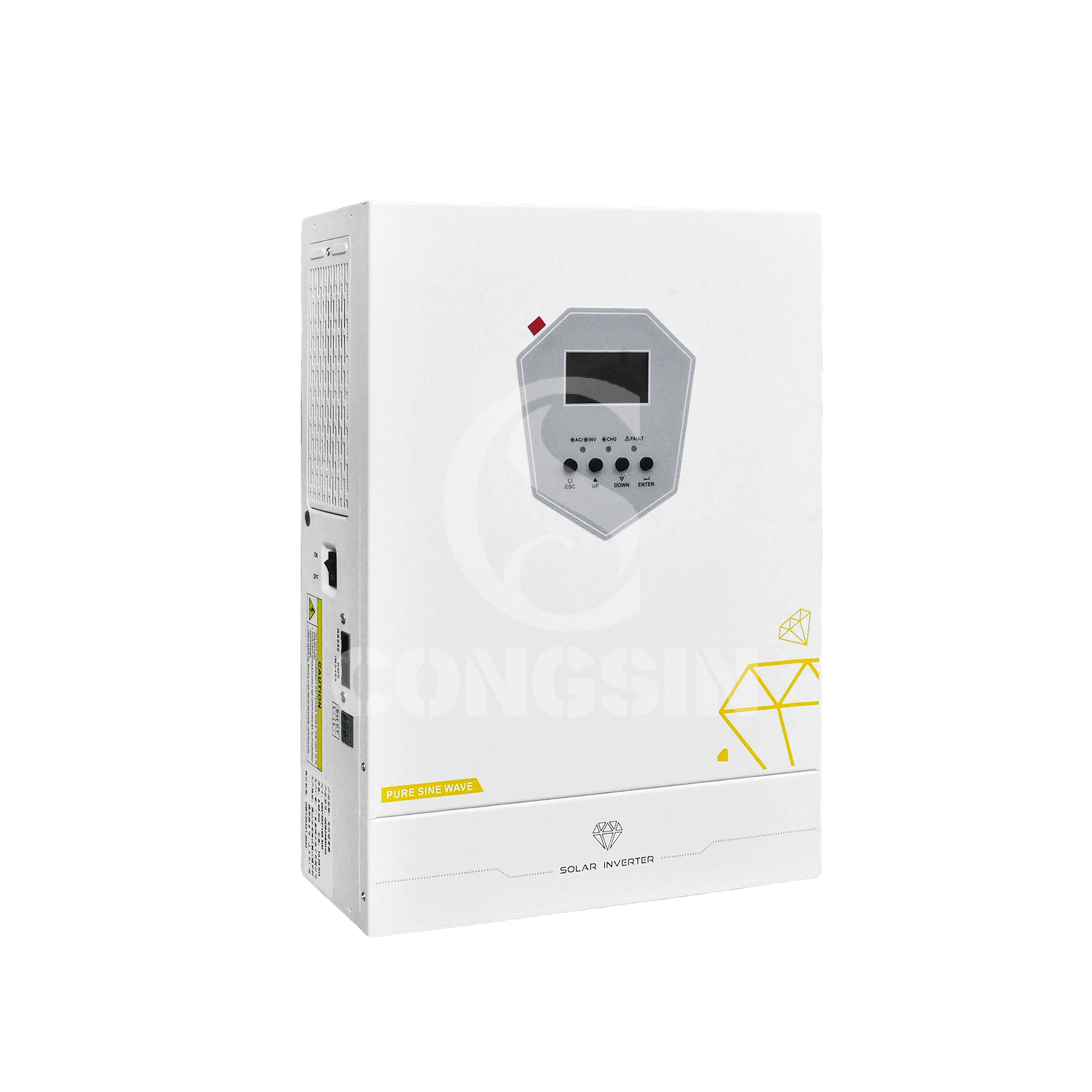
Factory Direct Sales 6000W Hybrid Solar Power Inverter with Controller and LCD Display
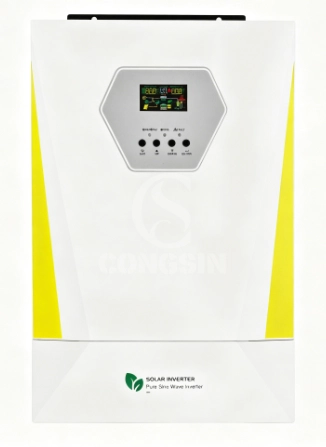
Congsin 4000W and 6000W Hybrid Inverter with Controller with LCD Display and CE Certification Solar
Power your solar system efficiently with the Congsin 4000W and 6000W Hybrid Inverter. Featuring an integrated MPPT Controller, this CE Certified inverter ensures optimal energy conversion. Monitor performance effortlessly via the intuitive LCD Display. Reliable, powerful, and ready for your sustainable energy needs.
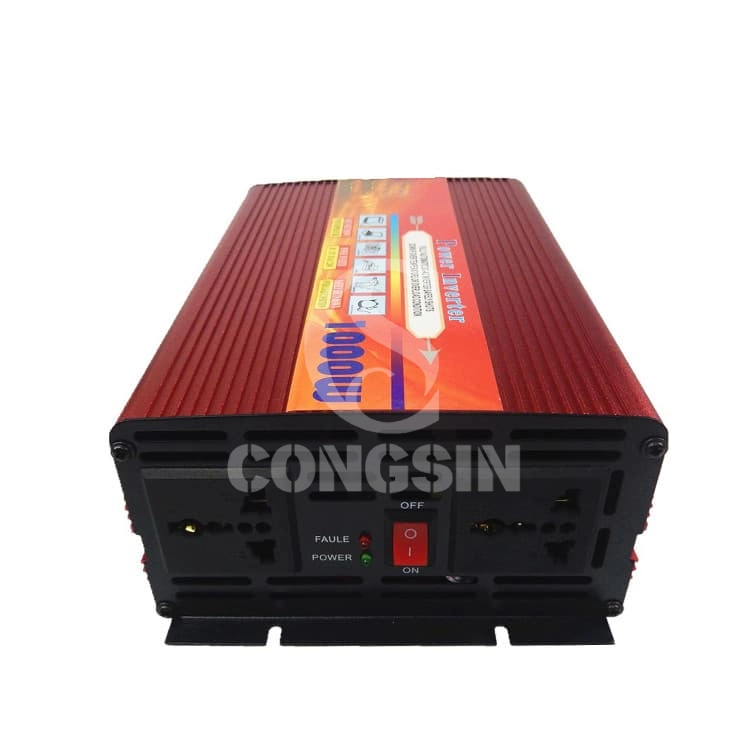
Congsin Manufacturer Wholesales Big Capability Modified Sine Wave Inverter with Red case and Double fan
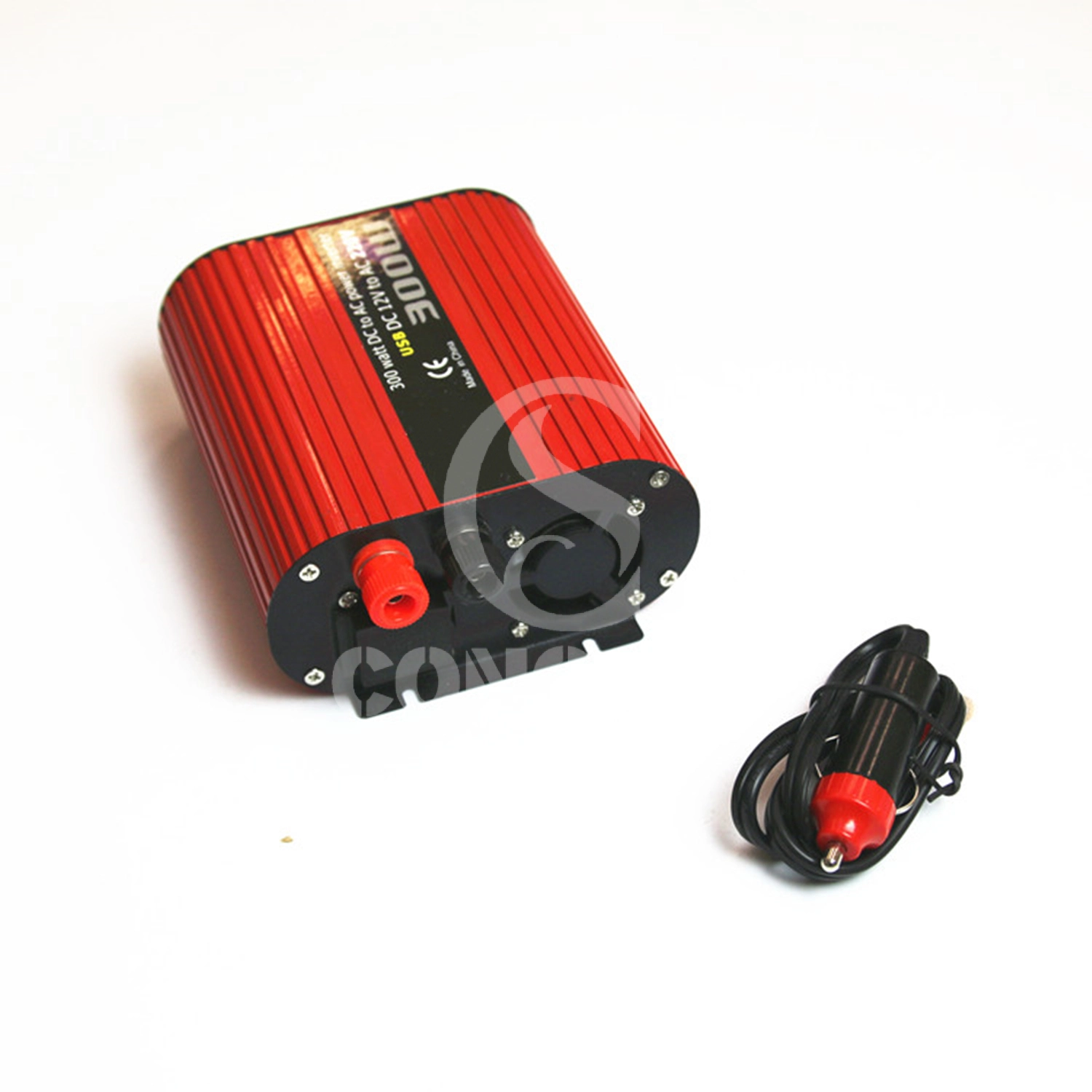
Factory Direct Sales Portable 150W Modified Sine Wave Inverter DC12V to AC220V Off-grid Sine Wave Inverter with Two USB and Universal Socket
Congsin's Portable 150W Modified Sine Wave Inverter powers your journey! This versatile Car Power Inverter with USB acts as a reliable 12V to 220V converter, ensuring an essential off-grid power supply. With dual USB ports and a universal socket, enjoy convenient power on the go.

CONGSIN is a trusted OEM factory for power inverters, solar charge controllers, and DC converters. Reliable solutions for global B2B buyers.
 High Quality
 7/24 Service
 Guaranteed Warranty
© 2025 Congsin. All Rights Reserved.
 WeChat
 Scan QR Code
sin cong
teaimei10
Whatsapp: +8618028086791
Scan QR Code