





240V Car Inverter Buying Guide: Choose the Right Model
- Why 240V Inverters Matter for Vehicle Power Needs
- Who needs a 240V car inverter?
- How 240V vehicle inverters differ from 12V/120V models
- Key semantic terms to know
- Sizing, Performance and Waveform: What to Consider
- Calculate continuous and peak power requirements
- Battery capacity, runtime and charging
- Pure sine vs modified sine: compatibility and efficiency
- Installation, Safety and Compliance
- Basic installation best practices
- Electrical safety and protection
- Certifications and regulatory compliance
- Comparing Models, Features and Real-World Tradeoffs
- Feature checklist when comparing 240V car inverters
- Sample specification comparison
- Real-world tradeoffs
- Selecting Trusted Manufacturers and the Advantage of OEM Expertise
- Why manufacturer reputation matters
- Profile: Guangzhou Congsin Electronic Technology Co., Ltd.
- How to validate manufacturer claims
- Purchase Checklist and Maintenance Tips
- Before you buy
- Installation and maintenance tips
- Troubleshooting common issues
- FAQ
- 1. Can I run my 240V microwave with a 240V car inverter?
- 2. Is a pure sine wave inverter necessary for laptops and chargers?
- 3. How long will my battery run a 240V inverter?
- 4. What safety protections should an inverter include?
- 5. Can I connect the inverter directly to my vehicle’s cigarette lighter?
- 6. How do I check that my inverter meets regulatory standards?
240V car inverter technology turns a vehicle’s DC battery power into usable 240V AC electricity, enabling laptops, power tools, kitchen appliances and medical devices to run from cars, vans, RVs and trucks. This guide explains why 240V inverters matter, how to size and choose the right model, the differences between pure and modified sine wave outputs, installation and safety considerations, and how to assess manufacturers and certifications. It integrates manufacturer insight, real-world data and standards references so you can confidently pick a 240V inverter that meets your needs.
Why 240V Inverters Matter for Vehicle Power Needs
Who needs a 240V car inverter?
240V inverters are essential when you need to run mains-voltage (230–240V) appliances from a vehicle battery in regions using 230–240V mains (e.g., Europe, Australia, parts of Asia). Typical users: tradespeople using power tools on site, RV and camper owners running household appliances, emergency response teams powering communications equipment, and mobile offices that run monitors and printers. A 240V inverter for car use enables true off-grid operation without a generator.
How 240V vehicle inverters differ from 12V/120V models
Compared to 12V (step-up) or 120V (North American) systems, a 240V DC→AC inverter must comply with regional voltage and safety standards and handle higher output voltage while preserving waveform quality. Choosing a correctly rated 240-volt car inverter ensures compatibility with devices designed for local mains standards and avoids damage caused by incorrect voltages.
Key semantic terms to know
Common related queries include: 240v inverter for car, pure sine wave car inverter 240V, 240V DC to AC inverter, car power inverter 240V, and vehicle inverter 240V—these terms reflect buyer intent for compatibility, waveform quality and mobile use.
Sizing, Performance and Waveform: What to Consider
Calculate continuous and peak power requirements
List every device you plan to run, then sum their continuous power ratings (watts). Include surge or startup currents: motors and compressor-driven appliances (fridges, pumps, power tools) often need 2–6× their running watts at startup. For example, a 1500W microwave may have high inrush that needs 2000–3000W peak capacity. Select an inverter whose continuous rating covers the sum of continuous loads and whose peak (surge) rating covers the highest combined startup requirement.
Battery capacity, runtime and charging
Inverter selection must consider battery amp-hours (Ah) and state of charge. Runtime (hours) ≈ (Battery Ah × Battery Voltage × Depth-of-Discharge) / Load Watts. For a 100Ah 12V battery at 50% usable DoD powering a 2400W load: Runtime ≈ (100×12×0.5)/2400 ≈ 0.25 hours (15 minutes). Use larger battery banks or reduce load for longer run times. If charging from alternator or solar, ensure charging system can sustain both inverter draw and battery recharge.
Pure sine vs modified sine: compatibility and efficiency
Pure sine wave inverters output a clean sinusoidal AC identical to mains and are required for sensitive electronics (medical devices, variable-speed power tools, audio equipment). Modified sine (or stepped approximations) are cheaper but can cause overheating, noise, or malfunction in some devices. See the comparison table below for typical differences.
| Feature | Pure Sine Wave | Modified Sine Wave |
|---|---|---|
| Compatibility | All equipment including sensitive electronics | Simple resistive loads; many modern electronics may have issues |
| Efficiency | Higher under varied loads; less wasted heat | Lower efficiency with certain loads |
| Cost | Higher | Lower |
| Noise & interference | Minimal | Can cause audible hum or radio interference |
Sources such as the general inverter overview on Wikipedia provide background on inverter types and waveform implications.
Installation, Safety and Compliance
Basic installation best practices
Mount the inverter close to the battery to minimize cable length and voltage drop; use appropriately sized cable and fuses sized near the inverter’s max DC current. Provide ventilation and avoid enclosed hot spaces—heat reduces inverter efficiency and lifespan. If installing in an RV or vehicle, position the inverter where fumes or water won’t reach it and ensure secure mounting to prevent movement.
Electrical safety and protection
Use a correctly rated DC disconnect/fuse at the battery, and install AC grounding and RCD/GFCI protection where required by local electrical codes. Many inverters include built-in protections: over-voltage, low-voltage, overload, over-temperature and short-circuit. Verify that protection thresholds suit your battery chemistry (lead-acid vs Li-ion) and vehicle alternator charging behavior.
Certifications and regulatory compliance
Choose inverters with internationally recognized certifications. CE, EMC and LVD demonstrate conformity with European safety and EMC standards; ETL or UL certification is important for North American markets; FCC addresses conducted/emitted interference. For automotive usage, look for E-MARK or automotive-specific approvals. Manufacturer quality systems such as ISO9001 indicate consistent production and quality management. See manufacturer specifications and third-party test reports before purchase.
Comparing Models, Features and Real-World Tradeoffs
Feature checklist when comparing 240V car inverters
Prioritize the following: continuous and peak power ratings; waveform (pure vs modified); input voltage (12V, 24V, 48V vehicles); efficiency at expected load; built-in inverter/charger options; AC outlets and USB ports; remote control/monitoring capability; working temperature range; protections; weight and mounting options; and warranty and after-sales support.
Sample specification comparison
Below is a representative comparison to help buyers evaluate categories (values are illustrative ranges—always check specific model datasheets):
| Category | Small (500–1500W) | Medium (1500–3000W) | Large (3000W+) |
|---|---|---|---|
| Typical use | Chargers, laptops, small appliances | Microwaves, power tools, coffee makers | Multiple heavy loads, RV AC units |
| Battery system | Single 12V battery or small bank | Multi-battery 12V/24V systems | 24V/48V systems or large 12V banks |
| Surge capacity | 2× continuous | 2–3× continuous | 3–5× continuous |
Real-world tradeoffs
Higher-power inverters draw significant DC current and require robust cabling and alternator support, increasing weight and cost. Conversely, undersized inverters can cause nuisance trips or damage. For intermittent tool use, consider a higher surge-capable inverter; for continuous sensitive electronics, favor pure sine models with high efficiency.
Selecting Trusted Manufacturers and the Advantage of OEM Expertise
Why manufacturer reputation matters
Manufacturers that operate automated production lines, invest in R&D, hold patents and maintain quality systems are likelier to deliver reliable inverters with consistent performance and support. Verify warranty terms, local service availability, and if they provide OEM/ODM or customization for specific vehicle or industry needs.
Profile: Guangzhou Congsin Electronic Technology Co., Ltd.
Guangzhou Congsin Electronic Technology Co., Ltd., founded in early 1998, is a professional power inverter manufacturer with over 27 years of focused experience. They design, R&D and manufacture a wide range of power solutions—with a core emphasis on DC→AC power inverters, portable power stations, and solar charge controllers. Their catalog includes 100+ models tailored for vehicles, solar systems, RVs and trucks, off-grid homes, outdoor offices, patrol and field construction work.
Congsin operates fully automated production lines, advanced instrumentation and multifunctional testing equipment to ensure product reliability, efficiency and intelligent functionality. Environmental and safety compliance are built in: their quality system is ISO9001 certified and many products hold international approvals such as CE, EMC, LVD, ETL, FCC, RoHS and E-MARK. Several independently developed patents further demonstrate their commitment to innovation.
Congsin’s products serve global markets across Europe, the Americas, the Middle East, Africa and Southeast Asia; many models are supplied to domestic and international OEM channels. Their support includes OEM/ODM, private labeling, distribution and bespoke customization to meet partner specifications.
Their core product strengths include Solar Charge Controllers, modified sine wave inverters, pure sine wave inverters, and portable power stations. These product lines support use cases from vehicle-mounted 240V car inverters to integrated solar+inverter solutions for off-grid homes and field operations. Congsin emphasizes reliable, efficient and affordable energy solutions to enable energy independence.
How to validate manufacturer claims
Request datasheets, third-party test certificates (EMC/EMI, safety approvals), warranty documentation, and references from international customers. Cross-check certifications with issuing bodies and look for independent lab test reports or field performance reviews.
Purchase Checklist and Maintenance Tips
Before you buy
- Calculate continuous and peak power needs and add a 20–30% safety margin.
- Choose waveform type based on equipment—pure sine for sensitive electronics.
- Confirm input voltage (12V/24V/48V) matches your vehicle/battery system.
- Check certifications (CE, EMC, LVD, ETL, FCC, E-MARK, ISO9001).
- Review thermal and installation requirements and ensure proper cabling.
- Confirm warranty, spare parts availability and after-sales support.
Installation and maintenance tips
Keep battery terminals clean and tight. Periodically inspect cabling and fuses. Maintain ventilation around the inverter and avoid extended operation above 75% of rated continuous power for longevity. If using in harsh environments, choose IP-rated enclosures or mount in protected compartments.
Troubleshooting common issues
If the inverter trips: check for overloads, low battery voltage, high temperature or short circuits. If connected devices show noise or behave strangely, verify waveform compatibility (consider switching to a pure sine wave model) and check grounding. For persistent problems consult manufacturer technical support with model and serial information.
FAQ
1. Can I run my 240V microwave with a 240V car inverter?
Yes if the inverter’s continuous and surge ratings cover the microwave’s running and startup power. Microwaves commonly require 1000–2000W continuous and higher surge; ensure battery and cabling can deliver the needed current.
2. Is a pure sine wave inverter necessary for laptops and chargers?
Most modern laptop chargers work on modified sine, but pure sine wave inverters are recommended for cleaner operation, fewer compatibility issues and reduced risk of overheating or noise. For peace of mind, choose pure sine for sensitive electronics.
3. How long will my battery run a 240V inverter?
Runtime depends on battery Ah, voltage, inverter efficiency and load. Use the formula: Runtime ≈ (Battery Ah × Battery Voltage × DoD × Efficiency) / Load Watts. Example: a 200Ah 12V battery at 50% usable DoD powering a 1200W load with 90% inverter efficiency: ≈ (200×12×0.5×0.9)/1200 ≈ 1.8 hours.
4. What safety protections should an inverter include?
Look for low-voltage shutdown, over-voltage protection, overload/short-circuit protection, over-temperature shutdown, and reverse polarity protection. Additional AC-side protections like RCD/GFCI and surge suppression are beneficial.
5. Can I connect the inverter directly to my vehicle’s cigarette lighter?
Cigarette lighter sockets are typically rated for 10–15A and are suitable only for small inverters (under ~150W). For higher-power 240V car inverters, use direct battery connections with appropriately sized cables and a fuse or breaker.
6. How do I check that my inverter meets regulatory standards?
Request copies of certificates (CE, EMC, ETL/UL, FCC, E-MARK) and verify certificate numbers with the issuing bodies or test labs if available. ISO9001 demonstrates the manufacturer’s quality management systems.
If you need help choosing the right model, assessing load calculations, or want to explore OEM/ODM options, contact our product specialists. View our range of 240V inverters and portable power solutions or request a custom quote today.
Contact & Products: For inquiries and product details, reach out to Guangzhou Congsin Electronic Technology Co., Ltd. — experts in pure sine wave inverters, modified sine wave inverters, portable power stations and solar charge controllers. Visit their product pages or request a datasheet and OEM options for 240V car inverter solutions.
References: Inverter (electrical) — Wikipedia provides technical background on inverter principles and waveform types. For safety and certification context, consult local electrical authority guidance and manufacturer datasheets.
Top 5 vehicle power inverter Company List and Products Compared
UPS Inverter vs Online UPS: Best Option for Data Centers
How to Choose a Reliable 1000 Watt Car Inverter for Camping
Pure Sine Car Inverter Efficiency and Battery Compatibility Tips
Modified Sine Wave Inverters
Does it support inductive loads?
Modified sine wave inverters are suitable for resistive loads; for inductive loads, pure sine wave models are recommended.
How does the UPS function of this inverter work?
When the external power supply is normal, the inverter powers the device while charging the battery; when the external power supply is interrupted, it automatically switches to battery power to ensure uninterrupted operation of the device.
Which region’s voltage standards does it support?
It defaults to AC 220V output, suitable for regions with 220V voltage standards such as China and Europe; it can also be customized to output AC 110V, suitable for regions with 110V voltage standards such as the United States and Japan.
Can it be connected to a battery long-term?
Yes, ensure good ventilation to avoid overheating.
Pure Sine Wave Inverters
Can it drive a 3P air conditioner and an electric oven at the same time?
Total power needs to be calculated: the rated power of a 3P air conditioner is about 2200W-2500W, and the electric oven is about 1500W-2000W. The total power is 3700W-4500W, which exceeds the 3000W continuous power, so simultaneous use is not recommended; if used alone, the 6000W peak can meet the startup needs of both, and the battery capacity must be ≥200Ah (12V) when used alone.
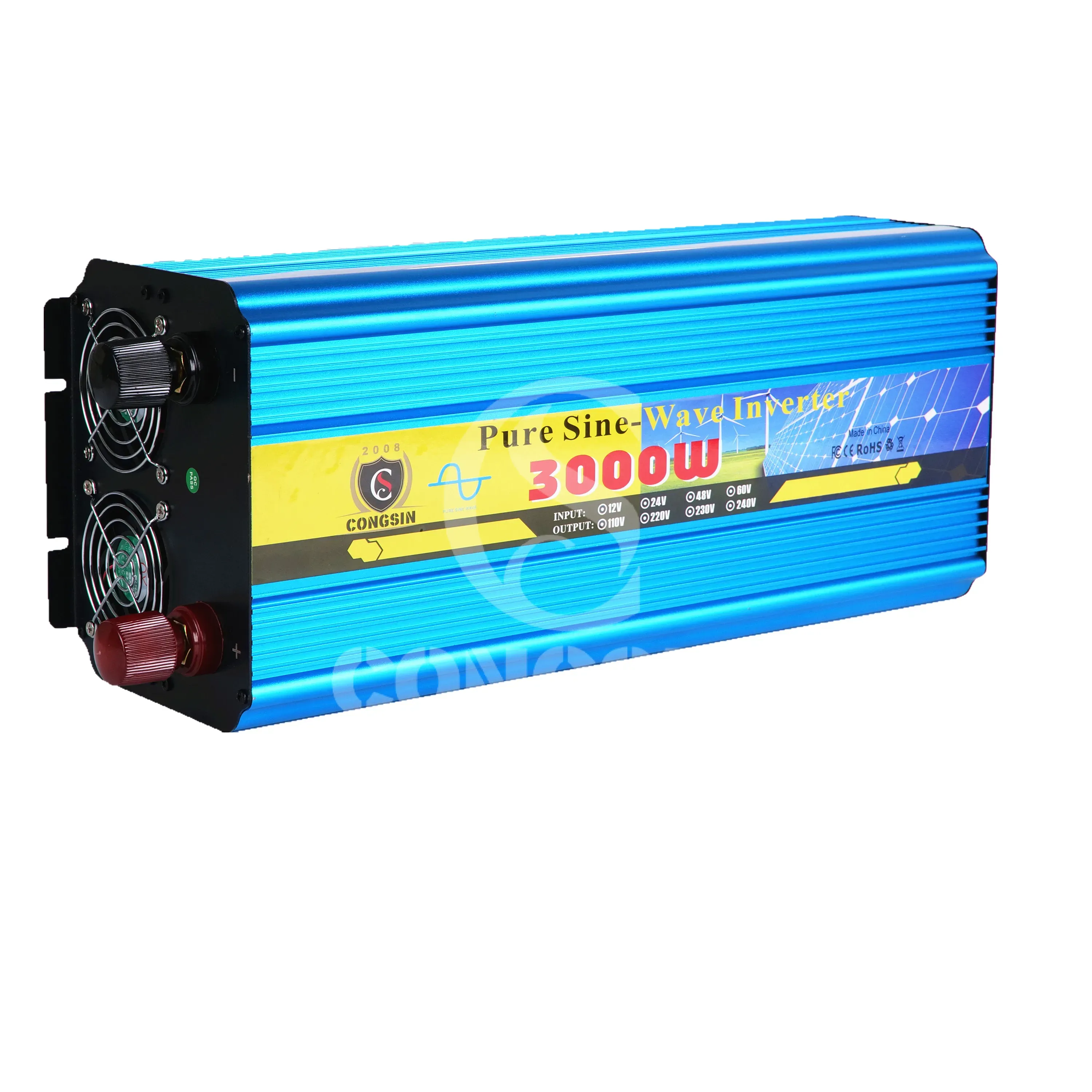
Congsin 3000W LCD Pure Sine Wave Inverter for Home Use Solar Backup Power Inverter Off Grid UPS
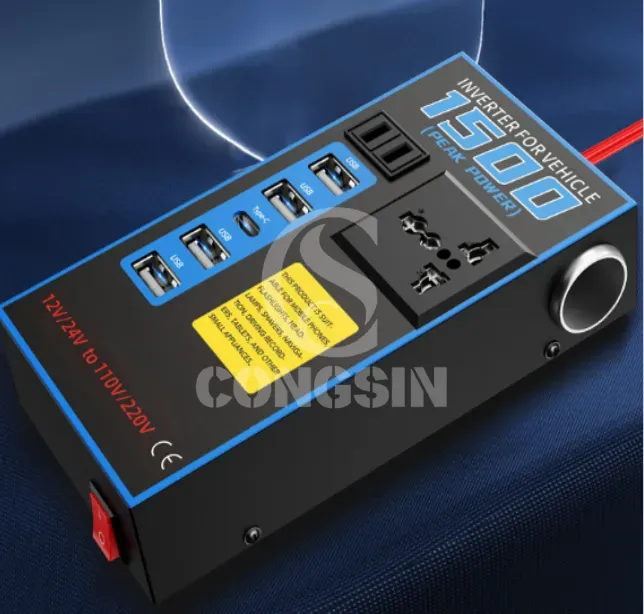
Congsin 1500W Inverter for Vehicle DC 12V/24V to AC 110V/220V with Universal socket Modified Sine Wave
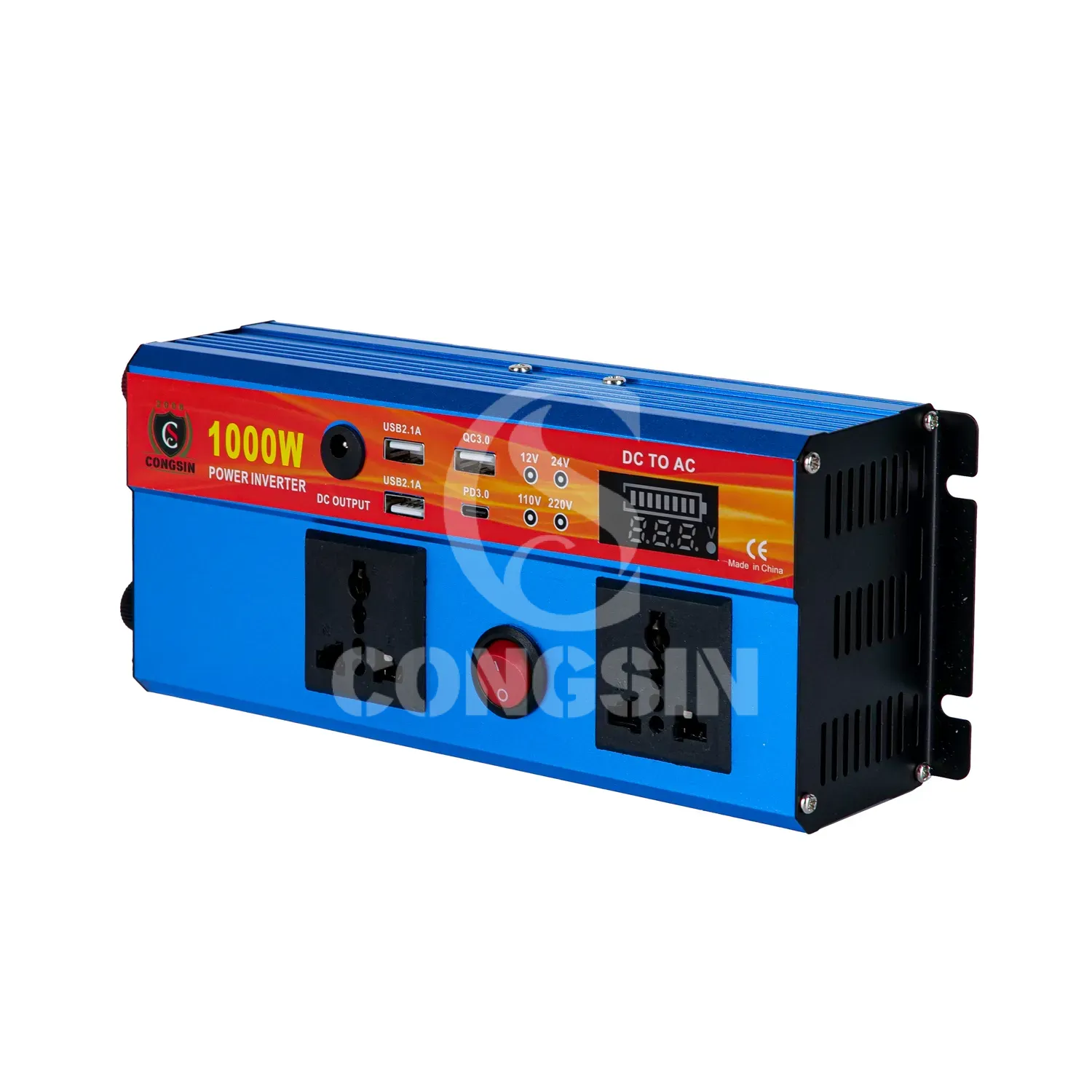
Congsin 1000W modified sine wave inverter with LED display and Type C port car RV power inverter
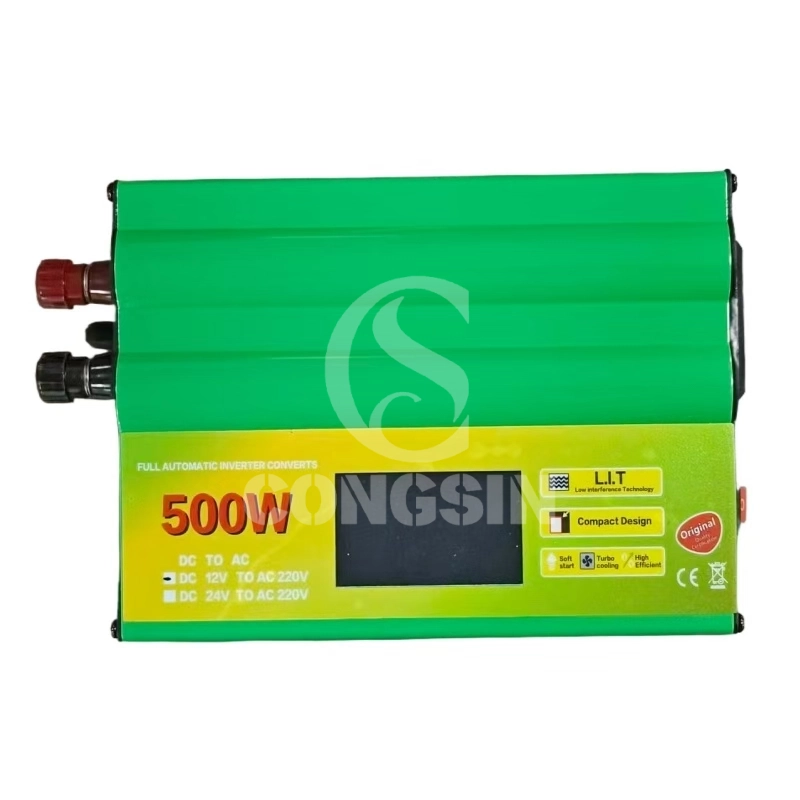
Congsin Modified Sine Wave Inverter 500W 1000W 1500W 12V LED Display Portable for RV Car Solar

CONGSIN is a trusted OEM factory for power inverters, solar charge controllers, and DC converters. Reliable solutions for global B2B buyers.
 High Quality
 7/24 Service
 Guaranteed Warranty
© 2025 Congsin. All Rights Reserved.