





10 Crucial Tips for Maximizing Efficiency with a 1000W Modified Sine Wave Inverter in 2026
- What is a 1000W Modified Sine Wave Inverter?
- Quick Summary: Key Takeaways for 1000W MSW Efficiency
- Tip 1: Prioritize Resistive Loads Over Inductive Loads
- Tip 2: Respect the 20% Surge Capacity Buffer
- Tip 3: Size Your Battery Bank Correctly (The 100Ah Rule)
- Tip 4: Ruthlessly Minimize Idle Power and Standby Draw
- Tip 5: Use Heavy-Duty, Short DC Input Cables
- Tip 6: Manage Heat and Ensure Proper Ventilation
- Tip 7: Avoid Sensitive Electronics to Prevent Harmonic Distortion Waste
- Tip 8: Stagger Your Appliance Startup Times
- Tip 9: Match Input Voltage Perfectly and Keep Terminals Clean
- Tip 10: Utilize Smart Monitoring Tools
- Expert Tips & Common Mistakes to Avoid
- Conclusion
- What appliances can run efficiently on a 1000W modified sine wave inverter?
- Will a modified sine wave inverter damage my laptop or phone?
- How many batteries are needed for a 1000W inverter?
- Why does my modified sine wave inverter get hot?
- Can a 1000W modified sine wave run a refrigerator?
- What is the difference in efficiency between pure and modified sine wave inverters?
- How do I stop my inverter from beeping under heavy load?
- Are modified sine wave inverters still useful in 2026?
What is a 1000W Modified Sine Wave Inverter?
A 1000W modified sine wave inverter is a cost-effective electrical device that converts direct current (DC) from a battery into 120V alternating current (AC) using a stepped, blocky waveform. It is designed to safely handle up to 1000 continuous watts of electrical power.
While its output is less smooth than a pure sine wave, this technology remains highly relevant in 2026. As reported by Wikipedia, inverters are primarily used in electrical power applications to run household appliances from a DC source. They are particularly favored for off-grid cabins, budget campervans, and work trucks due to their robust simplicity and affordability. Maximizing 1000w modified sine wave inverter efficiency begins with recognizing its fundamental mechanics and optimal use cases.
- Cost-Effective: Significantly cheaper to manufacture than complex pure sine wave models.
- Durable: Fewer sensitive internal components make them resilient in rugged off-grid environments.
- Ideal for Basics: Perfectly suited for running simple lighting, chargers, and basic heating elements without issue.
Quick Summary: Key Takeaways for 1000W MSW Efficiency
To quickly maximize your inverter's performance, you must prioritize basic resistive loads, strictly manage battery power, use thick cabling, and physically disconnect unused appliances to stop phantom power drains.
Following these core principles ensures you get the absolute most out of your setup without triggering thermal protections, losing energy to heat, or draining your battery bank prematurely.
- Stick to simple resistive loads to prevent energy waste through heat.
- Always account for the 20% surge buffer to avoid triggering thermal protection.
- Use heavy-duty, short DC cabling to minimize voltage drop.
- Proactively manage idle draw by physically disconnecting unused devices.
Tip 1: Prioritize Resistive Loads Over Inductive Loads
Prioritizing resistive loads means powering simple devices like incandescent bulbs and heaters that efficiently use the blocky waveform, rather than inductive loads like motors that waste up to 20% of the energy as heat.
Understanding the difference between resistive vs inductive loads on modified sine wave systems is essential for maximizing runtime. Resistive loads convert electrical energy directly into heat or light without relying on magnetic fields, making them perfect for stepped waveforms. Inductive loads, however, use coils and magnetic fields (found in compressors and fans), which struggle with the sudden, sharp voltage changes of a modified sine wave, resulting in severe inefficiency.
- Optimal (Resistive): Coffee makers, toaster ovens, traditional lightbulbs, and basic soldering irons.
- Suboptimal (Inductive): Mini-fridges, power tool battery chargers, AC motors, and cooling fans.
Tip 2: Respect the 20% Surge Capacity Buffer
Respecting the 20% surge capacity buffer means keeping your total continuous power draw under 800 watts on a 1000-watt inverter, leaving vital headroom for the sudden, brief energy spikes appliances need to start up.
Every electrical appliance has a continuous rating and a peak surge rating. When a device turns on, it can pull double its normal running wattage for a few milliseconds. By keeping your continuous load carefully capped below 800W, you maintain peak conversion efficiency and prevent internal component stress on the inverter.
- Improves Lifespan: Operating an inverter at 100% capacity constantly degrades its internal capacitors.
- Preserves Battery: Maxing out the continuous wattage forces the battery to discharge at an unsustainable rate.
- Prevents Shutdowns: The 20% buffer stops the inverter's thermal overload protection from triggering unexpectedly and cutting your power.
Tip 3: Size Your Battery Bank Correctly (The 100Ah Rule)
The 100Ah rule dictates that a 1000-watt inverter running near full capacity must be paired with a minimum of one 100Ah 12V deep-cycle or lithium battery to prevent severe voltage drops and inefficiency.
Correct 1000w inverter battery sizing 100Ah is non-negotiable for overall system stability. Voltage sag from an undersized battery forces the inverter's transformers to work significantly harder to output the same 120V AC voltage. This extra effort slashes your overall efficiency and translates directly to wasted battery life.
- Standard Rule: Always pair a minimum 100Ah 12V battery with a 1000W inverter setup.
- Avoid Voltage Sag: Undersized batteries cause rapid voltage drops under load, quickly triggering the inverter's low-voltage alarm.
- Lithium Upgrades: Modern LiFePO4 (lithium) batteries offer sustained voltage curves, significantly improving the inverter's working efficiency compared to older, sagging lead-acid counterparts.
Tip 4: Ruthlessly Minimize Idle Power and Standby Draw
Minimizing idle power means physically turning off the inverter or hardwiring a remote kill switch, as simply leaving the unit powered on consumes between 0.5 and 1.5 amps continuously.
A major mistake off-grid users make is ignoring phantom loads. Reducing inverter idle power draw is vital because a modified sine wave inverter consumes battery power just by maintaining its internal switching circuitry. Furthermore, device chargers left plugged in—even when not actively connected to a phone or laptop—draw parasitic power because their transformers react poorly to modified waveforms.
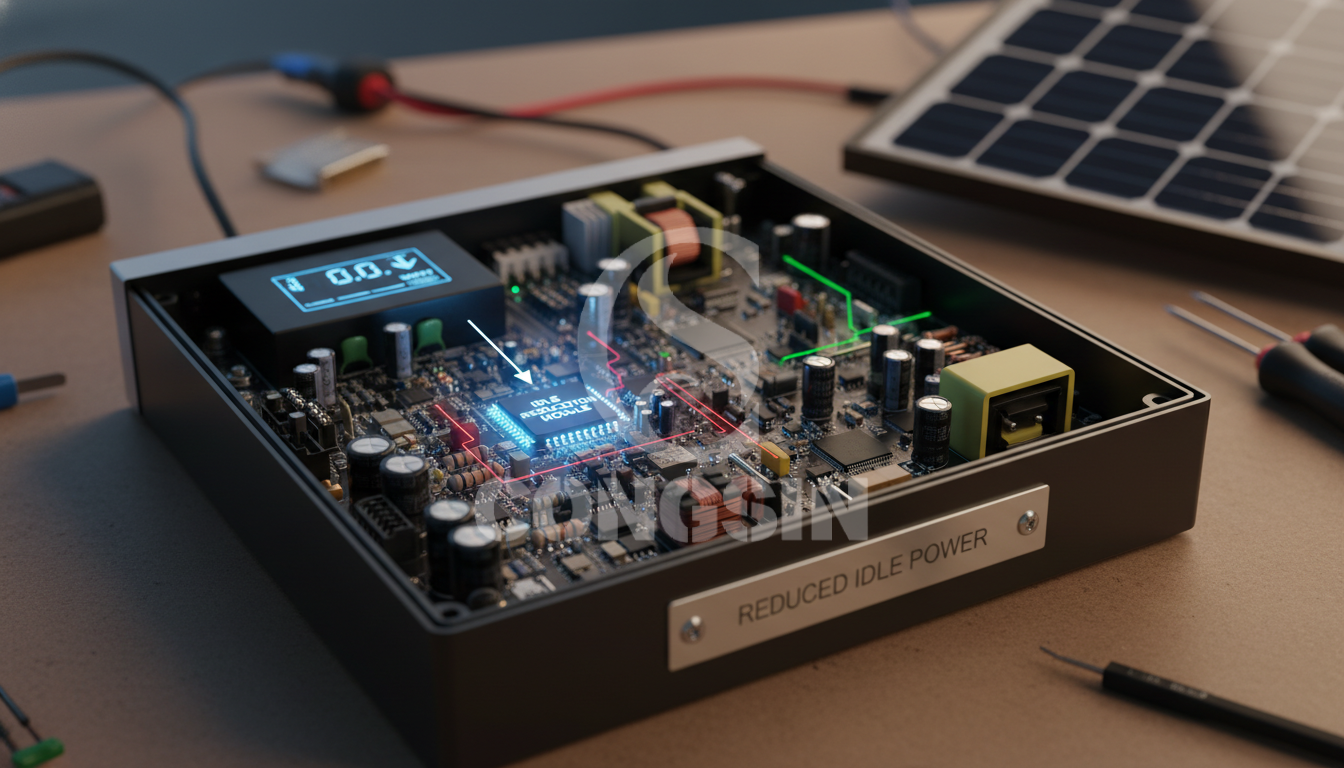
- Kill Switches: Install a remote on/off switch to easily sever the battery connection when AC power is not needed.
- Unplug Chargers: Remove all AC adapters and charging bricks from the outlets when not actively in use.
- Monitor Standby: Check your manufacturer specifications to understand the exact standby amperage of your specific unit so you can calculate daily drain.
Tip 5: Use Heavy-Duty, Short DC Input Cables
Using heavy-duty, short DC input cables reduces electrical resistance between the battery and the inverter, preventing massive efficiency losses caused by low-voltage DC drop.
The physics of low-voltage DC power mean that distance is the enemy of efficiency. A 1000W load at 12V pulls over 80 amps of current. If the connecting cables are too thin or too long, the electrical power turns into ambient heat before it even reaches the inverter, wasting your battery capacity.
- Cable Sizing: Use appropriately thick 2 AWG or 4 AWG cables for a standard 1000W unit.
- Keep it Short: Mount the inverter no more than 3 feet away from the battery bank to eliminate resistance.
- Material Matters: Always use pure copper cables rather than cheaper copper-clad aluminum (CCA) for maximum conductivity and minimum heat.
Tip 6: Manage Heat and Ensure Proper Ventilation
Managing heat involves mounting the inverter in a cool, open space with plenty of airflow to prevent the internal cooling fans from triggering early and draining extra battery power.
The stepped, blocky waveform of a modified sine wave inherently creates more internal friction and heat than a pure sine wave equivalent. If mounted in a cramped, unventilated campervan cabinet or truck toolbox, the ambient temperature rises quickly, which severely handicaps the conversion efficiency.
- Avoid Enclosures: Never seal the inverter in an airtight box or a tight compartment.
- Fan Power Drain: High ambient temperatures trigger the cooling fan much earlier, which draws extra parasitic watts from the battery.
- Clearance: Leave at least two inches of free space around all external heat sink fins to allow for maximum passive cooling.
Tip 7: Avoid Sensitive Electronics to Prevent Harmonic Distortion Waste
Avoiding sensitive electronics on a modified sine wave prevents the total harmonic distortion from turning electrical power into damaging heat within complex microprocessors and variable speed drives.
As defined by Wikipedia, total harmonic distortion (THD) measures the harmonic distortion present in an electrical signal, and higher THD means more energy is wasted. Preventing harmonic distortion energy loss is crucial when using modified sine waves, as their THD can reach up to 40%. This extreme distortion causes sensitive electronic devices to run highly inefficiently, overheat rapidly, or outright fail.
- Do Not Use: Laser printers, which use complex heating fusers that require pure, clean sine waves to function.
- Medical Devices: CPAP machines and oxygen concentrators must never be run on a modified waveform due to motor inefficiency and safety risks.
- Audio Equipment: High-end stereos and amplifiers will emit a loud, annoying buzz as the electrical noise is converted into wasted acoustic energy.
Tip 8: Stagger Your Appliance Startup Times
Staggering startup times means turning on your largest power-drawing appliance first, letting its surge power stabilize, and then carefully powering on subsequent smaller devices.
Turning everything on simultaneously creates a dangerous, compounding surge effect. If multiple devices hit their startup surge at the exact same millisecond, the combined draw can easily exceed the 2000W peak rating of a 1000W inverter, causing it to crash and operate outside its most efficient power band.
- Largest First: Always start the heaviest load, like a small compressor or space heater, first.
- Wait for Stabilization: Give the primary device 5 to 10 seconds to settle completely into its continuous running wattage.
- Add Secondary Loads: Finally, switch on your smaller, secondary loads like lights, laptop chargers, and basic accessories.
Tip 9: Match Input Voltage Perfectly and Keep Terminals Clean
Matching the input voltage means ensuring your inverter's rating strictly aligns with your battery bank, while keeping terminals perfectly clean guarantees a lossless flow of electrical current.
A 12V inverter cannot be connected to a 24V battery bank without experiencing catastrophic failure. Beyond strict voltage matching, the physical connection points are the most common efficiency failure zones. Corroded, loose, or oxidized battery terminals introduce severe electrical resistance, systematically starving the inverter of power and causing voltage drops.
- Verify Voltage: Double-check that both the battery bank and the inverter are strictly rated for 12V (which is standard for 1000W units).
- Clean Terminals: Use a wire brush every six months to scrub away acid buildup, dirt, and oxidation.
- Dielectric Grease: Apply a thin layer of dielectric grease over tightened connections to prevent future power-robbing corrosion.
Tip 10: Utilize Smart Monitoring Tools
Utilizing smart monitoring tools involves installing an inline DC battery shunt or a Bluetooth monitor to track the exact wattage and amperage being pulled by the inverter in real-time.
You cannot optimize an electrical system that you do not accurately measure. In 2026, relying solely on the basic LED indicator lights found on cheap inverters is insufficient for true efficiency. A proper inline battery monitor shows exactly how many amps are being drawn, helping users actively adjust their consumption habits to maximize their 1000W limit.
- Install a Shunt: An inline DC shunt accurately measures the exact power leaving the battery and entering the inverter.
- Real-Time Data: Seeing exact wattage on a screen helps you immediately identify and eliminate hidden phantom loads.
- Bluetooth Connectivity: Modern monitoring trends in 2026 allow users to track their power efficiency remotely via dedicated smartphone apps.
Expert Tips & Common Mistakes to Avoid
The most common mistake users make is running excessively long AC extension cords or incorrectly assuming a 1000W inverter can seamlessly run a 1000W-rated microwave oven.
Maximizing efficiency is as much about avoiding operational errors as it is about following technical best practices. A microwave rated at 1000W for cooking actually pulls closer to 1500W of electricity from the wall to operate, which will immediately overload and shut down a 1000W modified sine wave inverter.
- Mistake: Running AC Extension Cords Too Far: Running AC extension cords over long distances causes AC voltage drop. The golden rule is to keep AC cords short, and DC cords even shorter.
- Mistake: Misunderstanding Appliance Wattage: Assuming a 1000W inverter can run a 1000W microwave is a recipe for failure. Microwaves pull much more than their advertised cooking wattage.
- Expert Tip: Listen to Your Electronics: If a fan, motor, or charger is buzzing loudly, the modified sine wave is causing inefficiency and internal heat. Unplug it immediately to save power and prevent damage.
Conclusion
Maximizing a 1000W modified sine wave inverter in 2026 comes down to deeply understanding your electrical loads, maintaining pristine physical connections, and aggressively mitigating heat. While pure sine wave inverters are often heralded as the industry gold standard, modified sine wave units remain incredibly budget-friendly and ruggedly dependable for simple applications. By treating them with the right efficiency practices—such as keeping your continuous draw well under 800W and utilizing an appropriately sized 100Ah battery—you can ensure their real-world performance strongly rivals much more expensive power setups. Contact us today to optimize your 1000w modified sine wave inverter efficiency strategy.
What appliances can run efficiently on a 1000W modified sine wave inverter?
Basic resistive loads run best. This includes incandescent lights, simple coffee makers, toasters, small TVs, and most basic laptop chargers. Always check the continuous wattage to ensure it falls below 800W for a safe buffer.
Will a modified sine wave inverter damage my laptop or phone?
Generally, modern laptop and phone chargers convert AC back to DC anyway, so they usually work fine. However, the charging brick might run noticeably hotter due to the stepped waveform. Monitor it closely.
How many batteries are needed for a 1000W inverter?
For a 1000W inverter running at full capacity, you need at least a 100Ah 12V deep-cycle battery. To maximize runtime and efficiency without damaging the battery, a 200Ah setup is highly recommended.
Why does my modified sine wave inverter get hot?
The blocky, stepped waveform of modified sine waves causes internal switching components to work harder, generating more heat. Running inductive loads or operating near the maximum 1000W limit will also cause rapid temperature increases.
Can a 1000W modified sine wave run a refrigerator?
It can run a small dorm-style fridge, but it's not ideal. Compressors require a large startup surge. Additionally, the modified waveform makes the compressor motor run hotter and less efficiently, potentially shortening its lifespan.
What is the difference in efficiency between pure and modified sine wave inverters?
Pure sine wave inverters typically operate at 90-95% efficiency. Modified sine wave inverters generally operate at 75-85% efficiency, losing more power to heat and harmonic distortion.
How do I stop my inverter from beeping under heavy load?
A beeping inverter usually indicates low voltage from the battery, triggering the low-voltage disconnect alarm. To fix this, reduce the load, ensure your DC cables are thick enough, or charge your battery bank.
Are modified sine wave inverters still useful in 2026?
Yes, they remain highly useful and cost-effective for simple, rugged applications like job site tools, basic lighting, and budget off-grid cabins. As long as users pair them with appropriate resistive loads, they offer unbeatable value.

2026 Ultimate Guide: Why Off-Grid Hybrid Solar Inverters Are the Game-Changer You Need [Buyer's Checklist]
Top 10 AC to DC Car Inverters for Road Trips and Work
Best 1000W Car Inverters 2026: Top Models Compared
Cost Breakdown: UPS Inverter Price, Installation, and ROI
Modified Sine Wave Inverters
Is it normal for the inverter to heat up when working?
It is normal for it to generate some heat when working. If the temperature is too high (e.g., hot to the touch), please stop using it and check if the load is overloaded.
Can I customize the color and logo?
Yes, OEM/ODM customization is supported.
Can this inverter power a laptop?
If the laptop power is within 150W and the input is AC220V, it can supply power normally.
Distributor
Do I need to carry inventory?
We offer flexible inventory options based on your market needs, and we can assist with supply chain management.
Pure Sine Wave Inverters
Can it drive a 3P air conditioner and an electric oven at the same time?
Total power needs to be calculated: the rated power of a 3P air conditioner is about 2200W-2500W, and the electric oven is about 1500W-2000W. The total power is 3700W-4500W, which exceeds the 3000W continuous power, so simultaneous use is not recommended; if used alone, the 6000W peak can meet the startup needs of both, and the battery capacity must be ≥200Ah (12V) when used alone.
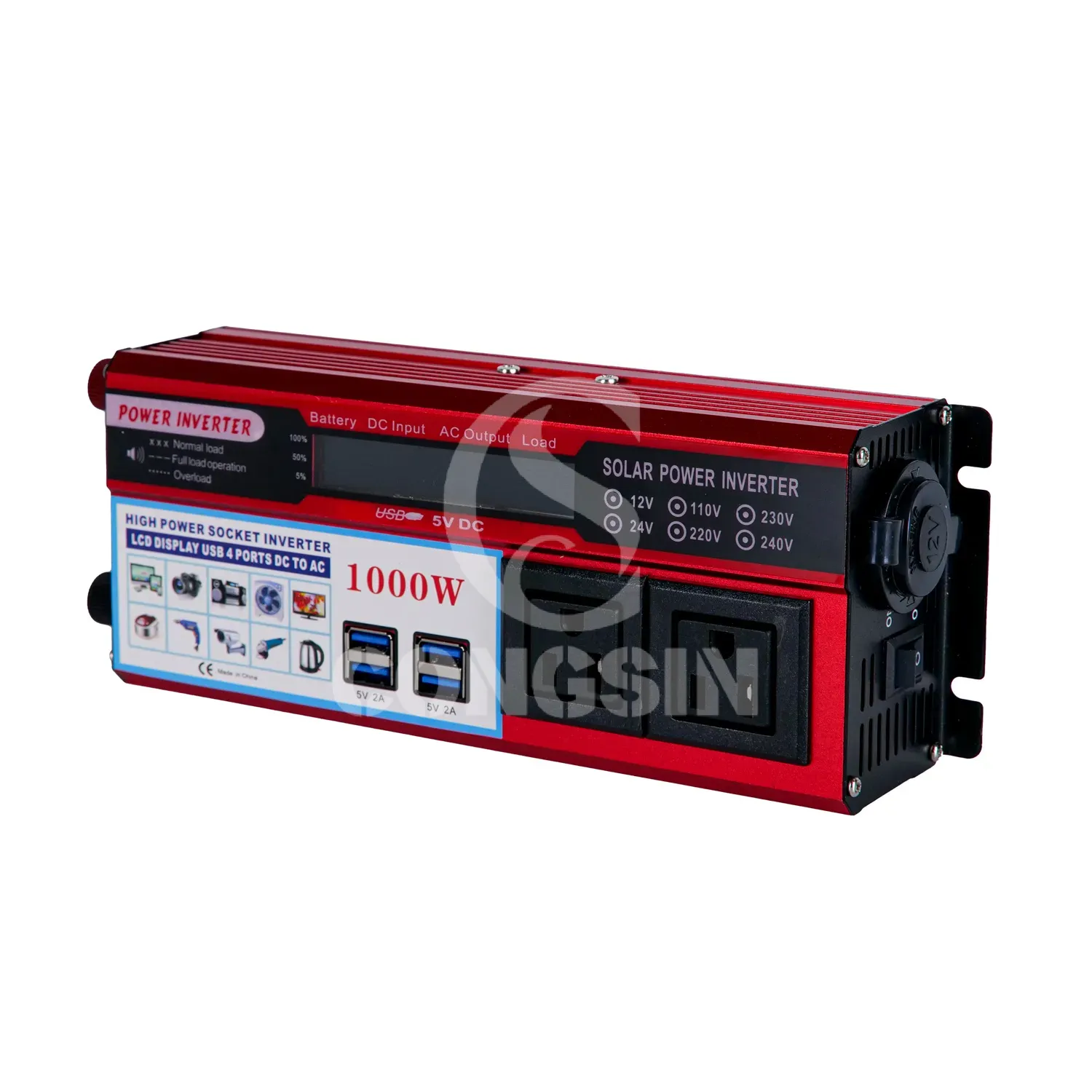
Congsin 1000W modified sine wave inverter with American Sockets and Lcd display portable 12V car RV
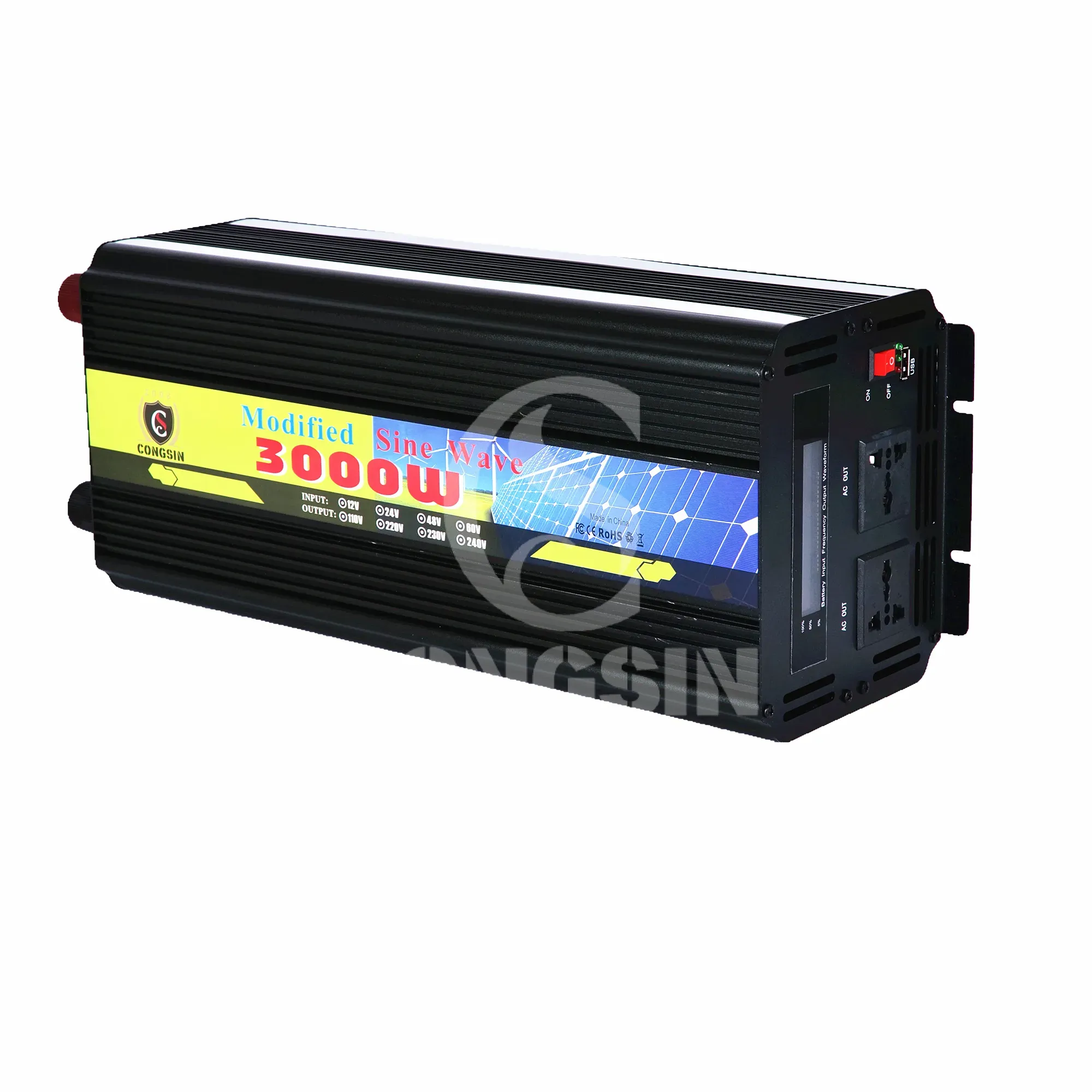
Congsin Full Power 3000W Modified Sine Wave Inverter Peak Power 6000W with LCD Display RV Solar
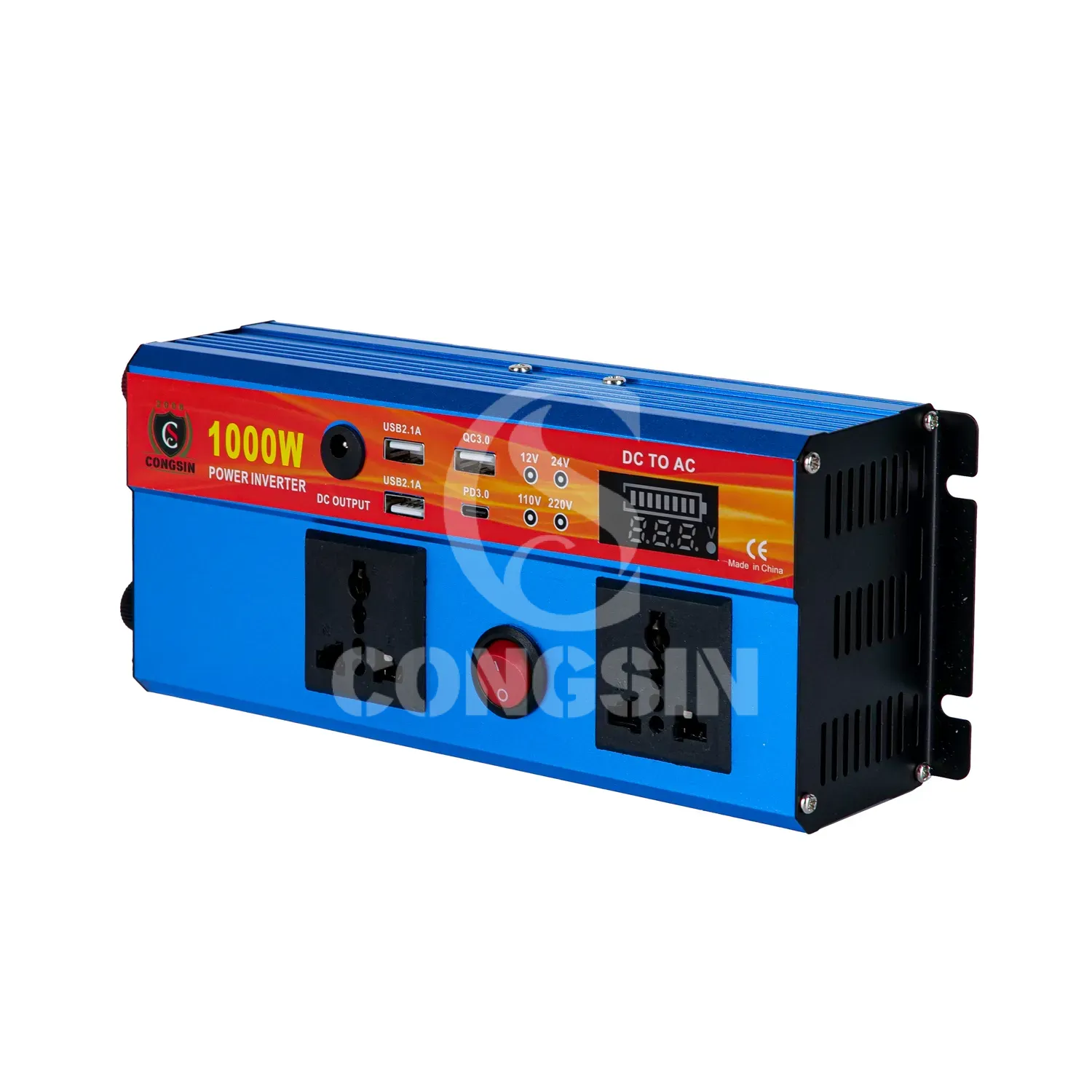
Congsin 1000W modified sine wave inverter with LED display and Type C port car RV power inverter
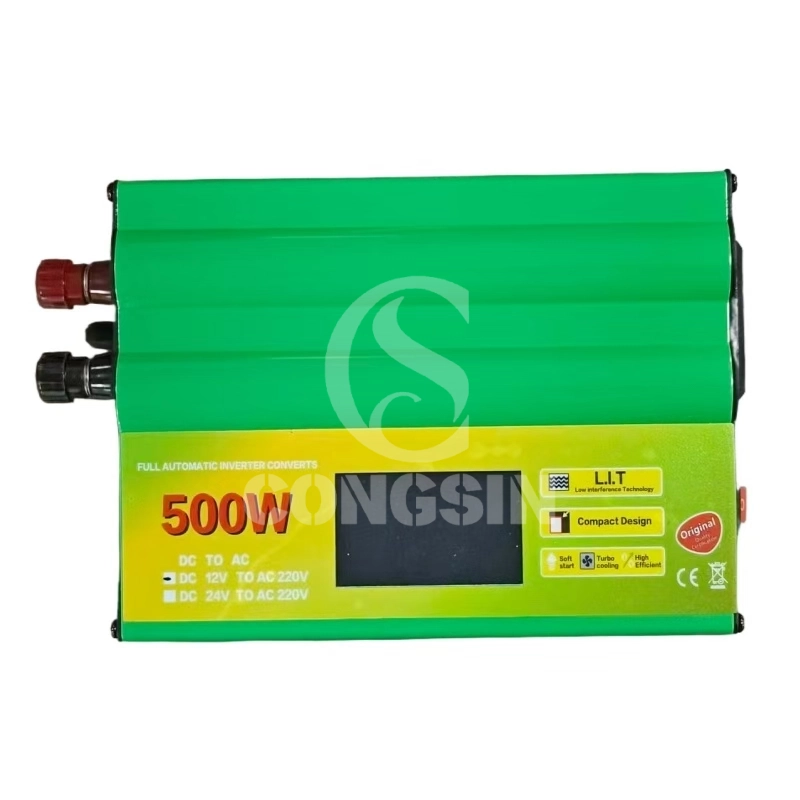
Congsin Modified Sine Wave Inverter 500W 1000W 1500W 12V LED Display Portable for RV Car Solar

CONGSIN is a trusted OEM factory for power inverters, solar charge controllers, and DC converters. Reliable solutions for global B2B buyers.
 High Quality
 7/24 Service
 Guaranteed Warranty
© 2025 Congsin. All Rights Reserved.