



Wholesale Pure Sine Wave Inverter Volume Order Planning
- Quick Answer
- Key Takeaways
- Build One Wholesale Pure Sine Wave Inverter Order Baseline From the Model Mix
- Link Sample Approval to the Production Release Gate
- Plan Lead Time Through Dependencies and Shipment Readiness
- Keep Documents and Changes Tied to the Approved Baseline
- Release One Controlled Procurement Package
- Frequently Asked Questions
- Share Your Volume Order Baseline
Quick Answer
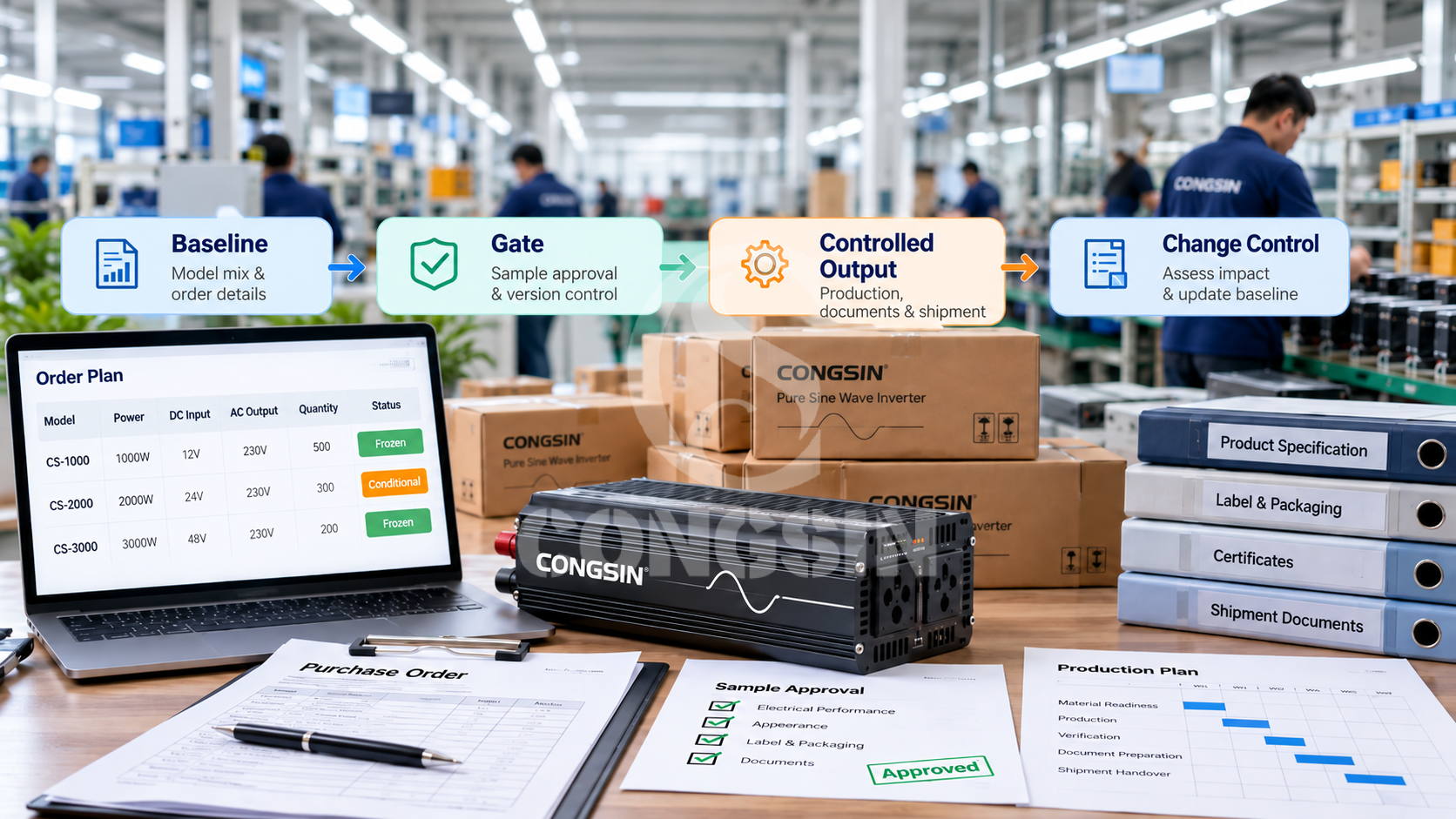
A wholesale pure sine wave inverter order should move into production only after the buyer and supplier are working from the same controlled baseline. That baseline connects each purchase-order line to one identifiable configuration, its approval reference, applicable document version, quantity and release status. Sample approval then acts as a gate: it confirms which configuration the order is actually referencing rather than simply proving that a sample was received.
Lead time should be managed from an agreed starting condition and through the dependencies that follow it, including configuration release, commercial confirmation, production, verification, documentation readiness and shipment handover. Documents and post-approval changes remain tied to that same baseline so that a revised label, packaging file, product requirement or commercial condition cannot silently create a different order.
This page begins after the supplier and product direction have been selected. It focuses on converting approved or near-approved inverter configurations into a controlled volume order rather than repeating supplier qualification or OEM development.
Wattage alone does not define a production SKU, every PO line should reference one controlled configuration, and production should not be released while material configuration, document or commercial requirements remain uncontrolled.
Unless confirmed in the applicable quotation, order confirmation or product-specific documentation, MOQ, mixed-model rules, lead-time conditions, sample requirements, customization availability, document applicability and certification scope remain project-specific.
Key Takeaways
- A PO line should reference one controlled configuration, not only a wattage or product-family description.
- Production release requires an identifiable approval basis and no uncontrolled critical requirement.
- Lead-time assumptions, documents and post-approval changes should remain linked to the released order baseline.
Build One Wholesale Pure Sine Wave Inverter Order Baseline From the Model Mix
Volume orders frequently contain more variation than their commercial description suggests. A distributor may purchase several power classes for different channels, while a system integrator may require different input platforms, output requirements or interfaces for separate projects. Trading companies may also handle multiple destination markets, private-label versions or packaging requirements in one procurement program.
The first engineering task is therefore not to ask when production can start. It is to define exactly what is being released for production.
Buyers who are still selecting the product family can first review Congsin's Pure Sine Wave Inverters. Once the relevant product direction has been selected, the commercial model mix needs to be translated into an order baseline that purchasing, engineering and production can all interpret in the same way.
Define Each Purchase-Order Line as One Configuration
A purchase-order line should represent one identifiable configuration. A description such as “1000W pure sine wave inverter” may be useful during initial sourcing, but wattage alone may not identify all requirements that affect manufacturing, labeling, documentation or commercial handling.
Depending on the order, configuration identity may include the product family or controlled model reference, rated power class, DC input requirement, AC output requirement, socket or interface configuration, destination market, branding, packaging, quantity, approval reference and applicable document revision.
The objective is not to make every standard order complicated. It is to make the level of control proportional to the number of variables in the project. A repeat order of an unchanged standard product may need only a stable model reference and quantity. A multi-market or customized order may require a broader baseline.
PO Line → Approved Configuration → Current Document Version → Release Status
| Baseline Element | Information to Control | Release Requirement |
|---|---|---|
| PO line identity | Internal model or controlled configuration reference | One PO line refers to one configuration |
| Electrical configuration | Power class, DC input and AC output requirements | Confirmed for the selected model |
| Interface and market version | Socket, connector, destination market or customer program | Applicable version identified |
| Branding and packaging | Artwork, label and packing references | Current revision approved where required |
| Quantity and commercial structure | Quantity by model or variant | Confirmed in quotation or order |
| Approval basis | Sample, drawing, specification or other approved reference | Traceable to the PO line |
| Documentation | Manual, label and required order documents | Applicable revision identified |
| Status | Frozen, conditional or open | Open items cannot silently enter production |
Separate Frozen, Conditional and Open Requirements
Every requirement does not need to reach final status at the same moment, but its status should be visible. A frozen requirement has been agreed and can be used as a production input. A conditional requirement is understood but still depends on a defined event or confirmation before the affected activity can proceed. An open requirement remains unresolved and should not be interpreted as an approved instruction.
This distinction is important because informal communication is common during sourcing. A buyer may discuss a new label in a message, attach an alternative packaging file or mention a possible destination change during quotation. None of those communications should automatically replace the controlled baseline.
An unanswered message, obsolete artwork file or informal comment should never become a production instruction.
When the status is visible, the project team can continue work that is genuinely ready while keeping affected activities on hold where an unresolved item could change the product, commercial basis or shipment package.
Prepare the RFQ From the Same Baseline
The RFQ should not be a separate description of the project that later needs to be reconciled with the production order. It should be the commercial expression of the same baseline.
For a volume pure sine wave inverter program, the RFQ should normally communicate the target model or product range, quantity by model, required DC and AC configuration, destination market or application, interface requirements, branding or packaging requirements where relevant, current sample or approval status, required documents and the target delivery window.
This does not mean every field must already be frozen before an initial quotation can be requested. It means that uncertain items should be identified as uncertain rather than hidden behind a generic product description.
Buyers who have not yet selected a supplier can use the Pure Sine Wave Inverter Supplier Evaluation and Buying Guide for the upstream sourcing decision. This volume-order framework begins once the project is ready to convert the selected product direction into a controlled commercial order.
Link Sample Approval to the Production Release Gate
Sample approval becomes valuable to volume purchasing when it identifies the version that production is expected to reproduce. A sample that has been received, tested or visually accepted is not automatically a complete production baseline. The approval should indicate what aspects of the supplied configuration were actually represented and accepted.
Define What the Approval Covers
Depending on the project, approval may cover the product configuration, electrical version, external interface, housing-related requirement, branding, label, packaging or document revision. The appropriate scope depends on what has been customized or changed.
An approved sample is evidence only for the configuration and attributes it actually represents.
For example, electrical acceptance of a sample does not automatically approve a packaging file created later. Approval of label artwork does not automatically confirm a later interface change. If several attributes were approved at different stages, the production baseline should make those references traceable rather than relying on the general statement that “the sample was approved.”
This is where the current article differs from the OEM Pure Sine Wave Inverter Development Roadmap. The OEM development process establishes and validates a new or modified configuration. Volume-order planning determines which valid approved configuration the commercial order is referencing and whether it is ready for release.
Close Deviations and Link Approval to the PO
Any difference identified during sample evaluation should reach a defined disposition. A deviation may be accepted as part of the approved baseline, corrected through a revised version, or remain open until a decision is made. The important issue is that an unresolved deviation should not disappear from view when the project moves from sampling to purchasing.
If a correction produces a new drawing, label, specification or sample reference, the PO baseline should point to that updated reference. If the accepted deviation becomes part of the supplied product, that decision should also be traceable.
Production release is valid only when the PO line and the approved configuration reference identify the same version.
Plan Lead Time Through Dependencies and Shipment Readiness
Lead time is commercially important, but treating it as one isolated number can hide the conditions that determine whether that number is achievable.
Configuration Freeze → Commercial Release → Material Readiness → Production → Verification → Documentation Readiness → Shipment Handover
The sequence does not imply that every order follows an identical internal workflow. Its purpose is to show that the delivery schedule depends on more than the physical production period.
Define the Starting Condition and Dependencies
A lead-time commitment only becomes operational when the starting condition is clear. Depending on the commercial project, the agreed starting point may be connected to order confirmation, payment conditions, final configuration approval, sample approval, artwork approval, document freeze or another defined release milestone.
The difference matters because time spent resolving open requirements is not the same as time spent executing a released production order. For example, if a buyer requests a packaging change after sample approval but before production release, the schedule impact depends on whether the new packaging affects commercial terms, material preparation or documentation. If a technical requirement changes after material preparation has begun, the effect may be different again.
Lead-time planning should therefore identify the dependencies that can reopen the schedule rather than simply repeat a number from an earlier quotation. When one of those dependencies changes, the affected timing basis should be reviewed together with the order baseline.
This is especially important for mixed-model purchasing. One order may contain lines that are ready to proceed and others that still have open configuration or artwork requirements. The project should make clear whether those lines move together or whether different readiness states affect the commercial delivery plan.
Separate Production Completion From Shipment Readiness
Production complete means manufacturing for the released configuration is complete. Shipment ready means the physical order, agreed packaging and required documents are ready for the defined handover.
The distinction is important because documentation and shipment preparation can remain open after manufacturing work has finished. A buyer may require specific commercial paperwork, product documentation, label confirmation or destination-related records before the order can proceed to the next logistics stage.
The required shipment package should therefore be defined early enough that document preparation does not become a last-minute activity disconnected from production planning.
A useful schedule review asks two different questions: when will the released configurations complete production, and when will the complete order package be ready for the agreed shipment handover? Keeping those milestones separate gives distributors and importers a more realistic view of delivery readiness.
Keep Documents and Changes Tied to the Approved Baseline
Documents and post-approval changes are often managed as separate administrative topics. In a controlled volume order, they serve the same purpose: preserving the identity of the product and order after approval. The document package should show what applies to the supplied configuration, while change control should prevent obsolete requirements from remaining active after a revision.
Match Documents to the Model and Market Variant
Order documents can be considered in three groups. Product and technical documents describe or support the supplied product, such as applicable specification references, instructions or product-specific compliance documentation. Commercial and order documents define the transaction, including quotations, purchase orders, order confirmations and the configuration references used by those records. Shipment and destination documents support the agreed logistics or market handover and depend on the commercial arrangement and destination requirements.
These categories should remain connected to the relevant model or market version. The existence of a company-level certificate or document does not automatically establish that it applies to every SKU, configuration or destination.
Congsin maintains a Certificates page for available company and product-related certification information. For an actual volume order, the applicability of any certificate or compliance document should still be matched to the specific product and market requirement using current product-specific documentation.
Labels, manuals and packaging files should also remain revision-controlled where they can change during the project. The objective is simple: the team should be able to identify which revision is current and which configuration it applies to without comparing multiple uncontrolled email attachments.
Assess Changes Before Updating the Baseline
Approval does not mean that a project can never change. It means that subsequent changes need a controlled decision.
A post-approval change may affect the technical configuration, artwork, documents, commercial terms, packaging, schedule or shipment requirements. The first step is therefore to identify the affected areas rather than automatically treating every revision as either trivial or a complete redesign.
After the impact is understood, the project can determine the appropriate level of reconfirmation. A document correction may require only a revised file and approval. A technical change may require additional engineering review or sample confirmation. A quantity or model-mix change may require commercial and schedule reconfirmation even when the product itself is unchanged.
The change should then reach one of three states: approved into the baseline, rejected, or kept open until the required decision has been made. Once approved, the affected configuration, document, quotation or schedule reference should be updated so that obsolete versions no longer appear to be current.
A change is not part of the order until its impact is assessed and the affected baseline is updated.
If a revision creates a materially different product or market configuration, a separate controlled SKU or PO line may be more appropriate than retaining one commercial identifier for two different configurations.
Release One Controlled Procurement Package
The purpose of the previous stages is to reach one controlled procurement package that can move from definition into execution. For a straightforward standard order, the package may be compact. For a customized or multi-market program, it may include more references. In either case, the release should connect the model mix, approved configuration, commercial order, timing basis, document references and change record.
The final decision is not whether every possible project question has disappeared. It is whether the requirements that can affect the released activity are either controlled or visibly held.
| Control Area | Required State Before Release | Action When Changed |
|---|---|---|
| Model mix | PO lines and quantities defined | Update order baseline and quotation |
| Product configuration | Approved reference identified | Review technical and sample impact |
| Branding and packaging | Current artwork and packing versions approved where required | Replace obsolete revisions |
| Commercial terms | Matched to released configuration and quantity | Reconfirm quotation or order |
| Lead-time basis | Starting condition and dependencies agreed | Reassess schedule |
| Documentation | Required documents and applicable revisions identified | Update the relevant document reference |
| Shipment readiness | Product, packing and required documents ready for the defined handover | Hold handover until the affected item is resolved |
| Open items | Owner, impact and decision point visible | Keep the affected activity on hold |
Confirm the Procurement Handover
The released package can be summarized as Model Mix + Approved Configuration + Commercial Order + Timing Basis + Document References + Change Record.
The value of this package is not the number of files it contains. Its value is that the main records point to the same order state. Commercial terms should correspond to the released model mix and configuration. Timing should be linked to the agreed release basis. Documents should be current for the relevant product and market. Any open requirement should have an identifiable owner, impact and decision point so that it cannot silently enter production.
This creates a clean handover from procurement definition to production execution. Purchasing no longer depends on an informal understanding of what the buyer “probably meant,” while production does not become the place where unresolved commercial or configuration decisions are discovered.
The same structure is useful for distributors, trading companies, integrators, transportation and outdoor-sector partners, and professional or commercial buyers because each of those organizations may need to coordinate multiple stakeholders around one order.
Preserve the Baseline for Repeat Orders
A controlled baseline also creates value after the first order. Before reusing a previous baseline, confirm that the product configuration, destination, artwork, packaging, documents and commercial requirements remain current. A repeat order should reuse a valid approved baseline, not simply copy an old purchase order.
If nothing material has changed, the previous controlled references can reduce unnecessary rework. If something has changed, the difference becomes visible and can be reviewed before the next release. This approach supports repeat purchasing without assuming that an old approval remains valid forever.
Frequently Asked Questions
What must be confirmed before releasing a wholesale pure sine wave inverter order?
Before release, each PO line should have an identifiable product configuration, quantity, approval basis, applicable document revision and release status. Requirements that can affect production, branding, packaging, commercial terms or shipment readiness should either be frozen or have a clearly controlled conditional status. Open critical items should remain visible and should not silently become production instructions. MOQ, mixed-model rules, timing conditions and customization availability should be confirmed through the applicable quotation, order confirmation or other project-specific documentation rather than assumed from a generic purchasing rule.
Does every inverter model need a separate approved sample?
Not necessarily. The required approval method depends on how much one configuration differs from another and what has already been validated. A separate physical sample may not be necessary when another approved reference legitimately represents the configuration being ordered. The important control is traceability: every production configuration should have an identifiable approval basis. If a model introduces a material electrical, mechanical, interface, branding or other configuration change, the project should determine whether additional review or sample confirmation is required before production release.
When should lead time begin for a volume order?
Lead time should begin from the starting condition agreed for the specific commercial order. Depending on the project, this may relate to order confirmation, payment conditions, final configuration approval, sample approval, artwork approval, document freeze or another defined release milestone. The starting condition matters because time spent resolving open requirements is different from time spent executing an already released production order. If a requirement changes after the agreed starting point, its impact on material preparation, production, documentation or shipment readiness should be reviewed before the previous schedule is treated as unchanged.
Can different power ratings and market variants be combined in one order?
A volume order can be structured around multiple PO lines and market variants, but the commercial feasibility and any mixed-model requirements must be confirmed for the actual project. Each line should remain traceable to one configuration, quantity, approval reference and applicable document version. Combining products in one commercial order should not result in several technically different configurations sharing an ambiguous SKU description. A model-mix baseline allows buyers and suppliers to discuss the combined order while preserving control over the individual configurations inside it.
How should documents and post-approval changes be controlled?
Documents should be matched to the applicable product, market and current revision rather than treated as generic files. Post-approval changes should first be assessed for their impact on the technical configuration, artwork, packaging, commercial terms, schedule or shipment requirements. The change can then be approved, rejected or kept open. When it is approved, the affected baseline records should be updated and obsolete revisions should stop being treated as current. This keeps the commercial order, production configuration and supporting documents aligned after the original approval.
Share Your Volume Order Baseline
If your project has moved beyond initial supplier selection and you are preparing a volume pure sine wave inverter order, organize the request around one baseline rather than a series of disconnected product questions.
Share the target models, quantity by model, DC and AC requirements, destination, sample or approval status, branding and packaging requirements where applicable, required documents and target delivery window with Congsin. These inputs provide a clearer basis for discussing the applicable configuration, commercial conditions and order timing.
The final quotation and order conditions should be based on the actual product mix and project requirements rather than assumed MOQ, mixed-model rules, lead time, document scope or customization conditions.


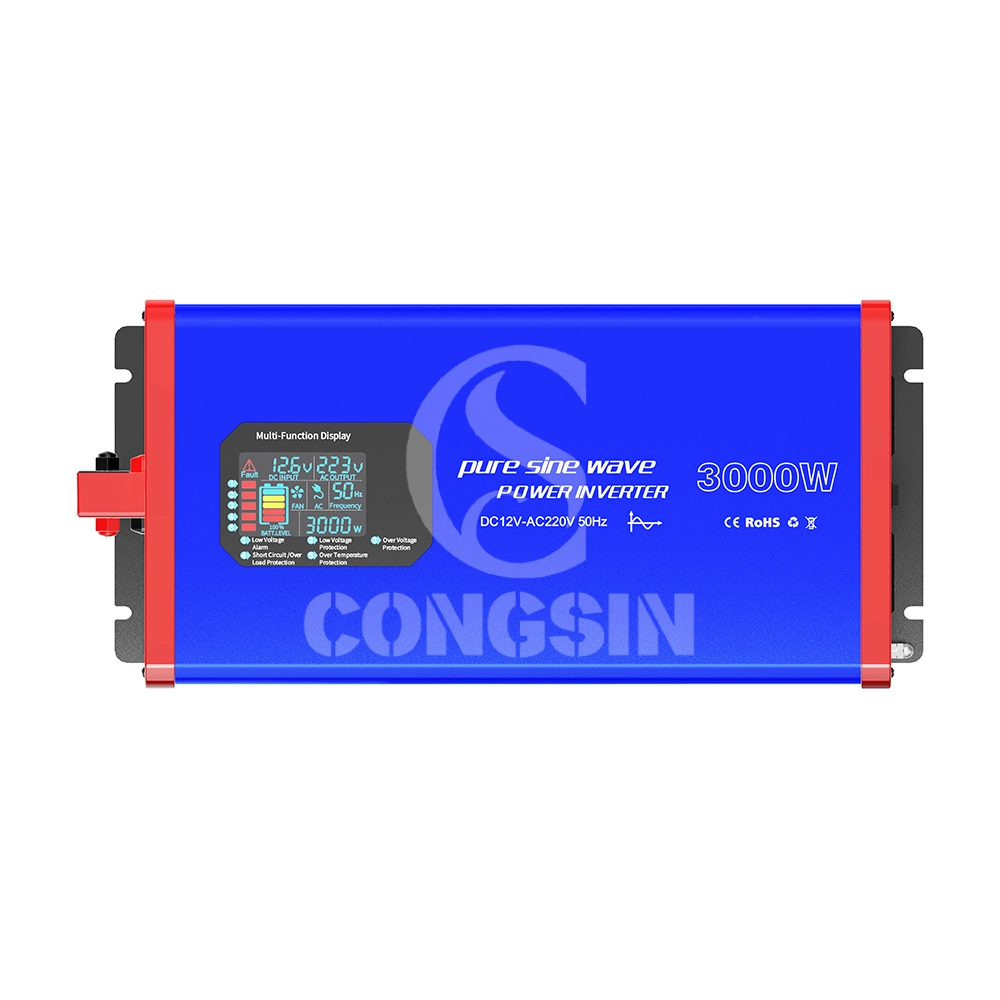
This 3000W full-power pure sine wave inverter (Model: CS3000PSW) adopts pure sine wave output technology (waveform distortion rate <2%), and the output power is highly consistent with mains power quality. It can safely drive high-power precision loads such as air conditioners, refrigerators, medical instruments, and small industrial equipment, avoiding equipment malfunctions or shortened service life caused by unstable waveforms. The device supports DC 12V input (compatible with 10.5V-14.8V wide voltage), continuously outputs 3000W full power, and has a peak power of 6000W, easily coping with the instantaneous startup impact of high-power devices; it is equipped with 4 AC universal sockets (max current 16A) + 2 USB 3.0 fast-charging ports (22.5W per port) to meet the simultaneous power supply needs of multiple devices. Built-in six-fold safety protection (overload, overvoltage, undervoltage, short circuit, overtemperature, reverse connection), combined with dual intelligent silent cooling fans (noise ≤45dB), it achieves the triple advantages of "high power + high safety + low noise," suitable for home emergency, outdoor engineering, vehicle-mounted power supply, small industrial scenarios and other fields.
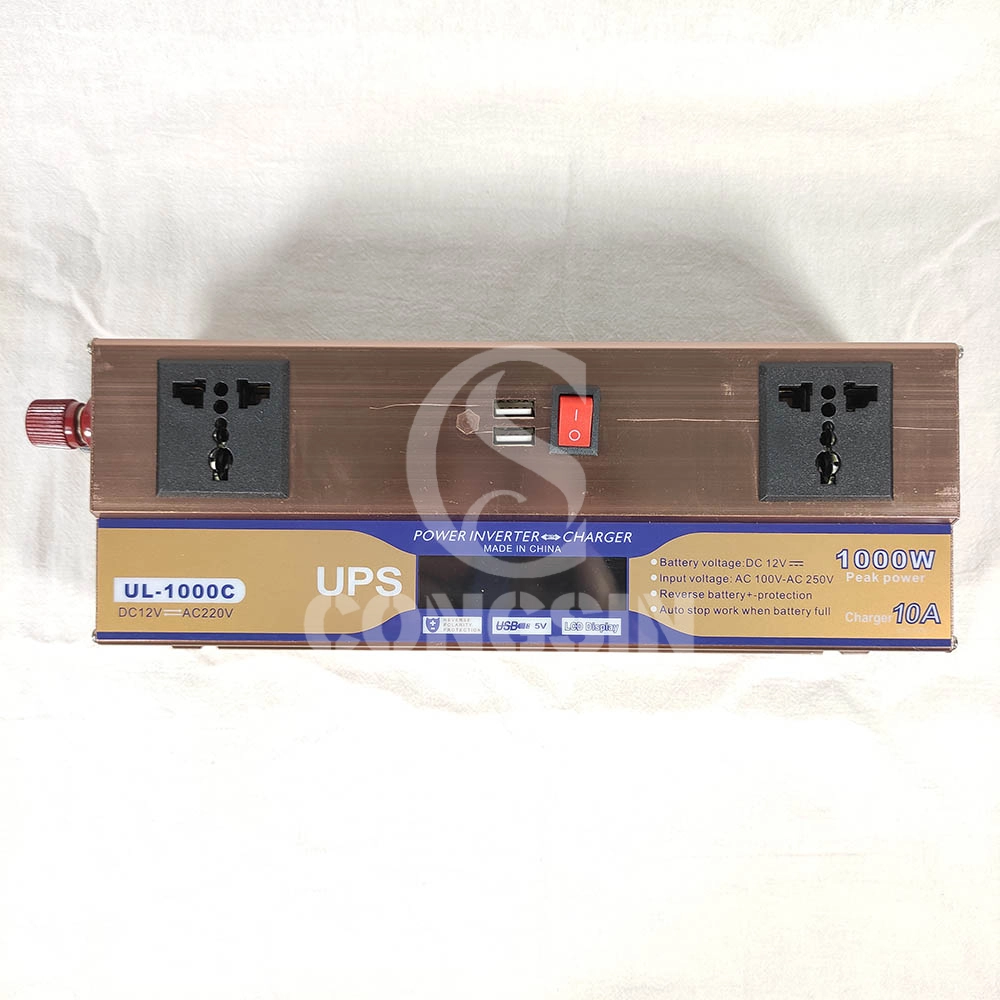
This 1000W modified sine wave inverter has UPS charging function, with DC12V input and AC220V output, and 600W rated power. Equipped with dual universal sockets, two USB ports, an LCD display, and a battery clip, it is professionally designed and has stable performance. It can provide stable AC power conversion and UPS emergency power supply for computers, small home appliances, electronic devices, etc. in home emergency, office, outdoor and other scenarios, meeting the needs of simultaneous power supply and emergency power supply for multiple devices.

This 1500W pure sine wave inverter converts DC 12V to AC 220V power, with a rated power of 1500W and a peak power of 3000W. Equipped with dual fans, LCD display, QC3.0 and PD Type-C fast charging ports, and remote control capability for stable and intelligent power output.

Our CS2000BIG 2000W modified sine wave inverter is a high-power power conversion device that converts DC 12V from batteries into AC 220V electricity. It is designed for heavy-duty use, featuring 2 AC sockets to power multiple high-power devices simultaneously, 2 cooling fans for efficient heat dissipation, and battery terminal wire for stable connection. With its robust construction and large capacity, it is an ideal solution for powering tools, appliances, and equipment in various scenarios, from industrial use to home emergencies.
Get in Touch with Our Team
You can also communicate with us directly through our online contact form. Please fill in the following information, and our team will contact you as soon as possible after receiving your message.

CONGSIN is a trusted OEM factory for power inverters, solar charge controllers, and DC converters. Reliable solutions for global B2B buyers.
 High Quality
 7/24 Service
 Guaranteed Warranty
© 2025 Congsin. All Rights Reserved.
 WeChat
 Scan QR Code
sin cong
teaimei10
Whatsapp: +8618028086791
Scan QR Code