





Trading Company vs. Direct Factory: Calculating Your True Profit Margin
- Introduction: The Supply Chain Dilemma for Importers
- Decoding the Hidden Markups of Trading Companies
- The Financial Advantage of Sourcing from a Direct Factory
- Beyond the Unit Price: Calculating Total Landed Cost (TLC)
- MOQ and Cash Flow: Balancing Inventory Costs
- Customization Margins: The Profitability of OEM & ODM
- Quality Control and Warranty: The Hidden Profit Killers
- How to Spot a Fake Factory Online
- Conclusion: Scaling Your Business with a True Manufacturing Ally
- Frequently Asked Questions (FAQs)
- What is a typical markup for a trading company?
- Can a trading company offer better shipping rates than a direct factory?
- How do I calculate my true profit margin when importing?
- Why do direct factories usually have higher MOQs (Minimum Order Quantities)?
- Is it always cheaper to buy from a direct factory?
- How can I verify if a supplier is a real factory or just a trading company?
Introduction: The Supply Chain Dilemma for Importers
In the complex landscape of global commerce, one of the most critical decisions for importers and distributors is selecting the right type of supplier. When sourcing from China, B2B buyers constantly face the classic dilemma: choosing a trading company vs manufacturer. While a trading company acts as a middleman, aggregating products from various sources, a direct factory owns the production lines, the machinery, and the engineering teams. Understanding the fundamental differences between these two entities goes far beyond simply looking at the quoted unit price. The structural and financial disparities between them directly impact your bottom line and competitive edge. To ensure long-term business success, mastering the art of accurate b2b profit margin calculation is essential. This guide will uncover the financial realities of global supply chains, helping you navigate hidden fees, understand the true cost of procurement, and ultimately make strategic purchasing decisions that protect and maximize your company's profitability.
Decoding the Hidden Markups of Trading Companies
Trading companies provide a service—often bridging language barriers, consolidating shipping, or handling small, diverse orders—but this convenience comes at a steep price. The primary revenue model for these intermediaries relies entirely on a trading company markup. Typically, they will take the factory’s base price and add anywhere from 15% to 30% before quoting the buyer. These hidden supply chain costs are rarely disclosed transparently. You are essentially paying for their office space, marketing, and profit margins, rather than the intrinsic value of the product itself. When calculating your potential retail or distribution profits, these middleman fees in manufacturing act as a massive drain. Every dollar paid in markup is a dollar subtracted directly from your net profit. For businesses looking to scale aggressively, relying on a supply chain layered with intermediaries makes it nearly impossible to remain competitive against rivals who are purchasing directly from the source.
The Financial Advantage of Sourcing from a Direct Factory
The most effective strategy to reclaim your profit margins and gain market share is to buy direct from factory. By eliminating the intermediaries, you gain access to authentic EXW (Ex Works) or wholesale prices. Comparing manufacturer pricing vs wholesale pricing offered by trading companies reveals a stark contrast; direct pricing gives you the financial breathing room needed to run aggressive marketing campaigns or offer volume discounts to your own clients. Furthermore, the factory direct sourcing benefits extend beyond just the initial cost. Direct manufacturers are highly motivated to build long-term relationships, meaning they are more likely to offer tiered pricing structures—the more volume you order, the cheaper each unit becomes. This scale of economy is crucial for distributors aiming to dominate their local markets. By securing the lowest possible base cost, you establish a resilient financial foundation that can withstand market fluctuations.
Beyond the Unit Price: Calculating Total Landed Cost (TLC)
A common pitfall for novice importers is basing their profit projections solely on the supplier's quoted unit price. To understand your actual expenditure, you must accurately calculate total landed cost (TLC). The TLC represents the total price of a product once it has securely arrived at your warehouse floor. The real product cost formula is straightforward: Factory Unit Price + International Freight + Shipping and customs duties + Insurance + Local Logistics. Here is where working with a direct factory provides another hidden advantage. Experienced manufacturers understand how to optimize product housing and packaging to maximize shipping container space, drastically reducing your dimensional freight weight. A trading company, constantly switching between different suppliers, rarely has the technical capability or motivation to engineer packaging for optimal freight efficiency. By accurately mapping out your TLC, you avoid nasty financial surprises when the goods finally arrive at your port.
MOQ and Cash Flow: Balancing Inventory Costs
One of the most debated topics in B2B procurement is the balance between Minimum Order Quantities (MOQ) and available cash flow. It is true that a trading company low MOQ can be attractive for startups looking to test a new product without committing significant capital upfront. However, this short-term flexibility results in a permanently higher cost per unit. On the other hand, factory MOQ requirements are inherently higher because manufacturers must set up complex production lines and purchase raw materials in bulk. While this requires a larger initial investment, it drastically lowers the per-unit cost. For established distributors, the goal is to optimize inventory holding costs while maximizing profit margins. Sourcing directly allows you to plan your procurement cycles efficiently, turning bulk inventory into a strategic asset rather than a liability. Ultimately, scaling a business profitably requires transitioning to factory volumes.
Customization Margins: The Profitability of OEM & ODM
Selling generic, off-the-shelf products often leads to a race to the bottom in terms of pricing. The true wealth in B2B distribution lies in building your own brand identity. Engaging in OEM manufacturing China allows you to leverage existing factory infrastructure to create proprietary products. Through factory direct customization, you can modify technical specifications, upgrade internal materials, and apply your own custom branding. Trading companies generally lack the in-house engineering departments required to facilitate deep technical changes. By creating a unique product tailored to your specific market, you escape direct price comparisons with competitors. This exclusivity empowers you to set premium retail prices, significantly boosting your private label profit margins. A direct factory acts as your outsourced R&D department, enabling you to innovate and command a much stronger position in the marketplace.
Quality Control and Warranty: The Hidden Profit Killers
Profit margins exist only on paper until defective products reach your customers; then, they vanish entirely. The cost of defective products includes not only return shipping and physical replacements but also irreversible damage to your brand's reputation. This is where direct factory quality control becomes a critical financial safeguard. When you work directly with the source, you can implement strict inspection standards before the goods ever leave the assembly line. Trading companies, lacking total control over the manufacturing environment, simply pass the risk onto you. Furthermore, robust manufacturer warranty support is only feasible when dealing directly with the creators of the product. If a technical issue arises, a real factory has the engineers and spare parts to resolve it swiftly. Intermediaries often create frustrating communication loops that delay resolutions and alienate your end-users.
How to Spot a Fake Factory Online
The internet is flooded with sophisticated middlemen claiming to be original manufacturers. Knowing how to verify a Chinese manufacturer is a vital skill for any procurement officer protecting company funds. The battle of the fake factory vs real factory starts with the business license; a genuine manufacturer’s license will explicitly list "manufacturing" or "production" in its registered business scope. Do not rely solely on website photos, as these are easily stolen or fabricated. Request an impromptu live video tour of the production floor and R&D facilities. Furthermore, assess their technical depth. If you ask complex engineering questions and the supplier takes days to respond (because they are checking with the actual factory), you are likely dealing with an intermediary. Understanding the difference between a sourcing agent vs direct factory ensures you are paying for actual production value.
Conclusion: Scaling Your Business with a True Manufacturing Ally
Navigating the complex solar supply chain ultimately comes down to securing a partner capable of delivering value far beyond the product itself. Transitioning from intermediaries to a direct factory model is the most effective way to streamline your operations and build a resilient brand. By partnering with a dedicated manufacturer like CONGSIN, you gain an authentic extension of your own business. We empower our clients with more than just competitive factory-direct pricing; CONGSIN provides robust OEM/ODM customization, rigorous quality control, and direct access to our expert engineering team. This comprehensive support allows you to confidently tailor products for your local market, guarantee unwavering reliability for your end-users, and scale your operations without the friction of middlemen. Partner with CONGSIN today, and let us provide the manufacturing strength you need to dominate your market.
Frequently Asked Questions (FAQs)
What is a typical markup for a trading company?
Trading company markups can vary widely depending on the industry and product complexity, but they typically range from 15% to 30%. For specialized technical products like solar inverters, this markup can sometimes be even higher, directly cutting into your potential retail profit.
Can a trading company offer better shipping rates than a direct factory?
Occasionally, large trading companies that consolidate shipments might negotiate favorable freight rates. However, experienced direct factories like CONGSIN have established logistics networks and can optimize product packaging at the source, effectively reducing dimensional weight and lowering your total shipping costs.
How do I calculate my true profit margin when importing?
Your true profit margin is calculated using the Total Landed Cost (TLC), not just the EXW unit price. The formula is: (Selling Price - Total Landed Cost) / Selling Price. Your TLC must include the factory price, international freight, insurance, import duties, and local delivery fees.
Why do direct factories usually have higher MOQs (Minimum Order Quantities)?
Direct factories manufacture products on massive production lines, which require significant setup time, raw material bulk purchasing, and labor allocation. Higher MOQs are necessary to cover these setup costs and achieve the economies of scale that allow them to offer you the lowest possible unit price.
Is it always cheaper to buy from a direct factory?
For long-term business, bulk orders, and OEM customization, yes. However, if you are a startup needing only a very small quantity to test a market (below factory MOQ), a trading company might be a temporary solution. For scaling businesses, partnering directly with a manufacturer like CONGSIN is the most profitable route.
How can I verify if a supplier is a real factory or just a trading company?
Always check their business license; a real factory’s scope of business will explicitly state terms like "manufacture" or "produce." Additionally, ask for an impromptu video call to see their production lines, request ISO certificates, and test if they have an in-house engineering team capable of modifying technical specifications directly.


Distributor
How long does it take to become an authorized distributor?
The process typically takes 2-4 weeks, depending on the discussion and agreement finalization.
Modified Sine Wave Inverters
How many devices can it power at the same time?
Dual universal sockets + two USB ports can power multiple devices (such as two home appliances + two mobile phones) at the same time, as long as the total power does not exceed 600W.
Is it normal for the inverter to heat up when working?
It is normal for it to generate some heat when working. If the temperature is too high (e.g., hot to the touch), please stop using it and check if the load is overloaded.
Pure Sine Wave Inverters
Does it include protection features?
Yes, it has sixfold safety protection for reliable performance.
Can the 3 AC sockets drive high-power devices at the same time?
Yes, but it is necessary to ensure that the total power of the 3 devices does not exceed 2000W (continuous power). For example, it can drive 1 1000W electric oven + 1 500W microwave + 1 400W printer at the same time (total power 1900W), avoiding total power overload to trigger the protection mechanism.
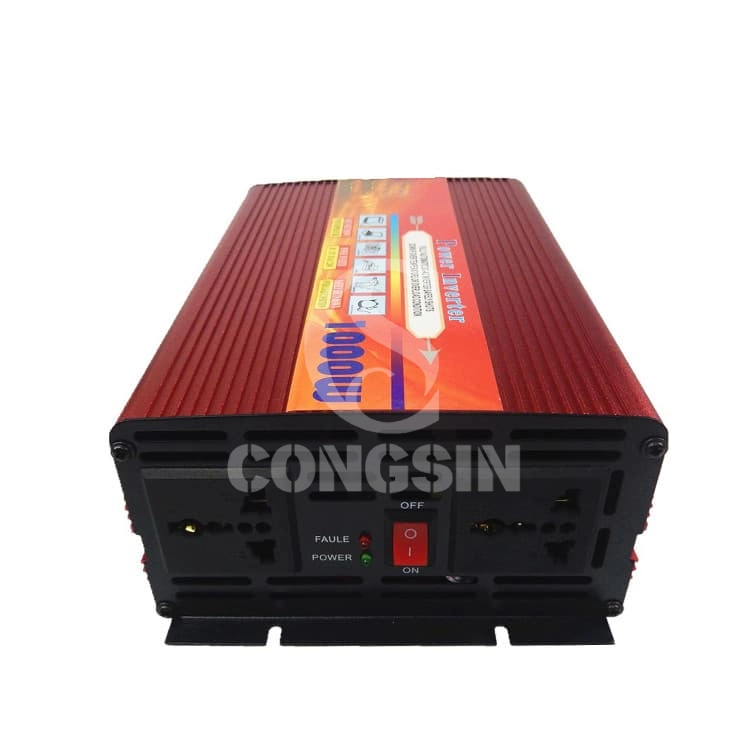
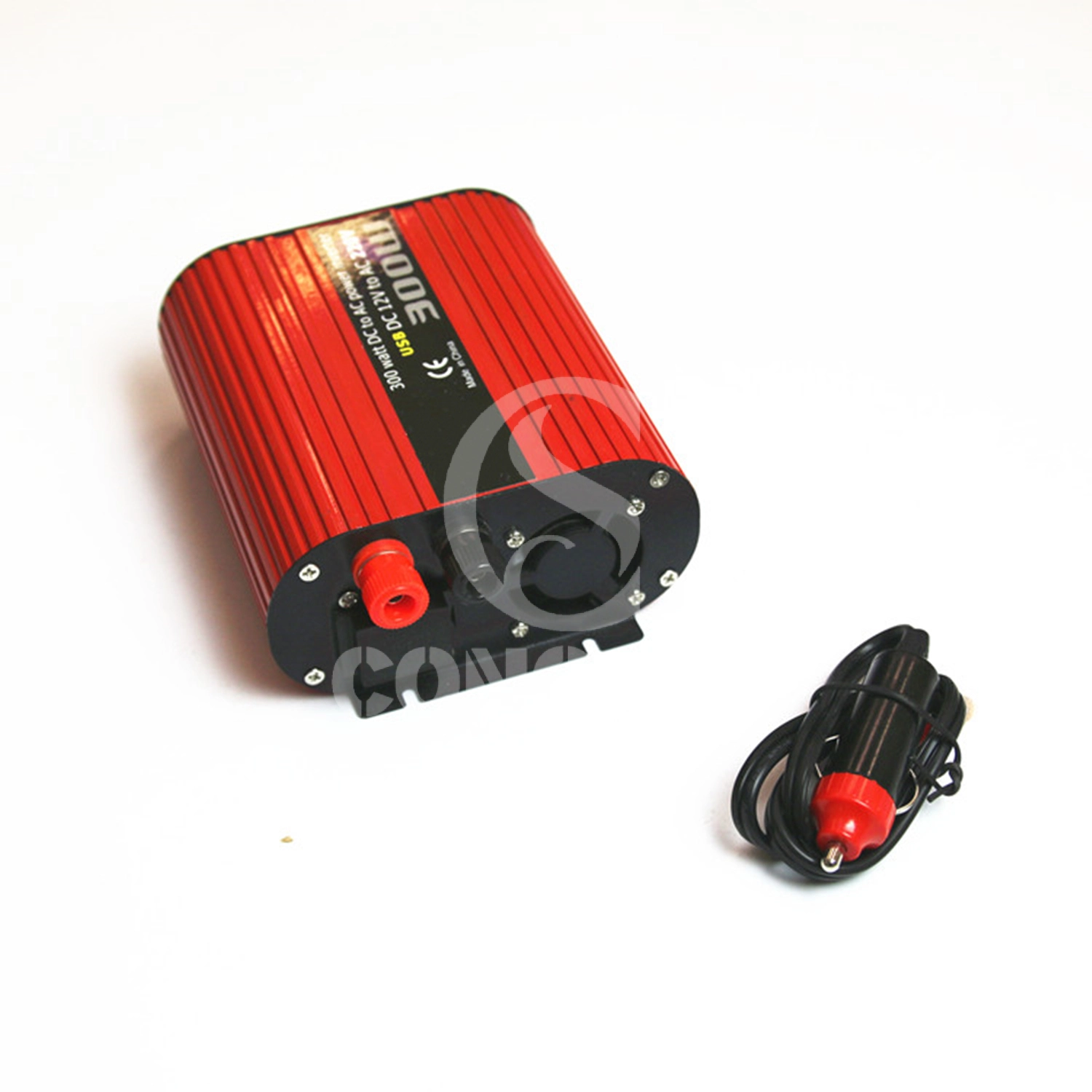
Congsin's Portable 150W Modified Sine Wave Inverter powers your journey! This versatile Car Power Inverter with USB acts as a reliable 12V to 220V converter, ensuring an essential off-grid power supply. With dual USB ports and a universal socket, enjoy convenient power on the go.
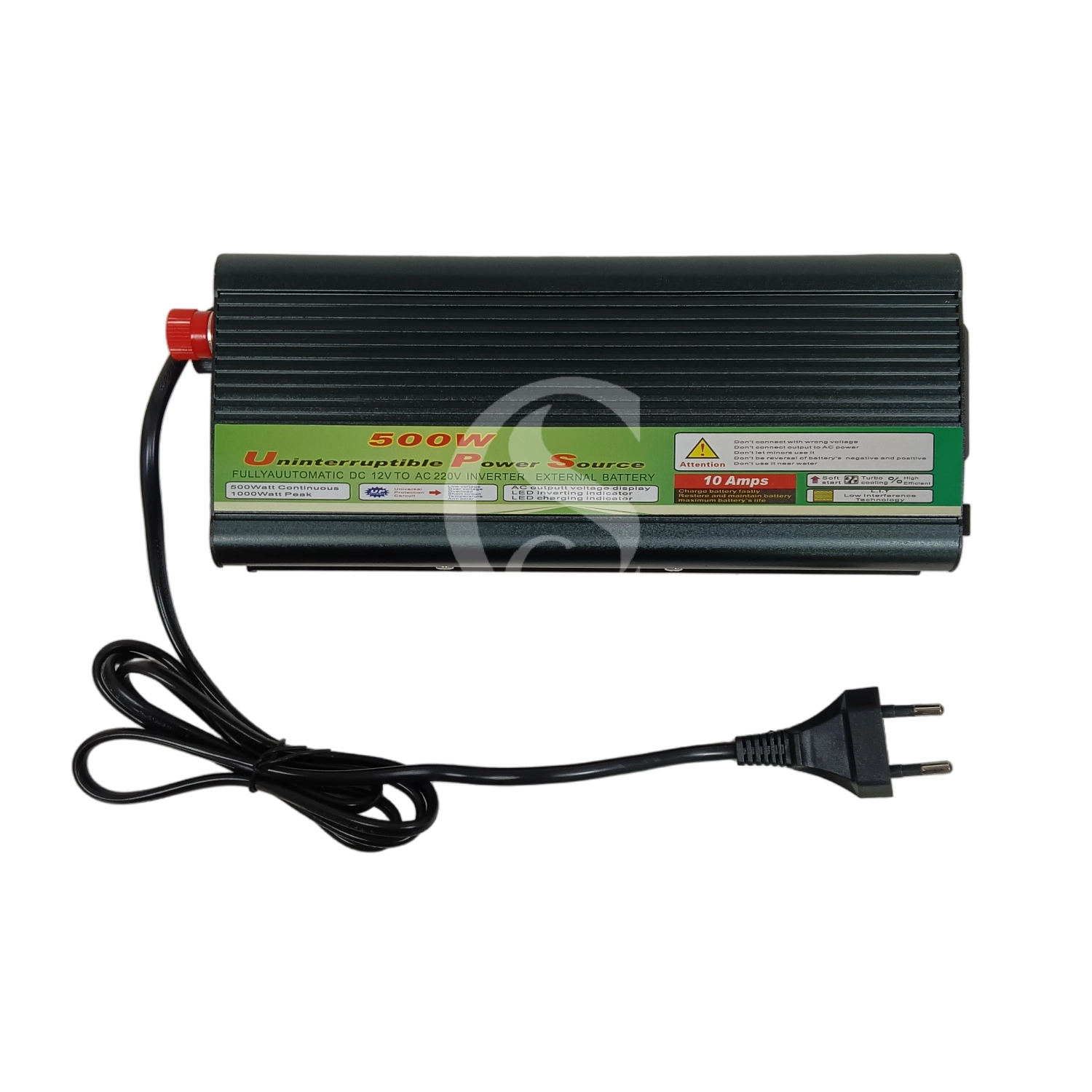
Congsin 500W 12V to 220V inverter delivers reliable off-grid power with its modified sine wave design. This portable 500W DC to AC power inverter efficiently converts 12V DC to 220V AC, ideal for outdoor and emergency use. Trust Congsin for stable, portable energy solutions.
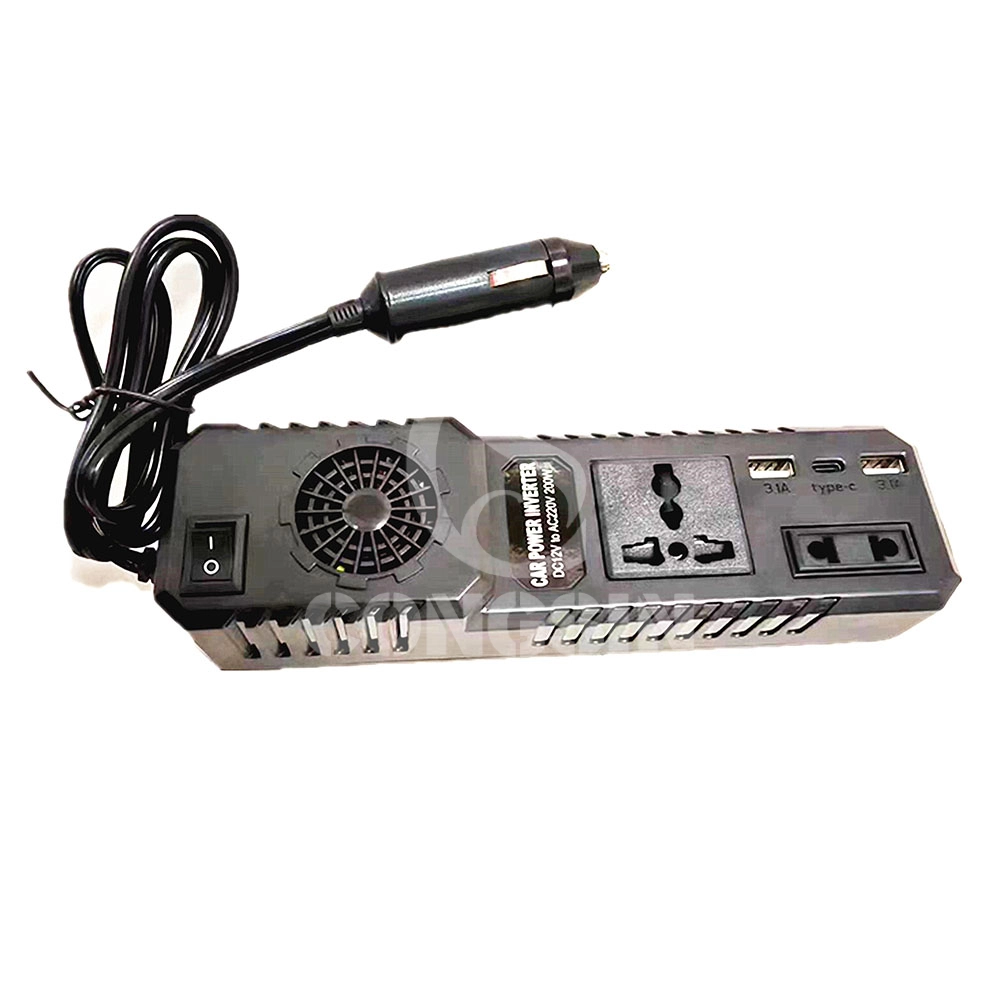
This 200W Modified Sine Wave Car Power Inverter is a compact and practical power conversion device designed for vehicle use. It supports dual input (DC12V/24V) and outputs AC220V, compatible with various electronic devices. Equipped with a Type-C port and dual 3.1A USB outputs, it can charge laptops, phones, cameras, drones, and other small electronics simultaneously—perfect for outdoor travel, emergency backup, and mobile work scenarios.
Get in Touch with Our Team
You can also communicate with us directly through our online contact form. Please fill in the following information, and our team will contact you as soon as possible after receiving your message.

CONGSIN is a trusted OEM factory for power inverters, solar charge controllers, and DC converters. Reliable solutions for global B2B buyers.
 High Quality
 7/24 Service
 Guaranteed Warranty
© 2025 Congsin. All Rights Reserved.
 WeChat
 Scan QR Code
sin cong
teaimei10
Whatsapp: +8618028086791
Scan QR Code