



Pure Sine Wave UPS Inverter: Backup Power, Transfer Time & Load Guide
- Quick Answer: What Is a Pure Sine Wave UPS Inverter?
- 1. Pure Sine Wave Output and Load Compatibility
- 2. Transfer Time Is Application-Specific
- 3. Size the Inverter for Continuous and Surge Power
- 4. Battery Capacity Determines Runtime
- 5. Charging and Battery Management
- 6. Critical Loads Need Validation
- 7. Protection Features to Review
- 8. Installation Considerations
- 9. Selection Checklist
- 10. When to Contact the Manufacturer
- FAQ
Quick Answer: What Is a Pure Sine Wave UPS Inverter?
A pure sine wave UPS inverter provides AC power from a battery system and is designed to maintain power to connected loads when utility supply is interrupted. The actual suitability depends on transfer behavior, inverter rating, surge capacity, battery size, charging system and the sensitivity of the connected equipment.
1. Pure Sine Wave Output and Load Compatibility
Pure sine wave output more closely resembles utility AC power than modified sine wave output. It is generally preferred for sensitive electronics, motors, audio equipment, communication systems and loads that depend on cleaner AC power.
2. Transfer Time Is Application-Specific
UPS performance should not be judged by a universal “zero interruption” claim. Transfer behavior depends on the system architecture and load. For computers, networking, control systems, medical equipment or other critical loads, verify the acceptable interruption time specified by the equipment manufacturer and test the actual system.
3. Size the Inverter for Continuous and Surge Power
Add the continuous wattage of the connected devices, then review startup or surge demand from motors, compressors, pumps and other inductive loads. The inverter must support both normal operation and short-duration peak demand without relying only on the headline wattage.
4. Battery Capacity Determines Runtime
Backup runtime depends on battery capacity, DC voltage, inverter efficiency, load level, battery condition and discharge limits. Runtime should be estimated from the real load profile and battery system instead of using a fixed number for every installation.
5. Charging and Battery Management
Check compatible battery chemistry, charging current, charge stages, low-voltage protection and any external battery-management requirements. The charging system should match the selected battery bank and intended backup duty cycle.
6. Critical Loads Need Validation
For servers, communications, laboratory, healthcare or safety-related equipment, verify power-quality requirements with the equipment supplier and applicable project standards. A pure sine wave inverter improves waveform compatibility, but it does not automatically guarantee suitability for every critical system.
7. Protection Features to Review
- Overload and short-circuit protection
- High- and low-voltage protection
- Over-temperature protection
- Battery low-voltage shutdown
- Input and output isolation or grounding requirements
- Alarm and monitoring functions where needed
8. Installation Considerations
Plan ventilation, cable sizing, DC over-current protection, grounding, battery location and service access. High-current DC systems require careful installation, so follow the inverter and battery manufacturer's instructions and applicable electrical rules.
9. Selection Checklist
| Item | What to confirm |
|---|---|
| Load | Continuous watts and surge demand |
| Transfer | Acceptable interruption for the connected equipment |
| Battery | Voltage, chemistry, capacity and target runtime |
| Charging | Charge current and battery compatibility |
| Installation | Cables, protection, grounding and ventilation |
10. When to Contact the Manufacturer
For OEM, backup-power or project applications, provide the load list, input/output voltage, battery system, required runtime, transfer expectations, environment and certification requirements. Congsin offers inverter products and OEM/ODM support; confirm the exact model and project scope before purchase.
Contact Congsin about pure sine wave UPS inverter requirements.
FAQ
What is a pure sine wave UPS inverter?
It is an inverter-based backup-power system that supplies pure sine wave AC from a battery source when utility power is unavailable.
Does a pure sine wave UPS inverter have zero transfer time?
Not necessarily. Transfer behavior depends on the system architecture and should be verified against the requirements of the connected equipment.
How do I size a UPS inverter?
Calculate continuous load, startup surge and desired runtime, then select the inverter and battery system with suitable capacity.
How long will a UPS inverter run?
Runtime depends on battery capacity, load, inverter efficiency, battery condition and discharge limits.
Is pure sine wave better for sensitive electronics?
It generally offers broader compatibility because its waveform more closely resembles utility AC power.
What information should I send for a UPS inverter project?
Provide load details, surge requirements, voltage, battery system, target runtime, transfer expectations, environment and certification needs.


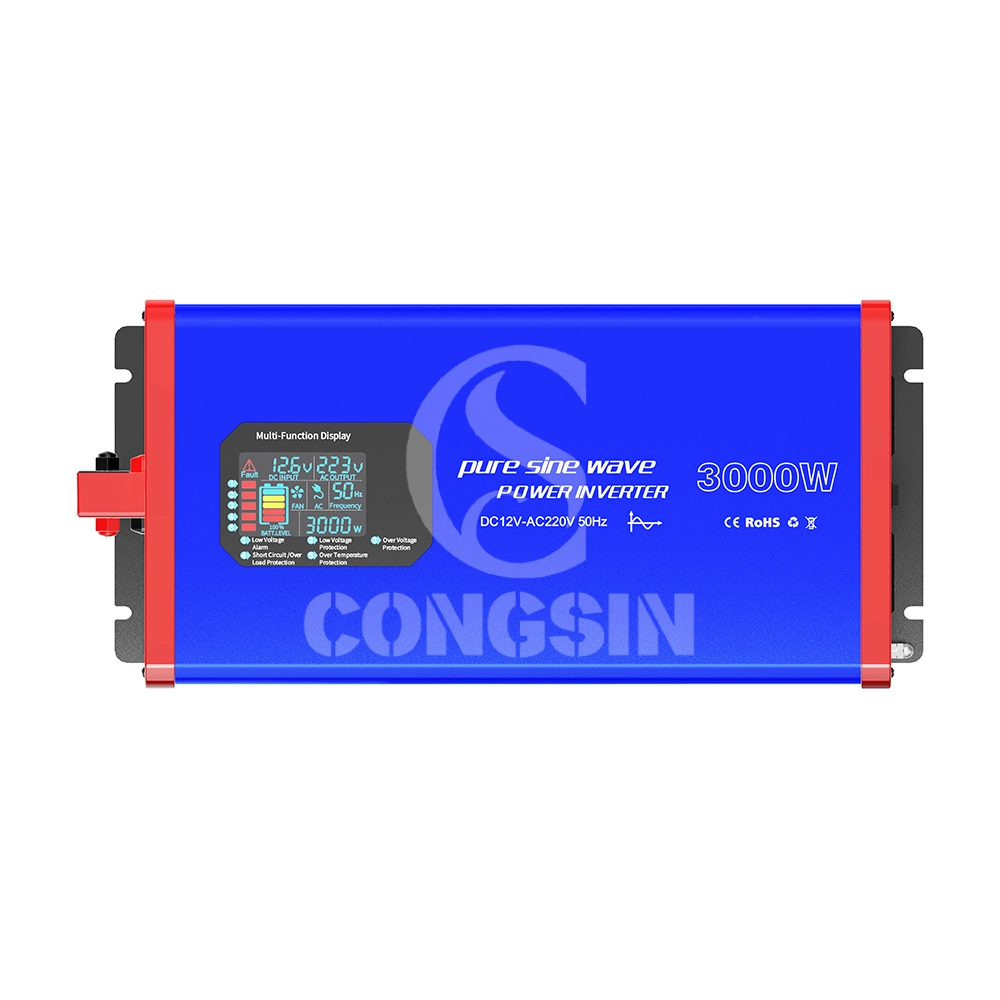
This 3000W full-power pure sine wave inverter (Model: CS3000PSW) adopts pure sine wave output technology (waveform distortion rate <2%), and the output power is highly consistent with mains power quality. It can safely drive high-power precision loads such as air conditioners, refrigerators, medical instruments, and small industrial equipment, avoiding equipment malfunctions or shortened service life caused by unstable waveforms. The device supports DC 12V input (compatible with 10.5V-14.8V wide voltage), continuously outputs 3000W full power, and has a peak power of 6000W, easily coping with the instantaneous startup impact of high-power devices; it is equipped with 4 AC universal sockets (max current 16A) + 2 USB 3.0 fast-charging ports (22.5W per port) to meet the simultaneous power supply needs of multiple devices. Built-in six-fold safety protection (overload, overvoltage, undervoltage, short circuit, overtemperature, reverse connection), combined with dual intelligent silent cooling fans (noise ≤45dB), it achieves the triple advantages of "high power + high safety + low noise," suitable for home emergency, outdoor engineering, vehicle-mounted power supply, small industrial scenarios and other fields.
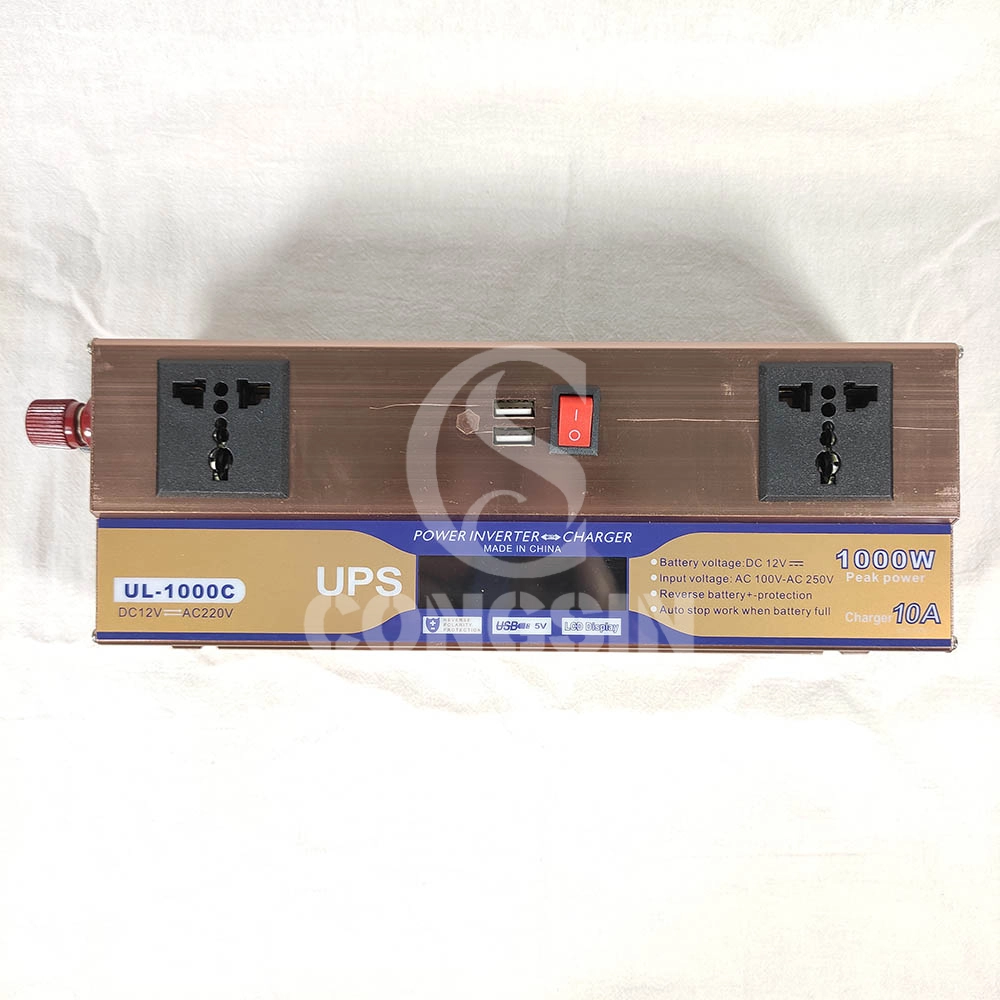
This 1000W modified sine wave inverter has UPS charging function, with DC12V input and AC220V output, and 600W rated power. Equipped with dual universal sockets, two USB ports, an LCD display, and a battery clip, it is professionally designed and has stable performance. It can provide stable AC power conversion and UPS emergency power supply for computers, small home appliances, electronic devices, etc. in home emergency, office, outdoor and other scenarios, meeting the needs of simultaneous power supply and emergency power supply for multiple devices.

This 1500W pure sine wave inverter converts DC 12V to AC 220V power, with a rated power of 1500W and a peak power of 3000W. Equipped with dual fans, LCD display, QC3.0 and PD Type-C fast charging ports, and remote control capability for stable and intelligent power output.

Our CS2000BIG 2000W modified sine wave inverter is a high-power power conversion device that converts DC 12V from batteries into AC 220V electricity. It is designed for heavy-duty use, featuring 2 AC sockets to power multiple high-power devices simultaneously, 2 cooling fans for efficient heat dissipation, and battery terminal wire for stable connection. With its robust construction and large capacity, it is an ideal solution for powering tools, appliances, and equipment in various scenarios, from industrial use to home emergencies.
Get in Touch with Our Team
You can also communicate with us directly through our online contact form. Please fill in the following information, and our team will contact you as soon as possible after receiving your message.

CONGSIN is a trusted OEM factory for power inverters, solar charge controllers, and DC converters. Reliable solutions for global B2B buyers.
 High Quality
 7/24 Service
 Guaranteed Warranty
© 2025 Congsin. All Rights Reserved.
 WeChat
 Scan QR Code
sin cong
teaimei10
Whatsapp: +8618028086791
Scan QR Code