





Pure Sine Wave Inverter Sample Testing for Pre-Production Approval
- Quick Answer
- 1. Establish the Exact Product and Approval Baseline
- 2. Validate Electrical Performance Against the Intended Application
- 3. Validate Protection, Cooling and Thermal Stability
- 4. Validate Commercial Interfaces, OEM Changes and Documentation
- 5. Close Deviations and Lock the Approved Sample Baseline
- Sample Approval Release Matrix
- Frequently Asked Questions
- Review Your Pure Sine Wave Inverter Sample Approval Plan
Quick Answer
For a B2B inverter project, pure sine wave inverter sample testing should convert application requirements into a controlled engineering baseline before OEM configuration lock, pilot production or volume-order planning. The purpose is not simply to confirm that an inverter powers on or reaches its nominal wattage. The exact commercial sample should be evaluated under representative electrical, thermal and functional conditions that reflect the intended application.
A useful approval process connects the selected product configuration with continuous and startup performance, DC input conditions, output voltage and frequency, waveform requirements, efficiency or idle consumption where specified, model-specific protection behavior, cooling and thermal stability, commercial interfaces and project documentation. When a deviation is found, the corrective action should be reviewed for technical impact and followed by an appropriate retest before the configuration is accepted.
Project Requirement → Exact Sample → Defined Validation Conditions → Engineering Evidence → Deviation Closure → Approved Sample Baseline
This page focuses on B2B pre-production sample approval rather than basic inverter selection, consumer waveform identification or production-lot quality control. This solution primarily addresses standalone DC-to-AC pure sine wave inverter samples. Products incorporating charging, automatic transfer, grid interaction, battery management, solar-control or integrated energy-storage functions require additional system-specific verification.
Project sample approval does not replace applicable product-safety, EMC, regulatory or destination-market conformity assessment. Approval of one representative sample establishes a controlled configuration baseline; it does not by itself demonstrate consistency across future production units or lots.

1. Establish the Exact Product and Approval Baseline
Sample approval should begin by defining exactly which commercial configuration is being evaluated and which requirements determine acceptance. A model name or wattage class alone is not enough because products within the same broad family can differ in DC input platform, AC output voltage and frequency, socket arrangement, display, remote-control functions, auxiliary outputs, cooling design, connectors, enclosure and OEM details.
CONGSIN’s Pure Sine Wave Inverter Product Range includes different product configurations, so the approval process should follow the exact selected model rather than assume that one product-page description applies across the complete range. The sample record should identify the model or power class, available hardware and firmware revision, DC and AC platform, continuous and surge rating, commercial interfaces, cooling arrangement, supplied cables or connectors, enclosure, label and any private-label or OEM changes relevant to the project.
The objective is not to create an unnecessarily large specification file. It is to ensure that the engineering evidence can later be traced to the version proposed for commercial use. This becomes especially important when a private-label model name differs from the manufacturer’s standard designation, or when an apparently unchanged model receives a PCB, firmware, fan, connector or interface revision.
Define the Acceptance Criteria Before Testing
Acceptance criteria should be established before the sample result is known. Depending on the product and project, these can include continuous power, startup performance, output voltage and frequency, waveform or THD where specified, efficiency, idle consumption, protection behavior, thermal limits, cooling behavior and commercial-interface operation. Limits should come from the exact model specification, application requirement or agreed project test plan rather than from another product in the range.
The same principle applies to protection functions. If one model documents overload, undervoltage, overvoltage, short-circuit and over-temperature protection, those functions can form part of that model’s sample plan. A different product should be evaluated against the protection functions documented for that exact configuration rather than against a generic series-wide claim.
The result of this first stage should be controlled and unambiguous: the project team knows which sample is being tested, which commercial configuration it represents and which criteria determine whether it can become the approved baseline.
2. Validate Electrical Performance Against the Intended Application
Electrical validation should evaluate the inverter as a complete operating system supplied from a defined DC source and connected to a representative AC load. Rated power is an important reference, but it is not enough to approve a sample because startup demand, load transitions, DC-side voltage drop, duty cycle and simultaneous loads can all influence real operating behavior.
For transportation or RV applications, representative loads may include chargers, onboard appliances, electronics or intermittent equipment. Backup or off-grid projects may involve refrigerators, compressors, mixed household loads or other startup-sensitive devices. Commercial and OEM projects can involve a defined machine, controller or electrical assembly. The approval question is not whether the inverter can operate every possible appliance; it is whether the exact sample can support the project’s intended load profile under defined conditions.
For vehicle or RV projects, the representative load and DC input conditions should reflect the intended application, but this page does not replace vehicle-specific RFQ, installation or procurement planning. Buyers managing a vehicle-focused program can use the CONGSIN Vehicle Inverter Procurement Guide for the broader supplier, RFQ and repeat-order workflow.
Verify Continuous, Startup and Transition Performance
Continuous loading and startup events should be considered separately. A sample can appear stable under a steady load but behave differently when a motor, compressor or another device with a higher starting demand is energized. Where the application requires it, testing should observe whether the target load starts successfully, whether output voltage and frequency remain acceptable, whether protection activates unexpectedly and whether stable operation returns after the transient.
Simultaneous-load changes can also matter when several devices are expected to operate together. The test plan should therefore reflect the real application rather than rely only on a single resistive load at one power point.
Record DC Input and High-Current Path Conditions
The AC result should remain connected to the DC test condition. In higher-power low-voltage inverter applications, source capability, terminal voltage, cable arrangement and connector condition can materially affect the observed result. Where relevant to the project, the record should identify the DC source, voltage at the inverter terminals during the test and the cable or connector arrangement used.
If voltage drop, cable condition or terminal temperature forms part of the customer requirement, those observations can also be retained with the sample record. No universal cable size, temperature limit or voltage-drop value should be assumed because these depend on product current, conductor, connection method, ambient environment and project-specific criteria. The purpose is traceability: the buyer should be able to distinguish an inverter-performance issue from a test setup that cannot adequately support the required DC input.
Verify Efficiency, Idle Consumption and Output Quality
Where efficiency, no-load consumption or standby current forms part of the model specification or customer requirement, the result should be measured under defined input, output and load conditions rather than inferred from rated wattage. For deeper analysis of conversion efficiency, partial-load behavior and idle losses, buyers can refer to CONGSIN’s Pure Sine Wave Inverter Efficiency Engineering resource.
Within sample approval, the decision is narrower: does this exact sample meet the agreed efficiency or idle-consumption requirement under the defined test condition? Where waveform or THD is part of the acceptance criteria, the evidence should likewise identify the load, load level, DC input condition and operating state associated with the measurement, with output voltage and frequency reviewed under the same defined condition where required.
Detailed THD theory does not need to be repeated here. CONGSIN’s Pure Sine Wave Inverter Waveform Quality Guide provides the deeper waveform context. In this sample-approval process, the concern is whether the electrical evidence for the exact unit satisfies the project-defined limit rather than whether a generic waveform specification appears in a brochure.
3. Validate Protection, Cooling and Thermal Stability
A pre-production sample should demonstrate predictable behavior not only during normal operation but also when operating conditions approach or move outside the intended range. Protection and thermal performance are closely connected because overload, input-voltage variation, cooling behavior and sustained operation can influence both the electrical response and the product’s temperature.
Abnormal-condition testing requires appropriate equipment and controlled procedures. Short-circuit, overvoltage, reverse-connection or elevated-temperature testing should not be improvised in field use. The purpose of sample approval is to confirm behavior against the exact model documentation and project requirements, not to replace formal safety testing.
Verify Model-Specific Protection and Recovery
The functions to be verified should come from the selected model. Depending on the exact configuration, relevant items can include input undervoltage, input overvoltage, overload, output short circuit, over-temperature or other documented protections. Reverse-connection protection should only be included where it is explicitly documented and an appropriate controlled test method has been established.
A protection result should consider more than whether the inverter turns off. The project should observe the expected indication or alarm, whether output is removed or limited according to the documented logic, whether recovery is automatic or manual and whether normal operation is restored after the abnormal condition is removed.
Defined Abnormal Condition → Protection Response → Intended Protective State → Recovery → Post-event Operation
The term intended protective state avoids assuming that every model uses the same safety or recovery logic. One product may latch until manual reset while another may recover automatically after the input returns to its normal range. Trigger thresholds and recovery behavior should therefore be taken from confirmed model-specific information.
Verify Cooling and High-Current Thermal Behavior
Thermal validation should reflect the intended duty cycle rather than a short demonstration that the sample can operate. The test record can include ambient condition, applied load, runtime, cooling-fan behavior and relevant temperature observations. Where required by the project, accessible measurement points, DC terminals or connectors can also be observed under sustained load.
The engineering question is whether cooling and temperature behavior remain acceptable for the intended operating condition. Fan activation should be stable where the model uses active cooling; repeated thermal protection, unstable fan behavior, abnormal odor, discoloration, unusual noise or loss of normal function should trigger further review.
If a particular model publishes a fan-noise or thermal characteristic and the customer has made it part of the acceptance criteria, that value can be verified for that model. It should not be generalized across products with different fans, enclosures or thermal designs.
Post-test behavior is equally important. If thermal protection is intentionally reached under a controlled test, the sample should be checked for the documented recovery condition and subsequent normal operation. A rising temperature does not automatically mean failure, and continued operation does not automatically prove acceptance; the judgment should follow the applicable product design, component limits, measurement method and agreed project criteria.
4. Validate Commercial Interfaces, OEM Changes and Documentation
A commercial inverter project includes more than the main AC output. Displays, remote controls, sockets, auxiliary outputs, switches, indicators, connectors, cables, labels, packaging and manuals can all form part of the approved product configuration. Sample approval should include these elements where they are part of what the buyer intends to purchase or resell.
Passing the AC power test does not automatically approve every interface included in the commercial sample.
Verify the Interfaces Included in the Project
Where included in the selected configuration, the project can verify LCD or status displays, wired or wireless remote controls, AC socket arrangements, USB, QC or Type-C outputs, switches, indicators, connectors and supplied cable sets. Successful AC output testing does not establish that an auxiliary output or remote-control function operates correctly, and a standard configuration passing engineering tests does not automatically approve a modified OEM interface.
The physical sample should also be reconciled with the commercial documentation. The specification, rating label, manual, interface description, cable or accessory list, OEM artwork and applicable project records should describe the same configuration that was tested. An electrically acceptable unit with an incorrect rating label, outdated manual or mismatched model identity should not become the final approved baseline until that discrepancy is closed.
Match OEM Changes to the Required Review Scope
OEM changes should be reviewed according to technical impact rather than treated with one universal retest rule. A practical classification is:
- Cosmetic or administrative changes: color, branding or packaging changes that do not affect the controlled electrical configuration may mainly require document confirmation.
- Interface or documentation changes: sockets, cable sets, connectors, remote functions, labels or manuals can require functional re-verification and document updates.
- Electrical, thermal or control changes: PCB, firmware, filtering, cooling, fan control, protection logic or enclosure changes that affect thermal behavior can require broader engineering review and retest.
For projects still upstream of sample approval, CONGSIN’s OEM Pure Sine Wave Inverter Development Roadmap provides the broader development context. The sample-approval process begins after the project configuration has become specific enough to evaluate.
Change → Technical Impact Review → Affected Approval Gates → Retest Scope
The objective is neither to repeat every test after every minor change nor to assume that old evidence automatically covers a technically significant revision. The final project file should make it possible to answer one basic question: what exact configuration was approved, and which evidence belongs to it?
5. Close Deviations and Lock the Approved Sample Baseline
Sample testing becomes commercially useful only when deviations are closed and the final configuration is clearly identified. A failed or incomplete result does not necessarily end the project, but any corrective action should be connected to a technical impact review and an appropriate retest before the sample is accepted.
Possible changes can involve waveform control, protection logic, firmware, cooling, fan behavior, connectors, interfaces, labels or other elements of the commercial configuration. A narrowly isolated change may justify targeted verification, while a broader electrical, thermal or control modification can require a wider test scope.
Deviation → Corrective Action → Technical Impact Review → Retest Scope → Evidence Closure → Approved Sample Baseline
Use a Clear Sample Decision Status
For project management, sample decisions can be recorded as Pass, Conditional — Hold for Closure, Retest Required or Fail. A conditional result should not allow configuration lock while an open issue affects required performance, product identity, protection response, thermal acceptance or mandatory project documentation.
These status labels are useful project-management terms rather than a statement that every CONGSIN product follows one fixed internal sample-approval workflow.
Stop at the Approved Sample Baseline
Approved Sample Baseline means the exact sample configuration and its required engineering evidence have been accepted for the project. It is a reference configuration for the next stage, not proof of production-lot consistency and not a commercial production-release authorization.
It does not mean that:
- future production units automatically match the approved sample;
- every production lot has already passed quality control;
- future design changes are automatically covered;
- all market-specific compliance requirements are complete; or
- a commercial purchase order has already been released.
Production consistency belongs to a separate control stage. CONGSIN’s Pure Sine Wave Inverter Quality Control Framework covers the transition from an approved product definition into manufacturing and production-quality controls.
Commercial quantity, PO configuration, production scheduling and shipment planning are later purchasing activities. Buyers moving from sample approval into that stage can use the Wholesale Pure Sine Wave Inverter Volume Order Planning resource rather than extending the sample-testing process into order execution.
Sample Approval Release Matrix
The following matrix converts project requirements into a sample-approval decision. It is not a universal factory test specification for every inverter model.
| Approval Gate | Evidence to Review | Approval Question |
|---|---|---|
| Product identity | Model, revision, DC/AC platform, interfaces and OEM configuration | Is this the proposed commercial configuration? |
| DC input and power | Source condition, terminal voltage where required, cable arrangement, continuous and startup behavior | Does the sample support the required load profile under the intended DC condition? |
| Output quality and efficiency | Voltage, frequency, waveform, THD where specified, efficiency or idle draw where required | Does electrical performance meet the project criteria? |
| Protection and recovery | Model-specific controlled protection tests and recovery behavior | Does the sample enter and recover from the intended protective state? |
| Thermal and cooling | Ambient condition, load, runtime, fan behavior and relevant temperature observations | Is operation acceptable for the defined duty cycle? |
| Interfaces | Display, remote control, sockets and auxiliary outputs included in the project | Do the required commercial interfaces operate as specified? |
| Documentation | Specification, rating label, manual, accessories and OEM records | Does the documentation represent the tested sample? |
| Corrective action | Change record, impact review and retest evidence | Have all relevant deviations been closed? |
| Approval | Complete evidence and controlled status | Can this configuration be locked as the approved sample baseline? |
A criterion that does not apply to the selected product does not need to be invented simply to complete the matrix. The approval scope should follow the exact commercial configuration and project requirement.
Frequently Asked Questions
Is rated power enough to approve a pure sine wave inverter sample?
No. Rated power is only one part of the approval decision. The sample should also be evaluated under the DC input condition and load profile relevant to the project, including startup or transition behavior where required. Waveform, voltage and frequency, efficiency or idle consumption where specified, protection response, thermal behavior, interfaces and documentation can also determine whether the exact commercial configuration should be approved.
What electrical conditions should be recorded during sample testing?
The test record should contain enough information to reproduce or correctly interpret the result. Depending on the project, this can include the DC source condition, voltage at the inverter terminals where relevant, cable or connector arrangement, AC load, startup condition, output voltage, frequency, waveform or THD where specified, efficiency or idle consumption and the operating state of relevant interfaces. The exact record should follow the product and project rather than a universal template.
How should protection and thermal behavior be verified?
Protection functions should be taken from the exact model documentation and tested through controlled procedures using appropriate equipment. The evaluation should consider the abnormal condition, protection response, intended protective state, recovery and post-event operation. Thermal validation should document the defined ambient condition, load, runtime, cooling behavior and relevant temperature observations required by the project rather than applying one universal temperature or protection threshold across different models.
Does one approved sample prove consistency of future production?
No. Sample approval establishes a controlled configuration baseline, not proof that every future production unit or lot will automatically match it. Production consistency must be managed through manufacturing controls, quality procedures, traceability and change control. This is why sample approval should hand off to a separate production-quality process.
When should an OEM or modified inverter sample be retested?
Retesting should follow the technical impact of the change. Cosmetic or administrative changes may mainly require documentation confirmation, while interface changes can require functional re-verification. PCB, firmware, filtering, cooling, protection, control or other electrical and thermal changes can require broader retesting when they affect the original approval evidence. The objective is to confirm that the engineering evidence still represents the configuration proposed for commercial use.
Review Your Pure Sine Wave Inverter Sample Approval Plan
A useful pre-production sample review starts with the project rather than a generic test checklist. For distributors, system integrators, transportation and outdoor partners, OEM customers and professional or commercial buyers, the discussion can begin with the candidate inverter model or power class, sample quantity, hardware or firmware revision where available, DC input platform, AC output and frequency, continuous and startup loads, intended application, duty cycle and ambient condition.
Where relevant, also provide the required socket arrangement, auxiliary outputs, display or remote-control functions, cable or connector requirements, OEM changes, destination market, current deviations and any power, waveform, efficiency, protection or thermal results already available. This allows the review to focus on the exact commercial configuration and the evidence required to establish an approved baseline.
Final acceptance criteria, test methods, protection thresholds, thermal limits, efficiency requirements and retest scope should be confirmed for the exact model and application. Project sample approval does not replace applicable compliance testing or production-lot quality control.


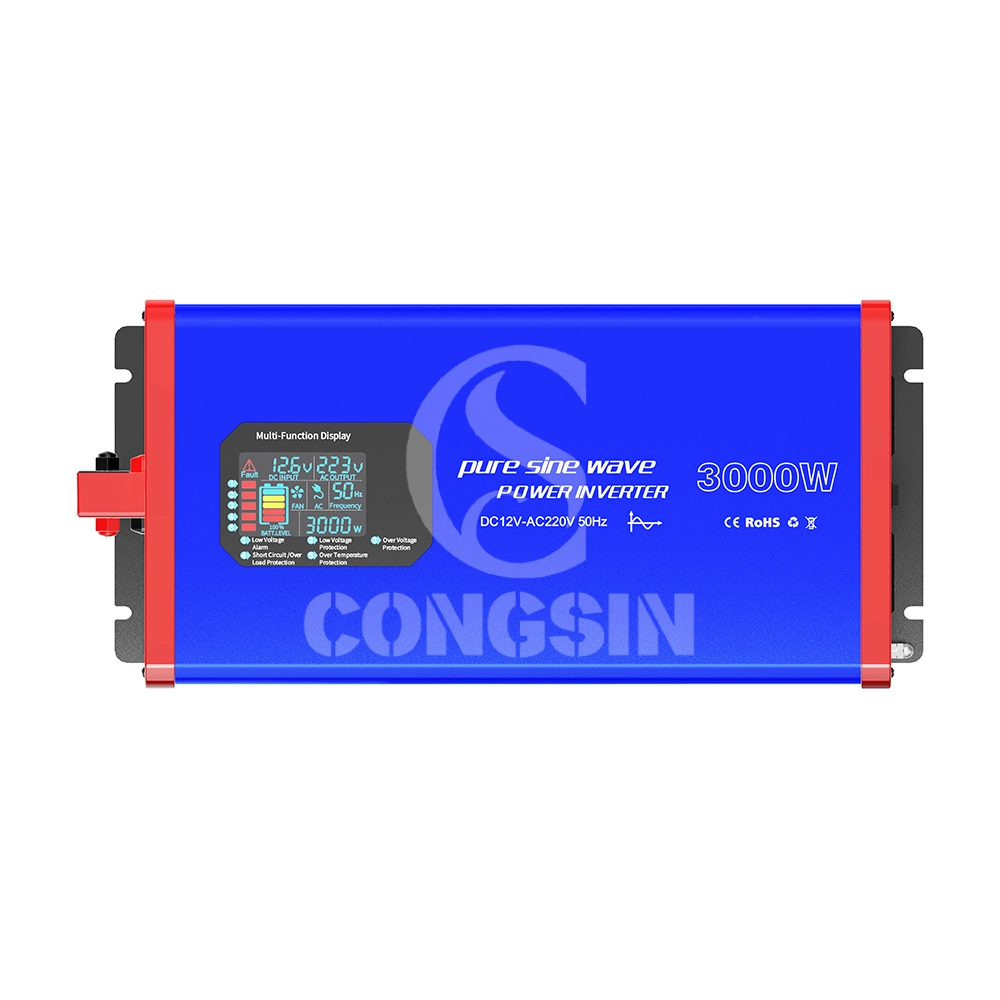
This 3000W full-power pure sine wave inverter (Model: CS3000PSW) adopts pure sine wave output technology (waveform distortion rate <2%), and the output power is highly consistent with mains power quality. It can safely drive high-power precision loads such as air conditioners, refrigerators, medical instruments, and small industrial equipment, avoiding equipment malfunctions or shortened service life caused by unstable waveforms. The device supports DC 12V input (compatible with 10.5V-14.8V wide voltage), continuously outputs 3000W full power, and has a peak power of 6000W, easily coping with the instantaneous startup impact of high-power devices; it is equipped with 4 AC universal sockets (max current 16A) + 2 USB 3.0 fast-charging ports (22.5W per port) to meet the simultaneous power supply needs of multiple devices. Built-in six-fold safety protection (overload, overvoltage, undervoltage, short circuit, overtemperature, reverse connection), combined with dual intelligent silent cooling fans (noise ≤45dB), it achieves the triple advantages of "high power + high safety + low noise," suitable for home emergency, outdoor engineering, vehicle-mounted power supply, small industrial scenarios and other fields.
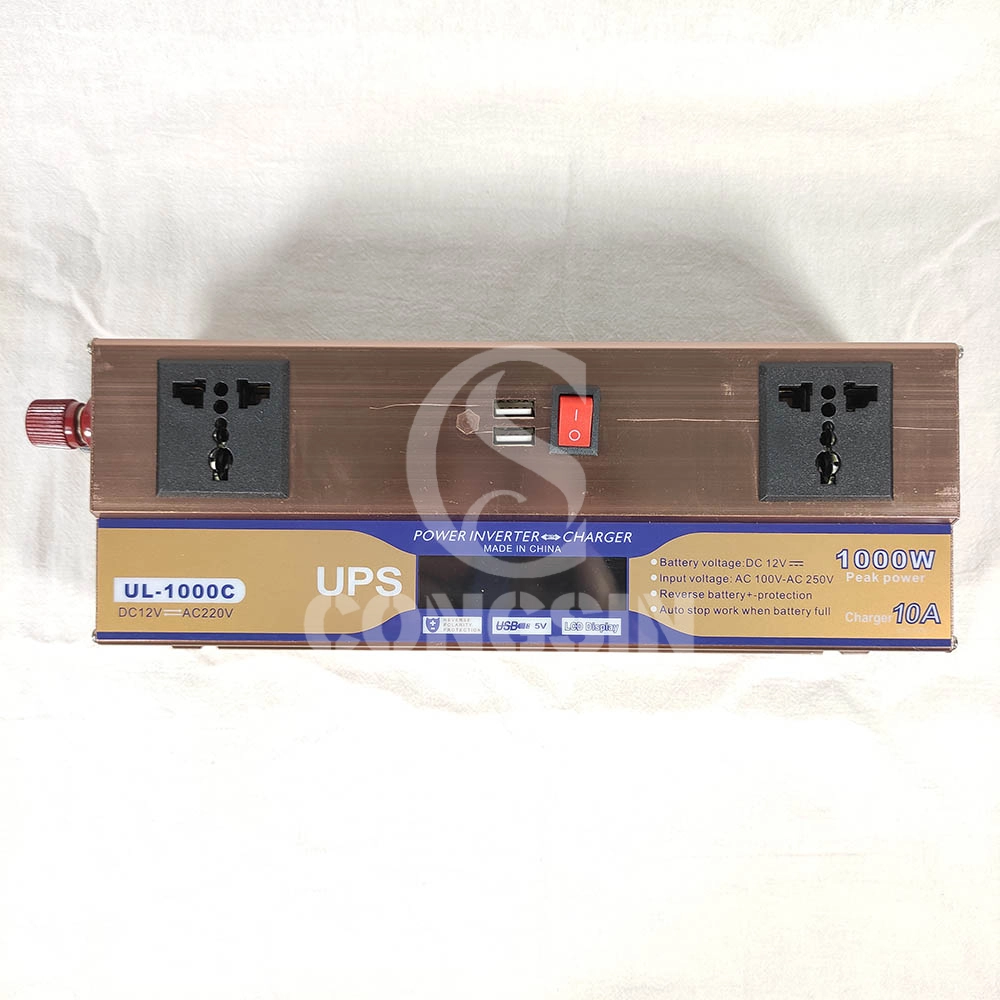
This 1000W modified sine wave inverter has UPS charging function, with DC12V input and AC220V output, and 600W rated power. Equipped with dual universal sockets, two USB ports, an LCD display, and a battery clip, it is professionally designed and has stable performance. It can provide stable AC power conversion and UPS emergency power supply for computers, small home appliances, electronic devices, etc. in home emergency, office, outdoor and other scenarios, meeting the needs of simultaneous power supply and emergency power supply for multiple devices.
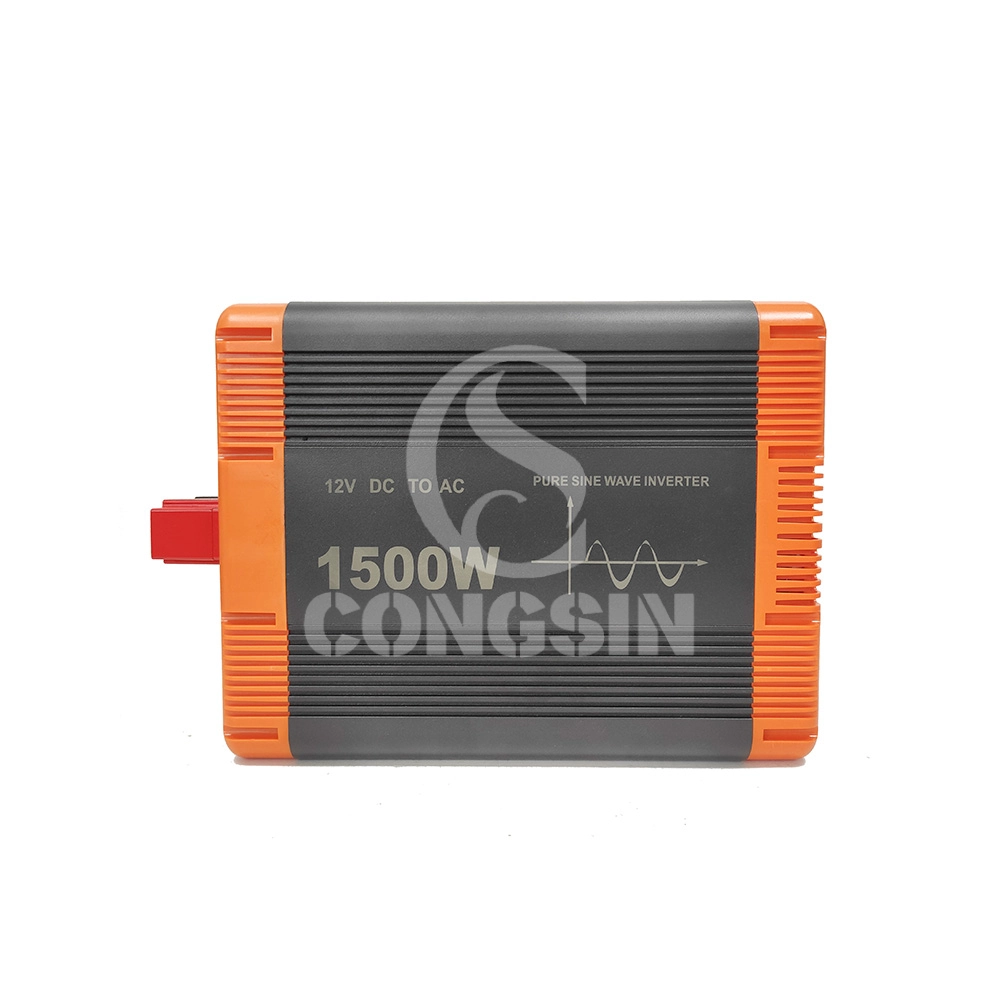
This 1500W pure sine wave inverter converts DC 12V to AC 220V power, with a rated power of 1500W and a peak power of 3000W. Equipped with dual fans, LCD display, QC3.0 and PD Type-C fast charging ports, and remote control capability for stable and intelligent power output.
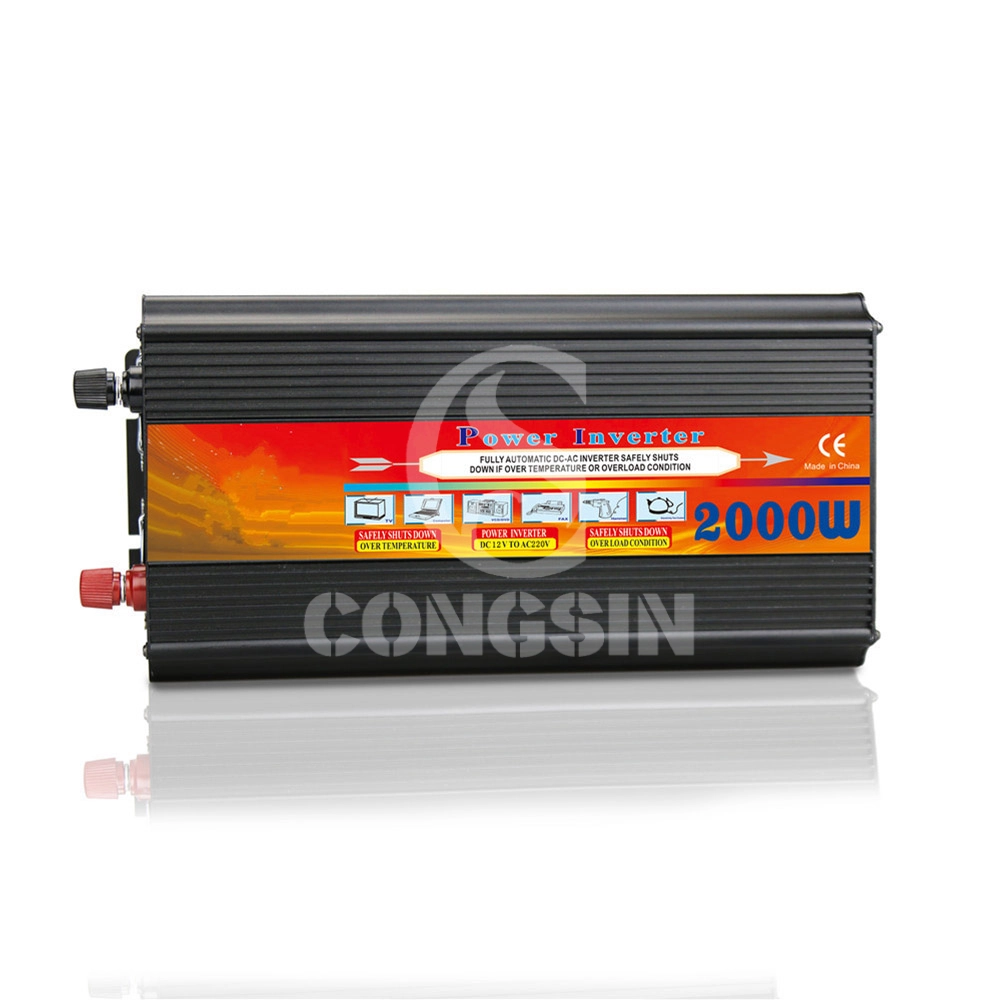
Our CS2000BIG 2000W modified sine wave inverter is a high-power power conversion device that converts DC 12V from batteries into AC 220V electricity. It is designed for heavy-duty use, featuring 2 AC sockets to power multiple high-power devices simultaneously, 2 cooling fans for efficient heat dissipation, and battery terminal wire for stable connection. With its robust construction and large capacity, it is an ideal solution for powering tools, appliances, and equipment in various scenarios, from industrial use to home emergencies.
Get in Touch with Our Team
You can also communicate with us directly through our online contact form. Please fill in the following information, and our team will contact you as soon as possible after receiving your message.

CONGSIN is a trusted OEM factory for power inverters, solar charge controllers, and DC converters. Reliable solutions for global B2B buyers.
 High Quality
 7/24 Service
 Guaranteed Warranty
© 2025 Congsin. All Rights Reserved.
 WeChat
 Scan QR Code
sin cong
teaimei10
Whatsapp: +8618028086791
Scan QR Code