





High Frequency Inverter Manufacturer Evaluation Guide
- Quick Answer: How Should Buyers Evaluate a High Frequency Inverter Manufacturer?
- What Congsin Publicly States
- 1. Define the Application and Product Requirements
- 2. Confirm Product Fit
- 3. Review Engineering Capability
- 4. Evaluate Samples and Validation
- 5. Review Quality-Control Processes
- 6. Verify Model-Specific Documents
- 7. Define OEM/ODM and Customization Scope
- 8. Assess Production and Supply Risk
- 9. Manufacturer Evaluation Checklist
- FAQ
- Prepare a High Frequency Inverter Project Brief
Quick Answer: How Should Buyers Evaluate a High Frequency Inverter Manufacturer?
Buyers should evaluate a high frequency inverter manufacturer by confirming application fit, electrical requirements, engineering review capability, sample validation, quality-control processes, model-specific documentation, customization scope, production readiness and commercial risk.
What Congsin Publicly States
Congsin's public company profile identifies Guangzhou Congsin Electronic Technology Co., Ltd. as a manufacturer founded in early 1998. Its published product scope includes DC-to-AC power inverters, portable power stations and solar charge controllers.
The public profile also lists OEM/ODM, private labeling, distribution and bespoke customization among its business services. The exact model, engineering scope, validation plan, documentation, quantity, schedule and commercial terms should be confirmed for each project.
1. Define the Application and Product Requirements
Before comparing manufacturers, buyers should define the target application and operating conditions.
- DC input voltage and operating range
- AC output voltage, frequency and waveform
- Continuous power and startup-surge requirements
- Connected loads and duty cycle
- Ambient temperature, ventilation and installation space
- Target market and required documentation
Review the high frequency inverter guide for product and topology considerations.
2. Confirm Product Fit
High-frequency topology can support compact inverter designs, but topology alone does not confirm suitability. Buyers should review the actual product specification, waveform, input range, thermal behavior, protection, interfaces and installation requirements.
3. Review Engineering Capability
| Review area | Buyer question |
|---|---|
| Application review | Who reviews the load, battery, environment and installation requirements? |
| Product platform | Which existing platform is proposed and what limits apply? |
| Changes | Which requested changes affect hardware, firmware, tooling or validation? |
| Documentation | How are specifications, drawings and revisions approved? |
4. Evaluate Samples and Validation
Sample validation should use representative input voltage, batteries, loads, temperatures, cables and installation conditions.
- Startup and shutdown behavior
- Continuous-load and surge response
- Waveform and output stability
- Thermal performance and fan behavior
- Protection and recovery behavior
- Interfaces, labels, manuals and packaging
5. Review Quality-Control Processes
Buyers should ask how incoming materials, assembly, functional testing, final inspection, traceability, non-conforming products and corrective actions are managed for the proposed model.
- Incoming material identification and inspection
- Assembly and workmanship controls
- Functional and representative-load testing
- Thermal and protection review
- Production lot and revision traceability
6. Verify Model-Specific Documents
Congsin's public profile references an ISO9001 quality system and approvals across the product catalog, including CE, EMC, LVD, ETL, FCC, RoHS and E-MARK. Buyers should verify which documents apply to the exact model, configuration, intended use and target market.
- Exact model and configuration
- Applicable standard or requirement
- Report or certificate number
- Issuing organization
- Scope and validity
7. Define OEM/ODM and Customization Scope
Private-label changes may focus on branding, labels, manuals and packaging. OEM adaptation may involve selected interfaces or configurations. ODM projects may require broader engineering and validation. The exact scope should be documented before quotation and sampling.
8. Assess Production and Supply Risk
- Production schedule for the exact model and quantity
- Critical component and substitution controls
- Change notification and approval process
- Packaging and shipping responsibilities
- Warranty, claims, repairs and spare-parts terms
9. Manufacturer Evaluation Checklist
- Application and electrical requirements are documented.
- The proposed product platform fits the project.
- Engineering responsibilities are clear.
- Samples and validation criteria are approved.
- Quality-control and traceability processes are reviewed.
- Model-specific documents are verified.
- Customization, production and commercial terms are written.
Use the complete power inverter manufacturer evaluation guide for a broader supplier checklist.
FAQ
How should buyers evaluate a high frequency inverter manufacturer?
Evaluate application fit, engineering review, samples, quality controls, documents, customization scope, production readiness and commercial terms.
Does high-frequency topology guarantee better performance?
No. Suitability depends on the complete product design, specification, connected loads, environment and installation conditions.
What should buyers test in an inverter sample?
Test startup, continuous load, surge, waveform, thermal behavior, protection, interfaces, labels and documentation under representative conditions.
Can a supplier's general certificate cover every model?
No. Buyers should verify the exact model, configuration, applicable standard, scope and validity.
What should be included in an OEM or ODM discussion?
Define the product platform, requested changes, engineering responsibilities, sample plan, validation, documentation and production revisions.
What supply risks should be reviewed?
Review component controls, substitutions, production schedule, change approval, logistics, warranty, claims and spare-parts responsibilities.
Prepare a High Frequency Inverter Project Brief


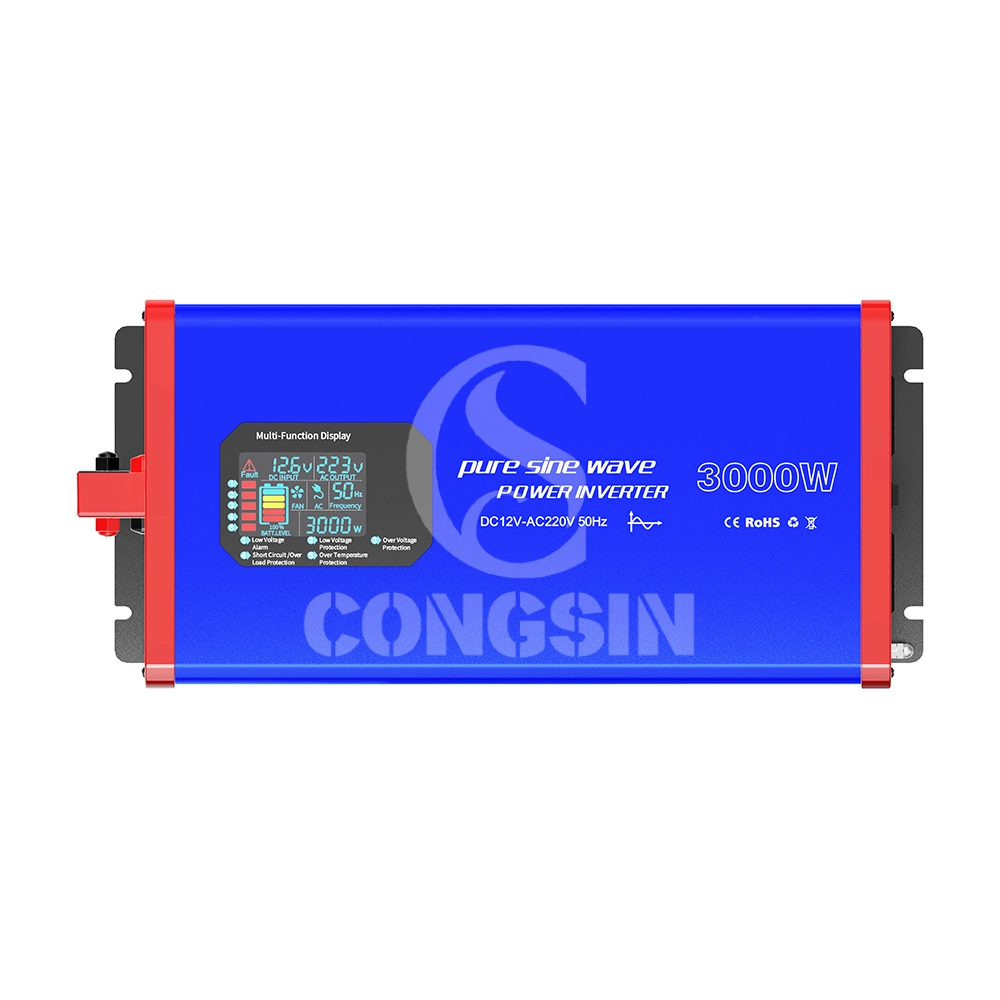
This 3000W full-power pure sine wave inverter (Model: CS3000PSW) adopts pure sine wave output technology (waveform distortion rate <2%), and the output power is highly consistent with mains power quality. It can safely drive high-power precision loads such as air conditioners, refrigerators, medical instruments, and small industrial equipment, avoiding equipment malfunctions or shortened service life caused by unstable waveforms. The device supports DC 12V input (compatible with 10.5V-14.8V wide voltage), continuously outputs 3000W full power, and has a peak power of 6000W, easily coping with the instantaneous startup impact of high-power devices; it is equipped with 4 AC universal sockets (max current 16A) + 2 USB 3.0 fast-charging ports (22.5W per port) to meet the simultaneous power supply needs of multiple devices. Built-in six-fold safety protection (overload, overvoltage, undervoltage, short circuit, overtemperature, reverse connection), combined with dual intelligent silent cooling fans (noise ≤45dB), it achieves the triple advantages of "high power + high safety + low noise," suitable for home emergency, outdoor engineering, vehicle-mounted power supply, small industrial scenarios and other fields.
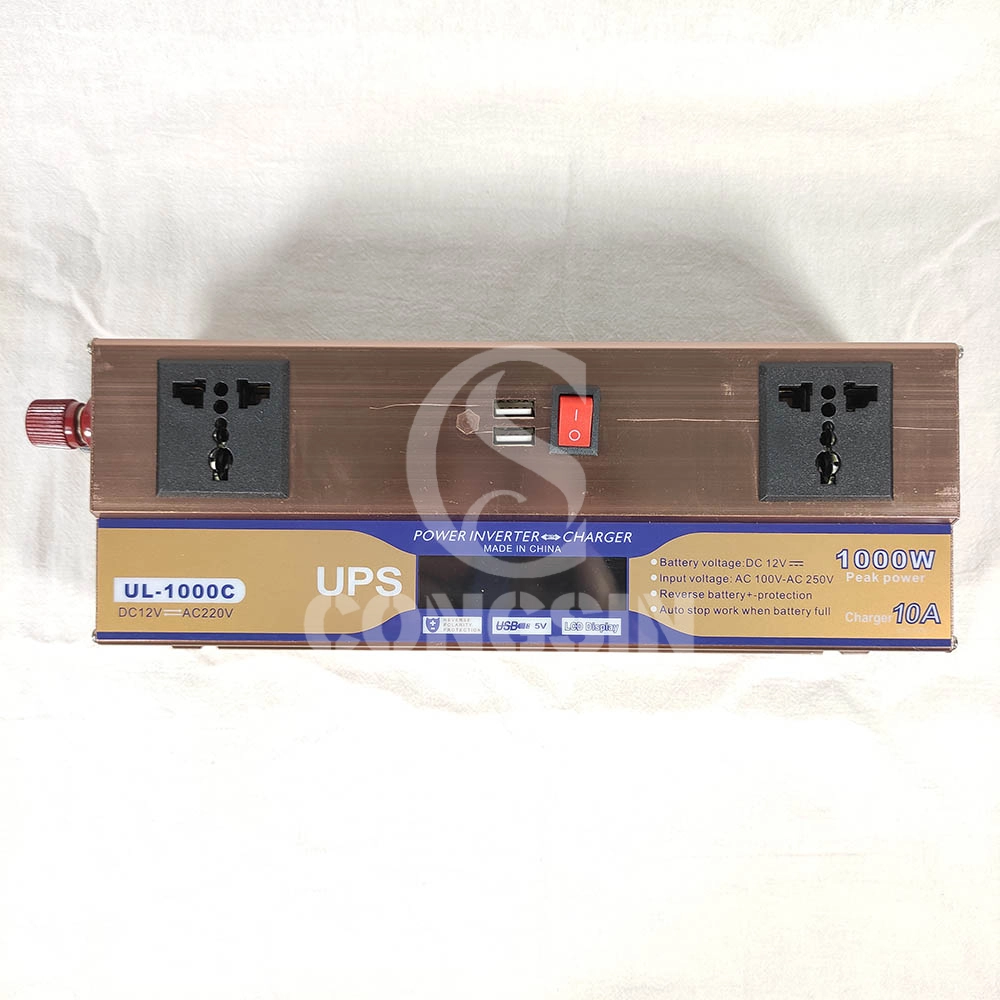
This 1000W modified sine wave inverter has UPS charging function, with DC12V input and AC220V output, and 600W rated power. Equipped with dual universal sockets, two USB ports, an LCD display, and a battery clip, it is professionally designed and has stable performance. It can provide stable AC power conversion and UPS emergency power supply for computers, small home appliances, electronic devices, etc. in home emergency, office, outdoor and other scenarios, meeting the needs of simultaneous power supply and emergency power supply for multiple devices.
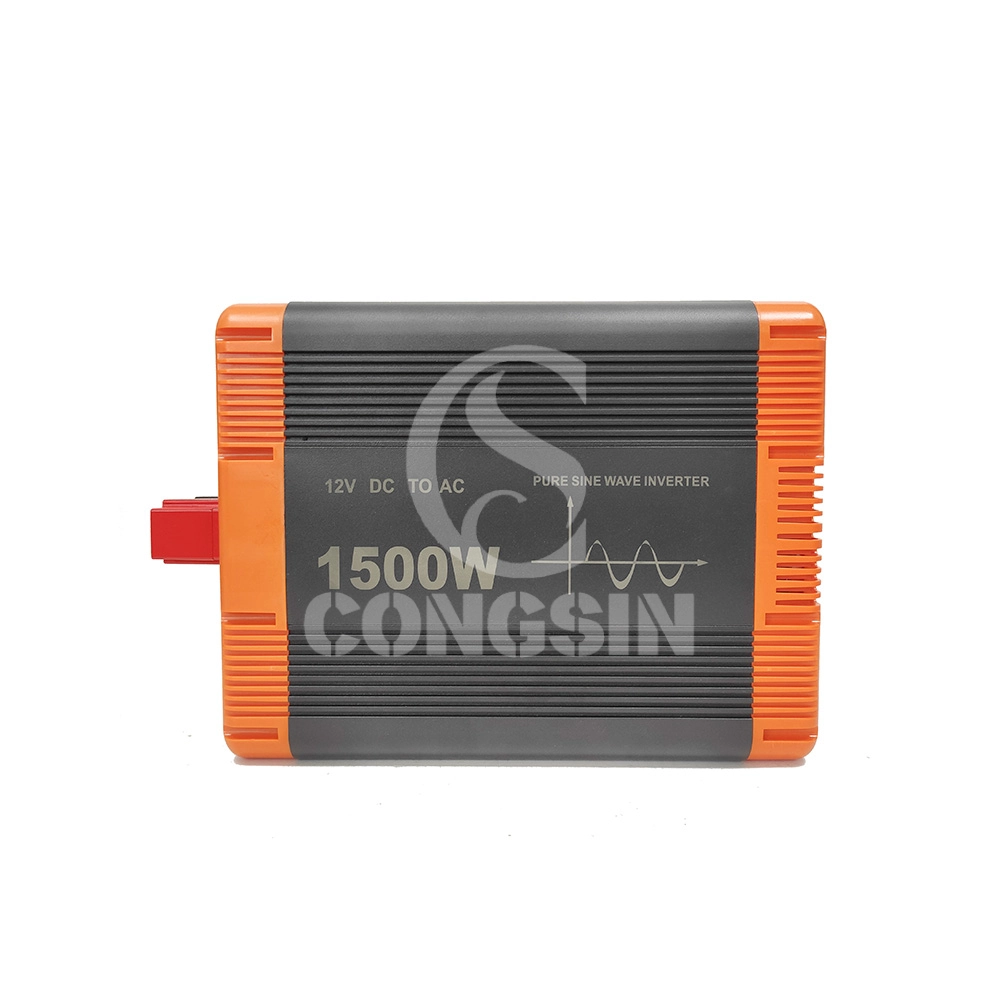
This 1500W pure sine wave inverter converts DC 12V to AC 220V power, with a rated power of 1500W and a peak power of 3000W. Equipped with dual fans, LCD display, QC3.0 and PD Type-C fast charging ports, and remote control capability for stable and intelligent power output.
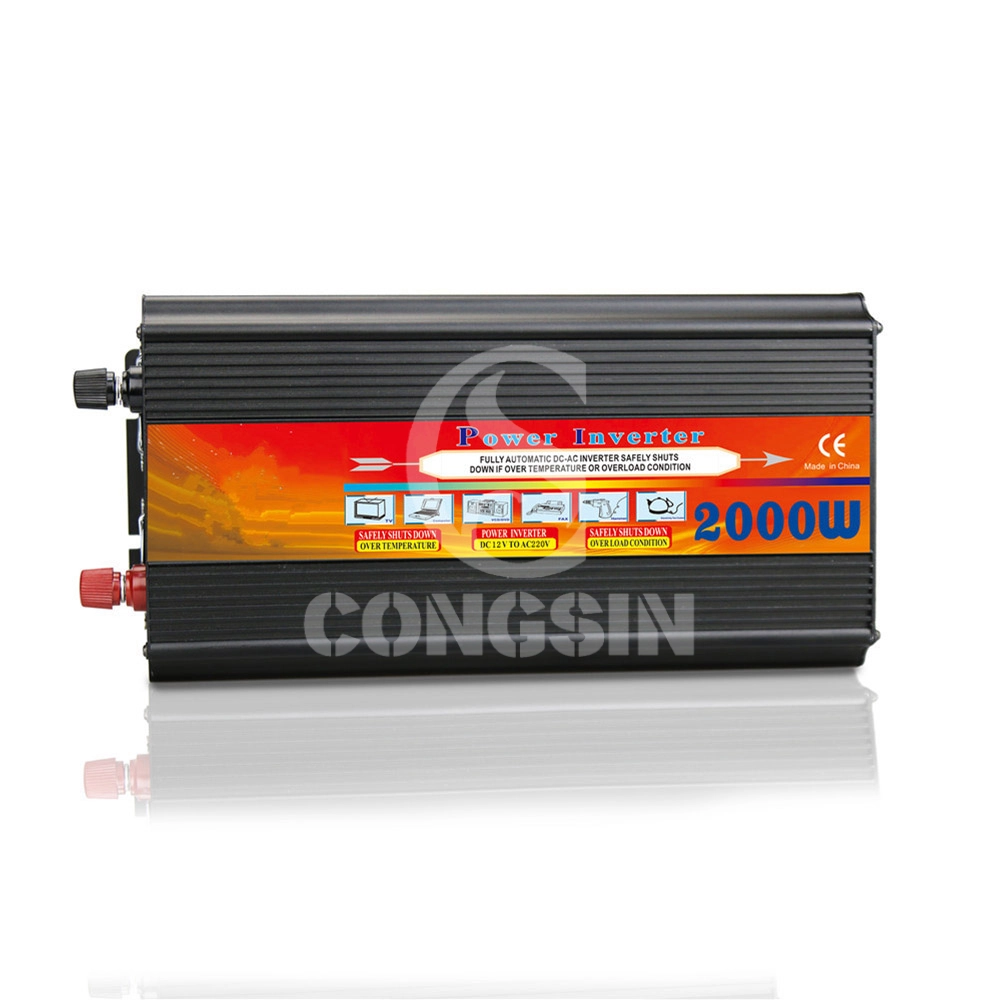
Our CS2000BIG 2000W modified sine wave inverter is a high-power power conversion device that converts DC 12V from batteries into AC 220V electricity. It is designed for heavy-duty use, featuring 2 AC sockets to power multiple high-power devices simultaneously, 2 cooling fans for efficient heat dissipation, and battery terminal wire for stable connection. With its robust construction and large capacity, it is an ideal solution for powering tools, appliances, and equipment in various scenarios, from industrial use to home emergencies.
Get in Touch with Our Team
You can also communicate with us directly through our online contact form. Please fill in the following information, and our team will contact you as soon as possible after receiving your message.

CONGSIN is a trusted OEM factory for power inverters, solar charge controllers, and DC converters. Reliable solutions for global B2B buyers.
 High Quality
 7/24 Service
 Guaranteed Warranty
© 2025 Congsin. All Rights Reserved.
 WeChat
 Scan QR Code
sin cong
teaimei10
Whatsapp: +8618028086791
Scan QR Code