





Electromagnetic Compatibility Planning for North American Pure Sine Wave Inverter Programs
- Quick Answer
- Key Takeaways
- 1. Define the Exact Product Before Selecting a Compliance Route
- 2. Determine the U.S. and Canadian Regulatory Paths Separately
- 3. Build a Representative Test Configuration
- 4. Build an Evidence and Responsibility Chain
- 5. Control Wireless Integration, Model Families and Design Changes
- 6. Release the Exact Configuration for the Target Market
- Frequently Asked Questions
- Confirm the North American EMC Path for Your Exact Inverter Configuration
- Official Sources for Further Verification
Quick Answer
A buyer evaluating an FCC compliant pure sine wave inverter should begin with the exact saleable configuration rather than a generic certificate request. In the United States, the applicable authorization route depends on product classification: many covered Part 15 unintentional radiators may use Supplier’s Declaration of Conformity (SDoC) or Certification, while most intentional radiators require Certification. Buyers can review the current 47 CFR §15.101 requirements and 47 CFR §15.201 requirements for the applicable equipment categories.
CONGSIN’s public Certificates page includes a document titled Supplier’s Declaration of Conformity for a Power Inverter, document No. TST20220503108-45C, dated May 17, 2022, and stating FCC Part 15 Class B as the test standard. The document lists a main test model and multiple additional models. It is a relevant project-qualification record, but buyers should still confirm that the exact current model, hardware revision and commercial configuration remain within its documented scope.
Exact Product → Destination Market → RF Classification → Authorization Route → Representative Test Configuration → Evidence & Responsibility → Revision Control → Market Release
Key Takeaways
- Authorization is configuration-specific. Product hardware, radio functions and destination market determine the appropriate regulatory path.
- Document existence is not the same as current model coverage. Even when an FCC-related SDoC-titled document is publicly available, the current product and revision should still be mapped to that evidence.
- FCC and ISED are only part of market qualification. RF and interference compliance does not replace electrical-safety certification, installation requirements or other applicable obligations.

Conceptual infographic showing the engineering flow from exact product definition through FCC/ISED pathway selection, representative testing, evidence control, design-change review and market release.
1. Define the Exact Product Before Selecting a Compliance Route
North American EMC planning should begin with a product definition precise enough to support engineering, regulatory and purchasing decisions. A description such as “2000 W pure sine wave inverter” is not enough because commercially similar products may use different power stages, control boards, filtering, displays, interfaces, enclosure structures or communication functions.
The useful baseline is the exact saleable configuration: intended use, DC input range, AC output voltage and frequency, rated and surge output, control-board and power-stage revision, enclosure and grounding arrangement, display and external interfaces, supplied cables and accessories, and any Wi-Fi, Bluetooth or other radio capability. The destination—United States, Canada or both—belongs in the same controlled definition.
Buyers can start with CONGSIN’s pure sine wave inverter product range to identify an appropriate product platform. Regulatory evidence should then be mapped to the exact version proposed for sale rather than inferred from the broader product family.
Compliance planning should begin with an exact saleable configuration, not with a broad product-family name.
This distinction matters for distributors and OEM buyers because a commercial model can keep the same name after a PCB, firmware, display or connector revision. The reverse can also occur: a private-label customer may assign a new commercial model number to hardware that remains technically unchanged. The compliance file therefore needs to follow controlled engineering identity rather than sales terminology alone.
Application-specific versions also need to be distinguished. An inverter intended for an RV, commercial system or outdoor mobile installation may use different cables, controls or interfaces. Those features should be frozen before the authorization and test strategy is selected.
Commercial Product → Controlled Hardware and Functions → Destination Market → Compliance Scope
2. Determine the U.S. and Canadian Regulatory Paths Separately
“FCC compliant” should become a product-specific conclusion rather than a marketing phrase. The United States and Canada can be managed within one engineering program, but their regulatory paths should remain separate.
Classify the RF Functions and U.S. Authorization Route
The first question is which RF-generating or radio-transmitting functions exist in the finished inverter. A product may contain digital control circuitry, switching electronics, displays, clocks or communication interfaces even when it has no intentional wireless transmitter. Absence of Wi-Fi or Bluetooth therefore does not automatically establish that no Part 15 assessment is relevant.
SDoC and Certification are different authorization procedures. Under 47 CFR §2.906, SDoC places conformity responsibility on the responsible party, while equipment eligible for SDoC may in some cases instead be certified. An FCC ID is associated with the Certification route and should not be treated as a universal compliance number for every FCC-compliant inverter.
Product Functions → RF Classification → Applicable Rule Scope → Authorization Route
This distinction is directly relevant to CONGSIN’s public documentation. The FCC-related document visible on the Certificates page is titled Supplier’s Declaration of Conformity, not an FCC Certification grant. It identifies Guangzhou Congsin Electronic Technology Co., Ltd. as applicant and manufacturer, the product as Power Inverter, the trademark as Congsin, document No. TST20220503108-45C, and FCC Part 15 Class B as the stated test standard.
The document lists a main test model and multiple additional models. This supports the specific statement that CONGSIN publicly displays a document titled Supplier’s Declaration of Conformity that states FCC Part 15 Class B for listed Power Inverter models. It does not support a blanket statement that every current CONGSIN pure sine wave inverter is “FCC certified.”
Check Current FCC Authorization Eligibility
A current U.S. program should also check whether equipment-authorization restrictions affect the exact product before relying on an older compliance file or commissioning new work. Current 47 CFR §2.903 addresses restrictions involving covered equipment, while SDoC rules also contain eligibility requirements relevant to responsible parties and measurement facilities.
One 2026 development requires especially careful wording. The FCC added a defined category of foreign-produced power inverters to the Covered List, but the regulatory definition is considerably narrower than the everyday commercial meaning of “power inverter.” Under the FCC’s August 20, 2026 Public Notice, the defined inverter must both be intended for use in parallel with an electric utility as a utility-interactive inverter and contain, or be designed or configured to accept, specified remote communication, control, sensing, data-collection or monitoring capability such as Ethernet, Wi-Fi, cellular or Bluetooth. The FCC Public Notice DA 26-870 also describes the associated foreign-production definition and Conditional Approval mechanism.
A conventional standalone DC-to-AC inverter should not be assumed to fall within the 2026 Covered List inverter category merely because it is manufactured outside the United States or is commercially called a “power inverter.”
The actual architecture needs to be compared with the FCC definition. Likewise, a 2022 document titled Supplier’s Declaration of Conformity does not by itself establish whether a materially changed or newly marketed 2026 product continues to follow the same regulatory path.
Build the Canadian Path Independently
Canada should be evaluated from the same controlled product definition but under ISED requirements. FCC evidence is not automatically Canadian compliance.
ISED ICES-003 applies where equipment falls within its defined scope for information technology equipment and digital apparatus and includes explicit scope conditions and exemptions. It should therefore not be presented as automatically applicable to every inverter.
Where radio functionality is included, the relevant Radio Standards Specifications also need to be determined. RSS-Gen Issue 6 was published July 30, 2026, with Amendment 1 dated September 15, 2026. It provides general requirements for radio apparatus and is used together with the RSS applicable to the specific radio technology.
A certified radio module can simplify part of a Canadian program, but it does not automatically complete host-product compliance. Host configuration, labeling, integration conditions and applicable RF-exposure requirements still need to be considered for the finished product.
One Controlled Product → U.S. FCC Path + Canadian ISED Path → One Controlled Production Revision
3. Build a Representative Test Configuration
Once the regulatory paths are understood, the team can determine which hardware and operating condition should represent the commercial product during testing. A technically valid report can still be commercially weak if the tested sample no longer represents the product entering production.
The highest-wattage inverter is not automatically the worst-case EMC configuration.
Depending on the design and applicable test method, relevant variables can include switching frequency, PCB layout, DC input voltage, AC output and load condition, fan and display operation, wired communication activity, wireless transmission state, cable arrangement, enclosure material, grounding or bonding, and charger or transfer functions where those features are present.
The laboratory setup should be based on the applicable test procedure rather than a generic purchasing checklist. FCC measurement guidance distinguishes procedures for intentional and unintentional radiators and should be used with the rules applicable to the final classification.
For procurement teams, the essential issue is traceability. The test file should identify the relevant hardware version, active functions, interfaces and operating configuration well enough to compare it with the production product.
This principle becomes particularly important when a document lists a main test model and additional models. The presence of additional models is stronger evidence than a generic company claim, but the buyer should still determine how those models relate technically to the representative test configuration and whether later revisions remain within the same basis.
A model-family rationale can draw on common control architecture, shared communication circuitry, the same radio system, comparable enclosure and grounding concepts, or documented differences that do not invalidate the selected test unit. A common housing or family name alone is not enough.
Exact Hardware → Representative Operating Configuration → Test Evidence → Justified Product Coverage
Manufacturing-quality controls answer a different engineering question. Buyers who also need production-process evidence can review CONGSIN’s Pure Sine Wave Inverter Quality Control Framework. Incoming inspection, burn-in and load testing support manufacturing quality but should not be presented as substitutes for applicable FCC or ISED compliance evaluation.
4. Build an Evidence and Responsibility Chain
A test report or certificate image becomes useful to a B2B project only when its identity, responsibility and model coverage can be traced to the commercial product.
Responsible Party → Exact Product Identity → Test or Authorization Evidence → Label and User Information → Marketed Product
CONGSIN’s public Certificates page provides a concrete example. It displays a document titled Supplier’s Declaration of Conformity for a Power Inverter, document No. TST20220503108-45C, identifying Guangzhou Congsin Electronic Technology Co., Ltd. as applicant and manufacturer, Congsin as the trademark and FCC Part 15 Class B as the stated test standard. The document is dated May 17, 2022 and lists a main test model together with multiple additional models.
This supports the specific company statement that CONGSIN publicly displays a document titled Supplier’s Declaration of Conformity that states FCC Part 15 Class B for listed Power Inverter models. It should not be generalized beyond the document’s model coverage or treated as proof that every current inverter in the catalogue follows the same authorization basis.
Before a distributor, importer, system integrator or OEM customer uses the record as project-specific evidence, the current product should be checked against the models identified in the document and against relevant hardware, firmware, interface or enclosure changes introduced since the original test basis.
Buyers can review CONGSIN’s available compliance documentation as part of supplier qualification. The same page also displays CE and RoHS-related product compliance records. The SGS-backed Alibaba supplier assessment shown there should be treated as a supplier or business verification record rather than as product EMC certification.
A controlled project file can additionally include product identification, hardware or firmware revision records, photographs, block diagrams, test setup information, test reports, authorization records where applicable, approved label artwork, user instructions, radio-module documentation, model-family justification and revision history. Not every buyer needs every confidential engineering record, but sufficient evidence should exist to connect the documentation to the product being purchased.
FCC and ISED documentation addresses applicable radio-frequency or interference requirements. It does not replace electrical-safety certification, application-specific installation requirements or other market obligations.
5. Control Wireless Integration, Model Families and Design Changes
A North American EMC program needs to remain connected to the production configuration after initial testing. This is especially important in OEM programs, where wireless functions, enclosures, interfaces, firmware or internal electronics may change after the original evidence was created.
Reassess Wireless Integration
A certified Wi-Fi or Bluetooth module can simplify part of a radio program when used within the conditions of its authorization, but it does not automatically complete host-product compliance. FCC KDB 996369 provides guidance for modular transmitters and host-product integration.
Changes involving the radio module, antenna, antenna position or gain, enclosure material, shielding, host power supply, radio-related firmware or simultaneous-transmission configuration can alter the assumptions behind an earlier integration review.
Base Inverter → Radio Integration → Host Review → Controlled Wireless Configuration
Justify Model Families and Control Changes
Family coverage should be based on demonstrable common architecture rather than naming. Relevant evidence can include common control circuitry, the same radio and antenna system, consistent interfaces, enclosure and grounding concepts, and controlled differences between power stages.
The existence of a 2022 document titled Supplier’s Declaration of Conformity that lists multiple models is useful, but it does not remove the need for revision control. When PCB, firmware, enclosure, filter networks, cable arrangements or radio systems change, engineering should determine whether the earlier test basis remains representative.
Administrative change: documentation can be updated without new technical evidence where the regulated configuration remains unaffected and the applicable rules permit that treatment.
Engineering review required: a PCB, component, firmware, interface, cable, enclosure or filtering change that could influence RF or EMC behavior should be assessed against the existing evidence.
Retest or new authorization may be required: additional testing or authorization work can become necessary where the revised product moves outside the technical or administrative scope of the previous evidence.
A previous report should not be carried forward automatically when the PCB, radio system, enclosure, filtering, cable arrangement or operating mode changes.
CONGSIN’s OEM/ODM Customization capabilities can support customized inverter programs, but the North American compliance impact of each electrical, mechanical, firmware or interface change should be evaluated against the exact project baseline.
6. Release the Exact Configuration for the Target Market
The final stage combines product identity, regulatory classification, representative testing, evidence ownership and change control into one controlled market-release decision.
| Release Item | U.S. Confirmation | Canada Confirmation | Release Evidence |
|---|---|---|---|
| Exact product identity | FCC scope and current eligibility checked | Applicable ISED scope checked | Model and revision record |
| Existing CONGSIN evidence | Applicability of document TST20220503108-45C checked where relevant | Not treated as Canadian evidence | Model/document mapping |
| RF function | Intentional/unintentional classification established | Radio/ICES classification established where applicable | Function declaration |
| Authorization path | SDoC or Certification determined as applicable | Applicable ICES/RSS path determined | Route decision |
| Test configuration | Representative configuration justified | Canadian configuration confirmed | Test setup and family rationale |
| Label and instructions | Applicable FCC requirements completed | Applicable ISED requirements completed | Approved artwork and manual |
| Responsibility | U.S. responsibility identified | Canadian responsibility identified | Responsibility record |
| Change status | No uncontrolled change | No uncontrolled change | Revision history |
| Market release | Internal release for defined U.S. configuration | Internal release for defined Canadian configuration | Controlled release record |
Document TST20220503108-45C should only be mapped into the U.S. evidence column when the proposed product can be connected to the models and technical basis represented by that record. It should not be copied into the Canadian evidence column or treated as a substitute for an ISED assessment.
“Released” in this matrix means an internal project decision for a defined commercial configuration. It is not a declaration that every CONGSIN inverter has universal FCC or ISED approval.
A North American EMC program is ready for release only when the exact product, applicable eligibility, destination market, RF classification, authorization route, representative evidence, responsibility chain and current production revision describe the same commercial configuration.
Frequently Asked Questions
Does every pure sine wave inverter need an FCC ID?
No. An FCC ID is associated with equipment following the FCC Certification route and is not a universal requirement for every FCC-compliant inverter. Many covered Part 15 unintentional-radiator categories may use SDoC or Certification, while most intentional radiators generally require Certification. CONGSIN’s publicly displayed document TST20220503108-45C is titled Supplier’s Declaration of Conformity and states FCC Part 15 Class B as the test standard, illustrating why buyers should determine the applicable authorization route before assuming that an FCC ID must exist.
Can one inverter compliance document cover an entire model family?
Potentially, but only where the document scope and underlying engineering relationship support that coverage. A listed additional-model relationship is relevant evidence, but later PCB, firmware, interface, enclosure, filtering or power-stage changes can affect whether an older test basis remains representative. Buyers should verify the exact current model and revision rather than extrapolate from a common housing or family name.
Does an FCC-compliant inverter automatically meet Canadian requirements?
No. FCC is a U.S. regulatory framework. Canadian products require a separate assessment against applicable ISED requirements, including relevant ICES requirements where the product falls within their scope and applicable RSS requirements where radio functions are present. Some technical work may be reusable when methods and configurations align, but FCC authorization should not be treated as Canadian approval.
Does a certified Wi-Fi or Bluetooth module complete host-product compliance?
No. A certified module can simplify part of a radio program when integrated within its authorized conditions, but the completed inverter can retain host-level integration, labeling, antenna, RF-exposure and other applicable requirements. The host configuration should therefore be reviewed against both the module conditions and the applicable U.S. or Canadian rules.
When should an inverter be reviewed or retested after a design change?
A compliance-impact review should occur whenever a design change could affect the relationship between the commercial product and its existing evidence. PCB revisions, radio or antenna changes, filtering, enclosure construction, grounding, cable arrangements, interfaces or operating firmware can lead to a documentation update, engineering justification, additional testing or another authorization action.
Confirm the North American EMC Path for Your Exact Inverter Configuration
For a project review, provide the target inverter and application, U.S. and/or Canadian destination, DC input, AC output and frequency, rated power, relevant interfaces, wireless functions, proposed model-family scope and planned OEM changes.
If existing compliance work is available, also identify the associated reports, module records, authorization information and hardware revision they represent. If the project intends to rely on CONGSIN’s public document TST20220503108-45C, the exact commercial model and current revision should be mapped to the record before it is treated as part of the project baseline.
CONGSIN can then discuss the relevant product platform and the project documentation available for the proposed configuration.
Applicable FCC and ISED requirements, current FCC equipment-authorization eligibility, responsible-party arrangements, test scope, model-family coverage and document availability should be confirmed for the actual product and destination market before they are treated as an approved project baseline.
Official Sources for Further Verification
For current regulatory requirements, engineering and procurement teams should verify the exact product against the applicable official FCC and ISED sources before market release:
- 47 CFR §15.101 — Equipment Authorization of Unintentional Radiators
- 47 CFR §2.906 — Supplier’s Declaration of Conformity
- FCC DA 26-870 — Covered List Power Inverter Definition
- FCC KDB 300643 — Part 15 Measurement Procedures
- ISED ICES-003 — Information Technology Equipment Including Digital Apparatus
- ISED RSS-Gen Issue 6 — General Requirements for Compliance of Radio Apparatus


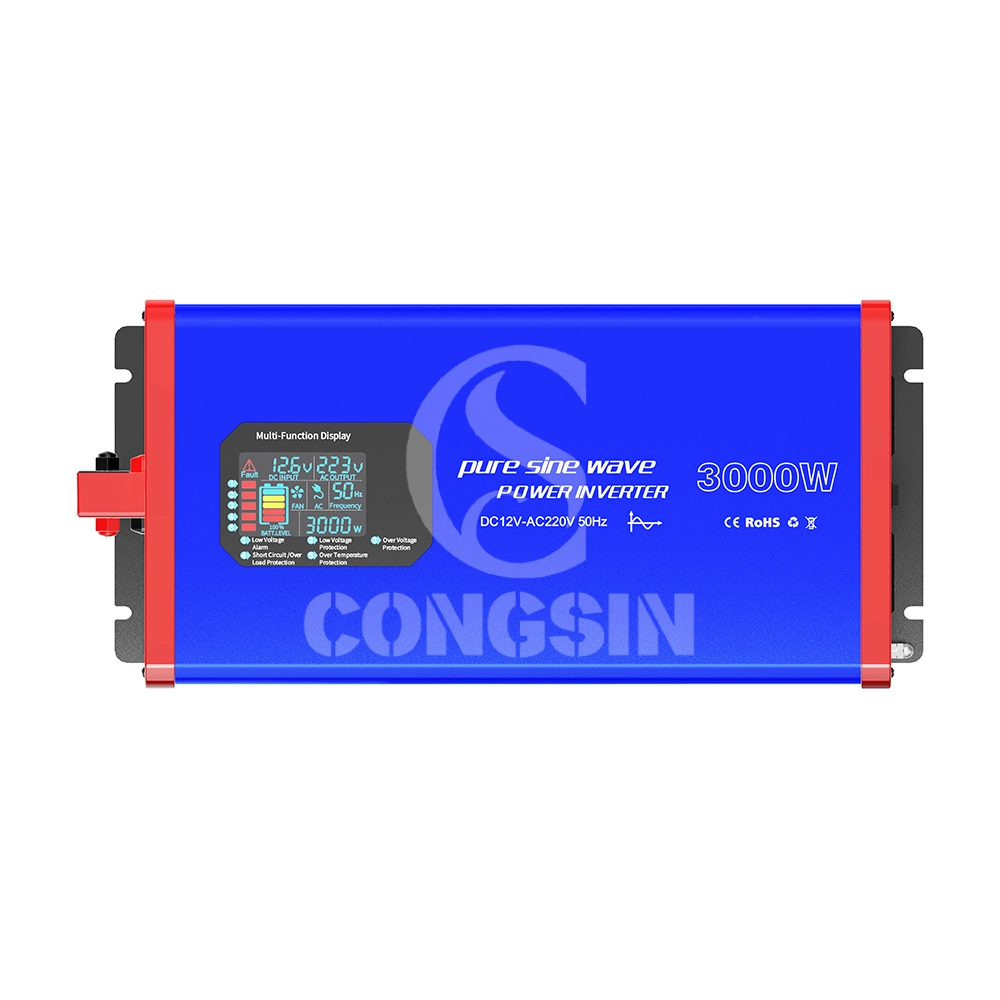
This 3000W full-power pure sine wave inverter (Model: CS3000PSW) adopts pure sine wave output technology (waveform distortion rate <2%), and the output power is highly consistent with mains power quality. It can safely drive high-power precision loads such as air conditioners, refrigerators, medical instruments, and small industrial equipment, avoiding equipment malfunctions or shortened service life caused by unstable waveforms. The device supports DC 12V input (compatible with 10.5V-14.8V wide voltage), continuously outputs 3000W full power, and has a peak power of 6000W, easily coping with the instantaneous startup impact of high-power devices; it is equipped with 4 AC universal sockets (max current 16A) + 2 USB 3.0 fast-charging ports (22.5W per port) to meet the simultaneous power supply needs of multiple devices. Built-in six-fold safety protection (overload, overvoltage, undervoltage, short circuit, overtemperature, reverse connection), combined with dual intelligent silent cooling fans (noise ≤45dB), it achieves the triple advantages of "high power + high safety + low noise," suitable for home emergency, outdoor engineering, vehicle-mounted power supply, small industrial scenarios and other fields.
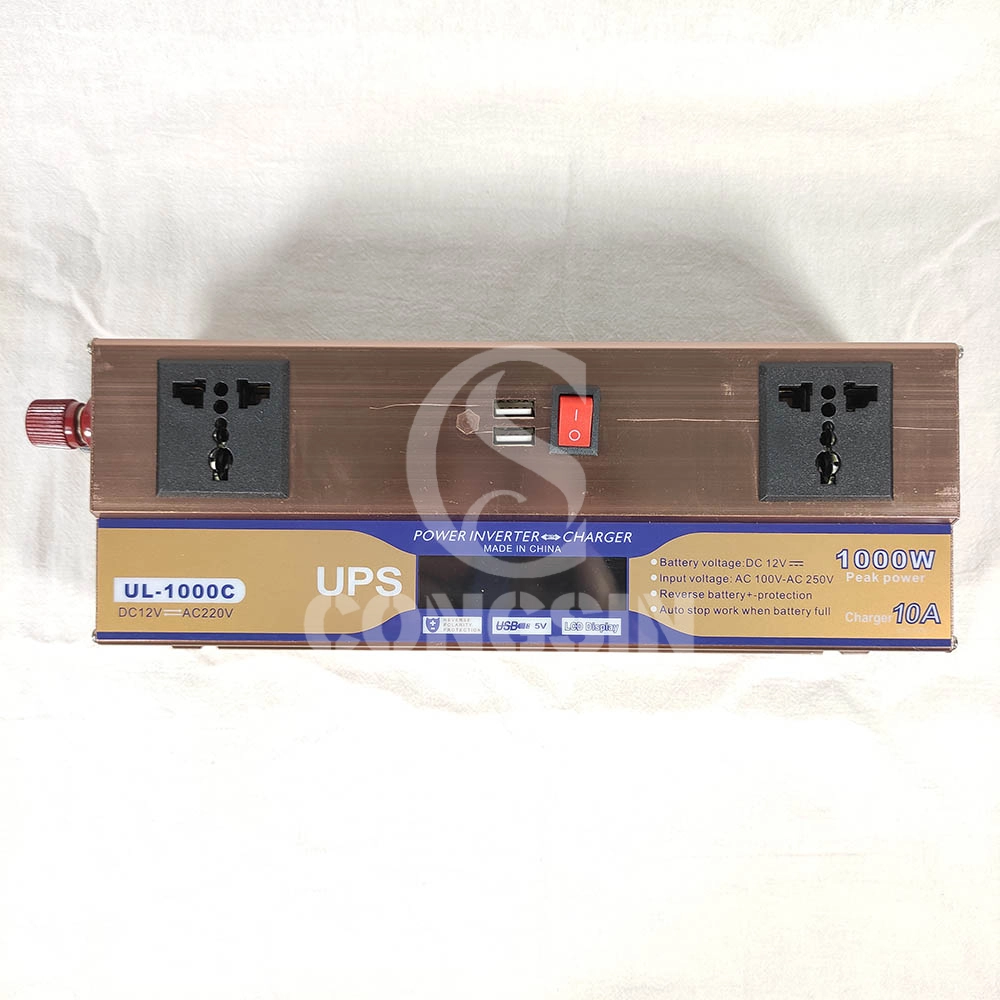
This 1000W modified sine wave inverter has UPS charging function, with DC12V input and AC220V output, and 600W rated power. Equipped with dual universal sockets, two USB ports, an LCD display, and a battery clip, it is professionally designed and has stable performance. It can provide stable AC power conversion and UPS emergency power supply for computers, small home appliances, electronic devices, etc. in home emergency, office, outdoor and other scenarios, meeting the needs of simultaneous power supply and emergency power supply for multiple devices.
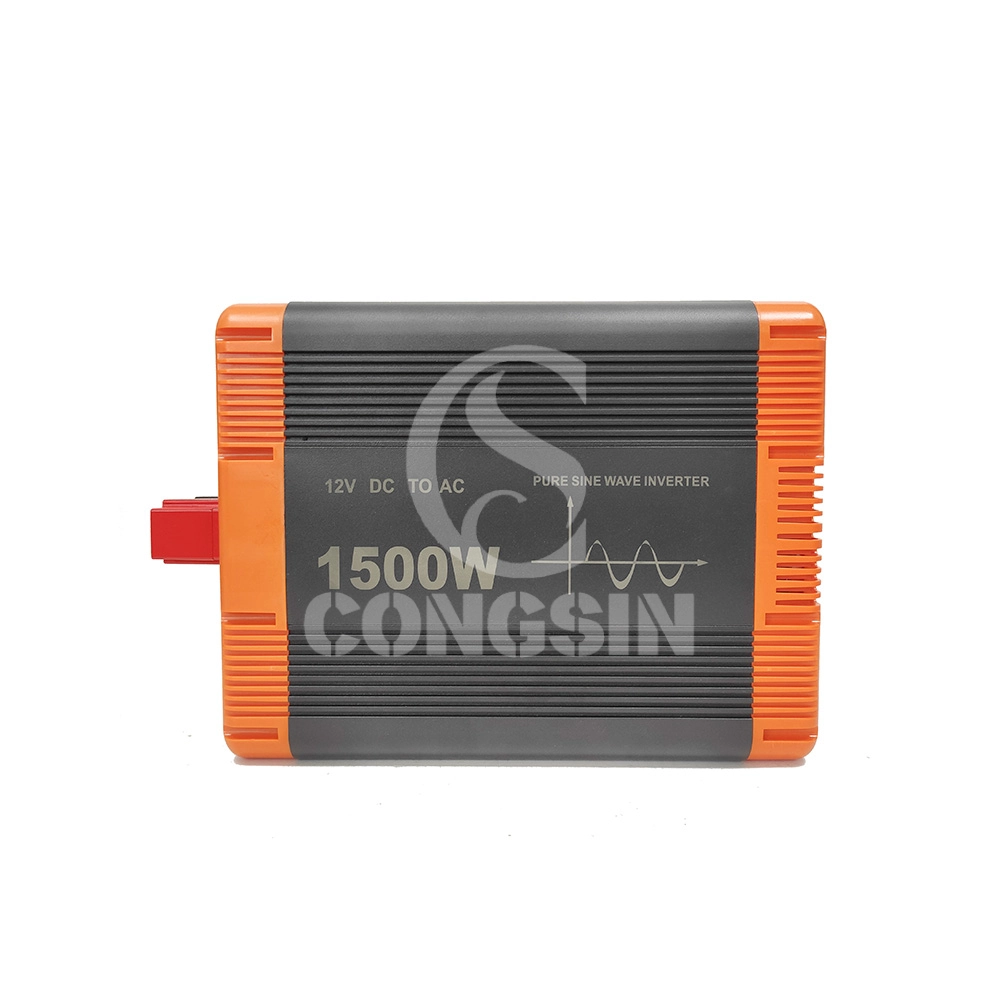
This 1500W pure sine wave inverter converts DC 12V to AC 220V power, with a rated power of 1500W and a peak power of 3000W. Equipped with dual fans, LCD display, QC3.0 and PD Type-C fast charging ports, and remote control capability for stable and intelligent power output.
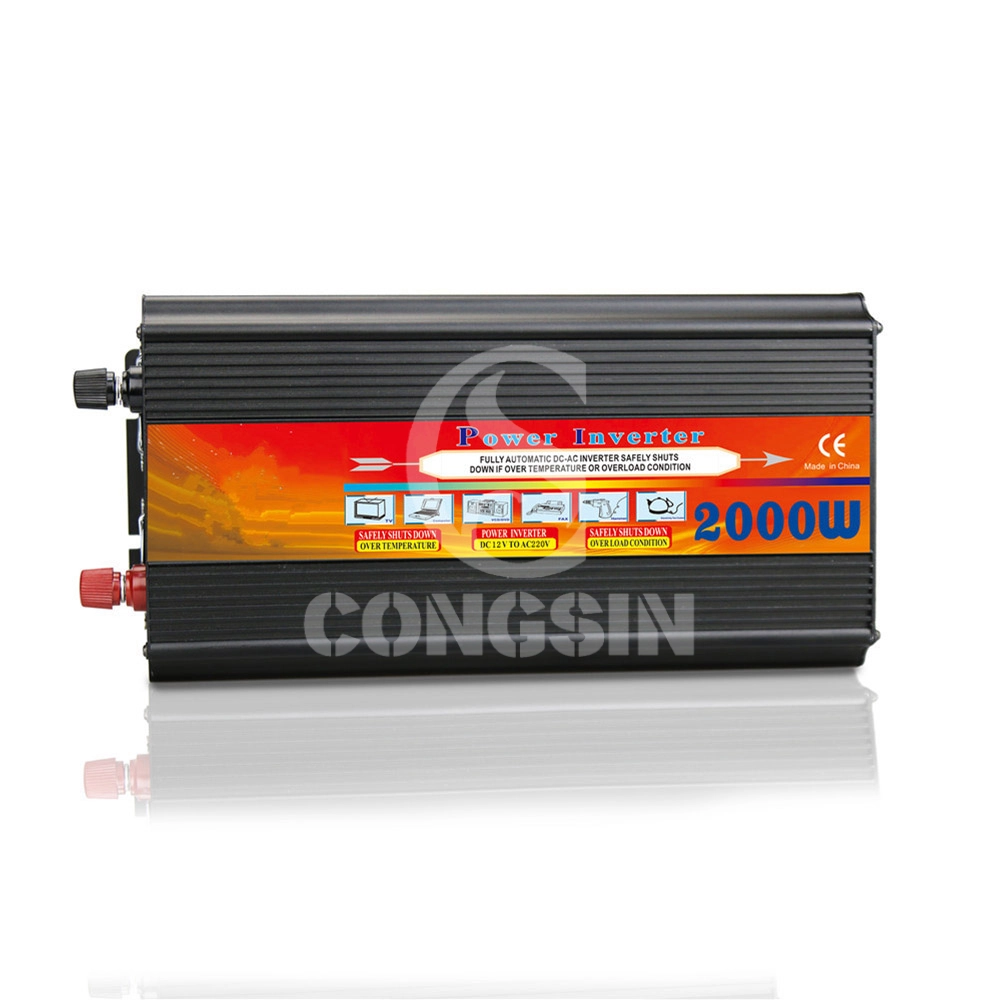
Our CS2000BIG 2000W modified sine wave inverter is a high-power power conversion device that converts DC 12V from batteries into AC 220V electricity. It is designed for heavy-duty use, featuring 2 AC sockets to power multiple high-power devices simultaneously, 2 cooling fans for efficient heat dissipation, and battery terminal wire for stable connection. With its robust construction and large capacity, it is an ideal solution for powering tools, appliances, and equipment in various scenarios, from industrial use to home emergencies.
Get in Touch with Our Team
You can also communicate with us directly through our online contact form. Please fill in the following information, and our team will contact you as soon as possible after receiving your message.

CONGSIN is a trusted OEM factory for power inverters, solar charge controllers, and DC converters. Reliable solutions for global B2B buyers.
 High Quality
 7/24 Service
 Guaranteed Warranty
© 2025 Congsin. All Rights Reserved.
 WeChat
 Scan QR Code
sin cong
teaimei10
Whatsapp: +8618028086791
Scan QR Code