





What are the top-rated vehicle power inverters for procurement?
- Vehicle Power Inverter Procurement: Essential Guide and Top Recommendations
- 1. What is a vehicle power inverter, and how does it work?
- 2. How do I determine the appropriate power capacity for my needs?
- 3. What are the differences between pure sine wave and modified sine wave inverters?
- 4. What key features should I consider when selecting a vehicle power inverter?
- 5. Are there any top-rated vehicle power inverters recommended for procurement?
- 6. How do I safely install and use a vehicle power inverter?
- 7. What are the maintenance requirements for a vehicle power inverter?
- 8. How do I choose between portable and hardwired vehicle power inverters?
- Conclusion: Why Choose Congsin for Your Vehicle Power Inverter Needs?
Vehicle Power Inverter Procurement: Essential Guide and Top Recommendations
When it comes to powering your devices on the go, a vehicle power inverter is an invaluable tool. It converts your vehicle's DC power into AC power, allowing you to use household electronics while traveling. However, selecting the right inverter involves understanding your specific needs and the technical specifications that align with them. Below are some frequently asked questions to guide you in making an informed procurement decision.
1. What is a vehicle power inverter, and how does it work?
A vehicle power inverter is a device that transforms the direct current (DC) from your vehicle's battery into alternating current (AC), enabling you to operate standard household appliances and electronics while on the move. This process involves increasing the voltage and using transistors or semiconductors to reverse the polarity of the DC input rapidly, effectively converting it to AC power suitable for your devices.
2. How do I determine the appropriate power capacity for my needs?
To select an inverter with the right power capacity, first, list all the devices you intend to power and note their wattage requirements. Add up the total wattage and include a 20% buffer to accommodate any additional power needs. This ensures that the inverter can handle the combined load of your devices without overloading.
3. What are the differences between pure sine wave and modified sine wave inverters?
Inverters come in two primary types:
Pure Sine Wave Inverters: These provide a clean, stable power output similar to that of utility-supplied electricity, making them ideal for sensitive electronics like laptops, medical devices, and high-end audio equipment.
Modified Sine Wave Inverters: These offer a more basic power output suitable for less sensitive devices such as lights, fans, and simple power tools. However, they may cause issues with sensitive electronics due to their less stable power output.
4. What key features should I consider when selecting a vehicle power inverter?
When choosing an inverter, consider the following features:
Output Ports: Ensure the inverter has the necessary ports for your devices, such as standard AC outlets, USB ports, or DC accessory ports.
Safety Protections: Look for built-in protections against overheating, overloading, over-voltage, under-voltage, and short circuits to safeguard both the inverter and your vehicle's electrical system.
Cooling Mechanism: Inverters with efficient cooling systems, like built-in fans or thermal management, help prevent overheating during prolonged use.
5. Are there any top-rated vehicle power inverters recommended for procurement?
While specific product recommendations can vary based on individual needs, here are some highly regarded vehicle power inverters:
Bestek 300W Power Inverter: Known for its reliability and multiple output ports, suitable for charging various devices simultaneously.
Energizer 1100W Power Inverter: Offers a higher power capacity, ideal for running larger appliances or multiple devices at once.
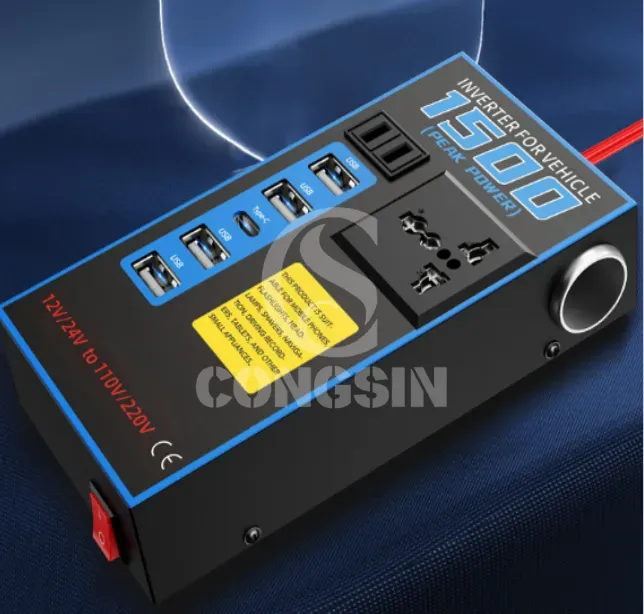
Congsin 1500W Power Inverter: Provides a balance between power output and portability, featuring multiple AC outlets and USB ports.
When selecting an inverter, ensure it aligns with your specific power requirements and device compatibility.
6. How do I safely install and use a vehicle power inverter?
To ensure safe installation and operation:
Installation: Follow the manufacturer's instructions carefully. Typically, this involves connecting the inverter directly to your vehicle's battery or using the cigarette lighter socket for lower wattage models.
Usage: Always run your vehicle's engine when using the inverter to prevent battery drain. Avoid using the inverter in wet or humid conditions, and ensure all connections are secure and insulated to prevent short circuits.
7. What are the maintenance requirements for a vehicle power inverter?
Regular maintenance includes:
Cleaning: Periodically remove dust and debris from the inverter using a dry cloth.
Inspection: Check all connections for wear and ensure they are tight and free from corrosion.
Troubleshooting: If the inverter is not functioning correctly, verify that all connections are correct and that the vehicle's battery is charged. Refer to the manufacturer's troubleshooting guide for specific issues.
8. How do I choose between portable and hardwired vehicle power inverters?
Portable Inverters: These are easy to install and remove, making them suitable for occasional use or for powering devices in multiple vehicles.
Hardwired Inverters: Permanently installed into your vehicle's electrical system, providing a more integrated solution for frequent or heavy-duty use. Installation is more complex and may require professional assistance.
Conclusion: Why Choose Congsin for Your Vehicle Power Inverter Needs?
Congsin offers a range of high-quality vehicle power inverters designed to meet diverse power requirements. Their products are known for reliability, safety features, and user-friendly designs, making them a top choice for those seeking efficient and durable power solutions on the go.
For a visual guide on selecting the right power inverter, you might find the following video helpful:


Products
Can I customize the logo?
Yes, OEM/ODM service is available.
Can it be connected to a battery long-term?
Yes, ensure good ventilation to avoid overheating.
Distributor
Do you provide marketing and sales materials?
Yes, we provide a range of marketing resources, including brochures, digital content, and product training.
Modified Sine Wave Inverters
What is the benefit of the UPS function? A2:
It automatically switches to battery power when AC fails.
Pure Sine Wave Inverters
Can it drive a 3P air conditioner and an electric oven at the same time?
Total power needs to be calculated: the rated power of a 3P air conditioner is about 2200W-2500W, and the electric oven is about 1500W-2000W. The total power is 3700W-4500W, which exceeds the 3000W continuous power, so simultaneous use is not recommended; if used alone, the 6000W peak can meet the startup needs of both, and the battery capacity must be ≥200Ah (12V) when used alone.
Get in Touch with Our Team
You can also communicate with us directly through our online contact form. Please fill in the following information, and our team will contact you as soon as possible after receiving your message.

CONGSIN is a trusted OEM factory for power inverters, solar charge controllers, and DC converters. Reliable solutions for global B2B buyers.
 High Quality
 7/24 Service
 Guaranteed Warranty
© 2025 Congsin. All Rights Reserved.