





How to calculate runtime and load for a UPS power inverter?
- Understanding UPS Power Inverters: Runtime, Load Calculation, and Sizing
- 1. How Do I Estimate the Runtime of a UPS Power Inverter?
- 2. How Do I Calculate the Total Load for My UPS System?
- 3. What Is the Recommended Sizing for a UPS System?
- 4. How Do I Account for Battery Depth of Discharge (DoD) in Runtime Calculations?
- 5. What Factors Can Affect the Actual Runtime of a UPS System?
- 6. How Do I Select the Appropriate Battery Capacity for My UPS System?
- 7. How Do I Account for Inverter Efficiency in Runtime Calculations?
- 8. What Are the Best Practices for Maintaining UPS System Performance?
- Conclusion: Why Choose Congsin for Your UPS Needs?
Understanding UPS Power Inverters: Runtime, Load Calculation, and Sizing
Uninterruptible Power Supply (UPS) systems are essential for maintaining continuous power to critical equipment during outages. Selecting the appropriate UPS power inverter involves understanding runtime estimation, load calculation, and proper sizing. Below are key considerations to guide your decision-making process.
1. How Do I Estimate the Runtime of a UPS Power Inverter?
Estimating the runtime of a UPS power inverter involves calculating how long the system can supply power to connected equipment during an outage. The formula is:
Runtime (in minutes) = (Battery Capacity in Ah × Battery Voltage in V × Depth of Discharge) × Inverter Efficiency / Load Power in W × 60
For example, with a 12V battery bank of 100Ah, a 50% depth of discharge, an inverter efficiency of 90%, and a load of 500W:
Runtime = (100 × 12 × 0.5) × 0.9 / 500 × 60 ≈ 108 minutes
This calculation provides an estimate; actual runtime may vary due to factors like battery age and temperature.
2. How Do I Calculate the Total Load for My UPS System?
To determine the total load:
- List all connected devices: Identify each device and its power consumption in watts (W).
- Sum the wattages: Add up the power requirements of all devices.
For instance, if you have:
- 3 Fans at 100W each
- 6 LED bulbs at 10W each
- 1 TV at 150W
- 1 Wi-Fi router at 20W
- 1 Refrigerator at 200W
The total load is:
(3 × 100) + (6 × 10) + 150 + 20 + 200 = 780W
This total load helps in selecting a UPS system with adequate capacity.
3. What Is the Recommended Sizing for a UPS System?
Proper sizing ensures the UPS can handle the load and provide sufficient runtime. A general guideline is:
- UPS Capacity: Choose a UPS with a capacity 20-30% higher than your total load to accommodate future growth and ensure stable performance.
For example, with a total load of 780W:
Required UPS Capacity = 780W × 1.25 ≈ 975VA
Selecting a UPS rated at 1000VA or higher would be appropriate.
4. How Do I Account for Battery Depth of Discharge (DoD) in Runtime Calculations?
The Depth of Discharge (DoD) refers to the percentage of battery capacity that can be safely used. To incorporate DoD into runtime calculations:
- Determine usable battery capacity: Multiply the total battery capacity by the DoD percentage.
- Adjust the runtime formula: Use the usable capacity in the runtime calculation.
For example, with a 100Ah battery bank at 12V and a 50% DoD:
Usable Capacity = 100Ah × 12V × 0.5 = 600Wh
This usable capacity is then used in the runtime formula.
5. What Factors Can Affect the Actual Runtime of a UPS System?
Several factors can influence the actual runtime:
- Battery Age: Battery capacity degrades over time, reducing runtime.
- Temperature: Extreme temperatures can affect battery performance.
- Load Variations: Fluctuating loads can impact runtime.
It's essential to consider these factors when planning for UPS runtime.
6. How Do I Select the Appropriate Battery Capacity for My UPS System?
To select the right battery capacity:
- Calculate the required battery capacity: Use the formula:
Battery Capacity (Ah) = (Total Load in W × Desired Backup Time in hours) / (Battery Voltage × Depth of Discharge)
- Choose standard battery sizes: Select batteries that meet or exceed the calculated capacity.
For example, for a total load of 1000W and a desired backup time of 2 hours:
Battery Capacity = (1000W × 2 hours) / (12V × 0.5) = 333.33Ah
Selecting batteries with a combined capacity of 340Ah or more would be appropriate.
7. How Do I Account for Inverter Efficiency in Runtime Calculations?
Inverter efficiency affects the actual usable energy from the batteries. To include inverter efficiency:
- Determine the inverter efficiency: Typically ranges from 80% to 95%.
- Adjust the usable energy: Multiply the total battery energy by the inverter efficiency.
For example, with a 12V battery bank of 100Ah (1200Wh) and an inverter efficiency of 90%:
Usable Energy = 1200Wh × 0.9 = 1080Wh
This adjusted usable energy is then used in the runtime calculation.
8. What Are the Best Practices for Maintaining UPS System Performance?
To ensure optimal UPS performance:
- Regular Maintenance: Perform routine checks and maintenance on the UPS and batteries.
- Monitor Battery Health: Regularly test battery voltage and capacity.
- Environmental Control: Keep the UPS in a cool, dry environment to prolong battery life.
By following these practices, you can enhance the reliability and longevity of your UPS system.
Conclusion: Why Choose Congsin for Your UPS Needs?
Congsin offers a range of high-quality UPS power inverters designed to meet diverse power backup requirements. With a focus on reliability, efficiency, and customer support, Congsin ensures that your critical equipment remains powered during outages. Explore our product offerings to find the perfect UPS solution for your needs.


Pure Sine Wave Inverters
What capacity battery is needed to drive a 1000W electric kettle?
It is recommended to match with a 12V 100Ah or larger capacity battery. When a 1000W electric kettle is working, the power consumption per hour is about 83Ah (1000W÷12V≈83A), and a 100Ah battery can support continuous work for about 1 hour (actual battery life is affected by battery aging).
Can this inverter drive a 3P air conditioner and a refrigerator at the same time?
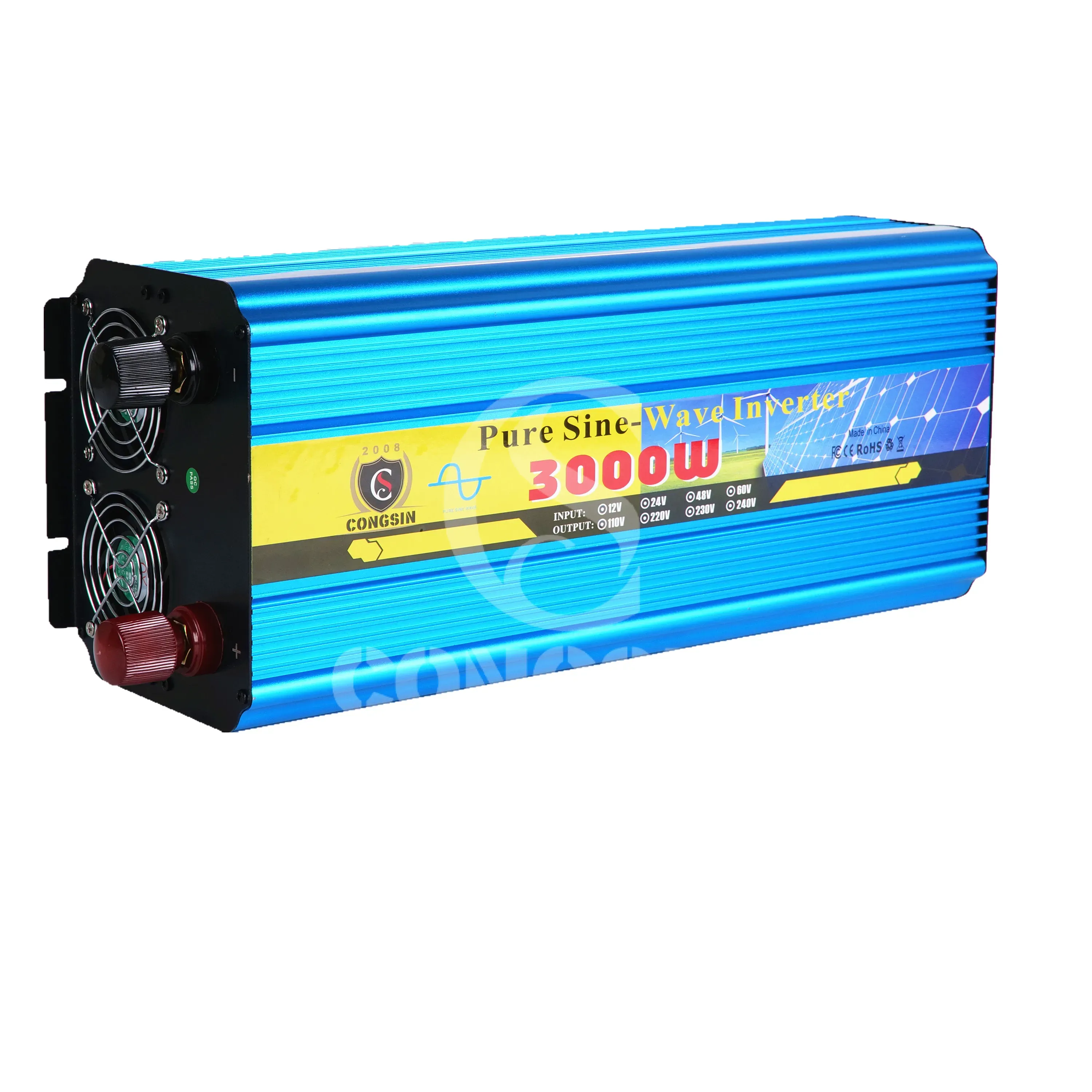
Yes. The rated power of a 3P air conditioner is about 2200W-2500W, and an ordinary double-door refrigerator is about 150W-300W, with a total power of about 2350W-2800W, which does not exceed the 3000W continuous power; and the peak 6000W can cope with the instantaneous startup impact of the air conditioner. When using, ensure the battery capacity is ≥200Ah (12V) to ensure battery life.
Can it be used in RVs or trucks?
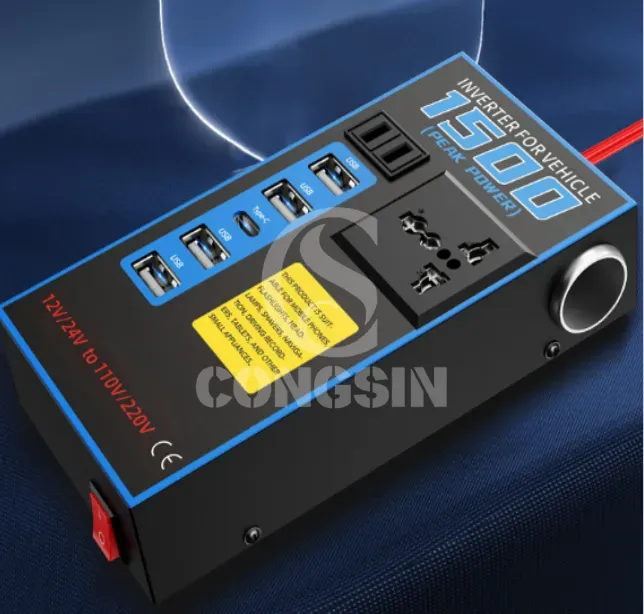
Yes. The device input voltage is DC 12V, which matches the battery voltage of RVs and trucks. It can be connected via battery clips or cigarette lighter interface (need to confirm that the maximum current of the cigarette lighter is ≥10A) to supply power to car refrigerators, parking air conditioners, laptops, etc.
Modified Sine Wave Inverters
Is the cooling fan noisy?
The fan is designed for heat dissipation and will make some noise during operation, but it is within a reasonable range and will not interfere with normal use.
Can it be used with a car cigarette lighter socket?
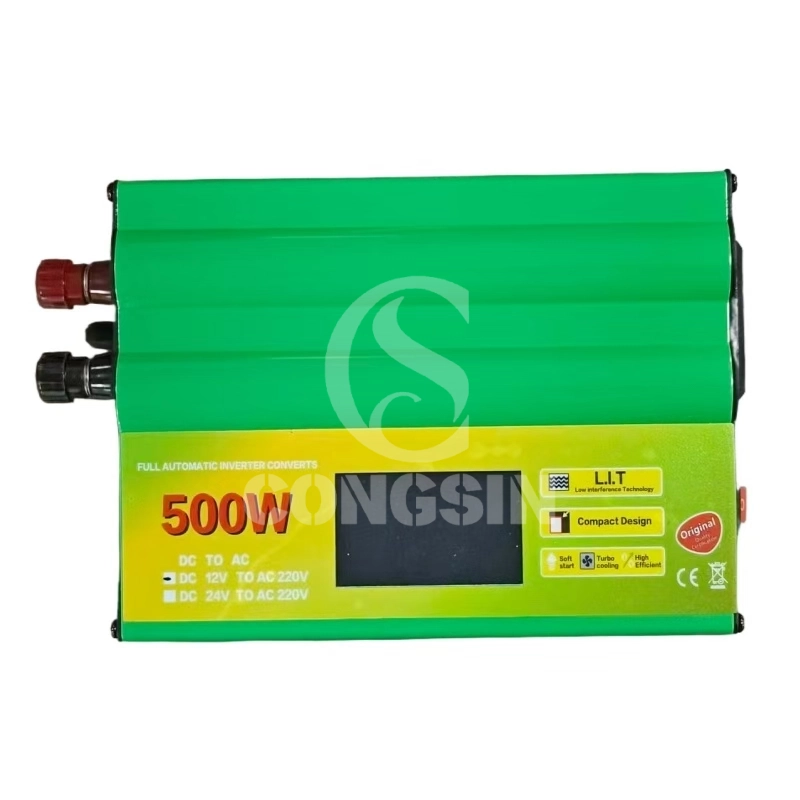
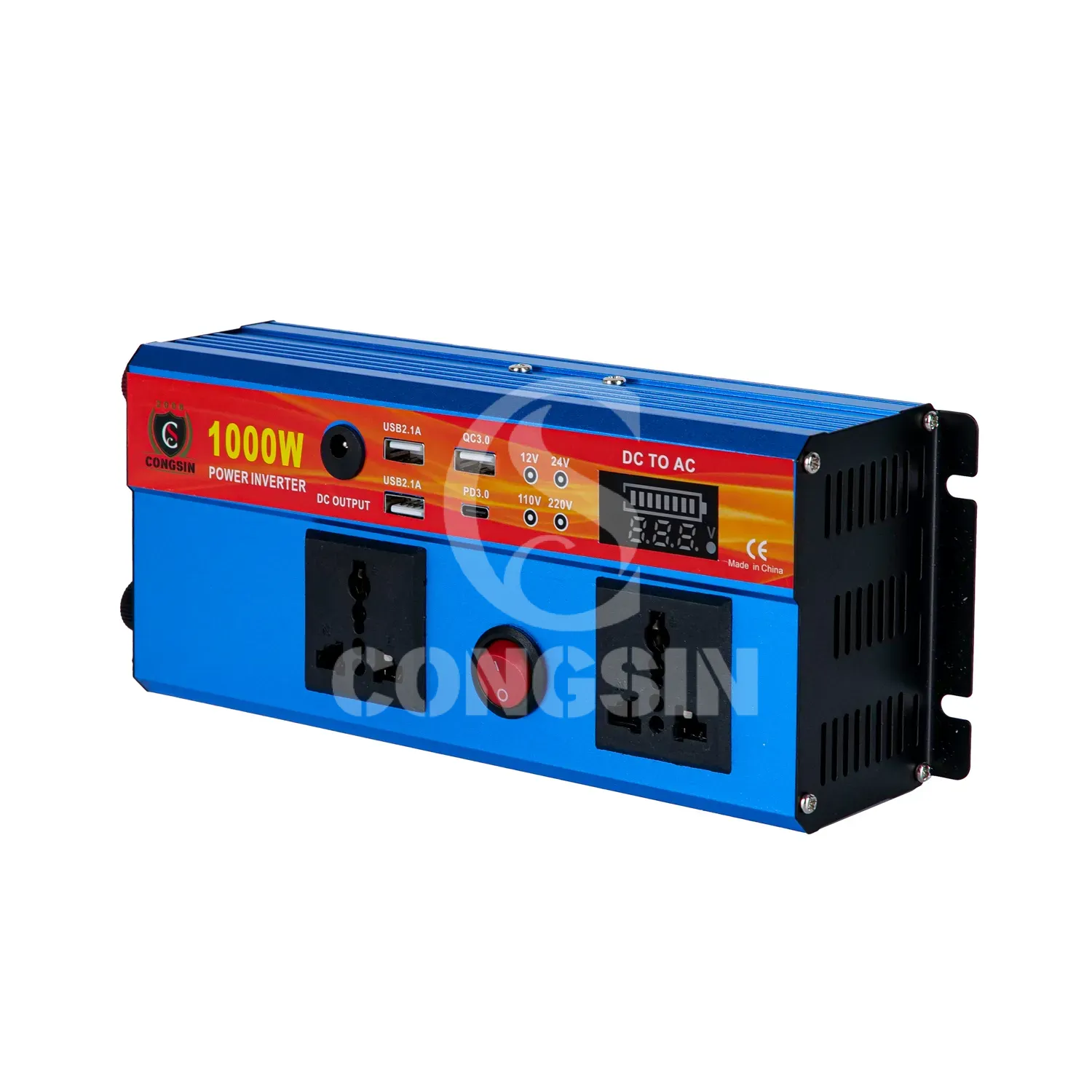
Yes, it supports both battery clip and cigarette lighter connection.
Get in Touch with Our Team
You can also communicate with us directly through our online contact form. Please fill in the following information, and our team will contact you as soon as possible after receiving your message.

CONGSIN is a trusted OEM factory for power inverters, solar charge controllers, and DC converters. Reliable solutions for global B2B buyers.
 High Quality
 7/24 Service
 Guaranteed Warranty
© 2025 Congsin. All Rights Reserved.