





Which solar inverter manufacturers support hybrid systems?
When considering the purchase of a solar inverter, it's crucial to address specific questions that often lack detailed answers online. Below are six frequently asked questions by beginners, along with in-depth responses to guide your decision-making process.
1. What are the leading solar inverter manufacturers known for their reliability and performance?
Several manufacturers have established a strong reputation in the solar inverter industry:
Enphase Energy: Pioneers in microinverter technology, Enphase offers individual inverters for each solar panel, enhancing system efficiency and reliability.
Sungrow: A global leader in solar inverters, Sungrow provides a comprehensive range of products suitable for residential, commercial, and utility-scale applications.
SMA Solar Technology: Based in Germany, SMA is renowned for its high-quality inverters and has a significant presence in the global market.
GoodWe: Known for its reliable hybrid and on-grid inverters, GoodWe combines modern design with smart technology for high efficiency and safety.
Fronius: An Austrian manufacturer with over 76 years of experience, Fronius offers inverters that are known for their durability and advanced features.
2. Which solar inverter manufacturers support hybrid systems?
Hybrid inverters are essential for integrating solar power with energy storage solutions. Notable manufacturers offering hybrid inverters include:
Sungrow: Offers a range of hybrid inverters suitable for various applications, including residential and commercial systems.
GoodWe: Provides hybrid inverters that combine modern design with smart technology for high efficiency and safety.
Fronius: Offers hybrid inverters that are known for their durability and advanced features.
Enphase Energy: While primarily known for microinverters, Enphase has expanded its product line to include hybrid solutions.
APsystems: Provides hybrid inverters suitable for various applications, including residential and commercial systems.
3. How do hybrid inverters differ from traditional inverters?
Hybrid inverters serve as a bridge between solar panels and energy storage systems, allowing for:
Energy Storage Integration: They manage the flow of electricity between solar panels, batteries, and the grid.
Grid Interaction: They can operate in both grid-tied and off-grid modes, providing flexibility during power outages.
Energy Management: They optimize energy usage by deciding when to store energy, use it, or export it to the grid.
4. What are the key features to consider when selecting a solar inverter?
When choosing a solar inverter, consider the following factors:
Efficiency: Higher efficiency ensures more of your solar energy is converted into usable power.
Compatibility: Ensure the inverter is compatible with your solar panels and energy storage system.
Warranty and Support: A robust warranty and reliable customer support are essential for long-term performance.
Monitoring Capabilities: Inverters with monitoring features allow you to track system performance and identify issues promptly.
5. Are there any emerging trends in solar inverter technology?
Yes, several trends are shaping the future of solar inverters:
Smart Inverters: Inverters with advanced monitoring and control features for better energy management.
Integration with Energy Management Systems: Inverters that work seamlessly with home energy management systems for optimized performance.
Enhanced Grid Compliance: Inverters designed to meet evolving grid standards and regulations.
6. How do I determine the right size of a solar inverter for my system?
The appropriate inverter size depends on:
Solar Panel Output: The total wattage of your solar panels.
Energy Consumption: Your household or business energy needs.
System Configuration: Whether you have a grid-tied, off-grid, or hybrid system.
It's advisable to consult with a solar energy professional to accurately size your inverter.
In conclusion, selecting the right solar inverter is crucial for the efficiency and reliability of your solar energy system. Leading manufacturers like Enphase Energy, Sungrow, SMA Solar Technology, GoodWe, and Fronius offer a range of products to meet various needs. Understanding the differences between hybrid and traditional inverters, along with key selection criteria, will aid in making an informed decision.
For a personalized quote or more information, please contact us at info@csinverter.com or visit our website at www.csinverter.com.


Modified Sine Wave Inverters
Which regional plugs can be used with the universal socket?
The universal socket supports most national plug specifications, such as GB, US, EU, etc. (some require adapters), and can meet the use of devices in multiple regions.
How to connect to the battery?
Use the included battery clips, connect the red clip to the positive pole of the battery and the black clip to the negative pole. Ensure good contact and no short-circuit risk when connecting.
Can this inverter support both 12V and 24V inputs
Yes, it can work with different voltage systems via selectable input terminals.
Which plug types are supported by the universal socket?
The universal socket is compatible with most national plug specifications, such as GB, US, EU, etc., and can meet the use of devices in different regions (some require adapters).
Pure Sine Wave Inverters
What is the difference between labeled 6000W and full power 3000W?
Labeled 6000W is peak power, which is only used to cope with the instantaneous high-power demand during device startup (such as air conditioner, motor startup); full power 3000W is continuous power, referring to the power that the device can stably output for a long time. When driving appliances daily, 3000W should be used as a reference to avoid total power overload.
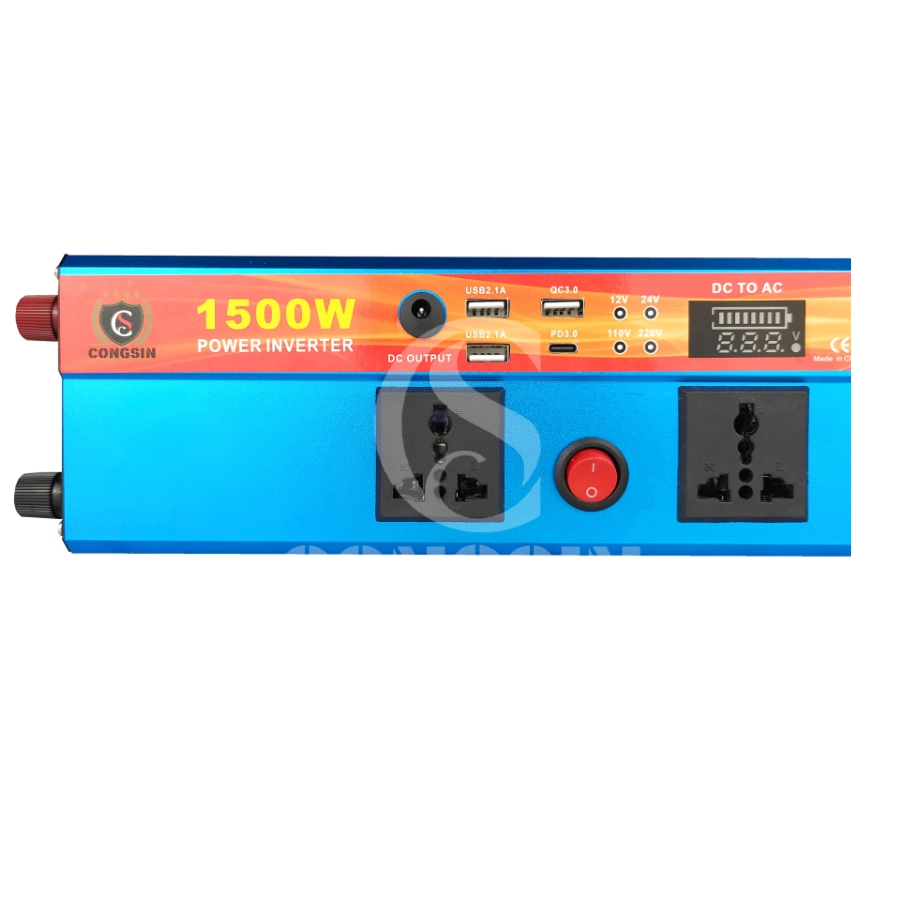
Our CS1000DDBC 1000W modified sine wave inverter is a professional power conversion device that converts DC 12V from batteries into AC 220V electricity. It is designed with user convenience in mind, featuring an LED display for real-time status monitoring, multiple charging ports (3 USB, 1 Type-C, 1 DC 12V) and two universal sockets to power a wide range of devices simultaneously. Its compact size (250×95×55mm) and lightweight design (NW: 0.84kg) make it easy to carry, ideal for outdoor activities, emergency home use, and on-the-go power needs.
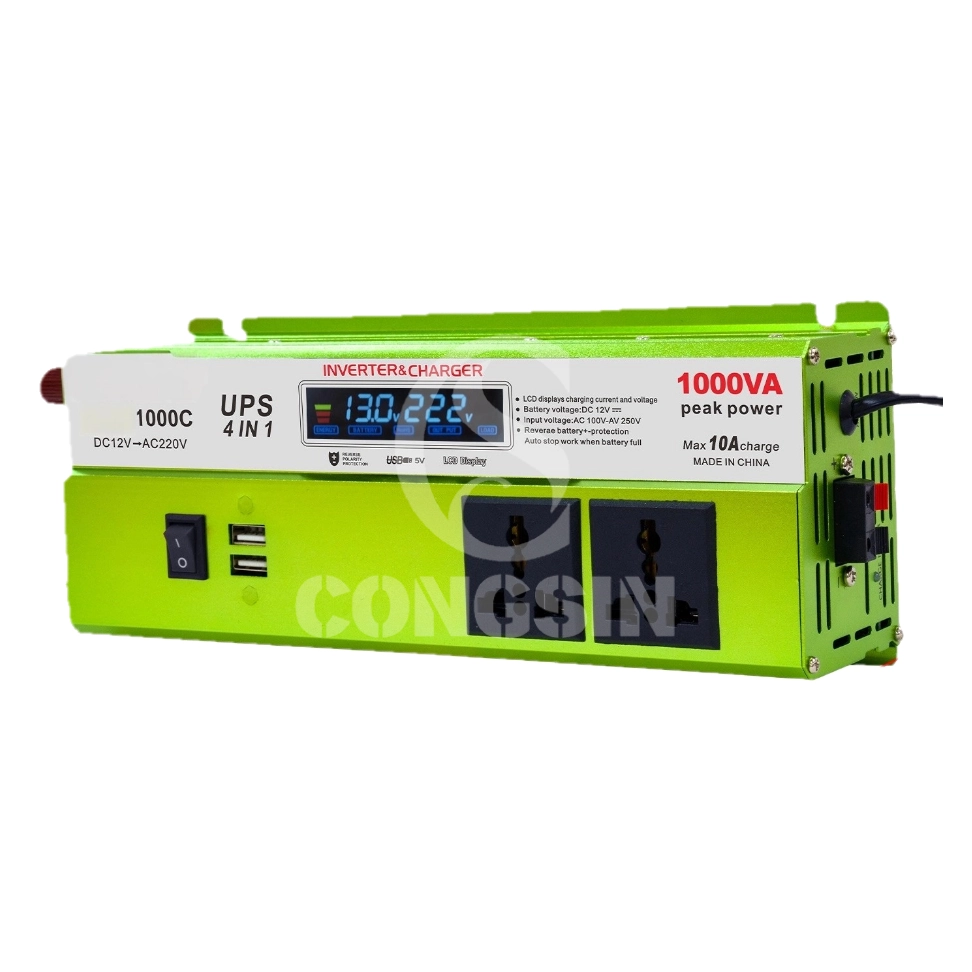
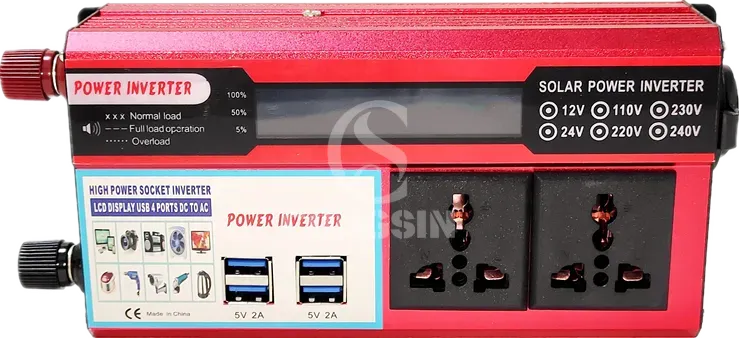
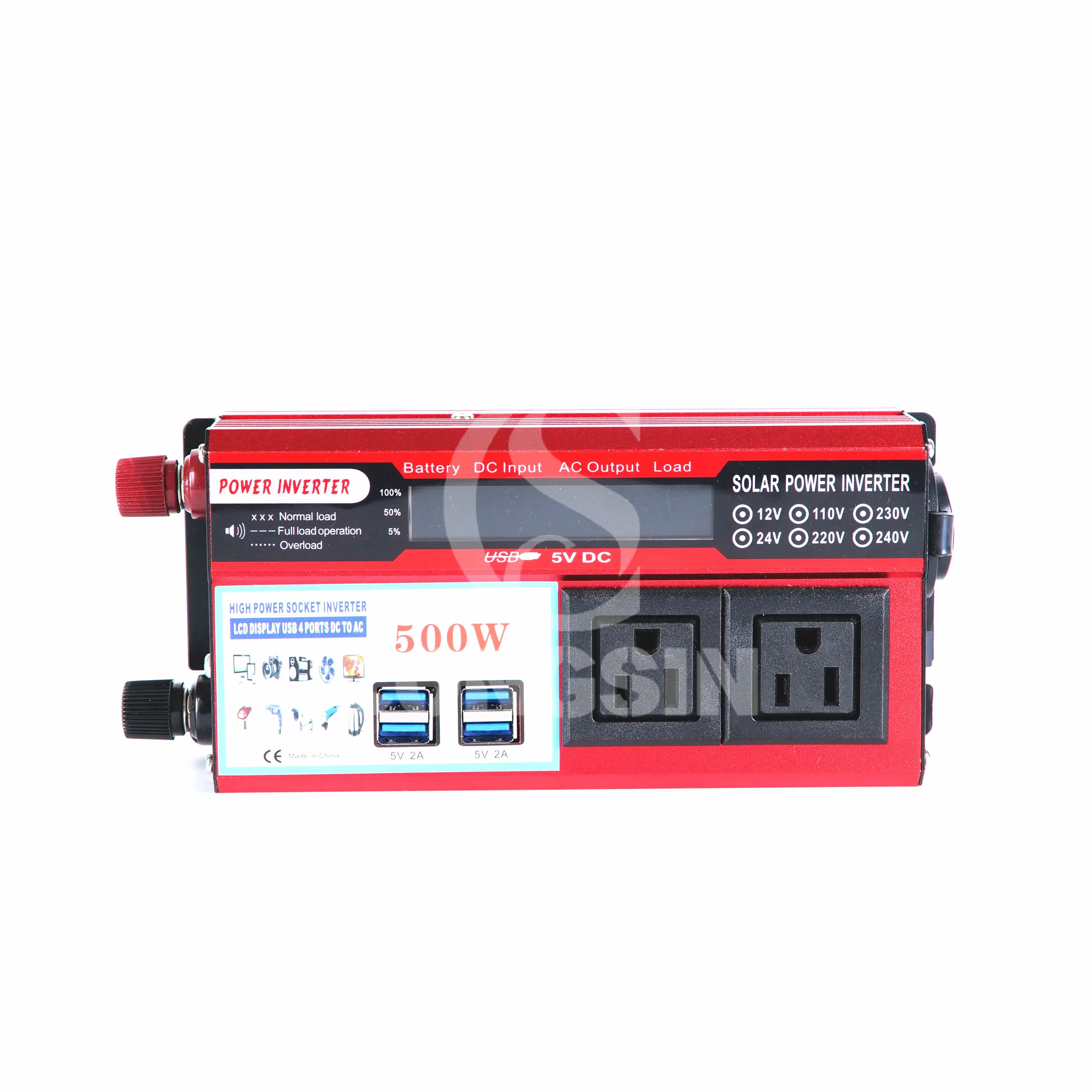
Get in Touch with Our Team
You can also communicate with us directly through our online contact form. Please fill in the following information, and our team will contact you as soon as possible after receiving your message.

CONGSIN is a trusted OEM factory for power inverters, solar charge controllers, and DC converters. Reliable solutions for global B2B buyers.
 High Quality
 7/24 Service
 Guaranteed Warranty
© 2025 Congsin. All Rights Reserved.