





Can off-grid solar inverters work with lithium batteries?
Integrating off-grid solar inverters with lithium batteries is a common choice for those seeking reliable and efficient energy solutions. However, beginners often encounter specific challenges and questions in this process. Below, we address six frequently asked questions, providing in-depth answers to guide your decision-making.
1. What are the key factors to consider when selecting an off-grid solar inverter for lithium batteries?
When choosing an off-grid solar inverter compatible with lithium batteries, consider the following factors:
Voltage Compatibility: Ensure the inverter's voltage matches the lithium battery's nominal voltage (e.g., 48V).
Communication Protocols: Verify that the inverter supports the communication protocol used by the battery's Battery Management System (BMS), such as CAN or RS485.
Charging Parameters: Confirm that the inverter can be configured to provide the appropriate charging voltage and current for lithium batteries.
Surge Capacity: Assess the inverter's ability to handle short-term overloads, which is crucial for starting appliances with high inrush currents.
Efficiency and Features: Opt for inverters with high efficiency and features like Maximum Power Point Tracking (MPPT) to optimize solar energy utilization.
2. How can I determine if my existing off-grid solar inverter is compatible with lithium batteries?
To assess compatibility:
Check Manufacturer Specifications: Review the inverter's manual or contact the manufacturer to confirm support for lithium batteries.
Examine Communication Protocols: Identify the communication protocol used by your battery's BMS and ensure the inverter can interface with it.
Adjustable Charging Settings: Verify if the inverter allows customization of charging parameters suitable for lithium batteries.
Firmware Updates: Determine if the inverter's firmware can be updated to support lithium battery integration.
3. Are there specific off-grid solar inverters designed exclusively for lithium battery use?
Yes, some off-grid solar inverters are specifically designed for lithium batteries, featuring built-in charging profiles and communication protocols tailored for lithium technology. For instance, certain models from Growatt and Schneider Electric offer seamless integration with lithium batteries.
4. What are the potential risks of using an off-grid solar inverter not designed for lithium batteries?
Using an incompatible inverter can lead to:
Overcharging or Undercharging: Lithium batteries require precise charging voltages; incorrect settings can damage the battery.
Reduced Battery Lifespan: Improper charging can shorten the battery's operational life.
Safety Hazards: Overcharging or deep discharging can pose safety risks, including thermal runaway.
5. How do I configure my off-grid solar inverter to work with lithium batteries?
Configuration steps include:
Set Battery Type: Access the inverter's settings to select 'Lithium' as the battery type.
Adjust Charging Parameters: Set the appropriate charging voltage and current as specified by the battery manufacturer.
Enable Communication Protocol: If applicable, enable the communication protocol (e.g., CAN or RS485) to facilitate data exchange between the inverter and battery.
Monitor Performance: Regularly check system performance to ensure optimal operation.
6. What are the benefits of integrating lithium batteries with off-grid solar inverters?
Integrating lithium batteries offers several advantages:
Longer Lifespan: Lithium batteries typically last longer than lead-acid batteries, reducing replacement costs.
Higher Efficiency: They provide higher round-trip efficiency, meaning more of the stored energy is usable.
Compact Design: Lithium batteries are more compact and lighter, saving space and simplifying installation.
Enhanced Performance: They can handle deeper discharges without significant capacity loss, offering more usable energy.
Conclusion
Integrating lithium batteries with off-grid solar inverters can significantly enhance your energy system's efficiency and reliability. By carefully selecting compatible components and configuring them correctly, you can achieve a sustainable and cost-effective off-grid power solution.
For personalized advice and to explore suitable options for your needs, feel free to contact us at info@csinverter.com or visit our website at www.csinverter.com.


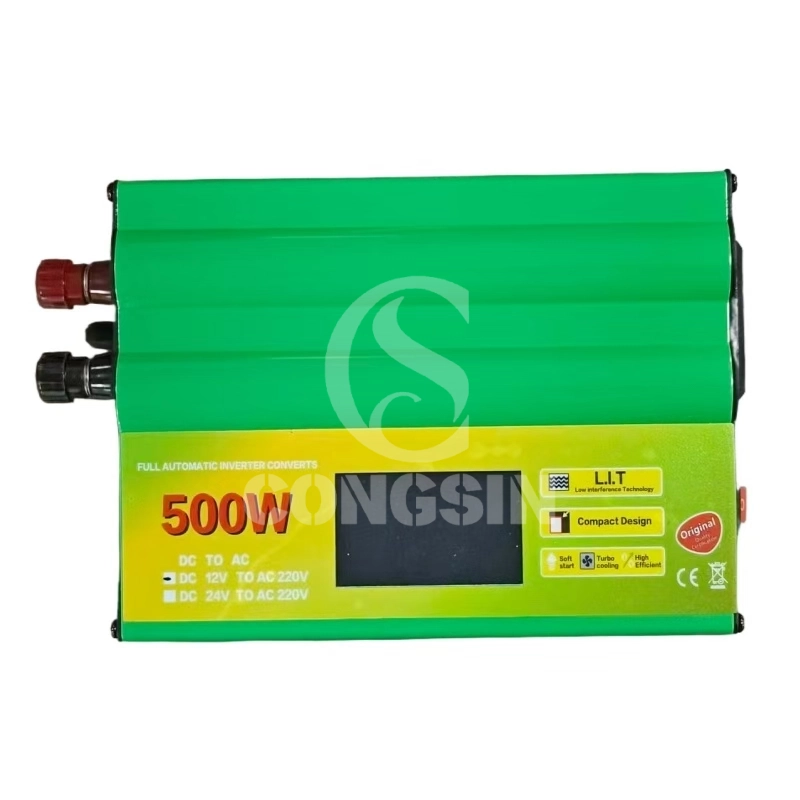
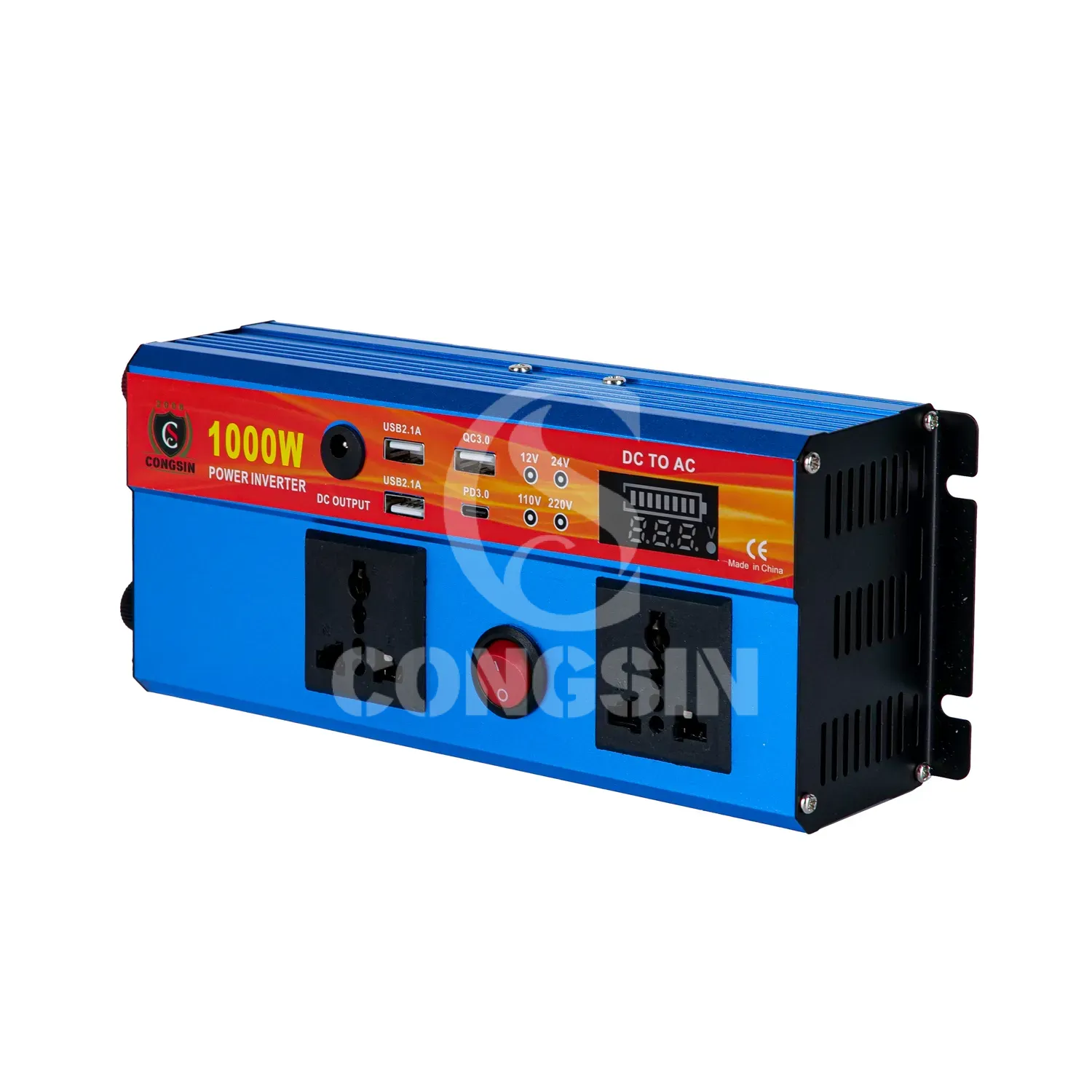
Modified Sine Wave Inverters
How to connect the battery with the battery clip?
Connect the positive and negative poles of the battery clip to the positive and negative poles of the battery respectively, and ensure a firm connection.
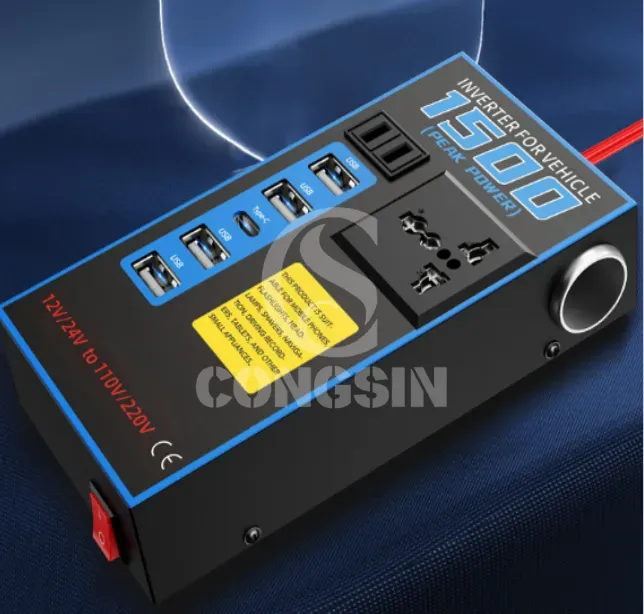
Which plug types are supported by the universal socket?
The universal socket is compatible with most national plug specifications, such as GB, US, EU, etc., and can meet the use of devices in different regions (some require adapters).
What devices can be powered by this inverter?
Suitable for TVs, fans, computers, and small tools.
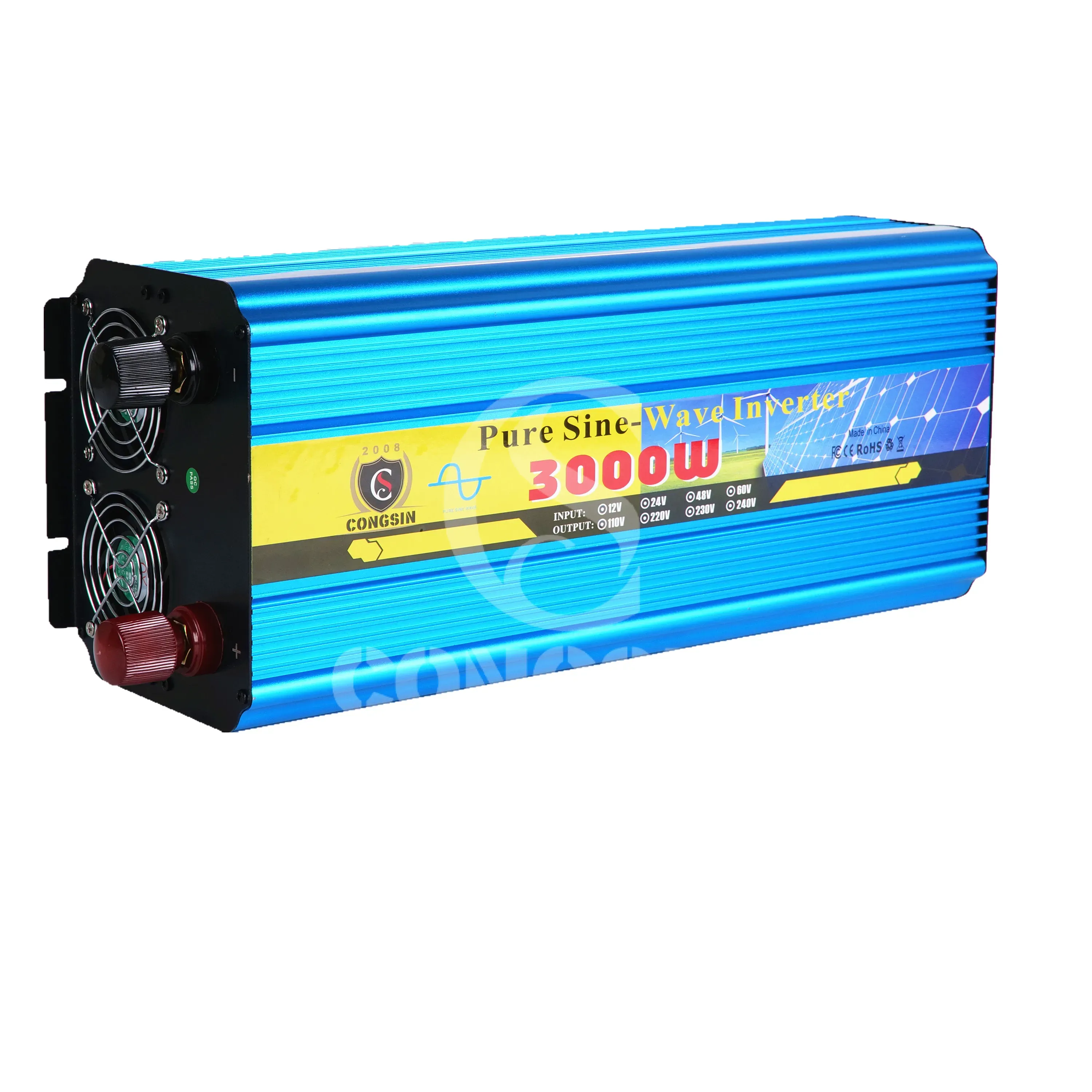
Pure Sine Wave Inverters
Can this inverter drive a 3P air conditioner and a refrigerator at the same time?
Yes. The rated power of a 3P air conditioner is about 2200W-2500W, and an ordinary double-door refrigerator is about 150W-300W, with a total power of about 2350W-2800W, which does not exceed the 3000W continuous power; and the peak 6000W can cope with the instantaneous startup impact of the air conditioner. When using, ensure the battery capacity is ≥200Ah (12V) to ensure battery life.
What is the difference between labeled 6000W and full power 3000W?
Labeled 6000W is peak power, which is only used to cope with the instantaneous high-power demand during device startup (such as air conditioner, motor startup); full power 3000W is continuous power, referring to the power that the device can stably output for a long time. When driving appliances daily, 3000W should be used as a reference to avoid total power overload.
Get in Touch with Our Team
You can also communicate with us directly through our online contact form. Please fill in the following information, and our team will contact you as soon as possible after receiving your message.

CONGSIN is a trusted OEM factory for power inverters, solar charge controllers, and DC converters. Reliable solutions for global B2B buyers.
 High Quality
 7/24 Service
 Guaranteed Warranty
© 2025 Congsin. All Rights Reserved.