





Can an inverter grid off power critical loads during outages?
Understanding Off-Grid Inverters: Key Considerations for Power Inverter Purchases
Off-grid inverters are essential components in independent power systems, particularly for areas without access to a traditional power grid. They convert direct current (DC) power stored in batteries into alternating current (AC) power, suitable for household and commercial applications. Additionally, they can convert AC power from the grid into DC to charge the batteries, making them crucial for solar power generation systems in remote locations.
1. What is an Off-Grid Inverter?
An off-grid inverter is a device that converts DC electricity from sources like solar panels or batteries into AC electricity for use in homes or businesses without access to the utility grid. These inverters often include integral battery chargers to replenish the battery from an AC source when available. They do not require anti-islanding protection, as they are not connected to the grid.
2. How Do Off-Grid Inverters Work?
Off-grid inverters perform several key functions:
DC-AC Conversion: They boost the DC input voltage and use advanced technology to produce a stable AC output.
Power Management: They manage the flow of power between the batteries and the electrical load, ensuring a consistent and reliable power supply.
Charging Capability: Many off-grid inverters include a solar charge controller and an automatic generator starter module, which help manage the charging of batteries from solar panels and backup generators.
3. Can an Off-Grid Inverter Power Critical Loads During Outages?
Yes, off-grid inverters can power critical loads during outages, provided they are connected to a battery storage system. In the event of a grid outage, the inverter switches to off-grid mode, supplying power to essential circuits such as lights, refrigerators, and communication devices. This functionality is particularly important in areas prone to power outages.
4. What Are the Key Features to Consider When Purchasing an Off-Grid Inverter?
When selecting an off-grid inverter, consider the following features:
Power Capacity: Ensure the inverter can handle the total wattage of your critical loads.
Surge Capacity: Check if the inverter can manage short-term power surges, which are common when appliances like refrigerators start.
Battery Compatibility: Verify that the inverter is compatible with your chosen battery storage system.
Efficiency: Look for inverters with high conversion efficiency to maximize the use of stored energy.
Safety Features: Ensure the inverter includes necessary safety features, such as overvoltage protection and short circuit protection.
5. How Do Off-Grid Inverters Differ from Grid-Tied Inverters?
Off-grid inverters are designed for systems that operate independently of the utility grid, converting DC electricity from solar panels or batteries into AC for use in homes or businesses. They typically rely on battery storage systems, which are charged by photovoltaic arrays, and are capable of powering AC loads directly. In contrast, grid-tied inverters are designed to synchronize with the utility grid, allowing excess power to be fed back into the grid. They do not provide backup power during utility outages.
6. What Are the Advantages of Using an Off-Grid Inverter?
Off-grid inverters offer several advantages:
Energy Independence: They allow you to generate and use your own electricity, reducing reliance on the utility grid.
Reliability: They provide a consistent power supply during grid outages, ensuring that critical loads remain operational.
Environmental Benefits: By utilizing renewable energy sources like solar power, they contribute to reducing carbon emissions.
7. How Do I Maintain My Off-Grid Inverter?
Regular maintenance is essential to ensure the longevity and efficiency of your off-grid inverter:
Regular Inspections: Check for any signs of wear or damage.
Cleanliness: Keep the inverter and surrounding area clean to prevent dust buildup.
Battery Maintenance: Regularly check the health of your battery storage system, as it plays a crucial role in the overall performance.
Conclusion
Off-grid inverters are vital for providing reliable power in areas without access to the utility grid. They offer energy independence, reliability during outages, and environmental benefits. When selecting an off-grid inverter, consider factors such as power capacity, surge capacity, battery compatibility, efficiency, and safety features to ensure it meets your specific needs.
Congsin's Advantages
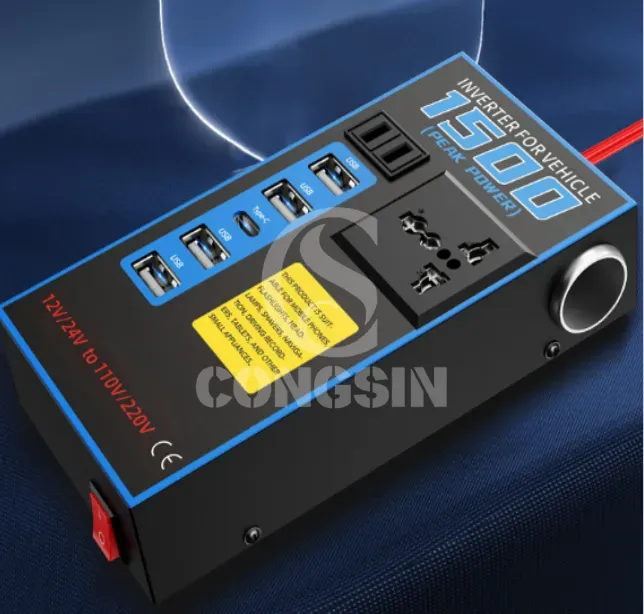
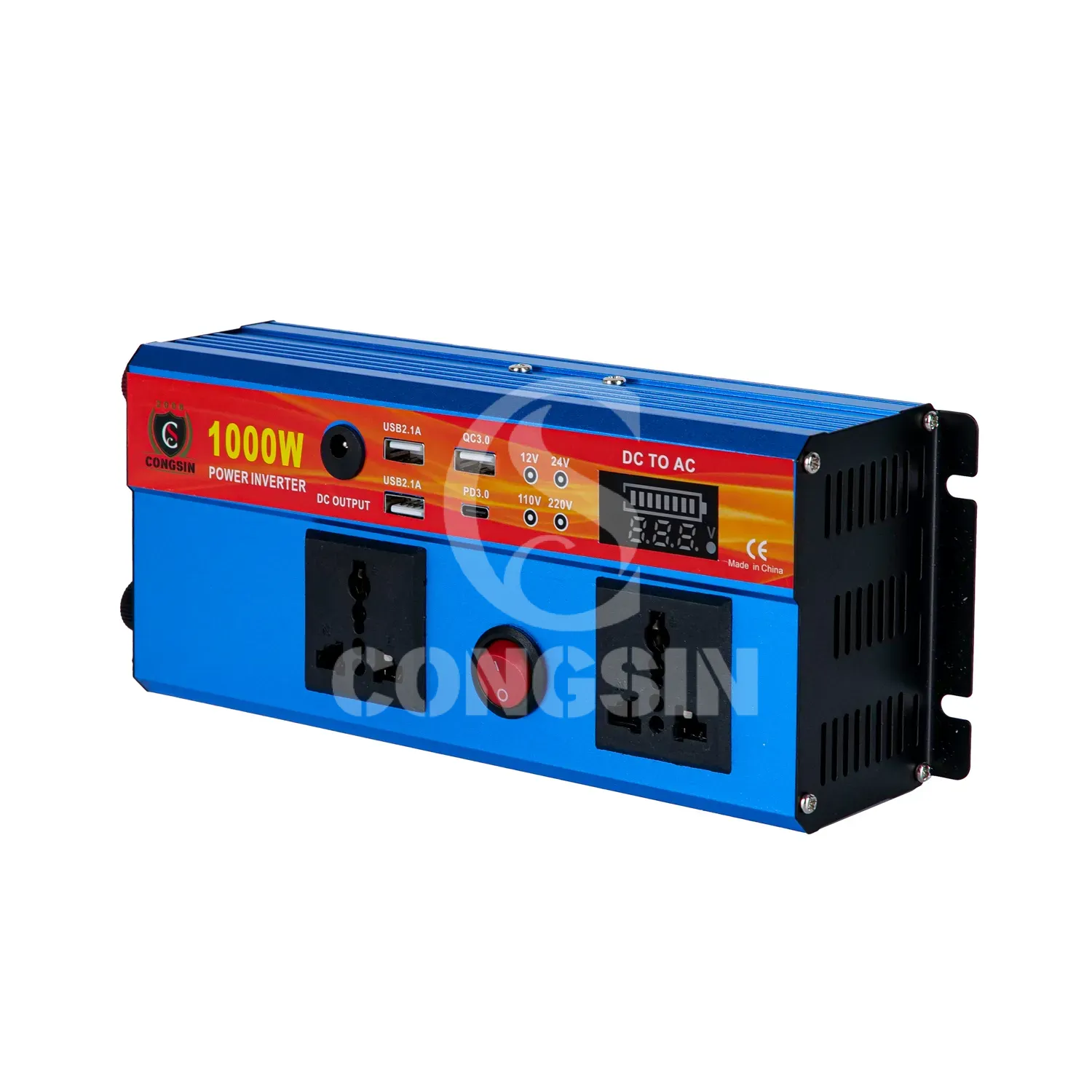
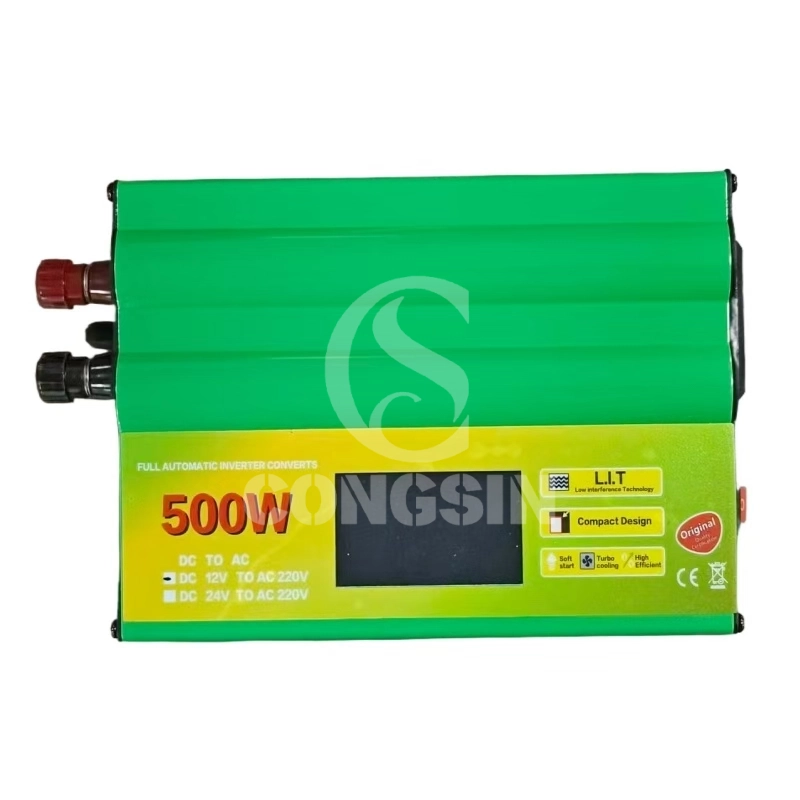
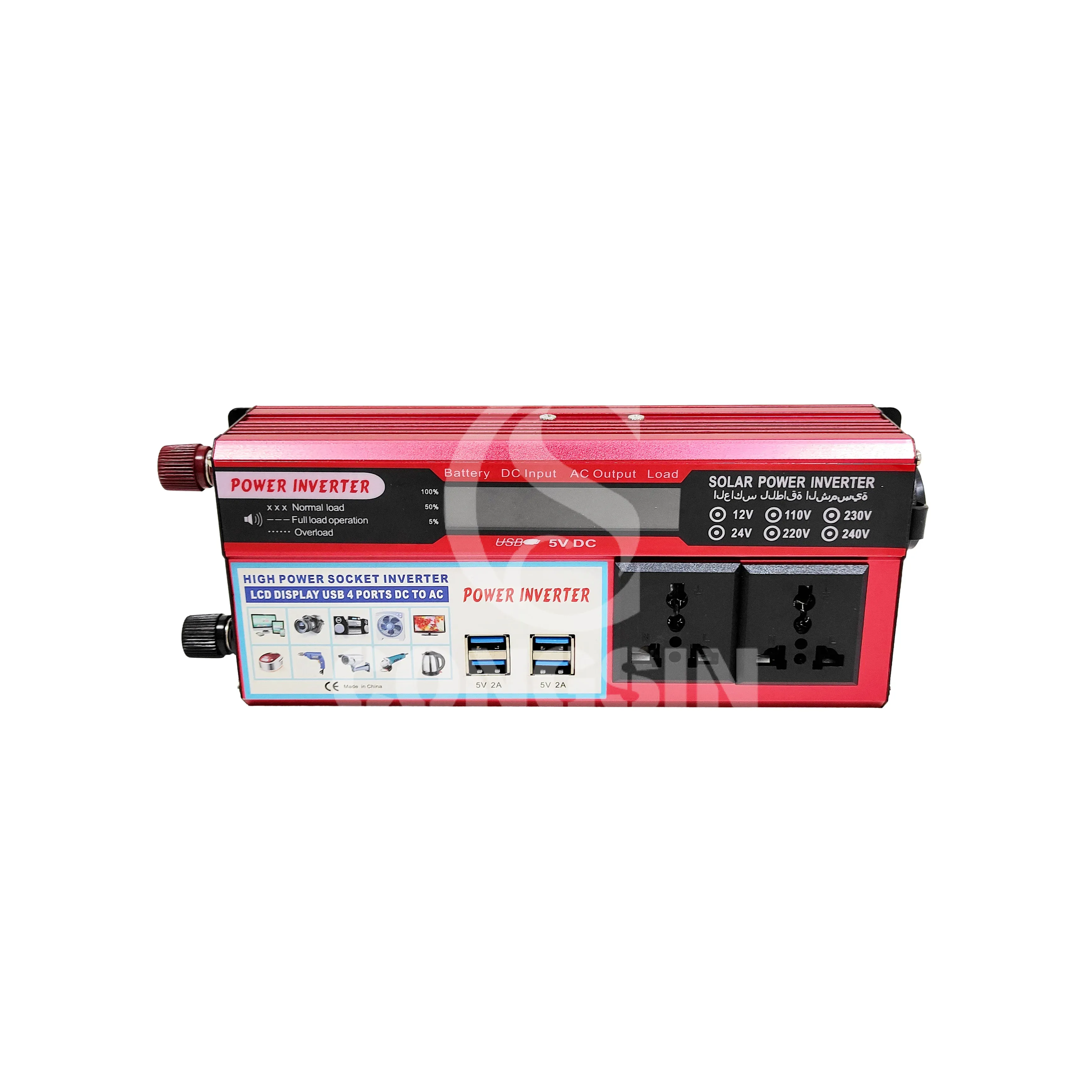
Congsin offers a range of high-quality off-grid inverters designed to meet diverse energy needs. With advanced technology, robust safety features, and excellent customer support, Congsin ensures reliable and efficient power solutions for your off-grid applications.
References
Off-Grid Inverter Overview. (n.d.). Retrieved from
Off-Grid Inverter Functionality. (n.d.). Retrieved from
Off-Grid Inverter Applications. (n.d.). Retrieved from
Off-Grid Inverter Features. (n.d.). Retrieved from
Off-Grid Inverter Maintenance. (n.d.). Retrieved from


Distributor
Do you provide marketing and sales materials?
Yes, we provide a range of marketing resources, including brochures, digital content, and product training.
Modified Sine Wave Inverters
What capacity battery can be used with it?
It is recommended to use a 12V 100Ah-200Ah lead-acid battery or lithium battery; the larger the battery capacity, the longer the UPS power supply time (e.g., a 100Ah battery can support a 100W device to work continuously for about 10 hours).
Can the peak 720W supply power continuously?
The peak power is the instantaneous maximum power, and the continuous power supply is 360W. Ensure that the device power does not exceed the rated value when using.
Pure Sine Wave Inverters
What is the reason for the inverter automatically shutting down during operation?
It is likely that the protection mechanism is triggered: 1. Load overload (total power of connected devices exceeds 1000W); 2. Abnormal input voltage (battery voltage <10.8V or >14.5V); 3. Device overtemperature (excessively high ambient temperature or cooling fan failure). It is recommended to disconnect some loads, check the battery voltage or clean the heat dissipation port before trying again.
What capacity battery is needed to meet long-term use?
It needs to be calculated according to the total power of the device, the formula is "Battery Capacity (Ah) = Total Device Power (W) × Usage Time (h) ÷ Input Voltage (12V)". For example, to drive a 1000W device for 5 hours, the required battery capacity = 1000×5÷12≈417Ah, it is recommended to use 2 200Ah batteries in parallel (total capacity 400Ah, actual usage about 4.8 hours).
Get in Touch with Our Team
You can also communicate with us directly through our online contact form. Please fill in the following information, and our team will contact you as soon as possible after receiving your message.

CONGSIN is a trusted OEM factory for power inverters, solar charge controllers, and DC converters. Reliable solutions for global B2B buyers.
 High Quality
 7/24 Service
 Guaranteed Warranty
© 2025 Congsin. All Rights Reserved.