





How to evaluate inverter compatibility with battery banks?
- 1. What are the key differences between on-grid and off-grid inverters?
- 2. How do off-grid inverters function to provide continuous power?
- 3. What factors should be considered when evaluating an off-grid inverter for a specific application?
- 4. How can I determine if my battery bank is compatible with a specific off-grid inverter?
- 5. What are the advantages of using a pure sine wave off-grid inverter over a modified sine wave inverter?
- 6. How do off-grid inverters handle energy storage and management?
1. What are the key differences between on-grid and off-grid inverters?
Off-grid inverters operate independently from the utility grid, converting DC power from renewable sources like solar panels into AC power for household use. They require battery storage to supply power during periods without sunlight. In contrast, on-grid inverters are connected to the utility grid, allowing excess energy to be fed back into the grid and drawing power when renewable generation is insufficient. Off-grid inverters are ideal for remote areas lacking grid access, while on-grid inverters are suited for locations with reliable grid connectivity.
2. How do off-grid inverters function to provide continuous power?
Off-grid inverters convert DC power from solar panels or batteries into AC power for household appliances. They manage energy storage by charging batteries during peak sunlight and discharging them during low-light periods or at night. This process ensures a continuous power supply, even when solar generation is low. Additionally, off-grid inverters often include features like maximum power point tracking (MPPT) to optimize energy harvest from solar panels.
3. What factors should be considered when evaluating an off-grid inverter for a specific application?
When selecting an off-grid inverter, consider the following factors:
Power Capacity: Ensure the inverter can handle the total wattage of all connected appliances.
Battery Compatibility: Verify that the inverter is compatible with the type and voltage of your battery bank.
Waveform Output: Choose between pure sine wave inverters, which are suitable for sensitive electronics, and modified sine wave inverters, which are less expensive but may not be compatible with all devices.
Efficiency: Higher efficiency reduces energy losses and operational costs.
Expandability: Consider future energy needs and whether the system can be scaled up.
Environmental Conditions: Ensure the inverter is rated for the operating conditions of your location, such as temperature extremes or humidity.
4. How can I determine if my battery bank is compatible with a specific off-grid inverter?
To assess compatibility between your battery bank and an off-grid inverter:
Voltage Matching: Confirm that the inverter's input voltage matches your battery bank's voltage.
Current Rating: Ensure the inverter can handle the maximum current your battery bank can supply.
Battery Type: Verify that the inverter supports the specific battery chemistry (e.g., lead-acid, lithium-ion) of your battery bank.
Charging Profile: Check that the inverter's charging algorithm aligns with your battery's requirements to prevent damage and ensure longevity.
5. What are the advantages of using a pure sine wave off-grid inverter over a modified sine wave inverter?
Pure sine wave inverters produce a smooth, consistent waveform that closely resembles the AC power from the utility grid. This quality offers several advantages:
Device Compatibility: Suitable for all types of appliances, including sensitive electronics like computers and medical equipment.
Efficiency: Appliances often run more efficiently and with less heat generation.
Noise Reduction: Reduced electromagnetic interference leads to quieter operation.
Battery Longevity: Less stress on batteries due to smoother power delivery.
6. How do off-grid inverters handle energy storage and management?
Off-grid inverters manage energy storage by regulating the charging and discharging cycles of the battery bank. They monitor battery voltage and state of charge (SOC) to optimize performance and extend battery life. Features may include:
MPPT Technology: Maximizes energy harvest from solar panels by adjusting to optimal operating points.
Low Voltage Disconnect: Prevents battery damage by disconnecting loads when voltage drops below a safe threshold.
Overcharge Protection: Stops charging when batteries reach full capacity to prevent overcharging.
Load Management: Prioritizes essential loads during periods of low energy availability.
In conclusion, understanding the distinctions between on-grid and off-grid inverters, their operational mechanisms, and compatibility considerations with battery banks is crucial for selecting the appropriate system for your energy needs. Off-grid inverters offer independence from the utility grid, making them ideal for remote locations or areas with unreliable grid access. By carefully evaluating these factors, you can ensure a reliable and efficient off-grid power solution tailored to your requirements.
For personalized assistance and a detailed quote, please contact us at info@csinverter.com or visit our website at www.csinverter.com.


Modified Sine Wave Inverters
Does it support inductive loads?
Modified sine wave inverters are suitable for resistive loads; for inductive loads, pure sine wave models are recommended.
Distributor
Do you provide marketing and sales materials?
Yes, we provide a range of marketing resources, including brochures, digital content, and product training.
Products
Can I customize the logo?
Yes, OEM/ODM service is available.
Pure Sine Wave Inverters
What is the reason for the inverter automatically shutting down during operation?
It is likely that the protection mechanism is triggered: 1. Load overload (total power of connected devices exceeds 1000W); 2. Abnormal input voltage (battery voltage <10.8V or >14.5V); 3. Device overtemperature (excessively high ambient temperature or cooling fan failure). It is recommended to disconnect some loads, check the battery voltage or clean the heat dissipation port before trying again.
Can this inverter drive a 3P air conditioner and a refrigerator at the same time?
Yes. The rated power of a 3P air conditioner is about 2200W-2500W, and an ordinary double-door refrigerator is about 150W-300W, with a total power of about 2350W-2800W, which does not exceed the 3000W continuous power; and the peak 6000W can cope with the instantaneous startup impact of the air conditioner. When using, ensure the battery capacity is ≥200Ah (12V) to ensure battery life.
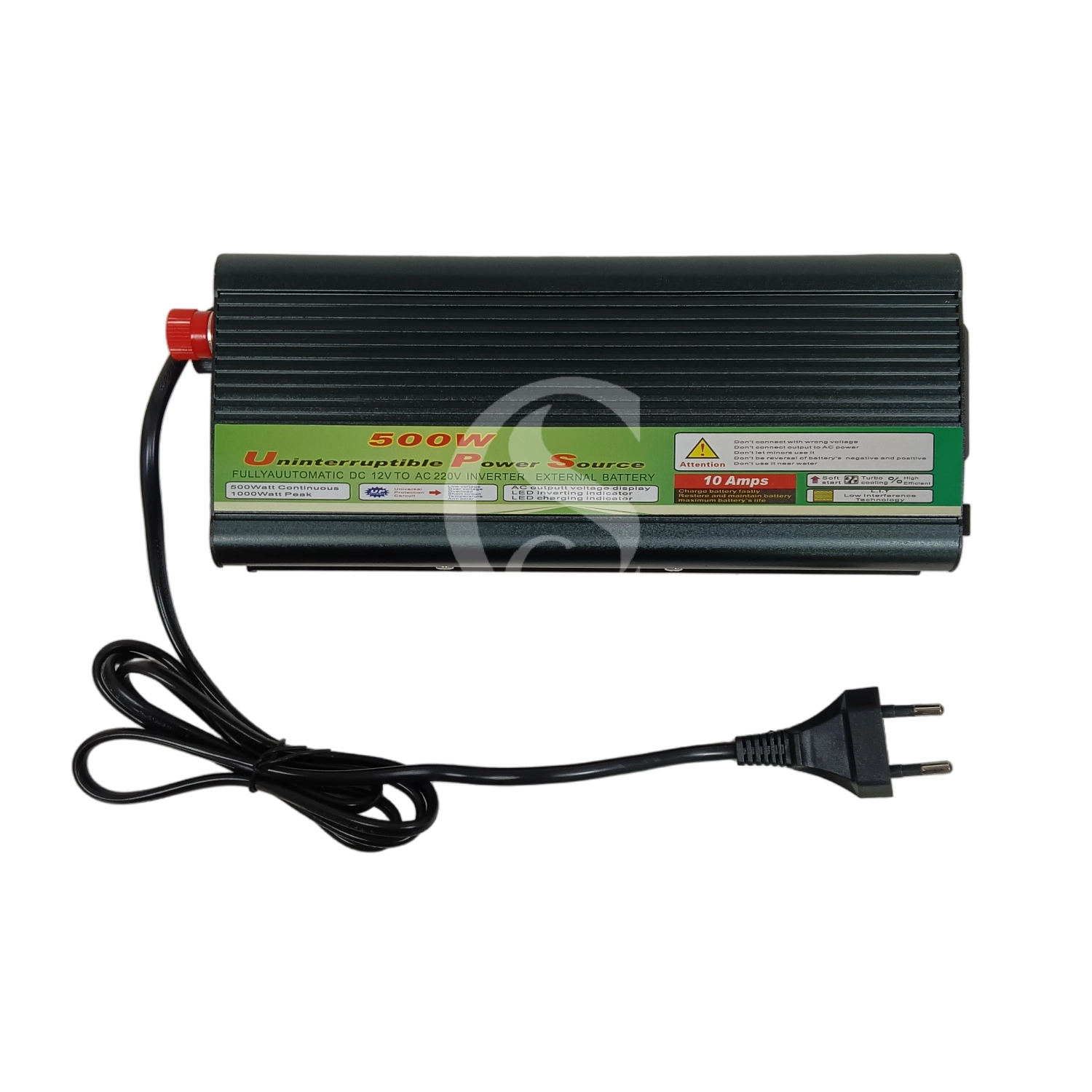
Congsin 500W 12V to 220V inverter delivers reliable off-grid power with its modified sine wave design. This portable 500W DC to AC power inverter efficiently converts 12V DC to 220V AC, ideal for outdoor and emergency use. Trust Congsin for stable, portable energy solutions.
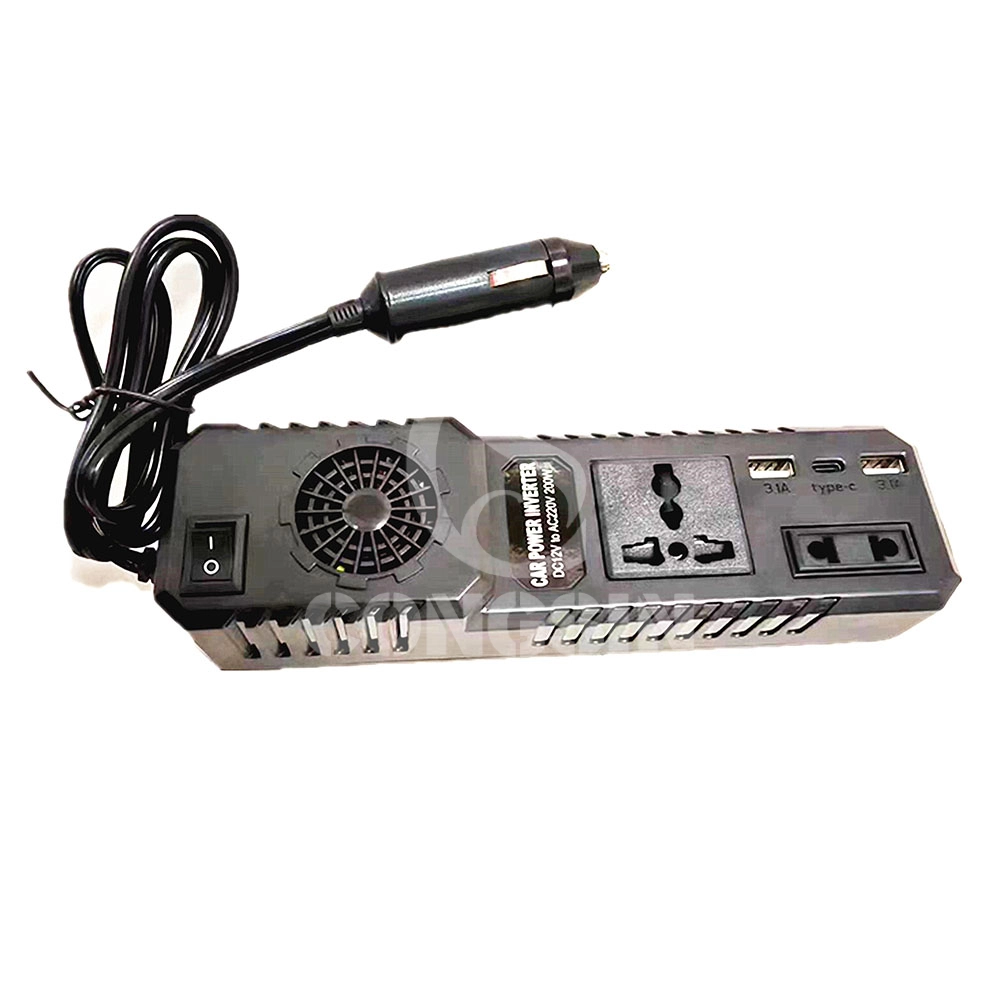
This 200W Modified Sine Wave Car Power Inverter is a compact and practical power conversion device designed for vehicle use. It supports dual input (DC12V/24V) and outputs AC220V, compatible with various electronic devices. Equipped with a Type-C port and dual 3.1A USB outputs, it can charge laptops, phones, cameras, drones, and other small electronics simultaneously—perfect for outdoor travel, emergency backup, and mobile work scenarios.
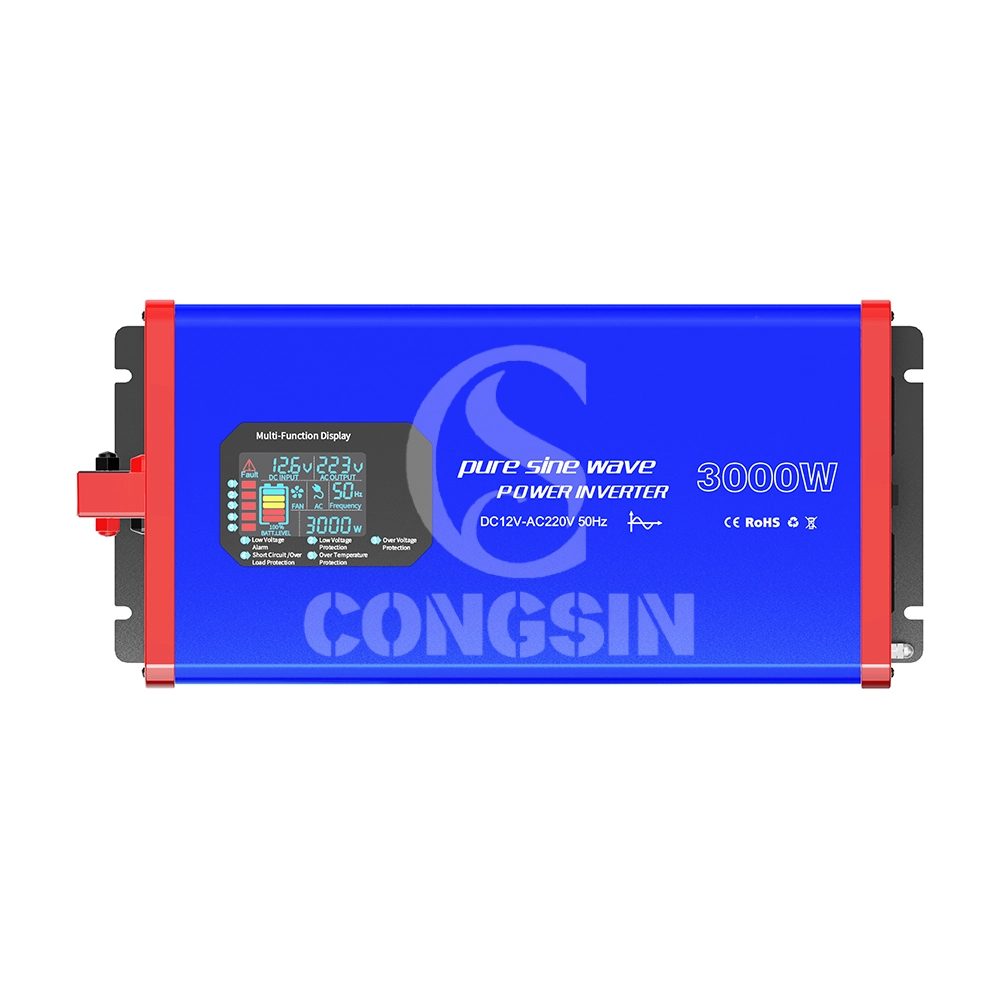
This 3000W full-power pure sine wave inverter (Model: CS3000PSW) adopts pure sine wave output technology (waveform distortion rate <2%), and the output power is highly consistent with mains power quality. It can safely drive high-power precision loads such as air conditioners, refrigerators, medical instruments, and small industrial equipment, avoiding equipment malfunctions or shortened service life caused by unstable waveforms. The device supports DC 12V input (compatible with 10.5V-14.8V wide voltage), continuously outputs 3000W full power, and has a peak power of 6000W, easily coping with the instantaneous startup impact of high-power devices; it is equipped with 4 AC universal sockets (max current 16A) + 2 USB 3.0 fast-charging ports (22.5W per port) to meet the simultaneous power supply needs of multiple devices. Built-in six-fold safety protection (overload, overvoltage, undervoltage, short circuit, overtemperature, reverse connection), combined with dual intelligent silent cooling fans (noise ≤45dB), it achieves the triple advantages of "high power + high safety + low noise," suitable for home emergency, outdoor engineering, vehicle-mounted power supply, small industrial scenarios and other fields.
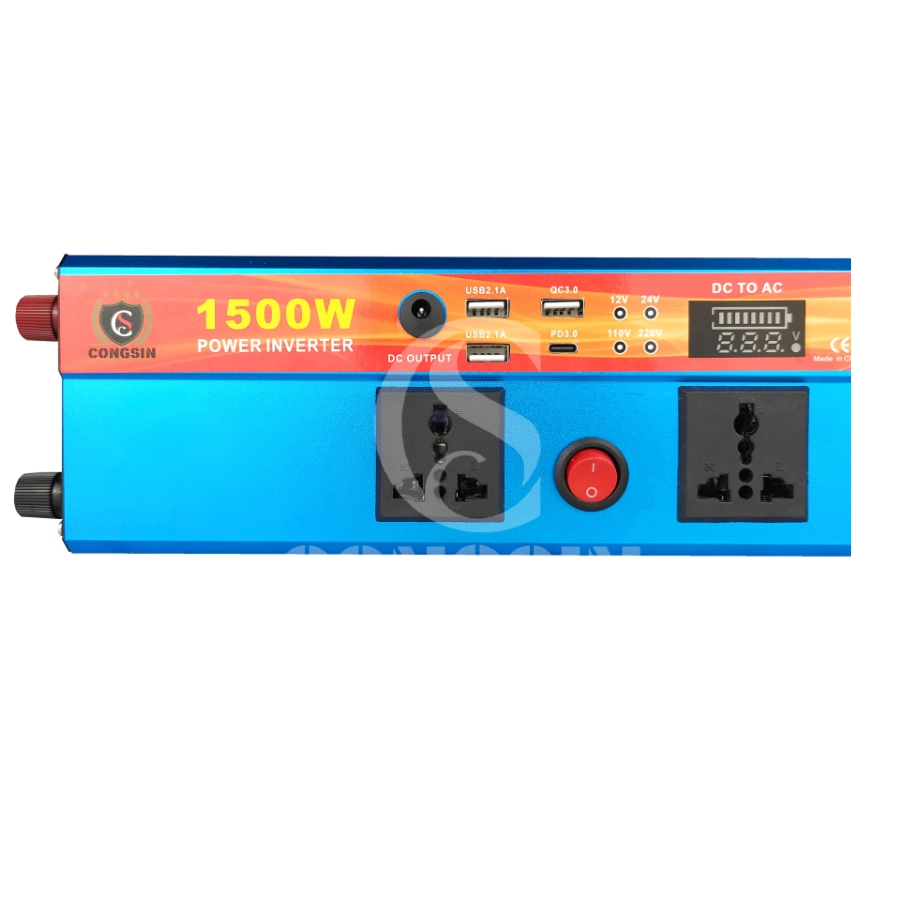
Our CS1000DDBC 1000W modified sine wave inverter is a professional power conversion device that converts DC 12V from batteries into AC 220V electricity. It is designed with user convenience in mind, featuring an LED display for real-time status monitoring, multiple charging ports (3 USB, 1 Type-C, 1 DC 12V) and two universal sockets to power a wide range of devices simultaneously. Its compact size (250×95×55mm) and lightweight design (NW: 0.84kg) make it easy to carry, ideal for outdoor activities, emergency home use, and on-the-go power needs.
Get in Touch with Our Team
You can also communicate with us directly through our online contact form. Please fill in the following information, and our team will contact you as soon as possible after receiving your message.

CONGSIN is a trusted OEM factory for power inverters, solar charge controllers, and DC converters. Reliable solutions for global B2B buyers.
 High Quality
 7/24 Service
 Guaranteed Warranty
© 2025 Congsin. All Rights Reserved.