



Micro Inverter Off Grid vs string inverters: which to purchase?
- 1. What are the key differences between micro inverters and string inverters in off-grid solar systems?
- 2. How does shading affect the performance of micro inverters compared to string inverters?
- 3. What are the maintenance implications of choosing micro inverters over string inverters?
- 4. Are micro inverters more cost-effective than string inverters for off-grid solar systems?
- 5. How do micro inverters and string inverters compare in terms of system scalability?
- 6. What are the safety considerations when choosing between micro inverters and string inverters?
1. What are the key differences between micro inverters and string inverters in off-grid solar systems?
Micro inverters are small devices attached to individual solar panels, converting direct current (DC) to alternating current (AC) at the source. This setup allows each panel to operate independently, optimizing performance and minimizing the impact of shading or panel defects. In contrast, string inverters connect multiple panels in series, converting the combined DC output into AC. The performance of the entire system can be affected if one panel underperforms due to shading or damage.
2. How does shading affect the performance of micro inverters compared to string inverters?
Shading can significantly impact the efficiency of string inverters, as the entire system's output is limited by the least productive panel. In contrast, micro inverters mitigate this issue by allowing each panel to function independently. Therefore, shading on one panel has minimal effect on the overall system performance, making micro inverters more suitable for areas with partial shading.
3. What are the maintenance implications of choosing micro inverters over string inverters?
Micro inverters are mounted directly on the roof beneath each panel, making them more challenging to access for maintenance or replacement. This can lead to higher labor costs and potential safety concerns. String inverters, typically installed at ground level, are more accessible, simplifying maintenance and reducing associated costs.
4. Are micro inverters more cost-effective than string inverters for off-grid solar systems?
Micro inverters generally have a higher upfront cost compared to string inverters, as each panel requires its own inverter. However, the increased energy yield due to optimized panel performance and reduced maintenance costs can offset the initial investment over time. The decision should consider the specific energy needs, shading conditions, and budget constraints of the installation site.
5. How do micro inverters and string inverters compare in terms of system scalability?
Micro inverters offer greater flexibility for system expansion. Since each panel operates independently, adding more panels to the system is straightforward without concerns about compatibility or system performance degradation. String inverters may require a more complex upgrade process, as the entire system's configuration needs to be compatible with the new panels.
6. What are the safety considerations when choosing between micro inverters and string inverters?
Micro inverters operate at lower DC voltages, reducing the risk of electrical hazards during installation and maintenance. This design enhances safety by minimizing the potential for electric shocks and fires. String inverters, operating at higher DC voltages, may pose greater risks, necessitating additional safety measures during installation and maintenance.
In conclusion, micro inverters offer several advantages for off-grid solar systems, including enhanced performance in shaded conditions, greater system scalability, and improved safety features. However, they come with higher initial costs and more complex maintenance requirements. String inverters, while more cost-effective upfront and easier to maintain, may not perform as well in shaded environments and offer less flexibility for system expansion. Evaluating your specific energy needs, site conditions, and budget will help determine the most suitable inverter choice for your off-grid solar system.
For a more detailed comparison and visual explanation, you might find this video helpful:
(https://www.youtube.com/watch?v=uCSbKRrwViU&utm_source=openai)
If you have further questions or need assistance in selecting the right inverter for your off-grid solar system, feel free to contact us at info@csinverter.com or visit our website at www.csinverter.com.


Modified Sine Wave Inverters
Can it be connected to a battery long-term?
Yes, ensure good ventilation to avoid overheating.
What devices can this inverter power?
Rated for 600W, peak 1000W. Recommended to use devices under 80% of rated capacity.
Is it normal for the inverter to heat up when working?
It is normal for it to generate some heat when working. If the temperature is too high (e.g., hot to the touch), please stop using it and check if the load is overloaded.
Pure Sine Wave Inverters
What is the reason for the inverter automatically shutting down during operation?
It is likely that the protection mechanism is triggered: 1. Load overload (total power of connected devices exceeds 1000W); 2. Abnormal input voltage (battery voltage <10.8V or >14.5V); 3. Device overtemperature (excessively high ambient temperature or cooling fan failure). It is recommended to disconnect some loads, check the battery voltage or clean the heat dissipation port before trying again.
Can this inverter drive a 3P air conditioner and a refrigerator at the same time?
Yes. The rated power of a 3P air conditioner is about 2200W-2500W, and an ordinary double-door refrigerator is about 150W-300W, with a total power of about 2350W-2800W, which does not exceed the 3000W continuous power; and the peak 6000W can cope with the instantaneous startup impact of the air conditioner. When using, ensure the battery capacity is ≥200Ah (12V) to ensure battery life.
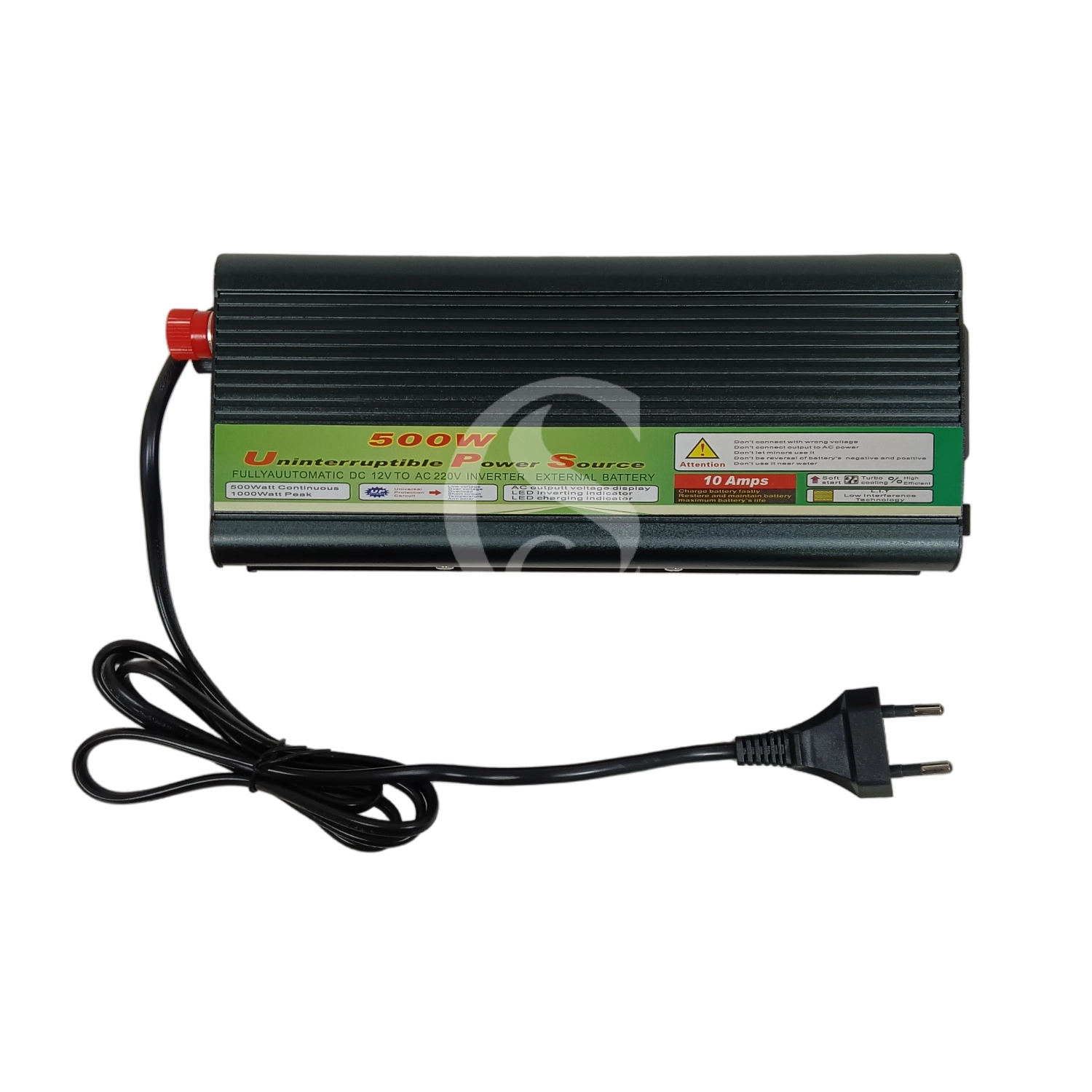
Congsin 500W 12V to 220V inverter delivers reliable off-grid power with its modified sine wave design. This portable 500W DC to AC power inverter efficiently converts 12V DC to 220V AC, ideal for outdoor and emergency use. Trust Congsin for stable, portable energy solutions.
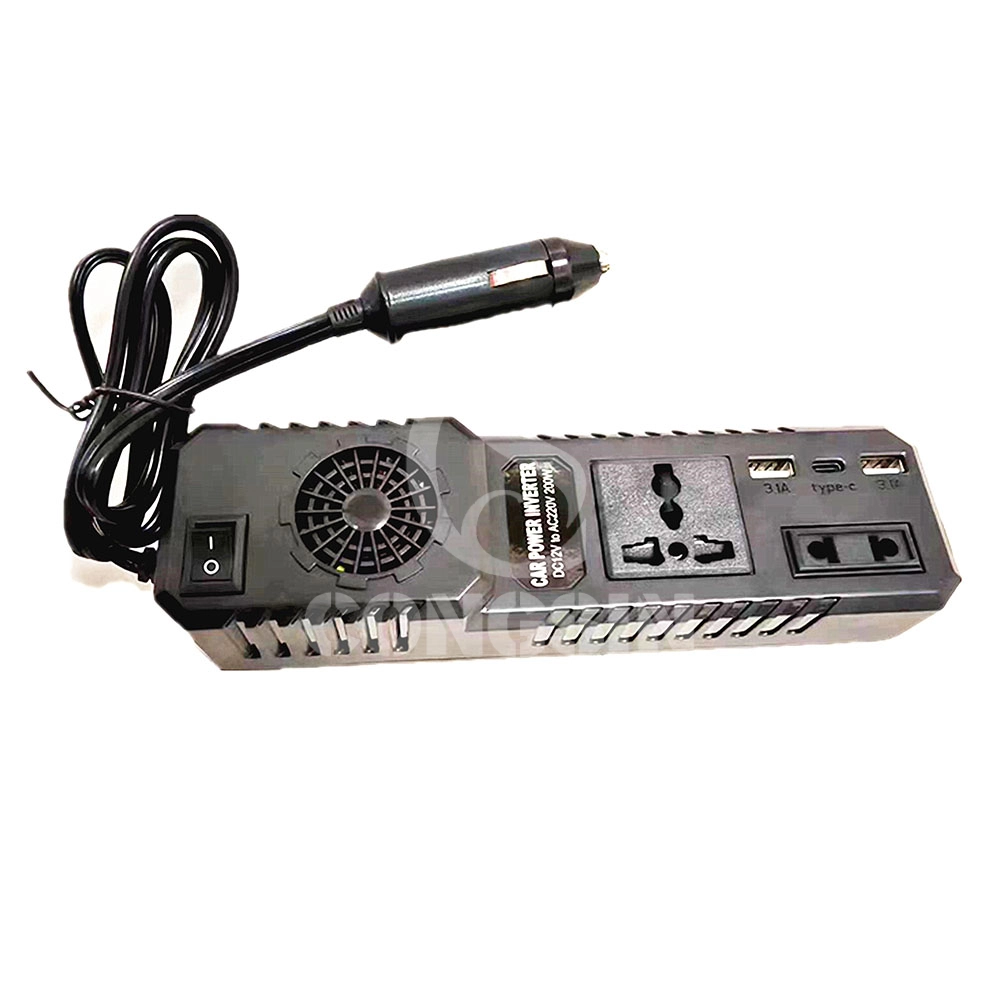
This 200W Modified Sine Wave Car Power Inverter is a compact and practical power conversion device designed for vehicle use. It supports dual input (DC12V/24V) and outputs AC220V, compatible with various electronic devices. Equipped with a Type-C port and dual 3.1A USB outputs, it can charge laptops, phones, cameras, drones, and other small electronics simultaneously—perfect for outdoor travel, emergency backup, and mobile work scenarios.
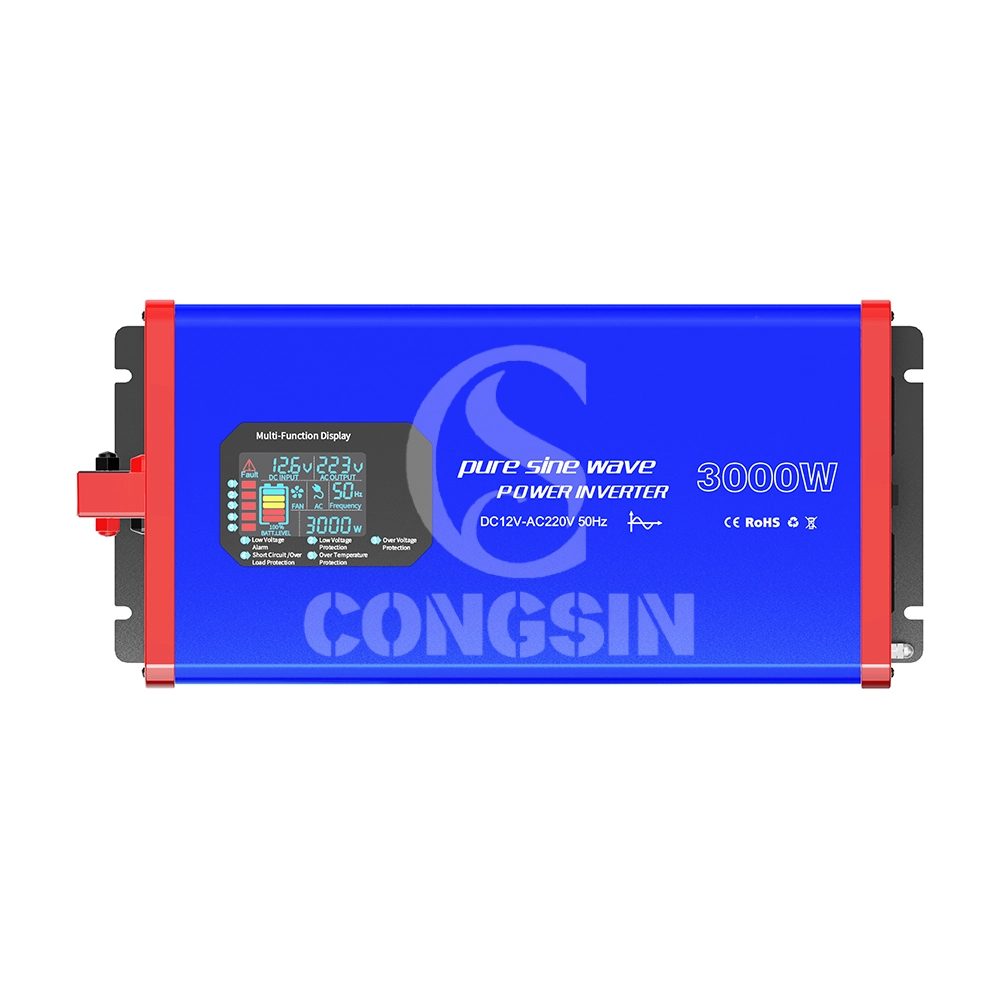
This 3000W full-power pure sine wave inverter (Model: CS3000PSW) adopts pure sine wave output technology (waveform distortion rate <2%), and the output power is highly consistent with mains power quality. It can safely drive high-power precision loads such as air conditioners, refrigerators, medical instruments, and small industrial equipment, avoiding equipment malfunctions or shortened service life caused by unstable waveforms. The device supports DC 12V input (compatible with 10.5V-14.8V wide voltage), continuously outputs 3000W full power, and has a peak power of 6000W, easily coping with the instantaneous startup impact of high-power devices; it is equipped with 4 AC universal sockets (max current 16A) + 2 USB 3.0 fast-charging ports (22.5W per port) to meet the simultaneous power supply needs of multiple devices. Built-in six-fold safety protection (overload, overvoltage, undervoltage, short circuit, overtemperature, reverse connection), combined with dual intelligent silent cooling fans (noise ≤45dB), it achieves the triple advantages of "high power + high safety + low noise," suitable for home emergency, outdoor engineering, vehicle-mounted power supply, small industrial scenarios and other fields.
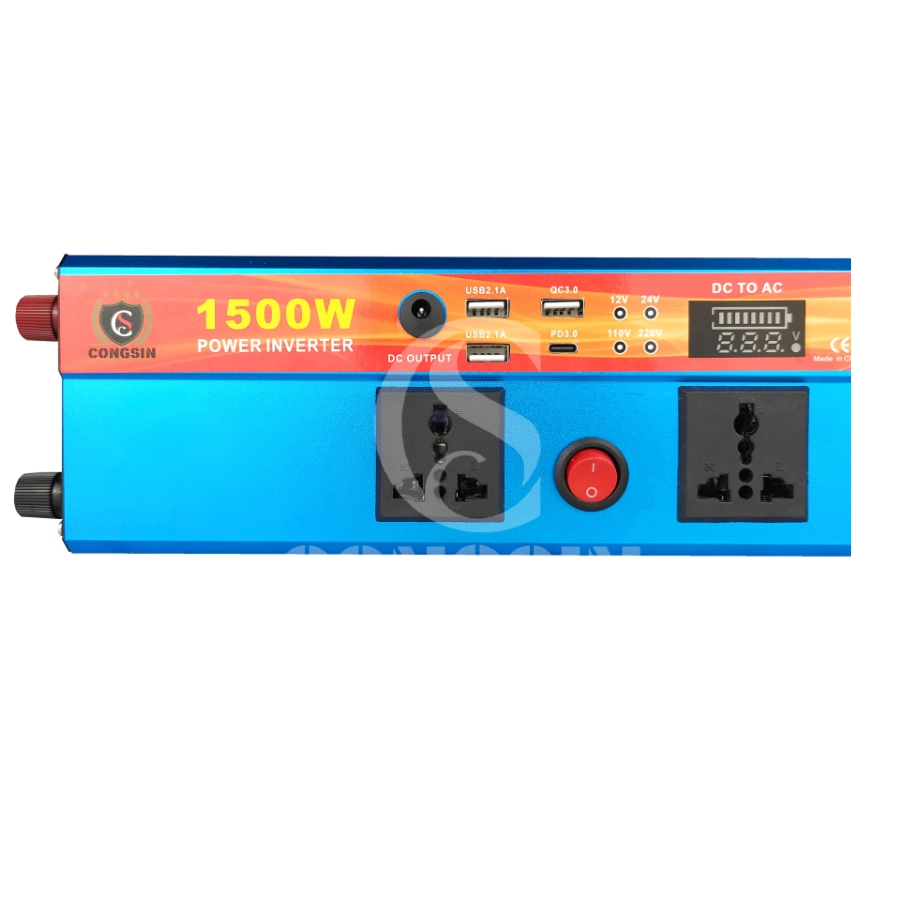
Our CS1000DDBC 1000W modified sine wave inverter is a professional power conversion device that converts DC 12V from batteries into AC 220V electricity. It is designed with user convenience in mind, featuring an LED display for real-time status monitoring, multiple charging ports (3 USB, 1 Type-C, 1 DC 12V) and two universal sockets to power a wide range of devices simultaneously. Its compact size (250×95×55mm) and lightweight design (NW: 0.84kg) make it easy to carry, ideal for outdoor activities, emergency home use, and on-the-go power needs.
Get in Touch with Our Team
You can also communicate with us directly through our online contact form. Please fill in the following information, and our team will contact you as soon as possible after receiving your message.
CONGSIN is a trusted OEM factory for power inverters, solar charge controllers, and DC converters. Reliable solutions for global B2B buyers.
 High Quality
 7/24 Service
 Guaranteed Warranty
© 2025 Congsin. All Rights Reserved.
 WeChat
 Scan QR Code
sin cong
teaimei10
Whatsapp: +8618028086791
Scan QR Code