





How reliable are micro inverter off grid systems for critical loads?
- 1. How do micro inverters enhance the performance of off-grid solar systems for critical loads?
- 2. What are the potential challenges of integrating micro inverters into off-grid systems for critical loads?
- 3. How do micro inverters compare to traditional string inverters in off-grid systems for critical loads?
- 4. What are the maintenance requirements for micro inverter off-grid systems powering critical loads?
- 5. Are there specific off-grid scenarios where micro inverters are particularly advantageous for critical loads?
- 6. How do micro inverters impact the overall cost-effectiveness of off-grid systems for critical loads?
1. How do micro inverters enhance the performance of off-grid solar systems for critical loads?
Micro inverters are small devices attached to individual solar panels, converting direct current (DC) into alternating current (AC) at the panel level. This design offers several benefits for off-grid systems powering critical loads:
Individual Panel Optimization: Each panel operates independently, allowing for maximum power point tracking (MPPT) at the panel level. This ensures that shading or debris on one panel doesn't significantly affect the overall system performance, leading to higher energy yields.
Enhanced System Resilience: The distributed nature of micro inverters means that the failure of one unit doesn't compromise the entire system. This redundancy is crucial for maintaining a continuous power supply to critical loads.
Simplified Maintenance and Monitoring: Micro inverters provide detailed performance data for each panel, facilitating easier detection and resolution of issues, which is particularly beneficial in remote off-grid locations.
2. What are the potential challenges of integrating micro inverters into off-grid systems for critical loads?
While micro inverters offer numerous advantages, there are challenges to consider:
Higher Initial Costs: The upfront investment for micro inverter systems is typically 20-30% higher than traditional string inverter setups. This increased cost can be a significant consideration for budget-conscious projects.
Complex Installation: Installing multiple micro inverters requires more time and labor compared to a single string inverter, potentially leading to increased installation costs.
Limited Power Output in Large Systems: For extensive off-grid installations, micro inverters may be less efficient than high-capacity string inverters, making them less suitable for large-scale applications.
3. How do micro inverters compare to traditional string inverters in off-grid systems for critical loads?
Performance in Shaded Conditions: Micro inverters excel in environments with partial shading, as each panel operates independently, minimizing the impact of shading on overall system performance.
System Reliability: The failure of a single micro inverter affects only the associated panel, whereas a string inverter failure can impact the entire system. This distributed architecture enhances the reliability of off-grid systems powering critical loads.
Cost Considerations: While micro inverters offer performance benefits, they come with higher initial costs compared to string inverters. It's essential to weigh these costs against the potential performance gains, especially for critical load applications.
4. What are the maintenance requirements for micro inverter off-grid systems powering critical loads?
Monitoring Capabilities: Micro inverters provide panel-level monitoring, allowing for early detection of issues and reducing downtime for critical loads.
Access and Repair: Since micro inverters are mounted on the roof, accessing them for maintenance can be more challenging and time-consuming compared to ground-mounted string inverters. This can lead to higher labor costs for repairs.
Durability: Exposure to high temperatures and environmental conditions can affect the longevity of micro inverters. Ensuring proper installation and ventilation is crucial to maintain system reliability.
5. Are there specific off-grid scenarios where micro inverters are particularly advantageous for critical loads?
Micro inverters are especially beneficial in off-grid scenarios with:
Partial Shading: Environments where shading is common can see significant performance improvements with micro inverters, as each panel operates independently.
Remote Locations: In areas where maintenance access is limited, the detailed monitoring capabilities of micro inverters can facilitate remote diagnostics and reduce the need for on-site visits.
System Expansion Plans: For users planning to expand their solar system over time, micro inverters offer flexibility, allowing for easy addition of panels without compatibility issues.
6. How do micro inverters impact the overall cost-effectiveness of off-grid systems for critical loads?
Energy Yield vs. Cost: The increased energy yield from micro inverters, especially in shaded or complex environments, can offset the higher initial costs over time, enhancing the system's overall cost-effectiveness.
Maintenance Savings: The ability to remotely monitor and diagnose issues can lead to reduced maintenance costs, contributing to the system's long-term value.
System Longevity: The distributed nature of micro inverters can lead to a longer system lifespan, as the failure of one unit doesn't compromise the entire system, potentially reducing replacement costs.
In conclusion, micro inverter off-grid systems offer several advantages for powering critical loads, including enhanced performance in shaded conditions, increased system reliability, and detailed monitoring capabilities. However, they also present challenges such as higher initial costs, complex installation, and maintenance considerations. Evaluating these factors in the context of your specific off-grid scenario is essential to determine the suitability of micro inverters for your critical load applications.
For a personalized consultation and quote, please contact us at info@csinverter.com or visit our website at www.csinverter.com.


Pure Sine Wave Inverters
What happens if the positive and negative poles are reversed when connecting the battery?
The device features built-in reverse polarity protection. If the positive and negative terminals are connected incorrectly, the circuit will automatically disconnect to prevent damage to the equipment. Simply adjust the battery clip connections (red clip to positive terminal, black clip to negative terminal), then restore power to resume normal operation.
Modified Sine Wave Inverters
Can this 2000W inverter power an air conditioner?
If the air conditioner power is within 2000W and the input is AC220V, it can supply power normally. It is recommended to ensure stable power when starting.
What is the function of the independent control switch?
The independent control switches for DC and AC can respectively control the on and off of DC and AC circuits, facilitating the separate management of power supply for different types of devices and improving power usage safety and flexibility.
Does it only support DC12V input voltage?
The regular model has DC12V input, and other input voltages such as DC24V can be customized. Please consult customer service for details.
Which plug types are supported by the universal socket?
The universal socket is compatible with most national plug specifications, such as GB, US, EU, etc., and can meet the use of devices in different regions (some require adapters).
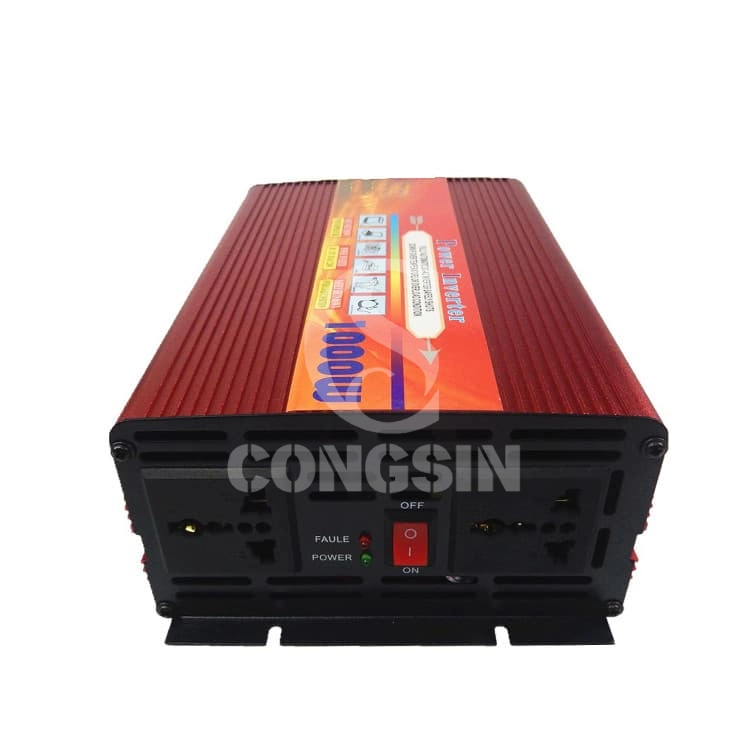
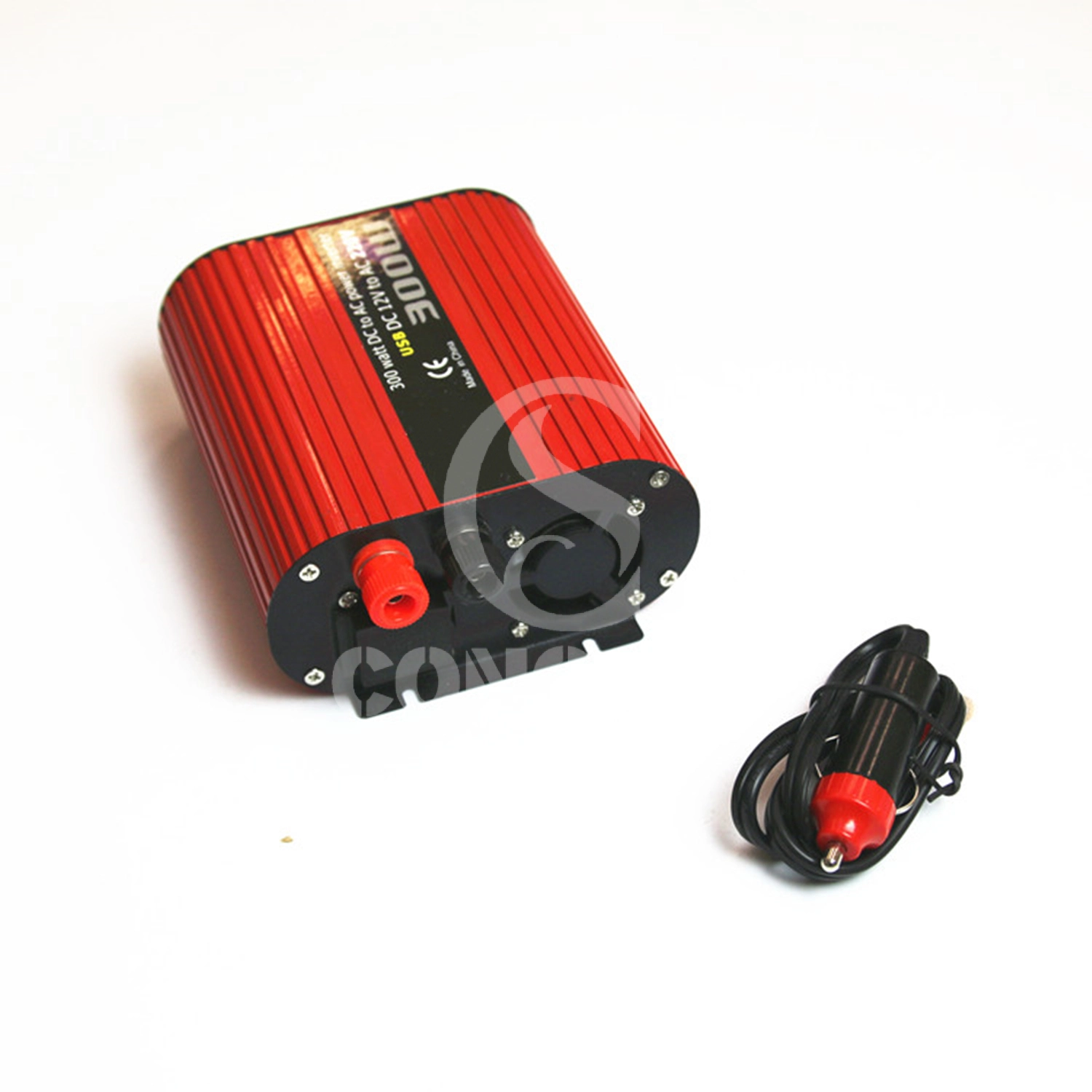
Congsin's Portable 150W Modified Sine Wave Inverter powers your journey! This versatile Car Power Inverter with USB acts as a reliable 12V to 220V converter, ensuring an essential off-grid power supply. With dual USB ports and a universal socket, enjoy convenient power on the go.
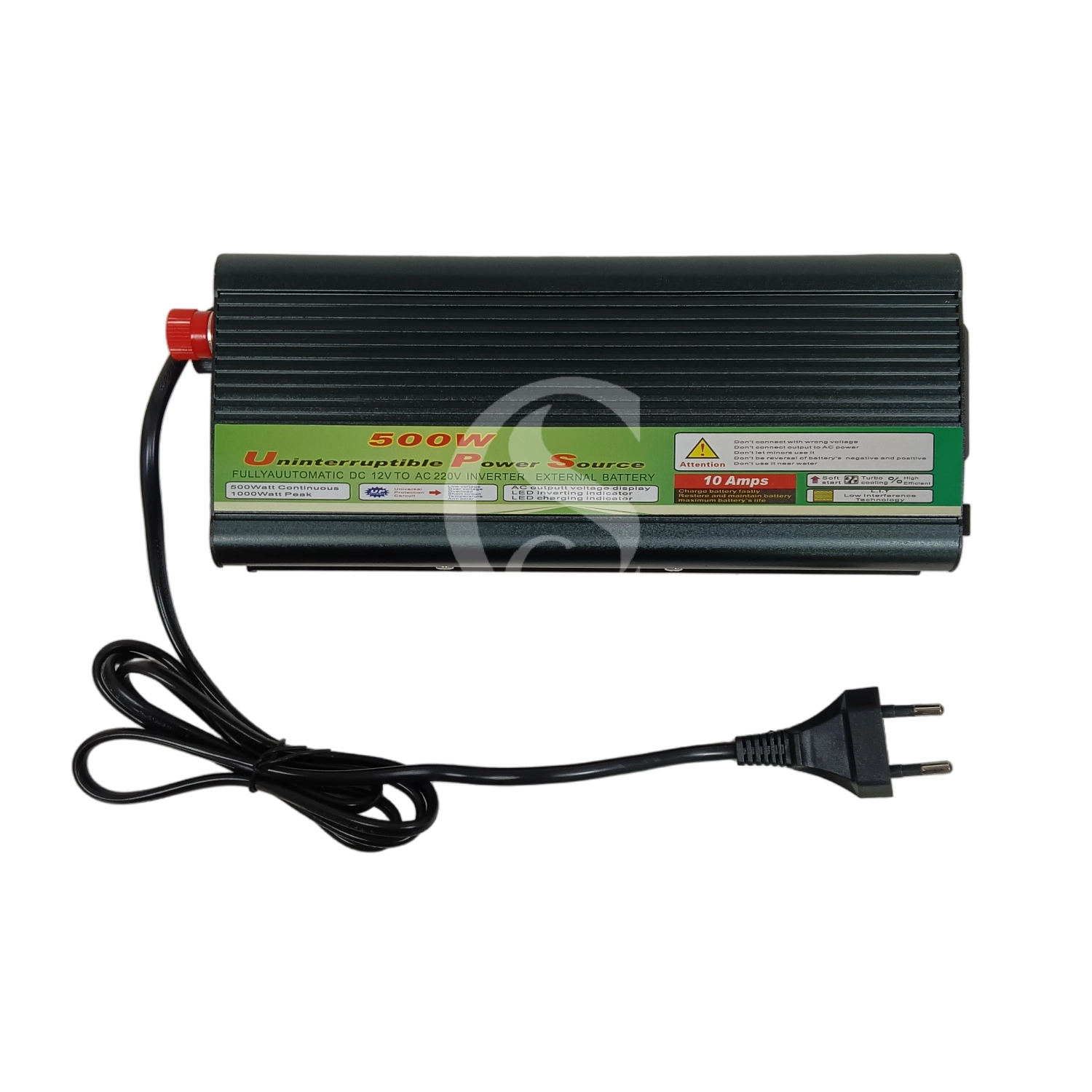
Congsin 500W 12V to 220V inverter delivers reliable off-grid power with its modified sine wave design. This portable 500W DC to AC power inverter efficiently converts 12V DC to 220V AC, ideal for outdoor and emergency use. Trust Congsin for stable, portable energy solutions.
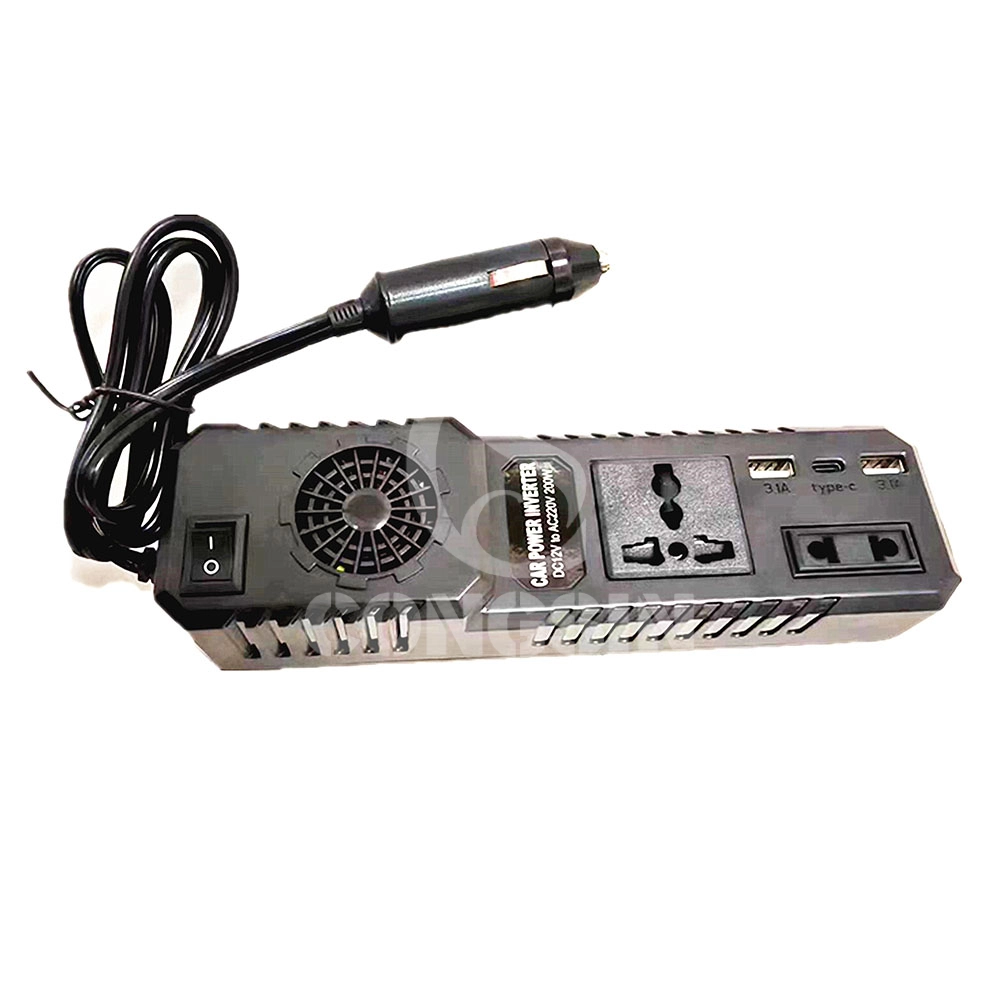
This 200W Modified Sine Wave Car Power Inverter is a compact and practical power conversion device designed for vehicle use. It supports dual input (DC12V/24V) and outputs AC220V, compatible with various electronic devices. Equipped with a Type-C port and dual 3.1A USB outputs, it can charge laptops, phones, cameras, drones, and other small electronics simultaneously—perfect for outdoor travel, emergency backup, and mobile work scenarios.
Get in Touch with Our Team
You can also communicate with us directly through our online contact form. Please fill in the following information, and our team will contact you as soon as possible after receiving your message.

CONGSIN is a trusted OEM factory for power inverters, solar charge controllers, and DC converters. Reliable solutions for global B2B buyers.
 High Quality
 7/24 Service
 Guaranteed Warranty
© 2025 Congsin. All Rights Reserved.
 WeChat
 Scan QR Code
sin cong
teaimei10
Whatsapp: +8618028086791
Scan QR Code