



How to integrate Micro Inverter Off Grid into hybrid systems?
- 1. What are the key differences between micro inverters and traditional string inverters in off-grid hybrid systems?
- 2. How do micro inverters improve energy harvest in off-grid hybrid systems?
- 3. What are the challenges of integrating micro inverters into off-grid hybrid systems?
- 4. How do micro inverters affect system reliability in off-grid hybrid setups?
- 5. What are the maintenance requirements for micro inverters in off-grid hybrid systems?
- 6. How do micro inverters contribute to the scalability of off-grid hybrid systems?
1. What are the key differences between micro inverters and traditional string inverters in off-grid hybrid systems?
Micro inverters and traditional string inverters serve distinct roles in off-grid hybrid systems. Micro inverters are installed at each solar panel, converting DC to AC power individually, which enhances system reliability and allows for panel-level monitoring. This setup is particularly beneficial in off-grid scenarios where maximizing energy production is crucial. In contrast, string inverters manage multiple panels simultaneously, which can lead to reduced efficiency if one panel underperforms.
2. How do micro inverters improve energy harvest in off-grid hybrid systems?
Micro inverters optimize energy harvest by converting DC to AC power at the panel level, ensuring that each panel operates at its maximum potential. This is especially advantageous in off-grid hybrid systems where energy independence is essential. By mitigating the impact of shading, dirt, or panel mismatch, micro inverters enhance overall system efficiency, leading to more reliable power supply.
3. What are the challenges of integrating micro inverters into off-grid hybrid systems?
Integrating micro inverters into off-grid hybrid systems presents several challenges. One primary concern is the increased complexity and cost due to the need for multiple inverters. Additionally, micro inverters require careful system design to ensure compatibility with battery storage and other components. Proper sizing and configuration are essential to maintain system stability and efficiency.
4. How do micro inverters affect system reliability in off-grid hybrid setups?
Micro inverters enhance system reliability in off-grid hybrid setups by isolating each panel's performance. If one panel fails or underperforms, the rest of the system continues to operate normally, reducing the risk of a complete system shutdown. This redundancy is vital in off-grid scenarios where consistent power supply is necessary.
5. What are the maintenance requirements for micro inverters in off-grid hybrid systems?
Maintenance of micro inverters in off-grid hybrid systems involves regular monitoring of each unit's performance, cleaning of panels to prevent shading, and periodic inspections to ensure all components are functioning correctly. While micro inverters can reduce the frequency of maintenance compared to string inverters, proactive upkeep is essential to maintain optimal system performance.
6. How do micro inverters contribute to the scalability of off-grid hybrid systems?
Micro inverters facilitate the scalability of off-grid hybrid systems by allowing for easy addition of panels without significant system redesign. Each panel operates independently, enabling incremental expansion to meet increasing energy demands. This modular approach provides flexibility and cost-effectiveness in system growth.
In conclusion, integrating micro inverters into off-grid hybrid systems offers numerous advantages, including enhanced energy harvest, improved system reliability, and scalability. However, it is essential to consider the associated challenges, such as increased complexity and maintenance requirements, to ensure a successful implementation. For a personalized quote and further assistance, please contact us at info@csinverter.com or visit our website at www.csinverter.com.

Pure Sine Wave Inverters
Will reversing the positive and negative poles damage the device when connecting the battery?
The device has a built-in reverse connection protection function, which will automatically cut off the circuit when the positive and negative poles are reversed to avoid damage caused by reverse current inflow; just adjust the connection order of the positive and negative poles of the battery clip and re-power on to use normally.
Does it have a charging (UPS) function?
No, this model is a pure inverter without UPS function.
OEM & ODM Services
What’s the main difference between your OEM and ODM services?
OEM uses your brand on our standard products; ODM creates entirely new products based on your concept or specification.
Modified Sine Wave Inverters
Is the dual input automatically recognized or manually switched?
Automatically recognize DC12V/24V input, no manual switching required.
Is it a pure sine wave or a modified sine wave? What's the difference?
This is a modified sine wave inverter, suitable for most conventional home appliances and electronic devices; pure sine wave is suitable for precision devices with extremely high power requirements. This modified sine wave is more cost-effective at 2000W, meeting the needs of most scenarios.
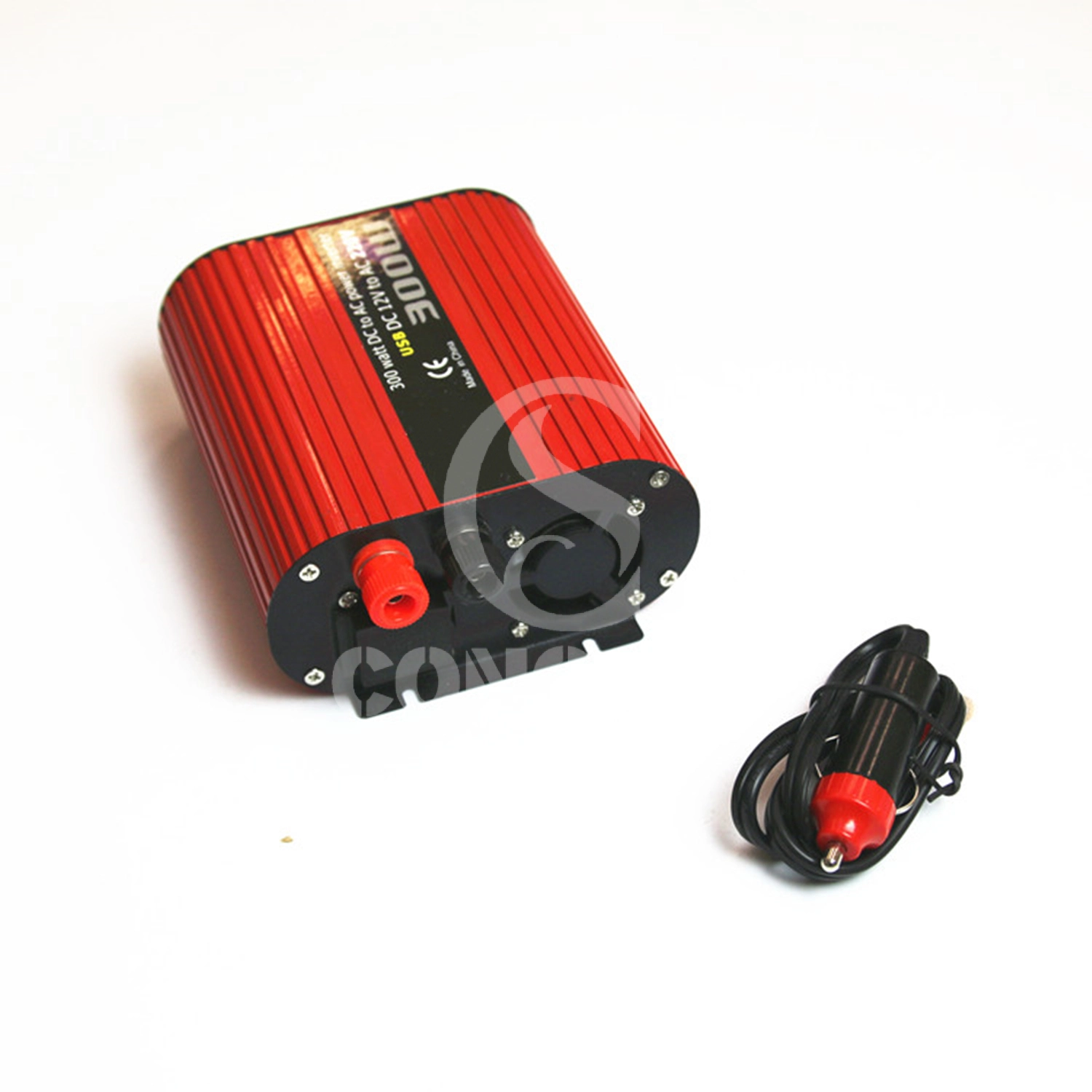
Congsin's Portable 150W Modified Sine Wave Inverter powers your journey! This versatile Car Power Inverter with USB acts as a reliable 12V to 220V converter, ensuring an essential off-grid power supply. With dual USB ports and a universal socket, enjoy convenient power on the go.
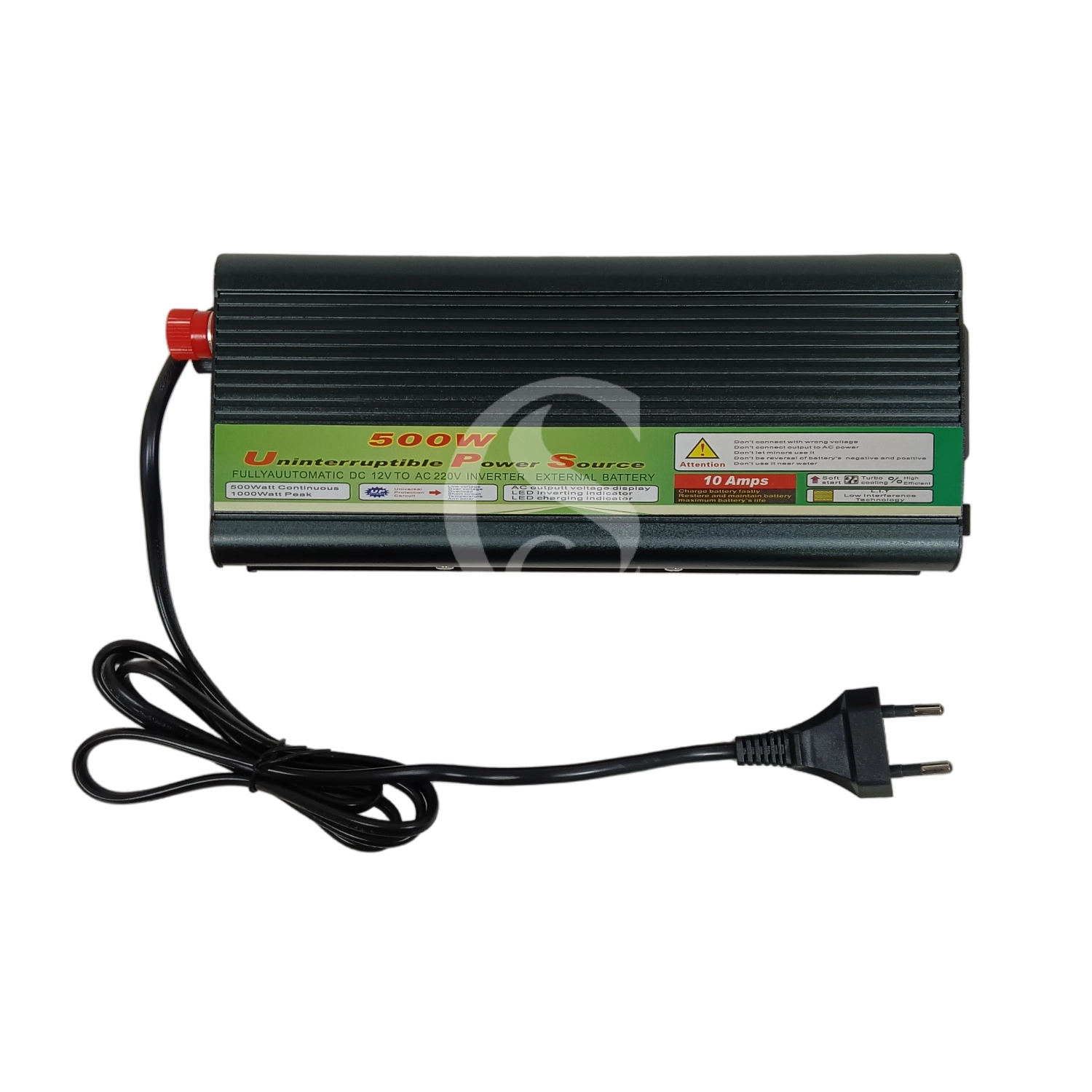
Congsin 500W 12V to 220V inverter delivers reliable off-grid power with its modified sine wave design. This portable 500W DC to AC power inverter efficiently converts 12V DC to 220V AC, ideal for outdoor and emergency use. Trust Congsin for stable, portable energy solutions.
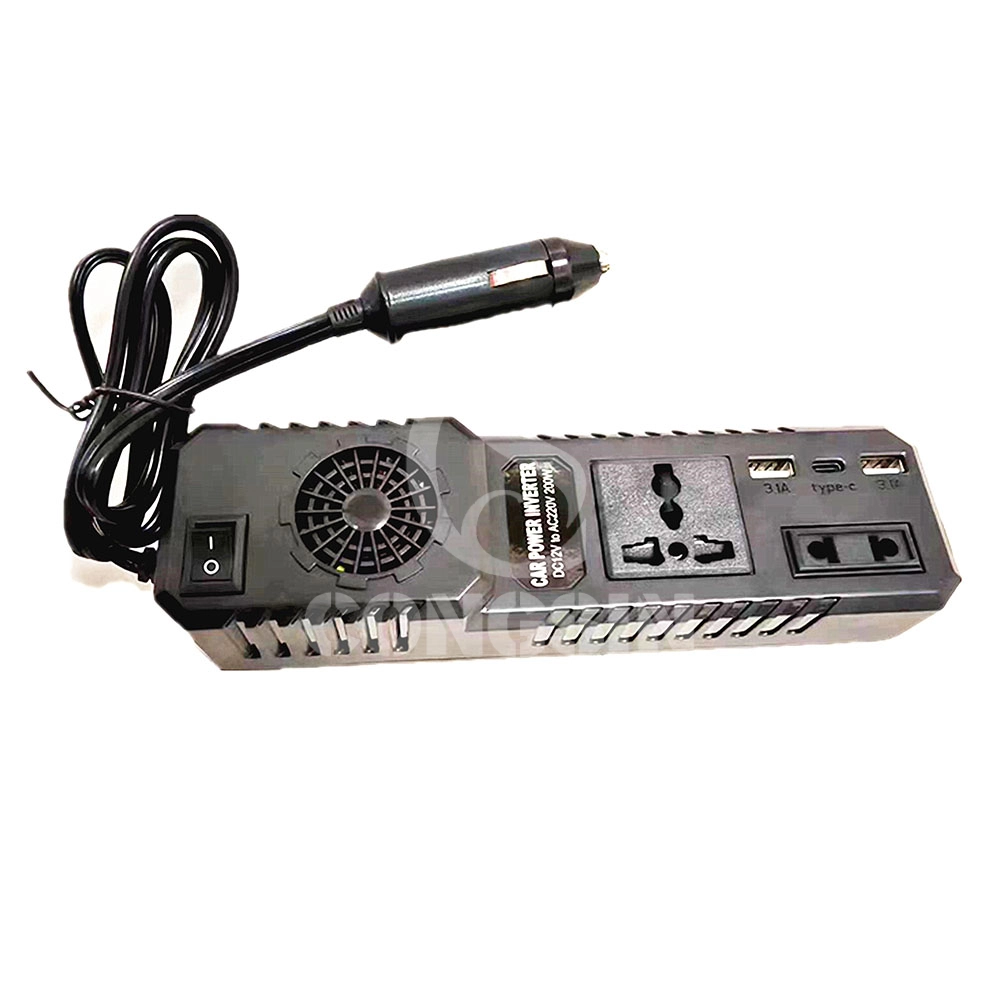
This 200W Modified Sine Wave Car Power Inverter is a compact and practical power conversion device designed for vehicle use. It supports dual input (DC12V/24V) and outputs AC220V, compatible with various electronic devices. Equipped with a Type-C port and dual 3.1A USB outputs, it can charge laptops, phones, cameras, drones, and other small electronics simultaneously—perfect for outdoor travel, emergency backup, and mobile work scenarios.
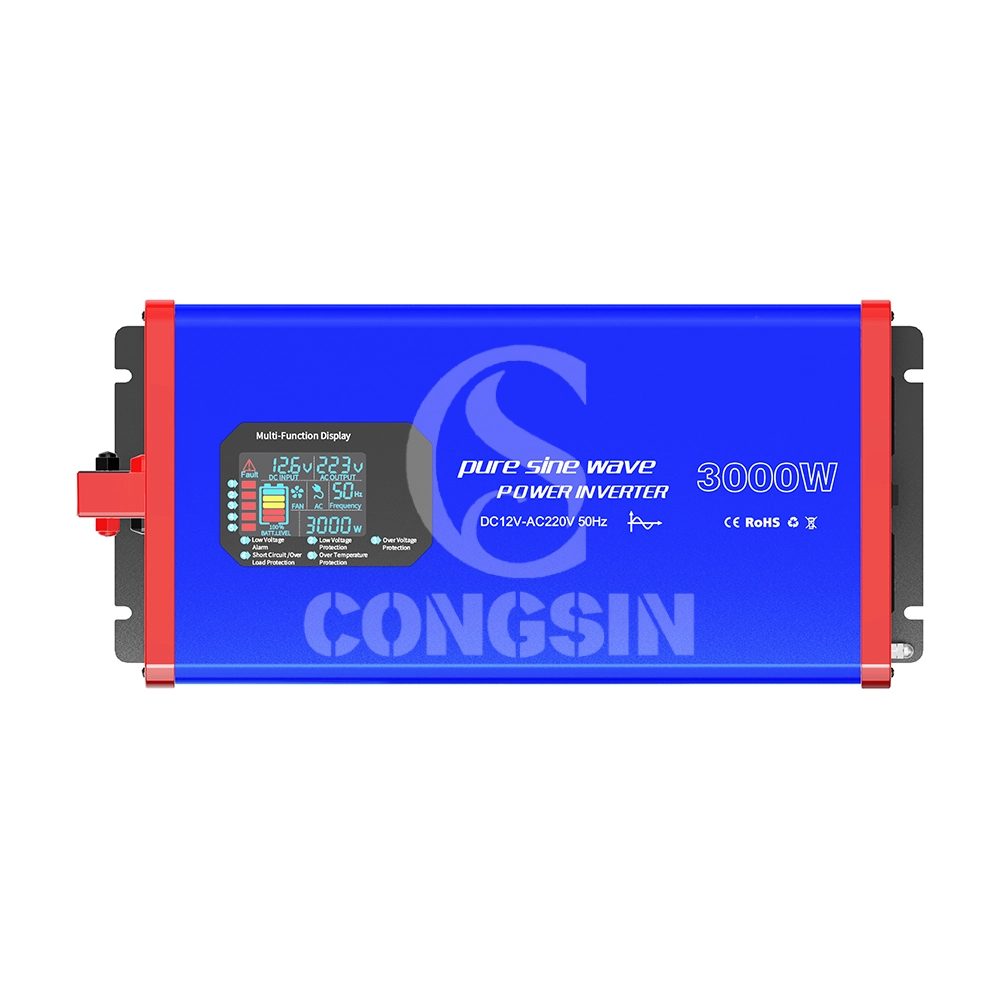
This 3000W full-power pure sine wave inverter (Model: CS3000PSW) adopts pure sine wave output technology (waveform distortion rate <2%), and the output power is highly consistent with mains power quality. It can safely drive high-power precision loads such as air conditioners, refrigerators, medical instruments, and small industrial equipment, avoiding equipment malfunctions or shortened service life caused by unstable waveforms. The device supports DC 12V input (compatible with 10.5V-14.8V wide voltage), continuously outputs 3000W full power, and has a peak power of 6000W, easily coping with the instantaneous startup impact of high-power devices; it is equipped with 4 AC universal sockets (max current 16A) + 2 USB 3.0 fast-charging ports (22.5W per port) to meet the simultaneous power supply needs of multiple devices. Built-in six-fold safety protection (overload, overvoltage, undervoltage, short circuit, overtemperature, reverse connection), combined with dual intelligent silent cooling fans (noise ≤45dB), it achieves the triple advantages of "high power + high safety + low noise," suitable for home emergency, outdoor engineering, vehicle-mounted power supply, small industrial scenarios and other fields.
Get in Touch with Our Team
You can also communicate with us directly through our online contact form. Please fill in the following information, and our team will contact you as soon as possible after receiving your message.

CONGSIN is a trusted OEM factory for power inverters, solar charge controllers, and DC converters. Reliable solutions for global B2B buyers.
 High Quality
 7/24 Service
 Guaranteed Warranty
© 2025 Congsin. All Rights Reserved.
 WeChat
 Scan QR Code
sin cong
teaimei10
Whatsapp: +8618028086791
Scan QR Code